Articles

Car battle

Audi A4 vs. Volvo S60: Complete comparison 2026

Detailed comparison of the Audi A4 and Volvo S60. Discover the differences in driving characteristics, equipment, and reliability of used cars. Read our verdict and make the right choice!

April 22, 2026

VS
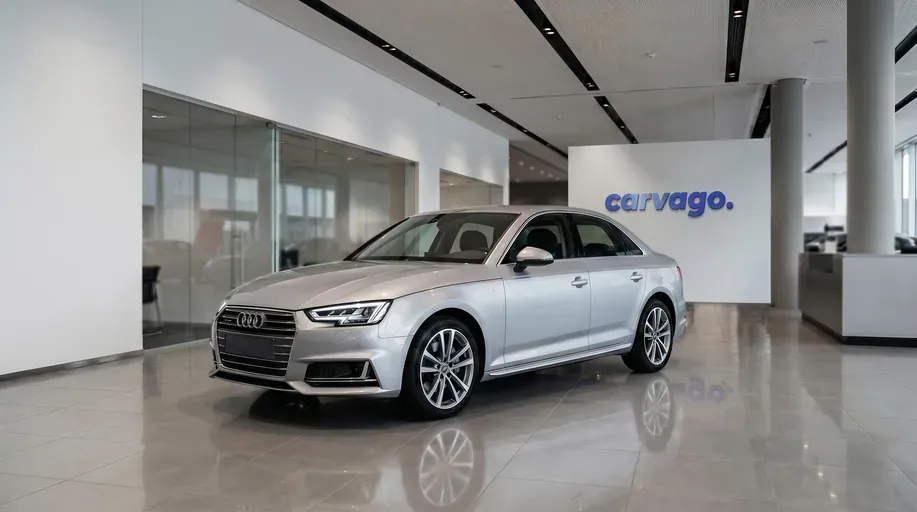
Audi A4

Audi A4

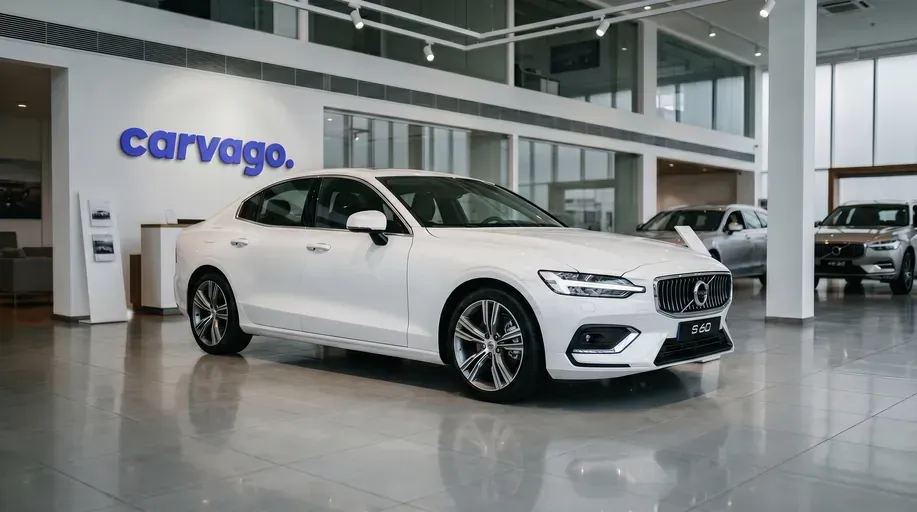
Volvo S60

Volvo S60

Introduction

The Audi A4 has long been considered the benchmark of the German premium mid-size class, attracting drivers with its precise driving characteristics, advanced technologies, and top-tier interior craftsmanship. In contrast, the Swedish Volvo S60 represents a distinctive alternative with elegant Scandinavian design, placing maximum emphasis on unrivaled safety, passenger comfort, and innovative powertrains. Let's take a detailed look at how these two exceptional sedans compare and which one represents the smarter choice for your next used car purchase.

Comparison of External Dimensions

When choosing a used representative of the premium mid-size class, with a production date around 2020 to 2022 (i.e., cars roughly 4 years old), two slightly different philosophies face off. On one side of the ring stands the German Audi A4 in its popular B9 generation (after a significant facelift), on the other, the dynamically styled third generation of the Swedish Volvo S60. Although both cars target a similarly demanding customer, even when comparing external physical proportions, we encounter noticeable differences that directly dictate their daily use.

The Swedish sedan is slightly larger in all key dimensions than its German rival. The third generation of the Volvo S60 measures 4,778 mm in length, outgrowing the Audi A4 (with a length of 4,762 mm) by 16 millimeters. However, Volvo's real ace up its sleeve is the wheelbase, which stands at an above-standard 2,872 mm. That is a full 52 mm more than the Audi (2,820 mm). In practice, these extra centimeters translate into significantly more legroom for rear-seat passengers, making the Nordic car a much more pleasant place for adult passengers on longer journeys. Furthermore, the Volvo's wider stance (1,850 mm compared to 1,847 mm for the Audi) gives the car a visually and physically more stable presence on the road.

However, the Audi A4 successfully counters with immense versatility, which significantly expands its target group. While the S60 designation at Volvo strictly means a classic sedan with more difficult trunk access, the Audi A4 family offers a choice. In addition to the sedan, you can get a highly practical estate (Avant), and even an off-road styled and raised Allroad variant. Classic Audi versions are also slightly shorter and lower, which counts in today's design of cramped city parking garages. The more compact footprint means the Audi is slightly more nimble to maneuver and makes it easier to judge the distance to the rear bumper when parallel parking.

Key advantages and disadvantages in terms of dimensions:

  • Volvo S60:
  • Audi A4:

From an overall perspective of external dimensions, the interpretation is clear. If you are looking for a stylish executive sedan and your main concern is that adults in the back seats have maximum comfort, the long wheelbase of the Volvo S60 will work in your favor. However, if your priority is absolute daily utility combined with transporting strollers or a dog, the more universal dimensional philosophy of Audi's estate body styles simply makes more sense.

Detailed comparison of external dimensions (2020–2023 models)
ParameterAudi A4 SedanVolvo S60 SedanAudi A4 EstateVolvo S60 Estate
Width (mm)184718501842 - 1847-
Length (mm)476247784738 - 4762-
Height (mm)142814311434 - 1493-
Wheelbase (mm)282028722818 - 2820-

Note: The range for Audi A4 Estate bodies covers the standard Avant model as well as the raised Allroad model (which reflects the higher height values). Volvo does not offer an estate body under the S60 model but has separated it into a completely independent V60 line.

Trunk Volume

When it comes to choosing a nearly-new premium used car around four years old (i.e., model generations from 2021 or 2022), luggage capacity plays a key role, especially if you plan to use the vehicle as your primary family car. This comparison pits two representatives of different approaches against each other. While the Audi A4 (B9 generation) offers customers both a classic sedan and an exceptionally practical estate (referred to as Avant or Allroad), the third-generation Volvo S60 relies purely on an elegant sedan shape. Those who need to transport truly large loads with the Swedish brand must logically opt for the derived V60 model, which is not the subject of this comparison. The differences in practicality between the evaluated cars thus represent a crucial point for any buyer who often carries more than just a laptop backpack and a few shopping bags.

Looking at the exact figures, the Audi A4 in sedan version offers a basic trunk volume of 460 to 480 liters, which grows to 965 liters after folding down the rear seats. However, if you choose the popular Estate (Avant) variant, you get a generous 495 liters under the load cover. After folding the backrests, this space increases to an impressive 1,495 liters, a size perfectly sufficient for a weekend shop or a longer holiday with the whole family. The competing Volvo S60 lags somewhat behind its German rival in total capacity, and its standard volume also varies significantly depending on the chosen powertrain. Conventional and mild-hybrid versions have a space of 427 to 442 liters, but with the widely represented plug-in hybrids (Recharge or T8 models), one must account for a reduced capacity of 391 liters, as the traction battery takes up valuable space. With the rear seatbacks folded, the Volvo S60 can offer a maximum capacity of approximately 754 liters.

In practice, these differences mean a fairly vast gap in usability. The Audi A4, primarily thanks to the estate body with its more vertical rear and excellent access, becomes a universal tool into which you can easily fit space for several extra suitcases, sports equipment, or a bulky stroller. The Volvo S60 is a design-clean and stylish car, but the sedan morphology with a smaller loading aperture and a narrow tunnel profile after folding the rear backrests clearly limits the transport of bulkier items. The reduced trunk volume of the popular hybrid Volvo can represent a significant compromise for a family of four packing for a seaside holiday, usually resulting in the need to purchase a roof box.

Luggage Capacity Comparison

ParameterAudi A4 SedanVolvo S60 SedanAudi A4 Estate
Base volume (liters)460 - 480391 - 442495
Max volume with seats folded down (liters)9657541495

Reason triumphs over style 🧳

If a generous and easily accessible trunk is a priority for you in a used car, the Audi A4 (especially in the estate version) clearly beats the managerially-oriented Volvo S60, which additionally loses further precious liters of its original volume in its sophisticated hybrid variants.

Trailer Weights

Towing capacity and maximum trailer weight are key parameters for drivers who plan to regularly tow a caravan, transport horses, or simply use heavier cargo trailers. Although both the Audi A4 and Volvo S60 represent the popular premium mid-size class, when comparing approximately four-year-old used cars (the third generation of the Volvo and the B9 generation of the Audi), we encounter quite fundamental differences that can significantly influence your final choice.

Looking at the base models, Volvo offers overall more robust starting values. Even with standard engines, such as the petrol or mild-hybrid Volvo S60 B4 and T4 versions, you can tow a braked trailer weighing 1800 kg. The real trump card of the Swedish sedan is the plug-in hybrid T8 Recharge / Twin Engine variants. These not only do not lose towing capacity due to the heavy battery (which is a common ailment in hybrids) but even increase it to a respectable 2000 kg.

In contrast, the Audi A4 (B9 generation) starts with a noticeably lower towing capacity. If you choose weaker engines, such as the petrol 35 TFSI or diesel 30 TDI, the permitted weight of a braked trailer ranges only between 1300 and 1500 kg. This value is sufficient for a weekend trip to a DIY store or a smaller trailer with garden waste, but it may not be enough for a large caravan. The "golden middle" for Audi is the popular 40 TDI versions, which can handle 1700 to 1800 kg. You reach the maximum for the German representative only with the top-of-the-line six-cylinder 50 TDI (or in the Allroad version), which offers 1900 kg.

In practical use, this means that while with the Audi A4 you have to be very careful about which engine you buy in relation to your plans for the tow bar, the Volvo S60 is much more versatile. Even in its base form, the Swedish car provides a huge reserve sufficient for towing a heavy family caravan on a long holiday or trouble-free boat transport. If towing capacity is a priority for you, Volvo is a safer choice across the entire portfolio in terms of numbers.

Comparison of trailer weights for selected engines

Model and motorizationBraked trailer weight (kg)Unbraked trailer weight (kg)
Audi A4 30 TDI (B9)1300 - 1500750
Audi A4 35 TFSI (B9)1400 - 1500750
Audi A4 40 TDI (B9)1700 - 1800750
Audi A4 50 TDI (B9)1900750
Volvo S60 B4 (3rd Gen)1800750
Volvo S60 T4 (3rd Gen)1800750
Volvo S60 T6 (3rd Gen)2000750
Volvo S60 T8 Twin Engine (3rd Gen)2000750

Overview of Most Common Motorizations

Engine Comparison: Evolution vs. Revolution

When choosing a roughly four-year-old premium mid-size car (manufactured around 2022), you will encounter two completely different technical approaches under the hoods of these two rivals. The chosen powertrain can very quickly decide which one better fits your lifestyle. The updated B9 generation Audi A4 remains faithful to a classic and exceptionally wide range, which includes efficient four-cylinder diesels as well as silky-smooth six-cylinder diesels – making it the clear favorite for tireless highway mile-munchers. In contrast, the third-generation Swedish Volvo S60 opted for a drastic revolution. It has consigned traditional diesel engines to history for good, settling only on two-liter petrol engines combined with advanced mild-hybrid or overwhelmingly powerful plug-in hybrid technology. For drivers who cover shorter distances, welcome the possibility of locally emission-free commutes, or enjoy sleeper-like, almost brutal performance off the line, the S60 has an irresistible charm. However, those seeking maximum fuel economy on long-distance intercity trips will undoubtedly reach for the TDI with the four rings on the badge. Most of these four-year-old vehicles from both manufacturers already come standard with fast and precise automatic transmissions from the factory.

Volvo S60: The End of Diesel and Absolute Dominance of Hybrids

Looking at the range of used third-generation Volvo S60s, you will find that the brand has dramatically simplified the engine selection. Power comes exclusively from two-liter four-cylinder petrol engines from the Drive-E family, and manual transmissions have been entirely replaced by the smooth eight-speed Geartronic automatic. Compared to the past, the automaker radically discontinued the production of diesel units, so the legendary D5 five-cylinders or the widely popular D3 and D4 four-cylinders never made it into the current S60 body. After 2020, pure internal combustion variants designated as T4 or T5 also gradually disappeared, with sophisticated 48V mild-hybrids hidden under the "B" designation taking center stage in the four-year-old market. This system effectively recovers energy during braking, smooths out the start-stop functionality, and fills in turbo lag. The standard B4 version offers 145 kW (197 hp), but if you choose the more potent B5 variant (184 kW / 250 hp), you also get the choice between front-wheel drive or all-wheel drive (AWD). The crown jewel for adrenaline seekers and green-plate enthusiasts alike is the T8 Recharge plug-in hybrid. By combining a petrol engine with an electric motor, it achieves a combined output ranging from 288 to 335 kW (over 450 hp in newer models) and offers massive torque along with an electric-only range of approximately 40–50 km.

Engine typeFuel typePower (kW)Torque (Nm)Transmission
B4Petrol (Mild-hybrid)1453008-speed Geartronic automatic
B5Petrol (Mild-hybrid)1843508-speed Geartronic automatic
T8 RechargePetrol (Plug-in hybrid)288 - 335640 - 7098-speed Geartronic automatic

Audi A4: The Uncrowned King of Efficient Highway Cruisers

Under the skin of the updated B9 generation Audi A4 (models from late 2019 onwards), there is a typically German diversity, dominated by the implementation of minor electrical assistance. Here too, a partial purge took place as part of the facelift – earlier compact units, such as the entry-level 1.4 TFSI petrol engine, are nowhere to be found, having completely disappeared from the younger used car market. The petrol range is now formed only by two-liter engines differentiated by software and technical specs, equipped with a 12V mild-hybrid system: the entry-level 35 TFSI (110 kW), the versatile 40 TFSI (150 kW), and the brisk 45 TFSI (195 kW). However, the true leaders in terms of interest for both corporate and private drivers are clearly the TDI models. Look for the exceptionally reliable and extremely efficient two-liter diesel under the codes 30 TDI (100 kW) and 35 TDI (120 kW). The absolute sweet spot of the used market is the 40 TDI variant with 150 kW (204 hp) and a respectable 400 Nm of torque, very often paired with the preferred intelligent quattro all-wheel drive (AWD). The icing on the cake – and an increasing rarity for six-cylinder lovers today – remains the majestic 3.0 TDI under the 50 TDI badge, where a monstrous, smooth pull of 620 Nm is managed by the eight-speed torque-converter tiptronic. With the exception of this six-cylinder, all main four-cylinder versions are equipped with the lightning-fast seven-speed dual-clutch S tronic transmission. As a highly interesting, albeit rare, alternative for environmentally conscious motorists, Audi also supplied the 40 g-tron version for running on compressed natural gas (CNG) during this era.

Engine typeFuel typePower (kW)Torque (Nm)Transmission
35 TFSI (2.0 TFSI)Petrol (Mild-hybrid)1102707-speed S tronic
40 TFSI (2.0 TFSI)Petrol (Mild-hybrid)1503207-speed S tronic
45 TFSI (2.0 TFSI)Petrol (Mild-hybrid)1953707-speed S tronic
30 TDI (2.0 TDI)Diesel (Mild-hybrid)1003207-speed S tronic
35 TDI (2.0 TDI)Diesel (Mild-hybrid)1203807-speed S tronic
40 TDI (2.0 TDI)Diesel (Mild-hybrid)1504007-speed S tronic
50 TDI (3.0 TDI)Diesel (Mild-hybrid)2106208-speed tiptronic

Electrified North vs. Efficient South ⚡

While the Volvo S60 delights with excellently tuned petrol and plug-in hybrid units ideal for the city and country roads, the Audi A4 is the undisputed winner for drivers who chew through massive highway distances and seek economical diesel engines.

Choosing the right engine is key to long-term satisfaction with the car, and our recommendations are based on real-world experience, fuel consumption, owner feedback, and overall mechanical reliability, taking into account the market offer of approximately four-year-old used cars. While the Audi A4, even in its current generation (B9), maintains a wide range of efficient and powerful diesel engines, Volvo made a very bold move with the third generation of the S60 – it became the brand's first modern car to completely phase out diesel engines and head down the path of electrification. When choosing the Swedish representative, you choose exclusively between petrol mild-hybrids and plug-in hybrids, while the German competitor still satisfies highway travelers seeking a reliable range of over a thousand kilometers on a single tank.

For the Audi A4, we recommend: 40 TDI (2.0 TDI), 150 kW (204 hp)

This engine (available for cars from 2020–2023) represents the absolute ideal on the used car market, combining great dynamics with low operating costs. The two-liter turbodiesel from the reliable EA288 Evo family is standardly equipped with 12V mild-hybrid technology, which smoothes out the reactions of the start-stop system and brings exceptionally smooth operation.

  • The best choice: A perfectly balanced performance compromise. You get much more confidence when overtaking than with the weaker 35 TDI version, while fuel consumption does not rise to the heights associated with six-cylinder models.
  • Technical advantages: Trouble-free travel is ensured by a massive torque of 400 Nm, which provides a confident pull from low revs. Real-world consumption easily stays between 5 and 6 liters per 100 km, which, combined with excellent cabin soundproofing, creates great comfort on the road.
  • Risks and weaknesses: The main complication to check on a used car is the condition of the diesel particulate filter (DPF). Frequent city driving without sufficient warming up leads to clogging because the control unit cannot complete the regeneration. A warning signal is often a rising oil level (due to diesel penetration) and humming fans after the engine is switched off. Furthermore, uncompromisingly monitor documented oil changes in the seven-speed dual-clutch S tronic transmission (every 60,000 km) – neglect will quickly destroy the sensitive and very expensive mechatronics.
  • Who it's for: A purebred highway cruiser. It reveals its strengths best to drivers who cover long distances daily, swallowing large portions of kilometers on regional roads and highways, and who require a stable and confident pull for their calm drive.

For the Volvo S60, we recommend: B4 (2.0 petrol mild-hybrid), 145 kW (197 hp)

Given the absence of diesel units, we recommend reaching for the happy medium in the form of the B4 mild-hybrid version (replacing the older generation T4 engine), which has been produced since roughly 2020. It is an exceptionally advanced design that harmonizes with the relaxed character of the Scandinavian sedan.

  • The best choice: Compared to the more powerful versions (B5) and the complex, expensive plug-in hybrids (T8), the B4 engine has historically been significantly less prone to technical quirks, more reliable overall, and its output of nearly two hundred horsepower is safely sufficient for the vast majority of traffic situations.
  • Technical advantages: The integrated starter-generator and 48V network perfectly fill the "turbo lag" (turbocharger delay) when the accelerator is pressed. The result is a silky smooth and quiet power delivery combined with a comfortably shifting eight-speed Aisin automatic. Real-world consumption for this relatively heavy car settles around a decent 7 to 7.5 liters of fuel per 100 km.
  • Risks and weaknesses: Significant technical complexity brings inevitable risks for used cars. The start-stop system and mild-hybrid technology put a strain on the electronics; it pays to check the condition of the 48V Li-ion battery, the replacement of which represents an unpleasant hit to the wallet. A classic risk for all direct-injection petrol engines is the formation of carbon deposits on the intake valves. Prevention in the form of refueling with premium fuel, using additives, and trying not to leave the engine chronically under-revved in city mode helps.
  • Who it's for: A perfect companion for drivers who prefer a defensive, comfort-oriented, or family style of travel. The S60 with the B4 is not a sports car and does not try to be; however, it will reward those looking for top-tier safety, acoustic well-being, and an exceptionally relaxed journey to their destination, both in the city and on calm weekend trips.

Real Fuel Consumption

The difference between the official fuel consumption figures provided by manufacturers and real-world values in everyday driving is often vast. To get the most accurate picture of how much fuel these models actually require, we looked at real-world data directly from drivers. We draw from community platforms such as the popular Spritmonitor.de, where owners record their refueling and actual mileage over the long term. For comparison, we selected approximately four-year-old used cars, which in the case of the Audi A4 means the B9 generation (after the facelift) and for the Volvo S60, the current third generation.

Model and EngineAverage Consumption (l/100 km)
Diesel engines
Audi A4 35 TDI (120 kW)5.6
Audi A4 40 TDI (140 kW)6.1
Petrol engines and mild hybrids
Audi A4 35 TFSI (110 kW)6.9
Audi A4 40 TFSI (150 kW)7.3
Volvo S60 B4 (145 kW)7.8
Volvo S60 T4 (140 kW)8.0
Volvo S60 B5 (184 kW)8.2
Plug-in hybrids
Volvo S60 T8 PHEV (288 kW)4.5

Interesting trends clearly emerge from the data. Traditional diesel engines in the Audi A4 (TDI) remain the unbeatable choice for long-distance highway drivers – the less powerful but still sufficiently potent 35 TDI version can achieve long-term consumption well below the six-liter mark. Audi's TFSI petrol units also stay within very reasonable limits, showing that modern turbocharged four-cylinders can be unexpectedly efficient.

In contrast, the Volvo S60, which radically eliminated diesel engines for this model in its third generation, shows a noticeably higher appetite in its petrol and mild-hybrid versions (B4 and B5). The assistance of a small electric motor cannot miraculously slash highway consumption, and in real-world driving, you will most often find yourself around eight liters with this Swedish sedan. The top-of-the-line Volvo S60 T8 plug-in hybrid version is a chapter of its own; while its average on paper and in an ideal scenario oscillates around 4.5 l/100 km, this is strictly conditional on diligent charging from the grid. As soon as you drive a longer route with a discharged battery, consumption quickly matches that of conventional powerful petrol engines.

For buyers, a crucial recommendation follows from this comparison. If you commute long distances daily, often travel across the country on the highway, or simply look to minimize fuel costs as much as possible, a diesel Audi A4 will be a much more sensible choice for you. Conversely, the Volvo S60 will appeal more to drivers with lower annual mileage or users who have easy access to a charger at home or work and can thus fully exploit the potential of the T8 model. Due to the complete absence of diesels in the modern Volvo S60, overall real-world consumption is one of the key and decisive factors in this premium battle.

Price Range and Used Car Offerings

Price range on the used car market

When looking for roughly four-year-old used cars (2021 and 2022 models), you will encounter a diametrically different market reality for both models. While the Audi A4 benefits from a massive presence in corporate fleets, the Volvo S60 represents a much rarer and more specialized choice on the used car market.

Model (2021–2022 models)Starting price (mileage approx. 150,000 km)Most common price (the sweet spot)Top-tier versions (S line / Recharge)
Audi A4 (generation B9.5)from €19,000€23,000 – €27,000€29,000 – €35,000
Volvo S60 (3rd generation)from €21,000€27,000 – €31,000€35,000 – €41,000

Audi A4: King of fleet offers

The German representative benefits from a huge number of returned vehicles from large corporate fleets and operational leases. A strong oversupply over demand creates natural price pressure, giving used car buyers a great negotiating position.

  • Dominance of diesel and estate body style: A huge part of the used market supply consists of the extremely popular Avant (estate) body style and economical TDI diesel engines. Vehicles with basic four-cylinder engines and higher motorway mileage can therefore be purchased for very affordable amounts.
  • Abysmal differences in equipment: The market offers an extreme range. You can come across completely basic versions with cloth seats without modern technological features, but also "fully loaded" units in the aggressive S line package, with quattro all-wheel drive and a premium interior.

Volvo S60: Nordic premium without compromise

The third generation of the Volvo S60 offers a completely different approach on the used car market. The carmaker sells this specific model exclusively as a classic sedan (the estate is labeled V60), making it a less common sight in used car dealerships.

  • Fundamental absence of diesels: Volvo took a radical step with this generation of the S60 and completely removed diesel engines from the range. When buying a used car, you only choose between petrol mild-hybrids (B4, B5) or extremely powerful plug-in hybrids (labeled Recharge).
  • Rich base: The higher average price of a used Volvo S60 is compensated by the fact that you practically won't find any "bare-bones" versions on the market. Cars from first owners almost always include advanced assistance systems, a luxury leather interior, and highly premium audio systems.

Depreciation and total costs

The Audi A4 experiences a slightly sharper loss of value in the early stages precisely due to a market oversaturated with company cars. Once the car passes the 100,000-kilometer mark, the price drop curve slows down significantly.

The Volvo S60 benefits from its position as a premium alternative. Depreciation here is more linear; models hold their value well, but when buying top-of-the-line plug-in hybrid used cars (Recharge), it is appropriate to factor in possible future maintenance associated with a more complex powertrain system and an aging battery. For drivers who cover long motorway distances, the missing diesel in the Volvo may represent slightly higher daily fuel bills compared to Audi's proven TDI engines.

💰 Who is the winner for the wallet?

If you are looking for the best price-to-utility ratio combined with low motorway mileage costs, a used Audi A4 TDI from fleet offers is unbeatable; however, if you require rich luxury equipment as standard and representative performance, paying extra for a Volvo S60 is definitely worth it.

Safety and Euro NCAP Rating

Both models, the Audi A4 and the Volvo S60, received the maximum five-star rating in their primary Euro NCAP safety tests. When buying a used car, however, it is crucial to put these results into the correct context and take into account the year the tests were conducted. Euro NCAP assessment protocols are constantly evolving and becoming stricter over time, meaning that percentage scores from different years cannot be directly compared. Newer tests place disproportionately more emphasis on advanced assistance systems, the protection of vulnerable road users (cyclists and pedestrians), and complex crisis scenarios at intersections.

Audi A4 generation B9 underwent Euro NCAP crash tests as early as 2015. For its time, the car demonstrated an exceptionally high level of passive safety, which was reflected in excellent ratings for adult protection (89%) and child protection (87%). However, since the testing was conducted according to older and less demanding standards, the validity of this five-star certificate formally expired at the beginning of 2022. From today's perspective, this does not mean that the Audi A4 is dangerous; however, its factory rating for safety assistants and active pedestrian protection no longer fully reflects the latest and much stricter requirements of the current market.

Volvo S60, on the other hand, underwent testing in 2018 (the results were taken from the test of its sister estate, the V60, due to identical construction). In that year, a significantly stricter testing methodology was already in place. Volvo confirmed its historical reputation as a safety benchmark with a stunning result of 96% in adult occupant protection. Because the S60 shares the robust SPA architecture with larger models and utilizes the advanced City Safety active safety package, it already featured a standard system with pedestrian, cyclist, and large animal detection, as well as an automatic braking function at intersections.

Although both vehicles offer highly above-average protection in terms of passive safety, the Volvo S60 emerges from this comparison as the more modern and overall more comprehensive choice. This is due not only to the more recent testing date and the resulting success in more demanding criteria but also to the standard integration of active assistants that can reliably prevent a wider range of accidents in everyday traffic.

ParameterAudi A4Volvo S60
Year of testing20152018
Adult occupant protection89 %96 %
Child occupant protection87 %84 %
Vulnerable road user protection75 %74 %
Safety assist systems75 %76 %

Safety first 🛡️

Although both cars offer a solid and safe construction, the Volvo S60, thanks to its more recent rating and highly advanced assistance systems, provides used car buyers with a more confident choice that much better meets today's strict safety standards.

Comparison of Interesting Equipment Features

In addition to standard equipment, both models offer much more than just basic features for daily commutes, with each having its own distinctive approach to added value.

Audi A4: Technological precision and legendary drivetrain

  • Infotainment and digitalization: Audi excels with its Audi Virtual Cockpit system. This high-resolution, fully digital instrument cluster offers a huge degree of personalization, including the ability to display full-screen maps directly in the driver's field of vision. The central MMI display adds acoustic feedback for easier operation while driving.
  • Lighting technology: Top-of-the-line Matrix LED headlights are available. These can mask out surrounding traffic in real-time, allowing you to keep your high beams on constantly without dazzling oncoming drivers, significantly increasing safety and comfort during night travel.
  • Drivetrain and chassis: The models with the four rings rely on the proven quattro all-wheel drive, which ensures excellent traction in poor conditions. Fans of both comfort and dynamics will appreciate the optional adaptive suspension, which changes its characteristics at the touch of a button according to the selected driving mode (Drive Select).
  • Sporty variants: The traditional S line package gives the car a sharper look thanks to specific bumpers, a stiffer suspension, and sports seats with excellent lateral support, underlining the car's dynamic character.
  • Smart details and electronics: Audi prides itself on perfect ergonomics and craftsmanship. Modern features such as wireless phone charging and extensive support for remote vehicle access via the myAudi app are a matter of course. Most engines are also equipped with mild-hybrid technology for seamless coasting and fuel savings.

Volvo S60: Scandinavian luxury and top-tier safety

  • Infotainment and connectivity: Volvo recently switched to a system based on the Android Automotive platform. This means you have integrated Google Maps with real-time traffic data, Google Assistant for advanced voice control, and the ability to install apps via Google Play directly in the onboard system. The system also supports regular OTA (Over-The-Air) remote updates.
  • Safety and assistance systems: The brand is synonymous with safety. The City Safety system reliably detects not only other cars but also pedestrians, cyclists, and even large animals. The Pilot Assist function then offers an advanced level of semi-autonomous driving, where the car smoothly maintains distance and lane centering, which is invaluable during long highway journeys.
  • Distinctive design and comfort: The interior is characterized by Scandinavian minimalism and unique details. In higher trim levels, you'll find the iconic automatic gear selector made of genuine crystal from the Swedish glass company Orrefors. Also worth mentioning are the orthopedically shaped seats, which are among the most comfortable on the market, and the option of a top-tier Bowers & Wilkins audio system with a concert mode.
  • Drivetrain and ecology: The S60 model clearly emphasizes ecology. You won't find diesel engines in the lineup; everything is handled either by refined mild-hybrids or powerful Recharge plug-in hybrids, which allow for daily emission-free commuting with a real electric range of dozens of kilometers.
  • Sporty variants: Volvo can also be very fast. In addition to the R-Design trim level, the top-of-the-line Polestar Engineered version is highly sought after on the used car market. It combines a powerful plug-in hybrid drivetrain with high-end components such as mechanically adjustable Öhlins dampers and high-performance Akebono brakes.

Key Advantages and Disadvantages

Audi A4

Pros

Top-tier interior build quality and premium materials

Excellent digital instrument cluster (Virtual Cockpit) with a very intuitive interface

Wide range of reliable powertrains, including the popular TDI diesel engines

Excellent traction and driving stability thanks to the available quattro all-wheel drive

Very good residual value on the used car market

Cons

Significantly conservative design that changes only minimally between generations and even after facelifts

Less legroom for rear passengers compared to other mid-size cars

Noticeably stiffer suspension tuning on versions with the S line package or larger wheels

Audi A4 represents a long-standing benchmark in terms of craftsmanship and driving confidence, making it the perfect car for frequent motorway travel. It will primarily appeal to more conservative drivers who appreciate advanced technology, precise ergonomics, and a wide selection of classic internal combustion engines.

Volvo S60

Pros

Very attractive and timeless Scandinavian design that sets the car apart from German competitors

Unrivalled ergonomics and front seat comfort, ideal for long-distance travel

Absolute leader in active safety assistants and body robustness

Great driving performance in plug-in hybrid versions (Recharge) with the option of pure electric range

Cons

Smaller volume and poorer overall accessibility of the luggage compartment (produced exclusively as a sedan)

Complete absence of fuel-efficient diesel engines in the third-generation lineup

Factory-imposed top speed limit of 180 km/h (applicable to all models from 2020 onwards)

Excessive concentration of controls in the central touchscreen, including climate settings

The Volvo S60 is a great choice for individualists who want to break away from the traditional German premium brands and are looking for a safe, immensely comfortable, and stylish sedan. The absence of diesels and a clear focus on petrol and hybrid technologies make it more suitable for calmer drivers who prefer a relaxing atmosphere and a sustainable approach.

Common Problems and Owner Complaints

Based on long-term breakdown statistics, service bulletins, and data from our comprehensive CarAudit vehicle inspections, we have compiled an overview of the most common problems you should watch out for in roughly four-year-old used examples of these models.

Audi A4

The Audi A4 generation B9 (including the facelifted B9.5 version from 2019) is among the above-average reliable cars in its class; however, there are still typical weak points that require proper attention when choosing a used car.

  • Engine and cooling: In the very popular 2.0 TDI and 2.0 TFSI engines, hidden coolant leaks often occur through the plastic thermostat housing or the water pump, as their plastic components tend to crack over time due to temperature extremes. Additionally, in diesel versions, faulty pumps or damaged NOx sensors in the AdBlue emission system can cause trouble around the 80,000 km mark.
  • Transmission: The seven-speed dual-clutch S tronic (DSG) automatic requires unconditional adherence to oil change intervals (ideally every 60,000 km). If maintenance is neglected, used cars often exhibit jerking, delayed responses when pulling away, or local oil leaks around the hardened seal of the plastic transmission pan.
  • Electronics and infotainment: Owners quite commonly report freezing of the MMI on-board system, Bluetooth connection drops, or confused error messages from the Audi pre sense pre-collision assistance system cameras. However, most of these issues are satisfactorily resolved by authorized software updates. A mechanical and very frustrating ailment is the often-resonating audio system speaker grille.
  • Chassis and brakes: On the complex multi-link front axle, play in the control arm bushings can appear early in cars accustomed to poor-quality city roads. Models equipped with larger sport brakes also tend to produce unpleasant squealing and screeching at low speeds and during light braking.

Audi A4: Exemplary reliability with minor slip-ups

The Audi A4 generation B9 is among the more reliable choices among premium cars. However, its trouble-free operation stands and falls with the meticulous servicing of the complex transmission and timely intervention against minor coolant leaks.

Volvo S60

The third generation of the Volvo S60 is built on the advanced SPA platform, which, while providing top-tier levels of safety and rigidity, also hides relatively complicated technology that can significantly strain your wallet after the factory warranty expires.

  • Powertrain and hybrids: In popular plug-in hybrid versions (T8 Recharge) manufactured until 2022, there were excessive failures of the electric rear axle drive (ERAD) motor, resulting in the loss of all-wheel drive. From the 2023 model year, a completely improved, trouble-free unit has been installed. The 2.0-litre petrol engines themselves (often both turbocharged and supercharged simultaneously) require literally pedantic maintenance and timely replacement of spark plugs and high-quality oil.
  • Transmission: The eight-speed Geartronic torque converter automatic is mechanically solid and does not suffer from fatal failures, but many users of older used cars struggle with uncomfortable hard or jerky shifting in traffic jams. The most common cause is degraded transmission oil combined with a lack of transmission software adaptation.
  • Electronics and software: Digital systems (both the older Sensus and the first years of the newer Android Automotive system) tend to have a slower initial startup in roughly four-year-old cars. Occasional freezing of the central touchscreen or long delays in the rear parking camera are also known issues. Installing a stabilizing update helps.
  • Chassis and brakes: Perhaps the most significant mechanical weakness of the relatively heavy Volvo S60 is the unexpectedly undersized standard brakes. You will very often encounter used cars with prematurely warped brake discs, which transmit noticeable vibrations directly to the steering wheel and brake pedal during more intense braking. The problem is only solved by their complete replacement.

Volvo S60: A safe fortress full of complex technology

The Volvo S60 is a structurally robust car, but in older model years, you should be very careful about the risky initial versions of the plug-in hybrid system and generally expect much faster brake wear.

Tips for Buying a Used Car

When buying a used car, a thorough physical inspection of the used vehicle is key. Here are a few specific points you should focus on for these two models.

When choosing an Audi A4:

  • S tronic gearbox behavior: With dual-clutch automatics, focus on the smoothness of shifting during the test drive. Especially in cars with over 60,000 km, there may be jerking when starting off or stuttering during slow downshifts. This indicates worn clutches or neglected oil changes, leading to costly repairs.
  • Coolant leaks and the water pump: Engines in the B9/B9.5 generation often use a water pump with a plastic housing, which tends to become brittle and crack due to heat. After the engine has warmed up, check for puddles under the car and physically inspect the coolant level in the reservoir.
  • MMI infotainment response: The facelifted version switched to full touch control and introduced a new on-board system. Test the response speed, navigation functionality, and phone pairing. System freezes or sound dropouts may indicate the need for a software update or a more expensive module replacement.
  • Front axle condition: The Audi A4 has a complex multi-link front axle that carries a relatively large engine weight. When driving over speed bumps or potholes, listen carefully for any dull knocking sounds. This is a typical sign of worn bushings or ball joints.

When choosing a Volvo S60:

  • ERAD module condition in plug-in hybrids (PHEV): If you are considering the Recharge version (T6/T8), listen carefully for noises from the rear axle. The Electric Rear Axle Drive (ERAD) can suffer from internal wear. Any humming, growling, or metallic grinding under load indicates a risky and very expensive repair of the entire module.
  • Rapid brake wear and vibrations: The Volvo S60 built on the SPA platform is an exceptionally heavy car, which takes a heavy toll on the braking system. During the test drive, brake safely but firmly from a higher speed – if you feel vibrations in the steering wheel, the brake discs are warped and due for replacement.
  • Chassis and upper shock absorber mounts: The Volvo chassis sometimes suffers from squeaking from the rear trailing arm bushings or worn upper mounts of the front shock absorbers. Drive the car intentionally at a slow speed over cobblestones and watch for dull thuds or any unusual noises.
  • Software and assistance systems: Ensure that the on-board system (Sensus or, on the latest models, Android Automotive) boots up quickly after starting and does not report error messages. Non-communicating assistance systems (such as automatic braking) or hidden 12V battery drain overnight are known issues, usually resolved by a comprehensive software update.

FAQ: Most Frequently Asked Questions

The Audi A4 sedan offers a luggage capacity of 460 liters, which is slightly more than the 442 liters of the Volvo S60. Both cars have a regularly shaped trunk, but if you need to transport bulkier items, the German representative is slightly more practical. On the other hand, the third-generation Volvo scores with more luxurious upholstery and better lighting throughout the cargo area.

For a more dynamic driving experience, the Audi A4 is clearly the better choice, especially if equipped with quattro all-wheel drive and adaptive suspension. The Volvo S60, by contrast, focuses primarily on a calm, exceptionally comfortable ride and perfect isolation of the occupants from outside noise. The steering in the Swedish car is more over-assisted and does not provide as much feedback as the more precise system in the Audi.

A major difference in the used car market is the fact that the current generation of the Volvo S60 has completely abandoned diesel engines and offers exclusively gasoline or plug-in hybrid units. The Audi A4, on the other hand, has kept very efficient and popular TDI diesel engines in its lineup, which are ideal for long highway journeys. So, if you are looking for an efficient diesel for high mileage, the Audi is the only possible choice in this comparison.

Since both are premium vehicles, it is necessary to expect generally higher prices for spare parts and hourly service rates. For the Audi, watch out for the need for timely oil changes in the S tronic automatic transmissions, while the Volvo occasionally experienced infotainment software bugs in the early years of the third generation. As roughly four-year-old used cars, however, both models are above-average reliable if they have a documented and regular service history.

Both manufacturers represent the absolute pinnacle of safety and have earned the maximum five stars in the rigorous Euro NCAP crash tests. However, the Volvo S60 traditionally excels even in its base trim, which includes an advanced collision prevention system with detection of pedestrians, cyclists, and large animals. The Audi A4 offers fully comparable technology and assistants, but the first owner of the car had to pay extra for many of them.

Conclusion: Which Model to Choose?

Sources: ADAC, garaz.cz, denik.cz, dopravniinfo.cz, autorevue.cz, ceskyautoblog.cz

This article was prepared using artificial intelligence tools. The section guarantor is Petr Dušek.

Related articles

Car battle

Honda Accord vs. Škoda Superb: Complete comparison 2026

Detailed comparison of Honda Accord vs. Škoda Superb. Discover real-world experiences, equipment and driving characteristics comparisons, and read the verdict for the best choice.

Apr 21, 2026

Car battle

Peugeot 508 vs Škoda Superb: Complete Comparison 2025

Peugeot 508 vs. Škoda Superb: Detailed comparison, real-world experiences, and the verdict to help you choose the best executive car.

Apr 13, 2026

Car battle

Alfa Romeo Giulia vs. Mercedes-Benz C-Class: Complete comparison 2026

Alfa Romeo Giulia vs Mercedes-Benz C-Class comparison. We compared driving characteristics, engines, and equipment. Find out in our verdict which used sedan to choose.

Apr 19, 2026

We accept online card payments as well as wire transfers.

visa payment provider logovisa-electron payment provider logomastercard payment provider logomaestro payment provider logodiners-club payment provider logodiscover payment provider logo