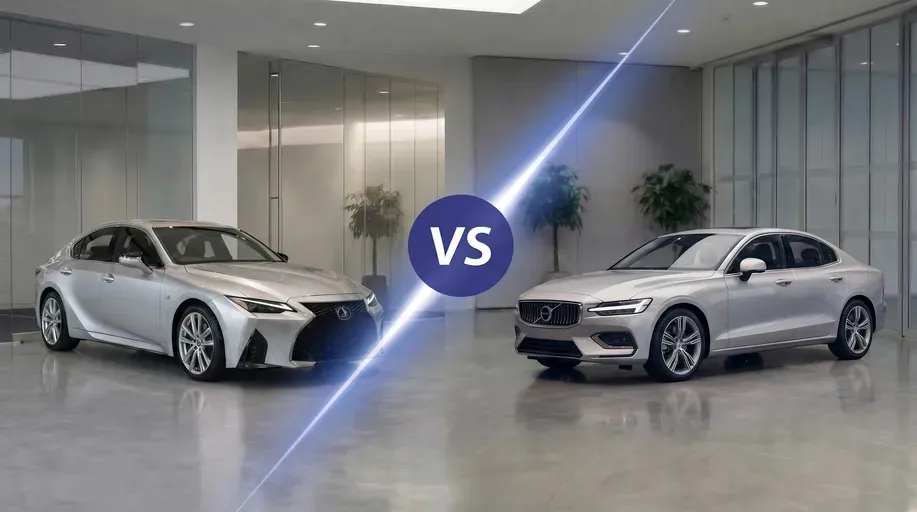
Car battle
Lexus IS vs. Volvo S60: Complete comparison 2026
Lexus IS vs Volvo S60: A detailed comparison of premium sedans. Discover the key differences in driving characteristics, equipment, and reliability before your purchase.
Oct 16, 2026
Articles
Review
Volvo V60 review: real owner insights, reliability, running costs, engine picks and used prices — everything you need to know before buying.
October 20, 2026
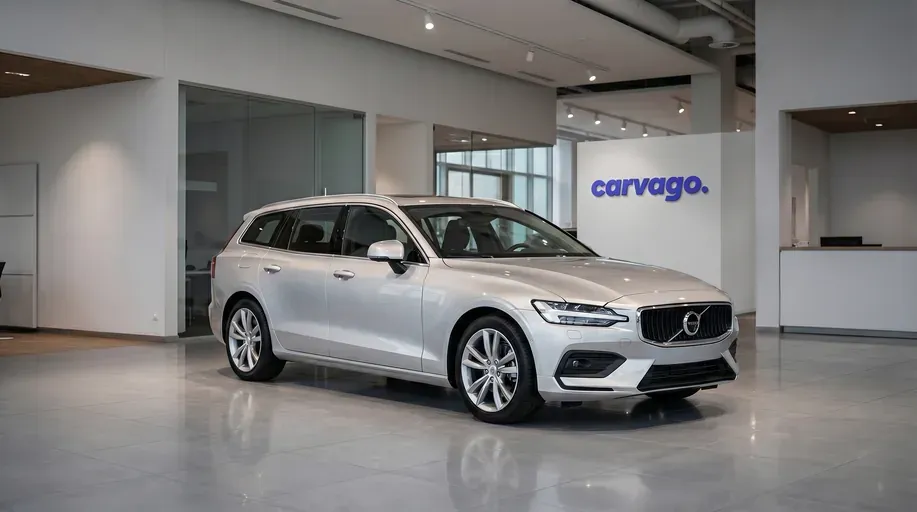
The second-generation Volvo V60 estate competes in the premium mid-size estate segment, positioning itself as a Scandinavian alternative to established German rivals. Built on Volvo's SPA platform, factory production commenced in April 2018, with European showroom arrivals on 2018-07-12 and customer deliveries following in late Q3 2018. Assembly for the European market remains active for model year 2026.
Buyers choose between the standard estate body and the raised-ride Cross Country variant, which premiered in September 2018 for those needing greater ground clearance. On 2022-03-10, Volvo revealed a facelift for the model that introduced revised bumpers with concealed exhaust outlets, new wheel designs, an Android Automotive infotainment system, and dual-clutch automatic gearboxes on entry-level petrol mild hybrids.
The Volvo V60 estate attracts long-distance commuters, company car users, and families seeking practical load-carrying capability and understated styling without moving to a taller SUV. This review focuses exclusively on the second generation across both pre-facelift and updated models.
The second-generation Volvo V60 has built a solid reputation for mechanical resilience across European markets, though owner reports and professional evaluations highlight distinct problem areas depending on the powertrain and production year. While conventional petrol and diesel mechanical components hold up well, electrified variants and post-facelift onboard software generate the bulk of documented complaints.
On early plug-in hybrid models built between 2018 and 2021, owners report mechanical whine from the Electric Rear Axle Drive (ERAD) unit. The noise typically emerges between 50 and 80 km/h under electric coasting or acceleration, caused by premature bearing fatigue and internal clutch wear. In severe cases, internal coolant seals degrade and cause fluid leakage into electrical components. Replacing the ERAD unit or fitting updated assemblies addresses the issue, while models upgraded from late 2021 onward feature a revised motor design with a significantly lower failure rate.
Water ingress in the cabin is another widely reported defect on models equipped with the panoramic glass roof. Organic debris can obstruct the front drainage hoses within the windshield pillars, or the lower drain tubes detach near the bulkhead. Water then collects in the front footwells beneath the carpeting. If left unaddressed, moisture risks damaging floor-mounted wiring looms and the central electronics module. Clearing drainage passages and securing the connections with modified clamps typically prevents recurrence.
On facelifted models from the 2023 model year onward, owners report recurring connectivity glitches associated with the Google-based infotainment system and the shark-fin antenna telematics module. Symptoms include sudden dropouts of cellular signal, offline navigation maps, flashing emergency call lights, and unresponsive remote app functions. Regular over-the-air firmware updates have mitigated the majority of communication freezes, though deep-discharged telematics backup batteries occasionally require workshop replacement. Additionally, on 48V mild hybrids introduced in 2020, owners report occasional depletion of the 12V support battery after extended parking periods, which triggers dashboard warnings and temporarily disables auxiliary functions until software updates optimize network sleep cycles.
Official European safety registers record several safety recalls for the second-generation Volvo V60 estate. Up to October 2026, no new recall campaigns have been initiated for this generation during 2026, but key earlier actions require verification on used cars.
| Build Window | Affected Models | Defect and Stated Consequence | Workshop Remedy |
|---|---|---|---|
| June 2025 – August 2025 | All variants (worldwide) | Defective seatbelt retractor torsion bar may cause uncontrolled spool-out during an accident, reducing restraint performance. | Inspection and replacement of both front seatbelt retractor assemblies. |
| May 2019 – June 2025 | Plug-in hybrids (worldwide) | Braking functionality can be disabled when using regenerative B-mode after coasting downhill, increasing accident risk. | Software update applied via over-the-air download or at an authorized workshop. |
| April 2019 – December 2021 | Plug-in hybrids (worldwide) | High-voltage battery cells can overheat when fully charged, posing a fire risk while parked. | High-voltage battery module inspection, replacement of defective modules, and updated monitoring software. |
| Model Years 2020–2021 | All variants (worldwide) | Pushrod between brake pedal and brake booster may detach due to incorrect assembly, causing brake pedal dysfunction. | Inspection and tightening of the pushrod connection to factory torque specifications. |
| December 2020 – July 2023 | Petrol mild hybrids (worldwide) | Inadequate turbocharger inlet oil line O-ring diameter can cause twisting and leakage, creating a fire risk. | Replacement of the oil supply line O-ring seal with an updated specification. |
| June 2018 – December 2019 | All variants (worldwide) | Low-pressure fuel pump fuse can blow, causing the engine to stall unexpectedly while driving. | Replacement of the factory fuse with an upgraded higher-amperage fuse. |
| 2018 – early 2019 | Diesel Volvo V60 (Europe/worldwide) | EGR cooling soot buildup can cause localized thermal deformation of the plastic intake manifold, posing an engine bay fire risk. | Cleaning and modification of the EGR loop, software recalibration, and fitting a thermal shield. |
Before committing to a used purchase, prospective buyers should verify that all open safety campaigns have been executed by an authorized retailer, or confirm the car's complete maintenance history through CarAudit.
The second-generation Volvo V60 relies exclusively on modular 2.0-litre four-cylinder engines, spanning front- and all-wheel-drive layouts with manual, torque-converter, or dual-clutch automatic gearboxes. The powertrain line-up evolved from conventional petrol and diesel units to 48-volt mild hybrids and plug-in hybrids.
| Engine | Fuel | Power | Gearbox | Drivetrain | Model Years |
|---|---|---|---|---|---|
| 2.0 D3 | Diesel | 110 kW (150 hp) | 6-speed manual / 8-speed automatic | FWD | 2018–2020 |
| 2.0 D3 AWD | Diesel | 110 kW (150 hp) | 8-speed automatic | AWD | 2018–2020 |
| 2.0 D4 | Diesel | 140 kW (190 hp) | 6-speed manual / 8-speed automatic | FWD | 2018–2020 |
| 2.0 D4 AWD | Diesel | 140 kW (190 hp) | 8-speed automatic | AWD | 2018–2020 |
| 2.0 B4 Diesel | Diesel Mild Hybrid | 145 kW (197 hp) | 8-speed automatic | FWD / AWD | 2020–2024 |
| 2.0 T4 | Petrol | 140 kW (190 hp) | 8-speed automatic | FWD | 2018–2020 |
| 2.0 T5 | Petrol | 184 kW (250 hp) | 8-speed automatic | FWD / AWD | 2018–2020 |
| 2.0 T6 AWD | Petrol | 228 kW (310 hp) | 8-speed automatic | AWD | 2018–2020 |
| 2.0 B3 | Petrol Mild Hybrid | 120 kW (163 hp) | 8-speed automatic | FWD | 2020–2022 |
| 2.0 B3 | Petrol Mild Hybrid | 120 kW (163 hp) | 7-speed dual-clutch automatic | FWD | 2022–2024 |
| 2.0 B4 | Petrol Mild Hybrid | 145 kW (197 hp) | 8-speed automatic | FWD | 2020–2022 |
| 2.0 B4 | Petrol Mild Hybrid | 145 kW (197 hp) | 7-speed dual-clutch automatic | FWD | 2022–present |
| 2.0 B5 | Petrol Mild Hybrid | 184 kW (250 hp) | 8-speed automatic | FWD / AWD | 2020–2024 |
| 2.0 B6 AWD | Petrol Mild Hybrid | 220 kW (300 hp) | 8-speed automatic | AWD | 2020–2022 |
| 2.0 T6 Twin Engine / Recharge | Petrol Plug-in Hybrid | 251 kW (340 hp) | 8-speed automatic | AWD | 2019–2021 |
| 2.0 T6 Recharge | Petrol Plug-in Hybrid | 257 kW (350 hp) | 8-speed automatic | AWD | 2021–2026 |
| 2.0 T6 Recharge | Petrol Plug-in Hybrid | 247 kW (336 hp) | 8-speed automatic | AWD | 2026–present |
| 2.0 T8 Twin Engine | Petrol Plug-in Hybrid | 288 kW (390 hp) | 8-speed automatic | AWD | 2018–2021 |
| 2.0 T8 Polestar Engineered | Petrol Plug-in Hybrid | 298 kW (405 hp) | 8-speed automatic | AWD | 2019–2021 |
| 2.0 T8 Recharge | Petrol Plug-in Hybrid | 335 kW (455 hp) | 8-speed automatic | AWD | 2021–present |
| 2.0 T8 Polestar Engineered | Petrol Plug-in Hybrid | 335 kW (455 hp) | 8-speed automatic | AWD | 2021–2025 |
For short suburban commutes and regular town driving, an entry-level petrol Volvo V60 such as the mild-hybrid B3 or B4 represents the most sensible choice. The seven-speed dual-clutch automatic fitted to later models reacts promptly in stop-and-go traffic, avoiding the kickdown hesitation noted on earlier torque-converter gearboxes. Buyers with access to regular home charging will also find a hybrid Volvo V60 well-suited to zero-emission daily commuting, especially post-update Long Range models with their larger traction battery.
Drivers covering a balanced mix of urban roads and country routes will find the sweet spot in the front-wheel-drive B4 or B5 petrol mild hybrids, which combine responsive mid-range acceleration with quiet cruising.
For high-mileage motorway driving, a diesel Volvo V60 bought as a used car remains the most practical proposition. The D4 and later mild-hybrid B4 diesel deliver strong pulling reserves on long gradients without working hard, though factory production of all diesel variants ended permanently in early 2024.
For towing heavy trailers or handling slippery winter roads, all-wheel-drive variants are essential. The diesel AWD models on the second-hand market and the T6 or T8 plug-in hybrids offer the highest towing capacities and stable traction in adverse conditions.
For detailed information on recurring mechanical faults, component wear, and safety recalls across these powertrains, refer to the owner experiences section.
| Dimension / Capacity | V60 Estate | V60 Cross Country |
|---|---|---|
| Length (mm) | 4,778 | 4,784 |
| Width without mirrors (mm) | 1,850 | 1,850 |
| Height (mm) | 1,437 | 1,499 |
| Wheelbase (mm) | 2,872 | 2,872 |
| Boot capacity – seats upright / folded (l) | 519 / 1,431 | 519 / 1,431 |
Note: The listed height does not apply to plug-in hybrid variants, which use a lowered chassis calibration, though all powertrain variants share identical boot volume.
The Volvo V60 estate provides adequate legroom and headroom in the outer rear positions for tall adults, supported by well-contoured backrests. Carrying three passengers across the rear bench is compromised by a tall central floor tunnel that restricts middle foot space, and the rear seat base is fixed without fore or aft sliding adjustment. Everyday cargo handling benefits from a low load sill flush with the boot floor, a concealed underfloor tub, and a folding floor section that pops up into a vertical luggage divider with shopping bag hooks (standard on higher trims or optional depending on the market). Longer cargo fits through an integrated central through-load hatch, while the rear backrests fold down flush with the cargo floor in a 60/40 split, though an independent three-way seat division is absent.
Professional road tests consistently characterise the Volvo V60 as a relaxed tourer rather than an agile sports estate. On motorways, the chassis displays reassuring stability and composed body control. At lower speeds, however, testers frequently note a firm secondary ride that struggles over sharp potholes, especially on cars fitted with optional larger wheels. The raised Cross Country variant cushions undulating roads more softly, though minor surface fidget remains. Steering is light and precise, yet offers muted road feel.
Cabin finish earns praise for tactile materials and solid assembly, matched by supportive front seats that reduce fatigue on long journeys. Cruising refinement is high, with wind and tyre roar well isolated. Earlier diesel engines were noted for audible clatter under heavy acceleration, while petrol mild hybrids operate far more quietly. Ergonomics draw consistent criticism: managing cabin temperature and ventilation through the portrait touchscreen proves distracting while moving.
Testers agree that the Volvo V60 estate prioritises long-distance cruising and seating comfort over back-road engagement. Opinions diverge mainly on urban ride compliance, where some find the passive dampers acceptable and others overly stiff. The mid-cycle update brought an Android-based infotainment interface, though testers observed that it still lacks separate physical climate buttons.
All the charts in this section are drawn from Carvago listings of the entire Volvo V60 model family, including other generations represented in the data, rather than exclusively the reviewed generation. Among the available build years, the median asking price sits at €23,900 for 2019 cars and €48,000 for 2026 models, with 2022 examples recorded at €32,000. Differences between these years reflect newer powertrain specifications and equipment levels advertised today.
Between April and September 2026, the number of active listings for the Volvo V60 moved from 6,215 to 6,497. The breakdown below shows the month-by-month advertised volume across this period.
Active listings over time
| Month | Volvo V60 |
|---|---|
| 2026-04 | 6 215 |
| 2026-05 | 6 385 |
| 2026-06 | 6 342 |
| 2026-07 | 6 482 |
| 2026-08 | 6 369 |
| 2026-09 | 6 497 |
Source Carvago
With available stock staying between 6,215 and 6,497 cars throughout the six months, buyers can count on a broad and stable selection to choose from.
Among cars advertised today, the median asking price for 2019 models is €23,900, while the median asking price for 2026 models is €48,000. The chart below shows how these median asking prices compare across build years.
Median advertised price by year of manufacture
| Model year | Volvo V60 |
|---|---|
| 2019 | 23 900 |
| 2020 | 26 500 |
| 2021 | 28 800 |
| 2022 | 32 000 |
| 2023 | 36 900 |
| 2024 | 41 500 |
| 2025 | 42 400 |
| 2026 | 48 000 |
Source Carvago
Buyers looking at 2019 models face a median asking price of €23,900, while those considering 2022 vehicles need €32,000, and the latest 2026 listings reach €48,000.
This depreciation curve tracks how the Volvo V60 loses value with age, shedding 16% of its residual value in the first year and 27% by age three. The data below illustrates how that decline progresses across consecutive years.
Residual value by vehicle age
| Vehicle age | Volvo V60 |
|---|---|
| New | 46 600 |
| 1 yr | 39 000 |
| 2 yrs | 37 300 |
| 3 yrs | 33 800 |
| 4 yrs | 29 500 |
| 5 yrs | 26 000 |
| 6 yrs | 24 200 |
| 7 yrs | 22 200 |
Source Carvago
Across the full seven-year span, the model sheds 52% of its residual value, with the single steepest drop occurring between age zero and age one. Buyers looking past that initial sharp decline will find vehicles from age one onward that have already absorbed that first-year loss.
Advertised listings by fuel type opened in April 2026 with 2947 hybrid and 1880 petrol cars, setting the pattern visible in the monthly figures below.
Supply composition by fuel type
Petrol
Diesel
Hybrid
Electric
| Month | Petrol | Diesel | Hybrid | Electric |
|---|---|---|---|---|
| 2026-04 | 1 880 | 1 265 | 2 947 | 1 |
| 2026-05 | 1 958 | 1 389 | 2 957 | 1 |
| 2026-06 | 1 897 | 1 373 | 3 013 | 0 |
| 2026-07 | 1 911 | 1 314 | 3 191 | 0 |
| 2026-08 | 1 882 | 1 282 | 3 145 | 0 |
| 2026-09 | 1 886 | 1 300 | 3 261 | 0 |
Source Carvago
In September 2026, hybrids made up the largest group of available cars at 3261 listings, alongside 1886 petrol and 1300 diesel options. Buyers will find the greatest availability among hybrid models, while petrol and diesel versions continue to offer substantial choice.
This chart tracks the average asking price for the Volvo V60 from April 2026 to September 2026, opening at €377,900.
Average price development over time
| Month | Volvo V60 |
|---|---|
| 2026-04 | 377 900 |
| 2026-05 | 32 000 |
| 2026-06 | 31 900 |
| 2026-07 | 32 000 |
| 2026-08 | 32 400 |
| 2026-09 | 32 400 |
Source Carvago
Across the recorded period, the average asking price moved from €377,900 in April 2026 to €32,400 in September 2026, remaining between €31,900 and €32,400 from May onward.
Composed high-speed cruising stability and supportive seating for long journeys
Practical boot layout with a flush loading sill and versatile pop-up divider
Plug-in hybrid versions retain full luggage capacity without sacrificing boot space
Stiff low-speed ride over sharp road imperfections and potholes
Touchscreen-based climate controls are distracting to operate while driving
Tall central floor tunnel restricts foot space for the middle rear passenger
Conventional petrol and diesel engines are mechanically resilient, though electrified variants and later onboard electronics present more frequent issues. Buyers should verify that software updates and recall campaigns have been completed.
For long-distance motorway driving, a diesel Volvo V60 such as the D4 or mild-hybrid B4 remains the most practical choice, although factory production ended in early 2024. Suburban commuters will find the front-wheel-drive petrol mild hybrids or a plug-in hybrid Volvo V60 more suitable, provided home charging is readily available.
Facelifted models from 2022 onward feature updated styling and responsive dual-clutch automatic transmissions on entry-level petrol variants, while earlier model years offer lower purchase prices and physical buttons for some dashboard settings. For any build year, verify that safety recalls have been resolved before buying.
Inspect the footwells for dampness caused by sunroof leaks and ensure all open safety recalls have been completed by VIN. On plug-in hybrid models, listen for whining from the rear axle during electric driving.
Sources: volvocars.com, adac.de, autocar.co.uk, autoexpress.co.uk, whatcar.com
This article was prepared using artificial intelligence tools. The section guarantor is Petr Dušek.
Lexus IS vs Volvo S60: A detailed comparison of premium sedans. Discover the key differences in driving characteristics, equipment, and reliability before your purchase.
Oct 16, 2026
Detailed comparison of Honda Accord vs. Volkswagen Passat. Read real-world experiences, a detailed equipment analysis, and a clear verdict that will make your choice easier.
Oct 16, 2026
Detailed comparison of the BMW 3 Series and Mercedes-Benz C-Class. Discover real-world experiences, differences in equipment, and read the verdict to help you choose the right car.
Oct 22, 2026