Review Volkswagen Touran: What do owners and experts really say?
Volkswagen Touran review: real owner experience, common faults, engine picks and used prices — everything you need before you buy.
October 22, 2026
Verdict at a Glance
Who it suits: Families needing three individual second-row seats and flexible cargo space without stepping up to a van.
Recommended engine: The 1.4 TSI or 1.5 TSI for everyday use, or the mid-range 2.0 TDI for motorway travel.
What to avoid: Cars without verified recall repairs—check by VIN—or dry-clutch automatics exhibiting low-speed shudder.
Introduction
The second-generation Volkswagen Touran debuted in February 2015, with Continental European customer deliveries commencing in September 2015. Built on the brand's modular transverse architecture, this generation remained in production at the Wolfsburg plant until 29 April 2026, representing the final iteration of the nameplate.
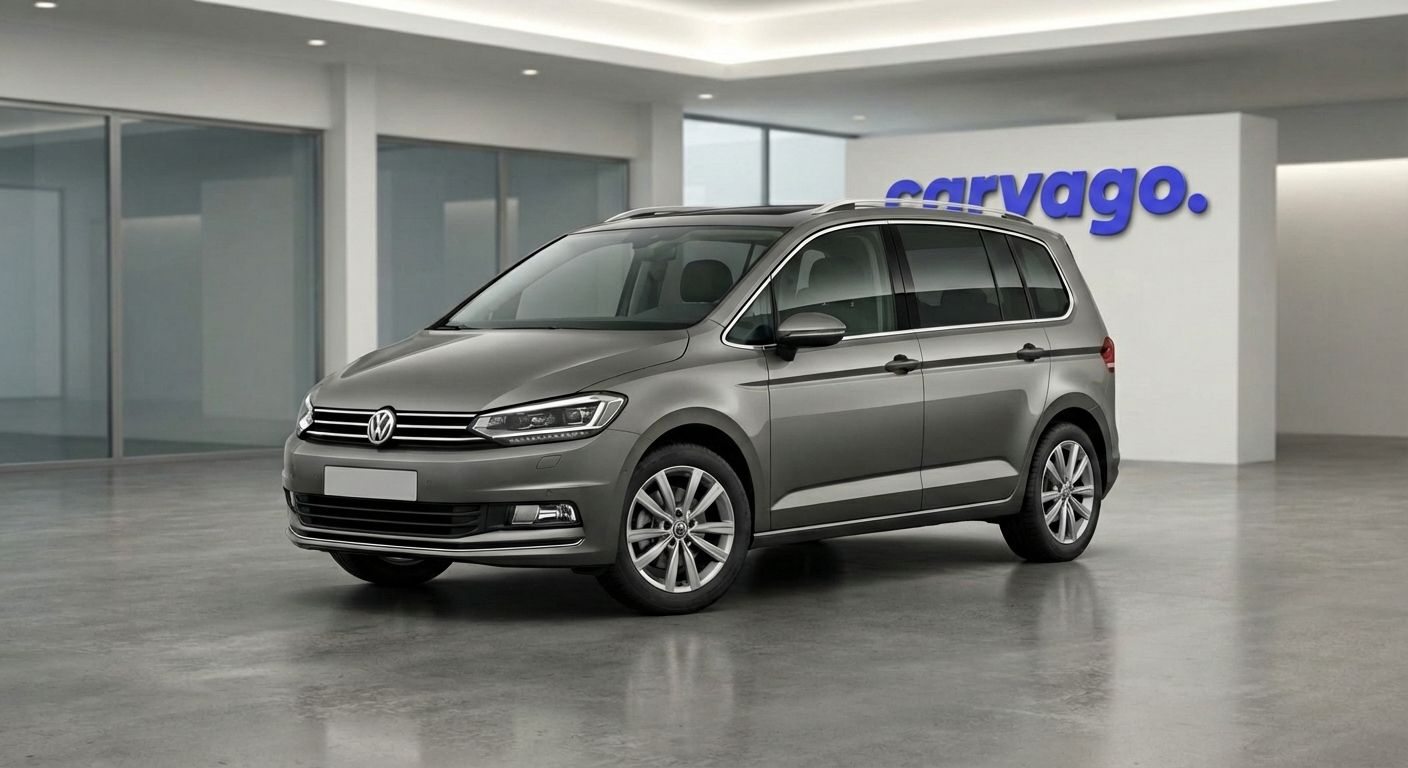
Sold exclusively as a compact multi-purpose vehicle, the Volkswagen Touran MPV was offered in both five-seat and seven-seat layouts. Rather than receiving a radical exterior sheet-metal redesign, the car underwent a technology and safety update announced on 28 March 2023.
Positioned in the traditional compact MPV segment, the Volkswagen Touran appeals primarily to family buyers.
Owner Experiences: Common Faults and Recalls
Second-generation Volkswagen Touran models have accumulated a solid reliability track record across Europe, though several factory safety campaigns and powertrain-specific wear patterns require close attention on the used market.
Verified Safety Recalls
Several official safety recalls apply to this generation across European markets:
Steering gear subframe fastener (September 2026): Across an umbrella production window from 24 September 2013 to 1 July 2024 covering shared group models, exposure to road salt over long-term operation can cause corrosion on the steering gear fastening bolt. This can risk bolt fracture, loose steering gear, and potential loss of steering control. Affecting over 2.1 million Volkswagen vehicles worldwide, the remedy involves inspecting the connection and installing a corrosion-resistant bolt. Drivers may continue using the vehicle until their appointment, but must stop immediately if front-axle clunking or steering changes occur.
Seat frame bolted connections (April 2025): Covering vehicles built from 9 August 2023 to 13 June 2024 across the European Union, certain seat frame bolts on front or rear seating may not have been tightened to the specified torque. This can impair passenger restraint in an accident and increase the risk of injury. Workshops inspect and retorque all affected seat mountings.
Rear left wheel bearing housing (July 2023): On a targeted batch built in April 2023 across Europe, casting cavities in the rear left wheel bearing housing could lead to fracture and compromise driving stability. Dealers inspect the identification matrix code and replace defective housings.
Brake pedal plate weld (December 2020 / February 2021): Affecting 38,119 left-hand-drive vehicles worldwide built between 26 June 2020 and 31 August 2020, an improper weld could cause the brake-pedal plate to detach under sudden braking on automatic Volkswagen Touran models. Workshops inspect the weld seam and replace the pedal assembly if necessary.
Panoramic sunroof ambient lighting (August 2018): Covering vehicles built from launch in February 2015 to 15 July 2018, moisture entering the ambient lighting module could cause a short-circuit, heat build-up, and fire risk. Dealers install a modified wiring harness with an integrated fuse and seal.
Repeated Model-Specific Faults
On the 1.5 TSI petrol engine—particularly 2018 to 2020 models paired with a manual gearbox or dry-clutch automatic—owners report hesitation and surging when pulling away from cold in first gear. Volkswagen addressed this through engine management software updates that smooth throttle response on most cars, though occasional examples still require gentle throttle modulation until the engine warms up.
The seven-speed dry-clutch automatic used on smaller petrol units and the 1.6 TDI can develop low-speed clutch shudder during shifts between first and second gear in stop-start urban traffic. Software recalibration can cure mild shudder, whereas prolonged clutch slipping or mechatronic pressure drops eventually demand physical clutch-pack replacement or mechatronic valve rebuilds.
On diesel Volkswagen Touran variants, the switchable water pump shroud can stick in the closed position, causing rapid coolant temperature spikes under load. Shaft seals on the water pump also tend to weep coolant between 70,000 km and 120,000 km. In most cases, fitting an updated water pump assembly during timing belt replacement resolves both concerns. High-mileage diesels driven predominantly in town can also develop metallic rattling from dual-mass flywheel wear at cold idle.
On models equipped with the optional panoramic glass roof, owners frequently report that dirt obstructs the drainage hoses inside the roof pillars. If these hoses pinch or block, rainwater leaks into the headliner and front footwells, threatening cabin wiring.
🔍 What to check before buying
Have an authorized dealer check the car's VIN to verify completion of all official safety recalls, specifically the steering gear bolt, seat frame torque, and panoramic roof lighting harness.
On 1.5 TSI models and vehicles with the seven-speed dry-clutch automatic, test cold take-off and crawling in stop-start traffic for shudder, hesitation, or jerky shifts between first and second gear.
On diesel models, check the coolant reservoir for correct level and inspect service records for water pump replacement; listen for metallic chatter from the flywheel at idle.
Check the front footwell carpets and A-pillar headliner trim for dampness or water stains on cars fitted with the panoramic glass roof.
Operate all rear folding seats to verify that the release levers and floor latches engage securely, and check that every seatbelt inertia reel locks and retracts smoothly.
Engines: Which One to Choose
The second-generation Volkswagen Touran was offered with a wide selection of turbocharged petrol and diesel engines, alongside a short-lived three-cylinder petrol variant. All versions direct power exclusively to the front wheels through six-speed manual or dual-clutch automatic gearboxes.
Engine
Fuel
Power
Torque
Gearbox
Model years
1.2 TSI
Petrol
81 kW (110 hp)
175 Nm
6-speed manual
2015–2018
1.0 TSI
Petrol
85 kW (115 hp)
190 Nm
6-speed manual
2019
1.4 TSI
Petrol
110 kW (150 hp)
250 Nm
6-speed manual, 7-speed automatic
2015–2018
1.5 TSI
Petrol
110 kW (150 hp)
250 Nm
6-speed manual, 7-speed automatic
2018–2026
1.8 TSI
Petrol
132 kW (180 hp)
250 Nm
7-speed automatic
2016–2018
1.6 TDI
Diesel
81 kW (110 hp)
250 Nm
6-speed manual, 7-speed automatic
2015–2016
1.6 TDI
Diesel
85 kW (115 hp)
250 Nm
6-speed manual, 7-speed automatic
2016–2020
2.0 TDI
Diesel
85 kW (115 hp)
250 Nm
6-speed manual, 7-speed automatic
2019–2020
2.0 TDI
Diesel
90 kW (122 hp)
320 Nm
6-speed manual
2020–2026
2.0 TDI
Diesel
110 kW (150 hp)
340 Nm
6-speed manual, 6-speed / 7-speed automatic
2015–2020
2.0 TDI
Diesel
110 kW (150 hp)
360 Nm
6-speed manual, 7-speed automatic
2020–2026
2.0 TDI
Diesel
140 kW (190 hp)
400 Nm
6-speed / 7-speed automatic
2016–2020
Which engine to choose on the used market
Short trips and city driving: A petrol Volkswagen Touran is the most sensible choice for drivers who primarily cover short suburban journeys. The entry-level 1.2 TSI and the rare 1.0 TSI cope with light urban errands, but both feel underpowered once carrying passengers. The 1.4 TSI and later 1.5 TSI offer significantly better flexibility.
Mixed everyday use: The 1.4 TSI and later 1.5 TSI represent the most balanced options on the used market. They provide quiet operation and linear acceleration without the extended warm-up cycles of modern diesels. The rare 1.8 TSI delivers higher top-end speed, but because its pulling power was factory-capped to match smaller petrol engines, it offers little real-world advantage in daily driving.
Long-distance travel: Frequent motorway driving calls for a diesel Volkswagen Touran. The 1.6 TDI is thrifty on fuel, but tests note it feels sluggish during high-speed overtaking when carrying a full cabin. The mid-range 2.0 TDI is the most capable powertrain for long hauls, offering relaxed cruising and ample reserves with a full load of passengers and luggage.
Towing and heavy payloads: For pulling trailers or regular seven-seat touring, the higher-output 2.0 TDI paired with an automatic Volkswagen Touran is the most suitable setup, as it uses more robust wet-clutch transmissions. The range-topping 2.0 TDI delivers the strongest towing pull, although its front-wheel-drive configuration can struggle for traction on wet roads from a standing start.
Space & Practicality
Dimension
5-Seat Configuration
7-Seat Configuration
Length (mm)
4,527
4,527
Width without mirrors (mm)
1,829
1,829
Height with roof rails (mm)
1,659
1,659
Wheelbase (mm)
2,791
2,791
Boot volume, seats upright (l)
743 – 834
137 (7 seats) / 633 (5 seats)
Boot volume, seats folded (l)
1,980
1,857
Practicality is the defining focus of the Volkswagen Touran MPV. In the second row, three individual, identically sized seats slide fore and aft independently, feature adjustable backrest angles, and fold completely flat into the cabin floor. Because all three second-row seats include dedicated child-seat anchors, families can install three child seats abreast across the cabin. Substantial headroom and legroom allow tall adults to travel comfortably, aided by a flat floor and tall door openings that simplify installing car seats and boarding. In seven-seat versions, the rearmost pair folds flat into the boot floor when not needed. These two pop-up seats also feature child-seat anchors, though limited knee room and lower ceiling clearance restrict them to children or occasional short journeys. With the rear seating folded away, the Volkswagen Touran forms an uninterrupted, level loading bed with a low threshold, accommodating oversized cargo, prams, and sports equipment without the need to lift out and store heavy seat assemblies.
What the Tests Say
On the road, the Volkswagen Touran behaves much like a conventional family hatchback rather than a tall people carrier. Professional road tests consistently highlight its supple ride, which absorbs scarred tarmac and speed cushions smoothly on standard wheels, while versions equipped with optional adaptive dampers demonstrate even tighter body control. Steering is light at low speeds and gains predictable weighting on the open road. Although testers agree that road manners remain composed and body roll is well contained in bends, the chassis prioritises stability over driver engagement, offering little steering feedback.
Cabin refinement is another strong point across testing reports. Acoustic insulation effectively muffles wind and engine noise at cruising speeds, keeping ambient sound lower than in van-derived alternatives, with tyre roar only surfacing over coarse asphalt. The interior earns steady praise for solid assembly, durable upper materials, and an upright driving position with versatile seat adjustment. The dashboard remains easy to navigate with straightforward physical controls, though reviewers note that lower plastics in the footwells are susceptible to scuffs.
Professional verdicts converge on the model being a composed, stress-free family cruiser. Mid-cycle updates modernised the cabin with standard digital instrumentation and enhanced driver assistance, freshening the technology without compromising its functional ergonomics.
Prices and Market Offer
All the charts in this section are drawn from Carvago listings of the entire Volkswagen Touran model family, including other generations represented in the broader dataset, rather than isolating the reviewed generation. Consequently, the supplied data does not establish a separate price level exclusively for the reviewed generation. Across the available model years, current listings show a median asking price starting at €21,700 for 2019 vehicles up to €37,800 for 2026 models.
The monthly count of active Volkswagen Touran listings rose from 8,543 in April 2026 to a peak of 8,723 in June 2026 before declining until August.
Volkswagen Touran - availability over time
Active listings over time
Month
Volkswagen Touran
2026-04
8 543
2026-05
8 607
2026-06
8 723
2026-07
8 360
2026-08
7 649
2026-09
7 714
Source Carvago
Supply reached its lowest point at 7,649 listings in August 2026 before ending at 7,714 in September 2026. Despite these shifts over the six months, total listing numbers remain substantial enough to provide buyers with broad choice.
Among used listings advertised today, the median asking price for a Volkswagen Touran built in 2019 is €21,700, while those built in 2026 carry a median asking price of €37,800.
Volkswagen Touran - median price by model year
Median advertised price by year of manufacture
Model year
Volkswagen Touran
2019
21 700
2020
23 700
2021
24 900
2022
28 000
2023
33 500
2024
35 800
2025
36 600
2026
37 800
Source Carvago
Buyers comparing available options will find that 2020 models show a median asking price of €23,700 among current listings, whereas securing a 2024 model requires a median asking price of €35,800.
This depreciation curve illustrates how the Volkswagen Touran's residual value declines with age, with the model losing roughly 33% of its initial value by age three. The steepest drop takes place in the first year, setting the pattern shown below.
Volkswagen Touran - value loss by age
Residual value by vehicle age
Vehicle age
Volkswagen Touran
New
38 800
1 yr
33 300
2 yrs
29 800
3 yrs
26 000
4 yrs
23 800
5 yrs
21 200
6 yrs
20 600
7 yrs
18 400
Source Carvago
Across the full seven-year span, the model sheds approximately 53% of its starting residual value. The rate of loss moderates noticeably by age six, where the year-over-year decline flattens to less than 3%.
Advertised Volkswagen Touran listings were primarily petrol and diesel, starting with 4,866 petrol and 3,667 diesel cars in April 2026. The chart below illustrates how listings for each fuel type developed through September 2026.
Volkswagen Touran - supply by fuel over time
Supply composition by fuel type
Petrol
Diesel
CNG
Month
Petrol
Diesel
CNG
2026-04
4 866
3 667
10
2026-05
4 765
3 833
9
2026-06
4 836
3 881
6
2026-07
4 730
3 623
5
2026-08
4 322
3 319
6
2026-09
4 303
3 400
9
Source Carvago
In September 2026, petrol remained the most common option with 4,303 listings, followed by diesel with 3,400, while CNG was limited to 9 cars. A buyer's realistic choice is therefore between petrol and diesel, as hybrid and electric alternatives are completely absent from the offer.
Between April 2026 and September 2026, the average asking price for the Volkswagen Touran tracked downwards from €30,000 to €28,900.
Volkswagen Touran - price trend over time
Average price development over time
Month
Volkswagen Touran
2026-04
30 000
2026-05
29 500
2026-06
29 400
2026-07
29 100
2026-08
29 000
2026-09
28 900
Source Carvago
Across these six months, the average declined by less than 4% overall, with the largest drop occurring between April and May from €30,000 to €29,500.
Versatile cabin with individual sliding second-row seats accommodating three child seats abreast
Supple ride comfort and car-like road manners with effective cabin noise insulation
Flat-folding rear seats create an uninterrupted loading floor without removing heavy seat units
Cons
Dry-clutch automatic transmissions can shudder and hesitate at low speeds in stop-start traffic
Third-row seating provides restricted space, limiting practical use to children
Detached steering feel with a chassis tuned strictly for stability rather than driver engagement
Frequently asked questions
Is the Volkswagen Touran a reliable family car?
The Volkswagen Touran maintains a solid reliability track record overall. However, long-term dependability depends on the powertrain, with dry-clutch automatics requiring the most scrutiny.
Which engine is the best choice?
The 1.4 TSI and later 1.5 TSI petrol engines offer the best balance of refinement and efficiency for daily driving. For regular long-distance trips, the mid-range 2.0 TDI diesel Volkswagen Touran is the most capable option, while the higher-output 2.0 TDI is best for towing.
What should you check before buying?
Verify the car's VIN with an authorized dealer to confirm all official recall campaigns have been completed. A professional pre-purchase inspection like CarAudit is recommended to assess transmission engagement and check for potential water leaks.
How much does a used Touran cost?
Across the European market, median asking prices start around €21,700 on the used market, rising with younger model years. Available listings consist almost entirely of petrol and diesel variants.