Articles

Review

Review Volkswagen Sharan: What do owners and experts really say?

Volkswagen Sharan (Typ 7N) review: real owner experience, common faults, running costs and used prices — everything you need before you buy.

October 19, 2026

Volkswagen Sharan

Introduction

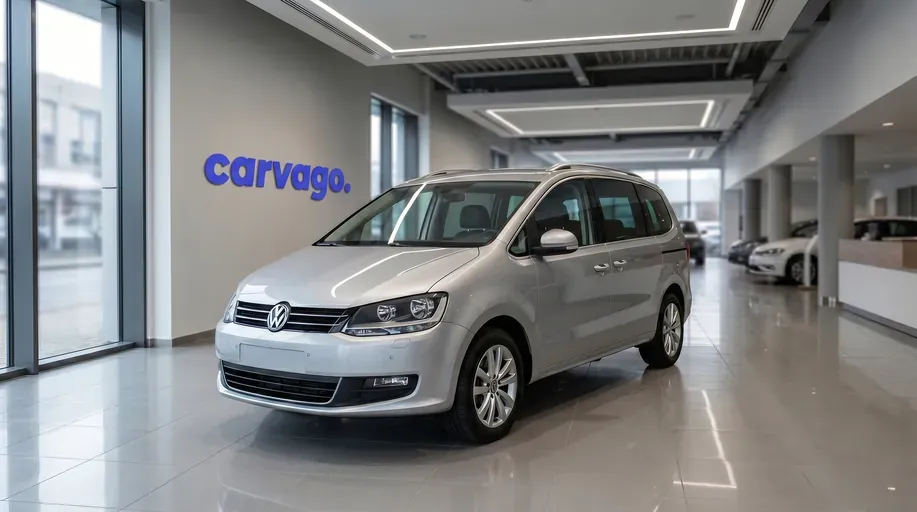
The second-generation Volkswagen Sharan (Typ 7N) represents the brand's full-size multi-purpose vehicle, designed specifically for passenger transport and cabin versatility. Premiered in March 2010, with customer deliveries starting in November 2010, this generation remained in production until 2022. It introduced integrated fold-flat seating and rear sliding side doors to the model line.

In March 2015, a technical and styling update debuted, with first European customer deliveries commencing in July 2015. The revision brought refreshed exterior lighting, newer infotainment and driver-assistance systems, and an overhauled engine line-up adapted to updated emissions standards.

Offered throughout its production run as a Volkswagen Sharan MPV in five-, six-, or seven-seat layouts, the model was aimed primarily at large families, private hire operations, and drivers requiring genuine multi-row passenger accommodation with wide-aperture side access.

Owner Experiences: Common Faults and Recalls

The second-generation Volkswagen Sharan is widely appreciated by families for its functional cabin, but body hardware accounts for a notable share of owner grievances. On models equipped with optional power-operated sliding side doors, owners report recurring issues with frayed Bowden cables jamming inside the lower track guides, as well as deteriorating anti-pinch sensors that cause the doors to bounce open or fail to cinch fully shut. Water ingress is another well-documented problem on versions fitted with the optional panoramic glass sunroof; tests and owner reports show that debris frequently blocks the A-pillar and D-pillar drain tubes or seals the rubber duckbill check valves in the wheel arches, spilling water into the headliner and footwells where sensitive electrical control units are housed.

Powertrain issues primarily centre on exhaust emissions hardware and automatic transmissions. On the diesel Volkswagen Sharan equipped with selective catalytic reduction, owners frequently describe electrical failures of the internal AdBlue tank heating element or delivery pump. When this happens, an emissions warning illuminates alongside a non-reversible mileage countdown preventing engine restart once depleted; resolving it typically requires replacing the heating element repair kit or the complete reservoir assembly. For the automatic Volkswagen Sharan, professional tests describe shuddering on pull-away and jerky low-speed downshifts if the dual-clutch transmission has not received regular oil and filter changes, with contaminated mechatronic solenoids occasionally forcing the gearbox into emergency mode.

Chassis wear is accelerated by the vehicle's substantial unladen weight. Workshop assessments and professional tests describe elevated wear rates on front suspension wishbone bushes, ball joints, and coil springs, alongside accelerated rear brake disc wear. Secondary electrical items, such as frozen infotainment screens and intermittent air conditioning operation, are also highlighted by tests as frequent minor faults across all production years. Potential buyers who wish to verify a specific vehicle's mechanical condition and chassis components before purchase can arrange an independent physical inspection through CarAudit.

Several official safety recalls affect the second-generation model across Europe:

  • Takata Driver Front Airbag: Announced in January 2025 with worldwide reach, covering vehicles built between 9 September 2004 and 15 September 2018. In the notice's words, "the propellant can deteriorate due to high humidity and temperature variations," which during deployment "could result in fragments from the inflator housing coming loose and injuring the vehicle's occupants." Authorised workshops inspect the module and replace the front driver airbag or gas generator free of charge.
  • Airbag Control Unit Capacitor: Announced in September 2019 for vehicles manufactured between 6 January 2015 and 22 December 2015 worldwide. A production error in an internal capacitor could cause the control unit to interpret a false crash signal or deactivate airbags, potentially causing inadvertent deployment or a failure to deploy during an impact. The remedy involves updating the control unit software or replacing the unit if fault memory persists.
  • Starter Solenoid Overheating: Announced in January 2018 with worldwide coverage for diesel models fitted with a start-stop system and produced between 1 March 2011 and 30 November 2011. Fracturing or tilting of the solenoid return spring could lead to permanent electrical energisation of the starter, causing component overheating and a potential fire risk. Dealers inspect the starter and fit a revised solenoid switch.
  • Side Airbag Gas Generator Casing: Announced in April 2016 for vehicles built between 12 January 2015 and 8 February 2015 across Europe and worldwide. If deployed, the gas generator casing of the front side airbag could rupture and release small metal parts into the passenger compartment. Authorised repairers replace the affected front side airbag module.
  • Wheel Bolt Torque and Tyres: Announced in March 2017 for vehicles produced between 8 September 2016 and 22 December 2016, rectifying wheel bolts that may not have been torqued correctly from the factory, as well as factory-fitted winter wheels that may have had directional tyres mounted in reverse.

🔍 What to check before buying

  • Recall completion: Contact an authorised dealer with the car's vehicle identification number (VIN) to confirm that all official safety recall actions—especially the driver airbag inflator and starter solenoid replacements—have been carried out.
  • Electric sliding doors: Cycle both rear doors several times using the exterior handles, dashboard buttons, and key fob; verify that movement is smooth without grinding noises, hesitation, or failure to cinch fully closed.
  • Sunroof drains and carpets: Check the headliner edges around the glass frame and press the front and rear floor carpets thoroughly to check for dampness or musty odours from blocked drain tubes.
  • Dual-clutch transmission behaviour: On automatic models, ensure smooth take-off from a complete stop without clutch chatter, confirm seamless low-speed downshifts when stopping, and verify documented evidence of regular transmission fluid and filter servicing.
  • AdBlue emissions display: On diesel variants, switch on the ignition and ensure there are no warning messages or remaining mileage countdowns relating to exhaust fluid heating or dosing.

Engines: Which One to Choose

The second-generation Volkswagen Sharan was offered throughout its production run with a selection of turbocharged four-cylinder petrol and diesel engines. Depending on the model year, power was delivered via manual or dual-clutch automatic gearboxes to either the front wheels or Volkswagen's 4MOTION all-wheel-drive system.

EngineFuelPowerGearboxDrivetrainModel Years
1.4 TSIPetrol110 kW (150 hp)6-speed manual, 6-speed automaticFront-wheel drive2010–2015
1.4 TSIPetrol110 kW (150 hp)6-speed manual, 6-speed automaticFront-wheel drive2015–2022
2.0 TSIPetrol147 kW (200 hp)6-speed automaticFront-wheel drive2010–2015
2.0 TSIPetrol162 kW (220 hp)6-speed automaticFront-wheel drive2015–2018
2.0 TDIDiesel85 kW (115 hp)6-speed manualFront-wheel drive2011–2017
2.0 TDIDiesel103 kW (140 hp)6-speed manual, 6-speed automaticFront-wheel drive, all-wheel drive2010–2015
2.0 TDIDiesel110 kW (150 hp)6-speed manual, 6-speed automaticFront-wheel drive, all-wheel drive2015–2020
2.0 TDIDiesel125 kW (170 hp)6-speed manual, 6-speed automaticFront-wheel drive2010–2013
2.0 TDIDiesel130 kW (177 hp)6-speed manual, 6-speed automaticFront-wheel drive2012–2015
2.0 TDIDiesel135 kW (184 hp)6-speed manual, 6-speed automatic, 7-speed automaticFront-wheel drive, all-wheel drive2015–2018
2.0 TDIDiesel130 kW (177 hp)6-speed automatic, 7-speed automaticFront-wheel drive, all-wheel drive2018–2020

Which engine to choose as a used buy

Short trips and city driving:
For buyers using the vehicle primarily for local errands and school runs, a petrol Volkswagen Sharan fitted with the 1.4 TSI is the most sensible option. It reaches operating temperature quickly and avoids the diesel particulate filter clogging and exhaust fluid dosing faults that can plague diesels on short cycles. While quiet in suburban use, the engine requires liberal use of the rev band when carrying a full complement of passengers.

Everyday mixed use:
The mid-range 2.0 TDI represents the most balanced choice across the line-up. Both the pre-facelift and post-facelift versions deliver solid low-end pulling power, ensuring the car never feels strained under typical family loading. The automatic transmission reduces fatigue in commuter traffic, while the six-speed manual remains a robust and simpler alternative.

Motorway cruising:
Long-distance European touring plays directly to the strengths of the diesel Volkswagen Sharan. The entry-level 2.0 TDI can feel breathless when executing high-speed overtakes with luggage aboard, making the mid-range or higher-output diesel variants far more capable companions for sustained highway travel. The 2.0 TSI petrol offers brisk acceleration and mechanical smoothness, but high-speed cruising increases fuel consumption substantially.

Towing and all-weather traction:
For drivers regularly pulling heavy trailers, caravans, or driving in mountain regions, the higher-output 2.0 TDI paired with all-wheel drive is well suited. The all-wheel-drive Volkswagen Sharan provides dependable traction on wet grass, snow, and steep slipways where front-wheel-drive models struggle for grip.

For detailed analysis of component longevity, typical mechanical problems, and servicing history, refer to the owner experiences section of this review.
Space & Practicality

Rear passenger access in the Volkswagen Sharan MPV is handled by sliding rear side doors, which simplify entry in narrow parking bays. The second row comprises three individual seats that slide fore and aft, recline, and fold flat into the vehicle floor rather than requiring manual removal from the cabin. In seven-seat configurations, the two third-row chairs fold flat into the boot floor; they provide adequate headroom and knee room for adults on moderate journeys, while the middle row accommodates tall occupants.

Child seats can be secured across all individual rear seating positions. For carrying elongated cargo, folding the front passenger backrest horizontal creates an extended loading platform through the interior.

Dimension / Capacity5-seat version7-seat version
Length (mm)4,8544,854
Width excluding mirrors (mm)1,9041,904
Height (mm)1,720–1,7401,720–1,740
Wheelbase (mm)2,919–2,9202,919–2,920
Boot volume, rear seats upright (l)711300
Boot volume, rear seats folded (l)2,4302,297

Figures reflect standard suspension; optional sports suspension lowers vehicle height.

What the Tests Say

Professional road tests consistently characterise the Volkswagen Sharan as a chassis engineered purely for relaxed long-distance travel. The suspension absorbs broken tarmac and motorway undulations with composure, an effect further enhanced on cars fitted with optional adaptive dampers. Body roll is kept under control, yet the steering prioritises straight-line stability over agility. Testers note that its sheer footprint and wide turning circle make tight urban parking manoeuvres cumbersome. Wind and tyre noise remain well suppressed at cruising speeds, though testers observe that the diesel Volkswagen Sharan transmits noticeable vibration and clatter under sustained acceleration before reaching operating temperature.

Inside, the cabin draws praise for durable assembly and logical switchgear placement, though hard plastics around the lower luggage compartment mark easily under heavy use. Testers frequently criticise the interior climate control, which takes an unusually long time to warm the large passenger compartment in freezing winter conditions.

The July 2015 facelift brought an updated touchscreen infotainment system with faster responses, alongside optional front collision assistance. Across evaluations, reviewers agree that the Sharan delivers long-legged touring composure and functional ergonomics, while disagreeing slightly on powertrain refinement when the car is pushed hard.

Prices and Market Offer

All market figures in this section reflect advertised listings across the wider Volkswagen Sharan model family rather than the reviewed generation alone, and the data does not isolate a separate price level for specific production runs. Current Carvago listings show a median asking price spanning from €20,000 for 2016 models up to €33,300 for 2023-registered vehicles, with 2019 examples sitting at €27,000. Across these offerings, steady buyer preference for diesel variants suited to loaded family touring and towing underpins the higher median asking prices commanded by the most recent model years.

Between April and September 2026, advertised listings for the Volkswagen Sharan decreased from 683 to 551 cars. The chart below illustrates the monthly counts across this six-month span.

Volkswagen Sharan - availability over time

Active listings over time

MonthVolkswagen Sharan
2026-04683
2026-05673
2026-06626
2026-07643
2026-08588
2026-09551

Source Carvago

With inventory recorded at 551 listings in September, buyers still have several hundred cars to choose from, though overall availability contracted over the period despite a brief rise to 643 in July.

For used listings advertised today, the median asking price of cars built in 2016 is €20,000, whereas for those registered in 2023 the median asking price reaches €33,300.

Volkswagen Sharan - median price by model year

Median advertised price by year of manufacture

Model yearVolkswagen Sharan
201620 000
201722 000
201824 700
201927 000
202028 600
202130 300
202232 800
202333 300

Source Carvago

Buyers looking at 2017 to 2019 model years encounter median asking prices between €22,000 and €27,000. For 2022 and 2023-registered models, median asking prices stand between €32,800 and €33,300.

Active listings for the Volkswagen Sharan are split entirely between diesel and petrol, opening with 419 diesel and 262 petrol models advertised in April 2026. The breakdown below tracks how counts for both fuels evolved over the six-month period.

Volkswagen Sharan - supply by fuel over time

Supply composition by fuel type

  • Petrol

  • Diesel

MonthPetrolDiesel
2026-04262419
2026-05248424
2026-06233392
2026-07252390
2026-08239347
2026-09246303

Source Carvago

By September 2026, advertised stock counted 303 diesel cars alongside 246 petrol examples, while alternative powertrains recorded 0 listings throughout. Buyers in the used market will find plenty of choices in both fuel types, with diesel maintaining the larger share of available stock.

Between April 2026 and September 2026, the average asking price for the Volkswagen Sharan opened at €21,800 before easing to €21,400 in May. The chart below shows how these monthly figures evolved over the six-month span.

Volkswagen Sharan - price trend over time

Average price development over time

MonthVolkswagen Sharan
2026-0421 800
2026-0521 400
2026-0621 400
2026-0721 300
2026-0821 000
2026-0921 300

Source Carvago

Across the full period, the average asking price moved from €21,800 down to €21,000 in August before finishing at €21,300 in September. That overall shift represents a change of just over two percent, indicating minimal movement relative to overall price levels.

Pros & Cons

Volkswagen Sharan

Pros

Practical rear sliding doors that simplify access in tight spaces

Highly flexible seating with rear chairs that fold flat into the floor

Composed suspension and quiet cruising manners on long journeys

Cons

Optional electric sliding doors and panoramic sunroof are prone to faults

Large footprint and wide turning circle make tight parking cumbersome

Climate control takes a long time to warm the cabin in freezing weather

Frequently asked questions

Mechanically it holds up well, though optional electric sliding doors and sunroof drains frequently cause troubles. On a diesel Volkswagen Sharan, emissions components and dual-clutch transmission maintenance represent the primary mechanical concerns.

The mid-range 2.0 TDI is the most balanced choice, delivering dependable pulling power under typical family loading for mixed everyday driving. If your routine consists mostly of short urban school runs, choose the 1.4 TSI petrol Volkswagen Sharan to prevent diesel exhaust filter issues.

Facelifted models delivered from July 2015 onward offer the best ownership experience thanks to faster touchscreen infotainment and updated engines. Regardless of production year, always check the vehicle identification number with an authorised dealer to confirm all safety recall actions have been completed on the Volkswagen Sharan.

Cycle both sliding side doors to ensure smooth operation without jamming, and press the footwell carpets to detect water ingress from blocked sunroof drains. For any automatic Volkswagen Sharan, confirm documented transmission fluid servicing and check for low-speed clutch shudder during pull-away.

Sources: volkswagen-newsroom.com, vwpress.co.uk, adac.de, kba.de, autobild.de

This article was prepared using artificial intelligence tools. The section guarantor is Petr Dušek.

Related articles

Car battle

BMW 2 Series Gran Tourer vs. Citroën Grand C4 SpaceTourer: Complete comparison 2026

Detailed MPV comparison: BMW 2 Series Gran Tourer vs. Citroën Grand C4 SpaceTourer (Picasso). Discover the differences in equipment, real-world experience, and the final verdict.

Oct 22, 2026

Review

Review Citroën Grand C4 SpaceTourer: What do owners and experts really say?

Citroën Grand C4 SpaceTourer review: real owner experience, reliability, running costs and used prices — everything you need before buying.

Oct 18, 2026

Car battle

Renault Grand Scénic vs. Volkswagen Touran: Complete comparison 2026

Detailed comparison: Renault Grand Scénic vs. Volkswagen (VW) Touran. Real-world experience with used cars, equipment, and a verdict for an easier choice of a family MPV.

Apr 25, 2026

We accept online card payments as well as wire transfers.

visa payment provider logovisa-electron payment provider logomastercard payment provider logomaestro payment provider logodiners-club payment provider logodiscover payment provider logo