Articles

Car battle

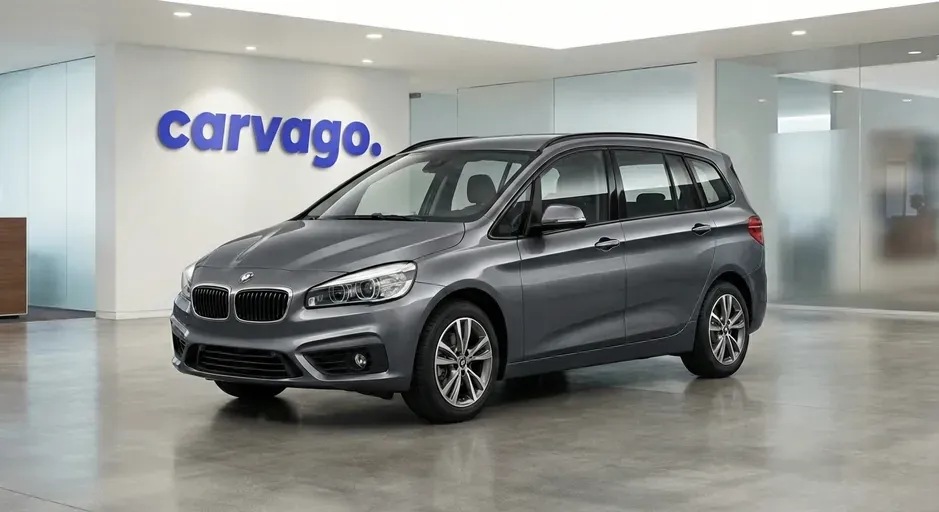
BMW řady 2 Gran Tourer vs. Citroën Grand C4 SpaceTourer: Complete comparison 2026

Detailed MPV comparison: BMW 2 Series Gran Tourer vs. Citroën Grand C4 SpaceTourer (Picasso). Discover the differences in equipment, real-world experience, and the final verdict.

May 10, 2026

VS
BMW řady 2 Gran Tourer

BMW řady 2 Gran Tourer

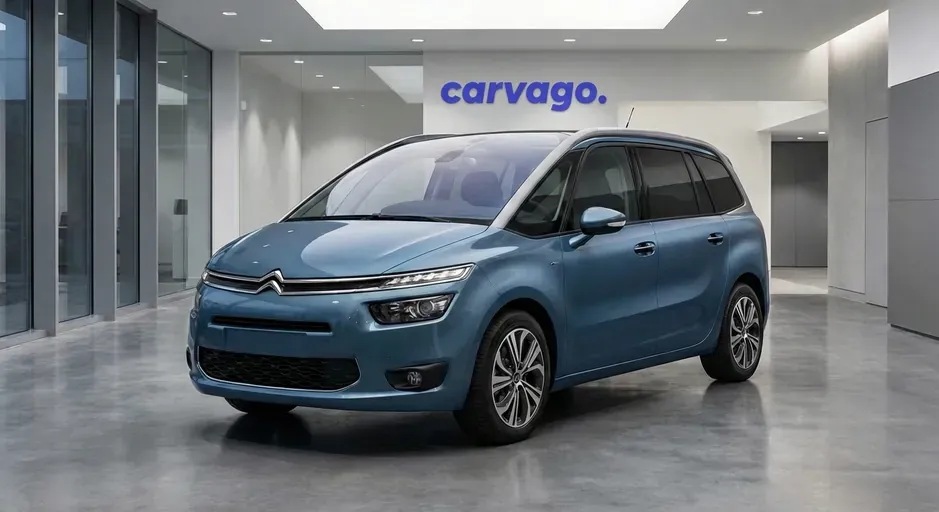
Citroën Grand C4 SpaceTourer

Citroën Grand C4 SpaceTourer

Introduction

The BMW 2 Series Gran Tourer brings premium quality, luxurious craftsmanship, and surprising driving dynamics typical of the Munich-based automaker to the family MPV segment. Its challenger is the Citroën Grand C4 SpaceTourer, formerly sold under the well-known Grand C4 Picasso name, which instead focuses on maximum travel comfort, an airy, light-filled interior, and avant-garde French design. Let's find out together which of these two very different takes on a seven-seater vehicle offers families on the used car market a better balance of price, practicality, and overall utility value.

Comparison of External Dimensions

When choosing a family car designed for the comfortable transport of a larger number of passengers, external dimensions play an absolutely key role. They determine not only the overall interior space but also the daily usability of the car in city traffic. If we look at models ideal for purchase on the used car market, i.e., roughly four-year-old BMW 2 Series Gran Tourer (F45/F46 generation) and Citroën Grand C4 SpaceTourer (1st generation), we find interesting differences. Although both cars target the same customer looking for a multi-purpose family vehicle (Van/MPV), the French representative is slightly larger in all directions, which can play a crucial role in the selection.

A detailed look at the numbers reveals that the Citroën Grand C4 SpaceTourer measures 4602 mm in length, which means it is 34 to 46 mm longer than its German competitor (the length of the BMW for the given model years ranges from 4556 to 4568 mm). The French model is also 26 mm wider (1826 mm compared to 1800 mm for the BMW) and exactly 30 mm taller (1638 mm versus 1608 mm). In practice, these extra centimeters mean a subjectively airier cabin and slightly more generous shoulder and headroom for the Citroën's occupants. Conversely, the BMW's more compact and lower build significantly facilitates parking in narrower parking garages and improves driving stability thanks to a lower center of gravity, which you will appreciate during more dynamic driving.

However, the look at the wheelbase, which is crucial for longitudinal space inside the cabin, is interesting. In this parameter, both cars are remarkably similar – the Citroën, with a value of 2785 mm, surpasses the BMW by a negligible 5 mm. This suggests that knee room for second-row passengers is highly comparable in both vehicles, so the overall seat layout will be the deciding factor. From the overall perspective of external dimensions, a clear rule applies: if you often maneuver in tight spaces or have a smaller garage, the slightly more subtle BMW will be a more practical choice for you. If, however, your absolute priority is maximum internal volume for the family, the Citroën's more robust bodywork will offer a better foundation.

ParameterBMW 2 Series Gran Tourer VanCitroën Grand C4 SpaceTourer Van
Width (mm)18001826
Length (mm)4556 - 45684602
Height (mm)16081638
Wheelbase (mm)27802785

Trunk Volume

For families with children and active travelers, luggage compartment volume is often the most important parameter when choosing a used car. MPV category vehicles, which you can typically find on the used market at around four years of age, perform excellently in this regard. A spacious trunk fundamentally affects overall practicality, whether you need to transport a stroller, sports equipment, or a pile of children's luggage.

Identical base for family trips

Looking at the basic numbers, you'll find that in a standard five-seat configuration (with the third row of seats hidden in the floor), both rivals are remarkably consistent. Both the BMW 2 Series Gran Tourer (F45/F46 generation) and the Citroën Grand C4 SpaceTourer (1st generation) offer an identical basic trunk volume of 645 liters. This value is completely sufficient for weekend shopping and longer vacations for the whole family, requiring no compromises in passenger comfort. Furthermore, you don't have to deal with specific differences in limited trunk capacity found in some plug-in hybrid models here with common used cars with conventional engines – popular internal combustion versions fully retain their maximum transport capacity.

Maximum space like a van

The real difference in the character of both cars fully manifests when you completely fold down the second row of seats. While the BMW 2 Series Gran Tourer offers an excellent 1905 liters after folding the seats, the Citroën Grand C4 SpaceTourer goes even further in modularity, and its maximum volume reaches an impressive 2181 liters. In practice, for the French car, this means valuable space for several extra suitcases or trouble-free moving of very bulky furniture, where in the premium BMW you would already have to carefully measure every centimeter.

From an overall perspective, it is clear that although both models handle common family duties with absolute ease, the Citroën works much better as a genuine hauler with a huge reserve for extra-large loads. BMW, on the other hand, offers a highly practical and competent family trunk for its premium class.

ParameterBMW 2 Series Gran Tourer VanCitroën Grand C4 SpaceTourer Van
Base volume (liters)645645
Max volume with seats folded down (liters)19052181

French King of Space 👑

Both cars offer an excellent and identical basic trunk, but if you plan to frequently use the maximum capacity with the seats folded down, the Citroën will delight you with unrivaled extra space.

Discover the true condition of the car thanks to an independent inspection

Order CarAudit™

Trailer Weights

The ability to tow a trailer is often a deciding factor for family MPVs, as it significantly expands their practicality and overall flexibility. Whether you need space for a few extra suitcases in the form of a small utility trailer or plan to hitch up a caravan, both compared cars offer values that are easily sufficient for weekend shopping for bulkier materials as well as longer summer holidays. When choosing a used car about four years old, however, it is necessary to monitor specific engine versions, as the maximum limits differ for both models.

For the BMW 2 Series Gran Tourer (F45/F46 generation from 2020–2022), there is a pleasant stability regarding towing capacities. The popular 218d diesel engine (110 kW) and the 218i three-cylinder petrol engine (100–103 kW) can standardly handle a braked trailer weighing 1500 kg. Depending on the equipment, the 218d diesel version can increase the maximum limit up to a solid 1600 kg. In the case of an unbraked trailer, both engines confidently and fully utilize the maximum legal limit of 750 kg.

The competing Citroën Grand C4 SpaceTourer (1st generation from 2018–2021) shows significantly greater variance, and it is necessary to carefully check the data in the registration document. For the base PureTech 130 petrol engine (96 kW), the weight of a braked trailer ranges from a more modest 1150 to 1400 kg. The very popular BlueHDi 130 four-cylinder diesel (96 kW) can handle 1200 to 1550 kg, although for some newer model years (2020–2021), this limit was apparently restricted to only 1200 kg due to emission regulations. The more powerful BlueHDi 160 diesel version (120 kW) then allows for a trailer weighing 1300 to 1600 kg to be attached. The weight of an unbraked trailer for the French model ranges between 680 and 750 kg, depending on the engine.

While the BMW 2 Series Gran Tourer brings greater certainty and more stable limits across the entire range, making it a more reliable choice for regular towing of heavier loads, the Citroën requires a more careful selection of a specific version for similar tasks. Nevertheless, even the French representative will meet common family needs with great ease.

Model and engine versionBraked weight of trailer (kg)Unbraked weight of trailer (kg)
BMW 218i Gran Tourer (100–103 kW)1500750
BMW 218d Gran Tourer (110 kW)1500–1600750
Citroën Grand C4 SpaceTourer PureTech 130 (96 kW)1150–1400680–750
Citroën Grand C4 SpaceTourer BlueHDi 130 (96 kW)1200–1550690–750
Citroën Grand C4 SpaceTourer BlueHDi 160 (120 kW)1300–1600750

Overview of Most Common Motorizations

Both models, the BMW 2 Series Gran Tourer and the Citroën Grand C4 SpaceTourer, approach engine options from different perspectives, perfectly reflecting their overall focus and philosophy. While BMW strives to offer a touch of its legendary driving dynamics and the option of xDrive all-wheel drive even in the family MPV segment, Citroën focuses primarily on maximum driving comfort and long-distance fuel economy. In the market for roughly four-year-old used cars (model years 2020–2022), diesel engines clearly dominate for both vehicles, as they are the most logical choice for robust seven-seater vehicles with a full load. BMW relies mainly on the powerful and reliable 218d two-liter diesel, while its French competitor builds on its renowned family of highly efficient BlueHDi units, complemented by available PureTech three-cylinder petrol engines. The choice thus depends purely on whether you prefer flexibility and driving confidence or are looking for an absolute fuel economy champion.

The range of engines for the BMW 2 Series Gran Tourer (F46 generation) available on the secondary market relies primarily on a two-liter four-cylinder diesel and a 1.5-liter three-cylinder petrol. A standard and highly sought-after choice is the 218d diesel version, which features a solid output of 110 kW (150 hp) and a generous torque of up to 350 Nm. This engine offers an ideal compromise between dynamics and fuel consumption. A petrol alternative, more suitable for city and suburban driving, is the 1.5-liter 218i three-cylinder with an output of 100 to 103 kW (136–140 hp). In newer models, this often works with a fast seven-speed dual-clutch Steptronic transmission (referred to as DKG in manufacturer tables). A crucial and rare advantage of the Munich car in this class is also the availability of xDrive all-wheel drive for diesel units, which will be appreciated by families commuting to mountain areas, for example.

Engine typeFuelPower (kW)Torque (Nm)Transmission
218iPetrol100 - 1032206-speed manual / 7-speed automatic (DKG)
218dDiesel110330 - 3506-speed manual / 8-speed automatic (Steptronic)

Unlike its rival, the Citroën Grand C4 SpaceTourer relies on a traditionally very diverse range of engines with a clear emphasis on refined diesels. These stand out for their very smooth operation and excellent fuel efficiency. The middle ground among used cars is the BlueHDi 130 (96 kW) version, while the more powerful BlueHDi 160 (118 kW and 400 Nm) variant is much more suitable for highway travel in a heavily loaded family cruiser. This is exclusively supplied with the smooth-shifting 8-speed EAT8 automatic. For drivers with lower annual mileage, the manufacturer prepared PureTech petrol power units, where the standard 1.2 PureTech 130 (96 kW) scores with a surprising torque of 230 Nm. From the perspective of market availability, it is necessary to mention that marginal and older engines such as the THP 165 petrol, PureTech 180, or BlueHDi 120 and 150 diesel variants were only offered until 2018 or 2019. For four-year-old cars from the end of production, you will logically only come across updated engines meeting the strictest emission standards, which remained in the range until sales ended in 2021.

Engine typeFuelPower (kW)Torque (Nm)Transmission
PureTech 130Petrol962306-speed manual / 6-speed and 8-speed automatic (EAT6/EAT8)
PureTech 180Petrol1332508-speed automatic (EAT8)
THP 165Petrol1212406-speed automatic (EAT6)
BlueHDi 120Diesel883006-speed manual / 6-speed automatic (EAT6)
BlueHDi 130Diesel963006-speed manual / 8-speed automatic (EAT8)
BlueHDi 150Diesel1103706-speed manual / 6-speed automatic (EAT6)
BlueHDi 160Diesel1184008-speed automatic (EAT8)

Family battle under the hood 🏎️ vs. 🛋️

While BMW appeals to drivers looking for a more dynamic ride and optional all-wheel drive, Citroën, with its efficient BlueHDi diesels and smooth automatic, is an unbeatable highway cruiser.

Choosing the right engine is crucial for long-term satisfaction, which is why the following recommendations are based on real-world performance experience, actual fuel consumption, owner feedback, and long-term mechanical reliability.

Both cars approach family travel differently, which is reflected in their technology and powertrain offerings. While BMW opted for a front-transverse engine platform for the first time in its history with the Gran Tourer and offers the unique option of advanced xDrive all-wheel drive in this segment, Citroën strictly adheres to the classic French school focused on supple comfort and space. A very interesting fact, however, is that despite their different philosophies, both manufacturers use reliable automatic transmissions with a hydrodynamic torque converter from the Japanese manufacturer Aisin for their best diesel engines. This shared element ensures that both cars can offer exceptionally smooth shifting.

For the BMW 2 Series Gran Tourer, we recommend: 218d, 110 kW (150 hp)

This two-liter four-cylinder diesel (code name B47) represents the absolute ideal within BMW's family MPV range. It offers the best compromise between purchase price, dynamics, and operating costs. With 110 kW and 330 Nm of torque, the car doesn't lose steam even when overtaking on the highway with a fully loaded trunk. Real-world fuel consumption remains very low with a light foot, usually between 5.5 and 6 liters per 100 km. Given that production of this generation ended in 2022, you will find cars from the very end of production on the four-year-old used car market, which have already had the teething troubles of earlier years ironed out.

  • Why it's the best choice: It is a robust and time-tested engine that, in combination with the excellent eight-speed Steptronic automatic (and potentially xDrive), makes the Gran Tourer a surprisingly dynamic and safe car. The three-cylinder petrol 218i versions consume excessive fuel under load, and smaller diesels can struggle, so the two-liter is a safe bet.
  • Known risks and how to solve them: The most significant weakness of B47 engines is the exhaust gas recirculation (EGR) system – specifically the EGR cooler, which could crack and leak coolant. However, BMW issued extensive recalls for this issue. How to tell: Check the coolant level. During the drive, focus on whether the car accelerates smoothly at low RPMs without jerking. Always check with a dealer using the VIN before buying to see if the car has undergone the recall.
  • Who it's for: Ideal for drivers who prefer longer routes, families requiring brisk highway driving, and anyone who appreciates a slightly firmer and more confident chassis complemented by premium refinement.

For the Citroën Grand C4 SpaceTourer, we recommend: BlueHDi 160, 120 kW (163 hp)

Although the smaller 1.5-liter (BlueHDi 130) is very common in listings, for the seven-seater and relatively heavy Grand C4 SpaceTourer, the more powerful two-liter diesel is the absolutely unrivaled and most logical choice. This iconic DW10 series engine offers velvety smooth operation, immense longevity, and very confident pull backed by 400 Nm of torque. The model ceased production at the end of 2021, so when looking for a four-year-old used car, you will come across the most mature model years, standardly equipped with the excellent EAT8 eight-speed transmission. Fuel consumption on long trips rarely exceeds 6.5 l/100 km.

  • Why it's the best choice: It ensures an absolute power reserve under all circumstances. The weaker PureTech three-cylinder petrol engines are under heavy load in such a large car, and the smaller diesel won't provide such a quiet and relaxed ride. The two-liter perfectly matches the soft and swaying character of the chassis.
  • Known risks and how to solve them: The engine mechanics themselves will outlast the rest of the car, but the dreaded bogeyman is the AdBlue urea injection emission system. The control electronics or the pump, which is integrated into the plastic tank, often fail, requiring replacement of the entire module. How to tell: Watch the dashboard closely during startup and the test drive. Any error messages regarding emissions, "UREA" warnings, or a glowing engine diagnostic light mean an expensive repair is imminent. Ask the previous owner or check the service history to see if the tank has already been replaced under warranty in the past.
  • Who it's for: This engine is perfect for calm and relaxed drivers. If you use the car primarily as a family cruiser for traveling across half of Europe or for weekend trips out of town, it will reward you with immense comfort and low-maintenance operation. It is not suitable for short city hops due to the DPF filter.

Real Fuel Consumption

Real-world fuel consumption in daily operation

Official fuel consumption figures provided by manufacturers often differ from reality in practice, especially for larger and heavier family MPVs, where vehicle load and aerodynamics play a crucial role. To get an accurate picture of how much fuel these roughly four-year-old cars (manufactured between 2020–2022) actually consume, we rely on independent data from drivers themselves. This data has been collected over the long term on the popular community portal Spritmonitor.de, which offers the most accurate insight into real operating costs. The following comparison takes into account data relevant to the current used car market, sorted primarily by fuel type.

Model and engineAverage consumption (l/100 km)Source (news_site)
Citroën Grand C4 SpaceTourer BlueHDi 1305.0Spritmonitor.de
BMW 218d Gran Tourer5.4Spritmonitor.de
Citroën Grand C4 SpaceTourer BlueHDi 1605.8Spritmonitor.de
BMW 218i Gran Tourer6.3Spritmonitor.de
Citroën Grand C4 SpaceTourer PureTech 1306.3Spritmonitor.de

Diesel wins, expect compromises with three-cylinder petrol engines

Looking at real-world data for four-year-old used cars, a very clear trend emerges – diesel engines are clearly the more rational choice for such voluminous cars in terms of fuel costs. Both the basic and more advanced diesel units of both models, whether it's the reliable French 1.5 BlueHDi four-cylinder or the Munich 218d two-liter, manage to push consumption down to excellent values slightly above the five-liter per hundred kilometers mark, despite the taller body structure.

However, a look at the turbocharged petrol variants might be a completely surprising finding. Many buyers expect modern small-displacement three-cylinders to bring fuel savings, but the opposite is often true. In real-world operation, both the 1.2 PureTech from Citroën and the 1.5-liter unit in the BMW 218i have to work much harder with a heavy family car. This naturally reflects in the fact that in practice, these units save little fuel and their consumption tends to hover around the 6.3 l/100 km mark.

What does this mean for used car buyers?

  • Highway drivers and full load: If you plan on regular highway commutes, long family vacations, or frequent trips with a fully loaded car, diesel is the clear choice. For example, the more powerful BlueHDi 160 two-liter diesel in the Citroën can offer excellent flexibility and pull even on highway inclines with a full trunk, without the average consumption rising dramatically. Here, diesel versions are the absolute favorite.
  • City drivers: In the event that the family MPV serves more as a "school bus" for daily city drop-offs with minimal mileage, the basic petrol engines (218i and PureTech 130) can still make sense. They warm up to operating temperature faster and save you the worry of clogged particulate filters, even though you will pay slightly more at the gas station for every kilometer driven.

In conclusion, it can be clearly stated that the difference in consumption between the BMW 2 Series Gran Tourer and the Citroën Grand C4 SpaceTourer is not the main deciding factor, as the adequate engines of both competitors achieve almost identical figures. The real and much more important argument for your final decision should therefore be the choice of the right fuel type depending on your typical driving profile.

Price Range and Used Car Offerings

Used Car Prices: How Do the Vehicles Stand on the Market?

When looking at the used car market and focusing on models approximately four years old (i.e., popular years at the end of production for both models around 2021 and 2022), the differences in the philosophy of both brands are clearly visible. The premium status of the Munich-based automaker plays a major role here, while the French representative traditionally competes with a very aggressive price tag.

  • Citroën Grand C4 SpaceTourer (2021–2022): Used examples from the last years of production can be found on the market starting from approximately €12,000. For very well-equipped models with lower mileage – typically with the economical 1.5 BlueHDi diesel engine – you will pay on average up to €18,000. The car loses its initial value slightly faster, making it an exceptionally good deal on the secondary market for families looking for maximum interior space for the least amount of money.
  • BMW 2 Series Gran Tourer (2021–2022): Premium origin and the propeller logo on the hood mean a noticeable surcharge in used car dealerships. Four-year-old used cars with higher mileage start at approximately €14,000. For well-maintained units with richer equipment, an automatic transmission, and popular diesel engines (for example, the reliable and economical 218d version), the price tag on the used market commonly reaches around €23,000. Conversely, the Munich model generally holds its residual value better.

Comparison of Approximate Used Car Prices (Approximately Four-Year-Old Models):

ModelApproximate price fromApproximate price toUsed market characteristics
Citroën Grand C4 SpaceTourer€12,000€18,000Unbeatable price-to-space ratio, cheaper maintenance, steeper depreciation.
BMW 2 Series Gran Tourer€14,000€23,000Higher residual value, better material quality, need to account for more expensive servicing.

Reason vs. Prestige ⚖️

While the Citroën Grand C4 SpaceTourer represents the embodiment of a rational and very affordable family choice, the BMW 2 Series Gran Tourer is a clear favorite for buyers who are happy to pay extra for a premium image and more stable residual value.

Safety and Euro NCAP Rating

Both of these popular family cars are historically associated with the maximum five-star Euro NCAP safety rating. However, it is absolutely crucial to view these results in a broader context and with regard to the year they were tested. The safety protocols of the independent Euro NCAP organization are constantly evolving and becoming stricter almost every year. For this reason, percentage scores from older years cannot be directly compared with the results of recently tested modern vehicles. While today's tests strictly require advanced frontal impact simulations, precise cyclist detection, and complicated intersection scenarios, about ten years ago, the criteria for modern electronics were significantly more lenient. For both of these models, the original certification has officially expired due to more demanding standards.

In the case of the BMW 2 Series Gran Tourer, the crash test situation is specific, as this extended seven-seater version never underwent an official Euro NCAP test during its production life. Passive and active safety ratings in the automotive world for this car are often loosely derived from its shorter five-seater sibling, the BMW 2 Series Active Tourer, which underwent crash tests in 2014 and took home a full five stars with very good results. However, because exact and specific data for the Gran Tourer itself does not exist, it is not listed in our comparison table in accordance with precise methodology. The absence of data does not mean that the family BMW is not safe – the car benefits from a very robust construction, but from today's perspective, it simply lacks the latest generation of advanced pre-collision assistants as standard.

The Citroën Grand C4 SpaceTourer, on the other hand, actually underwent stress crash tests in 2013, still under its then-commercial name Grand C4 Picasso. It took home a full five stars with an excellent score of 86% for adult protection and an above-standard 88% for child passenger protection. Its passive safety was at a top level; however, the car's overall electronic architecture dates back to a time when advanced autonomous emergency braking (AEB) was only slowly establishing itself on the market. It is therefore no wonder that by today's demanding standards, this model would no longer repeat its full rating, and its official safety certification at Euro NCAP expired in January 2020.

In terms of overall safety comparison, neither model today offers a complete package of active assistants that would unreservedly correspond to current very strict safety standards. Although you can count on a very solid construction protecting the crew in the event of a real impact with both cars on the four-year-old used car market, in terms of prevention and modern electronics, they already belong to the old school. The Citroën Grand C4 SpaceTourer provides an indisputable advantage here in that there is completely precise and verifiable data for its spacious body proving excellent safety for children, while for the BMW, the buyer must theoretically rely only on the structural kinship with the smaller model.
ParameterBMW 2 Series Gran TourerCitroën Grand C4 SpaceTourer
Year of testing-2013
Adult occupant protection-86%
Child occupant protection-88%
Vulnerable road user protection-68%
Safety assist systems-81%

Robust old-school safety 🛡️

Both vehicles provide reliable and robust passive protection for the whole family; however, their five-star Euro NCAP ratings have already expired and, unlike the latest models, they lack a modern comprehensive package of active assistants.

Comparison of Interesting Equipment Features

In addition to standard equipment, each model offers several unique features that can be decisive for the customer during the final selection, with both cars approaching added value for the occupants in completely different ways.

BMW 2 Series Gran Tourer: Premium ergonomics and driving spirit

  • Infotainment and connectivity: The interior is dominated by the proven iDrive system, controlled by an intuitive rotary selector on the center console. This allows for safe operation even while driving, without the need to aim for a touchscreen. Advanced BMW ConnectedDrive services are also available, allowing remote access to the vehicle via a mobile app.
  • Sport packages: A completely unique feature in the family MPV segment is the option of the M Sport package. It gives the family car a more aggressive exterior look, excellent sports seats with adjustable side bolsters, a sports steering wheel, and an overall firmer setup.
  • Chassis and drivetrain: BMW stays true to its roots and, in addition to precise steering, offers the premium xDrive all-wheel drive system, making it one of the few MPVs on the market to do so. For demanding drivers, used car listings also feature versions equipped with the EDC adaptive suspension.
  • Assistance systems and electronics: Among the optional equipment, you can often find a pop-up Head-Up display that projects key driving data directly into the driver's field of vision, or the advanced Driving Assistant Plus package with adaptive cruise control and traffic jam assist.
  • Smart variability: The second row of seats is split in a practical 40:20:40 ratio and is also sliding. The third row consists of two individual seats that can be easily folded completely flat with the trunk floor.

Citroën Grand C4 SpaceTourer: A French living room on wheels

  • Comfort and Lounge features: Citroën excels in the area of relaxation. The highest trim levels can include the so-called Lounge pack, which brings front seats with a massage function, special relaxation headrests, and, above all, an electrically extendable calf rest for the passenger.
  • Lighting and design: Typical for this model is the giant panoramic windshield (Zenith), which extends deep into the roof above the heads of the front passengers. Combined with thin pillars, it brings an unrivaled view and airiness to the interior.
  • Family variability: While BMW relies on a classic bench, Citroën offers three individual, equally wide seats in the second row. All are sliding, have reclining backrests, and each is equipped with ISOFIX anchors. This allows three child car seats to be easily secured side-by-side.
  • Smart storage spaces: Families will appreciate the fold-down airplane-style tray tables on the back of the front seats, equipped with integrated reading lights, as well as practical underfloor storage compartments in front of the rear seats.
  • Infotainment and instrument cluster: The interior is not dominated by a classic instrument cluster, but by a massive 12-inch digital screen located in the center of the dashboard. It clearly displays both speed and the navigation map. Below it is a 7-inch touchscreen that integrates full control of multimedia and dual-zone automatic climate control.

Key Advantages and Disadvantages

BMW 2 Series Gran Tourer

Pros

Top-tier driving characteristics and confidence in corners that mask the MPV dimensions

High-quality interior craftsmanship and use of premium materials

Intuitive and fast iDrive multimedia system with a physical controller

Reliable xDrive all-wheel drive option for selected engines

Excellent cabin soundproofing even at high highway speeds

Cons

Higher purchase price on the used car market and more expensive servicing

The third row of seats is very cramped and suitable exclusively for smaller children

The narrower middle seat in the second row complicates the installation of three child seats side-by-side

Firmer suspension tuning can reduce passenger comfort on broken roads

BMW 2 Series Gran Tourer is an ideal choice for drivers who need the practicality of a family car but refuse to give up premium quality and driving pleasure. It perfectly suits families with one or two children who appreciate perfect ergonomics and dynamic characteristics, while viewing the third row of seats more as an occasional backup.

Citroën Grand C4 SpaceTourer

Pros

Unrivaled travel comfort thanks to very supple suspension tuning

Three full-sized and individually adjustable seats in the second row (ideal for three ISOFIX child seats)

Huge interior space, excellent cabin lighting, and great visibility

Significantly better price-to-value ratio when buying a used car

Very economical and refined BlueHDi diesel engines

Cons

Impractical control of air conditioning and basic vehicle functions exclusively via the touchscreen

Dull driving experience, more pronounced body roll, and less communicative steering

Faster depreciation of residual value compared to German premium competitors

The automatic transmission may react with a slight delay when sudden acceleration is needed

The Citroën Grand C4 SpaceTourer will primarily appeal to practically-minded larger families who prioritize maximum variability, storage space, and a smooth ride. It is an unbeatable family hauler for those who regularly carry three children in the back and require a generous luggage compartment without compromises.

Common Problems and Owner Complaints

Based on our own data from the CarAudit service, long-term user feedback, and professional service reports, we have compiled an overview of the most common problems that buyers of used cars around 4 years old should watch out for. To reveal hidden defects in detail, we always strongly recommend a comprehensive car inspection before proceeding with the purchase itself.

BMW 2 Series Gran Tourer

Although the BMW 2 Series Gran Tourer is among the above-average reliable MPVs on the market, there are several specific design areas that require increased attention when inspecting a used car, especially with diesel engines.

  • Engine and Drive: Diesel units (B47 four-cylinder and B37 three-cylinder) can often suffer from EGR valve and exhaust gas cooler clogging. This problem manifests as fluctuating RPMs, a lit engine warning light, and in the past was addressed by extensive recalls due to fire risk – it is therefore necessary to check the maintenance history. With petrol units, coolant leaks around the water pump occasionally occur.
  • Transmissions: After the facelift, BMW began installing a seven-speed dual-clutch transmission (instead of the Aisin torque converter automatic) in certain specifications. This can jerk slightly when crawling in traffic jams, which is more of a characteristic than a fault, but it shortens the life of the clutches.
  • Chassis: Due to the higher weight of the family car and primary front-wheel drive, earlier wear of the silent blocks on the front arms and noticeably faster wear of the front tires occur.
  • Electronics and Interior: Exceptionally, owners deal with software freezes of the otherwise excellent iDrive system, or faults in the electric tailgate motors. In cars with higher mileage, harder plastics in the lower part of the interior can occasionally creak.

BMW 2 Series Gran Tourer: Reliable foundation, watch out for the EGR

BMW benefits from robust engines and quality workmanship; the biggest bogeyman remains the EGR valve in diesels and faster wear of front axle components due to higher load.

Citroën Grand C4 SpaceTourer

For the Citroën Grand C4 SpaceTourer, a transparent service history and the correct choice of power unit are absolutely crucial, as some of the offered engines suffer from known and potentially very expensive design weaknesses.

  • Engine (Petrol): In the 1.2 PureTech petrol engine, there is a risk of a critical problem with the timing belt, which is immersed in oil. The belt tends to crumble, and its loose parts clog the oil pump pickup. This leads to degradation of the brake booster and can result in fatal engine seizure. The correct oil and shortened change intervals are an absolute necessity here.
  • Engine (Diesel): In the 1.5 BlueHDi and 2.0 BlueHDi diesel versions, by far the most common source of problems is the urea injection system (AdBlue). Crystallization of the solution commonly occurs, causing pump failure or damage to the tank itself – repair then means replacing the entire module for tens of thousands of crowns.
  • Chassis: The softly and very comfortably tuned chassis comes at the cost of earlier wear of the suspension dampers and faster-developing play in the rear trailing arm silent blocks, especially if the car was often driven fully loaded.
  • Electronics: The car's Achilles' heel is the central infotainment. Users very often report freezes, spontaneous restarts, or extremely slow responses of the touchscreen, through which, unfortunately, the air conditioning is also controlled. Furthermore, faults in parking sensors, the blind spot monitoring system, and electronic parking brake motor failures appear.

Citroën Grand C4 SpaceTourer: Risky petrols and troublesome AdBlue

The French MPV offers unbeatable space and comfort, but requires extreme caution when choosing the petrol three-cylinder and a thorough check of the expensive AdBlue system in the popular diesel engines.

Tips for Buying a Used Car

When buying a used car, a thorough inspection is key. Here are some specific points to focus on for these two models, while a comprehensive car audit before the purchase itself can save you many unexpected expenses.

When choosing a BMW 2 Series Gran Tourer:

  • EGR valve in diesel engines: Diesel engines from this era (codes B47 and B37) in particular struggled with issues around the EGR valve cooler, where there was a risk of coolant leakage. Check the service book to verify if the car has undergone an official recall. During the test drive and cold start, look for signs of fluctuating RPMs or messages about coolant loss.
  • Front axle wear: In combination with front-wheel drive, the Gran Tourer model has a relatively heavy front end, which puts strain on the suspension components. Intentionally drive the car over a section of poor road or over speed bumps. Any dull thuds or squeaks indicate worn control arm bushings or stabilizer links. A thorough technical inspection of the car on a lift will best reveal the exact condition.
  • Automatic transmission behavior: The car can be equipped with a classic Aisin torque converter automatic or a 7-speed dual-clutch transmission. The dual-clutch must not jerk when pulling away from a standstill or when crawling in traffic. Conversely, the classic automatic should shift smoothly and without jolts even when the oil is cold.
  • iDrive infotainment stability: The iDrive system is generally very well-made, but older software versions may show signs of slowing down or spontaneous restarting. Pair your phone via Bluetooth and try switching quickly between navigation and media to test its response speed.

When choosing a Citroën Grand C4 SpaceTourer:

  • Timing belt on 1.2 PureTech engines: This popular petrol engine has a "wet" timing belt (running in oil). If the correct intervals are not followed or the wrong oil is used, the belt tends to crumble and clog the oil pickup screen. Visually check the condition of the belt through the oil filler cap and absolutely insist on a strictly documented history of frequent service inspections.
  • AdBlue system in BlueHDi diesel units: If you are buying a diesel variant, there is a risk of damage to the integrated pump in the AdBlue tank (urea crystallization). When turning on the ignition, watch the dashboard carefully – any unexpected display of the UREA warning light or engine icon may indicate a failing system.
  • Central touchscreen functionality: The vast majority of the car's functions, including climate control settings, are controlled exclusively via the upper touchscreen in the SpaceTourer. Click through it during the drive – make sure the screen responds immediately, the display does not spontaneously go black, and there are no dead zones unresponsive to touch. Display failures mean the inability to control basic car functions.
  • Clutch behavior in manual transmissions: For diesel engines with a manual gearbox, test the condition of the dual-mass flywheel and the clutch. Start the engine and let the car idle – if you hear a metallic clicking that disappears when the clutch pedal is depressed, or if the car vibrates significantly when pulling away, the clutch kit is nearing the end of its life. A detailed physical inspection of the used car will help you correctly evaluate these acoustic signals.
  • Rear air suspension (on higher trim levels): If the tested unit is in the highest trim levels, it may be equipped with pneumatic rear axle suspension. Check if the car "sits" low to the ground after standing for a long time, or if the compressor starts up immediately after starting for a suspiciously long time accompanied by a loud hum. Leaking air bellows are a relatively common fault.

FAQ: Most Frequently Asked Questions

Overall, the Citroën offers a more airy and spacious interior, benefiting from the typical glass-heavy design of a French family car. Although the paper boot capacity of both cars is similar (approximately 645 litres in a five-seat configuration), the Grand C4 SpaceTourer scores points for better usability and a greater number of storage compartments. The third row of seats in both cars is designed more as an emergency option for shorter trips, but access to it is slightly more comfortable in the Citroën.

The clear winner for this specific purpose is the Citroën, as it offers three full-sized, equally wide, and individually sliding seats with ISOFIX anchors in the second row. The BMW features a classic bench seat in the back, where installing three robust child car seats side-by-side is very difficult, often even impossible. The French car thus provides much greater versatility and hassle-free daily life for larger families.

Despite its taller MPV body, the BMW retains the brand's sportier genes, providing the driver with much more precise steering, confident cornering, and the option of xDrive all-wheel drive. In contrast, its French competitor is tuned primarily for maximum ride comfort, and its softer suspension absorbs bumps excellently, though the body leans more in corners. The choice thus depends on whether you prefer a sharper, dynamic drive or a smooth and relaxed journey.

The premium BMW brand usually means a higher hourly service rate, but its diesel and petrol engines from recent production years are rated as highly reliable by mechanics. Citroën benefits from generally cheaper maintenance and spare parts, but with BlueHDi diesels, it's necessary to monitor the AdBlue system, and with the 1.2 PureTech petrol engine, the timing belt replacement intervals must be carefully checked. When buying a used car of this age, a clearly documented service history plays an absolutely crucial role for both vehicles.

The iDrive system in the BMW is generally considered one of the best on the market, primarily due to its safe and intuitive operation via a physical rotary controller on the center console. In contrast, the Citroën relies on a pair of touchscreens, through which even the climate control temperature is adjusted, which can unnecessarily distract the driver while driving. In terms of ergonomics and overall user-friendliness, the German representative clearly has the upper hand.

Conclusion: Which Model to Choose?

Our Verdict

Choosing between these two models depends primarily on your family needs and driving preferences. The Citroën Grand C4 SpaceTourer is the uncrowned king of practicality and comfort, which, thanks to three full-sized seats in the second row and generous interior space, perfectly serves larger families looking for a great price-to-value ratio. In contrast, the BMW 2 Series Gran Tourer will appeal to more demanding buyers who are happy to pay extra for premium materials, precise ergonomics, and sportier driving characteristics spiced up with the option of all-wheel drive. If your absolute priority is the trouble-free transport of three child car seats and a smooth ride on long journeys, choose the French model, while for smaller families requiring driving dynamics and top-notch craftsmanship, the Munich representative will be the clear favorite.

Find your ideal car

Sources: ADAC, auto.cz, idnes.cz, autohome.cz, mobilmania.cz, autospektrum.cz

This article was prepared using artificial intelligence tools. The section guarantor is Petr Dušek.

Related articles

Car battle

Volkswagen Sharan vs. Seat Alhambra: Complete comparison 2026

Volkswagen Sharan vs. Seat Alhambra: The Big Comparison. Which family MPV should you choose? Discover the key differences in practicality and equipment, and read our clear verdict.

Apr 26, 2026

Car battle

Citroën Grand C4 SpaceTourer vs. Renault Grand Scénic: Complete comparison 2026

Comparison: Citroën Grand C4 SpaceTourer (Picasso) vs Renault Grand Scénic. A detailed comparison of space, equipment, and prices. Which 7-seater MPV is better for you?

Apr 13, 2026

Car battle

Ford Galaxy vs. Ford S-Max: Complete comparison 2026

Detailed comparison of Ford Galaxy vs. Ford S-Max. Find out which used 7-seater MPV offers better space, reliability, and driving characteristics. Read our verdict!

Apr 13, 2026

We accept online card payments as well as wire transfers.

visa payment provider logovisa-electron payment provider logomastercard payment provider logomaestro payment provider logodiners-club payment provider logodiscover payment provider logo