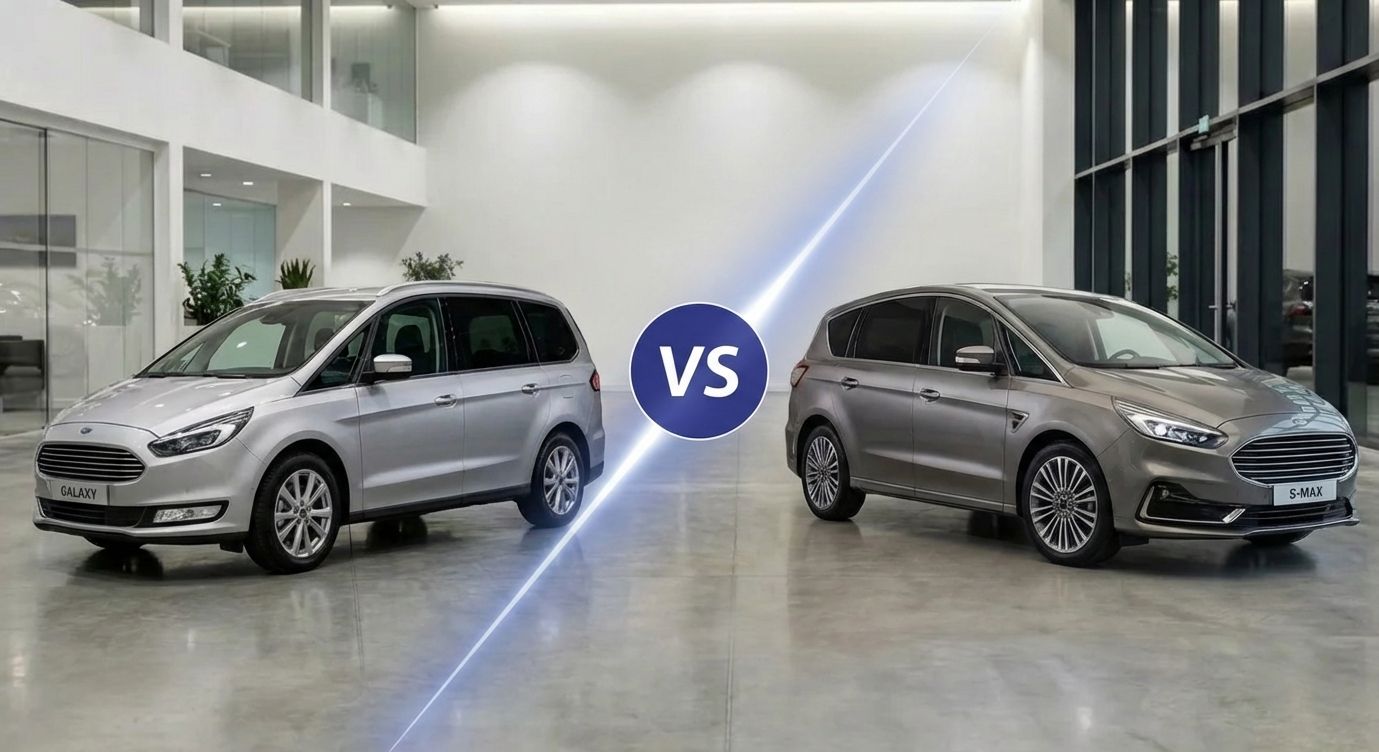
Car battle
Ford Galaxy vs. Ford S-Max: Complete comparison 2026
Detailed comparison of Ford Galaxy vs. Ford S-Max. Find out which used 7-seater MPV offers better space, reliability, and driving characteristics. Read our verdict!
Apr 13, 2026
Articles
Car battle
Comparison: Citroën Grand C4 SpaceTourer (Picasso) vs Renault Grand Scénic. A detailed comparison of space, equipment, and prices. Which 7-seater MPV is better for you?
April 13, 2026
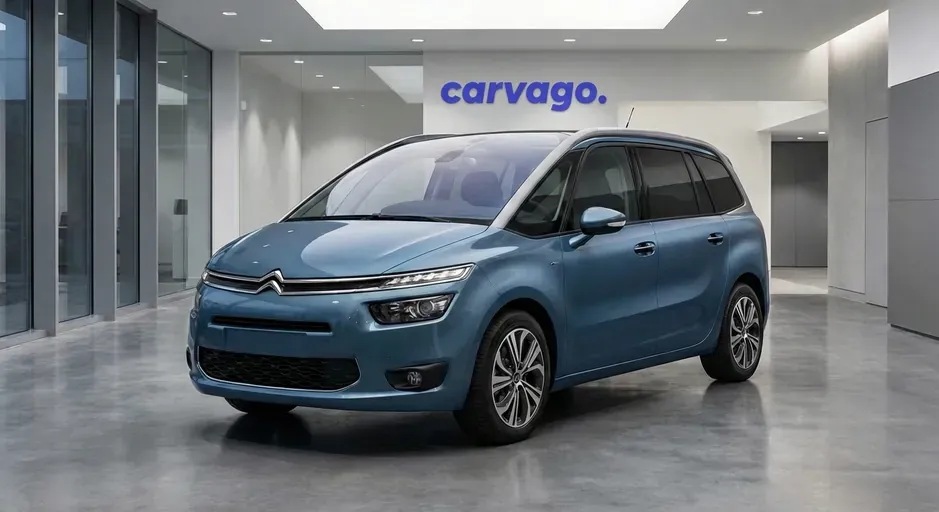
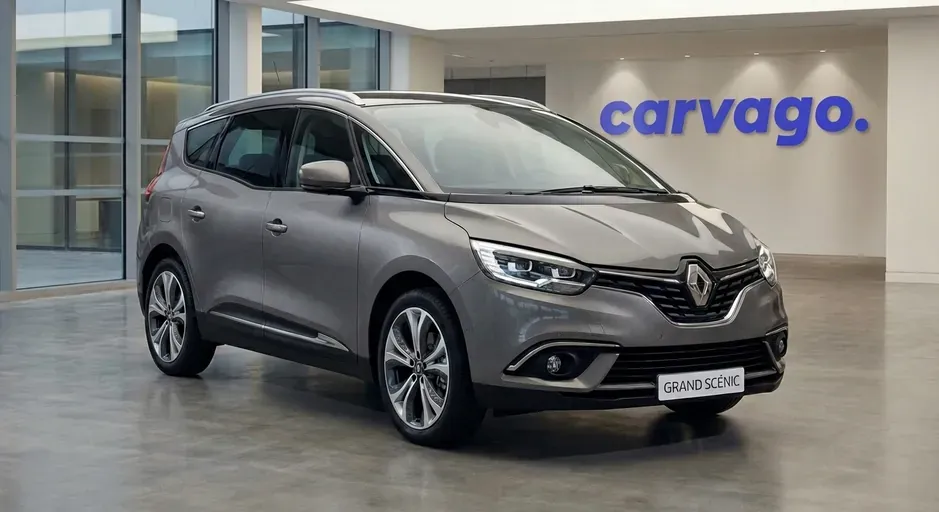
The Citroën Grand C4 SpaceTourer, previously sold under the much better-known name Grand C4 Picasso, is a highly comfortable and exceptionally spacious family MPV that bets on bold design and maximum practicality for larger families. Its direct competitor is the Renault Grand Scénic, a stylish pioneer of this segment that attracts customers with dynamic shapes, typical large wheels, and a cleverly designed variable interior. Let's take a detailed look at which of these two popular French cars represents a better, more reliable, and more advantageous choice on the used car market for your daily travels.
When comparing the exterior dimensions of these two popular family vehicles, it is essential to choose the correct generations that currently form the core of the market for roughly four-year-old used cars. While the Citroën Grand C4 SpaceTourer was sold in its last generation between 2018 and 2021, for the Renault Grand Scénic, we must choose the adequate fourth generation (produced until 2022) for a meaningful comparison, not models from previous decades. Both cars fall into the category of spacious MPVs, but even at first glance at their outer outlines, a different approach can be traced. While Citroën maintains a more traditional, millimetre-perfect boxy silhouette, Renault has opted for more dynamic proportions with slight crossover elements. Dimensional characteristics thus play a crucial role in how well the car fits into your garage and how it stands up in the daily urban jungle.
In terms of absolute numbers, the Renault Grand Scénic claims more space on the road, having a slight edge in all three main axes. With a total length of 4634 mm, it is exactly 32 mm longer than the Citroën Grand C4 SpaceTourer (4602 mm), while also being significantly 40 mm wider (1866 mm compared to 1826 mm) and 22 mm taller (up to 1660 mm vs. 1638 mm). This overall larger body gives the Renault a more confident stance on the road and brings a slightly more robust appearance, which you will appreciate in terms of a sense of safety. In contrast, the Citroën's more compact dimensions are a huge advantage for drivers who struggle with space daily. In particular, the 4-centimetre smaller width of the car means invaluable extra millimetres when opening doors in narrow underground garages or at shopping centres, making the Citroën a slightly more accommodating car for intensive city use.
An important indicator that says a lot about the interior layout is the distance between the front and rear axles. The wheelbase of the Renault Grand Scénic is 2804 mm, surpassing the Citroën's value of 2785 mm by 19 mm. In practice, the Renault's longer wheelbase contributes to slightly better directional stability on motorways and promises a theoretical advantage in longitudinal legroom in the second and third rows of seats. Citroën, on the other hand, proves that absolute numbers aren't everything – it balances a slightly shorter wheelbase with top-notch space packaging and subjectively better agility. The Renault's longer wheelbase thus makes sense especially for families travelling primarily on long routes, while the Citroën's slightly shorter chassis offers a perfect balance between solid interior space and the necessary nimbleness for frequent city driving.
| Parameter | Citroën Grand C4 SpaceTourer MPV | Renault Grand Scénic MPV |
|---|---|---|
| Width (mm) | 1826 | 1866 |
| Length (mm) | 4602 | 4634 - 4635 |
| Height (mm) | 1638 | 1655 - 1660 |
| Wheelbase (mm) | 2785 | 2804 |
When choosing a family car approximately four years old, luggage capacity is often the most important criterion that determines daily usability. For families, a larger boot means less stress when packing strollers, sports equipment, or bulky shopping. Both the Citroën Grand C4 SpaceTourer and the Renault Grand Scénic are staples of the used MPV market, and both models aim for maximum practicality. Although they share a similar French philosophy focused on comfort and family, their approach to interior space differs slightly, which can have a significant impact on buyers.
In terms of exact figures, the Citroën Grand C4 SpaceTourer in a five-seat configuration (with the third row of seats folded) has a standard boot volume of 645 litres, which can be increased to 704 litres thanks to the sliding second row. If you fold all the rear seats, you get a huge van with a maximum volume of 2181 litres. The competing fourth-generation Renault Grand Scénic offers an excellent 718 litres in the purely five-seat version, but the seven-seat variant is much more common on the used car market. With the third row of seats folded into the floor, it provides a basic volume of 533 litres. When the second and third rows of seats are fully folded, this Renault reaches a maximum capacity of 1737 litres.
In practice, these differences mean that the Citroën, thanks to its boxier body and lower loading sill, is the absolute champion in carrying cargo. Its maximum capacity literally offers space for several extra suitcases, making it an ideal partner sufficient for weekend shopping and longer holidays with the whole family. Renault Grand Scénic, on the other hand, sacrificed part of its absolute volume in favour of an attractive, almost crossover-like design with large twenty-inch wheels. The conclusion for those interested in a used car is therefore clear: if your absolute priority is moving large objects and uncompromising interior space, the Citroën Grand C4 SpaceTourer will be the more logical choice. However, if a slightly smaller but still very practical boot wrapped in a more stylish coat is enough for you, the Renault Grand Scénic will easily satisfy your family needs.
| Standard volume (liters) | 645 | 533 |
|---|---|---|
| Max. volume with seats folded (liters) | 2181 | 1737 |
The ability to tow a trailer is often a decisive parameter for family MPVs, significantly expanding their practicality and overall flexibility. While the Citroën Grand C4 SpaceTourer (in its 1st generation) allows a braked trailer with a weight starting at 1,150 kg and reaching a very solid 1,750 kg to be attached to the tow bar, the competing Renault Grand Scénic of a comparable age (i.e., 4th generation) slightly surpasses it, as its maximum limits reach 1,800 to 1,850 kg. The weight of an unbraked trailer for both cars logically hovers around the legal limit, specifically in the range of 695 to 750 kg.
A more detailed comparison reveals significant differences across individual engine versions. The standard towing capacity of base versions (such as the PureTech 130 in the Citroën) is a more modest 1,150 to 1,400 kg. It is also worth noting that for some newer Citroën model years (especially 2020–2021), the capacity was limited, likely due to meeting emission limits, even for the popular BlueHDi 130 engine, where the value dropped to 1,200 kg. However, these lower weights are still perfectly sufficient for weekend shopping or longer holidays, for example with a light utility trailer or a smaller folding camper. Conversely, the maximum limits of the top diesel versions (e.g., BlueHDi 150) can confidently handle heavy caravans, which for families on the road means invaluable space for several extra suitcases and maximum travel comfort.
In conclusion, if towing bulkier loads is more of an occasional matter for you, both cars will serve you excellently. However, if you plan on regularly crisscrossing Europe with a heavy caravan, powerful diesel engines are a necessity in this regard, and Renault provides a slight technical edge here in its newer generation.
Note: Since the database for the Renault Grand Scénic model only contains historical data for the 2nd generation from 2004–2009, which does not correspond in age to the market for roughly four-year-old used cars, these outdated values are not included in the table below for the sake of an objective comparison.
| Model and engine | Braked trailer (kg) | Unbraked trailer (kg) |
|---|---|---|
| Citroën Grand C4 SpaceTourer BlueHDi 120 (88 kW) | 1500 - 1550 | 695 - 750 |
| Citroën Grand C4 SpaceTourer BlueHDi 130 (96 kW) | 1200 - 1550 | 695 - 750 |
| Citroën Grand C4 SpaceTourer BlueHDi 150 (110 kW) | 1750 | 750 |
| Citroën Grand C4 SpaceTourer BlueHDi 160 (120 kW) | 1300 - 1600 | 750 |
| Citroën Grand C4 SpaceTourer PureTech 130 (96 kW) | 1150 - 1400 | 695 - 750 |
| Citroën Grand C4 SpaceTourer PureTech 180 (133 kW) | 1400 | 750 |
| Citroën Grand C4 SpaceTourer THP 165 (121 kW) | 1550 | 750 |
When choosing a family MPV on the market for roughly four-year-old used cars, the range of engines plays a key role, as it directly affects fuel consumption, the overall dynamics of the car, and reliability when fully loaded with passengers and luggage. Both the Citroën Grand C4 SpaceTourer and the Renault Grand Scénic offer modern turbocharged units, but with very different technical approaches. Citroën traditionally relies on exceptionally fuel-efficient diesel engines (1.5 BlueHDi and 2.0 BlueHDi) paired with a very smooth-shifting eight-speed torque converter automatic transmission (EAT8). The petrol choice here is the 1.2 PureTech three-cylinder. Renault, on the other hand, scores with the excellent 1.3 TCe petrol four-cylinder (developed in cooperation with Mercedes-Benz), which offers great refinement and plenty of power across the entire rev range. The diesel alternative at Renault is the updated 1.7 Blue dCi engines, which rely on responsive EDC dual-clutch automatics. For highway travelers with high annual mileage, the diesel Citroën will be slightly more suitable thanks to its torque converter automatic, while families with lower annual mileage and more frequent city driving will be much better served by the Renault with its refined and dynamic 1.3 TCe petrol engine.
The Citroën Grand C4 SpaceTourer offers a clear range of powertrains, which, however, changed quite quickly due to increasingly strict emission standards. If you are looking for a roughly four-year-old used car, you will primarily come across the 1.2 PureTech 130 petrol three-cylinder and the exceptionally efficient 1.5 BlueHDi 130 diesel units or the more powerful and highly sought-after 2.0 BlueHDi 160. It is essential to mention that for Citroën, a number of engines dropped out of the range relatively early. The available data clearly shows that older engines such as the 1.6 BlueHDi 120 and 2.0 BlueHDi 150 diesels, or the 1.6 THP 165 petrol, were discontinued during 2018. The powerful 1.6 PureTech 180 petrol engine was then only available for a very short time during 2019. Fortunately, most of the more modern engines on the young used car market are already available with the reliable eight-speed torque converter automatic (EAT8), which successfully replaced the older and slower six-speed EAT6.
| Engine type | Fuel | Power (kW) | Torque (Nm) | Transmission |
|---|---|---|---|---|
| 1.2 PureTech 130 | Petrol | 96 | 230 | 6MT / 8AT (EAT8) |
| 1.6 THP 165 | Petrol | 121 | 240 | 6AT (EAT6) |
| 1.6 PureTech 180 | Petrol | 133 | 250 | 8AT (EAT8) |
| 1.5 BlueHDi 130 | Diesel | 96 | 300 | 6MT / 8AT (EAT8) |
| 1.6 BlueHDi 120 | Diesel | 88 | 300 | 6MT / 6AT (EAT6) |
| 2.0 BlueHDi 150 | Diesel | 110 | 370 | 6MT / 6AT (EAT6) |
| 2.0 BlueHDi 160 | Diesel | 120 | 400 | 8AT (EAT8) |
In the case of the Renault Grand Scénic, it is essential to focus on the relevant 4th generation, as in the context of the market for roughly four-year-old used cars, the older 2nd generation from 2004–2009 is no longer relevant. From the perspective of power units, the modern Grand Scénic relies primarily on the excellent 1.3 TCe petrol four-cylinder. This is available in three power levels and has earned a reputation on the market as a highly reliable unit with above-average refinement. For diesel fans, the automaker has been serving the newer 1.7 Blue dCi engines (with outputs of 88 kW and 110 kW) since 2018, which fully replaced the earlier 1.5 dCi and 1.6 dCi versions in the range. While competitor Citroën uses a torque converter automatic, Renault opted for EDC dual-clutch transmissions (with six or seven speeds) for its automatic versions. While these can ensure almost lightning-fast shifts during acceleration, they are not as smooth as the competitor's classic torque converter when crawling in traffic jams or parking.
| Engine Type | Fuel | Power (kW) | Torque (Nm) | Transmission |
|---|---|---|---|---|
| 1.3 TCe 115 | Petrol | 85 | 220 | 6MT |
| 1.3 TCe 140 | Petrol | 103 | 240 | 6MT / 7EDC |
| 1.3 TCe 160 | Petrol | 118 | 260 / 270 | 6MT / 7EDC |
| 1.5 dCi 110 | Diesel | 81 | 260 | 6MT / 7EDC |
| 1.6 dCi 130 | Diesel | 96 | 320 | 6MT |
| 1.6 dCi 160 | Diesel | 118 | 380 | 6EDC |
| 1.7 Blue dCi 120 | Diesel | 88 | 300 | 6MT / 6EDC |
| 1.7 Blue dCi 150 | Diesel | 110 | 340 | 6MT / 6EDC |
Choosing the right engine is absolutely crucial for long-term satisfaction with a family MPV, which is why our recommendations are based on real-world experience, operational reliability, and actual fuel consumption of roughly four-year-old used cars. While the traditional strong and economical diesel school dominates the 2018–2021 Citroën Grand C4 SpaceTourer, the situation at Renault Grand Scénic has turned in favour of modern petrol units. Although you will find popular older engines from the second generation in the Renault database (such as the 1.9 dCi or 1.6 16V available until 2009), these units have long since ceased to be offered in roughly four-year-old models. Instead, we will focus on modern, cleaner, and much more advanced engines that make the most sense in today's market for nearly new used cars.
This two-litre diesel is the absolute best choice for a fully loaded seven-seater MPV. It offers a great balance between dynamics, pulling power, and long-term mechanical durability. Compared to the smaller and more common 1.5 BlueHDi engine on the market, this powerhouse does not suffer from undersized camshaft timing chains, which can cause problems in the smaller unit. With its 400 Nm of torque, it can handle motorway climbs even with a full car, with a real-world consumption of around 6 litres per 100 km. Furthermore, the standard eight-speed EAT8 automatic from Japan's Aisin shifts very smoothly and constantly keeps the engine in the ideal rev range.
Although MPVs used to be typical cars for diesel engines, for a roughly four-year-old fourth-generation Grand Scénic, the 1.3 TCe turbocharged petrol four-cylinder, developed in cooperation with Mercedes-Benz, is by far the safest choice. It offers a perfectly adequate 103 kW of power and 240 Nm of torque, while real-world consumption in combined operation stays around a solid 7 l/100 km. Unlike the problematic older generations of TCe engines (e.g., 1.2 TCe), this unit has a reliable timing system and stands out for its refined and quiet operation.
Official fuel consumption figures provided by manufacturers often differ significantly from reality, especially for large and heavy family MPVs where aerodynamics, a large frontal area, and overall vehicle load play a crucial role. While official laboratory methodologies promised miraculous figures for these vehicles, often starting with a four, practice shows a different picture. To get an accurate idea of how much fuel these roughly four-year-old vehicles (from 2018–2022) actually require, we rely on independent data from drivers themselves collected on the popular independent portal Spritmonitor.de.
Data source: Spritmonitor.de
| Model and Engine | Average Consumption (l/100 km) |
|---|---|
| Citroën Grand C4 SpaceTourer 1.5 BlueHDi 130 (96 kW) | 5.4 |
| Citroën Grand C4 SpaceTourer 2.0 BlueHDi 160 (120 kW) | 6.1 |
| Citroën Grand C4 SpaceTourer 1.2 PureTech 130 (96 kW) | 7.2 |
| Renault Grand Scénic 1.5 dCi 110/115 (81/85 kW) | 5.6 |
| Renault Grand Scénic 1.7 Blue dCi 150 (110 kW) | 6.3 |
| Renault Grand Scénic 1.3 TCe 140 (103 kW) | 7.1 |
Looking at real-world data, it is clear that diesel engines are still the most logical choice for these large family cars in terms of efficiency. Entry-level diesel engines (1.5 BlueHDi for Citroën and 1.5 dCi for Renault) can move even a fully loaded MPV with a very reasonable appetite of just over 5.5 liters per 100 kilometers. Conversely, petrol engines exhibit the classic ailment of small turbocharged units in large cars. Both the 1.2 PureTech three-cylinder from Citroën and the more refined 1.3 TCe four-cylinder from Renault struggle to stay below the 7-liter mark in real-world traffic. Once you load the cars with a family and hit the highway, the consumption of both small petrol engines can rise steeply.
For the average user, this leads to a clear recommendation based on how the vehicle is used. If you spend most of your time driving around town, taking children to school, and on short trips, the petrol versions make sense. This way, you avoid potential problems with a clogged diesel particulate filter (DPF) or the more complex AdBlue injection system, even though you will pay slightly more at the pump. However, for families who primarily use the vehicle for long highway journeys, summer holidays by the sea, or regular weekend trips, diesel variants are the clear favorite. They significantly reduce operating costs while offering better torque for safer overtaking in a fully loaded car.
So, will fuel consumption be the main deciding factor between these two French rivals? Probably not. The real-world values of both models with comparable engines are so close that you will hardly feel the difference in your wallet. While Citroën narrowly wins the battle for the most efficient entry-level diesel with its 1.5 BlueHDi, Renault counters with the more mature 1.3 TCe petrol four-cylinder, which offers much better sound and dynamic performance for similar consumption as Citroën's three-cylinder. The decision will therefore likely come down to a preference for exterior design, interior layout, and the current condition of a specific unit on the used car market.
Both models, the Citroën Grand C4 SpaceTourer and the Renault Grand Scénic, are among the last classic family MPVs on the European market. Their production ended around 2022, which means that used cars approximately four years old (from the end of production) are currently in high demand as they represent an ideal compromise between modern equipment and an acceptable price.
When looking at vehicles from 2021 to 2022, the price ranges of both competitors largely overlap. However, Citroën manages to maintain a slightly higher price ceiling thanks to the enduring popularity of its more powerful diesel engines.
| Model | Starting Price (higher mileage) | Typical Price (good condition) | Price Ceiling (low mileage, top trim) |
|---|---|---|---|
| Citroën Grand C4 SpaceTourer | from €12,000 | €13,000 – €16,000 | up to €22,000 |
| Renault Grand Scénic | from €10,000 | €12,000 – €14,000 | up to €16,000 |
(Note: Prices depend on the odometer reading, chosen equipment, and specific engine.)
For four-year-old used Citroëns, the chosen engine plays a crucial role. The cheapest units with a price tag around €12,000 and mileage over 150,000 km usually hide the entry-level 1.5 BlueHDi (96 kW) diesel engine or the 1.2 PureTech petrol three-cylinder under the hood.
However, if you are looking for the top specification with the highly sought-after and reliable 2.0 BlueHDi (120 kW) engine paired with an eight-speed automatic transmission and mileage under 100,000 km, expect prices to easily cross the €20,000 mark. This version holds its value exceptionally well – on the used car market, it is one of the best and most efficient diesel units for a fully loaded family car.
The situation on the used car market for Renault is slightly different. The end of production for the Grand Scénic was marked by a retreat from diesels. Therefore, among four-year-old cars, you will most frequently encounter the very successful 1.3 TCe four-cylinder petrol engine (in 103 kW or 118 kW versions), which was developed in cooperation with Mercedes-Benz.
Vehicles with this engine and mileage between 100,000 and 140,000 km commonly sell for a pleasant €12,000 to €14,000. Compared to the Citroën, Renault thus offers a somewhat more affordable entry into the world of modern seven-seater MPVs. Occasionally, you can also find the 1.7 Blue dCi diesel engine on the market, with prices in a similar range, but the overall supply in dealerships is much more limited.
Both of these popular family cars achieved the prestigious maximum five-star rating in Euro NCAP safety tests in their time. However, for a correct assessment of their safety, it is necessary to take into account the broader context and, above all, the year of their testing. The safety protocols of the independent Euro NCAP organisation are constantly evolving and become stricter almost every year. For this reason, percentage results from different years cannot be directly compared – newer methodologies include significantly more demanding frontal impact simulations, stricter measurements of cervical spine injuries, or the detection of cyclists and pedestrians at intersections, which were completely absent from older assessments.
The Citroën Grand C4 SpaceTourer (then still tested under the name Grand C4 Picasso) underwent crash tests as early as 2013. Although it clearly excelled in safety at the time and met all the criteria of the day, its safety certification officially expired in January 2020. This is common Euro NCAP practice for older vehicles that are expected to no longer meet modern and significantly stricter standards.
In contrast, the Renault Grand Scénic underwent crash tests in 2016, following significantly newer and more demanding protocols. Its testing already took into account advanced trials of autonomous emergency braking (AEB) systems. Renault gained valuable points here by being one of the first in its segment to offer pedestrian detection combined with emergency braking as standard equipment.
The percentages obtained clearly reflect the different levels of difficulty of the two testing eras. Citroën benefited from the relatively benevolent 2013 standards, earning a generous 81% for safety assistance systems. Renault, on the other hand, "paid the price" for the stricter 2016 methodology, which resulted in only 59% for assistants, even though its actual technological equipment is much more advanced. Despite the stricter test criteria, however, Renault achieved an excellent 90% for adult occupant protection, surpassing the 86% of Citroën's older body structure. The results for the protection of vulnerable road users correspond in both models to the design limits of MPV category vehicles at the time, characterized by a higher and steeper front end.
The overall comparison clearly shows that although both models will protect you very well on the road, the Renault Grand Scénic offers a more modern and comprehensive safety package. Its crumple zones and assistance systems have passed the sieve of more demanding criteria, the car has more advanced active protection against collisions with pedestrians, and from a homologation perspective, it provides a noticeably higher and more up-to-date safety standard in today's traffic.
| Parameter | Citroën Grand C4 SpaceTourer | Renault Grand Scénic |
|---|---|---|
| Year of testing | 2013 | 2016 |
| Adult occupant protection | 86 % | 90 % |
| Child protection | 88 % | 82 % |
| Vulnerable road user protection | 68 % | 67 % |
| Safety assistance systems | 81 % | 59 % |
In addition to standard equipment, each model offers several unique features, and both cars prove that a family MPV can provide much more than just basic spatial standards. However, each manufacturer approaches added value and everyday practicality in a completely different way.
Citroën focused on maximum airiness, comfort on long journeys, and flexibility of the interior layout for this model, drawing inspiration from luxury lounges.
Renault approached the fourth generation of the Scénic model with courage, combining the world of MPVs with crossover design elements and adding several highly original technological solutions.
Pros:
Cons:
Pros:
Cons:
Based on long-term data from service reports, manufacturer recalls, and hundreds of reports brought daily by our independent car condition inspection, we have compiled a detailed overview of the most common faults for both of these family MPVs. We focused primarily on models approximately four years old to cover what you will realistically encounter on the used car market.
The family representative from Citroën is valued for its maximum comfort; however, from a reliability perspective, it requires careful engine selection and a check of the onboard electronics.
Summary for Citroën: If you avoid neglected 1.2 PureTech petrol engines and check the history of AdBlue system repairs and timing belt replacements on diesel versions, you will get a reliable and unbeatably comfortable transporter. Most other faults relate more to electronic glitches, which are annoying but do not restrict driving itself.
The fourth generation of the Scénic bets on a very attractive design and an innovative approach, which, however, brings several specific characteristics that are good to be prepared for.
Summary for Renault: From a technical standpoint regarding engines, especially with the modernized 1.3 and the proven 1.5 diesel, it is an above-average reliable car. The biggest bogeyman on the used car market remains neglected maintenance of dual-clutch transmissions and a tired chassis due to the use of large and heavy wheels.
When buying a used car, a thorough inspection is key. Here are some specific points to focus on for these two models, which is why an independent technical inspection of the car is always worth it before the final decision.
The Citroën Grand C4 SpaceTourer offers a trunk volume of 645 liters in a five-seat configuration, while the Renault Grand Scénic provides 533 liters. With all rear seats folded, the Citroën also offers a flatter loading surface and a wider opening. This makes it a much more practical choice for family vacations or moving larger items.
The Citroën is overall more spacious for seven people because it has three full-sized individual seats in the second row and offers more headroom. The Renault has an asymmetrically split bench in the second row, which is harder for three adults to fit into, and its third row is strictly for emergency use by smaller children. For frequently transporting a larger family, the Citroën is a significantly better choice among these two representatives.
The Grand C4 SpaceTourer is famous for its exceptionally soft suspension, which perfectly irons out bumps but leans more in corners. The Renault Grand Scénic relies on massive 20-inch wheels across all trim levels, giving it a more attractive look, but the ride is noticeably firmer on uneven surfaces. As a result, the Renault feels more composed during spirited driving, while the Citroën excels in absolute travel comfort.
Both French manufacturers offer economical and proven diesel engines ideal for eating up highway miles. In the Citroën, you will most often encounter the popular 1.5 BlueHDi units, while in the Renault, you'll find the proven 1.5 Blue dCi or the more powerful 1.7 Blue dCi. When following regular service intervals, both brands perform very similarly in terms of mechanical reliability and without major issues.
The Citroën is characterized by an extremely bright cabin with a huge panoramic windshield and digital instruments placed unconventionally in the center of the dashboard. Renault opts for a more classic arrangement of gauges in front of the driver and a dominant vertical touchscreen in the center console. While the Citroën offers unbeatable visibility in all directions, the Renault feels a bit more enveloping and cozy in the interior.
The choice between four-year-old used MPVs Citroën Grand C4 SpaceTourer and Renault Grand Scénic depends on the family's lifestyle and primary use. The Citroën Grand C4 SpaceTourer is ideal for large families prioritizing uncompromising interior space, maximum comfort on long journeys, and regular transport of multiple children, especially with the 2.0 BlueHDi diesel engine. Conversely, the Renault Grand Scénic will appeal to families looking for a more modern design with crossover elements, excellent value for money, and is more suitable for daily suburban use with the 1.3 TCe petrol engine. If you are looking for the ultimate and most comfortable family 'mover' for cruising Europe, choose the diesel Citroën Grand C4 SpaceTourer. If you prefer a more stylish look, shorter drives, and a friendlier price with an excellent petrol engine, the Renault Grand Scénic will be the perfect choice for you.
Sources: ADAC, lidovky.cz, auto.cz, elektromobil.cz, autotechnik.cz, fastcars.cz
This article was prepared using artificial intelligence tools. The section guarantor is Petr Dušek.
Detailed comparison of Ford Galaxy vs. Ford S-Max. Find out which used 7-seater MPV offers better space, reliability, and driving characteristics. Read our verdict!
Apr 13, 2026
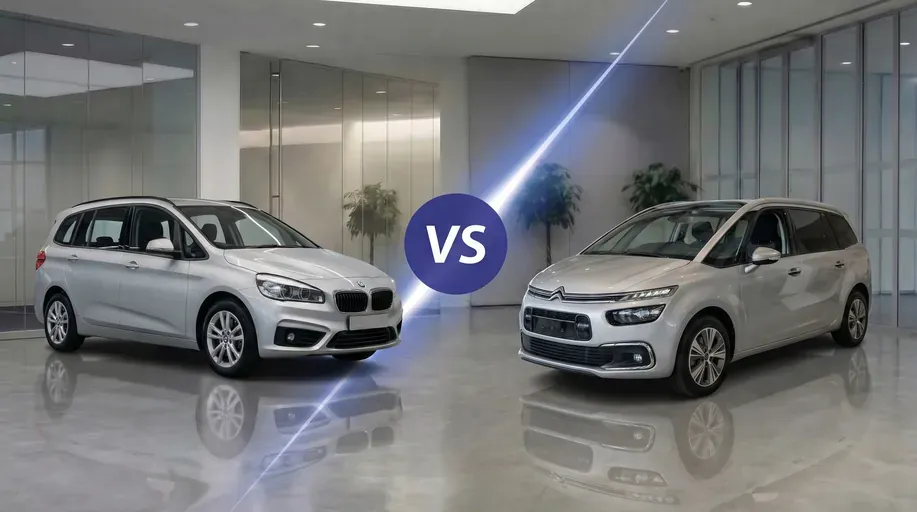
Detailed MPV comparison: BMW 2 Series Gran Tourer vs. Citroën Grand C4 SpaceTourer (Picasso). Discover the differences in equipment, real-world experience, and the final verdict.
May 10, 2026
BMW 2 Series Gran Tourer vs Volkswagen Touran. A detailed comparison of family MPVs, including a space test and final verdict. Choose your ideal used car!
Apr 14, 2026