Review Volkswagen Tayron: What do owners and experts really say?
Volkswagen Tayron review: real owner experience, 7-seat practicality, engine picks, running costs, and our definitive buyer's verdict.
October 22, 2026
Verdict at a Glance
Who it suits: Family buyers needing flexible cargo space, occasional seven-seat capability, and composed long-distance cruising.
Recommended engine: The 2.0 TDI diesel for highway journeys and towing, or the plug-in hybrid for short commutes with regular home charging.
What to avoid: Early vehicles without documented completion of the 2025 safety recalls — verify status by VIN.
Introduction
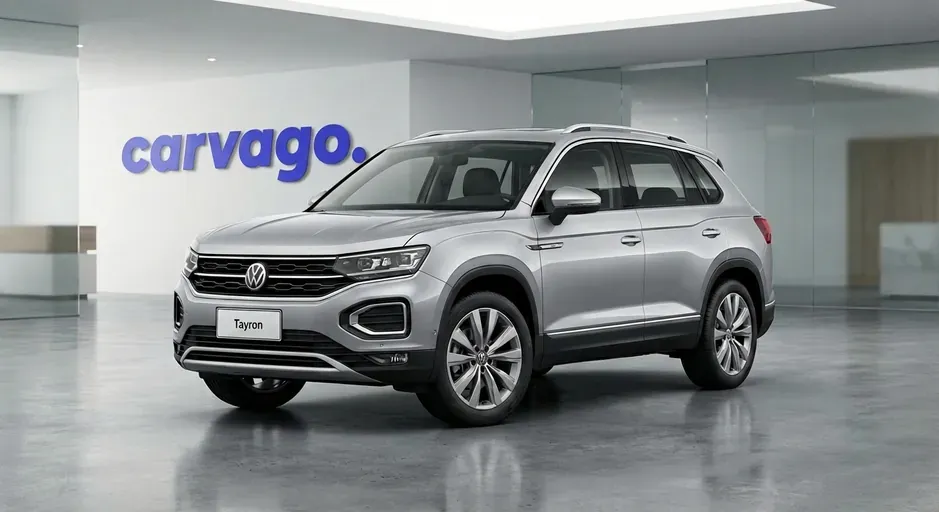
The Volkswagen Tayron is a mid-size crossover positioned between the Tiguan and the Touareg, serving as the direct replacement for the Tiguan Allspace in Volkswagen's European lineup. This review focuses exclusively on the first European generation (Typ DN), which celebrated its world premiere on 09 October 2024 and entered production at Wolfsburg late that year. First customer deliveries commenced in continental Europe on 07 March 2025, followed by the UK market in April 2025. As a newly introduced model, this generation has received no facelift to date.
The Volkswagen Tayron SUV comes with a five-seat layout as standard, alongside an optional seven-seat configuration on conventional petrol and diesel powertrains; plug-in hybrid models are restricted to five seats due to rear battery packaging. The model primarily targets family buyers who require greater cargo versatility or occasional third-row seating than compact crossovers offer, serving as a practical choice for long-distance driving and towing duties without stepping up into full-size luxury vehicles.
Owner Experiences: Common Faults and Recalls
Because European customer deliveries of the Volkswagen Tayron began in March 2025, long-term reliability and high-mileage failure trends are not yet established. The model has been on European roads for only nineteen months, so reports from early owners focus primarily on initial software stability and early production adjustments rather than systemic mechanical wear.
Official safety registers across Europe recorded three separate manufacturer recall campaigns during 2025, with no new safety notices registered in 2026 to date. All three actions stem from early assembly-line defects during initial production at the Wolfsburg plant:
Front passenger airbag deployment: Announced in February 2025, this Europe-wide action covers vehicles manufactured between 2 January 2025 and 31 January 2025, affecting 1,637 vehicles worldwide (including 683 in Germany and 115 in the United Kingdom). The official notice states that due to a control panel defect, the front passenger airbag may not open as intended during a collision, reducing its protective effect and increasing injury risks. Workshops inspect the dashboard assembly and replace the dash panel or airbag module where necessary.
Second-row curtain airbag installation: Also announced in February 2025, this campaign affects cars built between 18 December 2024 and 1 February 2025 across European markets, involving 1,712 vehicles in Germany and 196 in the United Kingdom. According to the safety notification, the head curtain airbags at the C-pillar may not have been correctly fitted during assembly. In an accident, the airbag may not open as intended, impairing passenger protection in the second seat row. Authorised repairers inspect the mounting position and correctly reinstall or secure the airbag modules.
Rear diffuser detachment: Issued in June 2025, this Europe-wide recall covers models built between 24 November 2024 and 21 May 2025 according to German registers (January 2025 to April 2025 in UK records). It involves over 11,500 vehicles worldwide, including 5,110 in Germany and 736 in the United Kingdom. The defect notice notes that due to an assembly error, the rear diffuser was not properly fastened and can completely detach while driving, presenting a hazard in following traffic. Technicians inspect the attachment hardware and refasten the diffuser.
Professional tests of early production cars describe occasional software instability with the central touchscreen, including slow cold boots or temporary display freezing before initial dealer updates were applied. For versions fitted with optional twin-valve adaptive dampers or the four-wheel-drive system on the Volkswagen Tayron 4MOTION, running gear has proven mechanically quiet and structurally tight in early testing. When considering a used example, having its history and hardware verified through a professional inspection such as CarAudit provides an extra layer of pre-purchase certainty.
🔍 What to check before buying
Request an official VIN check through an authorised dealer to confirm that all 2025 recall actions—specifically for the front passenger airbag, rear curtain airbags, and rear diffuser fasteners—have been documented and completed.
Test the central touchscreen from a cold start, toggling between smartphone integration, navigation, and driver-assistance menus to verify system responsiveness and recent software updates.
On seven-seat models, test the second-row forward-tilt mechanism and fold the third-row seats into the floor recess to ensure latches lock securely and floor covers sit flush.
If buying a plug-in hybrid, verify the presence of both charging cables and test the motorized locking pin mechanism on the charging port.
On cars equipped with optional adaptive dampers, visually check the damper bodies for hydraulic fluid leaks or oil misting.
Engines: Which One to Choose
Every variant of the Volkswagen Tayron is fitted exclusively with an automatic transmission. The powertrain lineup is structured around electrified petrol, standalone petrol, and turbodiesel options, with front-wheel drive on entry-level versions and all-wheel drive standard on the higher-output combustion units.
Engine
Fuel
Power
Drivetrain
Gearbox
Model years
1.5 eTSI
Petrol mild hybrid
110 kW (150 hp)
Front-wheel drive
7-speed automatic
2025–present
2.0 TSI 4MOTION
Petrol
150 kW (204 hp)
All-wheel drive
7-speed automatic
2025–present
2.0 TSI 4MOTION
Petrol
195 kW (265 hp)
All-wheel drive
7-speed automatic
2025–present
2.0 TDI
Diesel
110 kW (150 hp)
Front-wheel drive
7-speed automatic
2025–present
2.0 TDI 4MOTION
Diesel
142 kW (193 hp)
All-wheel drive
7-speed automatic
2025–present
1.5 eHybrid
Petrol plug-in hybrid
150 kW (204 hp)
Front-wheel drive
6-speed automatic
2025–present
1.5 eHybrid
Petrol plug-in hybrid
200 kW (272 hp)
Front-wheel drive
6-speed automatic
2025–present
Which engine to choose
For urban commuting and short daily journeys, the plug-in hybrid Volkswagen Tayron is well matched to buyers with regular access to home or workplace charging. Both 1.5 eHybrid variants operate predominantly in electric mode around town. Urban drivers without charging facilities are better served by the mild-hybrid 1.5 eTSI petrol Volkswagen Tayron, which handles stop-and-go traffic smoothly thanks to its belt-starter generator.
For mixed everyday use across town and country roads, the 1.5 eTSI provides adequate pace when lightly occupied. However, when loaded with passengers or luggage, it must rev hard on gradients, making the front-wheel-drive 2.0 TDI diesel Volkswagen Tayron a more relaxed option for general family hauling.
Long-distance motorway drivers will find the diesels the most natural fit. The front-wheel-drive 2.0 TDI handles steady cruising efficiently, while the more potent 2.0 TDI 4MOTION 4x4 Volkswagen Tayron adds all-weather traction and reduced low-rev vibration over long trips. Drivers seeking brisk overtaking performance without diesel fueling can look to the 2.0 TSI 4MOTION options, though their higher fuel demand on fast highway stints necessitates more frequent stops.
For towing duties, the 2.0 TDI 4MOTION is the most capable variant in the range, delivering steady low-down torque alongside the lineup's highest permitted trailer ratings. The all-wheel-drive 2.0 TSI models also carry strong towing limits for drivers who prefer petrol characteristics.
For documented mechanical service campaigns and early owner findings across these powertrains, refer to the owner experiences section.
Space & Practicality
Measurement
Standard 5-seater (ICE)
Optional 7-seater (ICE)
Plug-in hybrid (eHybrid)
Length (mm)
4,792
4,792
4,792
Width (mm)
1,852–1,853
1,852–1,853
1,853
Height (mm)
1,660–1,668
1,660–1,668
1,666
Wheelbase (mm)
2,789–2,791
2,789–2,791
2,789
Boot volume (seats up / folded) (l)
885 / 2,090
345 / 850 / 1,905
705 / 1,915
Note: In the seven-seat configuration, boot volume measures behind the upright third row, behind the folded third row, and with all rear rows folded flat. Width excludes exterior mirrors.
The Volkswagen Tayron SUV prioritises flexible family transport with a sliding and reclining second-row bench fitted as standard. The rear bench splits and slides fore and aft to balance second-row legroom against cargo capacity, providing relaxed headroom and legroom for tall adults even when set slightly forward. On seven-seat combustion models, the easy-entry tilt-and-slide mechanism eases access to the rearmost seats, though restricted knee room makes the fold-flat third row practical primarily for children.
Everyday practicality differs between powertrains. Conventional petrol and diesel versions feature a level load bay with underfloor compartments and remote seat-folding levers near the tailgate opening. In contrast, plug-in hybrid models omit underfloor storage and are strictly restricted to five seats, as the high-voltage traction battery and relocated fuel tank occupy the space beneath the rear axle.
What the Tests Say
Professional road tests describe the Volkswagen Tayron SUV as a calm, long-distance cruiser. When equipped with optional dual-valve adaptive dampers, the chassis filters out surface imperfections, sharp bumps, and expansion joints smoothly. That compliant tuning has a trade-off: body roll and pitch are noticeable through tighter corners and undulating tarmac, even in firmer chassis modes. Handling remains predictable and directional stability is reassuringly secure, though the heavy plug-in hybrid feels less eager through rapid transitions.
Refinement draws mixed feedback. While the cabin structure stays rattle-free over broken asphalt, the smaller petrol engine sounds strained when worked hard under load. Several tests also note that wind and tyre noise become noticeable at motorway speeds, where the diesel proves more relaxed.
Inside, professional testers note a contrast in materials. Upper dashboard sections and front door tops use pleasant soft-touch finishes, but hard plastics dominate the lower cabin and the rear doors. The rotary console dial earns praise for providing physical volume and drive-mode control, though testers criticise the multifunction steering stalk for overloading wiper and lighting functions into a single control. Tests unanimously agree that the Volkswagen Tayron prioritises relaxing composure over dynamic agility, though opinions differ on whether high-speed acoustic insulation feels appropriately isolated for its class.
Prices and Market Offer
All charts in this section are drawn from Carvago’s listings of the whole Volkswagen Tayron model family across all generations represented in the data, rather than the reviewed generation alone. Consequently, this data does not establish a separate price level for the reviewed generation. Across the current offer, the median asking price is €67,600 for model year 2024, €47,000 for model year 2025, and €54,100 for model year 2026. Differences across these years reflect the shifting inventory mix between early fully optioned demonstration units and later standard powertrains entering the market.
The chart tracks the volume of advertised Volkswagen Tayron models each month from April 2026 to September 2026, opening at 8,496 listings and peaking at 8,574 in May.
Volkswagen Tayron - availability over time
Active listings over time
Month
Volkswagen Tayron
2026-04
8 496
2026-05
8 574
2026-06
7 908
2026-07
7 598
2026-08
7 273
2026-09
7 476
Source Carvago
With between 7,273 and 8,574 listings active across this six-month window, buyers have a wide selection of vehicles to browse, even as monthly availability shifted over the period.
Among used listings of this model advertised today, the median asking price of cars built in 2024 is €67,600, while cars built in 2025 have a median asking price of €47,000. The chart below details how median asking prices compare across available model years.
Volkswagen Tayron - median price by model year
Median advertised price by year of manufacture
Model year
Volkswagen Tayron
2024
67 600
2025
47 000
2026
54 100
Source Carvago
Advertised prices do not follow a uniform pattern across build years, with buyers seeing a median asking price of €47,000 for 2025 models, €54,100 for 2026 models, and €67,600 for 2024 examples.
This depreciation curve illustrates how the model's residual value falls with age across the market. The sharpest decline occurs early on, with the vehicle losing 20% of its initial value by age one and 33% by age three.
Volkswagen Tayron - value loss by age
Residual value by vehicle age
Vehicle age
Volkswagen Tayron
New
56 200
1 yr
44 900
2 yrs
41 700
3 yrs
37 800
4 yrs
34 800
5 yrs
31 600
6 yrs
28 700
7 yrs
27 700
Source Carvago
Across the full seven years shown, the model sheds 51% of its starting residual value. The rate of depreciation eases considerably after the first year, dropping by less than 10% annually thereafter.
Active listings show the fuel options advertised between April and September 2026, starting with 3,838 diesel and 2,686 petrol vehicles on offer in April 2026. The chart below details how counts for each powertrain developed over this six-month period.
Volkswagen Tayron - supply by fuel over time
Supply composition by fuel type
Petrol
Diesel
Hybrid
Month
Petrol
Diesel
Hybrid
2026-04
2 686
3 838
1 972
2026-05
2 568
3 910
2 096
2026-06
2 261
3 512
2 135
2026-07
2 050
3 279
2 269
2026-08
1 976
3 043
2 254
2026-09
2 008
3 171
2 297
Source Carvago
Diesel provides the largest pool of listings throughout the series, finishing at 3,171 advertised cars in September 2026 alongside 2,297 hybrids and 2,008 petrol models. Buyers will find substantial choice among diesel, hybrid, and petrol versions, while all-electric models currently show zero advertised listings.
The chart tracks the average asking price for the Volkswagen Tayron from April 2026 to September 2026, opening at €47,100.
Volkswagen Tayron - price trend over time
Average price development over time
Month
Volkswagen Tayron
2026-04
47 100
2026-05
47 100
2026-06
47 200
2026-07
47 800
2026-08
48 000
2026-09
48 200
Source Carvago
Across the six months shown, the average asking price rose from €47,100 to €48,200, an overall change of just over 2% across the advertised listings.
Sliding and reclining second-row bench provides flexible legroom and cargo space
Smooth and compliant ride comfort over rough surfaces when equipped with adaptive dampers
Relaxed motorway cruising and strong towing capability on all-wheel-drive diesel models
Cons
Plug-in hybrid versions cannot be equipped with third-row seating and lose underfloor storage
Third-row seating offers restricted knee room suitable primarily for children
Noticeable body roll through corners alongside audible wind and tyre noise at motorway speeds
Frequently asked questions
Is the Volkswagen Tayron reliable?
Long-term reliability is not yet established because European customer deliveries only began in March 2025. Early owner feedback highlights occasional infotainment display freezing rather than mechanical defects, provided official recall work on early assembly components has been completed.
Which engine is best for long-distance driving and towing?
The 2.0 TDI diesel Volkswagen Tayron is the most capable option for motorway cruising and towing, particularly with all-wheel drive. Mild-hybrid petrol versions rev harder on gradients when fully laden, while plug-in hybrids require regular charging to deliver their efficiency benefits.
Can you get seven seats on every model?
No, the optional seven-seat configuration is restricted to conventional petrol and diesel powertrains. The plug-in hybrid Volkswagen Tayron is strictly a five-seater because its traction battery pack occupies the space beneath the rear floor.
What should you check before buying a used Tayron?
Request an official check by VIN to verify that 2025 safety recalls concerning the front and rear airbags and the rear diffuser fasteners have been completed. During inspection, test the central display from a cold start to ensure software stability and verify that all rear seat folding mechanisms lock securely.