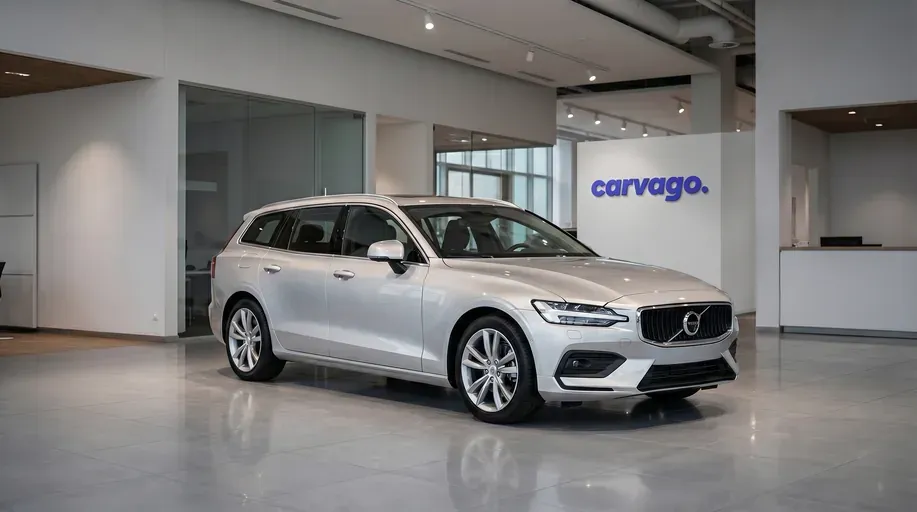
Review
Review Volvo V60: What do owners and experts really say?
Volvo V60 review: real owner insights, reliability, running costs, engine picks and used prices — everything you need to know before buying.
Oct 20, 2026
Volkswagen Passat B9 review: real owner experience, engine picks, estate practicality, running costs and our definitive buying verdict.
October 21, 2026
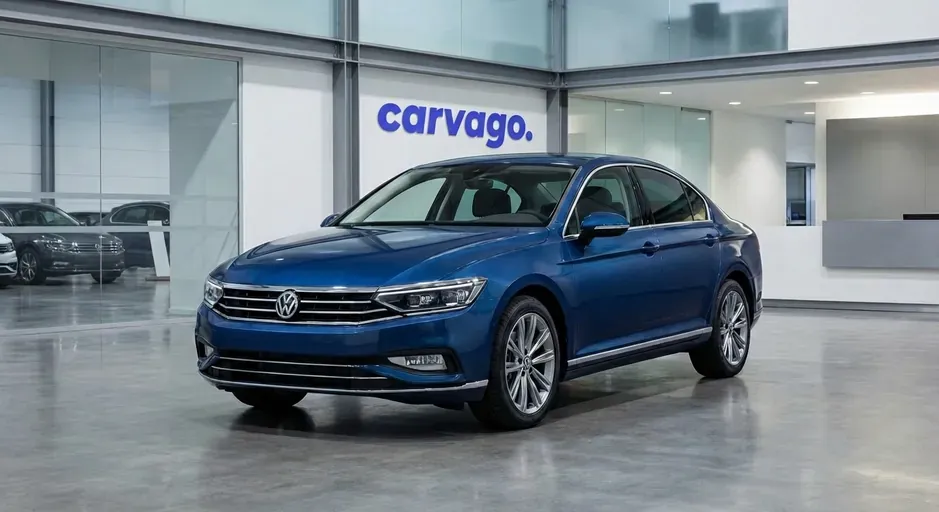
The Volkswagen Passat remains a core fixture in the European mid-size sector, aimed squarely at fleet operators, business commuters, and families seeking practical transport. This review covers the ninth generation (B9), which had its world premiere on 31 August 2023, followed by initial European customer deliveries in February 2024.
For this generation, Volkswagen discontinued the traditional four-door saloon in Europe. The model is sold exclusively as an estate, badged as the Volkswagen Passat Estate or Passat Variant depending on the country. European production takes place at Volkswagen Group’s plant in Bratislava, Slovakia.
Order books opened in November 2023 for front-wheel-drive mild-hybrid petrol and diesel versions. The line-up expanded in March 2024 with the introduction of plug-in hybrid options, an entry-level diesel, and all-wheel-drive diesel variants, before a high-output petrol all-wheel-drive model arrived in February 2025.
With European customer deliveries starting in February 2024, the Volkswagen Passat has had limited time to accumulate high mileage on European roads as of October 2026. Long-term mechanical durability and high-mileage wear patterns cannot yet be established from fleet statistics. Early owner reports and technical evaluations instead centre on electronic system integration, initial software calibration, and normal wear characteristics on heavier variants.
Infotainment stability and driver assistance calibration represent the most frequent complaints on early production cars. Tests describe sluggish initialization and occasional freezing of the central touchscreen, alongside dropped wireless smartphone connections on early software builds. Over-the-air and workshop software updates have resolved most lockups. Owners also report intermittent dropouts across multiple driver assistance systems, such as Travel Assist and Lane Assist, triggered upon drive-off or during heavy rain. In several instances, bulky dealership front number plate surrounds partially blocked the lower radar sensor; mounting the plate flush to the bumper and applying factory camera software updates in most cases resolve these spurious alerts.
Drivetrain refinement varies by powertrain. On the mild-hybrid 1.5 eTSI petrol with automatic transmission, owners report a momentary hesitation or slight shudder when pulling away from a standstill or transitioning between engine-off coasting and throttle application. Tests describe this as a calibration trait of the dry-clutch automated gearbox and starter-generator integration rather than mechanical failure. On heavier versions—specifically the hybrid Volkswagen Passat and all-wheel-drive diesel models—tests describe accelerated edge wear on the front tyre shoulders if suspension tracking deviates from factory alignment. Buyers considering a pre-owned Volkswagen Passat Estate can have the running gear, alignment, and diagnostic history inspected via CarAudit.
Two verified European safety recalls encompass vehicles from this generation's build window:
The ninth-generation Volkswagen Passat streamlines its mechanical layout by making dual-clutch automatic gearboxes standard across the board. The engine line-up encompasses mild-hybrid petrol, conventional turbocharged petrol, turbodiesel, and plug-in hybrid options paired with front-wheel drive or all-wheel drive.
| Engine | Fuel | Power | Gearbox | Drivetrain | Model years |
|---|---|---|---|---|---|
| 1.5 eTSI ACT | Mild-hybrid petrol | 110 kW (150 hp) | 7-speed automatic | Front-wheel drive | 2024–present |
| 2.0 TSI | Petrol | 150 kW (204 hp) | 7-speed automatic | Front-wheel drive | 2024–present |
| 2.0 TSI 4MOTION | Petrol | 195 kW (265 hp) | 7-speed automatic | All-wheel drive | 2025–present |
| 2.0 TDI | Diesel | 90 kW (122 hp) | 7-speed automatic | Front-wheel drive | 2024–present |
| 2.0 TDI | Diesel | 110 kW (150 hp) | 7-speed automatic | Front-wheel drive | 2024–present |
| 2.0 TDI 4MOTION | Diesel | 142 kW (193 hp) | 7-speed automatic | All-wheel drive | 2024–present |
| 1.5 eHybrid | Plug-in hybrid petrol | 150 kW (204 hp) | 6-speed automatic | Front-wheel drive | 2024–present |
| 1.5 eHybrid | Plug-in hybrid petrol | 200 kW (272 hp) | 6-speed automatic | Front-wheel drive | 2024–present |
For urban commuting and short daily journeys, the hybrid Volkswagen Passat is the most suitable option, provided you have regular access to home or workplace charging to complete daily trips entirely on battery power. City drivers without charging facilities should choose the mild-hybrid 1.5 eTSI petrol Volkswagen Passat, which uses an integrated starter-generator to assist during stop-and-go driving without the weight penalty of a large traction battery.
For mixed everyday driving combining suburban errands with weekend travel, the 1.5 eTSI serves as an adequate baseline choice. Buyers who frequently travel fully laden and desire greater passing reserves on secondary roads will be better served by stepping up to the front-wheel-drive 2.0 TSI.
Frequent motorway travellers and high-mileage drivers will find their sweet spot in the diesel Volkswagen Passat equipped with the mid-output 2.0 TDI, which delivers steady cruising pace alongside extensive single-tank driving range. The base 2.0 TDI satisfies fleet operators focused on lower acquisition costs, but lacks punch for brisk overtaking when carrying passengers and luggage.
For towing heavy trailers or driving in regions with severe winter weather, the Volkswagen Passat 4x4 variants are the necessary choice. The 2.0 TDI 4MOTION serves as the primary workhorse due to its high pulling power and maximum trailer rating, while the potent 2.0 TSI 4MOTION provides rapid acceleration for buyers prioritising petrol refinement and all-weather traction.
For verified safety recalls, recurring electrical faults, and long-term service considerations on this Volkswagen Passat Estate, refer to the owner experiences section.
| Dimension / Parameter | Estate (Standard) | Estate (eHybrid) |
|---|---|---|
| Length (mm) | 4,917 | 4,917 |
| Width without mirrors (mm) | 1,849 | 1,849 |
| Height (mm) | 1,506–1,521 | 1,506–1,521 |
| Wheelbase (mm) | 2,841 | 2,841 |
| Boot capacity: seats up / folded (l) | 690 / 1,920 | 510 / 1,770 |
Offered exclusively as an estate in Europe, the Volkswagen Passat Estate accommodates five occupants with ample rear kneeroom and headroom, comfortably fitting tall adults behind tall front passengers. The rear bench is fixed without fore-and-aft sliding adjustment, but the seatbacks fold in a 60:40 split and incorporate a central ski hatch for transporting long cargo alongside two seated passengers. A flat load floor and wide aperture simplify stowing bulky luggage, although choosing the plug-in hybrid variant reduces the underfloor luggage volume to accommodate the traction battery.
On the road, the Volkswagen Passat estate behaves with composed, long-distance stability. Professional road tests agree that the standard steel suspension absorbs road imperfections effectively without excessive body roll. Models equipped with optional twin-valve adaptive dampers offer an even broader span between plush comfort and taut control, though testers note that the stiffest setting feels unnecessarily harsh. Steering is precise and intuitive. All-wheel-drive models deliver unflappable traction, whereas front-wheel-drive diesel versions can struggle with front-wheel spin under hard acceleration out of slow corners.
Cabin refinement is a consistent strength at cruising speeds, especially when fitted with optional acoustic glazing. However, testers note that the mild-hybrid petrol engine sounds strained under high revs, and the diesel transmits minor idle vibrations when stationary.
Inside the Volkswagen Passat, reviewers praise the return of physical steering-wheel buttons and the long-distance support of the front seats, although sports seats fitted on higher trims with integrated headrests restrict adjustment. Where tests universally push back is the cockpit ergonomics: the climate and volume touch sliders remain fiddly on the move, and deeply nested infotainment menus require acclimatisation. Thick rear roof pillars also hinder rearward visibility. No mid-cycle facelift has arrived yet to alter these road manners or cabin traits.
All the charts in this section are drawn from Carvago’s listings of the whole Volkswagen Passat model family, including other generations represented in the data, not only the reviewed generation. Because the underlying data groups listings purely by year of manufacture, this chart does not establish a separate price level for the reviewed generation. Across the broader lineup, the median asking price sits at €19,900 for 2019 cars, €35,900 for 2024 models, and €45,300 for 2026 vehicles, reflecting varying specifications and equipment across different build years.
The chart tracks the volume of advertised Volkswagen Passat models between April and September 2026, starting at 21,763 listings and reaching a high of 22,661 in June. The monthly figures below illustrate how overall availability developed over this period.
Active listings over time
| Month | Volkswagen Passat |
|---|---|
| 2026-04 | 21 763 |
| 2026-05 | 22 203 |
| 2026-06 | 22 661 |
| 2026-07 | 21 452 |
| 2026-08 | 19 924 |
| 2026-09 | 19 793 |
Source Carvago
Buyers can expect an extensive selection of vehicles on the market, with active listings staying near or above 20,000 each month despite a decline from the June peak down to 19,793 by September 2026.
Among used Volkswagen Passat listings currently advertised, the median asking price starts at €19,900 for cars built in 2019 and reaches €45,300 for those built in 2026. The overview below illustrates how asking figures compare across model years in current listings.
Median advertised price by year of manufacture
| Model year | Volkswagen Passat |
|---|---|
| 2019 | 19 900 |
| 2020 | 21 900 |
| 2021 | 22 800 |
| 2022 | 23 900 |
| 2023 | 28 000 |
| 2024 | 35 900 |
| 2025 | 40 000 |
| 2026 | 45 300 |
Source Carvago
Buyers considering models built between 2019 and 2022 see median asking prices ranging from €19,900 to €23,900, whereas cars built in 2024 sit at a median asking price of €35,900.
This depreciation curve illustrates how the Volkswagen Passat loses value over time, shedding nearly 23% of its initial residual value within the first year and roughly 45% by age three. The chart below tracks this decline across vehicle age.
Residual value by vehicle age
| Vehicle age | Volkswagen Passat |
|---|---|
| New | 47 000 |
| 1 yr | 36 300 |
| 2 yrs | 31 900 |
| 3 yrs | 25 700 |
| 4 yrs | 21 700 |
| 5 yrs | 19 500 |
| 6 yrs | 17 800 |
| 7 yrs | 15 700 |
Source Carvago
Across the seven years shown, the model sheds approximately 67% of its initial residual value. The steepest annual drops occur during the first three years, after which the rate of depreciation moderates significantly.
Active listings for the model show an offer led primarily by diesel, which accounted for 12,972 advertised cars in April 2026 alongside 4,995 petrol options. The chart traces how the count of advertised vehicles across each fuel type developed over the six-month span.
Supply composition by fuel type
Petrol
Diesel
Hybrid
CNG
LPG
| Month | Petrol | Diesel | Hybrid | CNG | LPG |
|---|---|---|---|---|---|
| 2026-04 | 4 995 | 12 972 | 3 784 | 2 | 1 |
| 2026-05 | 5 163 | 13 553 | 3 478 | 1 | 0 |
| 2026-06 | 5 424 | 13 757 | 3 469 | 0 | 1 |
| 2026-07 | 5 160 | 13 007 | 3 271 | 2 | 1 |
| 2026-08 | 4 858 | 11 939 | 3 114 | 2 | 1 |
| 2026-09 | 4 730 | 11 919 | 3 133 | 1 | 0 |
Source Carvago
Diesel continues to dominate the available selection, recording 11,919 listings in September 2026 compared to 4,730 petrol and 3,133 hybrid cars. Buyers will encounter abundant choices in diesel and petrol, whereas alternatives such as natural gas are virtually nonexistent with only 1 CNG listing that same month.
Between April 2026 and September 2026, the average asking price began at €30,700 and reached a low of €30,200 in July.
Average price development over time
| Month | Volkswagen Passat |
|---|---|
| 2026-04 | 30 700 |
| 2026-05 | 30 400 |
| 2026-06 | 30 300 |
| 2026-07 | 30 200 |
| 2026-08 | 30 500 |
| 2026-09 | 30 500 |
Source Carvago
Overall movement across the six months was minimal, dipping slightly in early summer before rebounding to finish at €30,500 in September.
Ample rear legroom and vast, easily accessible luggage space
Composed ride comfort with stable long-distance high-speed cruising
Return of physical steering-wheel buttons alongside supportive front seats
Fiddly touch sliders and deeply nested infotainment menus
Screen freezes and intermittent driver-assistance alerts on early builds
Hesitation when pulling away and vocal engine strain on mild-hybrid petrols
Because European deliveries only began in 2024, long-term mechanical durability is not yet established. Early owner reports primarily highlight software glitches such as central touchscreen freezing and intermittent driver assistance warnings, which dealer software updates largely resolve.
The mid-output 2.0 TDI diesel Volkswagen Passat is the most balanced choice for high-mileage motorway cruising, whereas urban drivers with charging access are better suited to the plug-in hybrid Volkswagen Passat, provided they can accept its reduced underfloor boot space.
No, the traditional four-door saloon was retired in Europe for this generation, meaning the model is sold exclusively as the Volkswagen Passat Estate.
Have an authorised dealer verify by vehicle identification number (VIN) that official safety recalls for the front passenger airbag and brake booster heat shield have been completed, and test the touchscreen from a cold start to verify display stability.
Sources: volkswagen-newsroom.com, vwpress.co.uk, adac.de, europa.eu, autobild.de
This article was prepared using artificial intelligence tools. The section guarantor is Petr Dušek.
Volvo V60 review: real owner insights, reliability, running costs, engine picks and used prices — everything you need to know before buying.
Oct 20, 2026
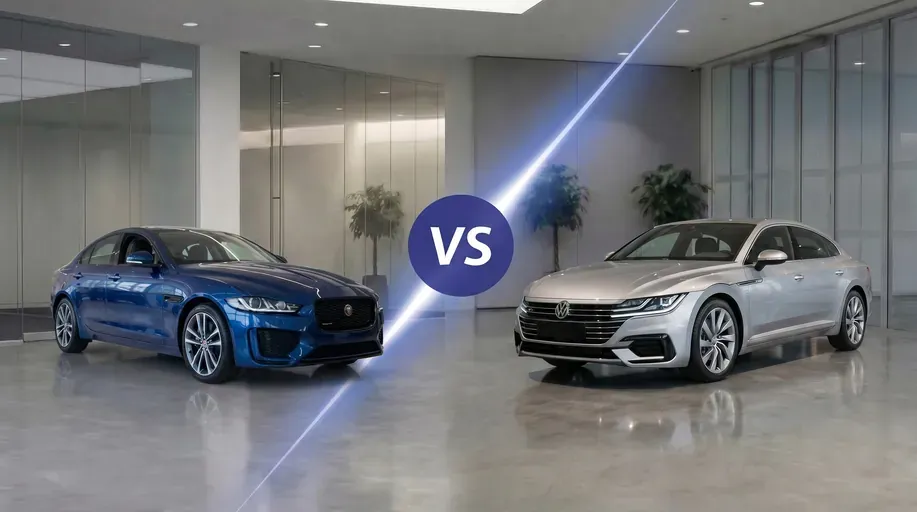
Detailed comparison of Jaguar XE vs Volkswagen Arteon. Discover the differences in driving characteristics, equipment, and reliability, and choose the best used car for you.
Apr 26, 2026
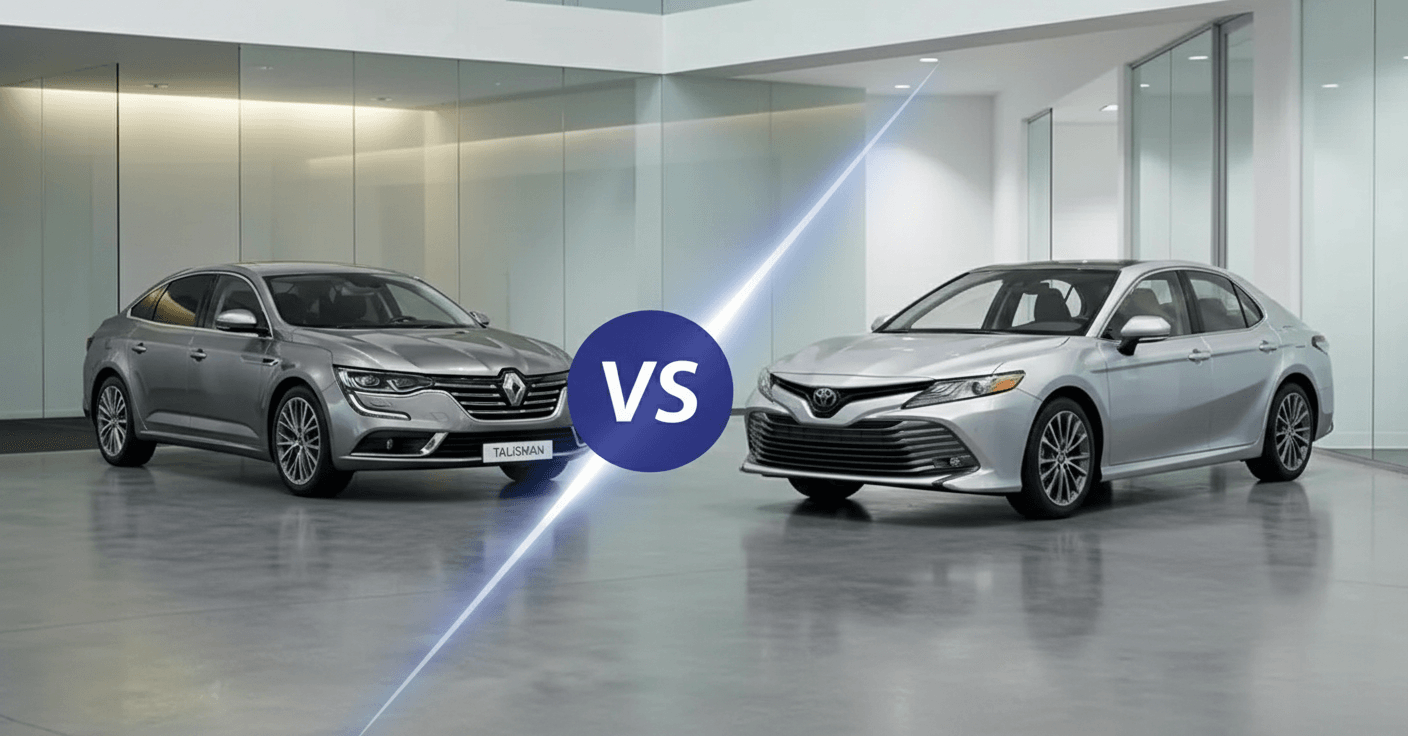
Detailed comparison of Renault Talisman vs. Toyota Camry. Discover the real differences in reliability, equipment, and fuel consumption. Find out which car to choose based on our verdict.
Oct 16, 2026