Review Volkswagen ID.7: What do owners and experts really say?

Volkswagen ID.7 in-depth review: real owner experience, real-world range, Fastback and Tourer practicality, costs, and our expert verdict.

October 28, 2026

Volkswagen ID.7

Verdict at a Glance

  • Who it suits: Fleet users and long-distance commuters seeking a quiet, spacious electric cruiser.
  • Recommended engine: The rear-wheel-drive version with the larger battery for motorway travel.
  • What to avoid: Cars without documented completion of safety recalls for the battery or passenger airbag — check by VIN.

Introduction

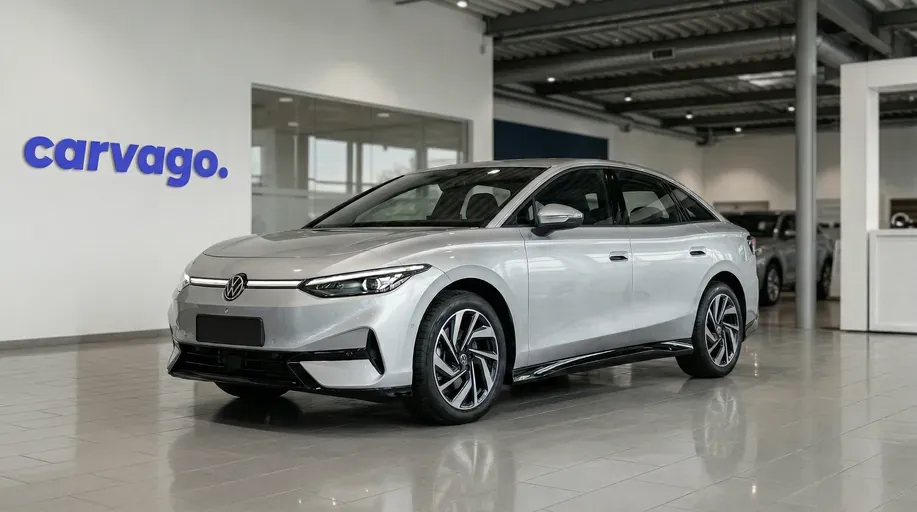
The Volkswagen ID.7 serves as the manufacturer's flagship all-electric model in the upper mid-size executive class. Built on the modular electric drive matrix (MEB), this first-generation vehicle entered series production at the Emden plant in Germany in August 2023, with initial customer deliveries across Europe taking place in November 2023. As of October 2026, the vehicle remains in its original production cycle, with no mid-cycle facelift introduced to date.

The model initially arrived on the market as a five-door fastback. In February 2024, the brand introduced an estate derivative, the Volkswagen ID.7 Tourer, for which pre-sales commenced in March 2024. The lineup broadened further in June 2024 when order books opened for variants equipped with a larger battery capacity as well as dual-motor all-wheel-drive configurations across both body styles.

The ID.7 is aimed primarily at business fleet users and long-distance drivers seeking an electric alternative to conventional executive saloons, while the estate variant targets family buyers requiring cargo flexibility without moving to an SUV format.

Owner Experiences: Common Faults and Recalls

Because the Volkswagen ID.7 entered series production in August 2023, long-term reliability and high-mileage chassis durability are not yet established. Early ownership reports and workshop data center primarily on official safety campaigns affecting early production batches, alongside minor electronic integration quirks. Prospective buyers arranging an independent pre-purchase verification through CarAudit should focus on recall documentation and infotainment responsiveness.

The high-voltage battery system has been subject to two separate safety recalls. In October 2026, an official recall was published covering 5,050 vehicles worldwide built between 18 September 2023 and 27 June 2025. Official notices state that "high-voltage batteries that do not meet specifications may overheat and cause a fire" due to supplier production defects in individual battery cells. Workshops inspect the pack, install diagnostic battery management software, and replace defective cell modules. Until inspected, manufacturers issued an interim safety precaution capping charging at an 80% state of charge and requiring outdoor charging only. This followed an earlier campaign announced in January and February 2026 for 323 vehicles worldwide built between 2 September 2023 and 21 March 2024. That notice cited cells showing increased self-discharge that could lead to thermal overload; dealers replace affected modules free of charge, with owners instructed to avoid DC rapid charging prior to inspection.

Two further European safety recalls address interior hardware. An announcement published in July and August 2025 affected 17,804 vehicles worldwide across multiple model lines built between May 2022 and 27 May 2025. The notice warned that during an accident deployment, "the gas generator housing may burst or components of the gas generator housing may detach, which could result in serious or fatal injuries to occupants." Dealers replace the entire front passenger airbag assembly; interim advice instructed owners to deactivate the passenger airbag and leave the seat unoccupied until serviced. Earlier, in June 2024, a recall covering 11,144 vehicles worldwide built from the start of production up to 19 March 2024 addressed front seat frames, where a defective screw connection between the backrest and the seat pan risked insufficient support in a collision. Authorised workshops inspect and re-torque or replace the mounting bolts.

Beyond official safety notices, owners report minor operational inconsistencies with cabin comfort systems. The electronically controlled air vents, which use small motorized actuators to direct airflow via touchscreen inputs, can develop audible clicking sounds or mechanical resistance in freezing ambient conditions. Dealerships address this under warranty through software recalibration or by replacing noisy stepper motors. Drivers also describe occasional latency with keyless proximity unlocking when approaching the vehicle, delayed response from the hands-free tailgate sensor, and slow server synchronisation through the smartphone app. While system software updates have resolved early connectivity glitches, occasional wake-up hesitation remains reported by some owners.

Whether considering the fastback, the Volkswagen ID.7 Tourer, or the dual-motor all-wheel-drive Volkswagen ID.7, verifying warranty-backed service records is essential on early build dates.
🔍 What to check before buying

  • High-voltage battery recalls: Have an authorised workshop verify the vehicle identification number (VIN) to confirm that all battery cell diagnostic checks, software updates, and module replacements were completed.
  • Passenger airbag campaign: Confirm documented dealer replacement of the front passenger airbag module assembly on cars manufactured prior to June 2025.
  • Front seat mountings: Check service records to ensure the front seat backrest screw connections were inspected and torqued to specification.
  • Motorized air vents: Test the cabin ventilation controls through the central touchscreen across all automatic sweep settings, listening for clicking noises or stuck louvres.
  • Keyless entry and tailgate: Test key fob proximity locking, door handle sensors, and the hands-free boot release to ensure responsive wake-up operation.

Engines: Which One to Choose

The first-generation Volkswagen ID.7 entered European markets with a dedicated rear-axle electric motor, subsequently expanding to include an extended-range battery option and an all-wheel-drive performance powertrain. Every variant is paired with a fixed-ratio reduction automatic transmission.

EngineFuelPowerGearboxDrivetrainModel years
Electric (77 kWh)Electric210 kW (286 hp)Automatic (1-speed)Rear-wheel drive2023–present
Electric (86 kWh)Electric210 kW (286 hp)Automatic (1-speed)Rear-wheel drive2024–present
Dual-motor AWD (86 kWh)Electric250 kW (340 hp)Automatic (1-speed)All-wheel drive2024–present

For city commuting and mixed suburban driving, the rear-wheel-drive electric Volkswagen ID.7 with the standard battery is the most practical selection. Its rear-mounted motor offers progressive throttle calibration from rest, ensuring smooth low-speed behaviour without sudden wheelspin in urban traffic.

For drivers who regularly cover long motorway distances, the rear-wheel-drive version fitted with the larger battery is the most suitable configuration. Retaining the same power output as the standard unit, its extra storage capacity extends the operating window between charging stops while sustaining quiet, low-vibration cruising speeds.

The dual-motor all-wheel-drive Volkswagen ID.7 serves buyers who need extra traction in cold-weather regions or require regular towing capability, offering improved grip on compromised surfaces and a higher braked towing rating than rear-wheel-drive variants. Drivers requiring estate practicality can also pair this dual-motor drivetrain with the Volkswagen ID.7 Tourer.

Real-world range and charging

Cold winter conditions noticeably diminish operating range due to cabin heating demands and battery thermal management. On high-power DC fast chargers, replenishment speeds remain consistently high when route guidance automatically pre-conditions the battery pack ahead of arrival; plugging into rapid chargers without pre-heating leads to significantly slower charging curves in freezing temperatures.

Space & Practicality

Dimension / CapacityFastback (Hatchback)Tourer (Estate)
Length (mm)4,9614,961
Width (mm)1,8621,862
Height (mm)1,535–1,5361,549–1,551
Wheelbase (mm)2,9712,970–2,971
Boot capacity (seats up / folded, l)532 / 1,586605 / 1,714

A long wheelbase provides substantial rear legroom across both versions of the Volkswagen ID.7, accommodating tall adults comfortably behind tall front occupants. Rear headroom is sufficient beneath the sloping roofline of the hatchback Volkswagen ID.7, whereas the estate Volkswagen ID.7 provides additional vertical clearance. Everyday utility is supported by a standard 60:40 split-folding rear bench with an integrated central armrest and a through-loading hatch for longer items. To increase cargo depth without lowering the rear seats, the estate variant incorporates an upright cargo position for the rear backrests. Neither body style features a sliding rear bench, and neither provides a front luggage compartment under the bonnet, so charging cables must be stowed under the main boot floor.

What the Tests Say

Professional road tests describe the Volkswagen ID.7 as a dedicated long-distance cruiser prioritizing calm over driver engagement. When fitted with optional adaptive damping, the suspension absorbs highway crests and long-wave undulations with composure. Handling remains secure and predictable during emergency avoidance maneuvers, though the steering provides muted road feel and the chassis lacks cornering agility. When fitted with optional acoustic glass, wind rush remains low at motorway pace, though coarse asphalt induces noticeable tyre roar, and larger wheel choices can transmit sharp impacts over broken urban tarmac.

The cabin represents a clear step forward from the brand's earlier electric offerings, featuring soft-touch plastics, comfortable seating, and neat structural assembly. While the central infotainment screen responds promptly, control ergonomics draw consistent criticism. Testers repeatedly report that touch-sensitive steering-wheel pads, capacitive temperature sliders, and a shared driver-door window toggle frustrate everyday operation.

Reviewers agree on the car's quiet motorway demeanor and composed passenger comfort. Testers diverge primarily on secondary ride compliance across differing wheel setups, as well as the traction control's abrupt interventions when accelerating out of tight corners on wet surfaces.

Prices and Market Offer

All the charts in this section reflect Carvago listings across the entire Volkswagen ID.7 model family, including any generations represented in the broader data rather than only the reviewed generation, and do not establish a separate price level for the reviewed generation alone. Currently, the median asking price stands at €49,500 for 2023 cars, compared to €51,400 for 2024 examples. For 2025 and 2026 builds, the median asking price reaches €52,500 and €56,000 respectively, with later listings frequently featuring estate body styles and larger battery configurations.

The chart tracks the volume of active Volkswagen ID.7 listings on the market from April to September 2026, starting at 2,758 advertised cars and reaching 4,382 by the final month.

Volkswagen ID.7 - availability over time

Active listings over time

MonthVolkswagen ID.7
2026-042 758
2026-052 634
2026-062 908
2026-073 405
2026-083 716
2026-094 382

Source Carvago

After a dip to 2,634 listings in May 2026, advertised counts increased in each following month, giving buyers a broad and widening selection of vehicles to choose from.

Across used listings advertised today, the median asking price is €49,500 for cars built in 2023 and reaches €56,000 for vehicles built in 2026.

Volkswagen ID.7 - median price by model year

Median advertised price by year of manufacture

Model yearVolkswagen ID.7
202349 500
202451 400
202552 500
202656 000

Source Carvago

Buyers focusing on 2024 and 2025 models encounter median asking prices of €51,400 and €52,500, whereas securing a 2026 build requires €56,000.

This depreciation curve illustrates how the model sheds residual value as it ages, losing roughly 10% in its first year and 33% by age three.

Volkswagen ID.7 - value loss by age

Residual value by vehicle age

Vehicle ageVolkswagen ID.7
New56 600
1 yr51 000
2 yrs44 000
3 yrs37 800
4 yrs33 500
5 yrs30 700
6 yrs28 300
7 yrs26 900

Source Carvago

Across seven years, the car sheds approximately 52% of its initial residual value, with the steepest decline occurring between age one and age three before annual losses moderate to under 5%.

Between April 2026 and September 2026, advertised listings for the model were entirely electric, starting at 2,758 cars in April and reaching 4,382 by September. The chart below shows how monthly listing counts compare across powertrain options over this span.

Volkswagen ID.7 - supply by fuel over time

Supply composition by fuel type

MonthElectric
2026-042 758
2026-052 634
2026-062 908
2026-073 405
2026-083 716
2026-094 382

Source Carvago

In September 2026, all 4,382 available listings were electric, with zero petrol, diesel, or hybrid vehicles recorded in the data. Anyone browsing the market will realistically find only battery-electric options.

The chart tracks the average asking price for the Volkswagen ID.7 from April 2026 to September 2026, when listings began at an average of €52,800.

Volkswagen ID.7 - price trend over time

Average price development over time

MonthVolkswagen ID.7
2026-0452 800
2026-0553 500
2026-0653 300
2026-0753 000
2026-0852 700
2026-0952 100

Source Carvago

After rising to €53,500 in May 2026, the average asking price eased downward in each subsequent month to €52,100 by September 2026, representing a movement of just over one percent across the recorded span.

Pros & Cons

Volkswagen ID.7

Pros

Substantial rear legroom accommodating tall adults across both body styles

Quiet motorway cruising with low wind noise and composed ride comfort

Improved interior assembly and soft-touch materials compared to earlier brand electric models

Cons

Capacitive climate sliders, touch-sensitive steering pads, and shared window switches complicate operation

No front luggage compartment under the bonnet for dedicated charging cable stowage

Early production batches subject to safety recalls concerning high-voltage battery cells and airbags

Frequently asked questions

Because series production began in late 2023, long-term durability is not yet established. Early ownership reports center primarily on official safety recall campaigns and minor electronic quirks.

The rear-wheel-drive Volkswagen ID.7 equipped with the larger battery is the most suitable choice, providing the widest operating window between charging stops. However, cold ambient temperatures noticeably reduce real-world range.

Have an authorised workshop verify the vehicle identification number (VIN) to confirm all official recall work has been completed. Prospective buyers should also test the motorized air vents and electronic convenience features for smooth operation.

Across the market, median asking prices start at €49,500, with newer builds such as the Volkswagen ID.7 Tourer commanding higher values.

Sources: volkswagen-newsroom.com, adac.de, vwpress.co.uk, autocar.co.uk, autobild.de

This article was prepared using artificial intelligence tools. The section guarantor is Petr Dušek.

Related articles

Car battle

BMW i4 vs. Tesla Model 3: Complete comparison 2026

BMW i4 vs Tesla Model 3: Which electric car should you choose? We bring you a detailed comparison of real-world range, equipment, and driving characteristics, including a clear verdict.

Apr 26, 2026

Car battle

Opel Astra Electric vs. Renault Mégane E-Tech: Complete comparison 2026

Detailed comparison of the Opel Astra Electric and Renault Mégane E-Tech Electric. Find out the real range, compare equipment, and read our final verdict.

Apr 29, 2026

Car battle

MG4 vs. Peugeot e-308: Complete comparison 2026

Detailed comparison of the MG4 and Peugeot e-308. We compared the real-world range, equipment, and driving characteristics of both electric vehicles. Read our verdict before you buy!

Apr 13, 2026

We accept online card payments as well as wire transfers.

visa payment provider logovisa-electron payment provider logomastercard payment provider logomaestro payment provider logodiners-club payment provider logodiscover payment provider logo