Car battle
Tesla Model 3 vs. Volkswagen ID.7: Complete comparison 2026
Detailed comparison of Tesla Model 3 vs Volkswagen ID.7. Which electric car offers better range and space? Discover real-world driving experiences and our verdict.
Apr 26, 2026
Articles
Car battle
Detailed comparison of the Opel Astra Electric and Renault Mégane E-Tech Electric. Find out the real range, compare equipment, and read our final verdict.
April 29, 2026
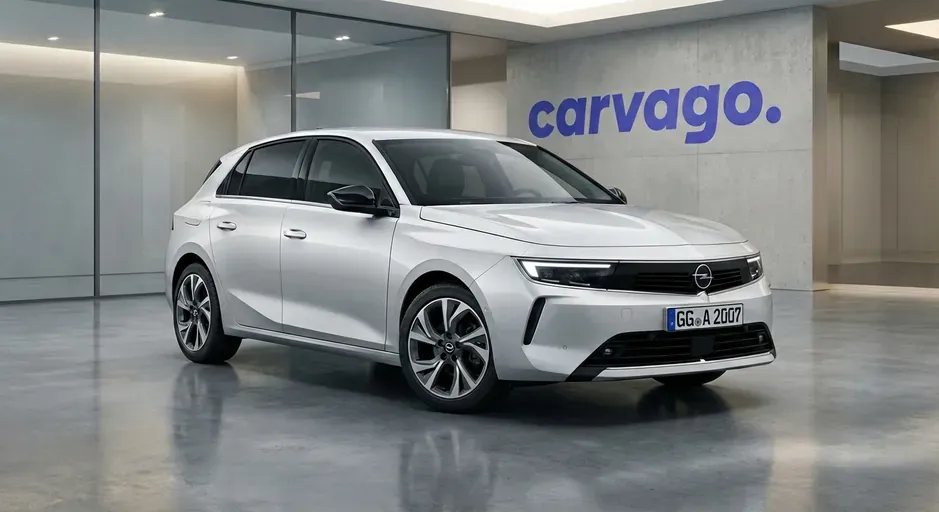
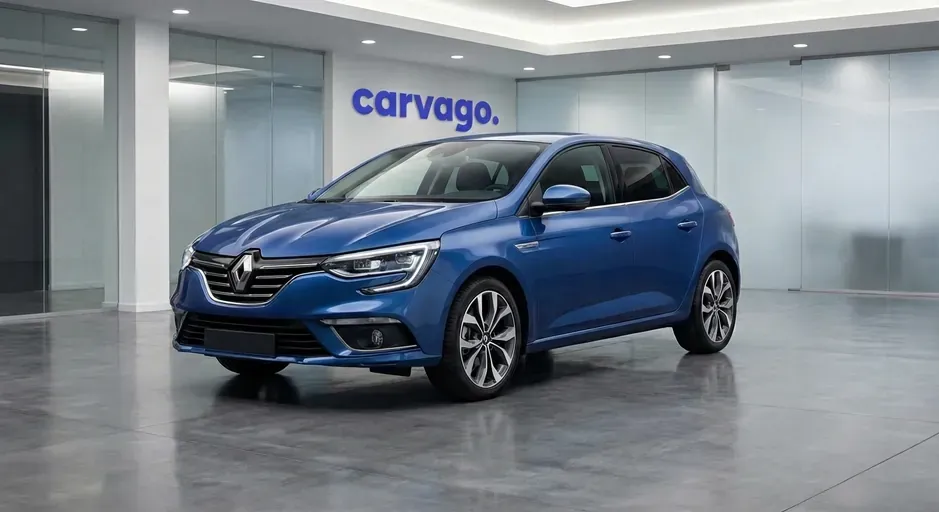
Opel Astra Electric, also sold on the British market as the Vauxhall Astra Electric, represents a modern electric evolution of the traditional European hatchback, focusing on proven practicality and clean design. Standing against it is the Renault Mégane E-Tech, also known by its full name Renault Megane E-Tech Electric, which brings a bolder, innovative concept on the border between a hatchback and a crossover, built on a platform designed exclusively for battery power. The following lines will compare the specifications, equipment, and driving characteristics of both models in detail, helping you decide which of these roughly four-year-old electric vehicles makes more sense for your daily journeys on the used car market.
Looking at the exterior dimensions of both electric vehicles, you quickly discover that each manufacturer has chosen a completely different philosophy for its key model. While the Opel Astra Electric is based on a flexible multi-energy platform and retains the classic proportions of a traditional five-door hatchback (or the very practical Sports Tourer estate), the Renault Mégane E-Tech was designed exclusively as an electric vehicle from the first sketches. This gave it a distinctive shape somewhere between a raised hatchback and a city crossover, which has strongly influenced its proportions. In terms of concept, you will be choosing between a classic sportier cut and an innovative approach to maximizing interior space.
A fundamental difference can be found in the overall length of both cars. The Renault Mégane E-Tech measures just 4200 mm in length, which is a significant 174 mm less than the Opel Astra Electric in its shorter hatchback body (4374 mm). In practice, this means the French representative is much more agile in narrow city streets, and parallel parking in tight spaces is noticeably easier. However, if you are primarily looking for a car for family holidays and need the largest possible transport capacity, Opel scores with its estate version, which measures an impressive 4642 mm in length. Renault does not currently offer this length and volume alternative for the electric Mégane, which may be a clear argument for the German brand for many interested in a spacious family car.
Truly fascinating, however, is the look at the wheelbase values. Although the Mégane E-Tech is significantly shorter than the Opel hatchback, thanks to its purely electric platform (CMF-EV), it has its wheels pushed to the very corners of the body and benefits from minimal overhangs. The result is a wheelbase of 2685 mm, which is actually 10 mm more than that of the significantly longer Astra hatchback (2675 mm). Renault thus manages to conjure up a surprising amount of knee room for rear passengers from a small exterior footprint. Opel, on the other hand, clearly dominates in exterior width – at 1860 mm, it exceeds the Mégane (1783 mm) by a full 77 mm, which benefits the wider interior and shoulder room in particular. The French model, conversely, is 17 mm taller (1505 mm vs. 1488 mm). As a result, the Astra appears much more planted and dynamic on the road, while the Mégane relies on exceptionally efficient space packaging, particularly suitable for modern city traffic.
| Parameter | Opel Astra Electric Hatchback | Opel Astra Electric Estate | Renault Mégane E-Tech SUV |
|---|---|---|---|
| Width (mm) | 1859 - 1860 | 1859 - 1860 | 1783 |
| Length (mm) | 4374 | 4642 | 4200 |
| Height (mm) | 1488 | 1481 - 1498 | 1505 |
| Wheelbase (mm) | 2675 | 2732 | 2685 |
When choosing a compact car on the market for roughly four-year-old used cars, luggage compartment volume is a key factor, especially if the car is to serve as the main family vehicle. In this regard, the offerings of both manufacturers differ quite significantly due to overlapping generations and different body styles. While the Opel Astra Electric represents the latest generation (L), which, even with a purely electric drive, offers a traditional five-door hatchback and a classic station wagon (Estate), with the Renault Mégane E-Tech, you will encounter a wider range. Alongside the newer fully electric fifth-generation model, which has the proportions of a crossover (SUV/Offroad category), slightly older fourth-generation plug-in hybrid models in hatchback and station wagon (Estate) versions often appear in advertisements.
The installation of heavy batteries in compact cars always takes its toll on interior space. In the five-door Opel Astra Electric hatchback, the basic trunk volume has decreased to 352 liters (maximum 1,268 liters with the backrests folded down), which represents a slight decrease compared to pure internal combustion versions, but is fully sufficient for everyday tasks. However, the competing fourth-generation Renault Mégane E-Tech plug-in hybrid hatchback suffered even more from the presence of the battery – the trunk shrank to a modest 308 liters (maximum 1,200 liters), which can significantly limit family ambitions. A fundamental change was brought by the fifth, fully electric generation of the Renault (crossover), where the deep luggage compartment holds an excellent 440 liters and grows to 1,332 liters when folded down, which in practice means space for several extra suitcases.
If you need to transport bulkier loads or are looking for a car with sufficient capacity for weekend shopping and longer summer holidays, the station wagon body style makes much more sense. The fourth-generation plug-in hybrid Renault Mégane E-Tech Estate saves the situation with a usable volume of 389 liters, which increases to 1,372 liters after folding the seats. However, the absolute king of transport capacity in this comparison is the purely electric Opel Astra Electric Estate. In its basic configuration, its trunk swallows a very respectable 516 liters and after folding the rear backrests, it offers an impressive 1,533 liters, crowned by a practical flat loading surface ideal for easier cargo handling.
| Parameter | Opel Astra Electric Hatchback | Opel Astra Electric Estate | Renault Mégane E-Tech Hatchback | Renault Mégane E-Tech Estate | Renault Mégane E-Tech SUV/Offroad |
|---|---|---|---|---|---|
| Base volume (liters) | 352 | 516 | 308 | 389 | 440 |
| Max volume with seats folded down (liters) | 1268 | 1533 | 1200 | 1372 | 1332 |
If trunk volume is an absolute priority for you, the electric Opel Astra station wagon wins hands down, while the fully electric Mégane E-Tech crossover will also serve perfectly for daily use with a sufficient reserve.
The ability to tow a trailer is a frequently discussed topic for modern electrified vehicles, as trailer weight and worsened aerodynamics significantly affect overall range and practicality. For the purely electric Opel Astra Electric (generation L, produced since 2023), the manufacturer unfortunately does not list any official values for towing capacity. In used car market practice, this usually means that a tow bar either cannot be fitted at all, or it is homologated only for vertical load, i.e., exclusively for carrying a bicycle rack, not for towing.
The competing Renault Mégane E-Tech is significantly better in terms of towing capacity and offers clear figures. If you go for a roughly four-year-old plug-in hybrid Mégane E-Tech Plug-in 160 (generation IV, 2020–2023), you can count on a standard braked trailer weight of 750 kg. For the fully electric successor Mégane E-Tech Electric (generation V, since 2022), capacities vary by power and battery. Basic variants with 130 hp (EV40 / ER 130) can handle a maximum of 500 kg. However, if you choose the more powerful version with 220 hp (EV60), the maximum braked trailer weight rises to a very respectable 900 kg. In practice, this means that the basic capacity of 500 kg is fully sufficient for occasionally attaching a smaller trailer for hauling garden waste or materials from a DIY store. The more powerful electric version with 900 kg already offers enough reserve even for towing a lighter folding caravan for a family holiday.
In conclusion, if the ability to tow a trailer is a key parameter for you when choosing a used car, the Renault Mégane E-Tech represents a much more practical and versatile choice. With the electric Astra, you will have to give up this functionality entirely.
| Model and motorization | Braked weight of trailer (kg) | Unbraked weight of trailer (kg) |
|---|---|---|
| Renault Mégane E-Tech Plug-in 160 (Gen IV) | 750 | - |
| Renault Mégane E-Tech Electric 130 hp (Gen V) | 500 | - |
| Renault Mégane E-Tech Electric 220 hp (Gen V) | 900 | - |
When comparing the powertrains of the Opel Astra Electric and Renault Mégane E-Tech, we encounter two different approaches to electric drive offerings, which is a key factor for those interested in a used electric car approximately four years old. For the L generation, Opel bets on maximum simplicity and offers a single, yet carefully balanced variant with one power level and one battery capacity. In contrast, Renault, with the fifth generation (V) of its Mégane, comes with a much more diverse range, allowing a choice between two battery capacities and two motor power versions. In terms of range, the better-equipped versions of both cars on the market are very similar – the stated WLTP figures easily exceed the 400 km mark. The deciding factor for buyers will therefore primarily be whether they prefer the predictable, efficient standard from Opel or the possibility of much more precise adaptation of power and battery size to their own needs and budget, as offered by the more dynamic Renault. Both models then identically use front-wheel drive and a single-speed reduction gearbox.
The Opel Astra Electric entered its electric era within the L generation with a clear and concise offering – you won't find a confusing array of variants on the used car market. The car is powered by a synchronous electric motor located on the front axle, which delivers a peak power of 115 kW (156 hp) and a maximum torque of 270 Nm. This power is more than sufficient for smooth operation and agile responses in both city and highway traffic, with the Astra effectively benefiting from a relatively favorable kerb weight (less than 1,700 kg). Energy is stored in a compact lithium-ion battery with a gross capacity of 54 kWh (50.8 kWh is usable). Although the customer has no choice of a more powerful "sporty" derivative or a variant with a monstrous battery for extra-long trips, the combination used excels in above-average electric efficiency. The Astra Electric can thus offer a homologated combined WLTP range slightly exceeding the 415-kilometer mark.
| Engine type | Fuel | Power (kW) | Torque (Nm) | Transmission |
|---|---|---|---|---|
| Electric | Electricity | 115 | 270 | Automatic |
The all-electric Renault Mégane E-Tech (generation V), built on a dedicated electric platform from the start, serves up more attractive options in the used car market. The base is the version designated as EV40 (or also 130 Urban Range), which combines a smaller 40kWh battery with an electric motor with an output of 96 kW (130 hp) and a torque of 250 Nm. This specification is an ideal choice for a budget, especially for those who use an electric car mainly for urban use. If you need to drive longer distances without frequent stops, a larger 60kWh battery is available. You can get this either with the basic, more efficient 96 kW electric motor (in the price list optimized for maximum range as EV60 130hp or ER 130), or in its most common and much more aggressive EV60 220hp specification (or 220 Comfort Range). The top variant sends a powerful 160 kW (218 hp) and a torque of 300 Nm to the front wheels. It thus gives the car a very confident to slightly sporty character with acceleration from zero to 100 km/h in a confident 7.4 seconds.
| Engine type | Fuel | Power (kW) | Torque (Nm) | Transmission |
|---|---|---|---|---|
| EV40 130hp / 130 Urban Range | Electricity | 96 | 250 | Automatic |
| EV60 130hp / ER 130 Comfort Range | Electricity | 96 | 250 | Automatic |
| EV60 220hp / 220 Comfort Range | Electricity | 160 | 300 | Automatic |
While the Opel Astra Electric will suit more conservative buyers thanks to one very efficient and universal variant, the Renault Mégane E-Tech, thanks to the offering of multiple battery capacities and more powerful electric motors, adapts much better to different driving styles and dynamic demands.
Choosing the right powertrain is crucial for long-term satisfaction, which is why our recommendations are based on real-world experience with performance, efficiency, owner feedback, and the technical reliability of both models. When comparing these two fully electric compact cars, two completely different approaches face off. The Opel Astra Electric bets on the conservative form of a traditional hatchback with an exceptionally efficient motor and a modest battery, while the Renault Mégane E-Tech has taken the path of an innovative crossover with a thin battery pack and an extremely fast system. While the Astra scores with great consumption and predictability, the Renault delights with unrivaled onboard AC charging, which fundamentally simplifies life for people without their own garage. In the used car market, both cars are nearly new, mostly still covered by a generous factory warranty.
This powertrain, available since 2023, represents the only and, from a technical standpoint, ideally balanced choice on the nearly new vehicle market for the Astra Electric. It is the best choice due to its complete lack of demanding requirements and top-tier efficiency, thanks to which real-world consumption commonly stays around a very low 15 kWh/100 km and the field-tested range reliably reaches 320 km. A significant technical advantage is the smooth and pleasantly refined power delivery of 115 kW, paired with a comfortably tuned chassis that perfectly masks the battery's weight. A known weakness, however, is the slightly slower fast charging with a maximum output of 100 kW DC, which on longer trips means that charging from 10 to 80% takes approximately half an hour. When choosing a used car, check the status of the infotainment software in particular – older versions of the system may have less optimized battery energy management, so check the settings history to ensure the car has been regularly updated. Ultimately, this powertrain is best suited for more moderate and conservative drivers or families who primarily travel on shorter and suburban routes, are not looking for racing acceleration, and prefer a smooth and comfortable ride.
Although a weaker version with a smaller 40 kWh battery exists, for models produced since 2022, we clearly recommend the more sought-after and much better-proportioned EV60 variant with 220 hp. We consider it the best choice because the larger 60 kWh battery guarantees great versatility with a safe real-world range of around 350 kilometers. A major technical advantage is both the punchy dynamics (0 to 100 km/h in 7.5 seconds) with faster 130 kW DC charging, and especially the fantastic built-in 22 kW AC charger. Thanks to this, you can fully recharge at an ordinary city charging post in a few hours, whereas with other cars, you would barely get half. Due to all 220 hp being sent exclusively to the front wheels, there is a known risk of significant front tire wear and torque steer during sharp acceleration – check the car's tires during the test drive; worn outer edges may alert you to insensitive handling by the previous owner. Another drawback is the poor visibility through the narrow rear window; for this reason, physically test the speed and flawless operation of the parking camera on the main display. The model is therefore ideal for tech enthusiasts, dynamically-minded drivers, and city dwellers who will fully utilize the lightning-fast public AC charging and smart infotainment.
Differences between officially stated and real-world fuel consumption are often the subject of long discussions, which is why it is always best to rely on real data from drivers themselves. For this purpose, we have used user records from the popular portal Spritmonitor.de. Given that traditional internal combustion versions of both cars (Opel Astra generation L and the previous K, and Renault Mégane generation IV) meet modern purely electric variants on the market for roughly four-year-old used cars, we compared the most common engines across the entire spectrum.
Source: Spritmonitor.de
| Model and engine | Average consumption |
|---|---|
| Renault Mégane 1.5 Blue dCi 115 (85 kW) | 4.5 l/100 km |
| Opel Astra 1.5 Diesel (96 kW) | 4.8 l/100 km |
| Opel Astra 1.2 Turbo (96 kW) | 5.8 l/100 km |
| Renault Mégane 1.3 TCe 140 (103 kW) | 5.9 l/100 km |
| Opel Astra Electric (115 kW) | 15.5 kWh/100 km |
| Renault Mégane E-Tech EV60 (160 kW) | 15.8 kWh/100 km |
The interpretation of this data shows a clear trend: diesel engines from both brands still represent an unbeatable choice for highway travel. The French 1.5 Blue dCi four-cylinder from Renault is slightly more economical than its diesel competitor from Opel, and both cars can realistically be driven well below the five-liter mark. In contrast, small petrol turbo engines may attract with low consumption on paper, but in practice, the common myth of downsizing has been confirmed – if you put more load on these engines (1.2 Turbo in the Opel and 1.3 TCe in the Renault), consumption quickly climbs towards six liters. The data for purely electric versions is surprisingly balanced. Although the Renault Mégane E-Tech offers significantly higher performance, its average energy consumption remains at an excellent level, closely following the slightly more efficient Astra Electric.
For the average user, these values mean only one thing – choose your powertrain strictly according to the type of routes you drive. If you are a driver who enjoys long trips and highway travel, the diesel variants of both models will save you significant money in the long run and provide excellent range. Petrol variants target drivers operating primarily on shorter routes or in and around cities, where their higher consumption is less noticeable, and you benefit from a lower susceptibility to expensive repairs. Modern electric variants of both cars with high energy efficiency make sense for everyone who has the possibility to charge at home or at work and whose primary requirement is the lowest possible operating costs.
It can therefore be calmly stated that consumption itself will not be the main factor that should decide the duel between these two rivals. Both car manufacturers have managed to tune their units to almost identical levels of efficiency. Your final choice will therefore be influenced more by the exterior design language, the interior concept, or the feel of the driving characteristics of both cars.
When looking for a used electric car in the compact category, the length of time a model has been on the market plays a crucial role. While the Renault Mégane E-Tech went on sale at the turn of 2021 and 2022, the fully electric Opel Astra Electric only entered the market in mid-2023. This time shift is naturally reflected in the supply and prices on the used car market, where we typically look for three- to four-year-old vehicles.
The Mégane E-Tech is quite well-represented on the used car market, which pushes its average prices down and offers buyers a wider choice. For roughly four-year-old models, the price depends primarily on the original battery capacity:
Due to its later market launch, used Astra Electric cars are on average one to two years younger than the oldest electric Mégane models. The supply on the secondary market is still slightly more limited, and prices are naturally somewhat higher.
| Model | Market launch of electric version | Average used car price | Battery capacity (usable) |
|---|---|---|---|
| Renault Mégane E-Tech | 2022 | €18,000 - €25,000 | 40 kWh / 60 kWh |
| Opel Astra Electric | 2023 | €25,000 - €29,000 | 54 kWh |
If you are looking for the most affordable entry into the world of modern compact electric cars and have a tighter budget, the 2022 Renault Mégane E-Tech offers an excellent price-to-value ratio. The 2023 Opel Astra Electric, on the other hand, requires a higher initial investment, which is offset by its younger age, nearly new condition, and more conservative approach to both the interior and exterior.
The Renault Mégane E-Tech benefits from its longer presence on the market and offers significantly more affordable used cars, while the overall younger Opel Astra Electric will appeal to buyers who are happy to pay extra for a nearly new car with low mileage.
Although modern electric vehicles and these model families generally speak of five-star ratings in Euro NCAP crash tests, when choosing a nearly new car, it is always crucial to consider the context and the exact year of testing. The methodology and test protocols of the Euro NCAP organization are constantly evolving and becoming stricter. Therefore, percentage scores or the star ratings themselves from different years cannot be simply and directly compared. Newer tests simulate much more complex scenarios, such as collisions at intersections, and place significantly higher demands on active accident prevention systems and more sensitive detection of pedestrians or cyclists.
In the case of our two competitors, the situation is transparent and easily comparable. Both models were independently tested in the same year, 2022, which means they had to face identical and very strict protocols (for the Astra model, the results also apply to the fully electric and plug-in hybrid variants).
| Parameter | Opel Astra Electric | Renault Mégane E-Tech |
|---|---|---|
| Year of testing | 2022 | 2022 |
| Adult occupant protection | 80 % | 85 % |
| Child occupant protection | 82 % | 88 % |
| Vulnerable road user protection | 67 % | 65 % |
| Safety assist systems | 66 % | 79 % |
A detailed look at the results shows that in terms of passive safety and the reliability of electronic systems, the French crossover has the upper hand. Renault offers the occupants more sophisticated structural protection in the event of an accident, as evidenced by the better figures for both adults and children. There is also a noticeable difference in safety assistants, where the Mégane E-Tech intervenes in a more modern and prompt manner. While the Opel Astra Electric leads slightly in the protection of pedestrians and cyclists in the event of a collision, it overall lags behind its rival. From the perspective of current and strict standards, the Renault Mégane E-Tech represents a more complete, safer, and more modern protection package.
While both cars ensure a high standard of protection, the Renault Mégane E-Tech represents a more comprehensive choice thanks to its more sophisticated assistants and its full five-star rating in the strict 2022 tests.
In addition to standard equipment, each of the models offers several unique features that can be decisive for the customer and clearly show the path both carmakers have taken.
Availability also in an exceptionally practical estate body style (Sports Tourer)
Conventional and very ergonomic interior with physical buttons for climate control preserved
Excellent electric drive efficiency with low real-world energy consumption
Confident, comfortable, and stable chassis for daily commuting
Smaller battery capacity (50.8 kWh usable) slightly limiting maximum range
Lower maximum charging power at DC fast-charging stations (only 100 kW)
Relatively cramped legroom for rear passengers in the hatchback version
The Opel Astra Electric targets more conservative buyers transitioning to electromobility who require familiar, traditional controls and an understated design. Especially in the Sports Tourer version, it is a rational choice for smaller families who appreciate excellent operational efficiency and top-notch driver's cockpit ergonomics.
Top-tier and fast OpenR Link infotainment with built-in Google services
Option of a larger battery (60 kWh) and a more powerful electric motor (up to 220 hp)
Support for very practical on-board AC charging up to 22 kW (on selected versions)
Attractive modern design and very agile, fun driving characteristics
Significantly limited rear-quarter visibility due to the rising window line and small rear window
Deep luggage compartment with an impractically high loading sill
Poorer front-axle traction during sharp acceleration, especially on wet surfaces
Less headroom and knee room for adult passengers in the second row of seats
The Renault Mégane E-Tech will perfectly appeal to those looking for a stylish, technologically advanced electric car with excellent dynamics and one of the best on-board systems on the market. It will serve tech enthusiasts and individuals or couples well who don't mind minor compromises in space and luggage compartment versatility.
Based on our own inspections through physical inspection of a used car, breakdown statistics, and long-term user tests, we have compiled a detailed overview of the most common problems you should watch out for when choosing.
The Opel Astra Electric utilizes shared electric technology from the Stellantis Group (54 kWh battery), which on one hand guarantees the availability of parts, but at the same time carries some typical teething troubles of this platform.
The Astra Electric benefits from a solid mechanical foundation, but when buying a used one, it is necessary to account for occasional immobilizer software errors, the risk of a discharged 12V battery, and possible problems with the electronic parking brake motor.
The Renault Mégane E-Tech entered the market as a completely new model on a purely electric platform with an innovative onboard system from Google. However, the leap in technology was not without several shortcomings in the first model years.
The innovative technological approach brought with it the risk of software freezes, moodiness at fast chargers, and false motor error messages in the first model years, which should always be preceded by a thorough professional diagnostic before purchase.
When buying a used car, a thorough inspection is key. While internal combustion engines deal with timing belt wear or oil leaks, in modern electric cars, battery condition, onboard software, and chassis specifics take center stage. Here are several specific points to focus on for these two models. For maximum peace of mind before buying, an independent technical inspection of the car provided by the CarAudit service is always ideal.
Renault offers a significantly more spacious boot with a total capacity of 440 litres. Its German competitor has a luggage compartment of only 352 litres, which is due to the battery placement in a platform shared with internal combustion engines. For family shopping and transporting larger items, the French representative is more practical.
The Mégane E-Tech version with the larger 60kWh battery promises a range of up to 470 kilometres according to the stricter WLTP standard. The Astra Electric with a battery of 51 kWh usable capacity offers a rated range of approximately 418 kilometres. In real-world driving and on the motorway, the French model can reliably cover a slightly longer distance.
Renault supports direct current (DC) fast charging with a peak power of up to 130 kW, while Opel manages a maximum of 100 kW. Nevertheless, both cars can be charged from 10 to 80% in approximately 30 minutes, thanks to the different sizes of their batteries. On longer journeys, neither car will keep you waiting unnecessarily at the charging station.
Renault uses the top-tier OpenR Link system built on the Android Automotive platform, which excels in smoothness and integrated Google services. Opel relies on a more traditional and simpler interface, which, however, retains the very popular physical buttons on the dashboard. The choice thus depends on whether you prefer the latest smart features or more classic ergonomics.
Thanks to its more powerful electric motor (220 hp), the French hatchback is noticeably more agile and accelerates from zero to 100 km/h in 7.4 seconds. The German car, with 156 hp, feels more composed, but in return, it excels in top-notch bump absorption and calm motorway stability. For a sportier driving feel, choose the Renault; for maximum driving comfort, choose the Opel.
Sources: ADAC, e15.cz, lidovky.cz, autorevue.cz, autotechnik.cz, autowork.cz
This article was prepared using artificial intelligence tools. The section guarantor is Petr Dušek.
Detailed comparison of Tesla Model 3 vs Volkswagen ID.7. Which electric car offers better range and space? Discover real-world driving experiences and our verdict.
Apr 26, 2026
Deciding between the MG4 and the Opel Astra Electric? Our detailed comparison of range, price, and equipment will help you choose the right electric hatchback for you.
Apr 14, 2026
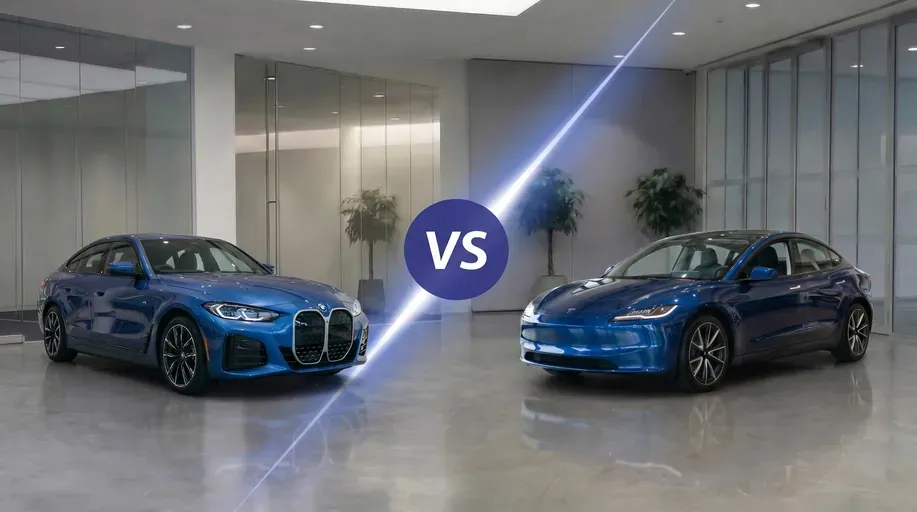
BMW i4 vs Tesla Model 3: Which electric car should you choose? We bring you a detailed comparison of real-world range, equipment, and driving characteristics, including a clear verdict.
Apr 26, 2026