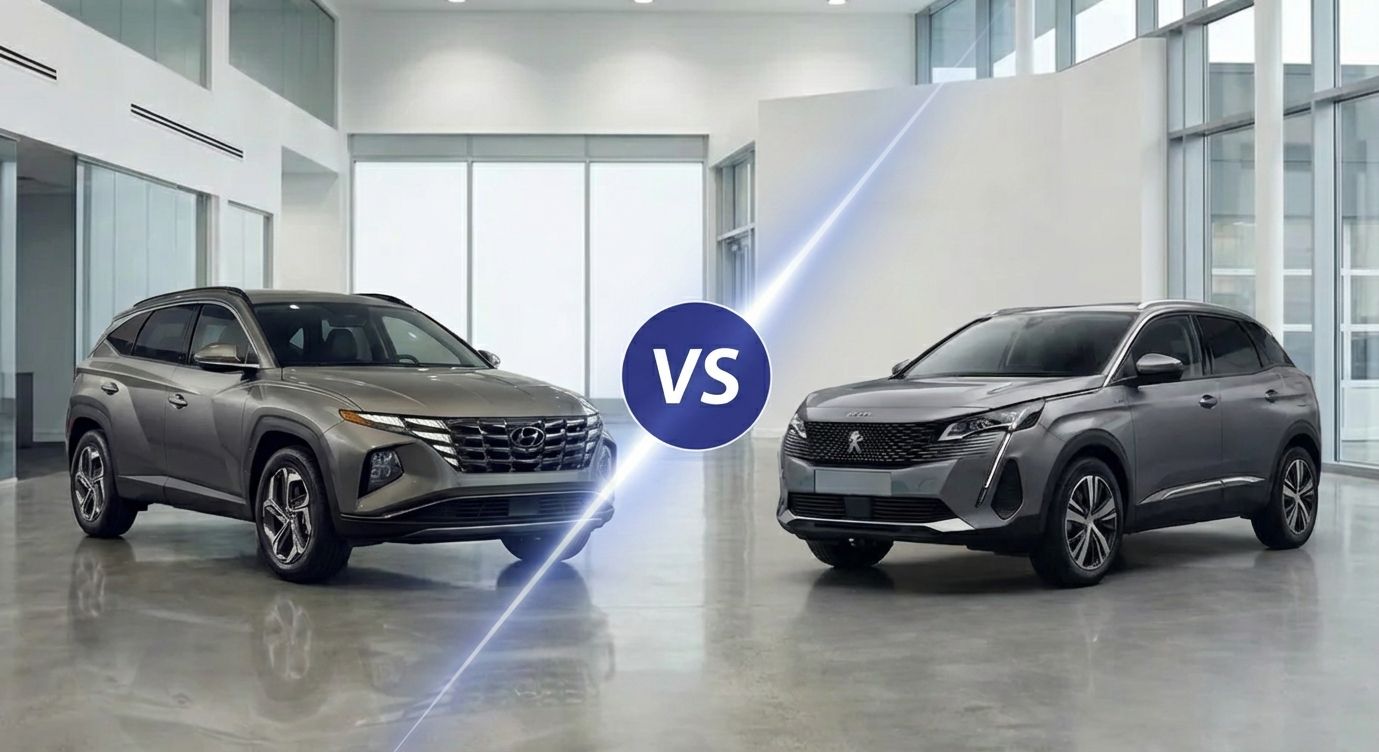
Car battle
Hyundai Tucson vs. Peugeot 3008: A Complete 2026 Comparison
Hyundai Tucson vs Peugeot 3008: A detailed comparison of design, engines, and features. Find out which SUV is the better choice for you in our big test.
Oct 23, 2026
Sixth-generation Toyota RAV4 review: real owner experience, expert tests, practicality, and specs — our definitive verdict on the new SUV.
November 2, 2026

The Toyota RAV4 sits in the competitive mid-size SUV category, functioning primarily as a practical family car for daily commuting and longer journeys. This review focuses on the sixth generation of the nameplate. Following its world premiere on 21 May 2025, European order books opened in May 2026, with the first customer deliveries commencing in June 2026.
Sold as a five-door Toyota RAV4 SUV, the current generation has not undergone any mid-cycle facelift to date and remains in its initial launch specification. It is aimed at private and fleet buyers seeking a five-seat family vehicle that balances passenger practicality with electrified powertrains and available all-wheel-drive capability.
Because European customer deliveries of the sixth-generation Toyota RAV4 only commenced in June and July 2026, long-term reliability and mechanical wear patterns are not yet established. Vehicles currently circulating on the used market are early production models, dealer demonstrators, and short-term registrations with minimal mileage. Long-term breakdown statistics and multi-year endurance data for this generation do not exist, and fault histories from older generations cannot be carried over to this redesigned platform.
To date, no repeated model-specific mechanical defects or hardware wear patterns have been established among European owners. Professional tests note occasional touchscreen lag and minor difficulties pairing driver profiles on the new multimedia interface during initial handover, though these reflect early software calibration rather than physical component defects. Isolated owner reports of early drivetrain warnings on low-mileage vehicles directly correspond to an electronic control initialization issue that was subsequently addressed through a manufacturer safety campaign.
In October 2026, an official safety recall entered into force across the European Union affecting the hybrid Toyota RAV4 in plug-in hybrid configuration. The issue stems from the motor-generator control software. According to the official safety notice, the electronic control unit of the motor generator may not correctly complete the motor initialization process, which can make the high-speed motor control mode unavailable. At higher speeds, this may cause the plug-in hybrid system to enter fail-safe mode or shut down entirely, resulting in a loss of motive power and increasing the risk of an accident.
The recall encompasses production intervals spanning from August 2025 to September 2026, affecting vehicles across the European Union and more than 53,000 units globally. The official remedy requires an authorised workshop to perform a software reprogramming and recalibration of the motor-generator electronic control unit free of charge.
| Affected powertrain | Production window | Defect | Workshop action |
|---|---|---|---|
| Plug-in hybrid | August 2025 – September 2026 | Motor-generator control unit initialization fault risking motive power loss | Software recalibration and update of the motor-generator ECU |
The sixth-generation Toyota RAV4 arrives exclusively with electrified petrol powertrains, pairing a four-cylinder combustion engine with electric motor assistance and an electronic continuously variable transmission. Depending on the European market, the range comprises self-charging full hybrids and plug-in hybrids in front-wheel-drive and all-wheel-drive configurations.
| Engine | Fuel | Drivetrain | Power | Gearbox | Model years |
|---|---|---|---|---|---|
| 2.5 Hybrid | Petrol Full Hybrid | FWD | 136 kW (185 hp) | Automatic | 2026–present |
| 2.5 Hybrid AWD-i | Petrol Full Hybrid | AWD | 143 kW (194 hp) | Automatic | 2026–present |
| 2.5 Plug-in Hybrid | Petrol Plug-in Hybrid | FWD | 200 kW (272 hp) | Automatic | 2026–present |
| 2.5 Plug-in Hybrid AWD-i | Petrol Plug-in Hybrid | AWD | 227 kW (306–309 hp) | Automatic | 2026–present |
For city driving and short daily commutes, the self-charging Toyota RAV4 Hybrid operates smoothly at low speeds and recaptures energy during deceleration without requiring access to a charging plug. Buyers who can charge regularly at home or work will get more utility from the front-wheel-drive plug-in hybrid, which covers daily suburban commuting primarily on stored battery power.
For mixed commuting and long-distance motorway driving, the plug-in hybrid models provide stronger overtaking reserves when merging into fast-moving traffic. The front-wheel-drive plug-in hybrid remains a practical choice for motorway commuters who do not require four-wheel traction, retaining low running costs on long journeys once the battery is depleted.
Drivers who tow trailers, negotiate unpaved roads, or regularly face winter conditions should choose the all-wheel-drive Toyota RAV4 4x4. Adding the dedicated electric motor to the rear axle substantially increases braked towing capacity on the plug-in hybrid, while the all-wheel-drive full hybrid provides confident traction in slippery conditions for buyers who prefer not to manage a charging cable.
Regarding long-term powertrain reliability and early service campaigns, detailed findings and recall history are covered in the owner experiences section.
| Dimension / Capacity | Standard SUV | Sport exterior version |
|---|---|---|
| Length (mm) | 4,600 | 4,645 |
| Width (mm) | 1,855 | 1,880 |
| Height (mm) | 1,700 | 1,685 |
| Wheelbase (mm) | 2,690 | 2,690 |
| Boot capacity (seats upright, l) | 672 | 672 |
| Boot capacity (seats folded to roof, l) | 1,690 | 1,690 |
Luggage capacity figures reflect the plug-in hybrid variant; complete European volume specifications for full-hybrid variants remain unverified.
The cabin of the Toyota RAV4 SUV provides adequate knee room and headroom in the second row for tall adults. While the rear bench is fixed and lacks a fore-and-aft sliding function to adjust passenger space against cargo volume, the seatbacks drop completely flat via a 60:40 split to facilitate stowing longer cargo. Everyday loading in the Toyota RAV4 is slightly hindered by a noticeable load lip at the boot sill despite the elevated floor housing the hybrid hardware, yet the wide opening makes packing bulky boxed items manageable.
Standard suspension setups on the Toyota RAV4 prioritise compliance, absorbing urban potholes and broken pavement with gentle damping. This soft tuning induces noticeable body lean through faster bends, accompanied by light, muted steering and stability systems that intervene early when pushed. In contrast, versions equipped with dedicated sports suspension and larger wheels deliver tighter body control and sharper turn-in, though sharp tarmac joints and sunken covers transmit noticeable thuds into the cabin. Refinement is strong during electric operation and steady cruising, but sudden full throttle still induces a prolonged engine flare before the transmission settles.
Inside, the cabin leans toward functional utility rather than decorative luxury. Sturdy assembly and functional ergonomics are standard, with testers commending the retention of tactile, physical dials for the climate control alongside practical centre console storage. Lower door casings and the transmission tunnel feature hard, unyielding plastics, and the central armrest lid feels thin. The digital interface provides clear graphics, though navigating through deeper vehicle setting menus requires some acclimation.
Professional road tests consistently praise the relaxed, predictable road manners and hushed low-speed operation of the Toyota RAV4, but they disagree on its everyday ride balance: some regard the soft chassis as comfortable family transport, whereas others find its low-speed body sway unsettled compared to tauter segment alternatives.
All the charts in this section are drawn from Carvago listings representing the whole Toyota RAV4 model family, including other generations represented in the data, rather than the reviewed generation alone. Because the dataset does not isolate specific production cycles, these figures do not establish a separate price level for the reviewed generation. Advertised listings show a median asking price of €28,000 for 2019 cars, compared to €49,900 for 2026 examples at the upper end of the recorded model years.
Active listings for the Toyota RAV4 began at 4,802 in May 2026 and finished at 4,913 in October 2026. The chart below illustrates how the number of advertised cars moved across this six-month period.
Active listings over time
| Month | Toyota RAV4 |
|---|---|
| 2026-05 | 4 802 |
| 2026-06 | 4 766 |
| 2026-07 | 4 809 |
| 2026-08 | 4 582 |
| 2026-09 | 4 664 |
| 2026-10 | 4 913 |
Source Carvago
With availability dipping to a low of 4,582 vehicles in August before rising to 4,913 in October, buyers can count on a consistently wide selection to choose from on the market.
Across used listings advertised today, the median asking price of vehicles built in 2019 is €28,000, while the median asking price of those built in 2026 is €49,900, with higher values shown for each successive model year below.
Median advertised price by year of manufacture
| Model year | Toyota RAV4 |
|---|---|
| 2019 | 28 000 |
| 2020 | 30 000 |
| 2021 | 32 000 |
| 2022 | 34 900 |
| 2023 | 40 000 |
| 2024 | 43 000 |
| 2025 | 46 600 |
| 2026 | 49 900 |
Source Carvago
Among used listings advertised today, buyers targeting 2019 or 2020 model years encounter median asking prices of €28,000 and €30,000, whereas 2024 and 2026 models reflect median asking prices of €43,000 and €49,900.
This depreciation curve illustrates how the model's residual value falls with vehicle age, shedding 15% in its first year and 26% by age three.
Residual value by vehicle age
| Vehicle age | Toyota RAV4 |
|---|---|
| New | 49 000 |
| 1 yr | 41 700 |
| 2 yrs | 39 300 |
| 3 yrs | 36 100 |
| 4 yrs | 32 400 |
| 5 yrs | 29 800 |
| 6 yrs | 27 400 |
| 7 yrs | 25 000 |
Source Carvago
Across the seven-year span, the car sheds 49% of its residual value, with the steepest decline occurring in the first year before the annual drop moderates.
Between May and October 2026, hybrid vehicles formed the vast majority of advertised inventory, recording 4441 listings in May alongside 270 petrol options. The chart below shows how active monthly listings were distributed across each fuel type over this six-month period.
Supply composition by fuel type
Petrol
Diesel
Hybrid
Electric
LPG
| Month | Petrol | Diesel | Hybrid | Electric | LPG |
|---|---|---|---|---|---|
| 2026-05 | 270 | 91 | 4 441 | 0 | 0 |
| 2026-06 | 274 | 86 | 4 403 | 0 | 1 |
| 2026-07 | 255 | 89 | 4 461 | 1 | 1 |
| 2026-08 | 245 | 78 | 4 258 | 0 | 0 |
| 2026-09 | 293 | 57 | 4 312 | 0 | 0 |
| 2026-10 | 317 | 65 | 4 528 | 0 | 0 |
Source Carvago
In October 2026, hybrid listings stood at 4528, while petrol accounted for 317 cars and diesel for 65. Buyers will encounter an extensive selection of hybrid models on the market, whereas finding a petrol or diesel variant means choosing from a much smaller pool of available cars.
The chart below shows the average asking price for the Toyota RAV4 from May 2026 to October 2026, opening at €34,400 and reaching €35,000 in August.
Average price development over time
| Month | Toyota RAV4 |
|---|---|
| 2026-05 | 34 400 |
| 2026-06 | 34 500 |
| 2026-07 | 34 600 |
| 2026-08 | 35 000 |
| 2026-09 | 34 900 |
| 2026-10 | 34 900 |
Source Carvago
Across the entire period, the average moved from €34,400 in May to €34,900 in October, an increase of less than 1.5 percent. This variation is minimal relative to the overall price of the vehicle.
Hushed low-speed operation and smooth electric cruising
Comfortable second-row passenger space with fold-flat seatbacks
Dependable cabin ergonomics with tactile physical climate controls
Noticeable body lean in bends and engine flare under hard acceleration
Fixed rear bench without a sliding adjustment to balance cargo space
Hard, unyielding plastics on lower interior surfaces and the centre tunnel
Long-term mechanical reliability is not yet established because European customer deliveries only began in June 2026. Early production cars have seen no widespread mechanical faults, though plug-in hybrid variants require an official motor-generator software update that buyers should verify before purchase.
The self-charging Toyota RAV4 is the most convenient option for urban commuting because it requires no plug-in charging and operates smoothly at lower speeds. Buyers with home charging or regular towing requirements should choose the plug-in hybrid or the all-wheel-drive Toyota RAV4 4x4.
Check the vehicle identification number (VIN) to confirm that an authorised workshop has carried out the motor-generator software update recall. In addition, test the touchscreen for responsiveness and ensure original charging cables are present on plug-in hybrid models.
Early 2026 production cars, demonstrator models, and short-term registrations reflect a median asking price of €49,900 across advertised European inventory.
Sources: media.toyota.co.uk, adac.de, ec.europa.eu, autocar.co.uk, autoexpress.co.uk
This article was prepared using artificial intelligence tools. The section guarantor is Petr Dušek.
Hyundai Tucson vs Peugeot 3008: A detailed comparison of design, engines, and features. Find out which SUV is the better choice for you in our big test.
Oct 23, 2026
Mazda CX-5 review: real owner experience, expert road tests, boot space, running costs and full verdict on the third-generation SUV.
Oct 25, 2026
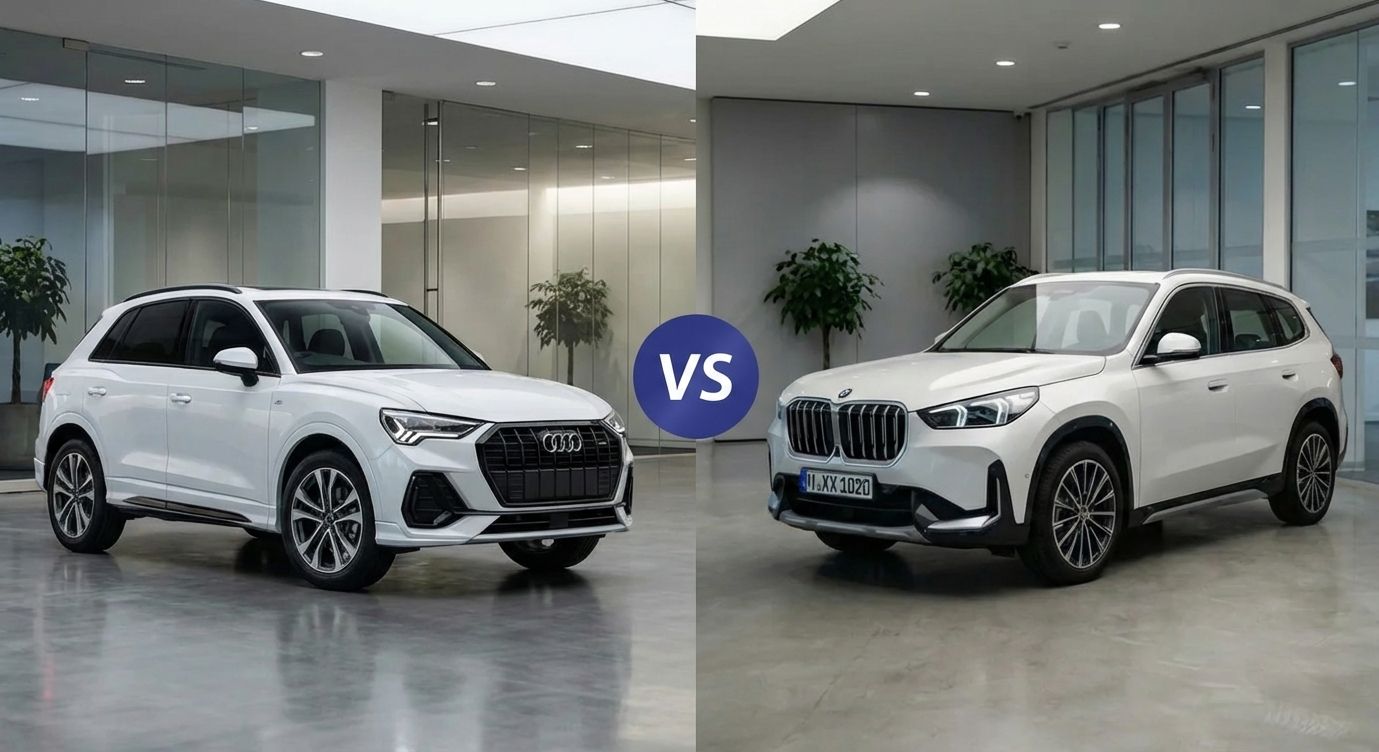
Audi Q3 vs BMW X1: Detailed comparison of design, performance, and practicality. Find out which premium SUV is the right choice for you in our verdict.
Nov 12, 2026