Review Toyota Hilux: What do owners and experts really say?
All-new Toyota Hilux review: Hybrid 48V and BEV performance, towing limits, payload, real-world capability, and our expert verdict.
October 26, 2026
Introduction
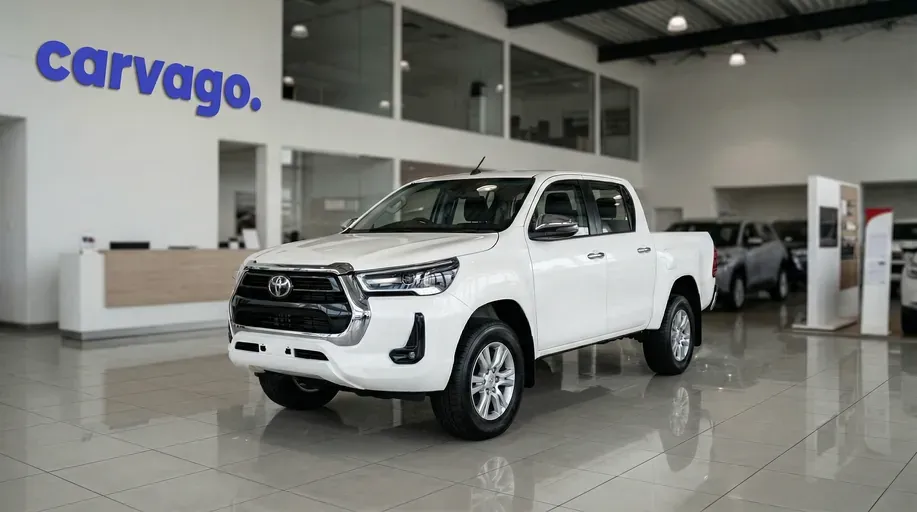
The Toyota Hilux pickup is an established nameplate in the European one-tonne commercial vehicle segment. This review focuses on the ninth generation, introduced for the 2026 model year. Its world premiere took place on 10 November 2025, followed by its European debut on 9 January 2026 at the Brussels Motor Show. Factory production started in spring 2026, succeeding the previous generation that ended European production earlier that year.
In Western Europe, the ninth-generation Toyota Hilux is supplied exclusively as a Double Cab with standard all-wheel drive.
This generation primarily targets commercial fleets, tradespeople requiring dependable towing and payload capacities, and utility-focused private buyers who need severe off-tarmac capability alongside everyday passenger carrying space.
Owner Experiences: Common Faults and Recalls
European customer deliveries of the ninth-generation Toyota Hilux commenced in mid-June 2026 for the battery-electric version, followed in July 2026 by the mild-hybrid diesel. Because these vehicles have been in service for only a few months as of late 2026, long-term durability records, recurring workshop repair patterns, and component wear thresholds are not yet established. Early owner feedback remains limited, and the secondary market consists predominantly of dealer demonstrators, manufacturer management units, and cancelled orders.
Statutory European safety recall databases show zero safety recalls issued for this generation. As with any recently launched model, prospective buyers should ask an authorised dealer to run the vehicle identification number through the manufacturer database to confirm all initial delivery campaigns and software updates are fully completed.
Independent endurance drives and initial fleet operations have revealed no systematic engineering defects, electrical glitches, or assembly faults. High-mileage commercial duty cycles are still required to establish long-term reliability for the mild-hybrid powertrain. Early operational reports note that elevated energy consumption when towing or driving off-road in the electric Toyota Hilux and unladen suspension firmness reflect design characteristics rather than component failures.
When evaluating a used or demonstrator diesel Toyota Hilux, buyers should concentrate on signs of past working duty. Heavy off-road usage, water wading, or demanding commercial towing can leave physical marks on the chassis, underside trays, and interior fittings. Booking an independent physical inspection via CarAudit provides verification of underbody condition and documented maintenance before completing a transaction.
🔍 What to check before buying
Confirm with an authorised dealer via the vehicle identification number that the vehicle has all factory software updates and technical campaigns documented as completed.
On the electric version, inspect the lower protective casing around the traction battery for deep scratches, dents, or signs of off-road grounding.
On the mild-hybrid diesel, check underneath the rear seat bench to ensure the compact hybrid battery and its surrounding wiring have not suffered damage from cargo or spilled liquids.
Verify that any fitted towbar matches the factory-approved towing specification for the vehicle's specific powertrain variant.
Engines: Which One to Choose
For its ninth generation, the European line-up for the Toyota Hilux transitions exclusively to electrified powertrains, pairing standard four-wheel drive with either a mild-hybrid turbo-diesel or a dual-motor battery-electric system.
Engine
Fuel
Power
Gearbox
Model years
2.8 Hybrid 48V
Diesel mild-hybrid
150 kW (204 hp)
6-speed automatic
2026–present
BEV
Electric
144 kW
Automatic
2026–present
Which engine to choose
For heavy towing, long motorway journeys, and demanding haulage duties, the diesel Toyota Hilux is the sensible option. Its mild-hybrid architecture uses a belt-driven starter-generator to smooth out stop-start transitions and assist initial acceleration from rest, addressing low-speed vibration without altering core mechanical functionality. Paired with a conventional torque-converter automatic, it retains full workhorse utility, delivering unstressed cruising and allowing drivers to exploit the diesel's maximum trailer weight and cargo bed payload limits.
The electric Toyota Hilux caters to specialized fleet operations, zero-emission commercial zones, and short-distance utility work where vehicles return to a home depot for charging. Thanks to independent motors on each axle, power delivery is instantaneous, offering precise throttle modulation during technical low-speed crawling across slippery ruts without requiring a dedicated low-range transfer box. However, because its maximum payload and trailer limits fall substantially short of the diesel's ratings, and high-speed energy consumption curtails usable driving distances, it is not suited to long-distance freight or heavy-load commercial transport.
Space & Practicality
Dimension / Specification
Hilux Double Cab 2.8 Hybrid 48V
Hilux Double Cab BEV
Length (mm)
5,320
5,320
Width (mm)
1,855–1,885
1,855
Height (mm)
1,865
1,845
Wheelbase (mm)
3,085
3,085
Boot volume (seats up / folded, l)
Open cargo bed
Open cargo bed
Standard enclosed luggage volume is not applicable due to the external load deck. Exterior width varies depending on fitted wheel-arch overfenders.
In the passenger cabin, the Toyota Hilux pickup truck provides seating for five occupants across two front bucket seats and a three-passenger rear bench. On the mild-hybrid model, the auxiliary battery is packaged directly beneath the rear seat base, which keeps the rear footwell clear and prevents any loss of cabin room. Rather than a conventional boot, carrying capability centers entirely on the open rear cargo deck, which features an integrated step in the rear bumper to facilitate climbing up and tying down equipment. Personal effects and tools can be stowed inside via door bins and an enclosed storage console situated between the front seats.
What the Tests Say
On the road, the Toyota Hilux retains the traditional characteristics of a ladder-frame workhorse. When driven unladen, the rear axle produces a noticeable bounce over broken surfaces due to its high-payload suspension tuning, though carrying weight in the load area settles the chassis significantly. Professional tests disagree on the battery-powered variant: while some reviewers report a firmer, more stilted secondary ride over uneven tarmac, others praise the calmer feel brought by the low-mounted battery pack compared to the diesel Toyota Hilux. The newly adopted electric power steering lightens steering effort around town and adds feedback over rough ground, but its slow gearing demands plenty of wheel turning during tight parking manoeuvres.
Acoustic refinement depends heavily on propulsion. The electric Toyota Hilux operates almost silently at lower speeds, which tends to emphasise wind rush against the upright windscreen at motorway pace. The diesel mild-hybrid delivers good high-speed stability, though pressing the engine hard introduces an audible commercial-grade clatter into the cabin.
Inside, the cabin adopts a modernised architecture with hard-wearing switchgear and supportive seat cushioning. Testers broadly agree that the durable layout suits hard work, but common criticisms target limited steering-column reach, sluggish infotainment software with fiddly menus, and awkward placement for some minor switches. As this generation arrived recently without a mid-cycle update, the entire model range shares this practical, functional setup.
Prices and Market Offer
All market charts in this section are drawn from Carvago listings covering the entire Toyota Hilux model family across multiple generations, rather than the reviewed generation alone. Consequently, this dataset does not establish a separate price level specifically for the newest generation. Across the advertised inventory, the median asking price sits at €30,300 for 2019 vehicles and reaches €56,900 for 2026 models.
Between April and September 2026, the number of advertised Toyota Hilux models grew from 1,021 to 1,400 cars. The chart below tracks this monthly count of active listings.
Toyota Hilux - availability over time
Active listings over time
Month
Toyota Hilux
2026-04
1 021
2026-05
1 149
2026-06
1 257
2026-07
1 301
2026-08
1 304
2026-09
1 400
Source Carvago
Buyers have a wide selection to choose from, with available inventory expanding consistently across the entire six-month span.
Among used listings advertised today, the median asking price of cars built in 2019 is €30,300, while the median asking price of cars advertised today built in 2026 is €56,900. Newer build years generally command higher figures, though listings for vehicles built in 2024 reflect a lower median asking price than those built in 2023.
Toyota Hilux - median price by model year
Median advertised price by year of manufacture
Model year
Toyota Hilux
2019
30 300
2020
30 900
2021
37 500
2022
39 000
2023
48 000
2024
46 900
2025
52 800
2026
56 900
Source Carvago
A buyer targeting earlier model years will find that the median asking price of cars advertised today built in 2019 is €30,300, compared to €30,900 for those built in 2020. For the newest production years, the median asking price of cars advertised today built in 2025 is €52,800, and for those built in 2026 it is €56,900.
This depreciation curve illustrates how the model's residual value declines with age, losing approximately 9% in the first year and 19% by age three. The chart below details this progression across each year of ownership.
Toyota Hilux - value loss by age
Residual value by vehicle age
Vehicle age
Toyota Hilux
New
57 700
1 yr
52 500
2 yrs
48 700
3 yrs
46 500
4 yrs
42 700
5 yrs
39 100
6 yrs
38 700
7 yrs
36 300
Source Carvago
Over the seven years shown, the model sheds roughly 37% of its initial residual value, retaining nearly 63% of that figure by age seven. The sharpest drop occurs between age zero and one, after which annual losses moderate considerably.
Active listings are heavily centered on diesel, which rose from 1,012 advertised vehicles in April 2026 to 1,352 in September 2026. The chart below tracks how the available inventory breaks down by fuel type over this period.
Toyota Hilux - supply by fuel over time
Supply composition by fuel type
Petrol
Diesel
Hybrid
Electric
Month
Petrol
Diesel
Hybrid
Electric
2026-04
5
1 012
3
0
2026-05
6
1 141
1
0
2026-06
5
1 247
1
3
2026-07
4
1 279
4
14
2026-08
4
1 273
9
18
2026-09
3
1 352
14
31
Source Carvago
In September 2026, diesel made up the bulk of the offer with 1,352 listings, compared to 31 electric, 14 hybrid, and 3 petrol vehicles. Anyone searching for this model will find that diesel is the only fuel type widely available.
Between April 2026 and September 2026, the average asking price for the Toyota Hilux moved between €48,900 and €47,300, as tracked in the monthly figures below.
Toyota Hilux - price trend over time
Average price development over time
Month
Toyota Hilux
2026-04
48 900
2026-05
48 700
2026-06
48 400
2026-07
47 300
2026-08
47 300
2026-09
48 100
Source Carvago
After holding at €47,300 in July and August, the average asking price rose to €48,100 in September 2026. Across the entire six-month period, the shift from €48,900 represents a net change of less than two percent, indicating minimal overall price movement.
Full working utility with strong towing and payload capabilities on the mild-hybrid diesel
Instant electric throttle response enables precise low-speed control in off-road terrain
Modernised cabin with durable switchgear and comfortable passenger seating
Cons
Unladen ride remains bouncy over broken surfaces due to commercial chassis tuning
Sluggish infotainment system with fiddly menus and awkward placement of minor switches
Electric version offers significantly reduced towing and payload capacities alongside limited range
Frequently asked questions
Is the ninth-generation Hilux reliable?
Long-term reliability is not yet established because European customer deliveries only began in mid-June 2026. Early operational drives have revealed no systemic mechanical defects, and European statutory databases record zero safety recalls for this redesigned Toyota Hilux.
Which powertrain is best for heavy work?
The diesel Toyota Hilux mild-hybrid is the right choice for commercial haulage and towing. The electric Toyota Hilux suits short-range utility, but its lower payload and towing limits rule it out for heavy transport.
What should you check before buying a used or demonstrator model?
Have an authorised dealer verify via the vehicle identification number that all factory software updates and technical campaigns are completed. Buyers should also inspect the underbody for physical damage from off-road use, particularly the battery protection casing on electric versions or the hybrid battery housing beneath the rear seat bench.
What does a Hilux cost on the European used market?
Median asking prices on Carvago range from €30,300 for older production years up to €56,900 for 2026 examples. Ninth-generation Toyota Hilux models remain scarce on the used market and are largely confined to dealer demonstrators and management units.