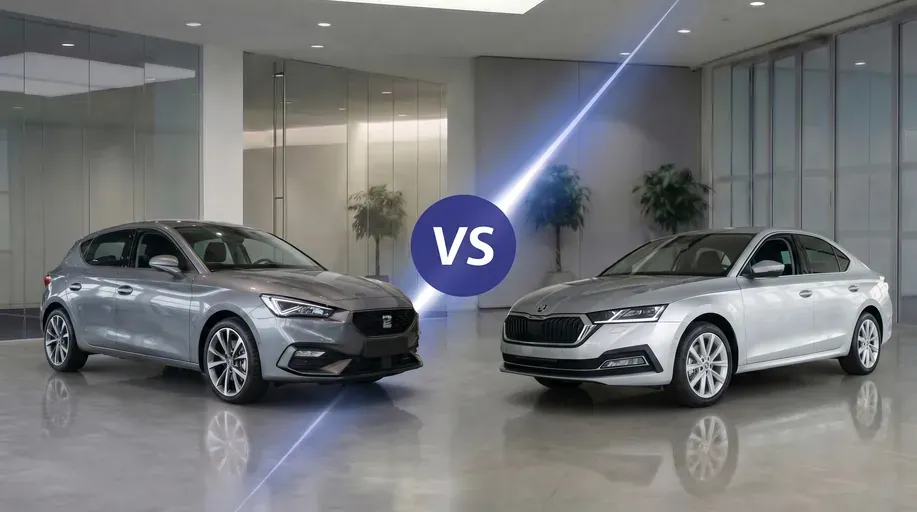
Car battle
Seat Leon vs. Škoda Octavia: Complete comparison 2026
Detailed comparison of used Seat Leon vs. Škoda Octavia. Read real-world experiences, comparisons of equipment, spaciousness, and the verdict for your ideal car choice.
Nov 12, 2026
Toyota Corolla review: real owner experience, hybrid reliability, common faults, running costs and used prices. Read our full verdict.
October 19, 2026
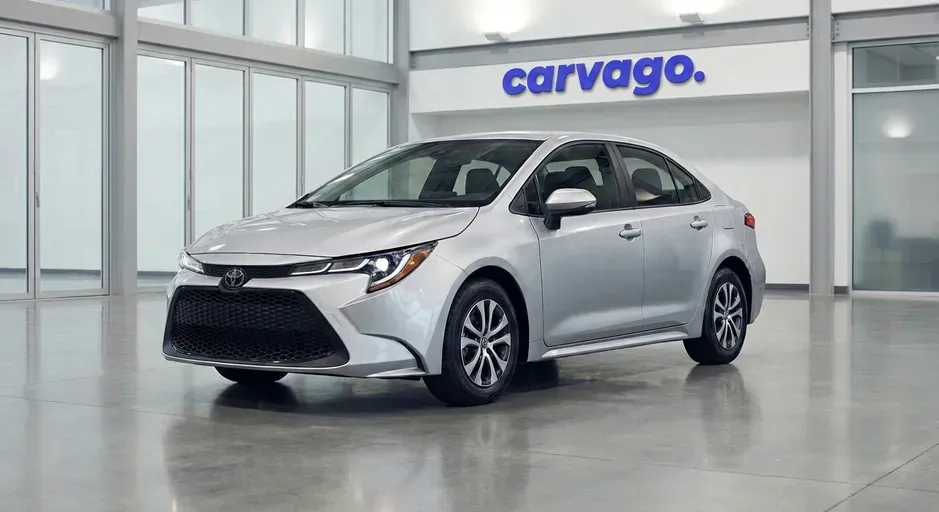
The 12th-generation Toyota Corolla represents the manufacturer's core entry in the competitive compact segment. European series production of the five-door hatchback and the Touring Sports estate began in January 2019, with first customer deliveries of the range arriving in February 2019 alongside the Turkish-built four-door saloon. Built on the TNGA GA-C modular architecture, this generation replaced the previous Auris nameplate across all European markets, establishing a unified identity built primarily around full-hybrid powertrains.
Buyers can choose from three distinct body formats: the compact Toyota Corolla Hatchback, the longer-wheelbase Toyota Corolla Touring Sports estate, and the traditional Toyota Corolla Saloon. A comprehensive mid-cycle revision was revealed on 2 June 2022, reaching European customers in February 2023. This update brought revised front and rear styling, an overhauled digital cabin interface, and upgraded fifth-generation hybrid hardware. Later additions included subtle model-year updates alongside the 60th Anniversary special edition announced on 25 August 2026.
The lineup caters to family car buyers, high-mileage fleet drivers, and commuters seeking straightforward petrol-electric hybrid motoring. This review focuses strictly on the 12th generation produced from 2019 onwards, evaluating what used-car buyers can expect from its different body styles, mechanical setups, and model years.
European reliability testing records a dependable mechanical record for the twelfth-generation Toyota Corolla, but real-world ownership highlights a clear vulnerability: the 12-volt auxiliary battery. In breakdown testing, discharged starter batteries represent the primary cause of roadside callouts for 2019 to 2023 models. A compact factory battery capacity, paired with parasitic current drawn by the telematic Data Communication Module and continuous keyless receiver polling, causes the 12-volt unit to drain when cars sit idle for one to two weeks or run exclusively on brief urban hops. When drained below critical levels, the vehicle cannot enter its ready state. Updating the telematics module software mitigates background drain, though severely discharged batteries usually require replacement with higher-capacity units.
Another mechanical issue appears on early examples of the larger 2.0-litre hybrid. Owners report that 2019 to 2021 builds can suffer internal coolant leaks inside the exhaust heat recovery system. This heat exchanger, mounted in the front exhaust section to accelerate cold-start engine warm-up, can develop fatigue cracks due to thermal cycling. Pressurised coolant slowly escapes into the exhaust gas path, producing white tailpipe vapour and dropping expansion tank levels without visible puddles on the ground. Resolving the defect requires fitting a revised front exhaust pipe with a reinforced heat exchanger assembly.
Infotainment behaviour draws recurring complaints across both pre-facelift and post-facelift cabins. On 2019 to 2022 cars, owners report slow menu responses and occasional wired smartphone projection dropouts. On facelifted vehicles introduced from February 2023, the upgraded multimedia system has been noted for random boot loops, audio dropouts, and intermittent failures when connecting wirelessly to smartphone mirroring after restarting the vehicle. Dealer software re-flashes and over-the-air firmware updates solve the majority of these interface glitches.
Official European recall campaigns for this generation have addressed specific software calibration errors, telematic failures, and a fuel component defect on petrol versions:
| Affected Models & Build Window | Defect Description | Official Remedy |
|---|---|---|
| 2022 to 2025 builds (Europe-wide) | Improper programming in the digital combination meter causes excessive data writing, degrading memory. The instrument cluster display can fail to boot at startup, eliminating the speedometer and warning lamps. | Authorised dealers reprogram the instrument cluster software, or replace the cluster assembly free of charge if memory corruption has already occurred. |
| 16 January 2023 to 05 November 2024 (Europe-wide) | Programming in the skid control electronic control unit can mismanage brake fluid pressure during cornering when the brake pedal is applied. This causes increased pedal firmness and reduced assistance, lengthening stopping distances. | Dealer workshops reprogram the skid control electronic control unit with revised software logic. |
| 18 June 2018 to 2022 (Europe-wide, 1.2-litre turbo petrol only) | Insufficient pressing of parts in the high-pressure fuel pump allows internal movement and cracking under fuel pressure, risking fuel leakage and fire. Does not affect hybrid models. | Inspection and replacement of the high-pressure fuel pump assembly with an upgraded part. |
| October 2020 to August 2023 (Europe-wide) | A software update routine can cause an abrupt reset in the data communication module, preventing it from restarting at the next ignition cycle and disabling the automated eCall emergency service. | Workshops rewrite and update the telematic firmware. |
Because hybrid drivetrains rely heavily on regenerative deceleration, friction brakes on a used hybrid Toyota Corolla frequently see minimal use. Professional tests note that rear brake discs and pads commonly suffer from surface corrosion, binding sliders, or low-speed squeal well before the friction linings are mechanically worn out.
The twelfth-generation Toyota Corolla moved European buyers almost entirely toward full hybrids, though conventional petrol options remained available in limited numbers during the earlier model years. Front-wheel drive is standard across the European line-up, paired with either an electronic continuously variable transmission on the petrol-electric options or either a manual or automatic transmission on the non-hybrid engines.
| Engine | Fuel | Power | Gearbox | Model years |
|---|---|---|---|---|
| 1.2T | Petrol | 85 kW | Manual & CVT | 2019 – 2022 |
| 1.6 Valvematic | Petrol | 97 kW | Manual & CVT | 2019 – 2021 |
| 1.5 Dynamic Force | Petrol | 92 kW | Manual & CVT | 2021 – 2025 |
| 1.8 Hybrid | Petrol Full Hybrid | 90 kW | Automatic (e-CVT) | 2019 – 2023 |
| 1.8 Hybrid | Petrol Full Hybrid | 103 kW | Automatic (e-CVT) | 2023 – present |
| 2.0 Hybrid | Petrol Full Hybrid | 132 kW | Automatic (e-CVT) | 2019 – 2020 |
| 2.0 Hybrid | Petrol Full Hybrid | 135 kW | Automatic (e-CVT) | 2019 – 2023 |
| 2.0 Hybrid | Petrol Full Hybrid | 144 kW | Automatic (e-CVT) | 2023 – 2025 |
| 2.0 Hybrid | Petrol Full Hybrid | 131 kW | Automatic (e-CVT) | 2025 – present |
For urban driving and daily suburban commuting, the 1.8 Hybrid is the logical choice. The pre-facelift version works smoothly in slow-moving traffic where electric running takes the load off the combustion unit, though brisk overtaking requires patience. The updated 1.8 Hybrid introduced with the 2023 model year brought a stronger electric drive and revised mapping, providing enough mid-range punch to handle motorway journeys with less engine flare under acceleration.
Drivers who regularly carry full passenger loads, tow lightweight trailers, or travel extensive motorway mileage will prefer the 2.0 Hybrid. The extra combustion output and more muscular electric motor significantly reduce engine strain on open roads, keeping cruising quieter at higher speeds.
The conventional petrol Toyota Corolla 1.2T is an option only on the used market. It suits low-mileage drivers who prefer a manual gearbox and want to avoid high-voltage hybrid hardware, but tests note that it feels underpowered under sustained motorway climbing and cannot rival the stop-and-go fuel economy of the hybrid Toyota Corolla.
For recurring mechanical issues, safety recalls, and guidance on what to inspect before buying, see the owner experiences section.
| Body Style | Length (mm) | Width (mm) | Height (mm) | Wheelbase (mm) | Boot Volume (upright / folded, l) |
|---|---|---|---|---|---|
| Hatchback | 4,370 | 1,790 | 1,435–1,460 | 2,640 | 361 / 1,024–1,052 |
| Touring Sports | 4,650 | 1,790 | 1,435–1,460 | 2,700 | 596–598 / 1,591–1,606 |
| Saloon | 4,630 | 1,780 | 1,435 | 2,700 | 471 / — |
Note: The larger hybrid engine reduces boot capacity in both the Hatchback and the Touring Sports due to the placement of the auxiliary battery under the luggage floor.
Everyday practicality differs considerably depending on the chosen body style. In the Toyota Corolla Hatchback, passenger accommodations in the back are noticeably tight; taller adults encounter restricted kneeroom and limited headroom beneath the sloping roofline, alongside narrow door apertures that make fitting child seats awkward. By contrast, the longer wheelbase of the Toyota Corolla Touring Sports estate and the Toyota Corolla Saloon delivers greater legroom for rear occupants. While all versions of the Toyota Corolla feature 60:40 split-folding rear backrests as standard, the seats do not slide fore and aft. The estate proves the most versatile of the trio, offering an entirely flat cargo deck when the rear seats are lowered, a wide loading aperture, and an adjustable two-tier boot floor that conceals underfloor storage on models with the smaller hybrid unit.
Professional road tests consistently praise the twelfth-generation Toyota Corolla for its stable road manners and chassis poise. Thanks to its low centre of gravity and independent multi-link rear suspension, cornering is predictable and body lean remains well contained. Testers observe that the steering responds cleanly off centre, although it remains light and detached, providing little road texture for enthusiastic driving. Ride comfort depends noticeably on specification: models riding on modest wheels deliver compliant, absorbent damping across broken asphalt, while larger optional wheels or firmer suspension setups introduce noticeable harshness over sharp expansion joints and urban potholes.
Cabin refinement receives mixed verdicts across test reports. Urban driving is smooth and quiet when operating under electric propulsion, but testers frequently note that coarse motorway surfaces generate prominent tyre roar and wind noise. Pre-facelift hybrids drew repeated criticism for pronounced engine droning under brisk acceleration or when climbing motorway grades. By contrast, evaluations of facelifted models noted that revised hybrid transaxles significantly reduce this high-rev flare during everyday driving, though heavy throttle inputs still produce an audible engine note.
Inside, testers appreciate the supportive front seats and straightforward climate controls, which retain dedicated physical buttons. Perceived quality is solid on upper surfaces, though hard plastics appear lower down the dashboard, and tests note visible welding seams on the door frames. Early production cars drew near-unanimous criticism for their sluggish, low-resolution central screen. Facelifted versions resolved this primary cabin shortcoming with faster, crisper digital displays, although some menu structures in the instrument cluster remain layered to navigate on the move.
All the charts in this section are drawn from Carvago’s listings of the whole Toyota Corolla model family, including other generations represented in the data, not only the reviewed generation. For this broader lineup, the median asking price starts at €19,000 for 2019 models and climbs steadily to €21,500 for 2022 examples. Listings step up to a median asking price of €26,100 for 2023 cars and reach €32,400 for 2026 models, reflecting buyer demand for newer registrations with upgraded hybrid systems, improved infotainment hardware, and remaining factory warranty coverage.
Active Toyota Corolla listings moved from 8,658 in April 2026 to 7,491 in September 2026 across the six-month window shown below.
Active listings over time
| Month | Toyota Corolla |
|---|---|
| 2026-04 | 8 658 |
| 2026-05 | 8 438 |
| 2026-06 | 8 277 |
| 2026-07 | 7 865 |
| 2026-08 | 7 399 |
| 2026-09 | 7 491 |
Source Carvago
Buyers face a deep pool of available cars, with inventory declining month by month to a low of 7,399 in August before a modest uptick in September.
Across used listings advertised today, the median asking price for a Toyota Corolla built in 2019 is €19,000, while the median asking price for models built in 2026 stands at €32,400. The chart below illustrates how these median figures compare across model years.
Median advertised price by year of manufacture
| Model year | Toyota Corolla |
|---|---|
| 2019 | 19 000 |
| 2020 | 19 900 |
| 2021 | 20 700 |
| 2022 | 21 500 |
| 2023 | 26 100 |
| 2024 | 28 900 |
| 2025 | 30 800 |
| 2026 | 32 400 |
Source Carvago
Buyers considering 2019 to 2022 model years see median prices ranging from €19,000 to €21,500. Securing a 2023 model involves a shift to €26,100, while the latest 2026 examples center at €32,400.
This depreciation curve illustrates how the Toyota Corolla's residual value drops as it ages, shedding about 24% of its initial value over the first three years.
Residual value by vehicle age
| Vehicle age | Toyota Corolla |
|---|---|
| New | 32 300 |
| 1 yr | 29 600 |
| 2 yrs | 26 200 |
| 3 yrs | 24 700 |
| 4 yrs | 22 200 |
| 5 yrs | 20 900 |
| 6 yrs | 19 200 |
| 7 yrs | 17 300 |
Source Carvago
Across the seven years shown, the model loses roughly 46% of its initial residual value, with the sharpest decline taking place between the first and second years.
Between April 2026 and September 2026, advertised listings were dominated by hybrid models, which opened the period with 7,671 cars on offer compared to 975 petrol cars. The distribution of active listings across fuel types over these six months is shown below.
Supply composition by fuel type
Petrol
Diesel
Hybrid
LPG
| Month | Petrol | Diesel | Hybrid | LPG |
|---|---|---|---|---|
| 2026-04 | 975 | 3 | 7 671 | 4 |
| 2026-05 | 922 | 4 | 7 502 | 6 |
| 2026-06 | 873 | 5 | 7 381 | 13 |
| 2026-07 | 800 | 5 | 7 043 | 10 |
| 2026-08 | 803 | 3 | 6 578 | 7 |
| 2026-09 | 777 | 3 | 6 692 | 12 |
Source Carvago
In September 2026, hybrids made up the vast majority of options with 6,692 advertised cars, followed by 777 petrol models and only 12 LPG and 3 diesel examples. Buyers searching the market will find the widest selection among hybrids, with pure petrol serving as a smaller secondary pool and other fuel types barely represented.
The chart shows the average asking price for the Toyota Corolla between April 2026 and September 2026, opening at €24,200.
Average price development over time
| Month | Toyota Corolla |
|---|---|
| 2026-04 | 24 200 |
| 2026-05 | 24 200 |
| 2026-06 | 24 500 |
| 2026-07 | 24 700 |
| 2026-08 | 24 600 |
| 2026-09 | 24 700 |
Source Carvago
Across the six months, the average moved only slightly from €24,200 to €24,700, shifting by around two percent overall with a slight dip to €24,600 in August 2026.
Composed handling with predictable cornering and well-controlled body lean
Touring Sports estate provides versatile cargo capacity and comfortable rear legroom
Smooth, quiet operation when running on electric power in urban traffic
Vulnerable 12-volt auxiliary battery prone to discharging during inactivity or short trips
Restricted rear passenger kneeroom and headroom in the hatchback
Prominent tyre roar and wind noise at motorway speeds
Mechanically it proves durable, but its primary vulnerability is the 12-volt auxiliary battery, which frequently drains and causes breakdowns after sitting idle or during short urban trips. On 2019 to 2021 models with the 2.0-litre hybrid, check also for coolant leaks in the exhaust heat exchanger.
The 1.8 Hybrid is the most sensible choice for city driving and suburban commuting due to its smooth efficiency, while the 2.0 Hybrid is better suited to motorway journeys and heavy loads despite reducing hatchback boot space.
The estate is far more practical because its longer wheelbase provides substantially more rear legroom and a larger cargo area with a flat loading deck. In contrast, the hatchback has tight rear passenger space and narrow door apertures that complicate fitting child seats.
Inspect the brake discs for surface rust or pitting caused by frequent regenerative braking, confirm the 12-volt battery promptly boots the car into its ready state, and verify via official dealer records that all safety recalls have been applied to the vehicle's VIN.
Sources: newsroom.toyota.eu, adac.de, ec.europa.eu, autocar.co.uk, autoexpress.co.uk
This article was prepared using artificial intelligence tools. The section guarantor is Petr Dušek.
Detailed comparison of used Seat Leon vs. Škoda Octavia. Read real-world experiences, comparisons of equipment, spaciousness, and the verdict for your ideal car choice.
Nov 12, 2026
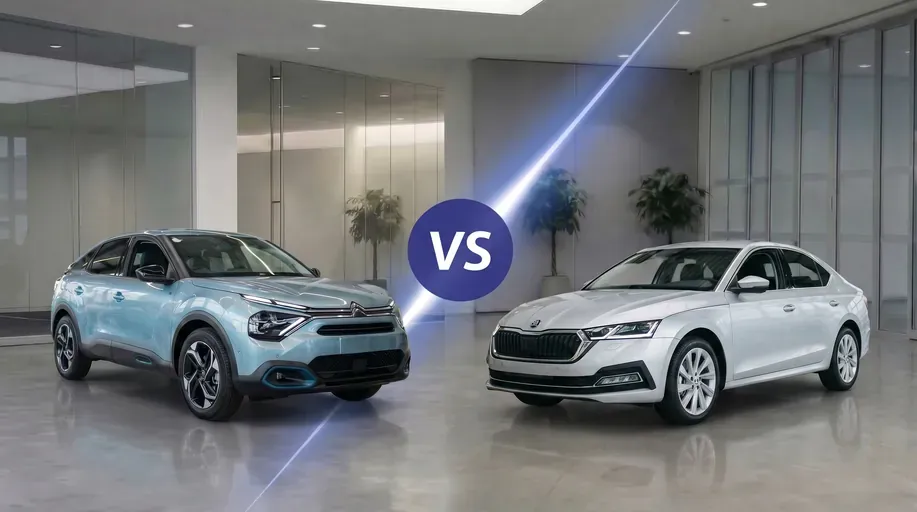
Detailed comparison of the Citroën C4 vs Škoda Octavia. We compare the driving characteristics, space, and equipment of these used cars. Find out from our verdict which car to choose.
Apr 18, 2026
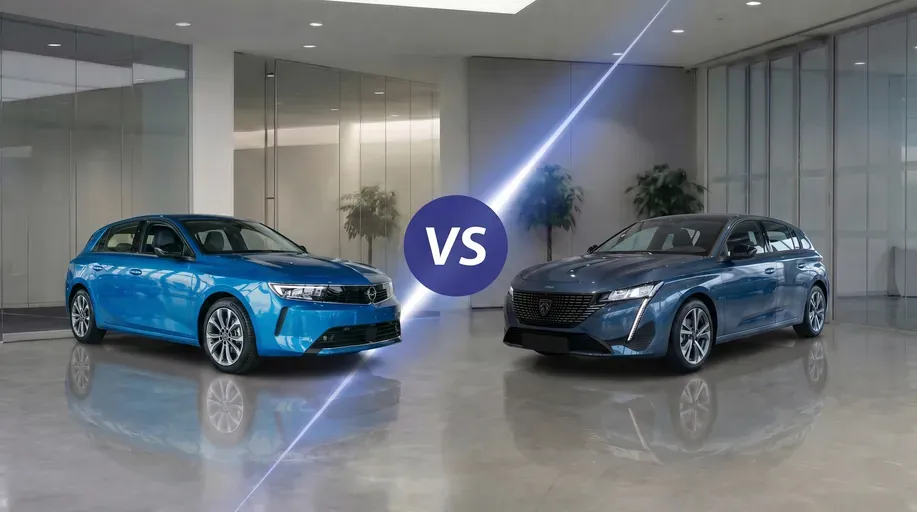
Detailed comparison of Opel Astra vs. Peugeot 308. Which hatchback has better engines, spaciousness, and reliability? Read our review and final verdict!
May 1, 2026