Car battle
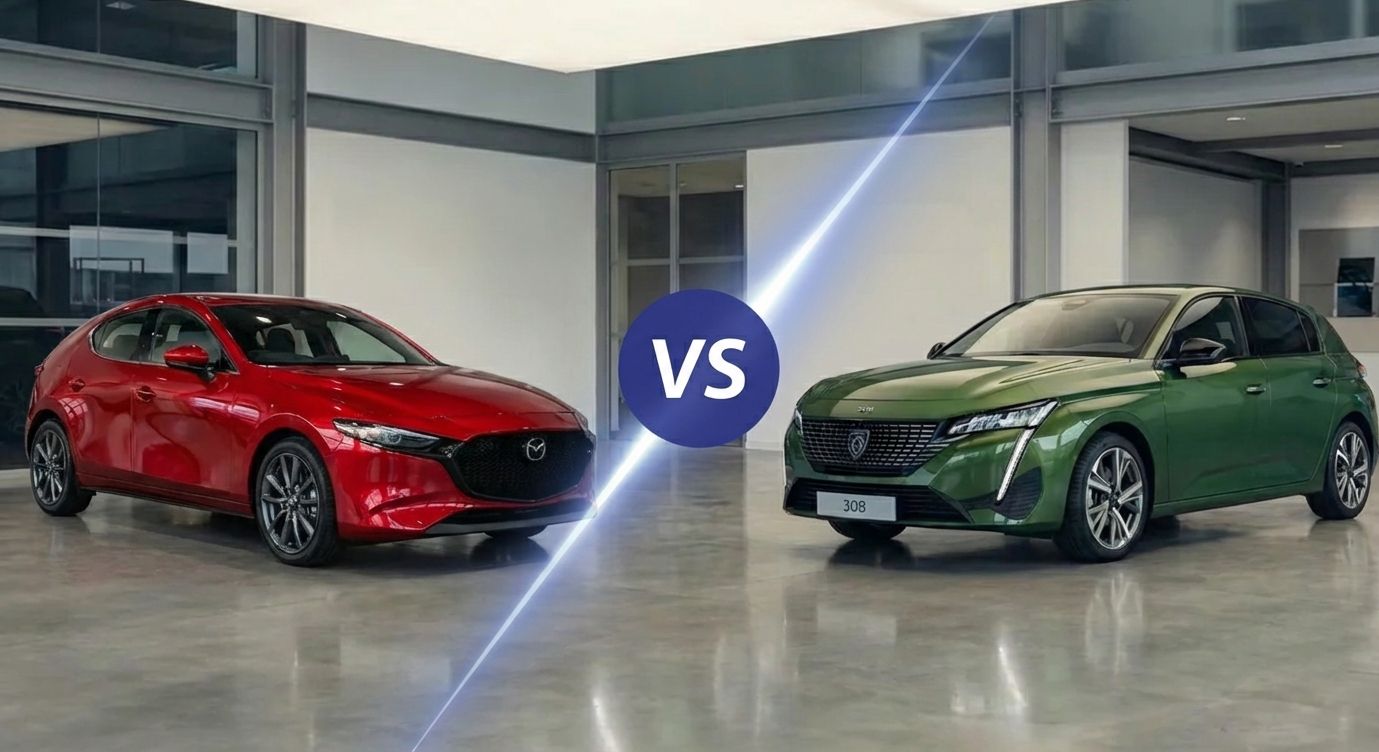
Mazda 3 vs. Peugeot 308: Complete comparison 2026
Mazda 3 vs. Peugeot 308: A detailed comparison of engines, interior, and reliability. Find out which stylish hatchback is the best choice for you.
Apr 13, 2026
Articles
Car battle
Detailed comparison of the Citroën C4 vs Škoda Octavia. We compare the driving characteristics, space, and equipment of these used cars. Find out from our verdict which car to choose.
April 18, 2026
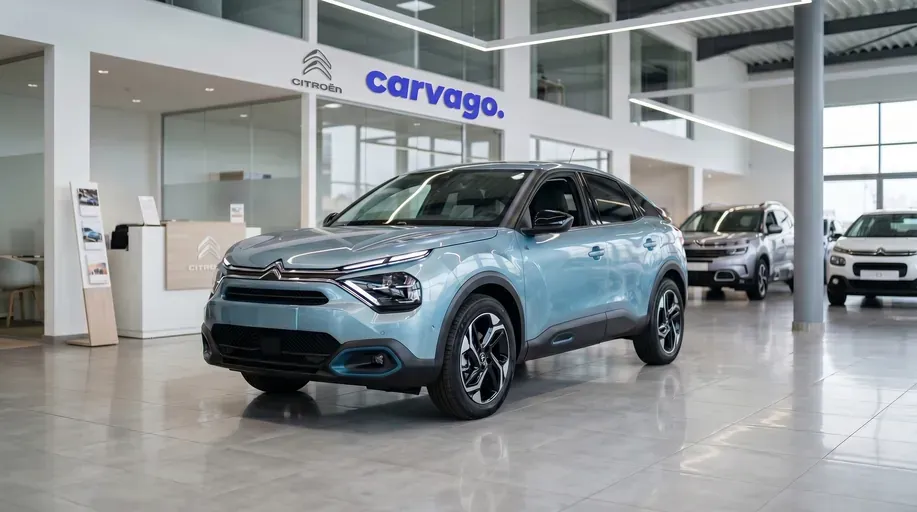
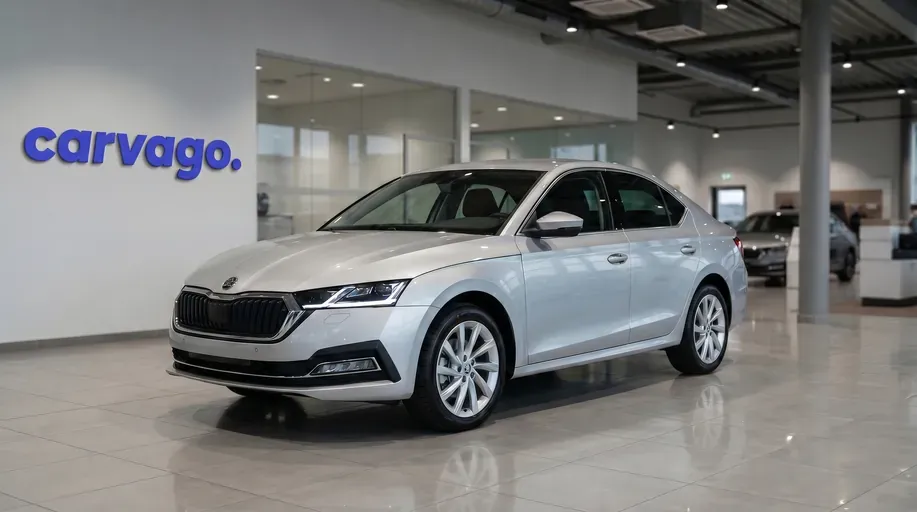
Citroën C4, also available on the market in a purely electric version ë-C4 or in an extended body variant C4 X (and historically known in some foreign markets as C-Quatre or C-Triomphe), represents the third generation of the French compact, which for models from 2020 onwards boldly transformed into a crossover with maximum emphasis on supple ride comfort. Standing against it is the fourth generation of the extremely popular Škoda Octavia, in the past or in specific markets also sold under the names Laura and Octavia Tour, which in its sought-after Octavia Combi version as well as a classic liftback bets on a rather conservative design and unrivaled luggage space. The following comparison will show you in detail how this head-to-head between two completely different approaches to a family car about four years old turns out and which vehicle will become the more practical choice for your daily journeys.
Both cars approach the compact segment from diametrically different directions. The roughly four-year-old fourth-generation Škoda Octavia continues its tradition as one of the largest cars in its class, bravely balancing on the imaginary border of the mid-size segment with its dimensions and offering traditional liftback and estate body styles. In contrast, the third-generation Citroën C4 has adopted the fashionable proportions of a crossover with coupé elements and a slightly more robust stance. This contrasting approach to body design immediately divides customers into those looking for maximum classic utility and those who prefer a fresh style and slightly higher ground clearance.
In terms of overall length, the Octavia clearly dominates its French competitor. With a length of approximately 4689 mm for standard versions, it is a significant 334 mm longer than the Citroën C4, which stays at a more compact 4355 mm. The Škoda is also slightly wider, pitting its 1829 mm against the Citroën's 1800 mm, which provides a few more millimetres of shoulder room inside the cabin. This massive difference in footprint makes the Octavia an unbeatable hauler for long family trips, while the significantly shorter C4 represents a much more agile choice for drivers who fight for every available parking space in the city centre every day.
However, the tables turn when looking at the body height, where the Citroën fully benefits from its SUV genes. The French model reaches a height of up to 1525 mm, which is about 5 centimetres more than the aerodynamically shaped Octavia (1470 mm for the standard liftback). What is surprising, however, is how close the two cars are in terms of wheelbase – 2686 mm for the Škoda compared to 2670 mm for the Citroën means a negligible difference of 16 millimetres. As a result, despite its shorter body, the C4 offers highly competitive interior space for passengers combined with the much-desired easier entry and better visibility, while the overall longer and lower Octavia with a lower centre of gravity will appeal to drivers who prefer highway stability and unrivalled boot capacity.
| Parameter | Citroën C4 SUV | Škoda Octavia Liftback | Škoda Octavia Combi |
|---|---|---|---|
| Length (mm) | 4350 - 4355 | 4689 - 4702 | 4689 - 4709 |
| Width (mm) | 1800 | 1829 | 1829 |
| Height (mm) | 1520 - 1525 | 1456 - 1486 | 1454 - 1508 |
| Wheelbase (mm) | 2670 | 2669 - 2686 | 2647 - 2686 |
When choosing a used family or versatile car, luggage space plays one of the key roles, as it directly determines the daily practicality and overall usability of the car. While some cars focus more on style and compact dimensions for easier city parking, others are designed from the ground up as uncompromising haulers for long journeys. Exactly this noticeable contrast is offered by a comparison of roughly four-year-old generations (introduced around 2020) of the Citroën C4 and Škoda Octavia models, where a French raised hatchback faces off against the traditional Czech benchmark of spaciousness.
The fourth-generation Škoda Octavia is an absolute top performer in its class, scoring points with its massive boot, which is more than sufficient for weekend shopping or a longer holiday with the whole family. In its standard liftback version, it offers an impressive 600 liters in the basic configuration and 1,555 liters with the rear backrests folded down. If you opt for the more popular and practical estate variant (Estate), you get a luxurious 640 liters, which can be expanded to a respectable 1,700 liters by folding the seats. However, it is important to note that if you choose the plug-in hybrid version labeled iV, expect a slightly smaller capacity due to the batteries stored under the boot floor – in this case, the liftback drops to 450 liters and the estate to 490 liters in the basic configuration.
Conversely, the third-generation Citroën C4, which balances between a classic hatchback and a stylish crossover, approaches spaciousness much more modestly. Its boot holds 380 liters in the basic configuration, representing the average standard of the compact class. With the backrests folded, the space increases to 1,250 liters. A major advantage of this model is that the pure electric e-C4 version and the standard internal combustion variants have exactly the same boot volume, so there are no spatial compromises when switching to an electric vehicle. While the Octavia easily swallows space for several extra suitcases and can even serve as a small van, the Citroën C4 is an ideal choice for everyday needs and weekend trips where extreme cargo volumes are not required.
| Parameter | Citroën C4 Hatchback | Škoda Octavia Liftback | Škoda Octavia Estate |
|---|---|---|---|
| Basic volume (liters) | 380 | 600 | 640 |
| Max. volume with seats folded (liters) | 1250 | 1555 | 1700 |
The ability to tow a trailer is often a decisive factor for drivers who need to expand their vehicle's transport capabilities. Trailer weight fundamentally affects the overall practicality of a car – it determines whether the vehicle offers enough capacity for a weekend shopping trip and a longer holiday with a heavy family caravan, or can only handle undemanding transport of garden waste. In the market for roughly four-year-old used cars, we find truly huge differences in this discipline between the fourth generation of the Škoda Octavia and the third generation of the Citroën C4.
The Škoda Octavia is considered a tireless workhorse in the field of towing vehicles. Even standard petrol engines, such as the popular 1.5 TSI, can easily handle a braked trailer weighing 1500 kg. However, if you need to tow truly heavy loads, the more powerful 2.0 TDI diesel versions (or 4×4 models) push the maximum braked trailer weight up to an impressive 2000 kg. The Octavia can typically tow an unbraked trailer up to the legal maximum of 750 kg. Even the plug-in hybrid Octavia iV version maintains a more than solid towing capacity of 1500 kg, making it easy to provide space for a few extra suitcases on a fully loaded trailer for your family.
As a compact crossover, the third-generation Citroën C4 has limits set significantly lower. The maximum braked trailer weight for more powerful versions (e.g., PureTech 130 or BlueHDi 130) reaches only 1200 kg. For basic and mild-hybrid versions, this value drops to just 1000 kg. The French car can tow an unbraked trailer in the range of 500 to 680 kg, depending on the specific equipment. A specific chapter with significantly limited capabilities is the fully electric e-C4 model, for which the manufacturer does not allow trailer towing at all, and the tow bar can, at best, only be used for a bike rack.
If trailer weight plays a major role when choosing a used car, the Škoda Octavia is the clear winner, as it offers both the power and the necessary stability for safely towing family caravans and large loads. In contrast, the Citroën C4 will only suit less demanding drivers who use the car more for the occasional transport of light materials over shorter distances.
| Model and engine | Braked trailer weight (kg) | Unbraked trailer weight (kg) |
|---|---|---|
| Škoda Octavia 1.0 TSI (81 kW) | 1300 | 650 - 710 |
| Škoda Octavia 1.5 TSI ACT (110 kW) | 1500 | 710 - 750 |
| Škoda Octavia 2.0 TDI SCR (110 kW) | 1600 - 2000 | 750 |
| Škoda Octavia 1.4 TSI iV (110 kW) | 1500 | 750 |
| Citroën C4 PureTech 100 (74 kW) | 1000 | 640 |
| Citroën C4 PureTech 130 (96 kW) | 1200 | 640 - 680 |
| Citroën C4 BlueHDi 130 (96 kW) | 1200 | 680 |
| Citroën e-C4 | 0 | 0 |
When comparing the engine options of these two popular family cars at around four years of age, we encounter completely different philosophies that will fundamentally influence your purchasing decision. While the Citroën C4 focuses on comfort, simplicity, and is one of the few to offer a shared platform with a choice of conventional internal combustion engines or fully electric drive, the fourth-generation Škoda Octavia counters with immense variability. Its range satisfies everyone – from budget-conscious drivers looking for one-litre three-cylinders, to long-distance highway drivers with the legendary 2.0 TDI engines, to those interested in mild-hybrid (e-TEC), plug-in hybrid (iV), or even natural gas (G-TEC) technologies and all-wheel-drive (4x4) models. In terms of fuel savings, the Frenchman offers an electric alternative, while the Czech model plays the card of modern hybrids and unrivalled highway efficiency.
Under the hood of the third-generation Citroën C4 (produced since 2020), you will find proven petrol three-cylinders and diesel four-cylinders. The standard petrol representative is the 1.2 PureTech 100 (74 kW) with a manual gearbox, which is suitable for undemanding city travel, while a much more versatile choice is the more powerful 1.2 PureTech 130 (96 kW). For diesel lovers, the very economical 1.5 BlueHDi is available with an output of 81 kW or 96 kW. Citroën does not offer all-wheel drive at all and relies on classic six-speed manuals or smooth-shifting eight-speed torque-converter automatics (EAT8). An interesting option is the purely electric e-C4 version, which makes sense for tech enthusiasts and suburban commuting.
From the perspective of the four-year-old used car market, it is important to note that the most powerful petrol version, the PureTech 155 (114 kW), was only available for a relatively short time, and according to available data, its sale ended as early as the spring of 2022. Finding it in advertisements is therefore quite rare.
| Engine Type | Fuel | Power (kW) | Torque (Nm) | Transmission |
|---|---|---|---|---|
| 1.2 PureTech 100 | Petrol | 74 | 205 | 6MT |
| 1.2 PureTech 130 | Petrol | 96 | 230 | 6MT / EAT8 |
| 1.2 PureTech 155 | Petrol | 114 | 240 | EAT8 |
| 1.5 BlueHDi 110 | Diesel | 81 | 250 | 6MT |
| 1.5 BlueHDi 130 | Diesel | 96 | 300 | EAT8 |
| e-C4 136 | Electricity | 100 | 260 | 1-speed reduction |
The fourth-generation Škoda Octavia impresses buyers with complex and advanced technology. The range starts with the turbocharged 1.0 TSI three-cylinder and moves up to the highly sought-after 1.5 TSI ACT four-cylinder (with cylinder deactivation). Both of these engines can also be found with the e-TEC suffix, indicating the presence of a mild-hybrid system paired exclusively with a seven-speed dual-clutch DSG transmission. The absolute leaders in the used car market are the 2.0 TDI SCR diesel engines (EVO series), which are incredibly efficient and offer a great performance range from 85 kW to 110 kW, while the top-of-the-line RS version extracts up to 147 kW from the two-litre unit. Unlike the Citroën C4, 4x4 drive is commonly available with the more powerful engines.
In the context of used cars from 2021 and 2022, we must highlight changes in the engine lineup. The basic 1.0 TSI three-cylinders (including the e-TEC version) accounted for a significant portion of sales at the start of production, but during 2022 and partly 2023, they were quietly phased out of Škoda's main price lists and replaced by slightly detuned versions of larger engines.
| Engine Type | Fuel | Power (kW) | Torque (Nm) | Transmission |
|---|---|---|---|---|
| 1.0 TSI / e-TEC | Petrol / MHEV | 81 | 200 | 6MT / 7DSG |
| 1.5 TSI / e-TEC | Petrol / MHEV | 110 | 250 | 6MT / 7DSG |
| 2.0 TSI (4x4) | Petrol | 140 | 320 | 7DSG |
| 1.4 TSI iV | Plug-in Hybrid | 150 | 350 | 6DSG |
| 1.5 TGI G-TEC | CNG | 96 | 200 | 7DSG |
| 2.0 TDI SCR | Diesel | 85 | 250 / 300 | 6MT / 7DSG |
| 2.0 TDI SCR | Diesel | 110 | 340 / 360 | 6MT / 7DSG |
| RS (2.0 TSI / iV / TDI) | Petrol / PHEV / Diesel | 147 - 180 | 370 - 400 | 6MT / 6DSG / 7DSG |
While the calm and design-forward Citroën C4 will please budget-oriented drivers looking for a pleasant city car or an affordable electric vehicle, the Škoda Octavia, with its robust 2.0 TDI engines and 4x4 options, represents a confident choice for highway travellers and families requiring maximum flexibility.
Choosing the right engine is absolutely essential for reliability and long-term satisfaction with a used car. While the third-generation Citroën C4 relies on a simpler and more sharply defined range of three-cylinder petrol engines and proven four-cylinder diesels with an emphasis on absolute comfort, the fourth-generation Škoda Octavia offers an exceptionally diverse range of powertrains, from advanced mild-hybrids to powerful diesels. In the four-year-old used car market, fantastic choices can be found for both models that combine great dynamics with reasonable running costs, but also specific weak points that every buyer should know about.
This turbocharged three-cylinder petrol engine represents the golden mean for the third-generation Citroën C4 (from 2020). The relatively light car is more than dynamic enough with it, and if you opt for the version with the smooth-shifting eight-speed EAT8 automatic transmission, you will perfectly complement the supple and exceptionally comfortable character of the chassis for which the C4 is famous.
For the fourth-generation Škoda Octavia, the 1.5 TSI four-cylinder petrol engine with 150 hp is the most sensible and versatile choice of all. It brings the excellent refinement and confidence of a four-cylinder, while its real-world running costs easily rival diesel engines, without the risk of expensive failures of complex emission systems (such as AdBlue injection systems) that diesels are sensitive to on shorter trips.
Official fuel consumption figures provided by car manufacturers often differ from the reality of daily driving. Especially with modern turbocharged engines, the differences between laboratory measurements and actual road use can be quite significant, potentially even as much as a full litre per hundred kilometres.
To get a completely objective idea of how these cars perform in terms of real fuel costs, we looked at data for roughly four-year-old vehicles (i.e., the third generation of the Citroën C4 and the fourth generation of the Škoda Octavia). We relied on long-term records from the independent community portal Spritmonitor.de, where thousands of owners regularly enter their actual refuelling data.
{news_site}
| Model and engine | Average consumption (l/100 km) |
|---|---|
| Citroën C4 1.2 PureTech 74 kW | 6,1 |
| Citroën C4 1.2 PureTech 96 kW | 6,4 |
| Škoda Octavia 1.0 TSI 81 kW | 6,0 |
| Škoda Octavia 1.5 TSI 110 kW | 6,2 |
| Citroën C4 1.5 BlueHDi 96 kW | 5,2 |
| Škoda Octavia 2.0 TDI 110 kW | 5,0 |
From the collected data, it is clearly evident that diesel engines remain the kings of long-distance routes and operating economy. The traditional and exceptionally popular 2.0 TDI unit under the hood of the Czech Octavia can achieve an excellent long-term average of 5,0 l/100 km. Its French competitor, in the form of the smaller 1.5 BlueHDi engine, lags only slightly behind and, with a value of 5,2 l/100 km, also represents a great and economical choice.
On the other hand, the real-world results of small-displacement three-cylinder petrol engines are a big surprise. Although the 1.0 TSI in the Škoda and the 1.2 PureTech in the Citroën promise savings on paper, in real-world driving, especially under load, drivers must expect an average above the six-litre mark. Furthermore, in the Octavia, it is evident that the more powerful, smoother, and significantly more refined 1.5 TSI four-cylinder engine takes only 0,2 litres more from the tank in practice than the one-litre three-cylinder. This makes it an unbeatable choice in terms of price-to-performance ratio. For Citroën, the consumption of the more powerful petrol variant rises slightly more, partly due to the higher overall body structure with crossover elements.
What this means for everyday users:
Ultimately, fuel consumption itself should not be the main deciding factor between these two candidates. Both manufacturers offer exceptionally efficient power units. The final word in the selection will therefore depend more on your driving taste – while the Octavia excels with precise aerodynamics and stability on the highway, the C4 offers the occupants an unbeatably comfortable and smooth chassis that perfectly filters out the imperfections of broken city streets.
When choosing a roughly four-year-old used car from 2021 to 2022, two completely different price levels face each other. While the third-generation Citroën C4 bets on a fresh crossover design and offers a very favorable depreciation of its original value for used car buyers, the fourth-generation Škoda Octavia (Octavia IV), on the other hand, holds its price exceptionally confidently. The reason is that it has long been among the most sought-after cars in the Czech Republic.
The third generation of the French model entered the market in 2020 and currently represents a very interesting and, above all, affordable alternative to traditional hatchbacks and estates on the used car market.
Thanks to a steeper depreciation curve in the first few years, you get much more bang for your buck with the C4. The car thus appeals to people looking for maximum comfort and fresh design without the need to spend high amounts.
The fourth generation of the Octavia, introduced at the turn of 2019 and 2020, is the king of domestic used car dealerships. Huge demand, ease of resale, and practicality are, however, very noticeably reflected in the final prices.
In short, a Škoda requires a relatively high initial investment, which is, however, to some extent compensated by the unrivaled breadth of the market offer, huge service availability, and a slower rate of depreciation for future resale.
| Brand and model | Cheapest units (higher mileage) | The sweet spot (good condition and equipment) | Top versions (Electric / RS) |
|---|---|---|---|
| Citroën C4 III | from €10,000 | around €14,000 | from €18,000 |
| Škoda Octavia IV | from €14,000 | around €20,000 | over €25,000 |
If your priority is to purchase the newest possible car at the lowest possible price, the steeper depreciation of the C4 represents an irresistible offer, but if you are looking for a spatial compromise with easy later resale, the extra cost for the Octavia is worth it.
When comparing the safety of used cars, customers often rely on whether a given model received the maximum Euro NCAP rating. Although the number of stars is a strong indicator, the case of these two cars perfectly illustrates how important context and the specific year of testing are. Euro NCAP testing protocols are constantly evolving and becoming significantly stricter over the years. New methodologies regularly influence standardized crash tests, whether it's more advanced frontal impact simulations, stricter requirements for cyclist detection, or handling crisis situations at intersections. For this reason, percentage scores obtained in different years are not directly comparable.
The Citroën C4 underwent a series of crash tests in May 2021 and earned a solid four-star rating. In terms of occupant protection itself, the car performed well and maintained a stable structure; however, it failed to reach the fifth star primarily due to gaps in standard active safety equipment. At the time of testing, the standard autonomous emergency braking (AEB) system showed shortcomings in pedestrian detection and completely lacked cyclist recognition, a feature available only at an extra cost. In terms of percentages, this meant 80% for adult protection and 83% for child protection. Significantly lower marks were given in the areas of vulnerable road user protection (57%) and safety assistants (63%). For a family car, this is a decent foundation, but the car did not reach the absolute top at the time of the test.
Conversely, the fourth-generation Škoda Octavia received a five-star rating upon its market launch in 2019. However, the automaker subjected the car to testing again in 2022 according to newer, and thus significantly stricter, protocols to confirm its exceptional level of safety. In these more demanding tests, which included, for example, a heavier and faster mobile barrier or a new generation of test dummies, the Octavia comfortably defended its maximum five stars. The car achieved an excellent 86% in adult protection and 84% for child passenger protection. Compared to the original test, it significantly improved in the area of assistance systems to 81% – the inclusion of a center airbag in the standard equipment and the reliable operation of the updated AEB system contributed greatly to this. The result of this test guarantees the formal validity of the maximum certificate until 2028.
| Parameter | Citroën C4 | Škoda Octavia |
|---|---|---|
| Year of testing | 2021 | 2022 |
| Adult occupant protection | 80% | 86% |
| Child protection | 83% | 84% |
| Vulnerable road user protection | 57% | 68% |
| Safety assistance systems | 63% | 81% |
From the overall comparison, it is clear that the Škoda Octavia provides a more modern and comprehensive level of active and passive safety. Although the Citroën C4 meets important structural standards, it falls significantly short in terms of advanced assistants and the protection of vulnerable road users. In contrast, the Czech model has long kept pace with the strictest requirements, which is undoubtedly proven by its very successful re-testing in 2022.
While the Citroën C4 offers an average safety standard with four stars, the Škoda Octavia clearly dominates thanks to its five-star rating defended in the stricter 2022 tests and its significantly more sophisticated assistance system equipment.
In addition to standard equipment, each model offers several unique features and more than just basic functions. Each car approaches added value in its own way, which can be decisive for the customer during the final selection. While the French representative attracts with unconventional solutions and maximum comfort on board, the Czech bestseller scores with well-thought-out practicality and rich technological equipment.
Exceptionally comfortable chassis with Progressive Hydraulic Cushions that absorb most road imperfections
Specific Advanced Comfort seats offering great comfort even on long journeys
Extravagant design with crossover elements that visually and factually distinguishes the car from mainstream models
Noticeably more favorable purchase price on the used car market compared to established competitors
Availability of a purely electric variant (ë-C4) on the same platform alongside traditional internal combustion engines
The sloping roofline limits headroom for taller passengers in the rear seats
Smaller luggage compartment volume (380 liters), which is average to below average for the compact class
More pronounced body roll and a less confident chassis during more dynamic cornering
Outdated graphics and slower response of the multimedia system
The Citroën C4 is the perfect choice for those looking for maximum driving comfort, fresh French style, and a higher driving position approaching that of an SUV. It best serves calmer drivers who appreciate a smooth ride on broken roads and do not place absolute emphasis on sporty characteristics or a gigantic cargo space.
Unrivaled interior spaciousness and a huge trunk (600 liters for the liftback, 640 liters for the Combi variant)
Exceptionally wide range of powertrains including fuel-efficient TDIs, mild-hybrids, plug-in hybrids, and the sporty RS version
Presence of many "Simply Clever" solutions that make daily use easier
Very good residual value retention and huge liquidity on the used car market
More premium interior finish using higher quality and soft-touch materials
Significantly higher purchase price on the used car market compared to the C4 and other competitors
Integration of climate control into the touchscreen can distract from driving
Early model years of the fourth generation may suffer from occasional software freezes of the infotainment system
Very conservative appearance, which lacks emotion for some drivers
The Škoda Octavia represents the uncrowned king of practicality, targeting primarily families and managers who require huge interior space, great ergonomics, and highway stability. Its higher purchase price is compensated for by excellent utility value, a more representative interior, and minimal loss of value upon resale.
Based on our own breakdown statistics, authorized service reports, feedback from long-term users, and the results regularly provided by independent technical car inspections, we have compiled an overview of the most common problems for both models that buyers of roughly four-year-old used cars should watch out for.
The third generation of the Citroën C4 is generally quite reliable and benefits from simpler mechanics, yet it has its specific weak points, particularly in the area of power units and software.
The main risk with a used Citroën C4 is the 1.2 PureTech petrol engines and their degrading timing belts. However, if you find a unit with a meticulous and verifiable service history, you will get a very comfortable and otherwise trouble-free car with excellent corrosion resistance.
The fourth generation of the Škoda Octavia brought a revolution in the digitalization of the entire vehicle, which unfortunately initially had a very negative impact on the reliability of the onboard electronics, while the mechanical side of the car remained a strong asset.
The fourth-generation Octavia is considered a mechanically above-average durable car, but its reputation as a used vehicle is marred by unrefined infotainment software and malfunctioning assistance systems. When buying, therefore, focus primarily on ensuring that all onboard electronics work without freezing and that the car has undergone all necessary updates.
When buying a used car, a thorough inspection is key, and a professional comprehensive car audit can save you significant money and worry. Both vehicles have their technical specifics and weak points. Here are a few points to focus on for these two models.
Škoda Octavia is the clear winner in this category, as its liftback body offers a massive volume of 600 liters, while the estate version even offers 640 liters. In contrast, the French representative has a rather average trunk with a volume of 380 liters. For users with high demands for space and transport capacity, the Czech model is an incomparably better choice.
Citroën C4 uses special shock absorbers with progressive hydraulic cushions, thanks to which it literally floats over bumps and offers an exceptionally soft and bouncy ride. The competitor from Mladá Boleslav, on the other hand, has a stiffer and more traditionally tuned chassis, which provides much better stability at higher speeds. The choice thus primarily depends on whether you prefer absolute comfort or rather more confident and precise cornering.
Thanks to its unusual concept on the border between a hatchback and a crossover, the French model has a higher ground clearance of 156 mm, which makes it easier to safely overcome curbs and dirt roads. The Octavia, by contrast, is a classic car with a lower center of gravity, which limits its off-road capability but brings the advantage of better aerodynamics and lower fuel consumption on highways. For light terrain or regular trips to a cottage, the slightly higher Citroën is thus better suited.
Škoda boasts a very wide range of power units, which includes popular TDI highway diesels, petrol mild-hybrids, and a plug-in hybrid version. The French brand offers a slightly narrower selection of traditional internal combustion units, but is the only one of the pair to allow the purchase of a fully electric e-C4 version with a range of around 350 km. It always depends on whether you are looking for a diesel cruiser for long distances or prefer a pure electric car for suburban commuting.
In the fourth generation of the Octavia model, software problems with freezing infotainment appeared very often in the first years of production, which are usually solved by updating the system at an authorized service center. For the C4 with the 1.2 PureTech petrol engine, it is absolutely crucial to carefully monitor the condition of the timing belt, which is immersed in oil and requires strict adherence to prescribed intervals. In both cases, it is therefore strongly recommended to thoroughly check the complete service history of the vehicle before purchasing a used car.
Sources: ADAC, lidovky.cz, garaz.cz, motorvize.cz, emobility.cz, rallylife.cz
This article was prepared using artificial intelligence tools. The section guarantor is Petr Dušek.
Mazda 3 vs. Peugeot 308: A detailed comparison of engines, interior, and reliability. Find out which stylish hatchback is the best choice for you.
Apr 13, 2026
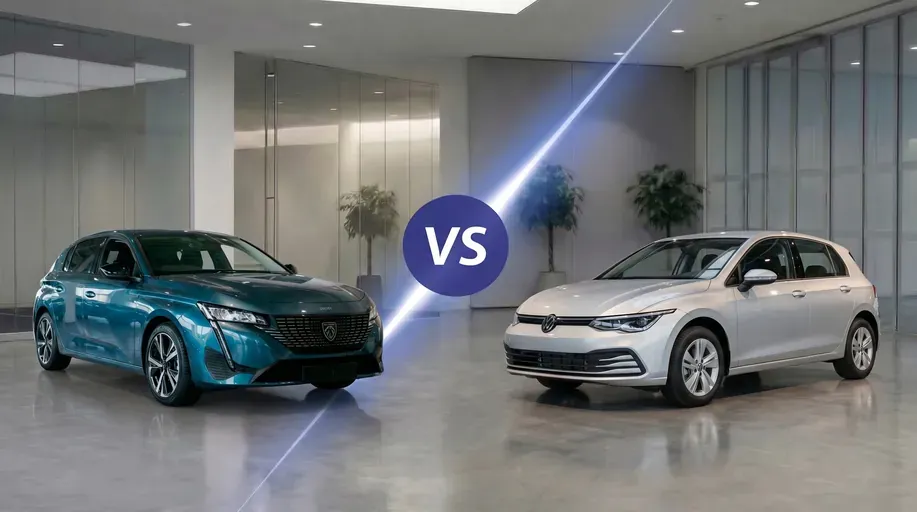
Detailed comparison: Peugeot 308 vs Volkswagen Golf (VW Golf). Read real-world experiences, engine comparisons, and a clear verdict on which hatchback to choose.
Apr 16, 2026
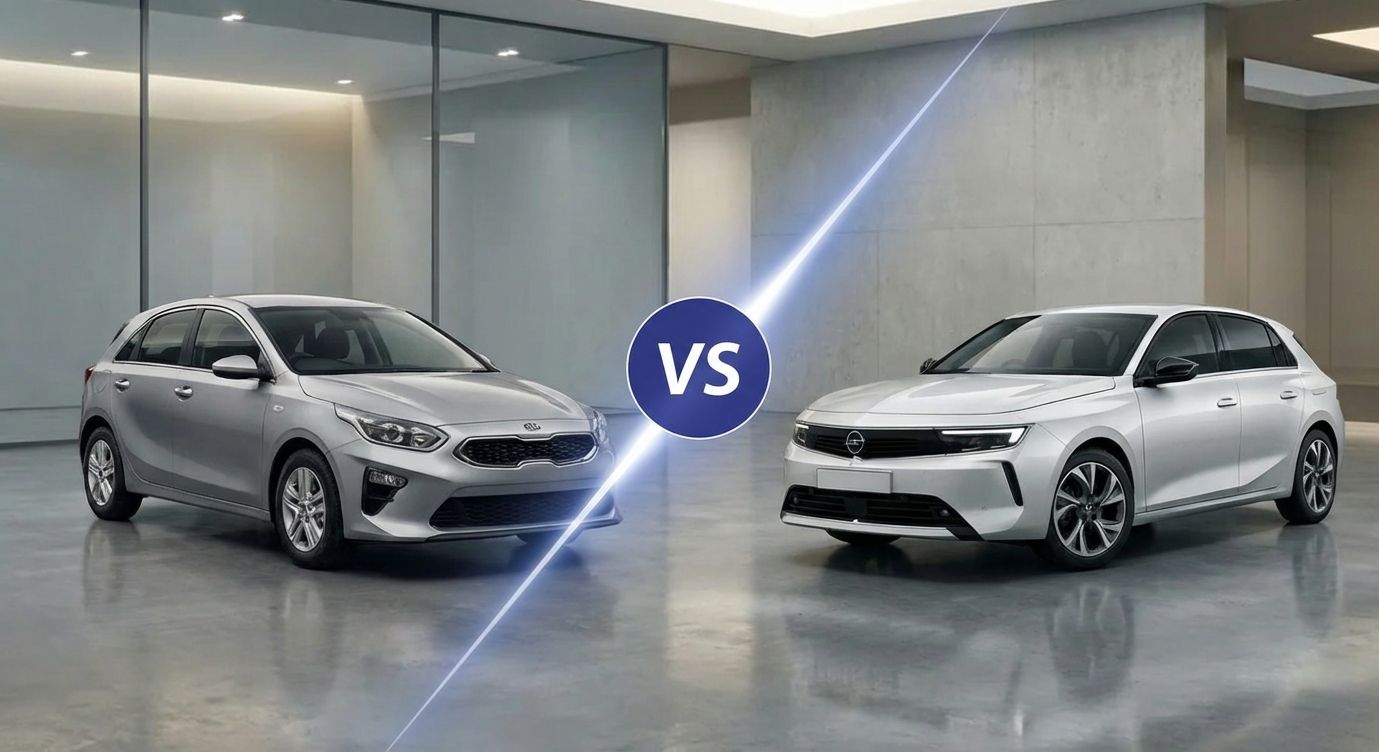
Detailed comparison of the Kia Ceed and Opel Astra. We compared real-world fuel consumption, reliability, and equipment. Find out which popular hatchback is worth buying.
Apr 14, 2026