Car battle
MG4 vs. Renault Mégane E-Tech: Complete comparison 2026
MG4 EV vs Renault Mégane E-Tech Electric comparison. A detailed look at range, equipment, and real-world experience. Read our verdict and make your choice easier!
Oct 16, 2026
Articles
Review
Tesla Model 3 review: real owner experience, common faults, running costs and used prices — everything you need to know before you buy.
October 26, 2026
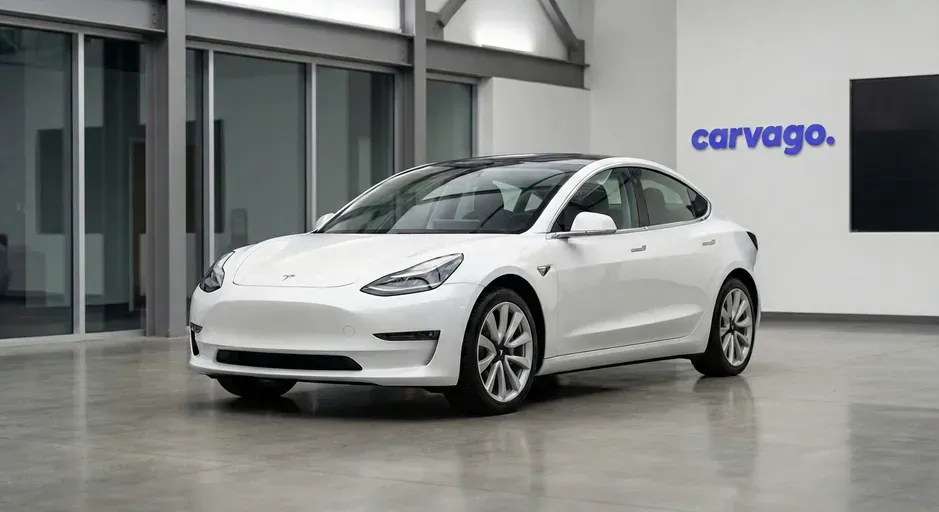
The Tesla Model 3 competes in the mid-size executive segment as an all-electric four-door saloon. This review focuses on its first generation, which arrived on European roads when customer deliveries commenced in February 2019, and remains in production as of October 2026.
Over its production span, the saloon received two notable revisions. An update in November 2020 added standard black exterior trim, a standard heat pump, and a power-operated boot lid. In September 2023, a comprehensive mid-cycle facelift made its world premiere, with first European customer deliveries following in October 2023. This overhaul brought redesigned front and rear lighting, altered cabin switchgear, and enhanced acoustic sealing. European customer deliveries of the revised Performance version began in May 2024, followed by the addition of a rear-wheel-drive long-range variant in October 2024.
Offered solely in a three-box body shape, the electric Tesla Model 3 saloon primarily appeals to fleet operators, daily commuters, and private buyers seeking a dedicated electric saloon with access to a proprietary fast-charging network.
Real-world ownership reports and periodic vehicle inspections indicate that the electric powertrain of the Tesla Model 3 displays solid mechanical durability, with high-voltage traction batteries and drive motors recording few systemic faults relative to vehicle age. Instead, recurring maintenance issues primarily centre on traditional chassis components, mechanical friction brakes, and climate hardware on specific production runs.
Chassis wear is among the most frequently documented complaints on pre-facelift models built between 2018 and 2023. An official service bulletin addresses water and road-salt ingress into the front upper control arm ball joints past an unsealed boot. Over time, flushed lubricant leads to internal corrosion, producing an audible creaking or squeaking noise when turning the steering wheel at low speeds or driving over road humps. While interim resealing was applied to some vehicles, resolving the noise permanently requires installing revised factory control arms or reinforced aftermarket replacements.
Technical roadworthiness tests consistently highlight premature brake disc degradation across the model range. Because one-pedal driving relies predominantly on regenerative electric motor braking to decelerate, the hydraulic friction brakes are rarely clamped with significant force. In wet European climates and regions using road salt during winter, surface rust develops quickly on brake rotors, leading to glazed friction pads, seized caliper guide pins, and uneven braking performance. Regular use of the manual brake-cleaning service routine and annual caliper lubrication help mitigate this issue.
Thermal management hardware has also required attention on vehicles built between November 2020 and 2021 equipped with the factory heat pump. Official technical documentation confirms that refrigerant pressure and temperature sensors in the circuit can experience electronic communication failure during sharp temperature fluctuations. When this happens, the controller shuts down the compressor to protect the system, leaving the ventilation system blowing ambient air into the cabin alongside an error message. A permanent fix involves evacuating the refrigerant and installing updated sensor hardware.
A significant proportion of official safety recalls on the electric Tesla Model 3 have been deployed digitally via over-the-air firmware updates, though several campaigns required physical workshop intervention. Prospective buyers can have the chassis and service history independently verified prior to purchase through CarAudit.
| Defect / Affected System | Production Window | Scope | Remedy |
|---|---|---|---|
| Far-side airbag calibration: In a side pole impact, lateral force on an occupant's shoulder may exceed 3 kN, failing side-impact requirements and increasing injury risk. | June 2024 to May 2026 | EU and export markets | Over-the-air software update to recalibrate deployment logic. |
| Power steering assist: Loss of electric power steering assist with a warning display, typically occurring after the vehicle comes to a standstill. | February 2023 to October 2023 | Worldwide | Over-the-air software update. |
| Car computer circuit board: Disruption during boot-up can cause loss of the rearview camera image when reverse gear is engaged. | 2023 to 2025 | European fleet | Over-the-air software update; car computer assembly replaced if hardware is damaged. |
| Front suspension lateral link: Fasteners attaching the lateral link to the sub-frame may become loose, risking separation from the sub-frame. | 2019 to 2021 | Worldwide | Physical inspection at service; fasteners torqued to specification or replaced. |
| Brake caliper fasteners: Bolts securing the brake calipers to the stub axles may not have been torqued to specification, risking loosening over time. | 2018 to 2021 | Worldwide | Physical inspection and re-torquing or replacement of caliper bolts. |
| Trunk lid wiring harness: Repeated trunk lid opening and closing causes wear to the coaxial cable inside the harness, leading to loss of the rearview camera feed. | 2017 to 2020 | Worldwide | Inspection of trunk harness; installation of a protective guide clamp or harness replacement. |
The electric Tesla Model 3 powertrain lineup consists entirely of permanent-magnet and induction electric drive units paired with a single-speed reduction transmission. Buyers can choose between single-motor rear-wheel-drive and dual-motor all-wheel-drive configurations across pre-facelift and facelifted iterations.
| Engine | Fuel | Power | Drivetrain | Gearbox | Model years |
|---|---|---|---|---|---|
| Standard Range Plus RWD | Electric | 225 kW (306 hp) | Rear-wheel drive | Automatic | 2019 |
| Standard Range Plus RWD | Electric | 239 kW (325 hp) | Rear-wheel drive | Automatic | 2019–2021 |
| Standard Range RWD | Electric | 208 kW (283 hp) | Rear-wheel drive | Automatic | 2022–2023 |
| Long Range AWD | Electric | 324 kW (440 hp) | All-wheel drive | Automatic | 2019–2023 |
| Performance AWD | Electric | 338 kW (460 hp) | All-wheel drive | Automatic | 2019–2023 |
| Rear-Wheel Drive | Electric | 208 kW (283 hp) | Rear-wheel drive | Automatic | 2023–present |
| Long Range RWD | Electric | 235 kW (320 hp) | Rear-wheel drive | Automatic | 2024–present |
| Long Range AWD | Electric | 324 kW (440 hp) | All-wheel drive | Automatic | 2023–present |
| Performance AWD | Electric | 338 kW (460 hp) | All-wheel drive | Automatic | 2024–present |
For city driving, short daily commutes, and mixed urban use, the single-motor rear-wheel-drive versions are the most sensible choice, shedding weight over the nose compared to heavier dual-motor options.
Drivers who frequently travel long motorway distances should look towards the Long Range rear-wheel drive as a used car or new purchase, as it combines the lower consumption of the single-motor layout with a larger battery. For frequent adverse weather, alpine regions, or brisk overtaking on wet motorways, the all-wheel-drive Tesla Model 3 Long Range provides consistent traction and prompt power delivery between both axles.
If you plan to tow a light trailer or carry bicycles, select either the rear-wheel-drive or Long Range all-wheel-drive variants equipped with the optional factory tow package. The Performance model is not approved for trailer towing.
The Performance dual-motor model caters to drivers focused on acceleration and high-speed stability.
For detailed information on drive unit reliability, half-shaft clicking noises, and thermal management hardware across specific build years, refer to the dedicated owner experiences section.
Owners report that ambient temperature significantly influences everyday driving range, with cold winter conditions increasing consumption due to cabin heating and battery conditioning. Early Tesla Model 3 examples produced before the late-2020 adoption of a standard heat pump show a steeper drop in winter efficiency. When rapid charging on highway journeys, owners highlight the convenience of automatic battery preheating en route to high-power chargers, though tests confirm that arriving at a fast charger with a cold battery substantially reduces initial charging speeds.
| Parameter | Pre-facelift (2019–2023) | Facelift (2023–2026) |
|---|---|---|
| Length (mm) | 4,694 | 4,720 |
| Width excluding mirrors (mm) | 1,849 | 1,850 |
| Height (mm) | 1,443 | 1,440 |
| Wheelbase (mm) | 2,875 | 2,875 |
| Rear boot volume, seats up / folded (l) | 561 / unverified | 594 / unverified |
Note: Stated measurements apply to standard rear-wheel-drive and Long Range variants; the Performance variant sits slightly lower with marginally longer exterior bodywork. Maximum cargo capacity with the rear seats folded forward is not officially published by the manufacturer under ISO or VDA standards.
The Tesla Model 3 saloon packages its powertrain beneath a flat cabin floor, which frees up foot room across the rear bench, including the centre position. However, because the floor is raised to accommodate the battery pack while the roofline tapers toward the rear, taller adults ride with their knees angled upward and limited under-thigh support. The rear bench is fixed and does not slide, but standard 60/40 split-folding rear backrests extend the luggage area forward for longer items. Everyday practicality benefits from dual cargo zones: a primary rear boot with a deep underfloor well, paired with a front luggage compartment suited for charging cables and smaller bags. Loading bulky cargo into the Tesla Model 3 remains constrained by the comparatively narrow opening of its saloon boot lid. Facelifted models from 2023 onwards introduce a standard rear touchscreen between the front seats for climate and seat-heating adjustments.
Early versions of the Tesla Model 3 drew persistent criticism from professional testers for their brittle low-speed ride—particularly on Performance models with large wheels—and elevated levels of tyre rumble and wind hiss at motorway speeds. Conversely, its handling dynamics received consistent praise: a low centre of gravity, responsive front-end grip, and an alert steering rack deliver nimble, reassuringly composed cornering with minimal body lean during abrupt direction changes.
Substantial chassis and acoustic revisions introduced in late 2023 transformed overall refinement. Comprehensive acoustic glazing and reworked suspension damping quell high-speed buffeting and absorb sharp expansion joints far better than early builds, although testers note occasional vertical restlessness over choppy, uneven secondary roads. Facelifted Performance versions also gained adaptive damping that keeps the chassis significantly more composed over uneven asphalt. Build quality and cabin ambience also took a noticeable step forward, featuring softer dashboard materials, lined door bins, and tighter panel alignment.
Testers express serious reservations about daily ergonomics, however. While the responsive central display and clutter-free dashboard appeal to minimalists, the complete elimination of traditional steering column stalks earned near-unanimous criticism. Operating indicator push-buttons while unwinding the steering wheel on roundabout exits proves awkward and distracting, as does shifting gears via the touchscreen edge. Road tests also note that the front seat cushions lack sufficient thigh support during extended long-distance journeys.
All charts in this section are drawn from Carvago's listings of the whole Tesla Model 3 model family, including all generations represented in the data, not only the reviewed generation. Without generation-specific filtering, this data does not establish a separate price level for particular production phases. In the current market, the median asking price is €22,500 for 2019 cars, €32,000 for 2023 models, and €41,800 for 2026 vehicles. Variations across model years reflect hardware updates over time, notably factory heat pumps, newer processors, and revised suspension components.
Between April and September 2026, the number of active Tesla Model 3 listings on the market ranged from a high of 2,806 to a low of 2,402, ending the period at 2,584.
Active listings over time
| Month | Tesla Model 3 |
|---|---|
| 2026-04 | 2 806 |
| 2026-05 | 2 527 |
| 2026-06 | 2 569 |
| 2026-07 | 2 528 |
| 2026-08 | 2 402 |
| 2026-09 | 2 584 |
Source Carvago
Buyers can expect an extensive selection of cars on offer, with overall vehicle choice remaining comfortably above 2,400 listings despite modest month-to-month fluctuations.
Among used listings advertised today, the median asking price of cars built in 2019 is €22,500, compared to €41,800 for cars built in 2026.
Median advertised price by year of manufacture
| Model year | Tesla Model 3 |
|---|---|
| 2019 | 22 500 |
| 2020 | 24 000 |
| 2021 | 27 600 |
| 2022 | 30 500 |
| 2023 | 32 000 |
| 2024 | 35 900 |
| 2025 | 36 000 |
| 2026 | 41 800 |
Source Carvago
Buyers considering earlier build years need €22,500 for a 2019 model or €24,000 for a 2020 model, whereas newer examples require €35,900 for a 2024 model and €41,800 for a 2026 model.
Active listings for electric cars moved from 2806 in April 2026 to 2584 in September 2026, while all other fuel types recorded 0 listings throughout the six-month span. The breakdown of advertised vehicles by powertrain over this period is shown below.
Supply composition by fuel type
| Month | Electric |
|---|---|
| 2026-04 | 2 806 |
| 2026-05 | 2 527 |
| 2026-06 | 2 569 |
| 2026-07 | 2 528 |
| 2026-08 | 2 402 |
| 2026-09 | 2 584 |
Source Carvago
Electric power accounts for the entire advertised selection, with 2584 electric vehicles and 0 for any other fuel type in September 2026. Prospective buyers will realistically find only fully electric models on offer.
Between April 2026 and September 2026, the average asking price for the Tesla Model 3 began at €26,800 and reached €27,800 in May. The chart below shows how advertised prices developed across these months.
Average price development over time
| Month | Tesla Model 3 |
|---|---|
| 2026-04 | 26 800 |
| 2026-05 | 27 800 |
| 2026-06 | 27 800 |
| 2026-07 | 27 900 |
| 2026-08 | 28 500 |
| 2026-09 | 28 200 |
Source Carvago
Across the full six-month period, the average asking price moved from €26,800 to €28,200, peaking at €28,500 in August before easing slightly in September. This overall shift of around 5% represents a relatively small change against the vehicle's asking price.
Mechanically durable electric powertrain with few battery or drive motor faults
Agile handling with responsive steering and composed cornering dynamics
Dual luggage areas featuring a front trunk and deep rear underfloor well
Steering wheel indicator buttons and screen gear selection hinder everyday ergonomics on facelift models
Susceptible to premature brake disc corrosion and pre-facelift suspension ball joint wear
Narrow saloon boot opening restricts loading of bulky items
The high-voltage battery and electric motors demonstrate solid durability, though pre-facelift examples are prone to front suspension ball joint wear and corroded brake discs.
The Long Range rear-wheel-drive model is best suited for long motorway commutes, pairing single-motor efficiency with the larger battery pack. For drivers facing severe winter conditions or wet alpine passes, the all-wheel-drive Tesla Model 3 Long Range provides more dependable traction between both axles.
Listen for front suspension squeaking over speed humps and inspect the brake discs for deep corrosion. Always check the vehicle identification number against official records to confirm all recall remedies and updates have been completed.
The late-2023 update introduced acoustic glazing and retuned suspension damping, significantly reducing road noise and smoothing out sharp road imperfections. However, the elimination of traditional steering column stalks in favour of steering wheel indicator buttons compromises daily usability on roundabout exits.
Sources: tesla.com, adac.de, tuvsud.com, autocar.co.uk, autoexpress.co.uk
This article was prepared using artificial intelligence tools. The section guarantor is Petr Dušek.
MG4 EV vs Renault Mégane E-Tech Electric comparison. A detailed look at range, equipment, and real-world experience. Read our verdict and make your choice easier!
Oct 16, 2026
Detailed comparison of the Opel Astra Electric and Renault Mégane E-Tech Electric. Find out the real range, compare equipment, and read our final verdict.
Apr 29, 2026
Detailed comparison of Tesla Model 3 vs Volkswagen ID.7. Which electric car offers better range and space? Discover real-world driving experiences and our verdict.
Apr 26, 2026