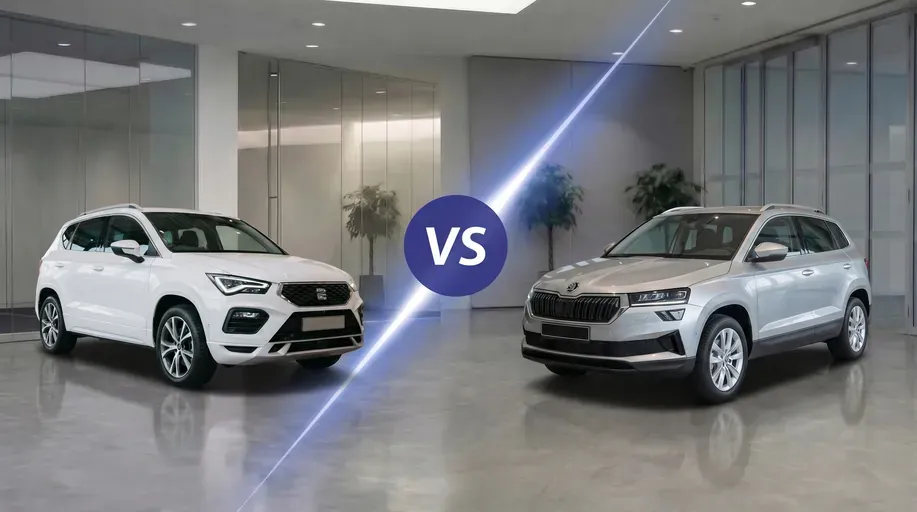
Car battle
Seat Ateca vs. Škoda Karoq: Complete comparison 2026
Detailed comparison of Seat Ateca vs. Škoda Karoq. Discover the differences in engines, driving characteristics, and practicality, and read our final verdict.
May 13, 2026
Suzuki Vitara review: real owner experience, hybrid engine picks, common faults and running costs — everything you need before you buy.
October 18, 2026
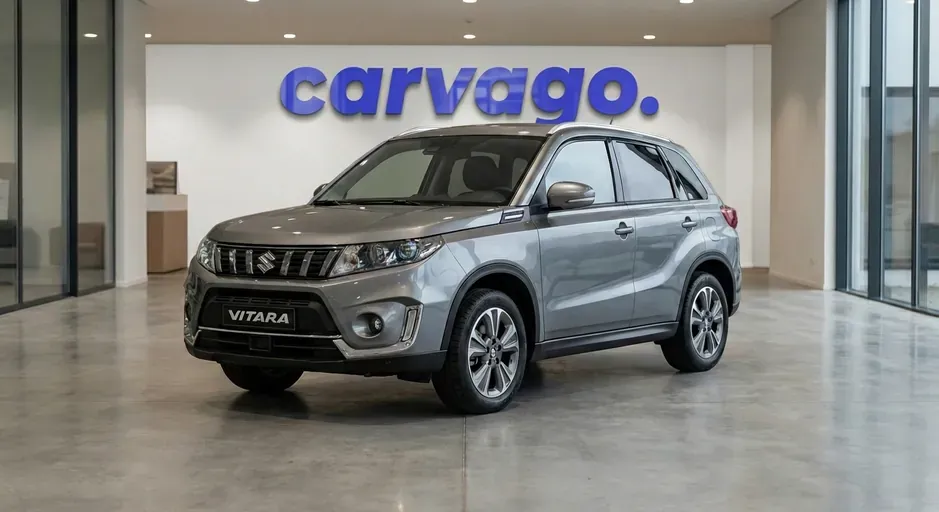
The Suzuki Vitara sits in the competitive compact crossover segment, combining an elevated seating position with manageable exterior dimensions. This review focuses on the fourth-generation model, which entered series production on 5 March 2015, with initial European customer deliveries following in April 2015. It remains in continuous production and on sale across European markets through 2026.
Sold exclusively as a five-door Suzuki Vitara SUV, the fourth generation has undergone two notable updates. The first facelift premiered in September 2018, bringing subtle exterior revisions and a revamped petrol line-up. A second update was announced on 2 April 2024, introducing a restyled front bumper, updated infotainment, and newer electronic assistance hardware. Along the way, the powertrain line-up evolved with the introduction of mild-hybrid technology in January 2020 and a full-hybrid option in March 2022.
The Vitara attracts private buyers looking for practical, uncomplicated transport. Its optional all-wheel-drive system makes it a distinctive choice in its class, appealing particularly to drivers in mountainous or rural areas who require dependable all-weather traction without stepping up to a larger vehicle.
Owner experiences and technical inspections show that the fourth-generation Suzuki Vitara is mechanically robust, though it is not immune to component wear, sensor quirks, and several manufacturer safety campaigns. Overall reliability is underpinned by straightforward mechanical assemblies, but prospective buyers across Europe should verify that specific production issues have been addressed by official workshops.
Several European safety recalls affect this generation. In November 2025, a worldwide recall covering 15,890 vehicles was announced for production year 2024 models due to an incorrect fault detection in the power steering control unit, which could cause the power steering assistance to switch off unexpectedly while the mechanical steering link remains functional; dealers resolve this with a software update. In November 2024, a worldwide campaign covering 466,792 units produced between 2019 and 2024 addressed an air void in the fuel pump's activated charcoal container, which could allow fuel vapours to escape.
Earlier campaigns include a February 2024 recall for 2023 production year models, where left rear brake pipes were at risk of installation damage that could cause rust or brake fluid leaks. In December 2022, a worldwide recall of 481,650 vehicles addressed 2015 to 2022 models fitted with Boosterjet turbo petrol engines (1.0-litre, 1.4-litre, and 1.4-litre mild hybrid). On these vehicles, a swollen non-return valve in the vacuum pump could temporarily restrict brake servo assistance, requiring substantially firmer pedal effort to decelerate. Earlier campaigns include an August 2015 reprogramming of the Radar Brake Support control logic for cars built between January and May 2015 (including units built prior to series production), a March 2016 fastener replacement for rear axle mounting bolts built without anti-friction coating between October and December 2015, and a February 2021 emissions management software update for 1.6-litre diesel engines built between February 2015 and September 2016.
Beyond official campaigns, professional tests describe specific operational characteristics on certain drivetrains. On the manual Suzuki Vitara, tests describe noticeable stiffness and notchiness when engaging first and second gear during cold winter starts. In most cases, readjusting external selector cables or renewing the gearbox lubricant reduces resistance, though forced gear engagement can cause synchromesh wear over time.
Electronic driver-assistance hardware also requires realistic expectations. On pre-2024 models, tests describe frequent spurious collision warnings or temporary system shutdowns of the front Radar Brake Support during wet snowfall, heavy road spray, or when road grime accumulates across the front grille badge. Keeping the emblem clean or obtaining a dealer software calibration typically resolves the issue.
Regarding regular chassis wear, technical inspections highlight front suspension stabilizer drop links and lower control arm bushings as early wear points on uneven road surfaces. Rear brake calipers also frequently suffer from seized sliding pins or uneven pad wear on vehicles driven infrequently or on salted roads, leading to corroded outer disc edges. Additionally, the thin factory paint finish on the front bumper and bonnet edge makes used models prone to stone chipping.
The fourth-generation Suzuki Vitara has featured a diverse range of powertrains throughout its production run, transitioning from traditional naturally aspirated petrol and turbodiesel units to modern turbocharged and electrified options.
| Engine | Fuel | Power | Gearbox | Drivetrain | Model years |
|---|---|---|---|---|---|
| 1.6 VVT | Petrol | 88 kW (120 hp) | 5-speed manual, 6-speed automatic | FWD, 4WD | 2015–2018 |
| 1.6 DDiS | Diesel | 88 kW (120 hp) | 6-speed manual, 6-speed dual-clutch automatic (4WD only) | FWD, 4WD | 2015–2018 |
| 1.4 Boosterjet | Petrol | 103 kW (140 hp) | 6-speed manual, 6-speed automatic | FWD, 4WD | 2015–2020 |
| 1.0 Boosterjet | Petrol | 82 kW (111 hp) | 5-speed manual, 6-speed automatic | FWD, 4WD | 2018–2020 |
| 1.4 Boosterjet Hybrid | Petrol Mild Hybrid | 95 kW (129 hp) | 6-speed manual, 6-speed automatic | FWD, 4WD | 2020–2024 |
| 1.4 Boosterjet Hybrid | Petrol Mild Hybrid | 80–81 kW (109–110 hp) | 6-speed manual, 6-speed automatic | FWD, 4WD | 2024–present |
| 1.5 Dualjet Hybrid | Petrol Full Hybrid | 85 kW (115–116 hp) | 6-speed automated manual | FWD, 4WD | 2022–present |
As a used car for local commuting, the early naturally aspirated 1.6 VVT petrol Suzuki Vitara represents the simplest choice. Lacking a turbocharger or complex particulate filtration, it tolerates frequent cold starts with minimal mechanical stress. The later three-cylinder 1.0 Boosterjet also feels sprightly around town, though its five-speed manual requires frequent shifting in dense traffic.
For newer models, the 1.5 Dualjet hybrid Suzuki Vitara can run solely on electric power over short urban stretches. However, professional road tests frequently criticize its automated manual gearbox for noticeable pauses and jerky shifting during sudden acceleration.
For most drivers, the turbocharged four-cylinder 1.4 Boosterjet provides the most balanced performance across the lineup. In pre-facelift form, it delivers responsive mid-range pulling power, while the subsequent 48V mild-hybrid version provides smoother stop-start operation and electric torque-fill at lower engine speeds. Both the six-speed manual and the torque-converter six-speed automatic pair well with this engine, making it well suited for daily commutes and family duties. Buyers seeking added all-weather traction can pair either gearbox with the Suzuki Vitara 4x4 system without sacrificing responsiveness.
Frequent highway drivers looking on the used market should consider the 1.6 DDiS diesel Suzuki Vitara. While tests note that it idles with noticeable agricultural clatter, its strong low-end pulling power allows relaxed high-speed cruising.
For towing trailers or carrying full passenger loads, both the diesel and the turbocharged 1.4 Boosterjet mild hybrid are capable options. The smaller 1.0 Boosterjet tends to run out of breath under sustained highway gradients, while the 1.5 Dualjet full hybrid is compromised for regular trailering due to its lower unbraked towing allowance and sluggish single-clutch gear shifts.
| Dimension / Capacity | Petrol & Mild Hybrid | Full Hybrid |
|---|---|---|
| Length | 4,175–4,185 mm | 4,175–4,185 mm |
| Width | 1,775 mm | 1,775 mm |
| Height | 1,595–1,610 mm | 1,595–1,600 mm |
| Wheelbase | 2,500 mm | 2,500 mm |
| Boot capacity (seats upright / folded) | 362–375 / 1,120 l | 289 / 1,046 l |
Inside the Suzuki Vitara SUV, the rear bench features a fixed base that does not slide fore or aft, paired with standard 60:40 split-folding backrests. While the upright roofline preserves adequate headroom for taller passengers, second-row kneeroom and footwell clearance remain tight compared to newer rivals, and the flat seat cushion provides limited under-thigh support. Everyday luggage practicality relies on an adjustable two-position boot floor in petrol and mild-hybrid versions, which creates a level loading surface when the seatbacks are folded flat. In the full hybrid Suzuki Vitara, this underfloor compartment is occupied by the high-voltage traction battery, resulting in a shallower cargo area and reduced total luggage volume.
Testers describe the Suzuki Vitara as an agile urban runabout whose low kerb weight keeps body lean in check through bends. However, the suspension struggles over rough surfaces, transmitting abrupt thumps into the cabin across sharp potholes and lateral ridges. The steering draws regular criticism across model years: testers find the rack numb and imprecise, noting an on-centre deadband and weak self-centring at low speeds that requires constant small corrections. High-speed motorway travel also exposes sparse acoustic insulation, allowing prominent wind and tyre roar into the passenger compartment.
Inside, the cabin prioritises utility over tactile appeal. Hard, scratch-prone plastics dominate the dashboard and door cards, creating an unpretentious atmosphere that lags behind newer rivals, though long-term evaluations show the physical switchgear remains durable and rattle-free. Front seats offer flat lateral bolstering. While testers praise the retention of straightforward physical buttons and dials for daily driving, the updated touchscreen introduced on later model years is faulted for sluggish responses and awkward menu layouts.
Professional verdicts broadly agree: the Suzuki Vitara 4x4 and front-wheel-drive variants remain dependable, user-friendly choices for daily commuting, but their hollow soundproofing, wooden secondary ride over broken tarmac, and disconnected steering reveal the underlying platform's age.
All the market charts in this section reflect listings of the complete Suzuki Vitara model family across all represented generations, rather than isolating the fourth generation alone, so the supplied data does not establish a separate price level for the reviewed generation. Across current European platform offerings, the median asking price sits at €16,500 for 2019 model years and reaches €27,100 for 2026 examples. These differences across advertised model years largely correspond to later production runs featuring factory mild-hybrid and full-hybrid powertrains alongside updated onboard electronic equipment.
Between April 2026 and September 2026, active Suzuki Vitara advertisements ranged from 4,556 to 4,986 listings across the platform. The chart below illustrates how inventory shifted across these six months, starting from 4,654 advertised vehicles in April.
Active listings over time
| Month | Suzuki Vitara |
|---|---|
| 2026-04 | 4 654 |
| 2026-05 | 4 655 |
| 2026-06 | 4 731 |
| 2026-07 | 4 986 |
| 2026-08 | 4 556 |
| 2026-09 | 4 752 |
Source Carvago
Buyers will find consistent availability on the market, with overall availability fluctuating moderately month to month and finishing at 4,752 active listings in September 2026.
The median asking price of cars advertised today built in 2019 is €16,500, while the median asking price of cars advertised today built in 2026 reaches €27,100.
Median advertised price by year of manufacture
| Model year | Suzuki Vitara |
|---|---|
| 2019 | 16 500 |
| 2020 | 18 000 |
| 2021 | 19 000 |
| 2022 | 21 000 |
| 2023 | 22 700 |
| 2024 | 24 400 |
| 2025 | 25 500 |
| 2026 | 27 100 |
Source Carvago
Buyers seeking a 2021 model year face a median asking price of €19,000, whereas choosing a 2024 model year corresponds to a median asking price of €24,400.
This depreciation curve tracks how the Suzuki Vitara loses value over time, shedding approximately 13% of its residual value in its first year and 27% by age three. The data below illustrates this decline across the model's first seven years.
Residual value by vehicle age
| Vehicle age | Suzuki Vitara |
|---|---|
| New | 27 400 |
| 1 yr | 23 900 |
| 2 yrs | 21 700 |
| 3 yrs | 19 900 |
| 4 yrs | 19 400 |
| 5 yrs | 17 200 |
| 6 yrs | 16 000 |
| 7 yrs | 14 800 |
Source Carvago
Across the seven-year span shown, the model sheds 46% of its residual value while retaining 54% of its initial worth. The largest single-year drop occurs right away in year one, whereas value loss slows noticeably between age three and age four with only a 3% decline.
Across the six months shown, petrol models made up the bulk of advertisements, moving from 3651 cars in April 2026 to 3375 in September 2026. The monthly distribution across all fuel types is detailed below.
Supply composition by fuel type
Petrol
Diesel
Hybrid
Electric
CNG
LPG
| Month | Petrol | Diesel | Hybrid | Electric | CNG | LPG |
|---|---|---|---|---|---|---|
| 2026-04 | 3 651 | 74 | 636 | 255 | 3 | 18 |
| 2026-05 | 3 593 | 80 | 675 | 273 | 1 | 19 |
| 2026-06 | 3 602 | 83 | 699 | 314 | 2 | 17 |
| 2026-07 | 3 733 | 88 | 777 | 357 | 2 | 17 |
| 2026-08 | 3 296 | 88 | 773 | 374 | 1 | 15 |
| 2026-09 | 3 375 | 78 | 814 | 457 | 1 | 12 |
Source Carvago
Petrol remains the dominant option on the market, accounting for 3375 listings in September 2026 alongside 814 hybrid and 457 electric listings. Buyers seeking alternatives will face far fewer choices, with diesel recording 78 listings and LPG only 12 in the same month.
Between April 2026 and September 2026, the average asking price for the Suzuki Vitara began at €23,900, as shown in the monthly data below.
Average price development over time
| Month | Suzuki Vitara |
|---|---|
| 2026-04 | 23 900 |
| 2026-05 | 23 900 |
| 2026-06 | 23 900 |
| 2026-07 | 24 100 |
| 2026-08 | 24 400 |
| 2026-09 | 24 600 |
Source Carvago
The average remained flat at €23,900 through June 2026 before rising to €24,600 by September 2026, representing a small overall movement of under 3 percent across the six months.
Available all-wheel drive provides dependable all-weather traction in a compact footprint
Responsive 1.4 Boosterjet petrol engine well suited to daily commuting and towing
Straightforward dashboard layout with durable, rattle-free physical switchgear
Suspension transmits noticeable thumps into the cabin over rough tarmac and potholes
Prominent wind and tyre roar at motorway speeds due to sparse sound insulation
Numb, imprecise steering with an on-centre deadband requiring constant corrections
Mechanically, the fourth-generation Suzuki Vitara is dependable and uncomplicated, provided all official recall campaigns have been completed by a dealer.
The turbocharged 1.4 Boosterjet, available as standard petrol and later as a mild hybrid, offers the best blend of responsive mid-range power and daily usability. In contrast, the 1.5 full hybrid is compromised by noticeable shift pauses from its automated manual gearbox and a smaller boot.
Extended motorway journeys expose sparse acoustic insulation and a firm suspension setup that transmits road thumps into the cabin. While the turbocharged engines hold motorway speeds comfortably, numb on-centre steering requires frequent corrections.
Verify by VIN that all official safety recall campaigns have been completed by a dealer, and test manual gearboxes for stiff engagement into first and second gear when cold. On a Suzuki Vitara 4x4, also inspect underneath for scrapes and fluid leaks around the transfer box and rear differential.
Sources: suzuki.co.uk, suzuki.de, adac.de, autobild.de, autocar.co.uk
This article was prepared using artificial intelligence tools. The section guarantor is Petr Dušek.
Detailed comparison of Seat Ateca vs. Škoda Karoq. Discover the differences in engines, driving characteristics, and practicality, and read our final verdict.
May 13, 2026
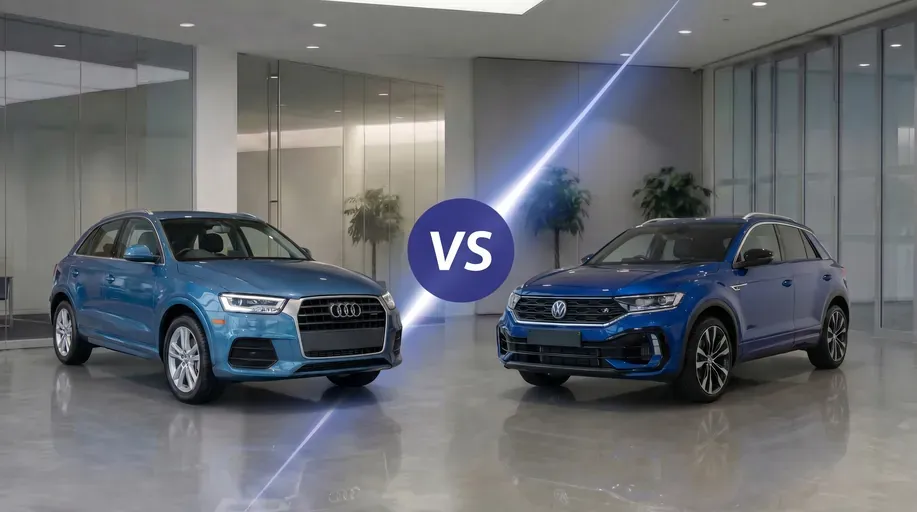
Detailed comparison of Audi Q3 vs Volkswagen (VW) T-Roc. Discover the differences in space, equipment, and real-world reliability. Read our clear verdict before you buy.
Apr 23, 2026
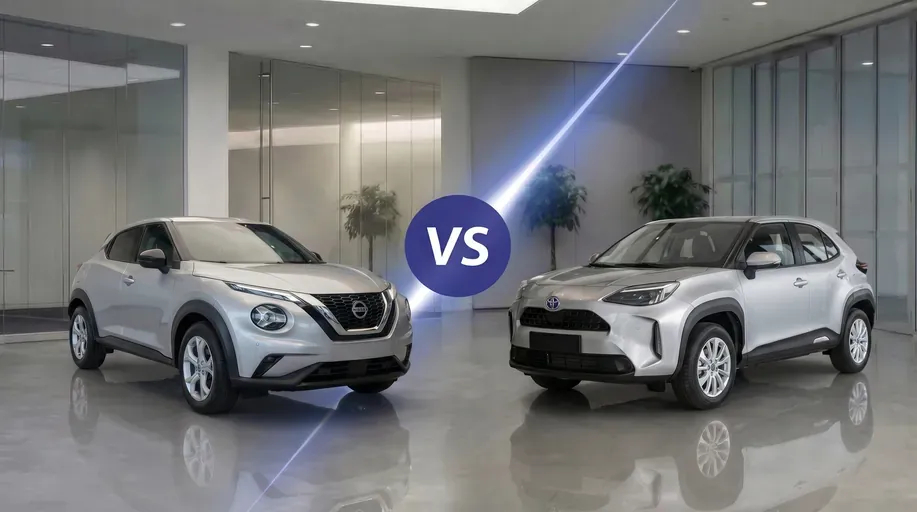
Nissan Juke vs Toyota Yaris Cross comparison. Find out which city SUV offers better equipment, fuel consumption, and driving characteristics. Read our final verdict!
May 21, 2026