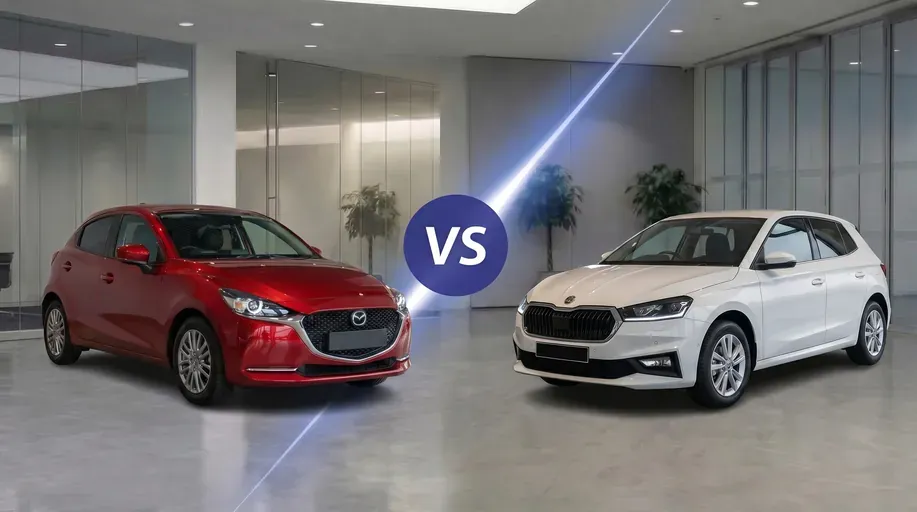
Car battle
Mazda 2 vs. Škoda Fabia: Complete comparison 2026
Detailed comparison: Mazda 2 vs. Škoda Fabia. Find out which used hatchback to choose. We offer a comparison of equipment, real-world driving experiences, and a clear verdict.
May 14, 2026
Suzuki Ignis review: real owner experiences, reliability, running costs, AllGrip AWD and used prices — everything you need before buying.
October 27, 2026

The Suzuki Ignis occupies a distinctive niche in the automotive market, blending the dimensions of an A-segment city car with the raised stance and styling cues of an ultra-compact crossover. This review covers the MF generation, which began European retail deliveries in January 2017 and concluded sales in early 2025 as dealer inventories cleared, leaving no direct replacement in Europe.
Sold exclusively as a five-door hatchback crossover, the model underwent a facelift revealed in March 2020, with deliveries starting across European showrooms in July 2020. The refresh brought revised exterior bumpers and grille styling, an updated engine paired with an upgraded mild-hybrid battery, and a continuously variable automatic transmission to replace the earlier automated manual gearbox.
With its tall proportions and the availability of an all-wheel-drive system, the all-wheel-drive Suzuki Ignis attracts urban buyers looking for straightforward parking and an elevated driving position, as well as rural drivers who need winter traction without the bulk or fuel consumption of a traditional sport utility vehicle. This guide examines how the small Japanese crossover holds up on the European second-hand market.
Real-world feedback across European markets indicates that the third-generation Suzuki Ignis is mechanically robust, though it exhibits a few distinct mechanical and electronic quirks. On manual Suzuki Ignis variants, owners frequently report a stiff clutch pedal, jerky take-up, creaking pedal action, and notchiness when engaging first or reverse gear. Workshop reports identify insufficient factory lubrication on the clutch release lever ball joint as a frequent cause, while distorted cable mounting brackets can allow excess play. Cleaning and regreasing the pivot point alongside proper cable adjustment typically restores smooth pedal action.
On pre-facelift models sold between 2017 and 2020 equipped with the optional five-speed automated manual transmission (AGS), tests describe low-speed clutch judder, lurching, and pronounced shift lag, especially during cold starts and stop-and-go driving. Revised transmission control calibration files and updated clutch friction discs mitigated extreme shuddering during the production run, but hesitation remains an inherent trait of the single-clutch automated system. Suzuki replaced the automated manual with a continuously variable transmission (CVT) across Europe with the July 2020 facelift.
Cabin electronics are another occasional talking point. Owners report that the central touchscreen infotainment system can freeze, disconnect from Apple CarPlay or Android Auto, or display a blank screen when reverse gear is selected. Dealership software updates generally resolve spontaneous rebooting, while blank reversing displays are often rectified by reseating the wiring harness connection inside the tailgate.
Official European recall campaigns for this generation focus primarily on specific production batches. In February 2025, a safety recall covered 2022 to 2023 vehicles across European markets because the steering shaft nut may not have been tightened to specification during manufacturing. The notice warns that this may cause the steering wheel to become loose, resulting in a loss of vehicle control. Workshops inspect the mounting, refit the assembly, and re-torque the nut to a revised specification. An earlier March 2022 recall for 2022 production involved a risk of the positive 12-volt cable contacting the negative wire or bodywork, which could cause a short circuit and fire.
Earlier in the production run, an April 2021 recall affected models built between July and November 2020 due to an improperly welded breather pipe on the fuel tank that could detach and leak fuel when filled completely, requiring full fuel tank replacement. For cars built between August 2016 and August 2017 with the 1.2 Dualjet mild hybrid powertrain, a March 2018 recall addressed engine control module software that could cause the stop-start warning light to blink and stop the 12-volt battery from charging, risking an engine stall. That same month, a separate campaign for mild-hybrid models built between September 2016 and February 2017 replaced the integrated starter generator drive belt, which lacked sufficient strength and could snap, causing the water pump to stop and the engine to overheat.
| Campaign Date | Affected Build Period | Affected Models & Powertrains | Defect Description & Workshop Remedy |
|---|---|---|---|
| February 2025 | 2022–2023 | All European models | Steering shaft nut undertorqued from the factory, risking loose steering wheel; dealer cleans assembly and re-torques retaining nut to a revised specification. |
| March 2022 | Model Year 2022 | All European models | Positive 12-volt cable may contact negative wire or bodywork, creating short circuit and fire risk; workshop inspects and secures battery harness. |
| April 2021 | 13 July 2020 – 24 November 2020 | All European models | Fuel tank breather pipe weld defect risking fuel leakage when filled completely; dealer inspects batch code and replaces fuel tank if affected. |
| March 2018 | 03 August 2016 – 31 August 2017 | 1.2 Dualjet mild hybrid | Engine control module software error stops battery charging and causes system failure; workshop reprograms the engine control module. |
| March 2018 | 17 September 2016 – 09 February 2017 | 1.2 Dualjet mild hybrid | Integrated starter generator belt can snap and disable the water pump, causing engine overheating; workshop replaces drive belt with reinforced unit. |
The European Suzuki Ignis line-up relies entirely on naturally aspirated four-cylinder petrol power, pairing light kerb weights with dependable, simple mechanics across both pre-facelift and facelift eras.
| Engine | Fuel | Power | Gearbox | Drivetrain | Model Years |
|---|---|---|---|---|---|
| 1.2 Dualjet | Petrol | 66 kW (90 hp) | 5-speed manual | FWD | 2017 – 2020 |
| 1.2 Dualjet | Petrol | 66 kW (90 hp) | 5-speed automatic (AGS) | FWD | 2017 – 2020 |
| 1.2 Dualjet | Petrol | 66 kW (90 hp) | 5-speed manual | 4WD (ALLGRIP) | 2017 – 2019 |
| 1.2 Dualjet SHVS | Petrol MHEV | 66 kW (90 hp) | 5-speed manual | FWD | 2017 – 2020 |
| 1.2 Dualjet SHVS | Petrol MHEV | 66 kW (90 hp) | 5-speed manual | 4WD (ALLGRIP) | 2017 – 2020 |
| 1.2 Dualjet Hybrid | Petrol MHEV | 61 kW (83 hp) | 5-speed manual | FWD | 2020 – 2025 |
| 1.2 Dualjet Hybrid | Petrol MHEV | 61 kW (83 hp) | Automatic (CVT) | FWD | 2020 – 2025 |
| 1.2 Dualjet Hybrid | Petrol MHEV | 61 kW (83 hp) | 5-speed manual | 4WD (ALLGRIP) | 2020 – 2025 |
For daily urban driving and short suburban hops, the post-facelift 1.2 Dualjet Hybrid with the continuously variable transmission is the easiest to manage in stop-and-go traffic. While the pre-facelift automated manual (AGS) proved jerky at low speeds, the later automatic Suzuki Ignis delivers seamless low-speed crawling. Its mild-hybrid starter-generator also provides smooth stop-start cycles at junctions.
For mixed everyday use spanning town routes and country roads, the front-wheel-drive 5-speed manual variants offer the best balance of driver engagement and direct control. The earlier petrol unit feels eager and rev-happy, whereas the facelifted mild hybrid delivers its maximum pulling power earlier in the rev band, reducing the need to work the gearbox quite as hard in suburban flow.
Long-distance motorway travel is not the primary domain of this lightweight city car, as overtakes at higher speeds demand deliberate downshifting and planning regardless of which variant you inspect. Buyers who tow light utility trailers or tackle unpaved tracks and winter climates can opt for the 4x4 Suzuki Ignis with ALLGRIP, which adds a mechanical rear axle for dependable traction on slippery inclines.
| Dimension | Value |
|---|---|
| Length | 3,700 mm |
| Width | 1,660–1,690 mm |
| Height | 1,595–1,605 mm |
| Wheelbase | 2,435 mm |
| Boot capacity (seats upright) | 260–267 l |
| Boot capacity (seats folded) | 501–514 l |
Boot volume figures apply to two-wheel-drive versions; all-wheel-drive models feature a reduced cargo capacity.
Despite compact exterior proportions, the Suzuki Ignis delivers a functional layout that prioritises passenger space. The tall roofline and upright seating posture grant adult occupants sufficient headroom. On higher trims, twin individual rear seats provide modular flexibility; these chairs slide fore and aft independently and include a reclining function, allowing owners to trade legroom for cargo volume depending on the trip. In four-seat models with the rear seats pushed back, knee clearance matches larger superminis, though seating is strictly limited to two occupants in the back. Standard versions feature a fixed five-seat bench that folds but does not slide. In all configurations, the narrow cabin limits elbow room, the rear floor forms a step when backrests are dropped, and carrying bulky cargo requires balancing luggage depth against passenger accommodation.
Professional road tests describe the Suzuki Ignis as a nimble city car whose featherweight chassis and tight turning radius suit tight urban environments, yet struggle on open highways. Testers consistently note that the suspension produces a firm, busy ride. The short wheelbase and limited damper travel transmit sharp potholes and transverse ridges directly into the cabin, often causing pronounced pitching over broken tarmac. At open-road speeds, the upright profile induces noticeable body lean through brisk bends. Steering feel is widely criticised across professional reviews for being slow, numb around the centre, and reluctant to self-centre naturally. Emergency braking performance also drew criticism in instrumented evaluations, where stopping distances were noted as long.
Inside, the cabin features an uncluttered layout, but test verdicts agree that material quality reflects its budget ethos. The dashboard and door cards consist entirely of hard, hollow, and scratch-prone plastics. While physical heating switches are easy to operate, the touch-sensitive volume slider on the central touchscreen proves frustrating to adjust on the move. Front seats lack lateral support on extended journeys. Sound insulation is light; although the naturally aspirated four-cylinder petrol engine idles smoothly, wind buffeting around the upright pillars and pronounced tyre roar make the interior noisy at highway pace.
Evaluations of the refreshed Suzuki Ignis acknowledge worthwhile chassis tuning, even if its fundamental nature remains unchanged. Revisions introduced structural floor bracing and retuned stability control programming, which intervenes earlier and far more progressively during abrupt swerving tests compared to the earlier setup. However, while general undulations are absorbed slightly better, road testers observe that urban ride comfort remains fidgety over coarse surfaces.
All charts in this section are drawn from Carvago's listings of the whole Suzuki Ignis model family, including other generations represented in the data, not only the reviewed generation. Because the dataset is not generation-filtered, it does not establish a separate price level specifically for the reviewed generation. Across the available stock, the median asking price stands at €12,900 for 2018 cars and reaches €19,400 for 2025 examples. Intermediate model years record a median asking price of €15,000 for 2021 listings and €18,500 for 2023 cars.
Between April and September 2026, the number of advertised Suzuki Ignis models increased from 1,011 to 1,101. The chart below tracks how monthly active listings evolved across this six-month span.
Active listings over time
| Month | Suzuki Ignis |
|---|---|
| 2026-04 | 1 011 |
| 2026-05 | 1 051 |
| 2026-06 | 1 063 |
| 2026-07 | 1 100 |
| 2026-08 | 1 083 |
| 2026-09 | 1 101 |
Source Carvago
With monthly counts consistently holding above 1,000 and peaking at 1,101 in September 2026, buyers have had a steady and healthy volume of choices on the market.
Among used cars advertised today, the median asking price for vehicles built in 2018 is €12,900, while the median asking price of cars advertised today built in 2025 is €19,400. The chart below shows how these asking prices compare across build years.
Median advertised price by year of manufacture
| Model year | Suzuki Ignis |
|---|---|
| 2018 | 12 900 |
| 2019 | 13 500 |
| 2020 | 14 500 |
| 2021 | 15 000 |
| 2022 | 16 000 |
| 2023 | 18 500 |
| 2024 | 19 100 |
| 2025 | 19 400 |
Source Carvago
Buyers targeting earlier model years find that the median asking price of cars advertised today is €12,900 for 2018 models and €15,000 for 2021 models. For later model years, the median asking price of cars advertised today is €18,500 for 2023 models and €19,400 for 2025 models.
Across the recorded period, petrol accounts for nearly all active listings, rising from 970 cars in April 2026 to 1066 in September. Hybrid options formed the only other recurring choice, registering 32 listings in April and 25 in September, as shown in the monthly breakdown below.
Supply composition by fuel type
Petrol
Diesel
Hybrid
Electric
LPG
| Month | Petrol | Diesel | Hybrid | Electric | LPG |
|---|---|---|---|---|---|
| 2026-04 | 970 | 0 | 32 | 0 | 3 |
| 2026-05 | 1 011 | 1 | 31 | 0 | 2 |
| 2026-06 | 1 025 | 2 | 28 | 0 | 2 |
| 2026-07 | 1 071 | 2 | 21 | 0 | 1 |
| 2026-08 | 1 052 | 1 | 23 | 1 | 0 |
| 2026-09 | 1 066 | 1 | 25 | 1 | 0 |
Source Carvago
In September 2026, the offer included 1066 petrol cars alongside 25 hybrids, with diesel and electric recording just 1 listing each. Buyers will find ample choice among petrol models, while anyone looking for an alternative powertrain has very few vehicles available.
Between April 2026 and September 2026, the average asking price for the Suzuki Ignis opened at €15,600 and reached €15,700 in June 2026. The chart below illustrates how these monthly advertised averages developed across the period.
Average price development over time
| Month | Suzuki Ignis |
|---|---|
| 2026-04 | 15 600 |
| 2026-05 | 15 600 |
| 2026-06 | 15 700 |
| 2026-07 | 15 500 |
| 2026-08 | 15 500 |
| 2026-09 | 15 400 |
Source Carvago
Across the six months, the average asking price moved from €15,600 to €15,400. That represents a shift of just over 1%, showing only minor movement relative to the vehicle's overall price level.
Compact dimensions with tight turning radius for straightforward urban parking
Clever sliding and reclining individual rear seats on higher specifications
Rare availability of mechanical all-wheel drive in the city-car segment
Busy, firm ride quality over broken road surfaces and potholes
Hard cabin plastics, light sound insulation, and high wind noise at speed
Sluggish automated manual gearbox on pre-facelift two-pedal versions
Facelifted models delivered from July 2020 onward are the preferred pick thanks to upgraded mild-hybrid hardware and improved stability control. If you require an automatic Suzuki Ignis, focus strictly on post-facelift cars to secure the smooth continuously variable transmission instead of the earlier automated manual gearbox.
Mechanically, this generation is robust due to its simple naturally aspirated petrol engines, though minor clutch linkage stiffness and infotainment freezes are reported. Always verify by VIN that official safety campaigns have been completed at a franchised workshop.
The car is less suited to long motorway journeys due to noticeable wind noise, a firm ride, and modest overtaking reserves at high speeds. It performs far better in urban driving and rural commuting.
The 4x4 Suzuki Ignis is worth choosing if you regularly encounter slippery winter roads or steep unpaved tracks. However, its mechanical rear axle reduces boot space compared to front-wheel-drive versions.
Sources: suzuki.co.uk, adac.de, service.gov.uk, autocar.co.uk, autoexpress.co.uk
This article was prepared using artificial intelligence tools. The section guarantor is Petr Dušek.
Detailed comparison: Mazda 2 vs. Škoda Fabia. Find out which used hatchback to choose. We offer a comparison of equipment, real-world driving experiences, and a clear verdict.
May 14, 2026
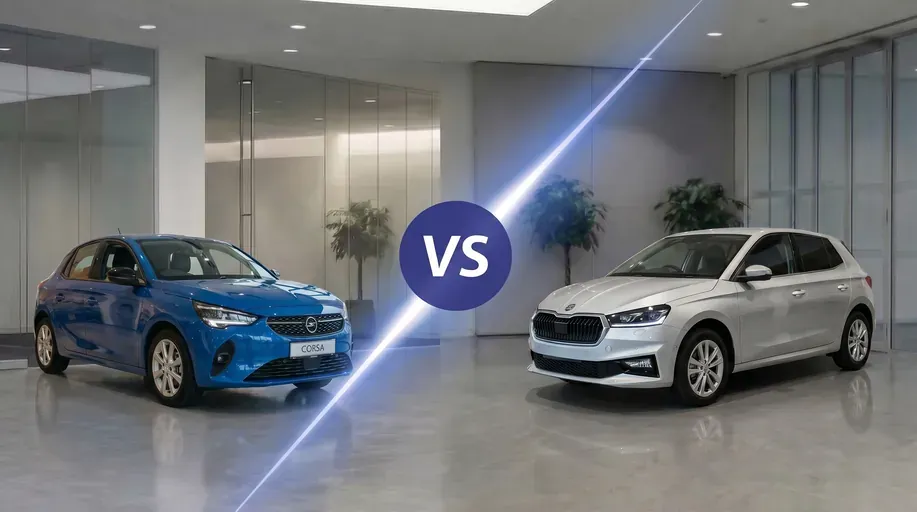
Detailed comparison: Opel Corsa vs. Škoda Fabia. Discover the differences in equipment, engines, and reliability. Real-world experiences to help you choose your used car.
Apr 24, 2026
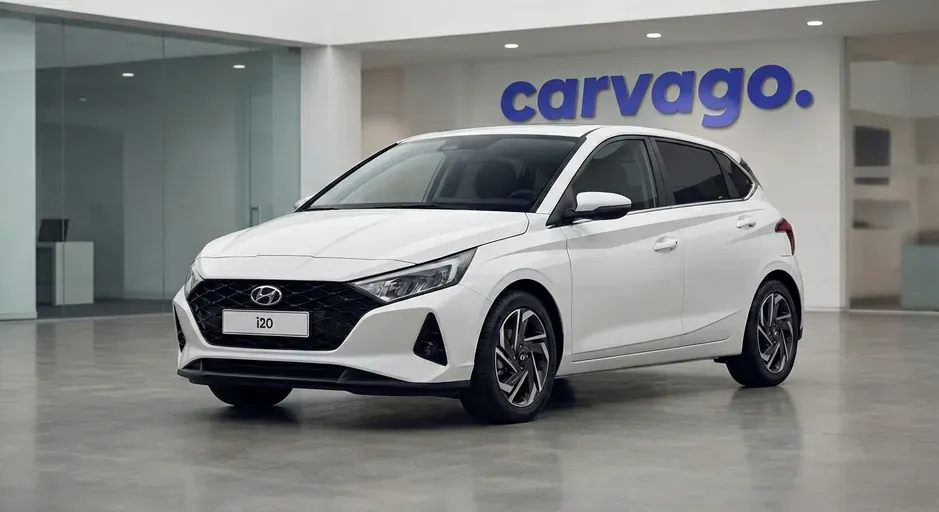
Hyundai i20 review: real owner experiences, common faults, engine picks, and running costs. Get the definitive verdict before you buy.
Oct 20, 2026