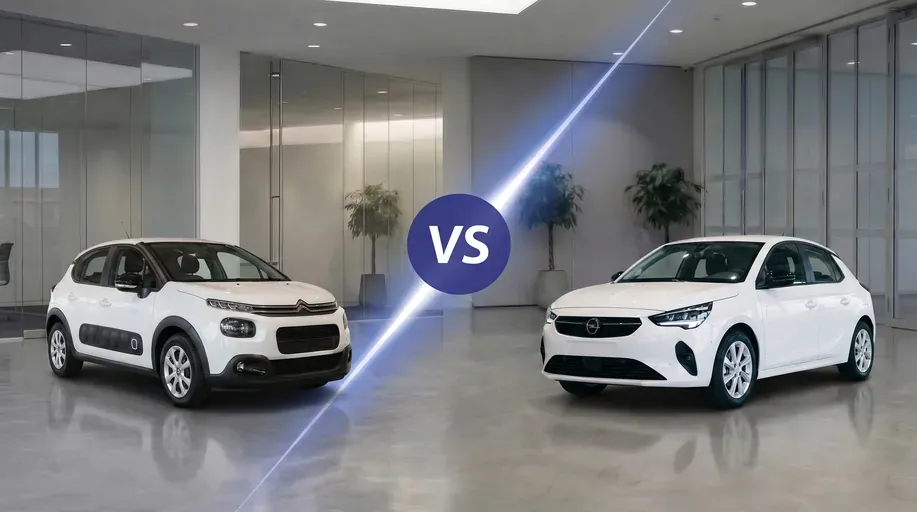
Car battle
Citroën C3 vs. Opel Corsa: Complete comparison 2026
Choosing a used Citroën C3 or Opel Corsa? Read our detailed comparison. We have evaluated the reliability, driving characteristics, and equipment of both city cars.
May 21, 2026
Hyundai i20 review: real owner experiences, common faults, engine picks, and running costs. Get the definitive verdict before you buy.
October 20, 2026
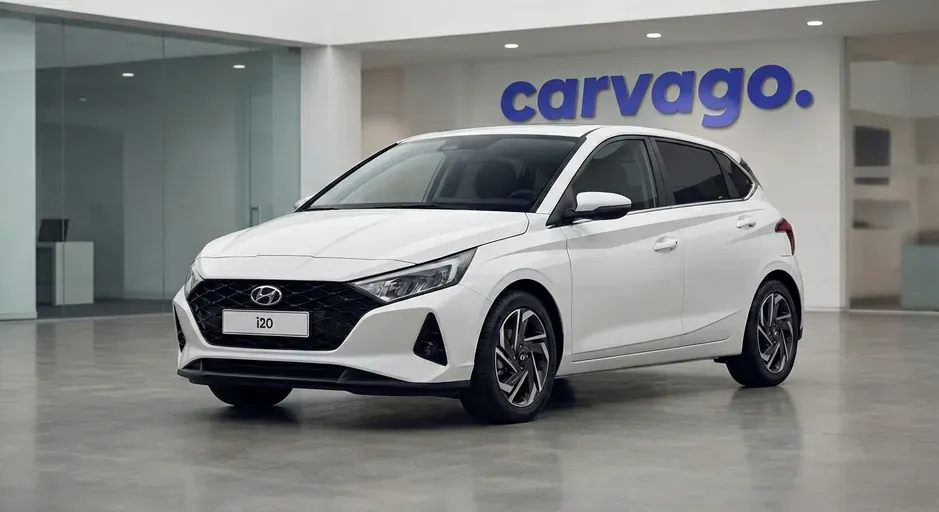
The third-generation Hyundai i20 represents the Korean brand's entry in the European supermini class. Series production began in August 2020 at the manufacturer's facility in İzmit, Turkey, with the first customer deliveries arriving in October 2020. Throughout this production run, the model has been offered exclusively as a five-door Hyundai i20 hatchback, alongside the styled N Line variant and the dedicated high-performance i20 N.
A mid-cycle facelift premiered on 10 May 2023, entering production in August 2023 with European customer deliveries rolling out that autumn. The update introduced redesigned bumpers, revised lighting elements, and updated cabin technology. A refreshed N Line was revealed in February 2024, the same month European production of the standalone petrol i20 N concluded.
Targeted primarily at commuters, small households, and urban drivers seeking manageable exterior dimensions alongside straightforward five-door practicality, the third-generation model remains active in series production. This guide evaluates how the car performs as a used purchase across its pre-facelift and updated iterations.
Owner reports and workshop data for the third-generation Hyundai i20 paint a generally solid picture, though specific mechanical and electronic quirks require attention on early production runs. Long-term reliability is still establishing itself across high-mileage examples, but distinct patterns have emerged around the automated transmission and electrified powertrains.
The dry-clutch seven-speed automatic transmission is the most frequent subject of owner discussion. In urban stop-and-go traffic, tests and owners describe low-speed engagement judder, hesitation when pulling away, and delayed clutch bite when warm. Software calibration updates for the transmission control unit resolved hunting and jerky take-up on many early vehicles. In some cases where shuddering persisted on hill starts or clutch slip occurred under load, workshops had to replace the dual-mass flywheel and dry clutch pack under warranty. Buyers seeking an automatic Hyundai i20 should ensure shifts remain seamless during extended low-speed crawling.
On mild-hybrid variants, owners report occasional 12-volt battery drainage after the vehicle sits parked for several days, accompanied by instrument cluster alerts warning of 48-volt electrical faults. When the auxiliary system shuts down or enters a low-voltage state, the intelligent manual gearbox cannot activate its engine-off sailing mode. Dealers addressed the parasitic draw primarily through battery management software flashes, though neglected auxiliary batteries occasionally required physical replacement.
Several safety recalls have been issued across European markets for this generation, addressing mechanical components and electronic control logic.
| Defect in Official Notice | Affected Build Window | Powertrain / Equipment | Workshop Remedy |
|---|---|---|---|
| Low-pressure fuel pump impeller swelling causing power loss or stalling | 01 April 2021 – 04 January 2023 | Petrol Hyundai i20 (1.2 MPi, 1.0 T-GDi, 1.6 T-GDi) | Replace low-pressure fuel pump and connector line in fuel tank |
| Transmission control unit error preventing limp-home mode, risking unintended deceleration or loss of drive | 28 March 2023 – 15 January 2024 | 1.0 T-GDi with 7-speed dual-clutch automatic | Update Transmission Control Unit software |
| Rear cross-traffic collision-avoidance assist non-functional when reverse gear is engaged | 09 August 2023 – 16 August 2024 | Models equipped with rear cross-traffic assist (optional or standard on higher trims) | Software update to radar and ADAS control module |
| Vacuum hose routing defect risking cracking, reduced brake assistance, and extended stopping distances | 18 August 2015 – 21 September 2020 (covering earliest 2020 production units) | 1.0 T-GDi petrol | Replace vacuum hose with revised design and inspect brake booster |
The third-generation Hyundai i20 relies exclusively on petrol power, offering a choice between an uncomplicated naturally aspirated four-cylinder and lively turbocharged three-cylinder units, alongside a dedicated performance model.
| Engine | Fuel | Power | Gearbox | Model years |
|---|---|---|---|---|
| 1.2 MPi | Petrol | 62 kW (84 hp) | 5-speed manual | 2020–2024 |
| 1.2 MPi | Petrol | 58 kW (79 hp) | 5-speed manual | 2024–present |
| 1.0 T-GDi | Petrol | 74 kW (100 hp) | 6-speed manual, 7-speed automatic | 2020–2024 |
| 1.0 T-GDi 48V | Petrol Mild Hybrid | 74 kW (100 hp) | 6-speed manual, 7-speed automatic | 2020–2024 |
| 1.0 T-GDi 48V | Petrol Mild Hybrid | 88 kW (120 hp) | 6-speed manual, 7-speed automatic | 2020–2024 |
| 1.0 T-GDi | Petrol | 66 kW (90 hp) | 6-speed manual, 7-speed automatic | 2024–present |
| 1.6 T-GDi (i20 N) | Petrol | 150 kW (204 hp) | 6-speed manual | 2021–2024 |
Short city trips: The naturally aspirated 1.2 MPi is well suited to urban runabout duties and short commutes. Its indirect multipoint fuel injection tolerates repeated cold starts with minimal complication. However, it is paired solely with a five-speed manual gearbox and lacks mid-range pulling power, which makes steep inclines and highway merging laborious.
Mixed daily driving: The turbocharged three-cylinder 1.0 T-GDi is the most balanced option for everyday versatility. With accessible low-end pull, it accelerates smoothly without requiring high engine revs. A manual Hyundai i20 provides a light, precise shift action, while an automatic Hyundai i20 with the dual-clutch transmission delivers relaxed open-road driving.
Motorway distances: For regular long-distance travel, either the turbocharged 1.0 T-GDi or the mild-hybrid variants are preferable. Their extra gear ratios — six speeds on the manual and seven on the dual-clutch — keep cruising revolutions lower than the base engine, reducing cabin noise at sustained speeds.
Towing: Drivers needing to pull a light trailer should choose the turbocharged 1.0 T-GDi, which carries the highest braked towing limit in the range. The naturally aspirated 1.2 MPi is restricted to lighter loads, while the hot hatch is not homologated for towing at all.
Enthusiasts (used market): Available exclusively as a used car following its European market withdrawal in February 2024, the range-topping i20 N features a dedicated turbocharged 1.6 T-GDi engine, a close-ratio manual gearbox, and a mechanical limited-slip differential engineered specifically for performance driving.
For details on component durability, transmission behaviour, and verified safety recalls, consult the owner experiences section.
The Hyundai i20 hatchback offers an accommodating passenger compartment for a supermini, providing two adults in the outer rear seats with comfortable knee clearance and sufficient headroom. Carrying three occupants across the rear bench is constrained by shoulder width and a small central floor tunnel. Cabin modularity is functional and straightforward: a 60:40 split-folding rear seatback comes standard, although sliding or reclining rear seats are not offered. Everyday luggage usability depends noticeably on the selected engine technology. Standard petrol variants feature a dual-height boot floor that aligns flush with folded rear seatbacks to ease loading bulky cargo. In mild-hybrid variants, the battery pack occupies the space beneath the boot floor, eliminating the lower storage compartment, reducing overall luggage depth, and leaving a distinct step in the load bay when the rear seats are lowered.
| Dimension / Capacity | Hatchback |
|---|---|
| Length | 4,040–4,065 mm |
| Width (excluding mirrors) | 1,775 mm |
| Height | 1,450 mm |
| Wheelbase | 2,580 mm |
| Boot capacity (seats up / folded) | 352 / 1,165 l |
| Boot capacity with 48V battery (seats up / folded) | 262 / 1,075 l |
Exterior dimensions do not apply to dedicated sport derivatives, which feature altered bumper styling and a lower chassis.
Professional road tests describe the standard Hyundai i20 as having a distinctly firm chassis setup. While the suspension absorbs larger undulations adequately, it transmits sharp potholes, manhole covers, and transverse ridges abruptly into the passenger cell at urban speeds. Models fitted with optional or higher-trim larger alloy wheels exhibit noticeable low-speed fidgeting, though ride compliance settles on faster roads. In cornering, body lean remains well contained and roadholding is secure. The steering is direct around the centre, but tests consistently note that feedback from the road surface is muted, with one test describing initial off-centre responses as slightly vague. The dedicated hot-hatch variant trades everyday compliance for an uncompromisingly rigid chassis with precise front-axle bite.
Cabin noise levels draw reservations. Tyre roar is prominent on coarse asphalt, wind noise becomes noticeable at motorway cruising speeds, and the three-cylinder petrol Hyundai i20 produces a vocal thrum under acceleration before settling down at steady speeds. For the automatic gearbox, testers note smooth shifts once underway.
The interior earns praise for ergonomics, but criticism for materials. Dashboards and door linings are dominated by hard, unyielding plastics that lack tactile warmth, though assembly remains tight and squeak-free. Testers widely appreciate the physical dials and traditional buttons for heating and ventilation, which make adjustments far simpler on the move than touch sliders. The digital instrument cluster, standard on higher trims and optional on base models, is regarded as clear and intuitive. The mid-cycle facelift updated exterior styling and on-board tech, leaving the car's underlying chassis tuning and hard cabin surfaces unchanged.
All the charts in this section are drawn from Carvago's listings of the whole Hyundai i20 model family, including other generations represented in the data, rather than only the third generation. Because listings are indexed by year of manufacture, this dataset does not establish a separate price level for the reviewed generation. The median asking price across the available selection stands at €11,900 for 2019 models and reaches €21,000 for 2026 vehicles. Variations between model years primarily reflect differing equipment grades, powertrains, and recorded mileage across the multiple generations present in the listings.
Between April and September 2026, the volume of active Hyundai i20 listings moved between a low of 9,119 and a peak of 9,746 in July. The chart below tracks how many vehicles were advertised on the platform across these six months.
Active listings over time
| Month | Hyundai i20 |
|---|---|
| 2026-04 | 9 201 |
| 2026-05 | 9 265 |
| 2026-06 | 9 472 |
| 2026-07 | 9 746 |
| 2026-08 | 9 133 |
| 2026-09 | 9 119 |
Source Carvago
Buyers can expect a broad selection of more than 9,000 cars on offer each month, with overall choice remaining consistently plentiful despite minor month-to-month shifts.
Across used listings currently advertised on the platform, the median asking price starts at €11,900 for cars built in 2019 and reaches €21,000 for 2026 models. The breakdown below illustrates how these median asking prices compare across build years.
Median advertised price by year of manufacture
| Model year | Hyundai i20 |
|---|---|
| 2019 | 11 900 |
| 2020 | 13 000 |
| 2021 | 14 700 |
| 2022 | 15 500 |
| 2023 | 18 000 |
| 2024 | 20 000 |
| 2025 | 20 000 |
| 2026 | 21 000 |
Source Carvago
Buyers exploring 2020 to 2022 models see median asking prices between €13,000 and €15,500, while listings built in 2024 and 2025 share an identical median asking price of €20,000.
This depreciation curve illustrates how the Hyundai i20 loses value as it ages, shedding about 13% of its initial average residual value in the first year and 27% by age three. The data below shows how that decline unfolds across its first seven years on the road.
Residual value by vehicle age
| Vehicle age | Hyundai i20 |
|---|---|
| New | 20 900 |
| 1 yr | 18 100 |
| 2 yrs | 16 600 |
| 3 yrs | 15 200 |
| 4 yrs | 14 700 |
| 5 yrs | 13 500 |
| 6 yrs | 11 600 |
| 7 yrs | 10 800 |
Source Carvago
Overall, the model sheds roughly 48% of its baseline value over seven years, retaining over half of its initial average residual value. The drop flattens considerably between ages three and four, where the loss slows to around 3%.
Between April 2026 and September 2026, petrol models formed the vast majority of advertised cars, starting at 9007 listings in April and peaking at 9573 in July. The chart below shows the breakdown of active listings by fuel type over this six-month span.
Supply composition by fuel type
Petrol
Diesel
Hybrid
LPG
| Month | Petrol | Diesel | Hybrid | LPG |
|---|---|---|---|---|
| 2026-04 | 9 007 | 46 | 64 | 60 |
| 2026-05 | 9 070 | 43 | 72 | 51 |
| 2026-06 | 9 299 | 36 | 75 | 36 |
| 2026-07 | 9 573 | 41 | 62 | 46 |
| 2026-08 | 8 947 | 48 | 77 | 46 |
| 2026-09 | 8 934 | 51 | 82 | 42 |
Source Carvago
In September 2026, petrol dominated the market with 8934 listings, while alternatives remained scarce, totaling 82 hybrids, 51 diesels, and 42 LPG cars. Anyone shopping for this model will have an abundant choice of petrol variants, but will need patience when seeking any other engine type.
Between April 2026 and September 2026, the average asking price for the Hyundai i20 started at €18,200 and finished at €18,400.
Average price development over time
| Month | Hyundai i20 |
|---|---|
| 2026-04 | 18 200 |
| 2026-05 | 18 100 |
| 2026-06 | 18 200 |
| 2026-07 | 18 200 |
| 2026-08 | 18 300 |
| 2026-09 | 18 400 |
Source Carvago
Across these six months, the average fluctuated within a narrow band between €18,100 and €18,400, shifting by just over 1% overall.
Accommodating rear-seat legroom and headroom for adult passengers
Straightforward cabin ergonomics with physical dials and buttons for climate controls
Flexible turbocharged petrol engines well suited to everyday versatility
Firm low-speed ride that transmits sharp road imperfections into the cabin
Low-speed hesitation and clutch judder from the dual-clutch automatic transmission in traffic
Interior dominated by hard plastics alongside noticeable road noise at higher speeds
Overall mechanical integrity of the Hyundai i20 is solid, though long-term reliability is still establishing itself across high-mileage cars. The primary caveat is the dry-clutch dual-clutch automatic transmission, which can suffer from low-speed clutch shudder or hesitation in stop-and-go urban traffic.
The turbocharged three-cylinder petrol engine provides the best balance of everyday pulling power and lower cruising engine speeds on the motorway. The naturally aspirated four-cylinder petrol handles short urban trips with minimal complication, but it feels strained during highway merging and steep climbs.
Verify by VIN with a dealer that safety recalls for the low-pressure fuel pump and transmission software have been completed. During the test drive of an automatic Hyundai i20, check for smooth clutch bite at crawling speeds, and ensure mild-hybrid models show no 48-volt battery warnings.
Yes. The 48-volt lithium-ion battery pack is housed beneath the boot floor, which eliminates the underfloor storage compartment, reduces overall cargo depth, and leaves a noticeable step in the load floor when the rear seatbacks are folded flat.
Sources: hyundai.news, adac.de, autobild.de, autocar.co.uk, autoexpress.co.uk
This article was prepared using artificial intelligence tools. The section guarantor is Petr Dušek.
Choosing a used Citroën C3 or Opel Corsa? Read our detailed comparison. We have evaluated the reliability, driving characteristics, and equipment of both city cars.
May 21, 2026
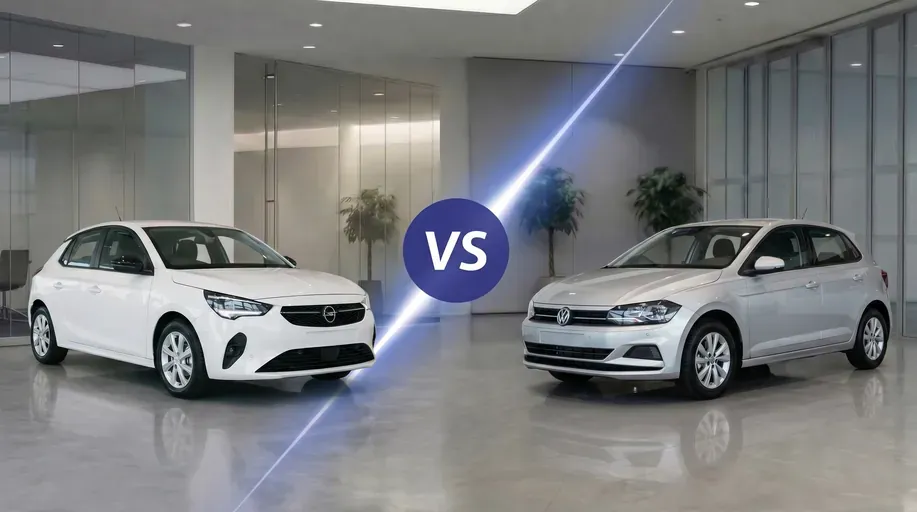
Detailed comparison of Opel Corsa vs. Volkswagen Polo (VW Polo). Discover real-world experiences, differences in equipment, and the verdict for choosing the ideal used hatchback.
Oct 16, 2026
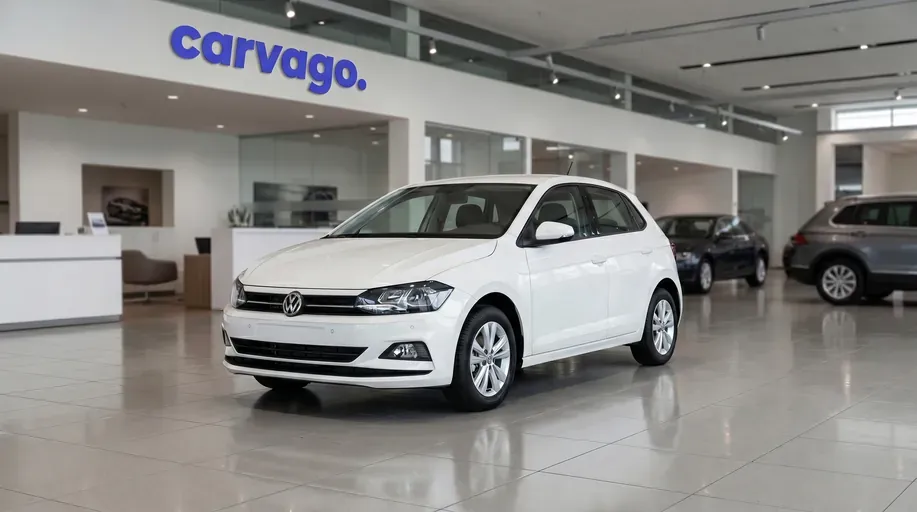
Volkswagen Polo Mk6 review: real owner feedback, common faults, engine picks, and used prices — everything you need to know before you buy.
Oct 18, 2026