Car battle
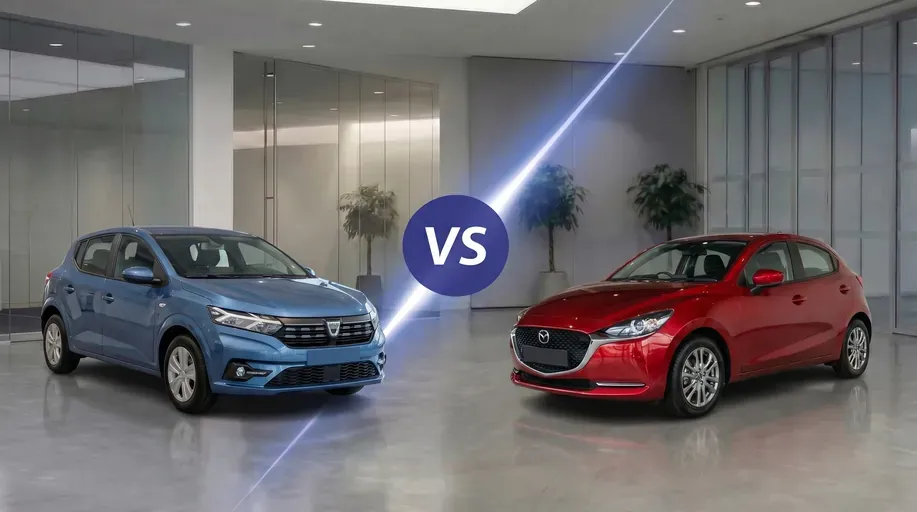
Dacia Sandero vs. Mazda 2: Complete comparison 2026
Comparison: Dacia Sandero (Stepway) vs Mazda 2 (Mazda2). Which used hatchback offers better reliability? Read real-world insights and our clear verdict!
May 7, 2026
Articles
Review
Volkswagen Polo Mk6 review: real owner feedback, common faults, engine picks, and used prices — everything you need to know before you buy.
October 18, 2026
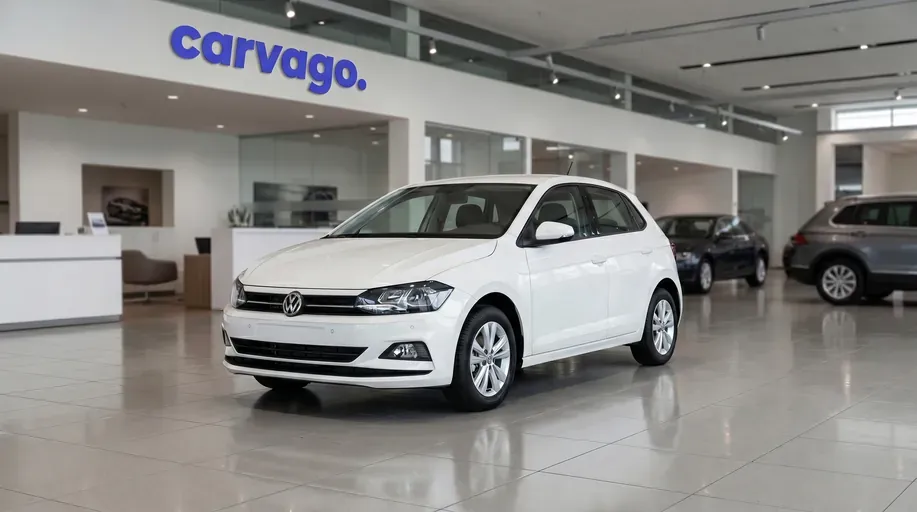
The sixth-generation Volkswagen Polo occupies a central position in the European supermini class. Built on the modular MQB A0 platform, this generation marked a decisive shift in format, offered exclusively as a practical five-door Volkswagen Polo hatchback. It serves a broad demographic, appealing to daily commuters, small households needing an adaptable primary car, and drivers downsizing from larger hatchbacks who still require stability on longer journeys.
Following its world premiere in June 2017, order books opened in August 2017, with the first customer deliveries rolling out across continental Europe in November 2017. The performance-focused Polo GTI joined customer fleets in June 2018. Over its production cycle, the powertrain selection evolved, with diesel variants dropped from European price lists in August 2020.
A mid-cycle update premiered in April 2021, introducing refreshed front and rear styling, updated lighting signatures, and revised digital cabin controls, with customer deliveries starting in late 2021. European manufacturing took place at the Pamplona assembly facility until July 2024, after which European supply transferred entirely to the Kariega plant, keeping this generation in ongoing distribution.
Real-world ownership reports for the sixth-generation Volkswagen Polo show a generally dependable supermini, but several distinct mechanical and software patterns have surfaced on European roads. On versions fitted with the seven-speed dry-clutch automatic transmission paired with the 1.0 TSI petrol engine, owners frequently report low-speed juddering or hesitation when crawling in stop-and-go traffic or shifting between first and second gear. While software adaptations can smooth early-stage clutch engagement in some vehicles, higher-mileage cars often require a complete replacement of the dual-clutch pack or workshop attention to the mechatronic hydraulic unit if pressure drops occur.
Engine hardware across the three-cylinder 1.0 MPI and 1.0 TSI variants proves robust, but coolant loss is a repeated mechanical complaint. Professional workshop checks note that the plastic thermostat housing assembly and water pump unit can weep coolant around their seals after repeated thermal cycling, typically between 60,000 km and 100,000 km. Tightening the existing casing does not resolve the issue; replacing the entire integrated composite housing and gasket is required. Underneath the vehicle, standard suspension models often emit a distinct rubber groaning or creaking noise from the front lower wishbone and anti-roll bar bushings when traversing speed bumps in cold weather. Lubricating the bushes provides only temporary relief, with revised factory rubber bushings needed to eliminate the sound permanently.
In-car electronics account for a significant share of owner grievances, especially on post-2021 facelift cars and late pre-facelift models equipped with updated infotainment. Drivers frequently report spontaneous display freezes, occasional screen blackouts, and recurring instrument cluster warnings stating that the emergency call service is restricted. Dealerships have addressed most of these glitches through software flash updates for the main infotainment and telematics control units, though persistent connectivity errors have occasionally required replacing the telematics module or its backup battery.
European vehicle safety authorities have issued several recalls across the life of this generation. For pre-production and early models built between 29 October 2016 and 17 October 2018, an official recall resolved a defect where the rear left seatbelt buckle could unlatch unintentionally during sudden directional changes if the centre seat was also occupied; workshops installed a redesigned double-buckle housing that physically separates the locks. A separate campaign for drum-brake variants built in the same period corrected potential slack in the parking brake cable mechanism.
More recent campaigns target airbag hardware and safety electronics. A recall launched in July 2025 covers vehicles produced between 17 May 2022 and 27 May 2025, where the front passenger airbag gas generator housing could burst upon deployment; authorised workshops replace the passenger airbag module free of charge. Another campaign addressed model years 2020 to 2021 regarding passenger airbag deployment at temperatures below -15 °C due to dashboard cover seams, while a 2023 software update resolved an instrument cluster glitch where the seatbelt status failed to display accurately. On cars built between August and September 2021, workshops inspected rear roof spoilers that risked detaching due to improper factory bonding.
The sixth-generation Volkswagen Polo offers a powertrain line-up dominated by three-cylinder petrol units, alongside short-lived diesel, natural gas, and performance options. Depending on the model year, buyers can choose between naturally aspirated engines, turbocharged TSI units, or the range-topping four-cylinder GTI.
| Engine | Fuel | Power | Gearbox | Model years |
|---|---|---|---|---|
| 1.0 MPI | Petrol | 48 kW (65 hp) | 5-speed manual | 2017–2019 |
| 1.0 MPI | Petrol | 55 kW (75 hp) | 5-speed manual | 2017–2019 |
| 1.0 MPI | Petrol | 59 kW (80 hp) | 5-speed manual | 2018–2021 |
| 1.0 MPI | Petrol | 59 kW (80 hp) | 5-speed manual | 2021–present |
| 1.0 TGI | CNG / Petrol | 66 kW (90 hp) | 6-speed manual | 2017–2022 |
| 1.0 TSI | Petrol | 70 kW (95 hp) | 5-speed manual / 7-speed automatic | 2017–2021 |
| 1.0 TSI | Petrol | 70 kW (95 hp) | 5-speed manual / 7-speed automatic | 2021–present |
| 1.0 TSI | Petrol | 81 kW (110 hp) | 6-speed manual / 7-speed automatic | 2020–2024 |
| 1.0 TSI | Petrol | 85 kW (115 hp) | 6-speed manual / 7-speed automatic | 2017–2020 |
| 1.0 TSI | Petrol | 85 kW (115 hp) | 7-speed automatic | 2024–present |
| 1.5 TSI | Petrol | 110 kW (150 hp) | 7-speed automatic | 2018–2020 |
| 2.0 TSI GTI | Petrol | 147 kW (200 hp) | 6-speed manual / 6-speed automatic | 2018–2021 |
| 2.0 TSI GTI | Petrol | 152 kW (207 hp) | 7-speed automatic | 2021–present |
| 1.6 TDI | Diesel | 59 kW (80 hp) | 5-speed manual | 2017–2019 |
| 1.6 TDI | Diesel | 70 kW (95 hp) | 5-speed manual / 7-speed automatic | 2017–2020 |
For purely urban driving and short daily errands, the entry-level 1.0 MPI delivers simple mechanics without turbocharging complications, though its modest output makes it sluggish on open roads.
The undisputed all-round recommendation for mixed driving is the standard turbocharged 1.0 TSI. It provides sufficient low-end pull for straightforward overtaking and relaxed motorway cruising while remaining frugal.
Drivers who frequently travel long motorway distances or carry heavier loads will appreciate the punchier 1.0 TSI variants with six speeds or the four-cylinder 1.5 TSI, though the latter is rare on the used market. For towing small trailers, these higher-output petrols are the most capable standard variants.
As a used car, a diesel Volkswagen Polo with the 1.6 TDI makes sense only for consistent long-distance commuters who can bypass the higher maintenance risks of particulate filters in city use. For driving enthusiasts, the petrol Volkswagen Polo GTI functions as a composed, rapid grand tourer rather than an unruly hot hatch.
Overall mechanical reliability across the petrol engine range is dependable when routine servicing is observed.
| Version | Length (mm) | Width (mm) | Height (mm) | Wheelbase (mm) | Boot volume (l) |
|---|---|---|---|---|---|
| Hatchback (pre-facelift, 2017–2021) | 4,053 | 1,751 | 1,446–1,461 | 2,551–2,564 | 351 / 1,125 |
| Hatchback (facelift, 2021–present) | 4,074 | 1,751 | 1,451 | 2,552 | 351 / 1,125 |
These figures do not apply to the natural gas variant or performance models, where sub-floor installations reduce available luggage capacity.
Thanks to its packaging, the hatchback Volkswagen Polo delivers notable everyday practicality for its segment. Front occupants find ample head and leg clearance, while the rear bench accommodates two average-sized adults with sufficient knee clearance on longer trips, though fitting three across remains constrained by shoulder width. Cargo flexibility relies on a fixed rear bench with asymmetrical 60:40 split-folding seatbacks to expand load capacity, paired with an accessible load floor and a wide tailgate opening that handles bulky everyday items easily.
Professional road tests consistently note that the Volkswagen Polo behaves like a larger vehicle on the open road. The chassis absorbs long highway undulations with composed damping, making high-speed cruising relaxed for a small car. However, assessments diverge over low-speed compliance: while models on smaller wheels absorb uneven tarmac well, testers report that the suspension can feel stiff and dry over sharp urban bumps. The steering is accurate and predictable, but reviewers widely note that it lacks road communication and chassis adjustability. Road-holding remains safe, settling into gentle understeer at the limit. Cabin noise is subdued around town, though coarse asphalt generates noticeable tyre roar and wind rush emerges around the windscreen pillars at motorway speeds.
Inside, testers praise the solid dashboard architecture, yet note that hard, scratch-prone plastics cover the lower doors and rear quarters. The most notable split between early and late production involves cabin ergonomics. Early cars featured physical rotary dials and buttons for climate control, which evaluations rated highly for usability. From late 2021 onward, updated models adopted capacitive touch sliders on higher equipment levels. Testers consistently criticise this touch interface as clumsy and distracting to adjust while driving. Professional reviews agree that the car prioritises stability, refinement, and occupant room, while trading away driving excitement and the tactile simplicity of physical dashboard switchgear.
All charts in this section are drawn from Carvago’s advertised listings across the wider Volkswagen Polo model family, including other generations represented in the data, rather than reflecting only the reviewed generation. Because these figures span multiple build eras, the dataset does not establish a separate price level isolated strictly to the sixth generation. Across currently advertised vehicles, the median asking price starts at €14,600 for model year 2019 and rises steadily with build year, reaching €16,400 for 2021, €17,900 for 2022, and up to €23,600 for model year 2026.
Between April and September 2026, active listings for the Volkswagen Polo rose from 19,771 at the start to a peak of 21,107 in July. The figures below trace how advertised inventory shifted across these six months.
Active listings over time
| Month | Volkswagen Polo |
|---|---|
| 2026-04 | 19 771 |
| 2026-05 | 20 231 |
| 2026-06 | 20 803 |
| 2026-07 | 21 107 |
| 2026-08 | 20 247 |
| 2026-09 | 20 720 |
Source Carvago
Buyers can expect an extensive selection across the market, with monthly advertised counts remaining between 19,771 and 21,107 throughout the period and closing at 20,720 in September 2026.
Across current Volkswagen Polo listings, the median asking price of cars advertised today spans from €14,600 for 2019 models up to €23,600 for 2026 vehicles. The chart below shows how asking figures compare across consecutive build years in today's market.
Median advertised price by year of manufacture
| Model year | Volkswagen Polo |
|---|---|
| 2019 | 14 600 |
| 2020 | 16 000 |
| 2021 | 16 400 |
| 2022 | 17 900 |
| 2023 | 20 000 |
| 2024 | 22 500 |
| 2025 | 22 800 |
| 2026 | 23 600 |
Source Carvago
Buyers browsing older listings from 2019 will find a median asking price of €14,600, while stepping up to 2023 models brings the median to €20,000, and the newest 2026 examples reach €23,600.
This depreciation curve illustrates how the Volkswagen Polo loses value with vehicle age, shedding 14% of its residual value after the first year and 28% by age three.
Residual value by vehicle age
| Vehicle age | Volkswagen Polo |
|---|---|
| New | 23 900 |
| 1 yr | 20 600 |
| 2 yrs | 18 500 |
| 3 yrs | 17 200 |
| 4 yrs | 16 200 |
| 5 yrs | 15 200 |
| 6 yrs | 13 400 |
| 7 yrs | 12 300 |
Source Carvago
Over the seven-year span shown, the model sheds roughly 49% of its initial residual value, retaining just over half of its original level. The steepest drop occurs over the first two years, after which the pace of depreciation moderates considerably.
Between April and September 2026, petrol accounted for the vast majority of advertised cars, moving from 19,009 listings in the first month to 20,004 in the last. The chart below shows how the monthly volume breaks down across every recorded fuel type.
Supply composition by fuel type
Petrol
Diesel
Hybrid
Electric
CNG
LPG
| Month | Petrol | Diesel | Hybrid | Electric | CNG | LPG |
|---|---|---|---|---|---|---|
| 2026-04 | 19 009 | 576 | 1 | 0 | 146 | 9 |
| 2026-05 | 19 432 | 628 | 1 | 0 | 123 | 10 |
| 2026-06 | 19 997 | 622 | 1 | 0 | 121 | 17 |
| 2026-07 | 20 310 | 613 | 0 | 0 | 118 | 17 |
| 2026-08 | 19 547 | 521 | 0 | 0 | 116 | 24 |
| 2026-09 | 20 004 | 525 | 2 | 2 | 124 | 21 |
Source Carvago
Petrol is effectively the default choice for buyers, numbering 20,004 listings in September 2026 against 525 diesel options. Anyone looking for alternative powertrains will encounter minimal choice, with natural gas (CNG) at 124 listings and LPG at 21 in the same month.
From April 2026 to September 2026, the average asking price for the Volkswagen Polo opened at €18,800 before dipping to €18,600 in June 2026. The chart below tracks these monthly averages.
Average price development over time
| Month | Volkswagen Polo |
|---|---|
| 2026-04 | 18 800 |
| 2026-05 | 18 700 |
| 2026-06 | 18 600 |
| 2026-07 | 18 600 |
| 2026-08 | 18 800 |
| 2026-09 | 18 800 |
Source Carvago
Across the entire period, the average asking price remained virtually unchanged, ending at €18,800 in September 2026 with overall movement confined to a narrow range between €18,600 and €18,800.
Composed, relaxed high-speed stability reminiscent of larger vehicles
Practical cabin packaging with sufficient adult rear legroom and easy cargo access
Frugal, well-balanced performance from the mainstream 1.0 TSI petrol engine
Automatic gearbox prone to low-speed judder and clutch hesitation in traffic
Distracting capacitive climate touch controls on post-2021 facelift models
Stiff, unyielding ride over sharp urban bumps and poor steering feedback
The mid-range turbocharged 1.0 TSI petrol engine is the most versatile option for mixed driving, offering balanced performance and low fuel consumption. The naturally aspirated 1.0 MPI is best kept to town trips, while diesels suit only high-mileage drivers.
Overall mechanical dependability is solid, though the plastic thermostat housing is prone to coolant leaks on 1.0-litre engines. On an automatic Volkswagen Polo, the dry dual-clutch transmission can also develop low-speed juddering in stop-start traffic.
Check the vehicle identification number (VIN) in an authorised database to confirm all safety recall campaigns have been carried out. A pre-purchase inspection should also verify the cooling system for leaks and test the infotainment screen for freezing.
For a petrol Volkswagen Polo on the used market, median asking prices begin at approximately €14,600 for 2019 models. Later production years command higher figures depending on mileage and equipment.
Sources: volkswagen-newsroom.com, adac.de, autocar.co.uk, autobild.de, autoexpress.co.uk
This article was prepared using artificial intelligence tools. The section guarantor is Petr Dušek.
Comparison: Dacia Sandero (Stepway) vs Mazda 2 (Mazda2). Which used hatchback offers better reliability? Read real-world insights and our clear verdict!
May 7, 2026
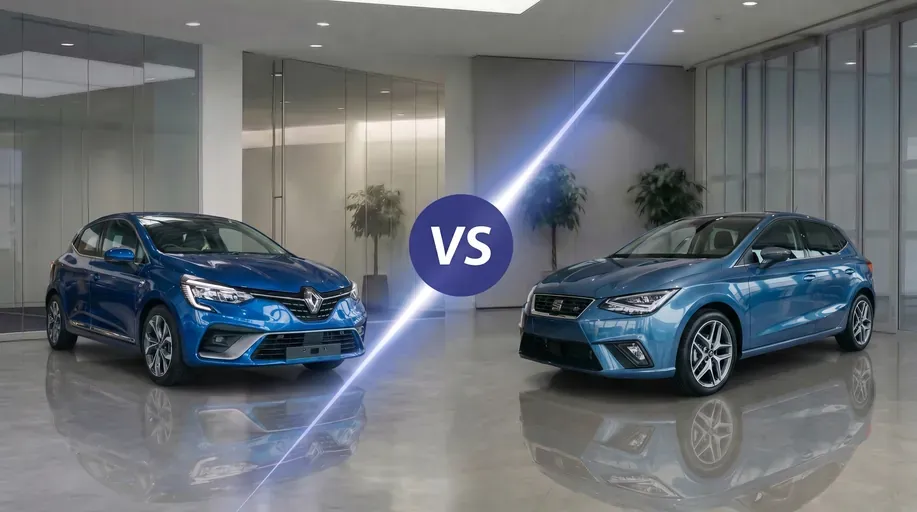
Renault Clio vs. Seat Ibiza: A detailed comparison of popular hatchbacks. Discover the differences in engines, equipment, and reliability, and read our final verdict.
May 2, 2026
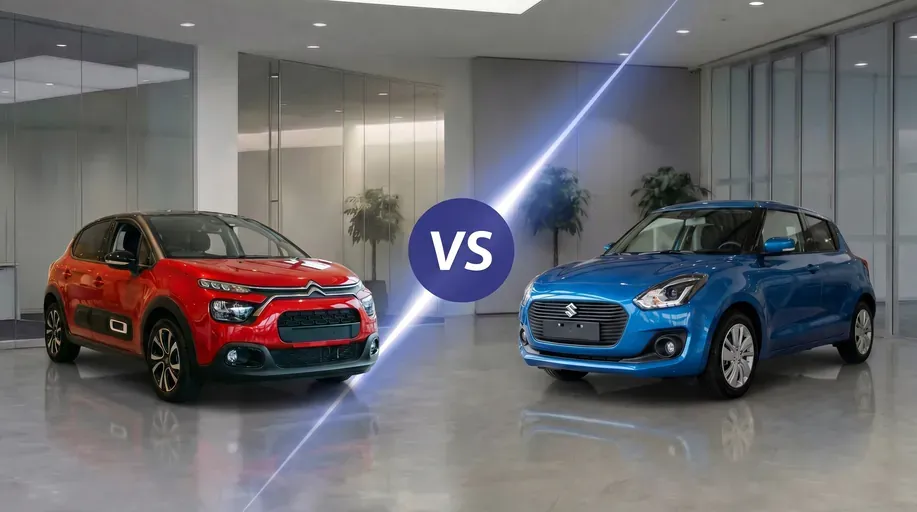
Used Car Comparison: Citroën C3 vs Suzuki Swift. Read a detailed comparison of engines, reliability, and equipment. Find out which city hatchback is the right one for you.
Apr 28, 2026