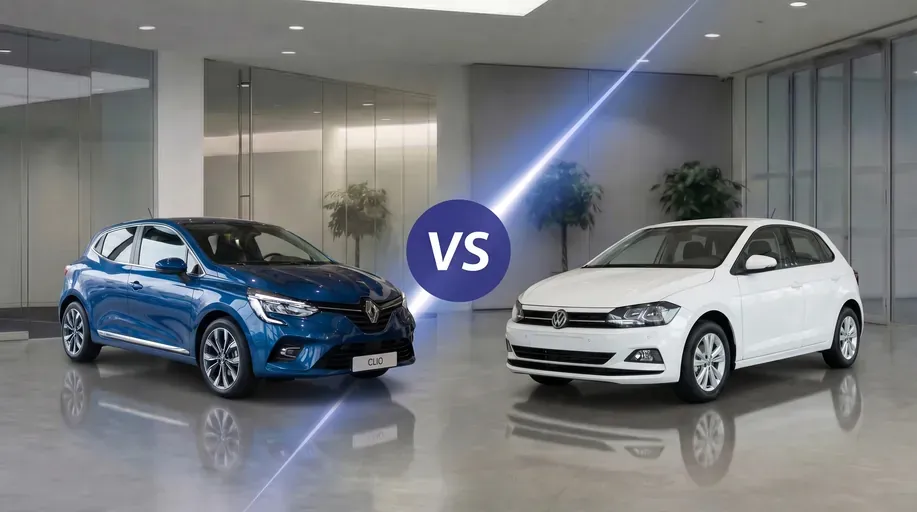
Renault Clio vs. Volkswagen Polo: Complete comparison 2026
Renault Clio vs. Volkswagen (VW) Polo: Which hatchback to choose? A detailed comparison of equipment, driving characteristics, and a real verdict for your right choice.
Apr 17, 2026
Articles
Car battle
Comparison: Dacia Sandero (Stepway) vs Mazda 2 (Mazda2). Which used hatchback offers better reliability? Read real-world insights and our clear verdict!
May 7, 2026


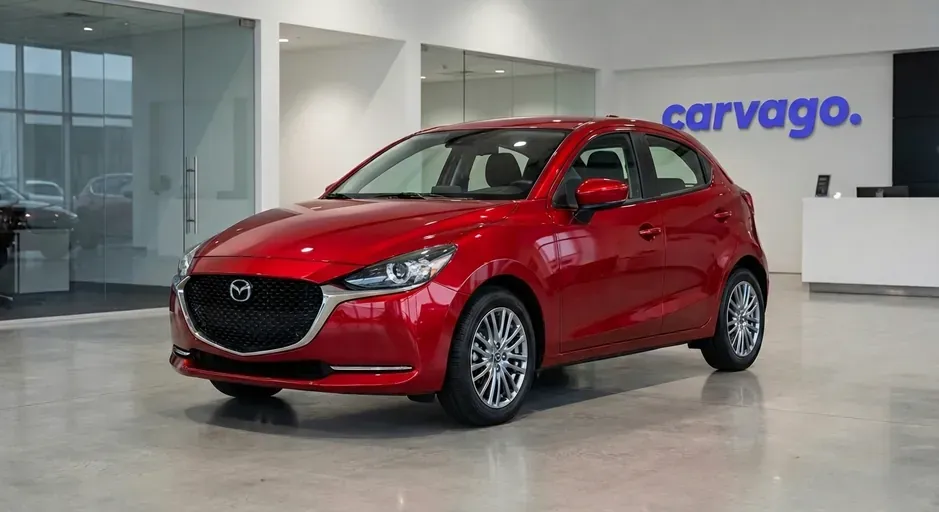
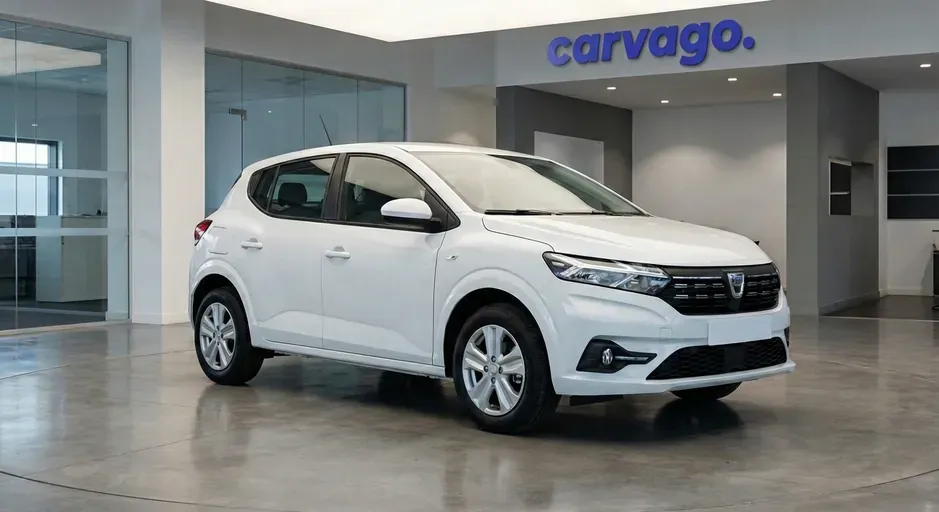
Dacia Sandero, also sold under the Renault Sandero name in some global markets, is an immensely popular and affordable hatchback that has won over crowds of drivers primarily with its uncomplicated practicality and exceptionally low operating costs. Standing against it is the Mazda 2, formerly known as the Mazda Demio in its home Japanese market, which instead brings sportier driving characteristics, dynamic design, and legendary mechanical reliability to the small city car segment. The following comparison will reveal in detail whether it makes more sense on the market for roughly four-year-old used cars to bet on the unrivaled utility value of the Romanian representative, or if it pays to invest in Japanese driving precision and more premium craftsmanship.
When comparing the exterior dimensions of roughly four-year-old used cars, we find that although both vehicles formally belong to the B-segment (small cars), their approach to utilizing their footprint is completely different. The third-generation Dacia Sandero makes a much more robust impression on the road. With a length of 4,088 mm (up to 4,099 mm for the popular Stepway version with plastic cladding) and, above all, a generous width of 1,848 mm, the car clearly borders on the compact class. The standard Mazda 2 (DJ1 generation) is a massive 153 mm narrower at just 1,695 mm, a difference you'll immediately notice in the interior shoulder room. If we include the Mazda 2 Hybrid (which is a rebadged Toyota Yaris with a length of 3,940 mm) in the comparison, the Sandero is even nearly 150 mm longer. For family use and a sense of airiness on board, the Dacia clearly leads, while the Mazda 2 remains more nimble and significantly more user-friendly when parking in narrow city streets thanks to its smaller proportions.
There is also a significant difference in the wheelbase, which is key for longitudinal cabin space and overall driving stability. The Dacia Sandero boasts a wheelbase of 2,604 mm, while the standard Mazda 2 offers 2,570 mm (or 2,560 mm for the aforementioned hybrid version). The Sandero thus has a 34 mm longer distance between the axles. In practice, this slight advantage translates into calmer directional stability at highway speeds and noticeably better legroom for rear passengers. Conversely, the Mazda benefits from its shorter wheelbase and slimmer body during dynamic driving on winding country roads, where it feels more agile and more willing to change direction. Both cars are relatively similar in height (around 1.5 meters), but the Dacia adds a bonus in the form of higher ground clearance with its Stepway variants, which you'll appreciate when getting in or clearing higher curbs.
Ultimately, the exterior dimensions of these two models clearly profile their ideal owners. With its above-standard dimensions, the Dacia Sandero pushes the boundaries of the small car class and can confidently fulfill the role of a full-fledged family car for the less demanding, although its unexpected width can sometimes be a minor disadvantage when maneuvering in older underground garages. The Mazda 2, on the other hand, remains true to the traditional values of a city hatchback – it hasn't bloated unnecessarily and reliably weaves through every gap in traffic, a trade-off in the form of a more cramped interior that city and suburban drivers are happy to accept.
| Parameter | Dacia Sandero Hatchback | Mazda 2 Hatchback |
|---|---|---|
| Length (mm) | 4088 - 4099 | 3940 - 4080 |
| Width (mm) | 1848 | 1695 - 1745 |
| Height (mm) | 1499 - 1535 | 1495 - 1515 |
| Wheelbase (mm) | 2604 | 2560 - 2570 |
Luggage space is often one of the key factors when choosing a small city car, especially if the vehicle is also to serve for occasional family trips or larger shopping trips. When comparing roughly four-year-old used cars, the third-generation Dacia Sandero clearly offers more in terms of spaciousness. This popular hatchback has a very decent 328 liters in its standard configuration, which is an above-average value in this segment. In contrast, the Mazda 2 (DJ1 generation) emphasizes elegant design and driving dynamics rather than maximum transport capacity – its trunk holds 280 liters in the basic layout. This difference of 48 liters in practice means valuable space for a few extra shopping bags or one smaller suitcase, which can be decisive in everyday family use.
The differences between the two models deepen even further after the rear seat backrests are fully folded down. In such a case, the Dacia Sandero offers a maximum transport capacity of up to 1,108 liters. This value makes it a surprisingly capable helper, whose space is fully sufficient for weekend shopping as well as a longer holiday for two, and it can handle the transport of smaller pieces of furniture without much difficulty. In contrast, the Mazda 2 provides a maximum total volume of 950 liters after folding the seats. Although even this space reliably covers the normal weekend needs of a two-person crew, the Japanese model simply cannot match the overall utility value and variability of the Romanian representative.
An interesting comparison is also provided by a look at specific versions and their influence on the total trunk size. The Dacia Sandero often appears on the used car market in the ECO-G version with factory LPG drive. Its huge advantage is the cleverly placed gas tank in the spare wheel well, thanks to which the standard volume of 328 liters remains completely preserved without any compromises for luggage. With the Mazda 2, you can also come across a newer full-hybrid version (ZV generation), which is a technological twin of the Toyota Yaris. In this hybrid version, the basic trunk volume is a slightly different 286 liters, but after folding the rear seats, it offers a somewhat more modest maximum capacity of 935 liters compared to the conventional variant.
| Parameter | Dacia Sandero Hatchback | Mazda 2 Hatchback |
|---|---|---|
| Basic volume (liters) | 328 | 280 |
| Maximum volume with seats folded (liters) | 1108 | 950 |
While the Dacia Sandero scores with a generous and highly usable trunk ideal for everyday family needs, the Mazda 2 prioritizes a sportier body style at the expense of overall luggage space.
The weight of the trailer that a given car can tow plays a crucial role for all motorists who regularly use a trailer to transport garden waste, building materials, or even a small caravan. Looking at cars approximately four years old (generations produced around 2021 to 2022), there are quite significant differences in the total towing capacity of both models. The Dacia Sandero (3rd generation) is noticeably more capable in this regard, as its maximum braked trailer weight reaches 1,100 kg and its unbraked trailer weight up to 600 kg. The competing Mazda 2 (DJ1 generation) offers a slightly more modest standard of 900 kg for a braked trailer and 500 kg for an unbraked one.
When choosing a used car, it is crucial to monitor specific engine versions, as there are exceptions to the aforementioned standard for both cars. In the Dacia Sandero, the base naturally aspirated SCe 65 engine must settle for a reduced limit of 980 kg for a braked trailer and 540 kg for an unbraked one, while the popular turbocharged TCe 90 and LPG TCe 100 ECO-G variants fully utilize the maximum potential of 1,100 kg. Great attention must be paid to the full-hybrid Mazda 2 Hybrid (ZV generation). Due to a different architecture shared with Toyota vehicles, it limits the maximum towing capacity for both braked and unbraked trailers to just 450 kg.
In practical use, this means a fairly clear division of roles. The 1,100 kg value of the Dacia Sandero offers enough capacity even for transporting heavier building materials or space for several extra suitcases hidden in a trailer during a family holiday with a lighter caravan. In contrast, the conventional Mazda 2, with its 900 kg limit, is more sufficient for weekend shopping for bulkier household items or hauling garden waste. The hybrid variant of the Mazda is then almost entirely unsuitable for towing heavy loads.
In conclusion, it can be summarized that if a tow bar plays a significant role in your choice, the Romanian representative will provide you with noticeably greater working flexibility and more reliable support when towing loads than its Japanese competitor.
| Model and engine | Braked trailer (kg) | Unbraked trailer (kg) |
|---|---|---|
| Dacia Sandero SCe 65 (3rd generation) | 980 | 540 |
| Dacia Sandero TCe 90 / TCe 100 ECO-G (3rd generation) | 1,100 | 560 - 600 |
| Mazda 2 1.5 Skyactiv-G / e-Skyactiv-G (DJ1) | 900 | 500 |
| Mazda 2 Hybrid (ZV) | 450 | 450 |
A look under the hoods of both models reveals two completely different engineering approaches, which is a crucial factor for those interested in a roughly four-year-old used car. In its third generation, the Dacia Sandero relies exclusively on small-displacement 1.0-liter three-cylinder engines, which attract buyers with the solid pull of turbocharged versions and unbeatable operating costs thanks to the factory LPG conversion. In contrast, the Mazda 2 will please more traditionally minded drivers, as under the hood of its DJ1 generation, it hides atmospheric 1.5-liter four-cylinder engines, unique by today's standards, which are supported by mild-hybrid technology in newer models. A completely specific chapter is the Mazda 2 Hybrid (ZV generation, on the market since 2022) sold in parallel, which is a technological twin of the Toyota Yaris and offers an exceptionally efficient full-hybrid powertrain. While the Dacia will suit budget-oriented buyers looking for maximum savings at the pump, the Mazda will appeal to those seeking the mechanical durability of naturally aspirated four-cylinders or precise hybrid technology for city traffic.
The range of powertrains for the third-generation Dacia Sandero (produced since 2021) is very straightforward and, unlike older generations, dCi diesel units and older 1.2 16V four-cylinders have completely disappeared from it. The base is a reliable but dynamically limited naturally aspirated 1.0 SCe 65 (49 kW) three-cylinder, which is ideal mainly for calm city driving and is paired exclusively with a five-speed manual. A much more desirable and versatile choice is the turbocharged 1.0 TCe 90 (67 kW). With this engine, you'll encounter an interesting technological compromise – with a six-speed manual transmission, it offers 160 Nm of torque, but if you come across a version with a CVT automatic transmission in a used car, the torque is reduced to 142 Nm for transmission design reasons. The most interesting variant is the factory 1.0 TCe 100 ECO-G (74 kW) version burning both petrol and LPG. Thanks to two tanks, it provides excellent range and saves money at every fill-up. Furthermore, the most powerful 1.0 TCe 110 unit with direct injection and 81 kW is reserved for the cladded and slightly raised Stepway version.
| Engine type | Fuel | Power (kW) | Torque (Nm) | Transmission |
|---|---|---|---|---|
| 1.0 SCe 65 | Petrol | 49 | 95 | 5MT |
| 1.0 TCe 90 | Petrol | 67 | 160 / 142 | 6MT / CVT |
| 1.0 TCe 100 ECO-G | Petrol / LPG | 74 | 170 | 6MT |
| 1.0 TCe 110 (Stepway) | Petrol | 81 | 200 | 6MT |
Among approximately four-year-old used cars, you will find two conceptually completely different cars under the same name on the market, while diesel units (like the older 1.5 SKYACTIV-D) have definitively disappeared from the market for nearly-new used cars in this class. The traditional model (DJ1 generation after the facelift) exclusively offers 1.5 e-SKYACTIV-G M Hybrid naturally aspirated four-cylinder petrol engines. The base version provides 55 kW (75 hp), however, the most sought-after is the "golden middle way" with 66 kW (90 hp), which is the only variant that can also be paired with a reliable six-speed automatic with a torque converter. The top specification then reaches a very decent output of 85 kW (115 hp). If you look for the completely different Mazda 2 Hybrid (ZV generation) in used car dealerships, you get a sophisticated full-hybrid system from Toyota under the hood. In it, a 1.5-liter naturally aspirated three-cylinder plays the main role, working together with a powerful electric motor. The resulting system output is 85 kW (116 hp), transmitted to the front wheels through an electronically controlled e-CVT transmission, and in city traffic, it can drive purely on electricity for a significant portion of the time, which radically reduces fuel consumption.
| Engine type | Fuel | Power (kW) | Torque (Nm) | Transmission |
|---|---|---|---|---|
| 1.5 e-SKYACTIV-G 75 M Hybrid | Petrol (Mild-hybrid) | 55 | 135 | 6MT |
| 1.5 e-SKYACTIV-G 90 M Hybrid | Petrol (Mild-hybrid) | 66 | 151 | 6MT / 6AT |
| 1.5 e-SKYACTIV-G 115 M Hybrid | Petrol (Mild-hybrid) | 85 | 151 | 6MT |
| 1.5 Hybrid (ZV generation) | Full-hybrid | 85 | 120 (engine) + 141 (elec.) | e-CVT |
Choosing the right engine is key to long-term satisfaction. Our recommendations are based on real-world experience, long-term mechanical reliability, actual fuel consumption, and long-term feedback from owners. From a technical standpoint, two completely different worlds face off against each other. While Dacia, with its third generation (available from roughly 2021), bet on a modern turbocharged three-cylinder supported by a factory-fitted LPG system, Mazda has stubbornly – and very successfully – stuck to honest naturally aspirated four-cylinder engines for the DJ1 generation. Both approaches have plenty to offer in the market for roughly four-year-old used cars, and both hide exceptionally reliable units.
This one-liter turbocharged three-cylinder with a factory-fitted LPG system is an absolute hit on the used car market from the 3rd generation and represents the best you can find under the hood of a Dacia Sandero. It offers a great compromise between agility (it has a decent torque of 170 Nm, which is even slightly higher on gas than on petrol) and absolutely unbeatable operating costs. The engine benefits from older but very reliable indirect fuel injection. Thanks to this, it does not suffer from carbon buildup on the intake valves during short trips around town, and the LPG version also lacks a delicate particulate filter.
What to watch out for: Although the engine is mechanically extremely robust, the LPG system requires additional care. Check if the previous owner regularly changed the gaseous phase filters (ideally every 15,000 km or once a year). During the test drive, focus on the moment of switching from petrol to gas – the process must be completely smooth and unnoticeable. Jerking or delays can indicate a worn-out reducer or clogged LPG injectors due to refueling with low-quality gas.
Who it is suitable for: An ideal candidate for drivers focused on low operating costs and people who commute longer distances to work. Thanks to two full-sized tanks (petrol + LPG), the car offers a massive combined range easily exceeding 1,000 kilometers.
For a roughly four-year-old Mazda 2 (DJ1 generation after the facelift), the 100% favorite is the naturally aspirated 1.5-liter petrol engine, ideally supported by mild-hybrid technology. While the competition vibrates with three-cylinders, Mazda offers you the velvety smooth and quiet operation of a four-cylinder with a perfectly linear power delivery. It excels with a high compression ratio, thanks to which it achieves real-world consumption of around 5 liters per 100 km, even without the use of a complex turbocharger. Furthermore, the mild-hybrid system wonderfully smooths out pull-offs using an integrated starter-generator.
What to watch out for: The engine uses direct fuel injection. From a mechanical point of view, this means only one potential weakness – the gradual buildup of carbon on the intake valves and in the intake, especially if the car is used exclusively for short trips with a cold engine around town. Prevention includes regular oil changes at least every 15,000 km (ideally every 10,000 km), occasional refueling with premium fuel containing cleaning additives, and the so-called "Italian tune-up" – meaning occasionally giving the engine a good run at higher RPMs on a longer trip after it has warmed up to burn off deposits.
Who it is suitable for: A perfect choice for traditionally-minded drivers who appreciate a smooth ride, instant throttle response, and mechanical simplicity without a turbocharger. A great car for calmer drivers and a mix of suburban or city traffic.
The difference between officially stated fuel consumption and real-world values from daily operation is often vast for many cars. To get the most accurate picture of operating costs, we rely on real data from the independent community portal Spritmonitor.de. We focused on the third-generation Dacia Sandero (from 2021) and current Mazda 2 engines (DJ1 generation and the full hybrid ZV), which typically correspond to approximately four-year-old used cars on today's market. This is where thousands of drivers meticulously record their actual refueling.
| Model and Engine | Average Consumption (l/100 km) | Source |
|---|---|---|
| Dacia Sandero 1.0 SCe 65 | 5.3 | Spritmonitor.de |
| Dacia Sandero 1.0 TCe 90 | 5.4 | Spritmonitor.de |
| Dacia Sandero 1.0 TCe 100 ECO-G | 7.4 (LPG) | Spritmonitor.de |
| Mazda 2 1.5 Hybrid | 4.6 | Spritmonitor.de |
| Mazda 2 1.5 e-SKYACTIV-G 90 M Hybrid | 5.4 | Spritmonitor.de |
| Mazda 2 1.5 SKYACTIV-G 75 | 5.5 | Spritmonitor.de |
Several interesting trends can be read from the collected data, debunking common myths. With its philosophy of honest naturally aspirated four-cylinder engines, Japan's Mazda clearly shows that a missing turbo doesn't necessarily mean higher consumption. Its 1.5-liter engines (especially in combination with M Hybrid mild-hybrid technology) achieve almost identical real-world values as Dacia's small turbocharged three-cylinder engines in actual traffic. This confirms in practice that downsizing in the form of Dacia's 1.0 TCe turbo engine does not bring such radical fuel savings as paper charts often promise. The absolute king of efficiency is the full hybrid Mazda 2 (the technical twin of the Toyota Yaris), which confidently drops below the five-liter-per-hundred-kilometer mark.
For the average user, however, pure liters per 100 km don't tell the whole story. For drivers on a tight budget, the absolute winner is the Dacia Sandero with factory LPG (the ECO-G version). Although its real gas consumption rises to an average of 7.4 l/100 km, thanks to the long-term half-price of LPG compared to gasoline, the financial costs per kilometer are completely unrivaled. Conversely, if you spend most of your time crawling in city traffic jams, the aforementioned Mazda 2 Hybrid makes huge sense, as it can drive largely on electricity alone in the city. On highways and country roads, the classic Mazda 2 with a four-cylinder engine will please, as its consumption does not fluctuate as much at higher speeds.
As a result, the fuel consumption figure for standard gasoline alone may not be the deciding factor between these two cars, as the differences between standard engines are minimal. The decision will hinge more on the form of savings. A customer looking for the cheapest possible operation on both long and short routes should choose the Sandero on LPG, while those who prefer a refined ride, worry-free reliable operation, and technologically advanced efficiency in the city will appreciate the mild-hybrid or full hybrid Mazda.
If you are looking for a roughly four-year-old compact car, the Dacia Sandero and Mazda 2 represent two completely different price and philosophical categories. While the Romanian representative aims for the best possible ratio of purchase price to utility value, the Japanese hatchback focuses on durability, a premium feel, and a driving experience for which you will logically pay more.
| Feature | Dacia Sandero (3rd gen) | Mazda 2 (3rd gen facelift) |
|---|---|---|
| Approximate price (€) | 9,000 – 13,000 | 14,000 – 17,000 |
| Availability in dealerships | Very high | Limited / Low |
| Typical engine | 1.0 TCe / 1.0 Eco-G (LPG) | 1.5 Skyactiv-G |
| Biggest benefit of a used car | Nearly new car with low costs | Long-term Japanese reliability |
The Dacia Sandero is the clear choice on the used car market for those looking for maximum practicality for minimum money, while the more expensive Mazda 2 will appeal to drivers willing to pay extra for top-tier driving characteristics and reliability.
When looking at today's automotive market, we encounter many comparisons that generally begin by stating that both cars received maximum five-star Euro NCAP ratings. In the case of the Dacia Sandero and Mazda 2, however, the situation is different, highlighting all the more the importance of detailed context and the year of testing. Testing protocols become significantly stricter with each new iteration, which is why percentage results from different years can never be directly compared.
The Dacia Sandero (3rd generation) underwent testing in 2021, when the Euro NCAP methodology was very strictly focused on advanced active safety, including complex intersection simulations and precise cyclist detection. Although the car only took home two stars, this was primarily caused by the absence of an advanced emergency braking system (the basic one reacts exclusively to other vehicles, not to pedestrians and cyclists). However, the structural resilience and passive cabin protection themselves are quite solid by today's standards.
The standard Mazda 2 (DJ generation), on the other hand, underwent crash tests as early as 2015, when it earned a very good four stars. While its percentage score looks significantly better on paper than the Dacia's, this rating is based on much more benevolent regulations. These older protocols did not yet penalize the absence of modern driving assistants nearly as much. From today's strict perspective, this model would likely lose many valuable points, and given the age of the test itself, its official Euro NCAP certification has already expired. (For context: the newer Mazda 2 Hybrid, which is a functional twin of the Toyota Yaris, did receive five stars in 2020, but on the four-year-old used car market, you are much more likely to encounter the original internal combustion version from 2015.)
| Parameter | Dacia Sandero | Mazda 2 |
|---|---|---|
| Year of testing | 2021 | 2015 |
| Adult occupant protection | 70 % | 86 % |
| Child occupant protection | 72 % | 78 % |
| Vulnerable road users protection | 41 % | 84 % |
| Safety assist systems | 42 % | 64 % |
In conclusion, the choice between these two models in terms of safety requires certain compromises. The Dacia Sandero features a more modern architecture and its structural integrity successfully meets the demands of 2021, even though its active safety equipment is intentionally stripped to a minimum. The Mazda 2, conversely, boasts a better historical score and, for its time, excellent passive protection and pedestrian friendliness, but it lacks the modern preventive systems required by current standards. If you are looking for a car that protects through the strength of a modern body, the newer Sandero will be the more predictable choice, while the Mazda 2, despite its older construction, will appeal to those drivers for whom the absolute cutting edge of electronic assistants is not a priority.
While the Mazda 2 benefits from a more benevolent and now expired 2015 rating, the more modern Dacia Sandero paid the price for the strict 2021 tests; nevertheless, it offers a rigid and structurally more up-to-date body.
In addition to standard equipment, each model offers several unique features that demonstrate their completely different approaches to added value, and it is these details that can be decisive for the customer during the final selection. While the Romanian model aims for unbeatable utility and smart savings, the Japanese representative focuses on ergonomics, driving pleasure, and technology inherited from higher-class vehicles.
The third-generation Dacia (typically models from 2021 onwards on the used car market) has made a huge leap forward not only in design but also in technological equipment, without losing its renowned affordability. Its main weapons are innovative solutions that save money and simplify daily life.
The Mazda 2 (in the facelifted third-generation version popular on the four-year-old used car market) represents a completely different world. Its driver focus stems from the well-known corporate philosophy of Jinba Ittai (the connection between rider and horse), making it feel much more mature behind the wheel than its external dimensions suggest.
Unbeatable price-to-value ratio on the used car market
Excellent interior spaciousness and an above-average trunk (328 liters) within the B-segment
Factory LPG option (1.0 TCe Eco-G engine) ensuring extremely low running costs
Solid suspension comfort on broken city roads thanks to the modern CMF-B platform
Practical equipment and a simple, very user-friendly infotainment system
Very poor Euro NCAP rating (only 2 stars), mainly due to the lack of advanced assistance systems
Noticeably worse cabin soundproofing and higher aerodynamic noise at highway speeds
Ubiquitous hard plastics and cheaper details in the interior
Detached steering and an overall very average driving experience
The third-generation Dacia Sandero is a perfectly rational choice for undemanding drivers looking for as much interior space and practicality as possible for a fraction of the competitors' price. It serves excellently as a durable car for daily commuting, while the LPG version offers unbeatably cheap operation, which thrifty motorists will appreciate.
Top-tier driving characteristics, agile chassis, and very communicative steering
Highly reliable naturally aspirated 1.5 Skyactiv-G four-cylinder engines with realistically low fuel consumption
Premium-finished interior with high-quality materials and great ergonomics
Precise manual transmission with short and accurate throws
Above-average reliability and excellent residual value retention
Cramped rear seat space, unsuitable for adult passengers on longer trips
Below-average trunk volume (only 280 liters) with a higher loading lip
Higher purchase price on the used car market compared to most competitors
The basic concept of the car dates back to a model introduced in 2014 (albeit after several significant updates)
The Mazda 2 targets more demanding drivers who want to enjoy their time behind the wheel and value high-quality craftsmanship and legendary Japanese reliability. Although it lags significantly in terms of overall spaciousness, its precise naturally aspirated engines and fantastic chassis make it one of the best-driving cars in its class, ideal for individuals or couples.
Based on long-term user feedback, service reports, breakdown statistics, and our independent technical inspections, we have compiled an overview of the most common problems that used car buyers should watch out for.
The third-generation Dacia Sandero is mechanically reliable thanks to its relatively simple technology, but it struggles with minor teething troubles and cost-cutting in terms of materials.
The Dacia Sandero does not suffer from fatal engine failures, but buyers must be patient when dealing with minor software bugs and accept the overall lower quality of the interior finish.
The Mazda 2 has long been considered one of the most reliable small cars on the market, yet even this Japanese model has a few weak spots that need to be focused on when choosing a used car.
The Mazda 2 is above-average reliable mechanically and in terms of the engine, but before buying, it requires a thorough check of the paint condition and the correct functionality of expensive electronic components such as the infotainment or mirrors.
When buying a used car, a thorough inspection is key, and for approximately four-year-old used cars, it pays not to underestimate even the smallest details. Here are some specific points to focus on for these two models, whether during a test drive or an inspection.
Dacia Sandero offers significantly more luggage space. Its third-generation trunk holds 328 liters, while the Mazda 2 offers only 280 liters in its standard configuration. Furthermore, the Sandero emerges from this comparison as a more spacious car overall, especially for rear-seat passengers.
The Mazda 2 is renowned for its excellent reliability, which it owes primarily to its naturally aspirated Skyactiv-G four-cylinder engines without complex turbochargers. The Dacia Sandero uses small-displacement turbocharged three-cylinder engines, which are considered solid but may require more careful maintenance in the long run. In terms of longevity and trouble-free operation, the Japanese model is the safer choice.
Both cars are exceptionally economical, but each approaches it differently. The Mazda 2 excels with a low real-world fuel consumption of around 5 liters of gasoline per 100 km, thanks to its very lightweight construction and efficient engine. On the other hand, the Sandero scores with its factory LPG version (Eco-G engine), which can reduce total fuel costs to an absolute minimum.
The Mazda 2 is the clear winner when it comes to driving pleasure, precise steering, and an excellently tuned chassis. In contrast, the Dacia Sandero is tuned purely for comfort; it filters city bumps well but leans more in corners and feels more cumbersome. Behind the wheel, the Mazda feels much more mature and sophisticated.
The Mazda 2 features a more robust construction and a much wider range of advanced assistance systems. The third-generation Dacia Sandero received only two stars in the rigorous Euro NCAP tests, primarily due to the absence of modern active safety features. If occupant protection is your absolute priority, the better-equipped Mazda is the safer vehicle.
Sources: ADAC, novinky.cz, garaz.cz, autoexpress.cz, dopravniinfo.cz, autohit.cz
This article was prepared using artificial intelligence tools. The section guarantor is Petr Dušek.

Renault Clio vs. Volkswagen (VW) Polo: Which hatchback to choose? A detailed comparison of equipment, driving characteristics, and a real verdict for your right choice.
Apr 17, 2026

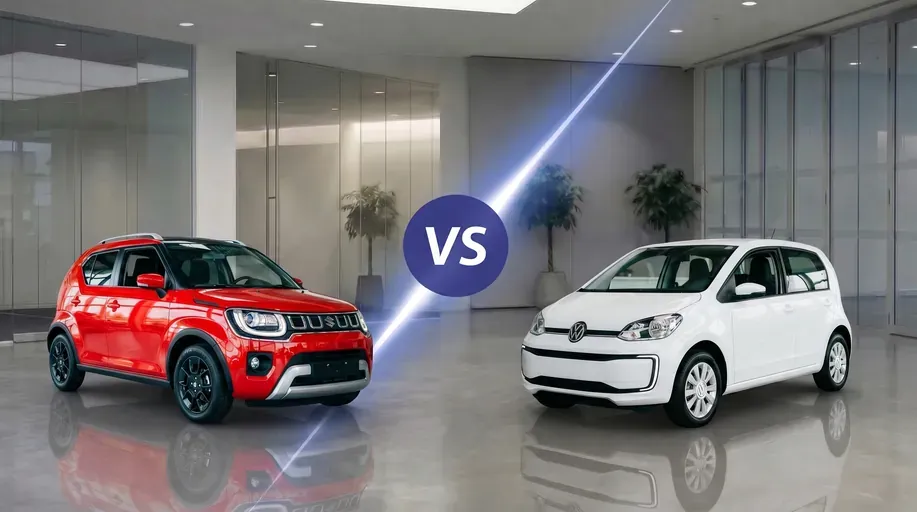
Detailed comparison of the Suzuki Ignis and Volkswagen up! (VW up!). Find out which used city car offers better reliability, real-world fuel consumption, and a clear verdict.
Oct 16, 2026

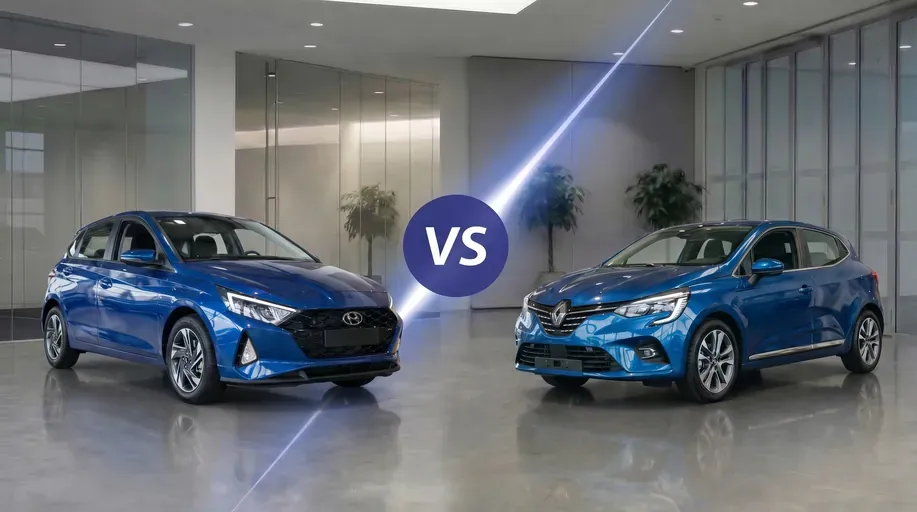
Detailed comparison of the Hyundai i20 vs Renault Clio. Find out from real data which city hatchback offers better equipment and fuel economy. Read our verdict.
May 3, 2026