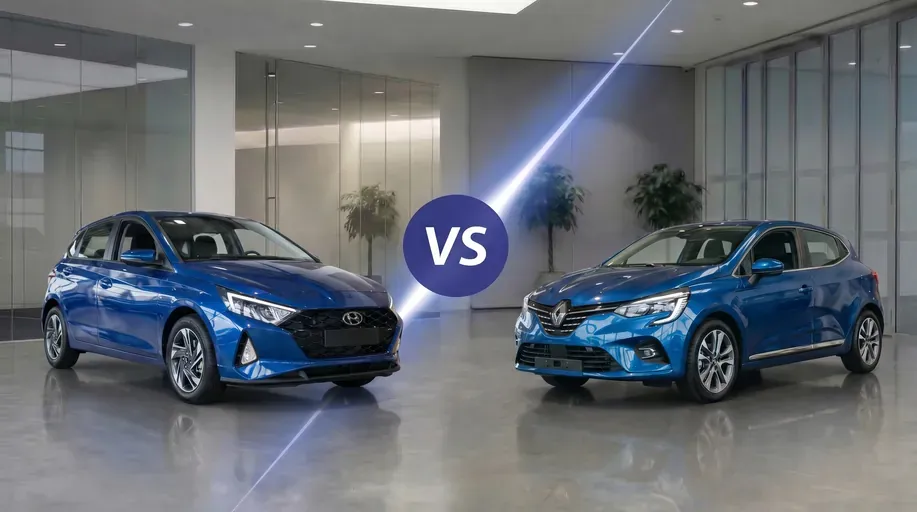
Car battle
Hyundai i20 vs. Renault Clio: Complete comparison 2026
Detailed comparison of the Hyundai i20 vs Renault Clio. Find out from real data which city hatchback offers better equipment and fuel economy. Read our verdict.
May 3, 2026
Articles
Car battle
Choosing a used Citroën C3 or Opel Corsa? Read our detailed comparison. We have evaluated the reliability, driving characteristics, and equipment of both city cars.
May 21, 2026
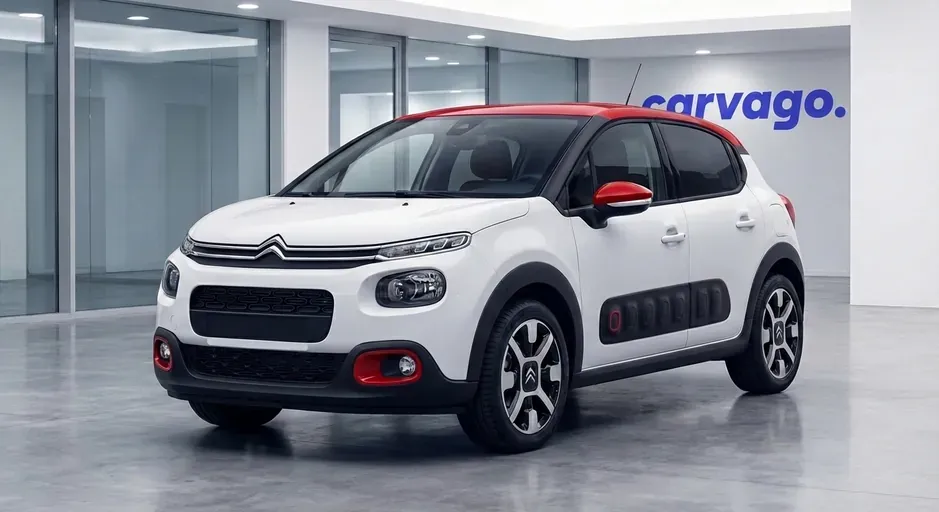
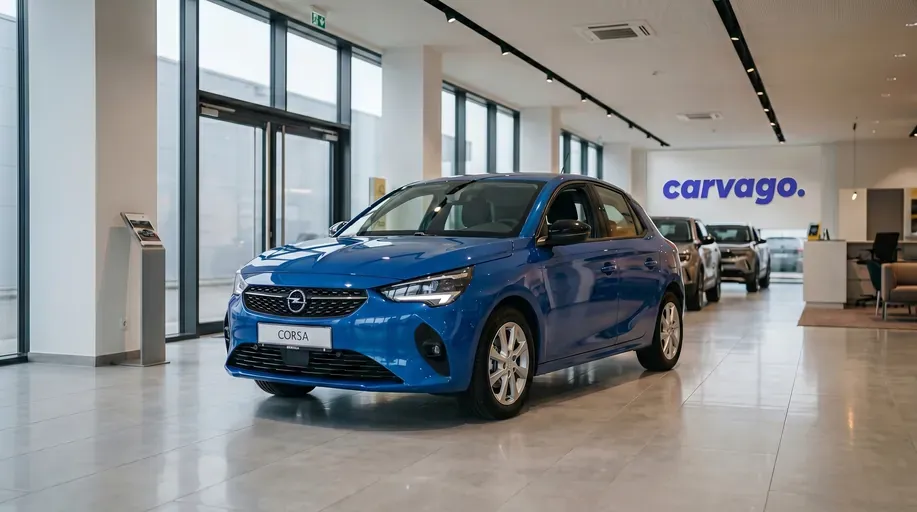
The Citroën C3 is a distinctive French hatchback that attracts buyers on the used car market primarily with its unmistakable design and an extraordinary emphasis on maximum driving comfort. Its main challenger is the Opel Corsa, also known as the Vauxhall Corsa on the British market, which, despite shared group technology, offers a noticeably sportier look and a more dynamic driving experience. Let's take a look at a detailed comparison of both models to find out which of these popular city cars will be the best choice for your daily journeys.
When looking at the currently most sought-after generations of roughly four-year-old used cars (the third-generation Citroën C3 and the Opel Corsa generation F), a different approach to the overall concept of exterior dimensions is apparent at first glance. While the French representative bets on rounded shapes and, with a length of 3996 mm, stays just below the four-meter mark, its German competitor has stretched to 4060–4061 mm. The Opel Corsa is thus roughly 65 mm longer and at the same time 16 mm wider (1765 mm compared to 1749 mm). This difference gives the Corsa a visually much sportier and more stable stance on the road, while the smaller footprint of the C3 represents an indisputable advantage for customers who daily fight for every centimeter during parallel parking in the city center.
A completely opposite situation occurs when comparing the height of both bodies. The Citroën C3 towers to a height of 1474 mm, outgrowing the Corsa by 40 mm, whose roof ends at values between 1433 and 1435 mm. The taller build of the French hatchback, very often supported by robust plastic elements, makes getting in easier and provides the driver with a slightly better view of city traffic. On the other hand, the lower silhouette of the Opel Corsa contributes to better aerodynamics and a lower center of gravity. So if you are looking for a car with more comfortable access to the cabin and a feeling behind the wheel more reminiscent of crossovers, the Citroën will clearly suit you, while lovers of traditional, lower-set seating will prefer the Opel.
An interesting finding is the comparison of the wheelbase, which is a key figure for longitudinal spaciousness in the interior. Although the Opel Corsa is an overall longer car, its wheelbase is 2538 mm, which is just 1 millimeter less than the 2539 mm of the significantly shorter Citroën C3. This implies that the longer body of the Opel is reflected primarily in the design and proportions of the overhangs, not in a diametrically larger legroom for passengers. Both cars thus offer very comparable interior space defined by the axles, and the final choice of car therefore depends on whether you prefer external maneuverability in tight spaces (C3) or the highway stability of a wider and longer car (Corsa).
| Parameter | Citroën C3 Hatchback | Opel Corsa Hatchback |
|---|---|---|
| Length (mm) | 3996 | 4060 - 4061 |
| Width (mm) | 1749 | 1765 |
| Height (mm) | 1474 | 1433 - 1435 |
| Wheelbase (mm) | 2539 | 2538 |
Luggage space is one of the key factors for many used car buyers, even in the small city car category. Whether you are looking for a practical vehicle for daily commuting, hassle-free storage for weekend shopping, or space for occasional family trips, every extra liter counts. When comparing roughly four-year-old models on the used car market – the third generation of the Citroën C3 and the F generation of the Opel Corsa – we find that both hatchbacks offer very competitive values. While the paper differences in the basic layout are not vast, actual flexibility and maximum capacity after folding the seats can play a decisive role in the final choice.
Standard internal combustion versions of the Opel Corsa boast a basic trunk volume of 309 liters, slightly surpassing the flat 300 liters of the Citroën C3. In practice, this difference of less than ten liters represents roughly enough space for one smaller extra bag, with both cars offering a volume safely sufficient for weekend shopping and longer holidays for two. However, a more significant difference arises when you need to transport a larger load. After folding the rear backrests, the Corsa offers a maximum transport capacity of up to 1081 liters, while the Citroën C3 reaches a value of 992 liters. The Corsa is thus a slightly more practical choice if you plan on more frequent transport of bulkier items.
It is also important to monitor which specific engine version you are choosing on the used car market, as alternative powertrains often take a toll on interior space. While the Citroën C3 maintains the same volume of 300 liters in all its conventional versions from these years, the situation is more varied with the Opel Corsa. If you opt for the fully electric Corsa Electric variant, the basic volume decreases to 267 liters (and 1042 liters after folding) due to the battery installation. The newer mild-hybrid version (48V) also has a reduced capacity, where the maximum usable space after folding the seats has shrunk to 1004 liters. In any case, both competitors please with split rear seats, which facilitate a flexible combination of carrying passengers and longer luggage.
| Parameter | Citroën C3 Hatchback | Opel Corsa Hatchback |
|---|---|---|
| Basic volume (liters) | 300 | 267 - 309 |
| Max. volume after folding seats (liters) | 992 | 1004 - 1081 |
The Opel Corsa offers a slightly more generous luggage space overall, especially after folding the seats, but you must account for compromises in the fully electric and hybrid versions. The Citroën C3, on the other hand, scores with a stable and easily predictable capacity regardless of which internal combustion engine you choose.
When choosing a small city hatchback, towing capacity might not be the first thing that comes to mind. However, if you occasionally need to hitch a small trailer, it is a crucial parameter. This gives you space for a few extra suitcases, or additional transport capacity that is sufficient for weekend shopping, longer holidays, or hauling materials to a cottage. A comparison of approximately four-year-old examples of these models – the Citroën C3 (3rd generation) and the Opel Corsa (generation F) – reveals vast differences in how many kilograms they can safely tow.
For the Citroën C3, towing options are quite limited. Its standard petrol engines, such as the base PureTech 83 unit, offer a maximum braked and unbraked trailer weight of only 450 kg. Even with more powerful versions featuring the turbocharged PureTech 110 engine or the BlueHDi 100 diesel, the maximum limit for a braked trailer only increases to 600 kg.
In contrast, the Opel Corsa is a surprisingly capable workhorse in this discipline. While the base naturally aspirated 1.2 engine allows for towing a standard trailer weighing 500 kg, the more powerful versions offer a significant leap. The turbocharged 1.2 DI Turbo petrol units and the popular 1.5 Diesel versions boast a maximum braked trailer weight of a respectable 1,200 kg. It is also worth mentioning the increasingly popular electric versions of both cars (such as the Opel Corsa Electric or the upcoming e-C3), where towing capacity is reduced to zero due to battery design and cooling requirements.
In practice, these differences mean that the Citroën C3 is ideal for mounting a bike rack or for a very light unbraked trailer for garden waste. The Corsa, however, can fully serve as a family hauler capable of handling much heavier loads, bulky furniture, or even towing a light caravan.
If towing capacity is an important factor in your car selection and you know the tow bar won't be there just for decoration, the turbocharged Opel Corsa will be a much more versatile choice for you than the city-oriented Citroën C3.
| Model and engine | Braked trailer (kg) | Unbraked trailer (kg) |
|---|---|---|
| Citroën C3 PureTech 83 (61 kW) | 450 | 450 |
| Citroën C3 PureTech 110 (81 kW) | 450-600 | 450 |
| Citroën C3 BlueHDi 100 (75 kW) | 600 | 450 |
| Opel Corsa 1.2 (55 kW) | 500 | 500 |
| Opel Corsa 1.2 DI Turbo (74/96 kW) | 1200 | 500-600 |
| Opel Corsa 1.5 Diesel (75 kW) | 1200 | 500-600 |
| Opel Corsa Electric | 0 | 0 |
Both compact hatchbacks from the Stellantis stable share a similar technical foundation, yet their engine lineups for roughly four-year-old used cars (around the 2022 model year) differ slightly, directly affecting daily dynamics and running costs. While the third-generation Citroën C3 bets on a more relaxed character and proven simplicity, the Opel Corsa F generation brings a more diverse range, including more powerful versions and a purely electric variant. The base for both models consists of naturally aspirated three-cylinder engines (1.2 PureTech with 61 kW for the C3, and 1.2 with 55 kW for the Corsa). For those seeking more dynamics, Citroën offers the turbocharged 1.2 PureTech (81 kW), while Opel counters with two versions of the modern 1.2 DI Turbo (74 kW and the more powerful 96 kW). For highway mile-munchers, both cars have an exceptionally efficient 1.5 BlueHDi or 1.5 Diesel four-cylinder engine with 75 kW in reserve. Opel also scores with the purely electric Corsa-e version with 100 kW.
Differences are also found in the transmissions. Base engines make do with 5-speed manuals, while more powerful versions received 6-speed gearboxes. If you require an automatic, the Citroën C3 uses the older but smooth-shifting 6-speed EAT6 torque converter. In contrast, the Opel Corsa benefits from a more modern and faster 8-speed automatic. Thanks to its wider and more powerful range, the Opel Corsa is much better suited for dynamically minded drivers and fans of electromobility. The Citroën C3 will appeal to calmer personalities and budget-oriented buyers who appreciate a suppler and more comfortable approach to driving.
For the third-generation Citroën C3, the engine range among four-year-old used cars is very clear and straightforward. The PureTech family of petrol units starts with the naturally aspirated 1.2 PureTech 83, which, thanks to the absence of a complex turbocharger, is ideal for the city, but quickly runs out of steam at highway speeds. More demanding drivers should definitely go for the turbocharged 1.2 PureTech 110 version, which offers a solid 205 Nm of torque and makes the relatively light car a pleasantly brisk companion. Furthermore, this variant could be combined with a reliable 6-speed automatic. The diesel alternative is the efficient 1.5 BlueHDi 100 four-cylinder. Although its production was gradually phased out in the final years of the third generation due to a widespread decline in interest in diesel engines in the small car segment, it is still relatively easy to find on the used market from 2021 and 2022.
| Engine type | Fuel | Power (kW) | Torque (Nm) | Transmission |
|---|---|---|---|---|
| 1.2 PureTech 83 | Petrol | 61 | 118 | 5MT |
| 1.2 PureTech 110 | Petrol | 81 | 205 | 6MT / 6AT |
| 1.5 BlueHDi 100 | Diesel | 75 | 250 | 6MT |
Compared to the C3, the Opel Corsa F uses the more modern CMP group platform, which allowed German engineers to integrate more advanced technology. The petrol base here is the naturally aspirated 1.2 engine with a modest 55 kW. However, the turbocharged 1.2 DI Turbo versions are much more enticing. While the weaker variant (74 kW) represents an absolutely ideal compromise between purchase price and agility for the Corsa, the more powerful 96 kW version gives the car above-standard dynamics and is supplied exclusively with the excellent 8-speed automatic. The range also includes the 1.5 Diesel (75 kW) for frequent commuting; however, it is worth noting that sales of this diesel engine for the Corsa were definitively ended during 2023. A major trump card for modern city commuting is the fully electric Corsa-e with a 50 kWh battery and 100 kW of power. (It should be added that the mild-hybrid Hybrid 48V versions only went on sale in early 2024, so you won't encounter them in four-year-old used car listings yet).
| Engine type | Fuel | Power (kW) | Torque (Nm) | Transmission |
|---|---|---|---|---|
| 1.2 | Petrol | 55 | 118 | 5MT |
| 1.2 DI Turbo 100 | Petrol | 74 | 205 | 6MT / 8AT |
| 1.2 DI Turbo 130 | Petrol | 96 | 230 | 8AT |
| 1.5 Diesel | Diesel | 75 | 250 | 6MT |
| Corsa-e (Electric) | Electricity | 100 | 260 | 1AT |
While the Citroën C3 scores with a simpler and time-tested range aimed more at calmer drivers, the Opel Corsa opens the door to more modern eight-speed automatics, higher performance, and quiet electromobility.
Choosing the right engine is a key step for long-term satisfaction with a car. While older generations of both models offered completely different engines, the current Citroën C3 (third generation) and Opel Corsa (generation F) benefit from being under the umbrella of the Stellantis group. This means one very interesting fact – under the hood of both these competitors beats an identical family of French three-cylinder petrol engines with a displacement of 1.2 liters. Our recommendations for roughly four-year-old used cars are therefore primarily based on the performance variants of this shared foundation, while we have taken into detailed account the balance of power, real-world fuel consumption, and mechanical reliability proven in practice.
This turbocharged three-cylinder petrol engine represents the absolute peak in the C3 range in terms of balance and everyday usability.
Since the current Corsa borrowed the French technical platform, it features an engine under the "DI Turbo" designation that is structurally identical to Citroën's PureTech engines. The 74 kW performance variant is an absolute safe bet on the used car market.
Paper fuel consumption figures often differ significantly from real-world values. Laboratory tests simply cannot always faithfully simulate daily loads, route profiles, or specific driving styles. To get the most accurate picture of real-world operating economy, we looked at data from owners themselves. We rely on the independent community portal Spritmonitor.de, where thousands of drivers meticulously record every refueling. We focused exclusively on used cars approximately four years old (i.e., generations current for the used car market around 2022), which are now among the most sought-after choices.
| Model and engine | Average consumption (l/100 km) | Source |
|---|---|---|
| Citroën C3 PureTech 83 (61 kW) | 5.9 | Spritmonitor.de |
| Opel Corsa 1.2 (55 kW) | 6.0 | Spritmonitor.de |
| Citroën C3 PureTech 110 (81 kW) | 6.4 | Spritmonitor.de |
| Opel Corsa 1.2 DI Turbo (74 kW) | 6.1 | Spritmonitor.de |
| Citroën C3 BlueHDi 100 (75 kW) | 4.6 | Spritmonitor.de |
| Opel Corsa 1.5 Diesel (75 kW) | 4.5 | Spritmonitor.de |
Interesting trends clearly emerge from the collected data. For basic naturally aspirated engines, both cars maintain very similar, modest values of around six liters per hundred kilometers. However, it may come as a surprise that more powerful turbocharged gasoline engines do not bring a fuel consumption revolution in the real world. For example, the more powerful Citroën C3 with the PureTech 110 engine shows an average consumption of 6.4 l/100 km, which is likely due to drivers enjoying and much more frequently utilizing its more generous dynamic potential. In contrast, the turbocharged Opel Corsa 1.2 DI Turbo stays just above the six-liter mark, making it an exceptionally efficient compromise between performance and consumption. The dominance of diesel engines (both BlueHDi and 1.5 Diesel) is then absolutely clear. They easily push consumption down toward the 4.5-liter mark.
What does this mean for the typical user? If you move mainly in the city and commute shorter distances, the basic naturally aspirated gasoline three-cylinder engines will serve you reliably. While you cannot count on miraculous consumption below five liters, you will avoid the risk of more expensive maintenance for complex diesel units during low-rev driving and stop-and-go traffic. Budget-conscious highway flyers and people who drive tens of thousands of kilometers a year, on the other hand, will appreciate the diesels. Even in roughly four-year-old used cars, diesel units represent a huge advantage and can save significant amounts on long trips.
In summary, fuel consumption itself should not play the most important role when deciding between these two models. Both vehicles in the generations we monitored share a large part of their technology, and thanks to their kinship within the Stellantis group, their real-world fuel requirements are practically identical. Decisions regarding used cars should therefore be based more on your personal preference for design, overall interior ergonomics, or the specific technical condition and documented service history of the chosen vehicle.
When looking at the market for roughly four-year-old used cars (mainly 2021 and 2022 models), both models represent a popular choice in the B-segment. However, the Citroën C3 (third generation after facelift) and the Opel Corsa (generation F) differ slightly in terms of purchase costs on the used car market. The Opel Corsa benefits from a more modern group platform and offers a wider range of powertrains, which is reflected in its slightly higher average price. Citroën, on the other hand, scores as a very affordable and economical choice.
The Citroën C3 has long been designed as an affordable car, and this characteristic carries over to the used car market. Four-year-old models with the base 1.2 PureTech engine and manual transmission can commonly be purchased for very favorable amounts.
The Opel Corsa F shares its technical foundation with the Peugeot 208, giving it more premium driving characteristics and more modern technology. This is reflected in a slight premium over the Citroën on the four-year-old used car market.
| Model | Base Used Cars (€) | Higher Trims / Automatics (€) | Electric Versions (€) |
|---|---|---|---|
| Citroën C3 | €9,500 – €10,700 | €11,100 – €13,200 | Not available |
| Opel Corsa | €10,700 – €12,300 | €12,800 – €15,600 | €16,500 and more |
In general, if your main criterion is the lowest possible purchase price for a reliable car for daily commuting, the Citroën C3 will often offer you lower mileage or better equipment for the same money. The Opel Corsa requires a slight premium, which it justifies with a wider range, more dynamic design, and an overall more modern feel behind the wheel.
The Citroën C3 will please buyers with a tighter budget thanks to its excellent affordability, while the Opel Corsa represents a more expensive but technologically more advanced choice with the option of pure electric drive.
Although many buyers consider a five-star Euro NCAP rating to be the perceived standard across the market, both the Citroën C3 and Opel Corsa models earned solid four-star ratings in their tests. However, when assessing the safety of used cars, it is crucial to consider the context and the year of testing. Euro NCAP test protocols are constantly evolving and becoming stricter. Percentage results from different years cannot be directly and unconditionally compared, as more modern tests include newer frontal impact simulations, more demanding intersection scenarios, and much stricter requirements for cyclist and pedestrian detection.
The third generation of the Citroën C3 underwent Euro NCAP crash tests in 2017. At the time, it demonstrated a very good level of passive safety.
The Opel Corsa (generation F) underwent Euro NCAP testing two years later, in 2019. Although the car also received an overall four-star rating, it faced significantly stricter test protocols.
| Parameter | Citroën C3 | Opel Corsa |
|---|---|---|
| Year of testing | 2017 | 2019 |
| Adult occupant protection | 88% | 84% |
| Child protection | 83% | 86% |
| Vulnerable road user protection | 59% | 66% |
| Safety assistance systems | 58% | 69% |
In conclusion, both cars offer reliable mechanical protection for the occupants with solid crumple zones. However, thanks to its newer design and 2019 testing, the Opel Corsa features a more comprehensive and modern active safety package, which is significantly better adapted to today's urban traffic and the protection of pedestrians and cyclists.
Although both cars are comparably safe in terms of occupant protection, the Opel Corsa benefits from a newer design and offers more advanced assistance systems that are slightly better suited to today's urban traffic.
Both models offer more than just basic equipment, with each having its own distinct approach to providing maximum added value to the customer and making daily life with the car more pleasant.
Exceptionally comfortable chassis and seats (Advanced Comfort program)
Original and playful design with practical Airbump protective elements
Wide range of personalization options including two-tone body paint
More favorable purchase price and great value for money on the used car market
Economical and low-maintenance 1.2 PureTech petrol engines
More pronounced body roll in corners due to the overall softer suspension
Outdated and slower infotainment, which also integrates climate control
Less legroom for adult passengers in the rear seats
Poorer shifting precision in manual transmissions
Citroën C3 is an ideal choice for drivers who prioritize maximum driving comfort and want to stand out visually in the city. Soft suspension and exceptionally comfortable seats make it a great companion for calm journeys, but don't look for sporting ambitions behind the wheel.
More confident, agile, and sportier driving characteristics with more precise steering
Availability of modern technologies, such as premium IntelliLux LED headlights
Excellent interior ergonomics with the retention of physical buttons for climate control
Wide range of powertrains including a fully electric version (Corsa-e)
Noticeably better and lower driving position
Firmer chassis tuning, which transmits more shocks into the cabin on broken roads
Cramped space in the rear seats combined with poorer access through narrower rear doors
Relatively dull and simple graphics of the optional digital instrument cluster
Smaller luggage compartment, the volume of which is even more limited in the electric version
Opel Corsa will appeal to those who demand a more mature and agile driving performance, modern assistance systems, and more traditional interior ergonomics with physical controls from a small car. It represents an excellent compromise between driving confidence and everyday usability, albeit at the cost of a slightly stiffer ride.
Based on reliability statistics, service bulletin data, owner reports, and records provided by a comprehensive car audit, we have compiled a detailed overview of the most common problems for both of these models that used car buyers should watch out for.
The third-generation Citroën C3 (including the 2020 facelift) is generally a user-friendly car; however, it shares certain typical ailments with other PSA Group models that are worth knowing about before purchasing.
For a used Citroën C3, it is absolutely crucial to focus on a carefully documented service history, especially for petrol engines, to prevent expensive timing belt issues.
The Opel Corsa generation F (sold since late 2019) switched to French technology and the CMP platform, which means a very similar range of positive attributes, but logically also the sharing of identical design flaws.
The Corsa F struggles with the exact same powertrain ailments as the C3, adding occasional software glitches with the automatic transmission that require thorough attention during a test drive.
When buying a used car, a thorough inspection is key. Although both models, roughly four years old (specifically the Opel Corsa generation F and the facelifted third-generation Citroën C3), share much of the same group technology under the hood, they have their own specifics that require close attention. A professional and independent technical inspection of the car is the ideal step towards a safe purchase in this case.
Citroën C3 is renowned for its exceptional focus on comfort thanks to its softer suspension and wide seats. Opel Corsa, on the other hand, has a stiffer suspension setup that holds its line better in corners but filters out road imperfections significantly worse. If you expect a smooth and relaxed ride from your car, the French model is the better choice.
Both compact hatchbacks are very similar in terms of transport capacity. The Citroën offers a 300-liter trunk in its basic configuration, while the Opel has a slightly larger space with a volume of 309 liters. The nine-liter difference is barely noticeable in practice, and both cars can easily accommodate a regular weekly shop or weekend luggage.
Since both brands now fall under the Stellantis group, cars approximately four years old share identical engines and technical foundations. In both models, you will most commonly encounter 1.2 PureTech three-cylinder gasoline engines or 1.5 BlueHDi diesel engines, which also means very similar service costs. For trouble-free operation of both used cars, the most important thing is to choose units with a clear history of timely engine oil changes.
The German representative offers significantly more confident driving characteristics thanks to a lower driving position, more precise steering, and a firmer body. The French model leans more during faster cornering and its steering is heavily over-assisted, which makes parking easier but offers no feedback from the wheels. For drivers who want to enjoy driving, the Corsa clearly makes sense.
If you are looking for an approximately four-year-old electric car, only the Opel with the Corsa-e model will suit you from this pair. The third generation of the Citroën C3, which was on the market at that time, was sold exclusively with traditional internal combustion engines. A purely electric alternative with the Citroën logo arrived on the market only as part of the fourth generation at the beginning of 2024.
Sources: ADAC, denik.cz, novinky.cz, mobilmania.cz, chytreauto.cz, autoemotion.cz
This article was prepared using artificial intelligence tools. The section guarantor is Petr Dušek.
Detailed comparison of the Hyundai i20 vs Renault Clio. Find out from real data which city hatchback offers better equipment and fuel economy. Read our verdict.
May 3, 2026
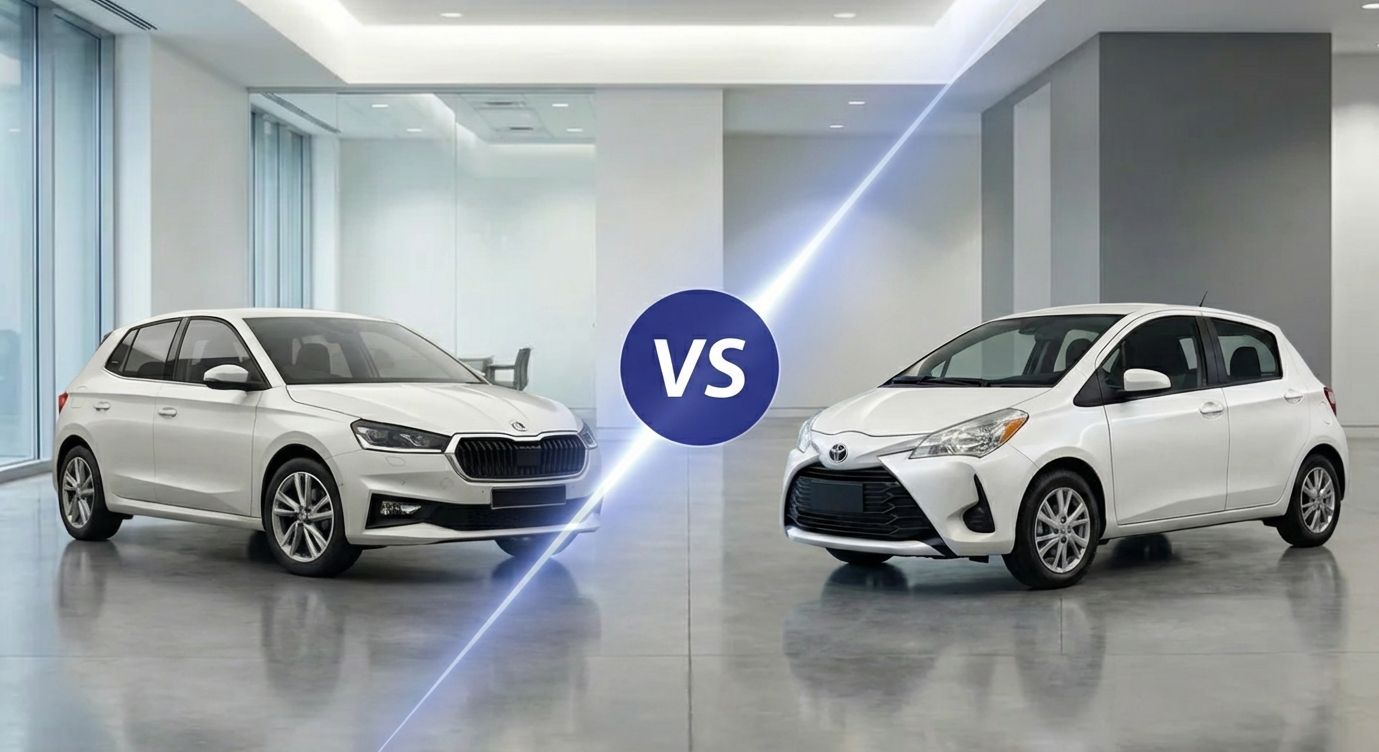
Škoda Fabia vs. Toyota Yaris. A detailed comparison of engines, features, and prices. Find out which of these popular small cars is the right one for you.
Apr 13, 2026
Dacia Sandero vs. Škoda Fabia: Which car is better? We compare engines, equipment, and price. Our detailed verdict will help you choose.
Apr 14, 2026