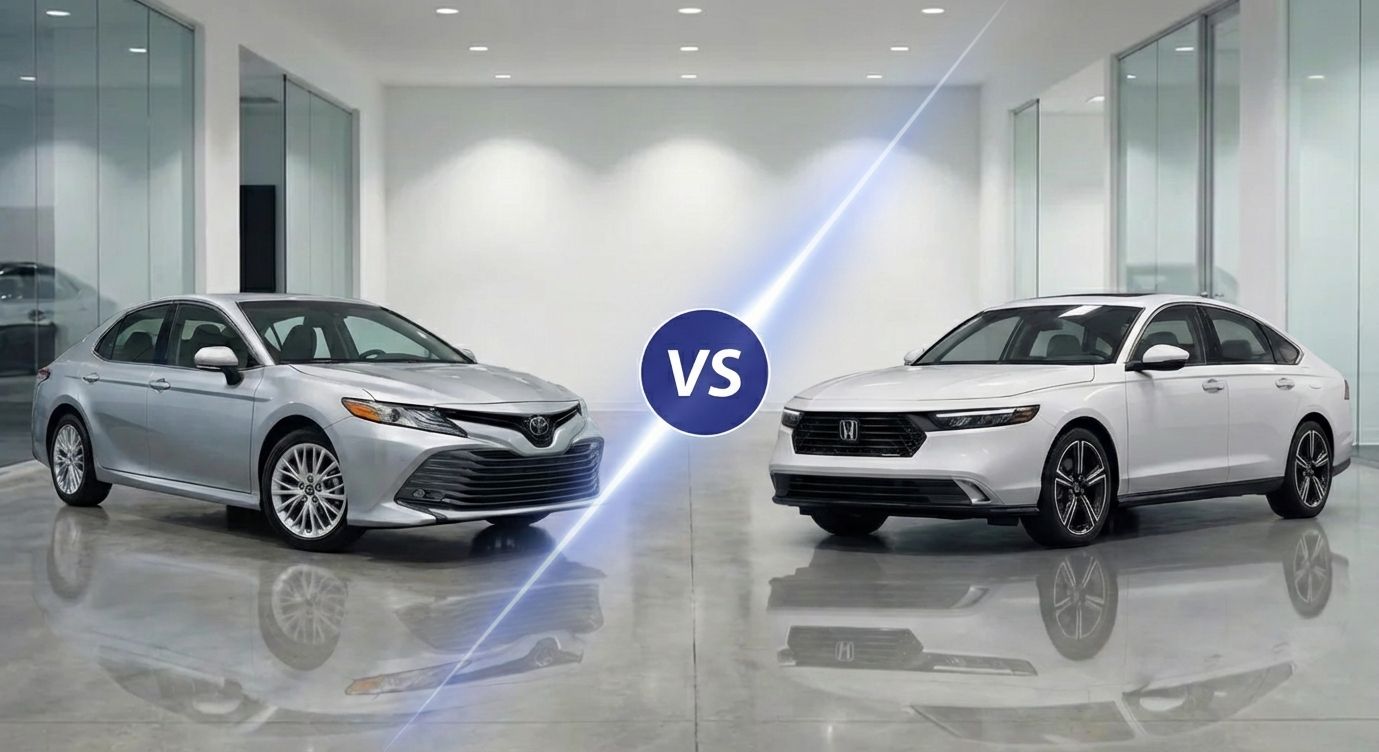
Car battle
Toyota Camry vs. Honda Accord: A Complete 2026 Comparison
Toyota Camry vs. Honda Accord: Which sedan to choose? Our detailed comparison helps you find the right car based on key differences and our verdict.
Oct 23, 2026
Škoda Superb review: real owner experience, space and boot tests, engine picks, running costs, and our expert verdict before you buy.
November 7, 2026
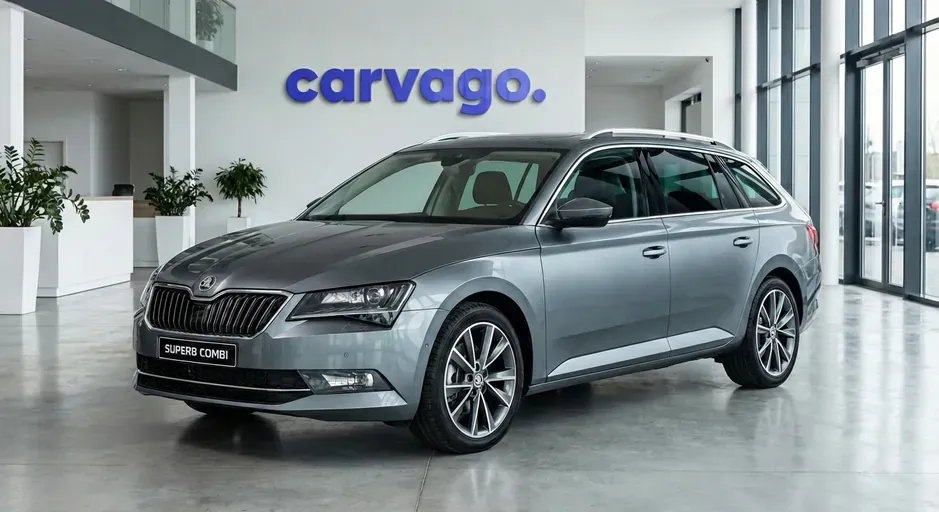
The fourth-generation Škoda Superb occupies a distinct position at the upper edge of Europe's non-premium mid-size segment. Premiered in November 2023, this generation entered series production on 1 December 2023, with the first European customer deliveries following in April 2024. Spanning the 2024 to 2026 model years, the lineup has received no mid-generation facelift to date.
Buyers can choose between two body configurations: a five-door liftback and the Škoda Superb estate (Combi). The estate launched the production run before the liftback joined order books in February 2024, followed by the addition of a plug-in hybrid estate to production in May 2024.
The vehicle primarily serves corporate fleets, long-distance motorway commuters, and private buyers seeking load capacity without moving into an SUV footprint. This review examines how the fourth generation performs on European roads, tracking owner feedback, powertrain options, and second-hand market availability.
With European customer handovers commencing in April 2024, the fourth-generation Škoda Superb has accumulated over two and a half years of road service. Because of this relatively short operational lifespan, long-term mechanical reliability is not yet established. Initial owner experiences and professional test fleet reports indicate that core drivetrains have proven mechanically sound so far, with early complaints centered almost exclusively on digital interfaces and electronic driver-assistance software.
On 2024 and early 2025 models, owners report and tests describe occasional software bugs affecting the central touchscreen. Symptoms include sudden system reboots, temporary dropouts when using wireless smartphone mirroring, and temporary blackouts when adjusting the physical rotary dials. Drivers also report spurious error pop-ups appearing in the digital instrument cluster—such as alerts indicating that lane-keeping or front collision assistance systems are temporarily restricted—despite sensors remaining undamaged and clean. Workshop-applied software updates and subsequent over-the-air firmware improvements released through 2025 have resolved these communication glitches in most vehicles without requiring control module replacement.
Two official European safety recalls affect this generation. In October 2026, an official recall was published covering 1,719,030 vehicles worldwide across several group models manufactured between November 2015 and August 2026, encompassing early fourth-generation production. The notice states that under specific environmental conditions and after extended operation in areas with road salt exposure, stress corrosion can develop on a fastening bolt in the steering system, and bolt shearing could lead to steering failure. Authorised workshops inspect the assembly and install an updated, corrosion-resistant bolt. Due to initial component constraints, workshops temporarily installed standard hardware in some instances pending final parts.
A separate official recall announced in August 2025 covers 1,666 vehicles worldwide across two model ranges manufactured between 7 September 2022 and 20 March 2025. The safety notice warns that if the front passenger airbag deploys during a collision, the gas generator housing cover could rupture or components could loosen, reducing occupant protection and risking serious injury. Authorised dealers replace the entire passenger airbag module free of charge. Official interim advice instructed owners waiting for the remedy to deactivate the passenger airbag according to the vehicle handbook and avoid seating passengers in the front seat until the replacement is carried out.
Due to strong demand for the Škoda Superb estate and diesel Škoda Superb variants in company car fleets and professional shuttle operations, early pre-owned examples frequently show higher-than-average usage for their age. Buyers considering a hybrid Škoda Superb should also verify the condition of the charging hardware alongside regular pre-purchase checks via CarAudit.
The fourth-generation Škoda Superb offers a streamlined range of mild-hybrid petrol, turbocharged petrol, diesel, and plug-in hybrid powertrains. Every variant across the lineup comes equipped with an automatic dual-clutch transmission as standard, driving either the front wheels or all four wheels.
| Engine | Fuel | Power | Drivetrain | Gearbox | Model years |
|---|---|---|---|---|---|
| 1.5 TSI mHEV | Petrol (mild-hybrid) | 110 kW (150 hp) | Front-wheel drive | 7-speed automatic | 2024–present |
| 1.5 TSI mHEV | Petrol (mild-hybrid) | 118 kW (160 PS) | Front-wheel drive | 7-speed automatic | 2026–present |
| 2.0 TSI | Petrol | 150 kW (204 hp) | Front-wheel drive | 7-speed automatic | 2024–present |
| 2.0 TSI 4x4 | Petrol | 195 kW (265 hp) | All-wheel drive | 7-speed automatic | 2024–present |
| 2.0 TDI | Diesel | 110 kW (150 hp) | Front-wheel drive | 7-speed automatic | 2024–present |
| 2.0 TDI 4x4 | Diesel | 142 kW (193 hp) | All-wheel drive | 7-speed automatic | 2024–present |
| 1.5 TSI iV | Plug-in hybrid | 150 kW (204 hp) | Front-wheel drive | 6-speed automatic | 2024–present |
| 1.5 TSI iV | Plug-in hybrid | 200 kW | Front-wheel drive | 6-speed automatic | 2026–present |
For urban commuting and frequent short hops, the plug-in hybrid Škoda Superb iV is the most sensible option if you can charge regularly at home or work, as its large battery covers everyday city journeys purely on electricity. If charging infrastructure is unavailable, the mild-hybrid 1.5 TSI petrol serves town and suburban driving well; its cylinder deactivation keeps consumption modest without subjecting diesel emissions hardware to repeated short-run soot accumulation.
For mixed everyday driving across city streets and rural roads, the front-wheel-drive 2.0 TSI petrol provides a notable step up in passing confidence compared to the mild-hybrid base engine. It runs smoothly, responds promptly when merging into fast-moving traffic, and avoids the need to manage charging cables.
For frequent long-distance motorway driving, the front-wheel-drive diesel Škoda Superb with the base 2.0 TDI remains the most economical partner. Professional testing confirms its extensive cruising range on a single tank and low fuel burn at sustained motorway speeds, making it the most cost-effective long-haul option.
For towing, mountain driving, or coping with frequent low-grip conditions, all-wheel-drive variants are essential. The diesel Škoda Superb 4x4 provides the necessary low-down pulling power and traction for hauling heavy trailers, offset only by a slight fuel economy penalty from the extra drivetrain hardware. Buyers who want all-weather traction paired with rapid overtaking performance should look instead to the range-topping 2.0 TSI 4x4.
For detailed reliability observations and early owner reports across the engine range, refer to the owner experiences section.
The Škoda Superb provides expansive cabin accommodations, offering adult rear passengers ample knee room and footwell clearance even with tall occupants seated in front. While the rear bench cushion remains fixed and cannot slide fore or aft, the asymmetric split-folding seatbacks fold down via remote release levers located conveniently in the boot. A standard through-loading hatch behind the folding rear armrest allows longer cargo to slide between passengers without compromising the outer seating positions. In the Škoda Superb Combi, the wide tailgate aperture and low load sill simplify loading bulky items, though choosing the plug-in hybrid variant eliminates the underfloor storage compartment to accommodate the traction battery pack.
| Body Style / Powertrain | Length (mm) | Width (mm) | Height (mm) | Wheelbase (mm) | Boot Volume (upright / folded, l) |
|---|---|---|---|---|---|
| Hatch (ICE / Mild-Hybrid) | 4,912 | 1,849 | 1,481 | 2,841 | 645 / 1,795 |
| Combi (ICE / Mild-Hybrid) | 4,902 | 1,849 | 1,482 | 2,841 | 690 / 1,920 |
| Combi Plug-in Hybrid (iV) | 4,902 | 1,849 | 1,482 | 2,841 | 510 / 1,770 |
Exterior width excludes door mirrors; volume and dimension figures for the plug-in hybrid hatch remain unverified pending official production type-approval data.
Professional road tests describe the Škoda Superb as a settled, long-legged cruiser. The standard passive suspension maintains composure over patchy tarmac, while the optional dual-valve adaptive dampers broaden low-speed suppleness and eliminate float over crests. Steering is measured and predictable rather than agile, keeping high-speed motorway stability secure. Acoustic insulation keeps wind and tyre noise muted at cruising speeds, though the mild-hybrid petrol engine sounds vocal when revved hard. Testers also caution that fitting larger alloy wheels causes sharp transverse ridges to transmit audible thuds into the cabin.
Inside, testers widely praise the standard rotary controls with integrated displays, which keep heating, ventilation, and seat adjustments accessible without forcing drivers into touchscreen submenus. Upholstery on the upper dashboard feels tactile, and optional comfort seats with extendable under-thigh cushions support long journeys without fatigue. Minor cost-cutting draws criticism: hard, scratch-prone plastics line the lower door bins and center console, while unclad interior window frames leave bare metal visible.
Across variants including the Škoda Superb Combi, professional verdicts agree on the intuitive dashboard ergonomics and relaxing motorway manners, while noting occasional low-speed hesitancy from the automatic gearbox in stop-start traffic. Testers disagree primarily on wheel size selection: while larger wheels give the car visual presence, smaller wheels deliver noticeably better ride comfort over broken surfaces.
All the charts in this section are drawn from listings across the entire Škoda Superb model family, including older generations present in the data, rather than the reviewed fourth generation alone. Consequently, this market snapshot does not establish a separate price level solely for the newest generation. Across the advertised vehicles, the median asking price ranges from €21,900 for 2019 models to €32,900 for 2023 cars, reaching €40,000 for 2024 and €48,000 for 2026 builds.
Across the broader Škoda Superb market, advertised inventory shifted from 12,034 active listings in May 2026 to 10,711 in October 2026. The chart below tracks how the volume of cars available on the market developed across these six months.
Active listings over time
| Month | Škoda Superb |
|---|---|
| 2026-05 | 12 034 |
| 2026-06 | 12 208 |
| 2026-07 | 11 953 |
| 2026-08 | 11 533 |
| 2026-09 | 11 593 |
| 2026-10 | 10 711 |
Source Carvago
While total listings softened over this period, buyers continue to have broad choice, with monthly inventory consistently exceeding 10,000 vehicles.
Across listings currently on the market, the median asking price of cars advertised today built in 2019 is €21,900, while for those built in 2026 it reaches €48,000. The chart below illustrates how these median asking prices compare across build years from 2019 to 2026.
Median advertised price by year of manufacture
| Model year | Škoda Superb |
|---|---|
| 2019 | 21 900 |
| 2020 | 24 200 |
| 2021 | 25 400 |
| 2022 | 26 800 |
| 2023 | 32 900 |
| 2024 | 40 000 |
| 2025 | 44 400 |
| 2026 | 48 000 |
Source Carvago
Buyers considering 2019 to 2022 model years encounter median asking prices ranging from €21,900 to €26,800. For vehicles built between 2023 and 2026, median asking prices run from €32,900 up to €48,000.
This depreciation curve illustrates how the Škoda Superb loses residual value across its first seven years. The steepest drop occurs early on, with the model shedding 20% of its initial value in the first year and nearly 42% by age three.
Residual value by vehicle age
| Vehicle age | Škoda Superb |
|---|---|
| New | 48 700 |
| 1 yr | 38 900 |
| 2 yrs | 34 000 |
| 3 yrs | 28 400 |
| 4 yrs | 23 800 |
| 5 yrs | 21 500 |
| 6 yrs | 19 500 |
| 7 yrs | 17 000 |
Source Carvago
Across the full span shown, the model loses approximately 65% of its initial residual value. The pace of depreciation slows noticeably after age four.
The chart outlines the monthly volume of advertised vehicles across each fuel type, led by diesel with 7321 listings in May 2026 and 6542 in October 2026. The figures below illustrate how the available choices compare over this six-month span.
Supply composition by fuel type
Petrol
Diesel
Hybrid
| Month | Petrol | Diesel | Hybrid |
|---|---|---|---|
| 2026-05 | 2 467 | 7 321 | 2 244 |
| 2026-06 | 2 476 | 7 519 | 2 212 |
| 2026-07 | 2 431 | 7 272 | 2 250 |
| 2026-08 | 2 396 | 7 015 | 2 121 |
| 2026-09 | 2 467 | 7 025 | 2 100 |
| 2026-10 | 2 247 | 6 542 | 1 921 |
Source Carvago
In October 2026, diesel dominated the available inventory with 6542 listings, alongside 2247 petrol and 1921 hybrid cars on offer. Buyers will realistically find the widest selection among diesel models, while petrol and hybrid vehicles provide solid secondary choices in comparable numbers.
The chart below tracks the average asking price for the Škoda Superb from May 2026 to October 2026, opening at €32,300 and peaking at €32,500 in July 2026.
Average price development over time
| Month | Škoda Superb |
|---|---|
| 2026-05 | 32 300 |
| 2026-06 | 32 400 |
| 2026-07 | 32 500 |
| 2026-08 | 32 400 |
| 2026-09 | 32 200 |
| 2026-10 | 32 100 |
Source Carvago
Prices then softened to end at €32,100 in October 2026, with the overall movement across the six months remaining within a narrow span of less than two percent.
Spacious rear-seat legroom and large luggage capacity
Composed, quiet ride suited to long-distance motorway cruising
Intuitive rotary dashboard controls with integrated displays
Early touchscreen software glitches and spurious assistance warning alerts
Occasional low-speed hesitation from the automatic gearbox in stop-start traffic
Audible cabin thuds over sharp road ridges when fitted with larger wheels
Because customer deliveries only began in April 2024, long-term mechanical reliability is not yet established. Powertrains have proven dependable so far on the Škoda Superb, though early models required software updates to resolve interface glitches.
The front-wheel-drive diesel Škoda Superb with the base 2.0 TDI engine is the most cost-effective choice, offering low motorway fuel consumption and long cruising range on a single tank. Drivers who regularly haul heavy trailers or face slippery conditions will benefit more from an all-wheel-drive diesel.
The plug-in hybrid Škoda Superb suits urban commuters best if you can charge regularly at home or work, as it covers routine town driving on electricity alone. The primary compromise is practical, as the traction battery pack eliminates the underfloor luggage compartment.
Have an authorised dealer verify by VIN that official safety recall work regarding the steering gear and passenger airbag has been completed. During the test drive, verify that touchscreen software updates have been applied and listen for suspension knocking on cars equipped with adaptive dampers.
Sources: skoda-storyboard.com, adac.de, europa.eu, autocar.co.uk, auto.cz
This article was prepared using artificial intelligence tools. The section guarantor is Petr Dušek.
Toyota Camry vs. Honda Accord: Which sedan to choose? Our detailed comparison helps you find the right car based on key differences and our verdict.
Oct 23, 2026
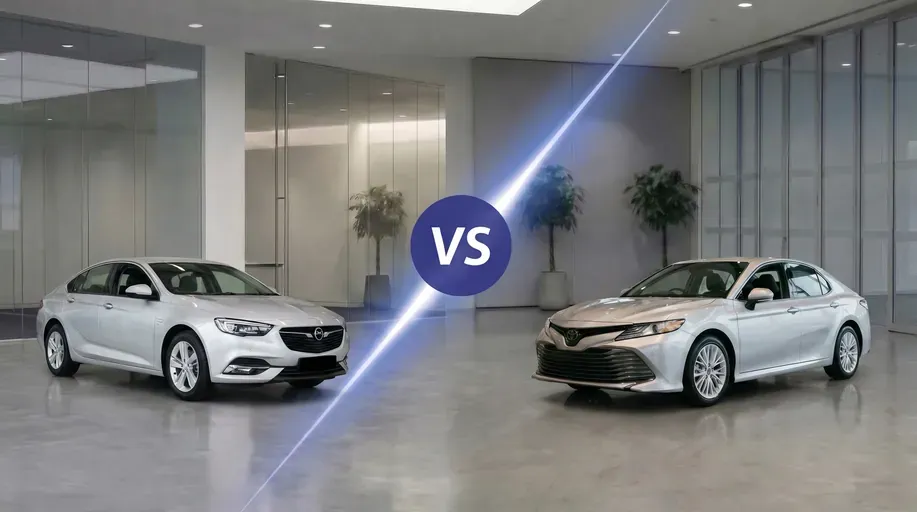
Detailed comparison of used Opel Insignia and Toyota Camry cars. We compare driving characteristics, reliability, and space. Find out which one is the better choice!
May 14, 2026
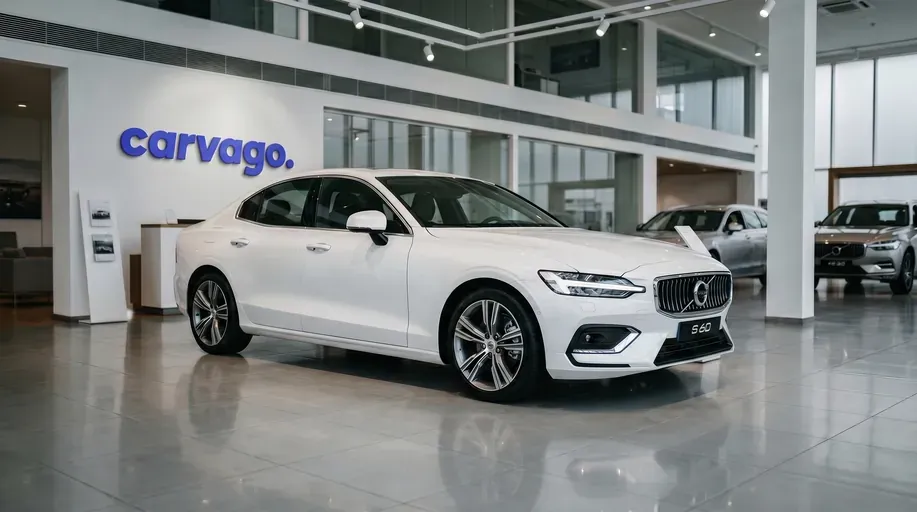
Volvo S60 review: real owner experience, common faults, hybrid running costs and used prices. Here is the definitive verdict before you buy.
Nov 6, 2026