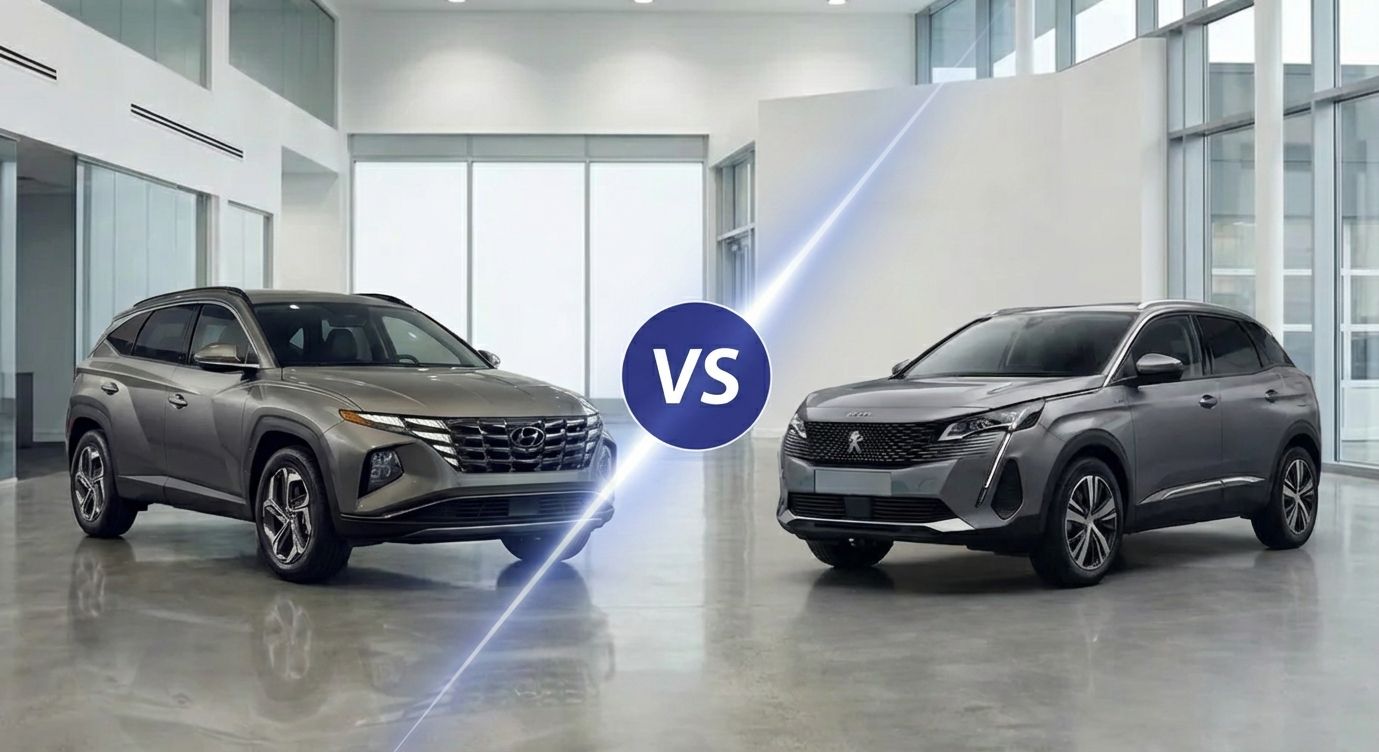
Car battle
Hyundai Tucson vs. Peugeot 3008: A Complete 2026 Comparison
Hyundai Tucson vs Peugeot 3008: A detailed comparison of design, engines, and features. Find out which SUV is the better choice for you in our big test.
Oct 23, 2026
Škoda Karoq review: real owner experience, common faults, engine picks, running costs and used prices — everything you need before buying.
October 22, 2026
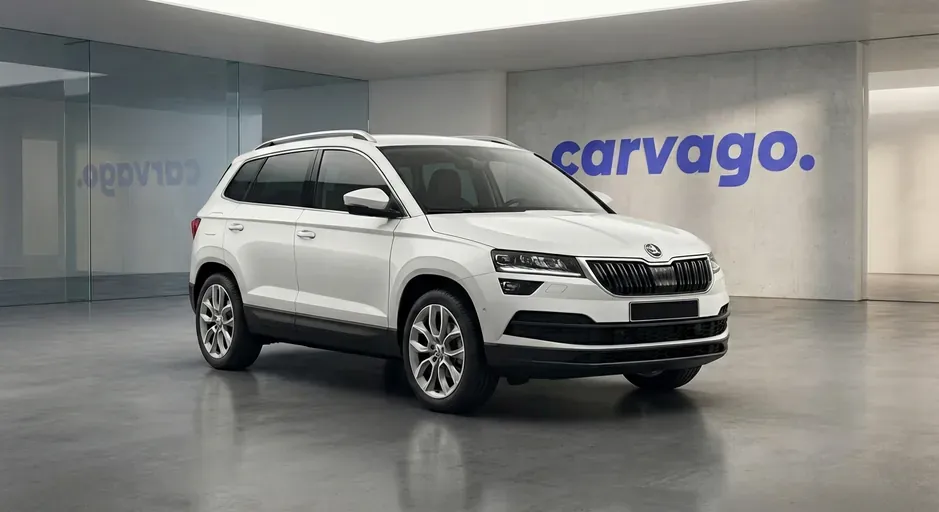
The Škoda Karoq is a compact crossover positioned in the manufacturer's lineup between the smaller Kamiq and the larger Kodiaq. Sold exclusively as a five-door Škoda Karoq SUV, it is aimed primarily at family buyers and commuters prioritising versatile seating configurations, straightforward controls, and manageable exterior dimensions for urban parking.
This review covers the first-generation model (type code NU7). Following its world premiere in May 2017, series production commenced in July 2017, with initial European customer deliveries starting in December 2017. Built on the MQB-A1 platform at the Kvasiny plant, the first generation remained in continuous active production through 2026.
Škoda presented a mid-cycle facelift on 30 November 2021, with European deliveries of the updated vehicle underway from April 2022. The refresh brought redesigned bumpers, a revised radiator grille, reshaped lighting units, and modified aerodynamic underbody panels, along with minor updates to interior upholstery and infotainment hardware across both front-wheel-drive and all-wheel-drive variants.
The Škoda Karoq has generally earned a solid reputation for mechanical durability across European markets, yet real-world ownership records highlight several distinct powertrain and electronic quirks. The most widely reported drivability complaint involves early versions of the 1.5 TSI petrol engine paired with a manual gearbox from model years 2017 to 2019. Owners report noticeable hesitation, stumbling, and bucking when pulling away from a standstill in first or second gear, particularly when the engine is cold. The issue was addressed through an official engine management software update, which resolved the stalling and rough take-off on the vast majority of cars, although some early examples still display a sensitive clutch engagement that requires careful throttle modulation.
For front-wheel-drive petrol versions paired with the seven-speed dry-clutch automatic transmission, tests and owners describe low-speed shudder or vibration when moving off from rest or crawling in heavy traffic. Typically surfacing between 60,000 and 110,000 km, this judder stems from glazed or worn clutch friction plates under thermal stress. While basic software resets and adaptations can temporarily smooth minor hesitation, physical shudder ultimately necessitates replacing the dual-clutch pack. Versions fitted with the wet-clutch automatic, found on the four-wheel-drive Škoda Karoq and larger diesels, do not share this specific failure pattern.
Cabin electronics and software account for another cluster of owner complaints, particularly on models built between 2020 and 2024. Tests describe the touchscreen infotainment system freezing, remaining completely black after start-up, or abruptly rebooting during journeys. Many owners also report persistent dashboard warnings indicating that the emergency call function is restricted. Resolving these glitches generally requires an authorised workshop to install updated system firmware, and in recurring emergency-call errors, replacing the internal backup battery or the roof-mounted communication unit.
A number of official safety recalls have been issued across the European market over the production run. In October 2026, a worldwide campaign covering 1,719,030 vehicles across the Octavia, Superb, Kodiaq, and Karoq lines built between November 2015 and August 2026 was announced because the bolt securing the steering gear to the subframe can suffer stress corrosion cracking in areas using road de-icing salt, which could lead to steering failure. Authorised workshops inspect and replace the fastener with an improved bolt. Earlier actions include a March 2022 worldwide recall for the 2.0 TSI petrol engine built between August 2020 and March 2022, where a loose engine cover posed a fire risk near the exhaust and turbocharger, resolved by removing and subsequently redesigning the cover. In March 2021, an alert affected 14,097 automatic Škoda Karoq and sibling models built between 29 June 2020 and 31 August 2020 due to an inadequately welded brake pedal plate that could detach under heavy braking, requiring inspection and pedal replacement. Additionally, an action in December 2018 resolved a software fault on manual 1.0 TSI models from 2017 to 2018 where the electronic parking brake could release spontaneously when parked in neutral.
Throughout its production run, the Škoda Karoq has offered a wide selection of turbocharged petrol and diesel engines paired with front-wheel drive or all-wheel drive. Depending on the engine and production year, buyers can choose between a six-speed manual and a seven-speed dual-clutch automatic transmission.
| Engine | Fuel | Power | Drivetrain | Gearbox | Model Years |
|---|---|---|---|---|---|
| 1.0 TSI | Petrol | 85 kW (115 hp) | Front-wheel drive | 6-speed manual, 7-speed automatic | 2017–2020 |
| 1.0 TSI | Petrol | 81 kW (110 hp) | Front-wheel drive | 6-speed manual | 2020–2023 |
| 1.0 TSI | Petrol | 85 kW (115 hp) | Front-wheel drive | 6-speed manual | 2024–present |
| 1.5 TSI | Petrol | 110 kW (150 hp) | Front-wheel drive | 6-speed manual, 7-speed automatic | 2017–present |
| 1.5 TSI 4×4 | Petrol | 110 kW (150 hp) | All-wheel drive | 7-speed automatic | 2018–2020 |
| 2.0 TSI 4×4 | Petrol | 140 kW (190 hp) | All-wheel drive | 7-speed automatic | 2019–present |
| 1.6 TDI | Diesel | 85 kW (115 hp) | Front-wheel drive | 6-speed manual, 7-speed automatic | 2017–2020 |
| 2.0 TDI | Diesel | 85 kW (115 hp) | Front-wheel drive | 6-speed manual | 2020–present |
| 2.0 TDI | Diesel | 85 kW (115 hp) | Front-wheel drive | 7-speed automatic | 2020–2024 |
| 2.0 TDI | Diesel | 110 kW (150 hp) | Front-wheel drive | 6-speed manual | 2019–2023 |
| 2.0 TDI | Diesel | 110 kW (150 hp) | Front-wheel drive | 7-speed automatic | 2022–present |
| 2.0 TDI 4×4 | Diesel | 110 kW (150 hp) | All-wheel drive | 6-speed manual | 2017–2019 |
| 2.0 TDI 4×4 | Diesel | 110 kW (150 hp) | All-wheel drive | 7-speed automatic | 2017–present |
| 2.0 TDI 4×4 | Diesel | 140 kW (190 hp) | All-wheel drive | 7-speed automatic | 2018–2020 |
For drivers spending most of their time in town, the three-cylinder 1.0 TSI petrol engine is the most practical choice. Its compact architecture warms up quickly on short hops, avoiding the soot buildup that affects diesel exhaust systems. Buyers seeking an automatic gearbox with this engine must look to earlier used models, as later updates paired the three-cylinder unit exclusively with a manual gearbox. The manual transmission remains well suited to stop-and-go commuting.
The four-cylinder 1.5 TSI is the most versatile all-rounder in the petrol Škoda Karoq line-up. Fitted with cylinder deactivation technology, it delivers ample passing reserve for rural roads while maintaining sensible efficiency around town. Available with either a manual or an automatic transmission, it strikes a balanced compromise of responsiveness and refinement for family use.
Frequent motorway drivers and long-distance commuters are best served by the diesel Škoda Karoq. The 2.0 TDI provides steady pulling power at sustained cruising speeds. The older 1.6 TDI is available only as a used car on early model years; while economical on flat stretches, it feels strained when carrying heavy passenger payloads.
For pulling horseboxes, caravans, or driving on slippery surfaces, the Škoda Karoq 4x4 equipped with the 2.0 TDI and automatic gearbox is the top recommendation, carrying the highest certified towing limits in the range. Drivers preferring petrol power can opt for the 2.0 TSI with standard all-wheel drive, though its fuel consumption rises significantly during urban driving.
For recurring mechanical issues, transmission wear patterns, and specific inspection tips before buying, see the dedicated owner experiences section.
| Parameter | Standard rear bench | Optional VarioFlex seats |
|---|---|---|
| Length | 4,382–4,390 mm | 4,382–4,390 mm |
| Width | 1,841 mm | 1,841 mm |
| Height | 1,603 mm | 1,603 mm |
| Wheelbase | 2,638 mm | 2,638 mm |
| Boot capacity (seats upright) | 521 l | 479–588 l |
| Boot capacity (seats folded) | 1,630 l | 1,605 l (1,810 l removed) |
Exterior dimensions reflect standard front-wheel-drive variants; all-wheel-drive models differ slightly in height and wheelbase due to their multi-link rear suspension.
The Škoda Karoq provides an upright seating position with ample headroom and knee clearance for tall adults in the outer rear positions. Practicality depends heavily on which rear seating layout was selected from the factory. The standard rear bench folds in a split arrangement, though lowering the backrests leaves a noticeable step in the luggage floor unless the optional variable load floor is fitted. Models equipped with the optional three-piece modular seating system deliver significantly more versatility: each individual seat slides, reclines, folds forward against the front backrests, or unlatches entirely from the car. While individual cushions on this modular setup are slightly narrower than the standard fixed bench, removing the middle seat allows the outer two chairs to slide inward to give rear passengers more shoulder room.
On the road, the Škoda Karoq prioritises secure, predictable roadholding over driver involvement. The standard suspension absorbs undulating tarmac smoothly, though sharp potholes send audible thuds into the cabin without optional adaptive dampers. Specifying larger optional wheels adds noticeable jitter over broken surfaces. The steering is light and accurate for town manoeuvres, but conveys little tactile road feel. Body lean remains tidy in normal cornering, with electronic stability control intervening progressively during sudden swerves. Cruising refinement is composed, although the petrol engine drones under sustained acceleration.
Inside, a high-set driving position provides clear forward visibility. Soft-touch materials cover the upper dashboard with robust assembly, though hard, scratch-prone plastics dominate the lower console and rear doors. Physical rotary climate dials keep operation straightforward on the move, whereas upgraded infotainment systems replace tactile volume knobs with capacitive glass buttons.
Professional tests consistently agree that the Karoq focuses on everyday family ease. Disagreements centre on chassis comfort, which varies markedly between compliant smaller wheels and firm, busy larger wheel combinations. The mid-cycle facelift introduced updated steering-wheel controls and subtle aerodynamic refinements, leaving the relaxed driving character intact.
All charts in this section are drawn from Carvago's listings of the whole Škoda Karoq model family, including other generations represented in the data rather than establishing a separate price level for the reviewed generation. Across the advertised manufacture years, the median asking price sits at €20,900 for 2019 cars and reaches €25,500 for 2022 models. Later model years reflect higher medians, progressing from €29,300 for 2023 examples to €36,700 for 2026 vehicles, where listings feature lower mileage and sought-after modular seating.
Between April and September 2026, the volume of advertised Škoda Karoq listings rose from 13,546 to 15,549. The chart below illustrates how active listing numbers developed across this six-month period.
Active listings over time
| Month | Škoda Karoq |
|---|---|
| 2026-04 | 13 546 |
| 2026-05 | 13 963 |
| 2026-06 | 15 057 |
| 2026-07 | 15 625 |
| 2026-08 | 15 224 |
| 2026-09 | 15 549 |
Source Carvago
Buyers can expect a wide selection on the market, as listing counts reached a peak of 15,625 in July before ending at 15,549 in September, with only a brief dip to 15,224 in August.
Across currently available listings, asking figures differ substantially depending on the production year. The median asking price of cars advertised today built in 2019 is €20,900, while the median asking price of cars advertised today built in 2026 reaches €36,700.
Median advertised price by year of manufacture
| Model year | Škoda Karoq |
|---|---|
| 2019 | 20 900 |
| 2020 | 22 800 |
| 2021 | 23 900 |
| 2022 | 25 500 |
| 2023 | 29 300 |
| 2024 | 33 900 |
| 2025 | 35 600 |
| 2026 | 36 700 |
Source Carvago
A buyer considering a 2019 model faces a median asking price of €20,900, compared to €25,500 for a 2022 model. For the newest production years, the median asking price spans from €33,900 for 2024 models to €36,700 for 2026 models.
This depreciation curve illustrates how the model's value falls with age, shedding roughly 12% of its initial residual value in the first year and reaching a 29% drop by age three.
Residual value by vehicle age
| Vehicle age | Škoda Karoq |
|---|---|
| New | 36 700 |
| 1 yr | 32 200 |
| 2 yrs | 29 200 |
| 3 yrs | 25 900 |
| 4 yrs | 25 200 |
| 5 yrs | 22 400 |
| 6 yrs | 20 100 |
| 7 yrs | 18 100 |
Source Carvago
Across the seven years shown, the model sheds approximately 51% of its initial residual value. The decline moderates noticeably around age four, after the steepest period of early depreciation has passed.
From April to September 2026, petrol vehicles made up the largest group of advertised cars, recording 9,264 listings in April and 10,407 in September. The chart below shows the number of cars advertised each month by fuel type.
Supply composition by fuel type
Petrol
Diesel
Hybrid
LPG
| Month | Petrol | Diesel | Hybrid | LPG |
|---|---|---|---|---|
| 2026-04 | 9 264 | 4 271 | 1 | 0 |
| 2026-05 | 9 273 | 4 680 | 1 | 1 |
| 2026-06 | 9 945 | 5 103 | 1 | 0 |
| 2026-07 | 10 425 | 5 193 | 0 | 0 |
| 2026-08 | 10 246 | 4 971 | 0 | 0 |
| 2026-09 | 10 407 | 5 130 | 0 | 2 |
Source Carvago
In September 2026, the available selection remained focused on 10,407 petrol and 5,130 diesel cars, alongside just 2 LPG vehicles. Buyers will therefore find their practical options limited to petrol and diesel powertrains.
The chart tracks the average asking price for the Škoda Karoq from April 2026 to September 2026, opening at €28,900.
Average price development over time
| Month | Škoda Karoq |
|---|---|
| 2026-04 | 28 900 |
| 2026-05 | 28 900 |
| 2026-06 | 29 200 |
| 2026-07 | 29 200 |
| 2026-08 | 29 100 |
| 2026-09 | 29 200 |
Source Carvago
Across the six-month period, the average moved within a narrow range between €28,900 and €29,200, amounting to an overall shift of roughly 1%.
Ample rear passenger space and high seating versatility when equipped with optional modular rear seats
Straightforward dashboard ergonomics with physical rotary dials for the climate controls
Broad engine selection offering well-matched choices for urban commuting, towing, and motorway cruising
Known low-speed clutch judder on front-wheel-drive automatics and hesitation on early manual petrols
Infotainment software glitches including freezing screens and recurring emergency call warnings
Jittery ride quality with audible thuds over broken surfaces on larger wheels
The Škoda Karoq generally proves mechanically durable for daily driving. However, front-wheel-drive automatics can develop low-speed clutch shudder, and early model years can suffer from infotainment software glitches.
The 1.5 TSI is the most versatile choice in the petrol Škoda Karoq range, balancing responsiveness with sensible everyday efficiency. Long-distance drivers carrying heavy passenger payloads are better served by the 2.0 TDI diesel.
Verify with an authorised workshop that all safety recalls have been completed by VIN, particularly the steering gear mounting bolt. During a test drive, check front-wheel-drive automatics for low-speed clutch judder and ensure early manual 1.5 TSI models pull away smoothly from cold.
Yes, the optional modular seating system adds substantial versatility by allowing each rear seat to slide, fold, or be removed entirely. However, the individual seat cushions are slightly narrower than those on the standard fixed bench.
Sources: skoda-storyboard.com, adac.de, service.gov.uk, autocar.co.uk, whatcar.com
This article was prepared using artificial intelligence tools. The section guarantor is Petr Dušek.
Hyundai Tucson vs Peugeot 3008: A detailed comparison of design, engines, and features. Find out which SUV is the better choice for you in our big test.
Oct 23, 2026
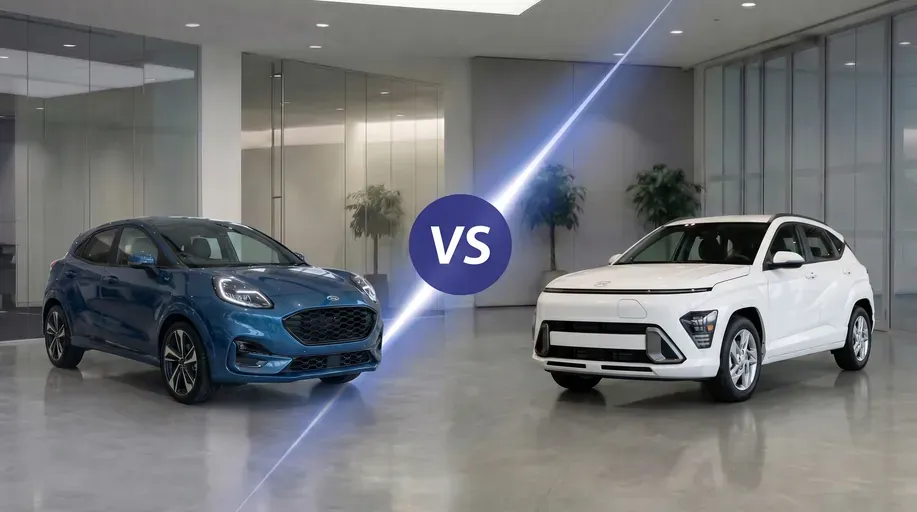
Ford Puma vs Hyundai Kona: A detailed comparison of popular city SUVs. Compare driving characteristics, fuel consumption, and space, and read our final verdict.
Oct 16, 2026
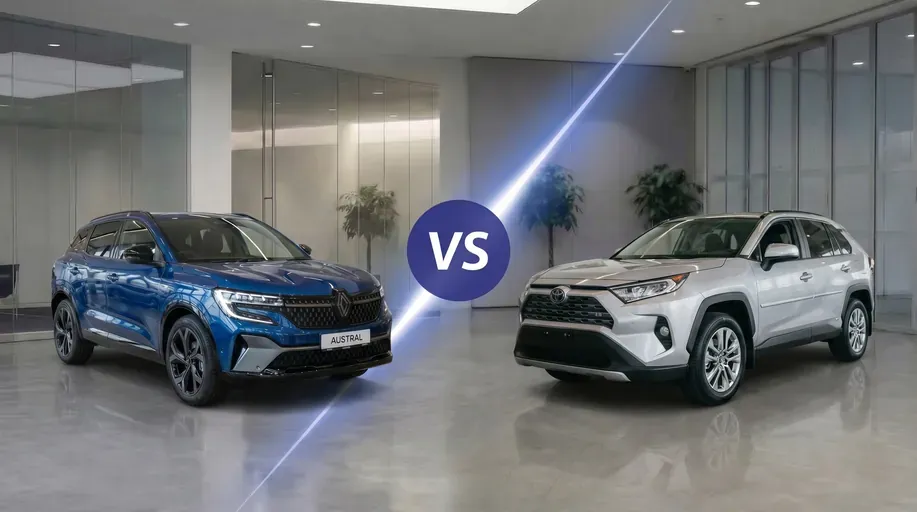
Complete comparison of Renault Austral vs. Toyota RAV4. Read real-world experiences, equipment comparisons, fuel consumption, and our clear verdict for choosing the ideal SUV.
Oct 16, 2026