Car battle
Hyundai Tucson vs. Peugeot 3008: A Complete 2025 Comparison
Hyundai Tucson vs Peugeot 3008: A detailed comparison of design, engines, and features. Find out which SUV is the better choice for you in our big test.
Apr 13, 2026
Articles
Car battle
Ford Puma vs Hyundai Kona: A detailed comparison of popular city SUVs. Compare driving characteristics, fuel consumption, and space, and read our final verdict.
April 30, 2026
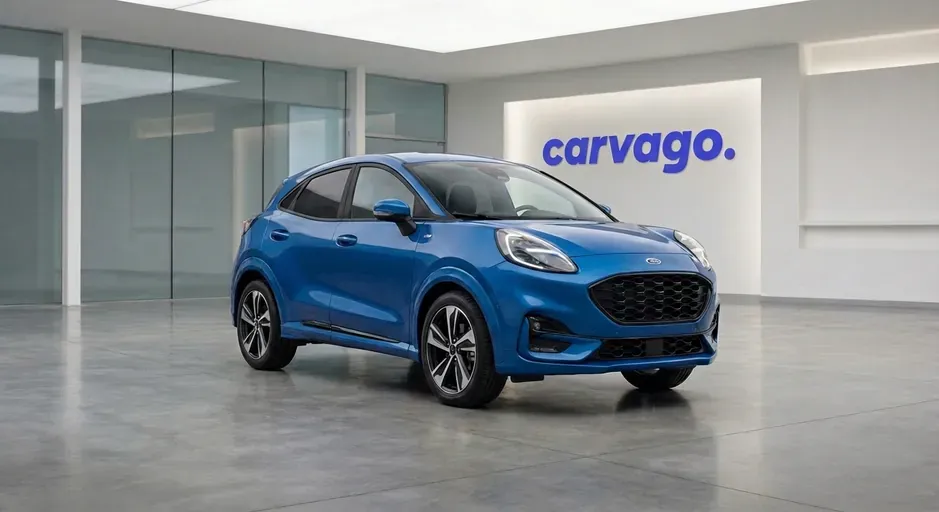
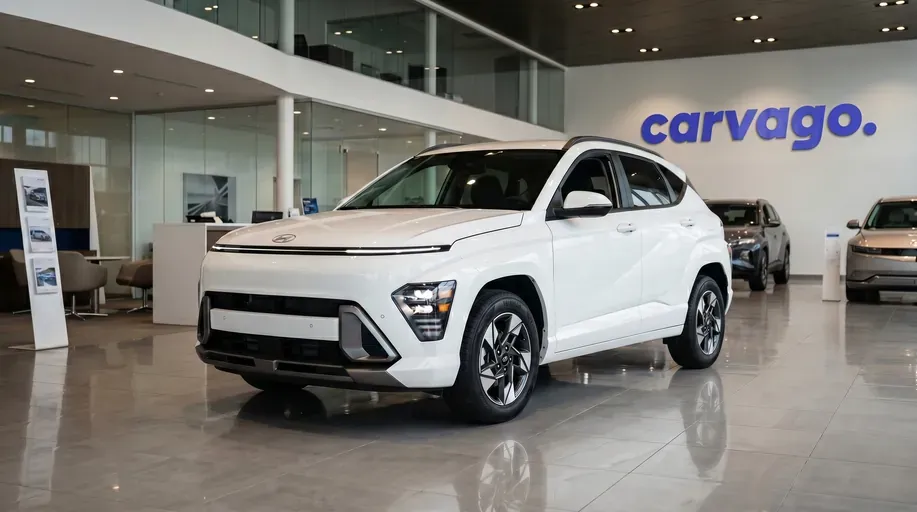
The Ford Puma, a popular subcompact crossover, has successfully revived a famous sporting name from the past and offers drivers highly agile handling complemented by an innovatively and cleverly designed luggage compartment. Standing against it is the confident Hyundai Kona, also known as the Hyundai Kauai or Encino in selected global markets, which attracts customers with its bolder design and an exceptionally diverse range of powertrains. In the following comparison, we will focus in detail on the key technical parameters, comfort levels, and overall practicality of both cars to help you decide which of these two stylish city SUVs makes more sense when choosing the ideal companion.
The Ford Puma (second generation) and Hyundai Kona (first generation, which currently dominates the market for roughly four-year-old used cars) represent typical examples of the popular city crossover segment. Looking at the overall length, both cars are very similar on the road. Standard versions of the Ford Puma measure 4186 mm in length (the top-of-the-line ST sports version is up to 4266 mm), while the first-generation Hyundai Kona ranges from 4165 to 4215 mm depending on the engine and facelift. The Puma is therefore roughly 20 mm longer as standard. For daily parking in narrow city streets, both models behave almost identically, but the Hyundai's slightly shorter body may offer a minor advantage when looking for a spot in a crowded city center.
More interesting differences can be found in width and height, which clearly define the overall stance of the cars and how they appear on the road. At 1805 mm, the Ford Puma is a negligible 5 mm wider than the Kona (1800 mm), but it sits noticeably lower. The Puma's height ranges between 1520 and 1555 mm, while the Kona stands at 1550 to 1570 mm. These proportions give the Ford a more athletic silhouette and a center of gravity closer to the ground, which positively affects the car's stability in sharper corners. Hyundai, on the other hand, bets on a more classic SUV build – the taller body makes entry slightly easier and offers a subjectively better view of traffic. From the driver's perspective, this means a clear choice: if you're looking for a sportier feel and confidence on backroads, the Puma's proportions will please you more. However, if you prefer a classic higher seating position and better visibility, the Kona will better meet your requirements.
A key parameter for the interior layout is the wheelbase, where the South Korean representative has a slight edge. The Hyundai Kona has a wheelbase of 2600 mm, while the Ford Puma offers a shorter 2588 mm. Although a difference of just 12 mm may seem like a negligible figure on paper, every millimeter counts in the compact car segment. The longer wheelbase of the Kona translates into slightly more generous knee room for rear-seat passengers and theoretically helps with smoother filtration of transverse bumps. So, if you plan to use the car for transporting adult passengers in the back, the Hyundai's longer wheelbase represents a more sensible path to travel comfort when choosing a used car.
| Parameter | Ford Puma SUV | Hyundai Kona SUV |
|---|---|---|
| Width (mm) | 1805 | 1800 |
| Length (mm) | 4186 - 4266 | 4165 - 4215 |
| Height (mm) | 1520 - 1555 | 1550 - 1570 |
| Wheelbase (mm) | 2588 | 2600 |
When choosing a roughly four-year-old used compact SUV, trunk capacity often plays a decisive role, especially if the car is to serve as the primary family vehicle. Whether you plan on regularly transporting a stroller, sports equipment for the mountains, or just large family grocery hauls, every extra liter makes daily life significantly easier. While the Ford Puma and Hyundai Kona might seem to target a similar group of customers looking for an attractive urban crossover at first glance, both manufacturers have approached interior layout and overall cargo capacity quite differently.
The second-generation Ford Puma is a top performer in its segment, offering an above-average base trunk capacity of 456 liters. Behind this exceptional figure lies an innovative solution called the MegaBox – a special, 80-liter deep compartment located under the double floor. This space is washable and features a drain plug at the bottom, so it can easily handle muddy boots or wet clothes. In contrast, the first-generation Hyundai Kona has a standard trunk capacity of 374 liters. Although this represents a noticeable difference of a full 82 liters in favor of the Ford, the space in the Korean car is still sufficient for many people for weekend shopping or a longer holiday for two, thanks to its regular shape. However, in a direct comparison, the Ford Puma offers the luxury of space for several extra suitcases, which families will appreciate on longer trips.
An important aspect when buying on the used car market is also the chosen engine, as some electrified versions see changes in trunk capacity. The Ford Puma is very often found in a mild-hybrid version (MHEV), where fortunately, thanks to the cleverly integrated battery, there is no loss of liters, and drivers still have those 456 liters at their disposal. On the other hand, the Hyundai Kona scores with the offer of a purely electric variant (Kona Electric), which, however, paid the price in the form of a volume reduced to 332 liters due to the battery pack. When it comes to transporting oversized items and maximum volume with the rear seats folded down, the differences narrow slightly. The Ford Puma reaches a capacity of 1216 liters, while the combustion-engine Hyundai Kona follows closely with 1156 liters (the electric version offers 1114 liters when folded).
| Parameter | Ford Puma SUV | Hyundai Kona SUV |
|---|---|---|
| Base capacity (l) | 456 | 374 |
| Max. capacity with seats folded (l) | 1216 | 1156 |
In conclusion, while the Hyundai Kona will satisfy less demanding users looking for a trouble-free, agile car with a standard-sized trunk, the Ford Puma demonstrates significantly more creativity. Thanks to the innovative MegaBox and a much more generous base capacity, it is a better candidate for active individuals and families who need to get the absolute maximum out of a smaller vehicle footprint.
While the Hyundai Kona offers a solid and functional average, the Ford Puma clearly dominates thanks to the clever MegaBox solution and provides unbeatable practicality for active families.
The ability to tow a trailer can play a surprisingly large role when choosing a small city crossover, especially if you plan on moving house, transporting building materials, or even towing a lighter caravan. When comparing approximately four-year-old used cars, significant differences in the design focus of both vehicles become apparent in this field.
The Korean workhorse with higher capacity
The first-generation Hyundai Kona (produced and sold in the relevant period of 2017–2023) proves to be a significantly more capable workhorse. Most standard conventional engines, such as the 1.0 T-GDI or the 1.6 CRDi diesel, can handle a braked trailer weighing 1,200 to 1,250 kg. The fuel-efficient hybrid versions (1.6 GDI Hybrid) then reach a very solid 1,300 kg. The extreme sports variant, the Kona N, thanks to its powerful turbo engine and rigid construction, can tow a respectable maximum of up to 1,600 kg.
The agile Ford with less power at the hitch
The competing second-generation Ford Puma (on sale since 2020) is designed much more for agile and sporty driving than as a hauler of heavy loads. The base three-cylinder 1.0 EcoBoost engines and their popular mild-hybrid derivatives typically have a limit for a braked trailer set at only 900 to 1,100 kg. A more significant outlier is the high-performance Puma ST (147 kW), whose sports suspension limits the capacity to just 750 kg. Interestingly, however, Ford has a slight edge with light unbraked trailers, with an average value of 640 kg compared to the usual 600 kg for the Kona.
Specifics of fully electric versions
The fully electric versions of both used cars require special attention regarding the specifics of their battery systems. The first-generation Hyundai Kona Electric has its towing capacity very strictly limited due to its design – it is often exactly 0 kg, and only in selected newer model years with the larger 64kWh battery does the manufacturer allow a weight of just 300 kg for both unbraked and braked trailers. In practice, this limit serves exclusively for mounting a bicycle rack on the towing device.
In real life, these differences represent substantial boundaries. While the Ford Puma is comfortably sufficient for standard home and garden maintenance, where a light unbraked trailer handles the weekend shopping or provides space for a few extra suitcases, the Hyundai Kona represents a much more serious work tool. Its parameters are sufficient even for a summer holiday, where you can safely hitch up a smaller caravan. In conclusion, it can be clearly stated that if you plan to realistically and actively use the towing device for heavier tasks with your chosen used SUV, the Hyundai Kona offers substantially greater utility freedom, while the Ford Puma prioritizes sporty and sharp driving over raw towing power.
| Model and engine | Braked trailer weight (kg) | Unbraked trailer weight (kg) |
|---|---|---|
| Ford Puma II 1.0 EcoBoost (70 - 92 kW) | 900 - 1100 | 640 |
| Ford Puma II 1.0 EcoBoost Hybrid (92 - 114 kW) | 900 - 1100 | 640 |
| Ford Puma II 1.5 EcoBlue (88 kW) | 1100 | 640 |
| Ford Puma II 1.5 EcoBoost ST (147 kW) | 750 | 640 |
| Hyundai Kona 1st Gen 1.0 T-GDI (88 kW) | 1200 | 600 |
| Hyundai Kona 1st Gen 1.6 CRDi (85 - 100 kW) | 1200 - 1250 | 600 |
| Hyundai Kona 1st Gen 1.6 GDI Hybrid (77 kW) | 1250 - 1300 | 600 |
| Hyundai Kona 1st Gen 1.6 T-GDI (130 - 146 kW) | 1250 | 600 |
| Hyundai Kona 1st Gen Electric (39.2 - 64 kWh) | 0 - 300 | 0 - 300 |
| Hyundai Kona 1st Gen N Performance (206 kW) | 1600 | 600 |
When choosing a used city crossover roughly four years old, engine options are one of the key factors that fundamentally influence fuel consumption, dynamics, and overall operating costs. The approach of both manufacturers to creating power units is different and reflects completely different philosophies. While the Ford Puma bets primarily on driving joy, agility, and efficiency through its award-winning 1.0 EcoBoost three-cylinder petrol engine with mild-hybrid technology, the Hyundai Kona scores with immense variability. The South Korean representative allows a choice from traditional petrol engines with the option of all-wheel drive (AWD), through an advanced full hybrid system (HEV), to extremely efficient pure electric variants. While both models offer practically identical dynamics for base engines (92 kW for the Puma versus 88 kW for the Kona), those seeking the ultimate sporty driving experience will find two completely different top-tier derivatives – the playful and rev-happy Puma ST (147 kW) or the rawer, track-tuned Kona N (206 kW).
The engine range for the Ford Puma is well-thought-out, and its cornerstone is the proven 1.0 EcoBoost three-cylinder petrol engine. In the market for four-year-old used cars, its modern mild-hybrid (MHEV) variants with 92 kW (125 hp) or 114 kW (155 hp) completely dominate. Their integrated 48V starter-generator effectively covers the so-called "turbo lag" at low revs, provides the car with above-standard flexibility, and visibly reduces fuel consumption in city traffic. The car pleases with the choice of a precise six-speed manual gearbox or a smooth-shifting seven-speed dual-clutch automatic. Customers with sporting ambitions should focus on the sharp Puma ST version with its lively 1.5 EcoBoost three-cylinder (147 kW) supplied with a manual. Keep in mind, however, that its production ended in the spring of 2024, and in the youngest model years, you will only find it with a 1.0-litre mild-hybrid automatic. The diesel engine deserves special attention – the reliable 1.5 EcoBlue four-cylinder diesel (88 kW) was only sold in older cars and was permanently withdrawn from the range at the end of 2021.
| Engine Type | Fuel | Power (kW) | Torque (Nm) | Transmission |
|---|---|---|---|---|
| 1.0 EcoBoost | Petrol | 70 / 92 | 170 / 210 | 6MT / 7DCT |
| 1.0 EcoBoost Hybrid | Petrol (Mild-Hybrid) | 92 / 114 | 210 / 240 | 6MT / 7DCT |
| 1.5 EcoBoost ST | Petrol | 147 | 320 | 6MT |
| 1.5 EcoBlue | Diesel | 88 | 285 | 6MT / 7DCT |
Compared to the narrowly focused Ford, the Hyundai Kona surprises in its modernized first (from 2021) and second generation with a much more diverse range of powertrains, where almost every driver will find something. The entry point is the 1.0 T-GDI turbocharged three-cylinder (88 kW), which is complemented by the smoother 1.6 T-GDI four-cylinder boasting a confident 146 kW (198 hp). This more powerful unit is particularly sought after on the used market because, unlike the Puma, it offers the option of popular all-wheel drive (AWD). A very sensible choice for economical motorists spending time primarily in city traffic is the efficient 1.6 GDI Hybrid (104 kW), where the internal combustion engine is supplemented by an electric motor with a small battery without the need for external charging. If you are thinking about pure electricity, the Kona Electric models (in versions with a 39.2 kWh or 64 kWh battery) can reduce real costs to a minimum, and the larger battery guarantees a generous range of over 400 km. As for diesel, a similar rule applies to the Kona as to the Ford: the 1.6 CRDi diesel unit with a 48V mild-hybrid system (100 kW) was withdrawn from the portfolio worldwide in August 2021 and can no longer be bought in newer cars. The ultimate extreme at the top of the range is the N Performance version with 206 kW (280 hp).
| Engine Type | Fuel | Power (kW) | Torque (Nm) | Transmission |
|---|---|---|---|---|
| 1.0 T-GDI (inc. 48V) | Petrol / Mild-Hybrid | 88 | 172 | 6MT / 7DCT |
| 1.6 T-GDI | Petrol | 146 | 265 | 7DCT |
| 1.6 GDI Hybrid | Petrol (Full-Hybrid) | 104 | 265 | 6DCT |
| 1.6 CRDi 48V | Diesel (Mild-Hybrid) | 100 | 320 | 6MT / 7DCT |
| Electric (39.2 / 64 kWh) | Electricity | 100 / 150 | 395 | 1AT |
| N Performance (2.0 T-GDI) | Petrol | 206 | 392 | 8DCT |
While the Ford Puma wins you over with its brilliantly tuned mild-hybrid three-cylinders combining dynamics and great driving characteristics, the Hyundai Kona crushes the competition with a breathtaking selection of powertrains, including efficient full hybrids, pure electric vehicles, and all-wheel drive.
Choosing the right engine is absolutely crucial for long-term satisfaction with a used car. Our recommendations are based on real-world experience, reliability, actual fuel consumption, and overall user ratings. In the case of approximately four-year-old cars on the used market, both the Ford Puma and Hyundai Kona offer very interesting, yet technologically different approaches to electrification. While Ford relies on a light and lively mild-hybrid powertrain, Hyundai counters with a proven full hybrid system.
This mild-hybrid (mHEV) three-cylinder represents the absolute sweet spot in the Puma model range for everyday usability. The biggest technical advantage of Puma cars since the start of production in 2020 is the fact that this engine received a main timing drive powered by a more reliable chain. With this, Ford solved the infamous problem of older engines with a timing belt immersed in oil (the so-called "wet belt"). Furthermore, the integrated starter-generator smooths out the torque curve, perfectly masks turbo lag, and contributes to a real-world fuel consumption of around 5.5 to 6 liters per 100 km. The engine is thus ideal for both city hopping and more dynamic driving on country roads.
The full hybrid version of the first-generation Hyundai Kona (around the 2021 model year) is considered one of the most reliable and well-thought-out powertrains you can choose on the used market. The system combines a naturally aspirated 1.6 GDI four-cylinder gasoline engine with an electric motor and, most importantly, a conventional six-speed dual-clutch transmission (DCT) (not the e-CVT variator used by competitors). The result is a much more natural driving feel and extreme efficiency – in the city and on suburban routes, you can commonly drive with consumption between 4.5 and 5.2 l/100 km. Due to the absence of a turbocharger and complex emission systems in the internal combustion engine, the risk of expensive repairs drops to a minimum compared to pure gasoline (T-GDI) or diesel (CRDi) variants.
The difference between the official fuel consumption figures stated by the manufacturer and reality on the road can unpleasantly surprise many a driver after purchasing a car. Especially with modern small SUVs, the actual appetite of the engines often varies depending on driving style, load, and route profile. To get the most accurate picture possible, we do not rely on laboratory measurements, but on real-world data from operation. For models relevant to the market of roughly four-year-old used cars (the second-generation Ford Puma and the first-generation Hyundai Kona), we have therefore analyzed both official ranges and values aggregated from the records of drivers themselves from the respected community portal Spritmonitor.de.
| Model and engine | Average consumption (l/100 km) |
|---|---|
| Ford Puma 1.5 EcoBlue (88 kW) | 4.5 |
| Hyundai Kona 1.6 CRDi (100 kW) | 4.9 |
| Hyundai Kona 1.6 GDI Hybrid (104 kW) | 5.4 |
| Ford Puma 1.0 EcoBoost Hybrid (92/114 kW) | 5.6 |
| Hyundai Kona 1.0 T-GDI (88 kW) | 6.1 |
| Ford Puma 1.5 EcoBoost ST (147 kW) | 6.6 |
| Hyundai Kona 1.6 T-GDI (146 kW) | 6.7 |
Several very interesting trends emerge from the presented data. When it comes to absolute minimization of fuel costs, diesel variants still lead the way among traditional internal combustion engines – Ford's economical 1.5 EcoBlue diesel can easily average a great 4.5 liters in real-world operation, with the 1.6 CRDi unit in the Kona following closely behind. A crucial finding is the behavior of small turbocharged petrol engines, where many buyers hope to maximize savings. While official figures tend to be very optimistic, in practice, the base 1.0 T-GDI unit without electrification in the Hyundai averages 6.1 liters of petrol. The Ford Puma comes out slightly better in this battle of the three-cylinders thanks to its cleverly tuned mild-hybrid technology (EcoBoost Hybrid), which can bring the average consumption down to an excellent 5.6 liters per 100 kilometers. The popular full-hybrid 1.6 GDI engine in the Kona also deserves attention, balancing consumption around 5.4 liters, which is an excellent result considering the presence of an automatic transmission and a more robust internal combustion engine.
For typical users, these figures mean the need to carefully consider their daily routes. For drivers who spend the vast majority of their time in heavy city traffic with frequent starts, the full-hybrid Hyundai Kona clearly appears to be an excellent and worry-free choice, as it can skillfully recuperate energy and maximize overall efficiency at low speeds. However, if you have a tighter budget and are looking for a versatile used car for daily commuting and more spirited country road driving, the mild-hybrid Ford Puma makes a lot of sense. In its case, the electric assistance smoothes out both the operation and the onset of engine torque, helping to significantly save fuel without the need for a complex full-hybrid system. For those who devour long motorway kilometers, diesel engines remain the stalwarts, although their presence in the three- and four-year-old used car market is more of a marginal matter. Drivers who, on the other hand, prefer dynamics and opt for powerful top-of-the-range versions like the Puma ST or Kona 1.6 T-GDI must expect consumption that reliably ranges between 6.6 and 6.7 liters.
In conclusion, fuel consumption will play an important role when choosing between these two popular crossovers, primarily depending on which level of powertrain electrification you prefer. While Ford scores valuable points thanks to its exceptionally efficient mild-hybrid three-cylinder as an ideal universal solution, Hyundai offers a technically advanced full hybrid (HEV) created specifically for demanding operation. If you choose an engine that corresponds to your route profile, the fuel bills for neither of these cars will ruin your budget.
Both models, especially when focusing on roughly four-year-old used cars (model years 2021 and 2022), are very popular and sought-after choices in the urban crossover segment of the used car market. The advantage of this age category is that the depreciation curve levels off and stabilizes, making them a highly rational investment.
The supply of roughly four-year-old Ford Puma cars on the market is quite plentiful, and prices start just below €12,000 for cars with higher mileage.
The facelifted version of the first-generation Hyundai Kona (2021–2022) stands out with a much more diverse range of powertrains. This is logically reflected in a noticeably wider range of purchase prices.
| Criterion | Ford Puma | Hyundai Kona |
|---|---|---|
| Base and average versions | €13,000 – €15,000 | €11,000 – €14,000 |
| Better equipped / more powerful cars | €15,000 – €17,000 | €16,000 – €18,000 |
| Fully electric models (EV) | Not available | €18,000 – €25,000+ |
| Prevailing market supply | 1.0 EcoBoost (mHEV) | 1.0 T-GDi, 1.6 T-GDi, EV |
In the long term, the Ford Puma holds its value very bravely on the secondary market. Its appealing design and great reputation for driving characteristics help. In contrast, the Hyundai Kona's base three-cylinder versions depreciate slightly faster. This is good news for used car buyers, as they can get a very reliable car with good equipment at lower purchase costs. The electric variant of the Kona behaves completely differently, holding its value confidently thanks to the long five-year factory warranty with no mileage limit.
While a used Hyundai Kona scores with a much wider choice of engines, including a great electric vehicle, and a slightly more friendly price tag for base versions, the Ford Puma attracts buyers with very stable value retention and easier resale in the future.
Both of these models can boast that they have achieved a maximum five-star rating in Euro NCAP tests in their history. However, when buying an approximately four-year-old used car, it is crucial not to perceive this number of stars in absolute terms, but always to take into account the specific year of testing and the context of the time.
The Euro NCAP methodology is constantly evolving and becoming significantly stricter. Therefore, percentage results obtained in different years cannot be fairly compared. Newer test protocols place much greater emphasis on sophisticated simulations of frontal and side impacts, advanced detection of cyclists and pedestrians, or crisis scenarios for the functioning of assistants at intersections. Furthermore, the certification of older tests has limited validity, meaning that ratings from earlier years may not correspond to today's requirements.
Ford Puma
Although the first-generation Ford Puma earned a full five stars from its original testing in 2019, its 2022 re-evaluation, conducted under significantly stricter protocols where it received four stars, is key to obtaining the most relevant data. The test confirmed a strong and stable passenger compartment and excellent protection for child passengers. The lower percentage gain for adult protection and assistance systems was mainly due to the absence of an innovative center airbag (preventing a collision between front passengers) and the lack of an advanced eCall system. Even so, the Puma benefits from very modern speed monitoring and reliable lane keeping, making it a very up-to-date car.
Hyundai Kona
The first-generation Hyundai Kona (which is the most typical representative of the four-year-old used car market in this model range) underwent barrier tests as early as 2017, when it easily achieved a five-star result. Under the milder rules of the time, the car excelled in passive safety for both adults and children. However, the age of the technological design was reflected in the evaluation of vulnerable road users and safety assistants. Although the system has basic autonomous emergency braking, it lacks, for example, the ability for early and accurate detection of cyclists, which is a complete standard in newer models.
| Parameter | Ford Puma | Hyundai Kona |
|---|---|---|
| Year of testing | 2022 | 2017 |
| Adult occupant protection | 75 % | 87 % |
| Child occupant protection | 84 % | 85 % |
| Vulnerable road user protection | 70 % | 62 % |
| Safety assist systems | 69 % | 60 % |
While both cars provide very solid protection in the event of an accident, the difference in the generations of safety systems is clearly evident. Thanks to more modern sensors and architecture, the Ford Puma offers a more comprehensive range of active assistants corresponding to newer protection standards, while the Hyundai Kona relies more on an older but still very robust passive safety construction.
Although both models are safe and reliable, the Ford Puma, thanks to its newer platform and more up-to-date active assistants, provides slightly more modern protection from today's perspective than the 2017 Hyundai Kona.
In addition to standard equipment, each model offers several unique features and technologies that bring a completely different approach to added value in everyday use. Both automakers approached the design of these urban crossovers with a focus on maximizing interior space and integrating modern digital solutions.
Great driving characteristics and an agile chassis that is fun for the driver
Innovative MegaBox storage space under the trunk floor (washable and with a drain)
Economical and dynamic EcoBoost mild-hybrid engines
Attractive sporty body design
Above-average total luggage compartment volume in its class (up to 456 liters)
Cramped legroom and headroom in the rear seats
Stiffer chassis tuning reduces comfort, especially in the ST-Line trim
Dashboard architecture taken from the older Fiesta feels slightly outdated
Poorer rearward visibility due to the significantly sloping roof and wide pillars
Ford Puma is an ideal choice for drivers who demand fun driving characteristics, confidence in corners, and a stylish look from a small crossover. Practical-minded owners will also appreciate the cleverly designed trunk with the MegaBox, although the rear seats offer rather average space suitable mainly for children.
Wide range of powertrains including gasoline engines, an economical hybrid, and a pure electric vehicle
Intuitive infotainment with clear controls and preserved physical buttons
More comfortable chassis tuning that filters out city bumps very well
Excellent reputation for reliability and a five-year factory warranty with unlimited mileage
Higher driving position ensuring excellent forward visibility and easier entry
Smaller basic trunk volume (374 liters) compared to the Ford Puma
More frequent use of harder and cheaper-feeling plastics in the interior
Specific and split headlight design that may appear controversial
Less communicative steering and weaker sporting ambitions during spirited driving
Hyundai Kona will appeal to customers looking for a versatile, comfortable, and reliable city crossover with an unrivaled choice of alternative powertrains. It is a rational choice for daily commuting, where you will appreciate great ergonomics and a calm ride, even if it lags slightly behind its main competitors in terms of trunk size.
Based on our own CarAudit inspections, failure statistics, and expert articles, we have compiled an overview of the most common problems that buyers of used cars around four years old should watch out for.
The first modern generation of the Ford Puma (since 2019) is an overall reliable crossover, yet it exhibits typical ailments associated with modern technologies and specific drivetrain wear.
The Ford Puma does not suffer from fatal failures if it has a history of careful servicing. When choosing, it is crucial to verify regular and timely oil changes and accept occasional software quirks of the infotainment.
The first generation of the Hyundai Kona (2017–2023) is a sought-after choice on the used car market thanks to a huge range of different engines. However, each has different risks for which a thorough physical inspection of the used car is worthwhile when purchasing.
The combustion versions of the Kona are generally reliable companions if given quality maintenance and prevention against carbon buildup. For the electric version, however, checking the detailed battery history is an absolute necessity due to known recalls.
When buying a used car, a thorough inspection is crucial, as both models have their technical specifics and weak points. Before making a final decision, keep in mind that an independent car technical inspection can save you a lot of worry and future expenses. Here are some specific points to focus on for roughly four-year-old used examples of these two crossovers.
Ford Puma offers a luggage compartment with a volume of 456 liters, which includes the innovative washable MegaBox storage compartment hidden under the floor. In contrast, the first-generation Hyundai Kona (typically model years around 2021-2022) lags behind with a volume of only 374 liters. If you often transport bulkier cargo or sports equipment, the Puma is clearly the more practical choice.
The Ford Puma shares its excellent chassis with the Fiesta model, making it one of the best and most fun-to-drive crossovers on the market. The Hyundai Kona, on the other hand, bets on a more comfortable and smoother setup, which is great for calm driving in the city or on rough roads. For enthusiastic drivers looking for great handling and feedback, the Puma is the winner.
The Hyundai Kona stands out with a very diverse range of powertrains, as you can easily find internal combustion engines, an economical full-hybrid, and the popular fully electric version on the used car market. For four-year-old used cars, the Ford Puma relies almost exclusively on dynamic and efficient 1.0 EcoBoost three-cylinder gasoline engines, which are also supplemented by mild-hybrid technology. While the Kona is ideal for those who want to switch to alternative powertrains, the Puma will please lovers of efficient gasoline engines.
Both vehicles are highly reliable models with robust technology and no frequent systemic faults. However, a major advantage of a used Hyundai Kona is the five-year factory warranty with no mileage limit, part of which still remains on a four-year-old car. The Ford Puma has a shorter standard warranty, but its service costs and the reliability of the EcoBoost engines represent minimal risk.
Given their classification as small city crossovers, the rear seat space in both competitors is rather average. The first-generation Hyundai Kona may feel slightly cramped in the knee area due to its shorter wheelbase. The Ford Puma, on the other hand, pays a bit for its elegantly sloping roofline, which takes away valuable centimeters of headroom for taller passengers.
Sources: ADAC, forbes.cz, novinky.cz, automix.cz, fdrive.cz, businessinfo.cz
This article was prepared using artificial intelligence tools. The section guarantor is Petr Dušek.
Hyundai Tucson vs Peugeot 3008: A detailed comparison of design, engines, and features. Find out which SUV is the better choice for you in our big test.
Apr 13, 2026
Detailed comparison: Citroën C5 Aircross vs Peugeot 3008. Find out which used SUV offers better comfort, reliability, and equipment. We have a clear verdict!
Apr 29, 2026
Nissan Qashqai vs. Renault Austral: A detailed comparison to help you choose. We compare design, engines, prices, and deliver a clear verdict.
Apr 14, 2026