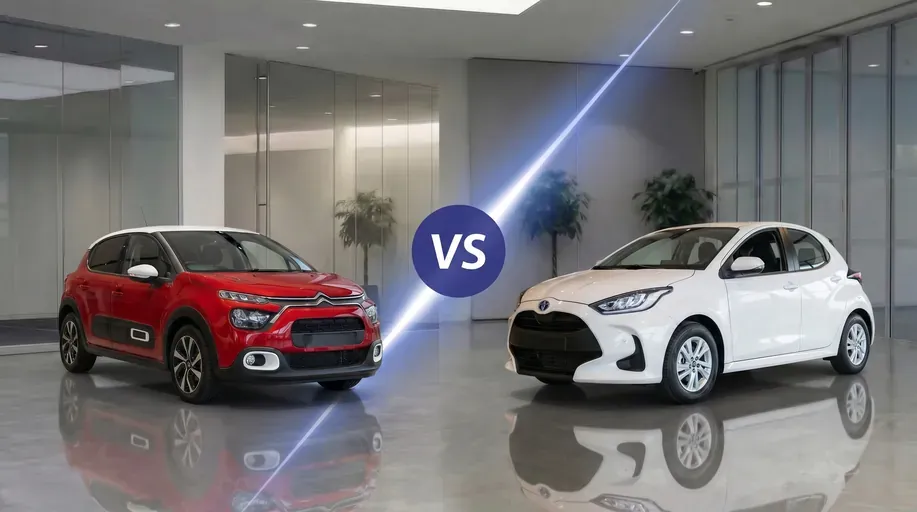
Car battle
Citroën C3 vs. Toyota Yaris: Complete comparison 2026
Detailed comparison of used Citroën C3 vs. Toyota Yaris. Discover the differences in engines, equipment, and reliability. Read our verdict before buying!
Oct 16, 2026
Škoda Fabia Mk4 review: real owner experience, common faults, engine picks, prices and running costs — everything you need before you buy.
October 31, 2026
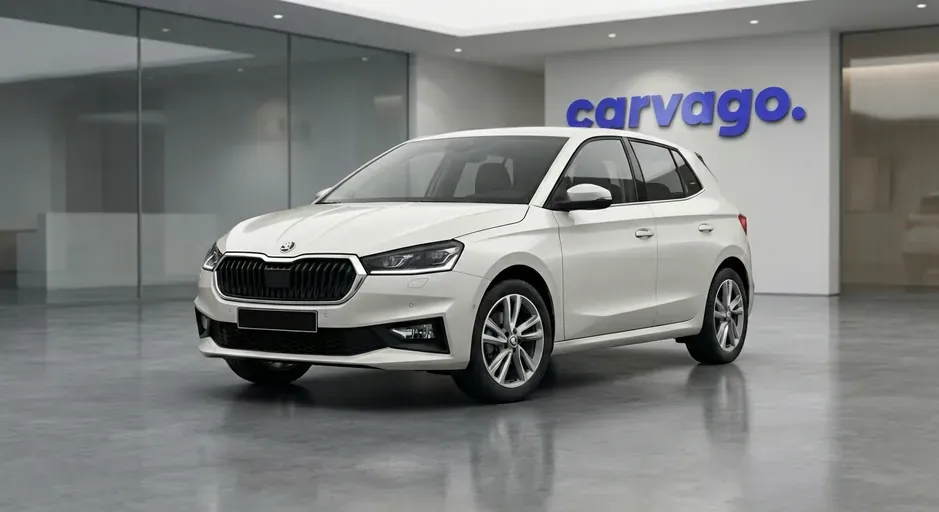
The fourth-generation Škoda Fabia represents the Czech manufacturer's contender in the European small-car segment. Series production commenced on 12 July 2021, with first European customer deliveries following in September 2021 and active production continuing through 2026. Unlike previous generations, this model is built exclusively as a five-door Škoda Fabia hatchback, omitting an estate variant.
The range subsequently broadened with a limited-production performance edition announced on 7 October 2025, which reached European customers in December 2025.
Targeted at urban commuters, small families, and second-car households, the Škoda Fabia prioritises straightforward controls, compact outer dimensions, and low running costs. This guide focuses on the fourth-generation model to assess how it holds up as a used purchase.
Because European deliveries of the fourth-generation Škoda Fabia began in autumn 2021, long-term reliability across high mileages is not yet fully established. Nevertheless, owner reports and workshop observations across multiple European markets show clear patterns regarding early-production electronic quirks, transmission refinement, and safety campaigns. Mechanically, the petrol powertrains demonstrate sound durability, but prospective buyers should pay attention to infotainment software and transmission behaviour.
On models produced between 2021 and 2024, tests describe and owners report recurring issues with the central touchscreen. Symptoms include sluggish menu response, blank screens when engaging reverse gear, delays in loading driver profiles, and dropped wireless smartphone mirroring sessions. Dealership software updates resolved boot delays and smartphone connection dropouts in most cases, while physical screen replacements were isolated to uncharacteristically unresponsive touch panels. Furthermore, owners report that the front radar sensor is sensitive to heavy spray, low sun angles, or road grime, occasionally triggering false collision alerts or temporary system-unavailability warnings on the instrument cluster.
Transmission choice significantly influences the ownership profile. On the automatic Škoda Fabia equipped with the seven-speed dual-clutch gearbox, tests describe and owners report low-speed hesitation when pulling away and clutch shudder during shifts between first and second gear in stop-and-go city traffic. Dealership software updates and clutch-point readaptations mitigate minor shifting jerks, but recurring friction shudder required mechanical replacement of the dual-clutch pack assembly in documented cases. Manual transmissions, by comparison, have proven trouble-free. If you are considering an automatic on the used market, having the car thoroughly inspected before purchase by an independent service such as CarAudit will confirm whether the clutch pack engages smoothly under load.
Official European and global safety authorities have logged two recall campaigns for this generation of the Škoda Fabia, both concerning front passenger airbag safety modules.
| Announcement Date | Affected Production Window | Defect and Remedial Action |
|---|---|---|
| August 2023 | June 2021 (including early builds) to June 2022 | A manufacturing deviation meant the front passenger airbag could rupture or fail to inflate properly upon deployment, increasing injury risk. Authorised workshops replace the passenger airbag module with a modified unit. |
| July 2025 | September 2022 to March 2025 | In an accident, the front passenger airbag gas generator housing could burst or shed loose components, causing serious or fatal injury and reducing protection. Workshops replace the airbag module free of charge. An official interim directive advised owners to deactivate the passenger airbag and keep the seat unoccupied until repaired. |
The fourth-generation Škoda Fabia relies entirely on petrol engines, offering a choice between naturally aspirated three-cylinder units, turbocharged three-cylinders, and a turbocharged four-cylinder.
| Engine | Fuel | Power | Gearbox | Model years |
|---|---|---|---|---|
| 1.0 MPI | Petrol | 48 kW (65 hp) | 5-speed manual | 2021–2023 |
| 1.0 MPI | Petrol | 59 kW (80 hp) | 5-speed manual | 2021–present |
| 1.0 TSI | Petrol | 70 kW (95 hp) | 5-speed manual | 2021–present |
| 1.0 TSI | Petrol | 81 kW (110 hp) | 6-speed manual | 2021–2024 |
| 1.0 TSI | Petrol | 81 kW (110 hp) | 7-speed automatic | 2021–2024 |
| 1.0 TSI | Petrol | 85 kW (115 hp) | 6-speed manual | 2024–present |
| 1.0 TSI | Petrol | 85 kW (115 hp) | 7-speed automatic | 2024–present |
| 1.5 TSI | Petrol | 110 kW (150 hp) | 7-speed automatic | 2021–present |
| 1.5 TSI | Petrol | 130 kW (177 hp) | 7-speed automatic | 2025–present |
For drivers whose routine consists primarily of short urban errands and city traffic, the naturally aspirated 1.0 MPI makes practical sense. Lacking a turbocharger, it warms up quickly and tolerates short trips without fuel dilution or particulate filter concerns. While quiet at low speeds, its modest pulling power requires high engine revs and patience on highway slip roads or open-road overtaking maneuvers. The lower-output version was discontinued early, leaving the higher-output specification as the sole naturally aspirated option still available new.
For general everyday driving that combines city streets with suburban bypasses, the lower-output 1.0 TSI provides a practical compromise. Turbocharging gives it usable low-end pull from early in the rev band, allowing it to merge onto open roads and maintain pace with traffic without constant downshifting. A manual Škoda Fabia with this engine is restricted to five forward gears, meaning gear ratios are widely spaced, but it remains easy to live with for everyday commuting.
Those who frequently travel longer motorway distances are better served by the higher-output 1.0 TSI. Its six-speed manual gearbox lowers engine speed at motorway cruising pace, reducing interior noise levels over long journeys. The earlier version of this engine is now found only as a used car, having been superseded by an updated specification with slightly wider peak torque delivery. For drivers who prefer two pedals, an automatic Škoda Fabia pairs this engine with a seven-speed dual-clutch transmission. Buyers who regularly carry passenger loads or want stronger high-speed reserves will find the four-cylinder 1.5 TSI well suited to sustained highway cruising, though it is sold strictly with the automatic gearbox.
For towing small utility trailers or mounting bicycles on a towball carrier, the 1.5 TSI offers the highest homologated towing capacity in the model range, followed closely by the higher-output manual and automatic 1.0 TSI variants. The naturally aspirated 1.0 MPI versions are rated for only lightweight trailers.
For a detailed analysis of drivetrain reliability, known transmission behavior, and wear patterns reported by drivers, consult the owner experiences section.
| Dimension | Hatchback |
|---|---|
| Length | 4,108 mm |
| Width (excluding mirrors) | 1,780 mm |
| Height | 1,459 mm |
| Wheelbase | 2,564 mm |
| Boot capacity (seats upright) | 380 l |
| Boot capacity (seats folded) | 1,190 l |
Note: Stated dimensions apply to standard models and exclude factory sports or rough-road suspensions, as well as the limited performance edition with extended aerodynamic bodywork.
The Škoda Fabia hatchback offers adult-friendly cabin accommodation on a compact footprint, with sufficient rear knee clearance and headroom for tall passengers to sit behind tall front occupants. Seating passengers three abreast in the rear row remains tight on shoulder room, making the middle position best suited to occasional use. Practical flexibility relies on an asymmetrically split-folding rear backrest fitted standard across the lineup, although the rear bench itself is fixed and does not slide. To accommodate longer items, a folding front passenger backrest is available as an option. The luggage area provides a rectangular, well-shaped load bay with a relatively low loading edge, supplemented by bag hooks and dedicated side compartments that prevent loose objects from sliding across the boot floor.
On the road, the Škoda Fabia prioritises rolling comfort over cornering agility. Its standard suspension absorbs coarse surfaces and road undulations with composure akin to larger hatchbacks, although testers note occasional body float across rural crests. Larger optional wheels and the lowered sports suspension transmit sharper thuds over urban potholes and cobbles. The steering is light for parking, weighting up securely at higher speeds, though it communicates little road texture. Motorway stability is calm and wind noise well suppressed, but three-cylinder engines produce a noticeable thrum under brisk acceleration.
Inside, testers praise the broad seat adjustment and the retention of physical heating dials, which keep essential controls intuitive while driving. Fabric dashboard inserts improve perceived quality on higher specifications, yet hard, scratch-prone plastics remain noticeable along the lower door panels, transmission tunnel, and dashboard top. The central display operates logically.
Reviewers agree that the car delivers mature high-speed refinement and an ergonomic layout, but opinions diverge on handling: some appreciate the relaxed compliance, while others find the soft setup detached in corners. The April 2024 update brought upgraded standard driver assistance systems and updated petrol units, leaving the cabin architecture and chassis balance unchanged.
All the charts in this section are drawn from Carvago's listings of the whole Škoda Fabia model family, including other generations represented in the data, rather than solely the reviewed fourth generation. Because production periods overlap, this overview does not establish a separate price level exclusively for the newest generation. Across the available model years, the median asking price spans from €11,600 for 2019 cars up to €22,000 for 2026 examples, with 2021 models posting a median asking price of €13,700 and 2024 models reaching €19,900.
Active advertised listings for the Škoda Fabia fluctuated between 16,170 in April 2026 and a peak of 16,545 in July, before declining to 14,854 by September 2026. The monthly figures illustrate how the volume of available listings developed over this six-month span.
Active listings over time
| Month | Škoda Fabia |
|---|---|
| 2026-04 | 16 170 |
| 2026-05 | 16 152 |
| 2026-06 | 16 491 |
| 2026-07 | 16 545 |
| 2026-08 | 15 278 |
| 2026-09 | 14 854 |
Source Carvago
With close to 15,000 or more vehicles on offer each month, buyers have a very broad selection to browse, even as overall listing numbers softened toward the end of the period.
Among used Škoda Fabia listings advertised today, the median asking price for cars built in 2019 is €11,600, while for those built in 2026 it stands at €22,000. The breakdown below details how these median asking prices compare across each build year.
Median advertised price by year of manufacture
| Model year | Škoda Fabia |
|---|---|
| 2019 | 11 600 |
| 2020 | 12 500 |
| 2021 | 13 700 |
| 2022 | 15 400 |
| 2023 | 17 800 |
| 2024 | 19 900 |
| 2025 | 20 800 |
| 2026 | 22 000 |
Source Carvago
Buyers focusing on a 2019 build year encounter a median asking price of €11,600, whereas choosing a 2022 model corresponds to €15,400, and a 2026 model lists at €22,000.
This depreciation curve illustrates how the Škoda Fabia loses value as it ages, shedding 13% of its residual value after the first year and 26% by age three. The following chart details that progression across seven years.
Residual value by vehicle age
| Vehicle age | Škoda Fabia |
|---|---|
| New | 21 900 |
| 1 yr | 19 100 |
| 2 yrs | 17 700 |
| 3 yrs | 16 200 |
| 4 yrs | 15 200 |
| 5 yrs | 13 900 |
| 6 yrs | 12 400 |
| 7 yrs | 11 600 |
Source Carvago
Across the full seven-year span shown, the model sheds 47% of its initial residual value, with annual depreciation moderating noticeably after the steep drop in the first year.
Between April and September 2026, petrol cars made up nearly all advertised inventory, peaking at 16,370 listings in July 2026 compared to 123 diesel vehicles that month. The chart below details the fuel mix of active listings across this six-month period.
Supply composition by fuel type
Petrol
Diesel
LPG
| Month | Petrol | Diesel | LPG |
|---|---|---|---|
| 2026-04 | 15 974 | 132 | 34 |
| 2026-05 | 15 958 | 133 | 31 |
| 2026-06 | 16 292 | 132 | 31 |
| 2026-07 | 16 370 | 123 | 23 |
| 2026-08 | 15 110 | 121 | 21 |
| 2026-09 | 14 700 | 112 | 17 |
Source Carvago
In September 2026, petrol models numbered 14,700 alongside 112 diesel and 17 LPG cars, with zero hybrid or electric listings recorded. Buyers will find realistic choice almost exclusively confined to petrol power, while other fuels are extremely scarce.
Between April 2026 and September 2026, the average asking price for the Škoda Fabia moved within a narrow range, starting at €18,000 before dipping to €17,900 in May.
Average price development over time
| Month | Škoda Fabia |
|---|---|
| 2026-04 | 18 000 |
| 2026-05 | 17 900 |
| 2026-06 | 18 000 |
| 2026-07 | 18 100 |
| 2026-08 | 18 100 |
| 2026-09 | 18 100 |
Source Carvago
Across the entire six-month span, the overall price level moved by less than one percent, closing at €18,100 and remaining unchanged from July through September.
Adult-friendly passenger room and a practical, well-shaped luggage compartment
Composed suspension comfort and calm high-speed motorway refinement
Straightforward cabin ergonomics with physical dials for climate controls
Automatic gearbox prone to low-speed hesitation and clutch shudder in city traffic
Early production years subject to touchscreen latency and false sensor warnings
Hard, scratch-prone cabin plastics across the dashboard top and door panels
The Škoda Fabia demonstrates sound mechanical durability across its petrol engines, though long-term reliability at high mileage is not yet fully established. Its most frequent documented issues involve central touchscreen software glitches on early production cars and low-speed clutch shudder on dual-clutch automatic gearboxes.
The turbocharged 1.0 TSI in the Škoda Fabia delivers the most practical compromise, providing usable low-end pull for commuting alongside lower engine speeds on open roads in higher-output manual form. The naturally aspirated 1.0 MPI handles short urban errands with minimal warm-up fuss, but it requires patience when overtaking or merging onto motorways.
Have an authorised workshop check the vehicle identification number to confirm that both front passenger airbag safety recalls have been carried out. On an automatic Škoda Fabia, test for crawling shudder between first and second gear in stop-and-go driving, and verify that the touchscreen boots without freezing.
While smooth in open traffic, the seven-speed dual-clutch transmission in the automatic Škoda Fabia can suffer from hesitation and clutch shudder in congested city queues. Minor shifting jerks can often be resolved with software updates, but persistent friction shudder has required replacement of the clutch pack assembly.
Sources: skoda-storyboard.com, adac.de, europa.eu, autobild.de, autoexpress.co.uk
This article was prepared using artificial intelligence tools. The section guarantor is Petr Dušek.
Detailed comparison of used Citroën C3 vs. Toyota Yaris. Discover the differences in engines, equipment, and reliability. Read our verdict before buying!
Oct 16, 2026
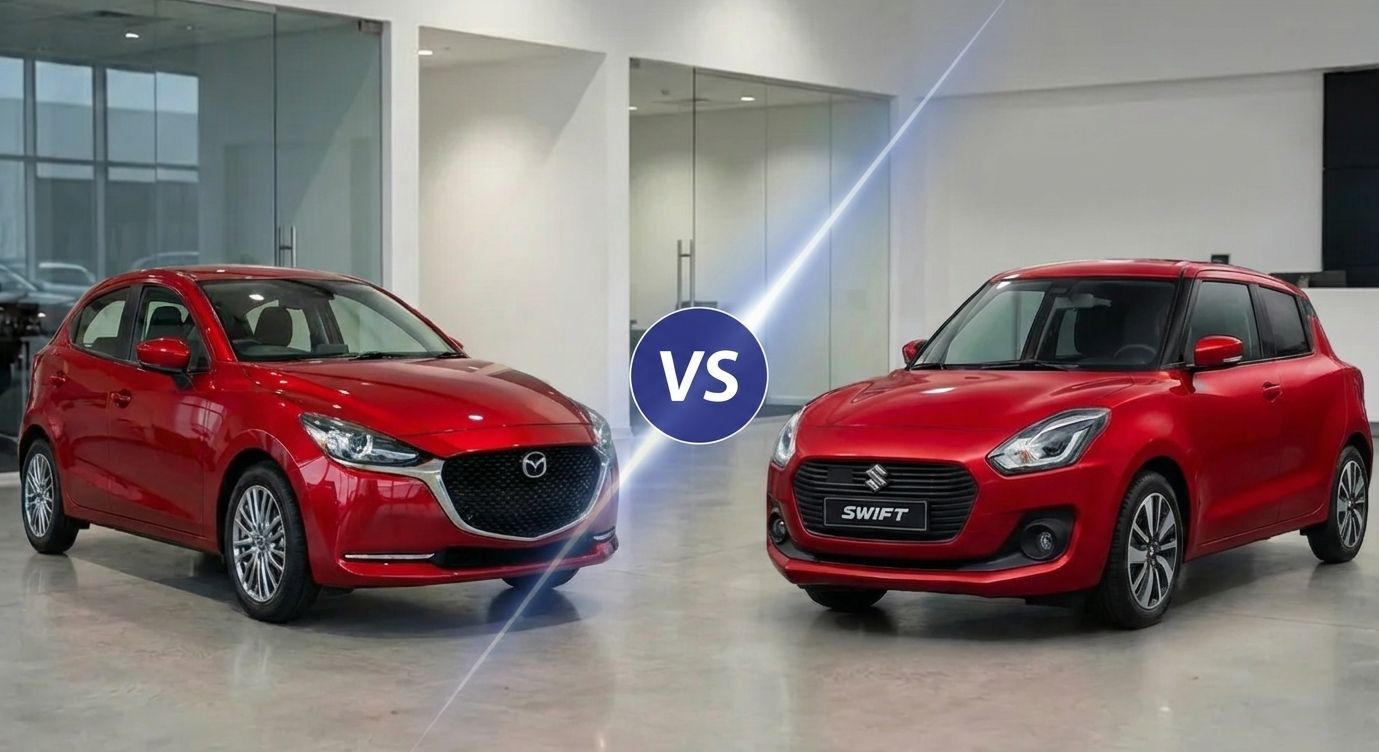
Detailed comparison of Mazda 2 vs Suzuki Swift. Are you looking for the ideal city hatchback? Find out the differences in driving characteristics, fuel consumption, and read our verdict.
Apr 8, 2026
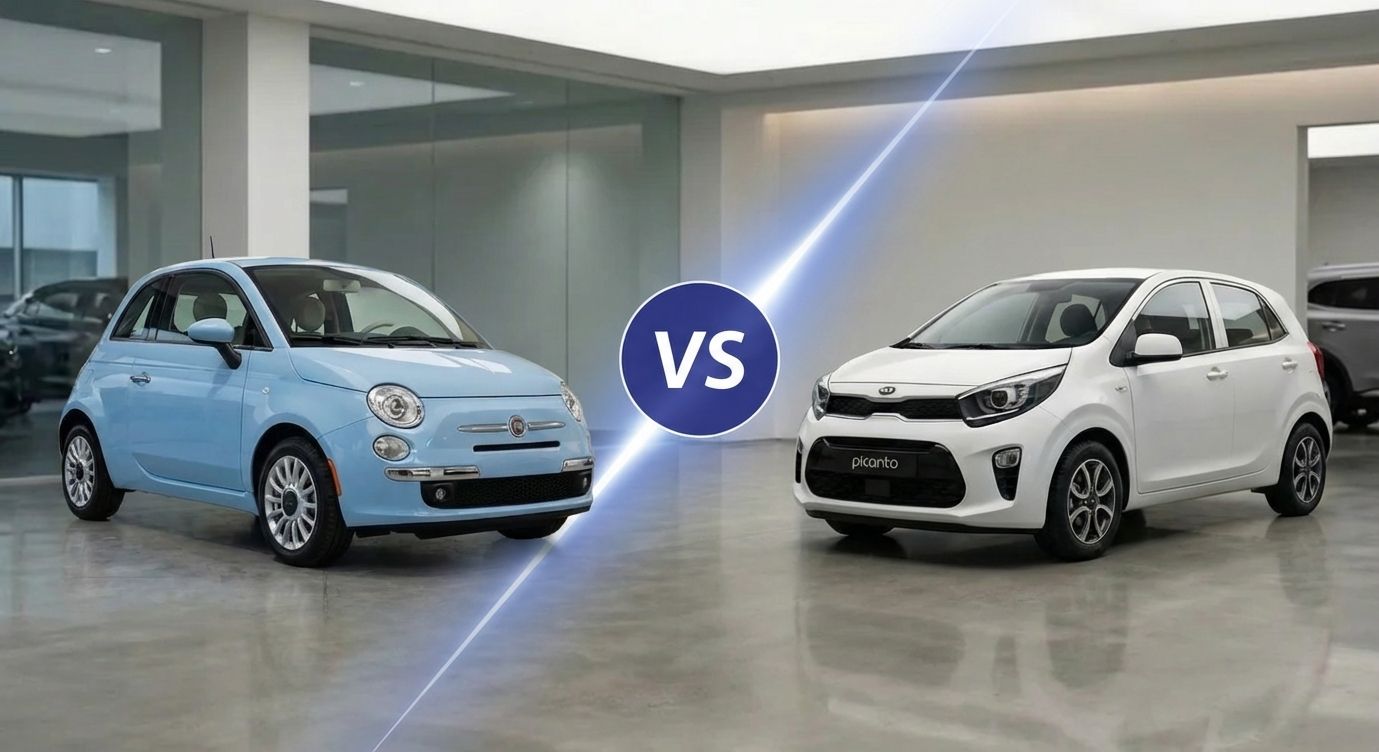
Fiat 500 or Kia Picanto? Our detailed comparison will help you choose the right city car. Detailed tests, features, and verdict.
Apr 14, 2026