Review
Review Volkswagen Polo: What do owners and experts really say?
Volkswagen Polo Mk6 review: real owner feedback, common faults, engine picks, and used prices — everything you need to know before you buy.
Oct 18, 2026
Articles
Review
SEAT Ibiza Mk5 review: real owner experience, common faults, running costs and used prices — everything you need to know before you buy.
November 8, 2026
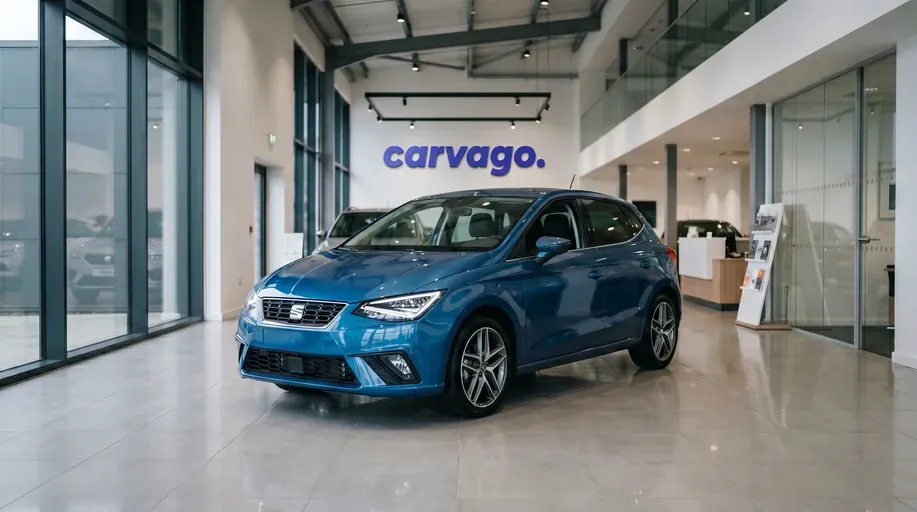
The SEAT Ibiza has long served as a core contender in the European supermini class, positioned primarily for urban commuting, first-time car buyers, and small households. This review focuses exclusively on the fifth-generation model, which entered production in May 2017, with European customer deliveries commencing in July 2017. Departing from earlier generations, it was manufactured strictly as a five-door SEAT Ibiza hatchback.
Over its continuous production run through 2026, the model received two significant factory revisions. The first mid-cycle facelift debuted on 15 April 2021, arriving with European customers in autumn 2021 to bring an overhauled dashboard layout and updated connectivity. A second exterior and interior refresh was unveiled on 29 October 2025, with customer deliveries starting in January 2026.
Across its lifespan, this generation has remained a straightforward and popular proposition in the small-car category. Navigating the changes between early production examples and the updated versions helps identify how well it aligns with daily driving requirements.
The fifth-generation SEAT Ibiza has accumulated extensive service records across European markets since its arrival in 2017. For cars delivered after the second facelift in January 2026, long-term reliability is not yet established due to limited time on the road. For vehicles built prior to this update, owner reports and workshop logs point to a clear pattern of software glitches, minor mechanical vulnerabilities, and several verified safety recalls.
Several manufacturer safety recalls have affected the model across European markets. The most widespread campaign was announced in July 2018 for cars built between 1 May 2017 and 26 September 2018, involving over 200,000 vehicles worldwide. In the notice's words, "the seat-belt buckles may open unexpectedly," creating an increased risk of injury during sudden dynamic manoeuvres when carrying three rear passengers. Authorised workshops fitted a redesigned rear double-buckle assembly with a lowered centre receptacle. A related campaign followed in April 2020 for cars built between 1 January 2020 and 30 June 2020 to replace rear double-buckle assemblies whose brackets were potentially damaged during manufacturing.
A separate recall announced between June and August 2025 applies to vehicles manufactured between 21 September 2022 and 7 April 2025, covering 1,899 units worldwide. Official notices state that "if the front passenger airbag is deployed as a result of an accident, the gas generator housing may burst or components of the gas generator housing may come loose and cause serious or fatal injuries to vehicle occupants." Authorised workshops replace the front passenger airbag module free of charge.
Earlier campaigns include an April 2020 recall for cars produced between 22 August 2019 and 3 February 2020, where a defective vacuum hose between the brake servo and the tandem pump could leak engine oil, reducing brake assistance. In April 2019, an action covering cars built from 25 May 2017 to 6 November 2018 addressed an adjuster nut on the handbrake lever that could loosen over time, requiring workshops to adjust cable tension and install a retaining clip. For the compressed natural gas variant built between 1 January 2018 and 31 August 2018, an August 2018 recall required workshops to check and torque the union nuts on gas lines to prevent potential gas leaks.
Drivers report low-speed hesitation and surging on manual 1.5 TSI petrol models built between 2017 and 2018. This behaviour typically occurs when pulling away in first gear or during cold running. Manufacturer engine management software updates released between late 2019 and 2020 resolved or significantly diminished the hesitation in most cars, though some clutch sensitivity under cold conditions remains inherent to the engine calibration.
Owners frequently report software stability problems with the touchscreen infotainment system across both pre-facelift and post-facelift cars. Symptoms include frozen screens, unexpected system reboots while driving, and dropped smartphone mirror connections. In most cases, dealer software updates resolve the spontaneous restarts. However, persistent emergency SOS dashboard warning lights typically require the replacement of the online connectivity control unit.
A repeated body fault reported by owners involves the rear windscreen washer line. The flexible plastic hose can split or pop off its connector inside the rubber conduit at the top of the tailgate. Escaping washer fluid runs down behind the internal tailgate trim directly into the electric boot lock actuator. This causes the latch to fail or triggers false dashboard warnings that the boot is unlatched. Resolving the fault requires securing the fluid hose and replacing the water-damaged latch mechanism.
On the chassis, workshops and owners report worn anti-roll bar drop links and cracked lower wishbone bushes on cars built between 2017 and 2023, which cause knocking noises over speed bumps and coarse road surfaces. On versions equipped with the seven-speed automatic gearbox, drivers note occasional judder or delayed clutch engagement when creeping at low speeds in heavy traffic.
The fifth-generation SEAT Ibiza arrived with an extensive engine portfolio centered on three-cylinder petrol units, complemented by four-cylinder petrol, turbodiesel, and compressed natural gas options. While the diesel and gas variants were eventually retired, the core line-up continues to rely on lively turbocharged petrol power.
| Engine | Fuel | Power | Gearbox | Model years |
|---|---|---|---|---|
| 1.0 MPI (65 hp) | Petrol | 48 kW (65 hp) | 5-speed manual | 2017–2020 |
| 1.0 MPI (75 hp) | Petrol | 55 kW (75 hp) | 5-speed manual | 2017–2018 |
| 1.0 MPI (80 hp) | Petrol | 59 kW (80 hp) | 5-speed manual | 2018–present |
| 1.0 TSI (95 hp) | Petrol | 70 kW (95 hp) | 5-speed manual | 2017–present |
| 1.0 TSI (110 hp) | Petrol | 81 kW (110 hp) | 6-speed manual | 2020–2024 |
| 1.0 TSI (110 hp) | Petrol | 81 kW (110 hp) | 7-speed automatic | 2020–2024 |
| 1.0 TSI (115 hp) | Petrol | 85 kW (115 hp) | 6-speed manual | 2017–2020 |
| 1.0 TSI (115 hp) | Petrol | 85 kW (115 hp) | 7-speed automatic | 2017–2020 |
| 1.0 TSI (115 hp) | Petrol | 85 kW (115 hp) | 6-speed manual | 2024–present |
| 1.0 TSI (115 hp) | Petrol | 85 kW (115 hp) | 7-speed automatic | 2024–present |
| 1.5 TSI (150 hp) | Petrol | 110 kW (150 hp) | 6-speed manual | 2017–2018 |
| 1.5 TSI (150 hp) | Petrol | 110 kW (150 hp) | 7-speed automatic | 2020–present |
| 1.0 TGI (90 hp) | CNG / Petrol | 66 kW (90 hp) | 6-speed manual | 2017–2024 |
| 1.6 TDI (80 hp) | Diesel | 59 kW (80 hp) | 5-speed manual | 2017–2019 |
| 1.6 TDI (95 hp) | Diesel | 70 kW (95 hp) | 5-speed manual | 2017–2020 |
| 1.6 TDI (95 hp) | Diesel | 70 kW (95 hp) | 7-speed automatic | 2018–2020 |
| 1.6 TDI (115 hp) | Diesel | 85 kW (115 hp) | 6-speed manual | 2017–2019 |
For strictly urban commuting and short errands, the naturally aspirated 1.0 MPI in the petrol SEAT Ibiza is a durable choice that copes well with frequent cold starts, though its modest acceleration requires patience outside city limits. Most urban drivers will prefer the standard turbocharged 1.0 TSI with a manual gearbox, which delivers prompt low-end response and easily handles suburban bypasses.
For mixed daily driving, the standard 1.0 TSI represents a practical balance of everyday performance and running costs. Buyers who frequently travel on motorways or want two-pedal convenience should look to the stronger 1.0 TSI or choose an automatic SEAT Ibiza. The automatic delivers relaxed cruising once moving, while the manual version features taller cruising gears that keep engine revs lower at motorway speeds.
For long motorway distances, the four-cylinder 1.5 TSI delivers the strongest performance, offering ample overtaking reserves and seamless cylinder shut-off during steady cruising. On the used market, the discontinued diesel SEAT Ibiza with the 1.6 TDI engine is an economical used-car option for high-mileage drivers due to its strong pulling power and frugal open-road economy, although its heavier front end makes cornering feel less agile than in three-cylinder models. The bi-fuel CNG SEAT Ibiza 1.0 TGI is another economical used-car alternative where refueling infrastructure exists.
For towing, the four-cylinder 1.5 TSI offers the highest towing capacity in the range, followed by the stronger 1.0 TSI; by contrast, the natural gas 1.0 TGI carries no factory towing approval.
For recurring mechanical faults, component wear patterns, and software updates across the engine range, consult the owner experiences section.
The SEAT Ibiza hatchback provides a practical interior layout that makes efficient use of its footprint. Up front, the seating position is low and natural, while the rear bench accommodates two adult passengers comfortably, offering competitive legroom and headroom for a supermini. Fitting three adults across the rear remains tight, however, and the rear bench cushioning is relatively flat, which limits support on longer journeys. A sliding rear bench is not available, and there is no through-loading ski hatch.
| Parameter | Pre-facelift (2017–2021) | Facelift (2021–present) |
|---|---|---|
| Length (mm) | 4,059 | 4,070 |
| Width (mm) | 1,780 | 1,780 |
| Height (mm) | 1,444 | 1,447 |
| Wheelbase (mm) | 2,564 | 2,564 |
| Boot capacity, seats up (l) | 355 | 355 |
| Boot capacity, seats folded (l) | 1,165 | 1,165 |
These figures do not apply to the compressed natural gas (CNG) variant, which has a reduced boot volume due to underfloor fuel storage.
Everyday luggage loading is straightforward thanks to a wide tailgate opening and a practical compartment shape. The 60/40 split-folding rear backrest is standard on higher trims, while base versions use a single-piece folding bench. Many versions feature a variable-height luggage floor—standard on higher trims and optional on others—that levels out the step to the folded seatbacks, creating a flat cargo area for bulkier cargo.
Professional testers consistently praise the SEAT Ibiza for its agile road holding, composed cornering, and responsive front-axle bite. Body roll remains tightly checked during sudden directional changes. However, ride comfort divides opinion depending on chassis specification: versions fitted with sports suspension and larger alloy wheels transmit noticeable thuds over expansion joints and sunken ironwork at town speeds, though the damping settles into better composure on smoother motorways. Acoustic refinement is a recurring criticism across tests. While engine vibrations remain isolated when cruising, road noise on coarse tarmac and wind rustle around the windscreen pillars penetrate the cabin at higher speeds.
Cabin ergonomics earn praise for functional practicality. Even on updated models, the Ibiza retains tactile rotary switches for climate control and physical steering wheel buttons rather than touch-sensitive sliders, although testers note dated infotainment graphics. Material quality changed significantly during the production run: the first mid-cycle update introduced a slush-moulded, soft-touch dashboard top that addressed early criticisms of a drab cabin, yet unpadded hard plastics remain on the lower centre console and rear door panels. Testers agree on the supportive side bolsters of the front seats, but disagree on their base padding, with some noting long-distance fatigue. Overall, evaluations portray the Ibiza as an agile, predictable supermini whose firmer chassis setup benefits from smaller wheel sizes.
All market charts in this section are drawn from Carvago listings across the entire SEAT Ibiza model family, including other generations represented in the data, and do not establish a separate price level exclusively for the reviewed generation. In today’s market snapshot, the median asking price sits at €12,900 for 2019 models and reaches €22,500 for 2026 cars. Used-market demand centres heavily on turbocharged petrol engines with manual gearboxes, while naturally aspirated entry units and discontinued alternative-fuel variants generally command lower asking figures across these model years.
Active Seat Ibiza listings fluctuated across the six-month period, opening at 12,389 in May 2026 and reaching a high of 13,223 in July 2026. The monthly figures below illustrate how the volume of advertised vehicles changed through October 2026.
Active listings over time
| Month | Seat Ibiza |
|---|---|
| 2026-05 | 12 389 |
| 2026-06 | 12 514 |
| 2026-07 | 13 223 |
| 2026-08 | 12 816 |
| 2026-09 | 13 063 |
| 2026-10 | 12 152 |
Source Carvago
Advertised supply remained between 12,152 and 13,223 cars across all six months, offering buyers a broad selection on the market despite the regular month-to-month movements.
Among used Seat Ibiza listings advertised today, the median asking price for cars built in 2019 is €12,900, while the median asking price for cars built in 2026 is €22,500. The chart below outlines how these median asking prices compare across build years.
Median advertised price by year of manufacture
| Model year | Seat Ibiza |
|---|---|
| 2019 | 12 900 |
| 2020 | 14 000 |
| 2021 | 14 800 |
| 2022 | 15 800 |
| 2023 | 17 000 |
| 2024 | 19 300 |
| 2025 | 20 500 |
| 2026 | 22 500 |
Source Carvago
Buyers considering a 2020 model face a median asking price of €14,000 among current listings, whereas targeting a 2024 model requires a median asking price of €19,300. Across the covered build years, median asking prices are consistently higher with each newer model year.
This depreciation curve shows how the Seat Ibiza loses value with vehicle age, shedding 15% of its initial residual value in the first year and 27% by age three. The progression across the years is illustrated below.
Residual value by vehicle age
| Vehicle age | Seat Ibiza |
|---|---|
| New | 22 800 |
| 1 yr | 19 400 |
| 2 yrs | 17 800 |
| 3 yrs | 16 700 |
| 4 yrs | 15 600 |
| 5 yrs | 14 800 |
| 6 yrs | 13 500 |
| 7 yrs | 12 800 |
Source Carvago
Over the seven years shown, the model sheds 44% of its residual value, keeping more than half of its original level. The sharpest drop occurs in the first year, with annual depreciation moderating to between 5% and 9% in subsequent years.
This overview shows the count of advertised Seat Ibiza vehicles by fuel type per month, with petrol listings recorded at 11,922 in May 2026 and 11,761 in October 2026. The breakdown below details the monthly distribution across all available fuel options.
Supply composition by fuel type
Petrol
Diesel
CNG
LPG
| Month | Petrol | Diesel | CNG | LPG |
|---|---|---|---|---|
| 2026-05 | 11 922 | 196 | 262 | 1 |
| 2026-06 | 12 058 | 212 | 236 | 2 |
| 2026-07 | 12 798 | 208 | 209 | 3 |
| 2026-08 | 12 398 | 203 | 208 | 3 |
| 2026-09 | 12 622 | 202 | 231 | 4 |
| 2026-10 | 11 761 | 181 | 206 | 1 |
Source Carvago
Petrol dominates the current offering, registering 11,761 advertised cars in October 2026 compared to 206 for CNG and 181 for diesel, with LPG showing 1 and hybrid or electric at 0. As a result, buyers have an extensive selection of petrol models to choose from, whereas those seeking a diesel or CNG option face a far narrower field of listings.
Between May 2026 and October 2026, the average asking price for the Seat Ibiza opened at €17,500 and concluded at €17,700, as shown in the monthly overview below.
Average price development over time
| Month | Seat Ibiza |
|---|---|
| 2026-05 | 17 500 |
| 2026-06 | 17 500 |
| 2026-07 | 17 600 |
| 2026-08 | 17 700 |
| 2026-09 | 17 700 |
| 2026-10 | 17 700 |
Source Carvago
Overall movement across the period was minimal relative to the vehicle values, edging up by just over one percent from €17,500 to €17,700 before holding steady through the final months.
Agile handling with composed cornering and tightly controlled body roll
Practical cabin layout with competitive boot capacity and straightforward loading
Functional ergonomics retaining physical rotary climate switches and steering wheel buttons
Intrusive road and wind noise at speed, alongside a firm ride on larger wheels
Frequent infotainment software glitches, unexpected reboots, and dropped smartphone connections
Hard interior plastics on lower panels and flat, less supportive rear seat cushioning
The standard turbocharged 1.0 TSI delivers the most balanced performance and running costs for mixed everyday driving. Long-distance drivers will benefit from the four-cylinder 1.5 TSI, though manual versions from the initial production years should be checked for low-speed pull-away hesitation.
The SEAT Ibiza has proven mechanically dependable overall, though earlier model years are prone to touchscreen software crashes and several factory safety recalls. Reliability for cars delivered after the early 2026 update has not yet been established.
Always verify the car's recall history by VIN through an authorised dealer, specifically for rear seatbelt buckle and front passenger airbag rectifications. Additionally, test the rear windscreen washer to ensure leaking fluid has not compromised the boot latch actuator.
Current listings show median asking prices ranging from €12,900 for 2019 cars up to €22,500 for 2026 models. The second-hand market is dominated by the petrol SEAT Ibiza, leaving buyers looking for discontinued diesel or natural gas versions with a much smaller pool of choices.
Sources: seat-cupra-mediacenter.com, adac.de, ec.europa.eu, autoexpress.co.uk, autocar.co.uk
This article was prepared using artificial intelligence tools. The section guarantor is Petr Dušek.
Volkswagen Polo Mk6 review: real owner feedback, common faults, engine picks, and used prices — everything you need to know before you buy.
Oct 18, 2026
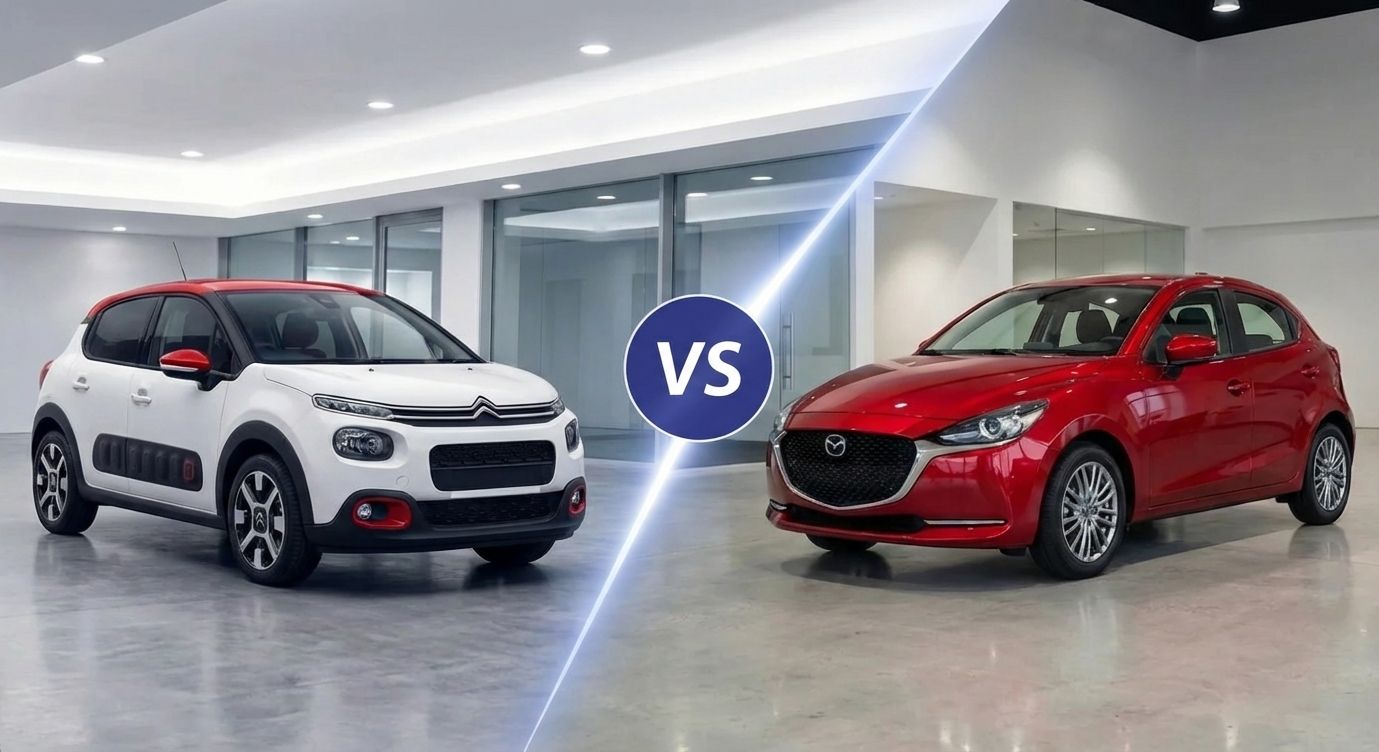
Detailed comparison of Citroën C3 vs. Mazda 2 (Mazda2). We offer real-world driving experiences, an equipment overview, engine comparison, and a clear verdict for the right choice.
Apr 13, 2026
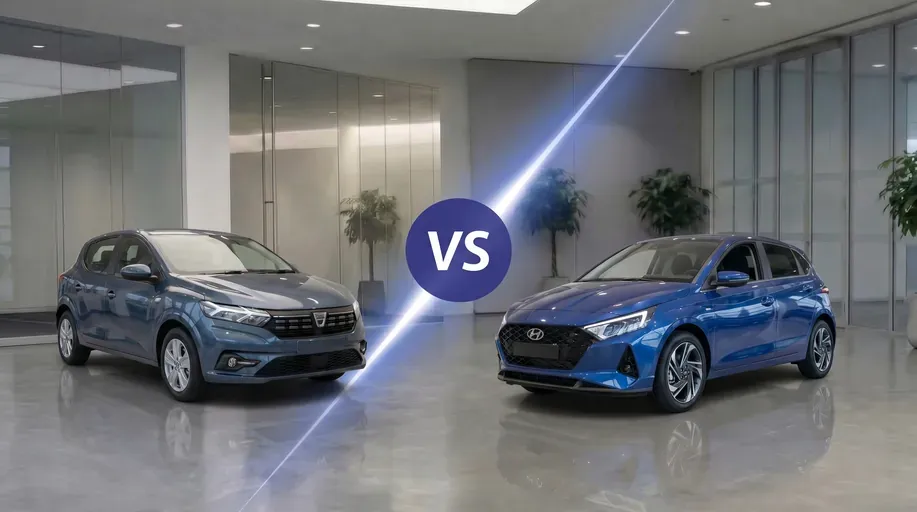
Detailed comparison of Dacia Sandero (including Stepway) vs Hyundai i20. We reveal real-world experiences, equipment, reliability, and the final verdict. Which hatchback to choose?
Apr 30, 2026