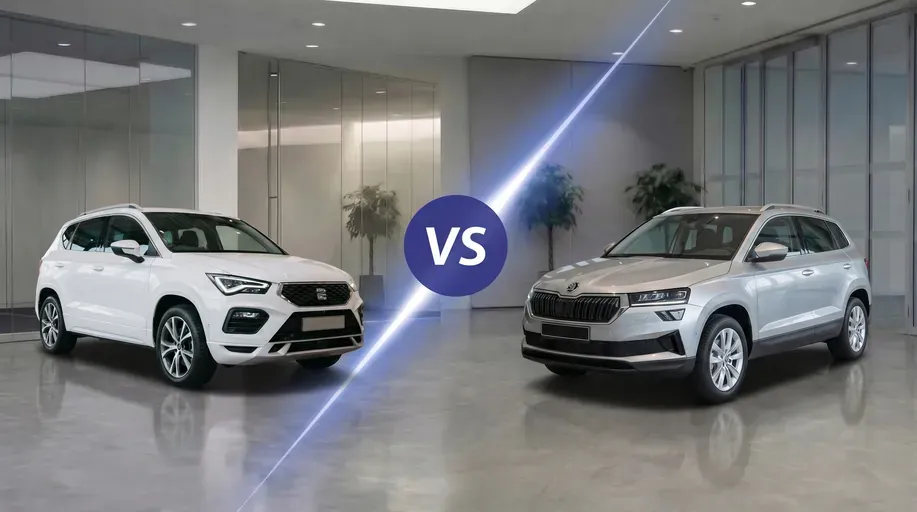
Car battle
Seat Ateca vs. Škoda Karoq: Complete comparison 2026
Detailed comparison of Seat Ateca vs. Škoda Karoq. Discover the differences in engines, driving characteristics, and practicality, and read our final verdict.
May 13, 2026
SEAT Arona review: real owner experience, common faults, practical space, and running costs — everything you need to know before you buy.
November 6, 2026
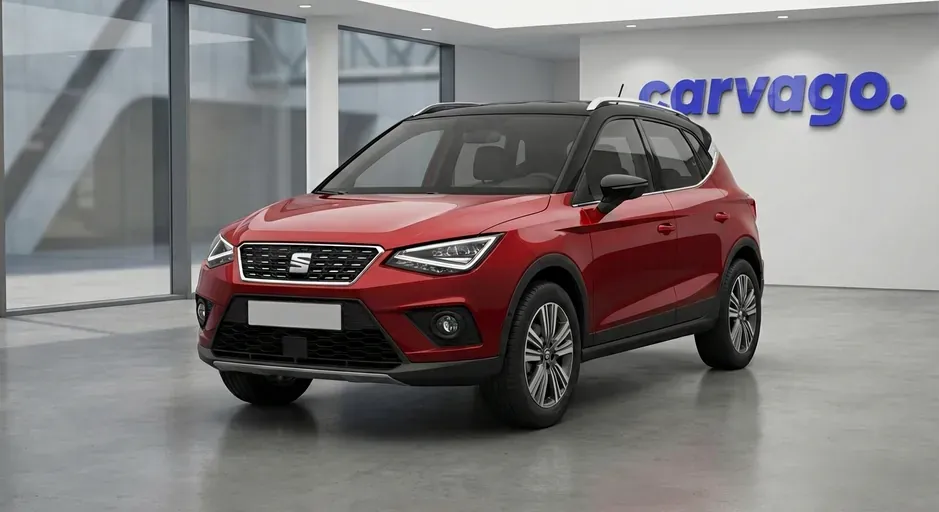
The SEAT Arona is a subcompact crossover designed to bridge the gap between traditional superminis and larger family SUVs. This review focuses on the first-generation model, which premiered in June 2017, with first European customer deliveries commencing in November 2017. Built exclusively as a five-door crossover with front-wheel drive, it was designed to appeal to urban commuters, downsizers, and small families looking for practical daily transport in a compact format.
During its lifecycle, the vehicle underwent two distinct updates. A first facelift, revealed on 15 April 2021 with production starting in July 2021, introduced refreshed exterior styling and a redesigned dashboard layout. A second revision was unveiled on 29 October 2025, entering production on 10 December 2025 and arriving with customers in January 2026.
As a staple of the European market, a used SEAT Arona crossover competes in one of the most crowded segments on the road. The following sections explore how its packaging, running costs, and mechanical record translate into everyday ownership.
Overall owner feedback on the SEAT Arona indicates a generally dependable small crossover, though several recurring mechanical and electronic quirks have emerged over its production run. On facelifted models built from July 2021 onwards, owner reports and professional evaluations frequently highlight software instability with the central infotainment system. Drivers describe system freezes, black screens, unexpected audio dropouts, and continuous reboot cycles. While holding down the power button initiates a temporary reboot, permanently resolving the instability requires authorized workshop software updates.
Under the bonnet, petrol engines exhibit a few known tendencies. On early manual examples of the 1.5 TSI petrol produced between 2017 and 2020, tests and owner reports describe noticeable low-speed hesitation and bucking when pulling away from a standstill while the engine is cold. Official engine control software updates were issued to recalibrate throttle response, significantly reducing the hesitation in most vehicles. Furthermore, across both the 1.0 TSI and 1.5 TSI petrol engines, owners report slow coolant seepage typically developing between 60,000 and 100,000 km. This is caused by leaking composite thermostat and thermal management housings, leaving characteristic pink dried crusting along the engine block; resolving it requires replacing the complete housing assembly rather than just the gasket.
Transmission behavior is another area warranting attention. On an automatic SEAT Arona equipped with the seven-speed dual-clutch gearbox, tests and owner experiences note low-speed judder, metallic clunks, and clutch snatching during first-to-second gear transitions, especially on cars predominantly used in dense city stop-and-go driving. While electronic adaptation resets provide temporary smoothness, in some cases glazed or thermally worn clutch friction plates require mechanical clutch pack replacement to cure.
Several official safety recall campaigns have been registered across European markets over the model's lifespan. The most prominent early campaign involved the rear seat belt assembly on vehicles manufactured between 01 May 2017 and 26 September 2018: when the rear centre and left seats were both occupied, sudden directional changes could cause the middle buckle to press against and inadvertently unlatch the left buckle. Official advice instructed owners not to use the middle seat until workshops replaced the double-buckle bracket with an offset design. A separate recall covered cars built from January 2020 to June 2020 to replace buckle brackets potentially damaged during manufacturing.
A significant European recall announced in July 2025 covers vehicles produced from 21 September 2022 to 07 April 2025. In the official notice's words, deployment of the front passenger airbag during an accident could cause the gas generator housing to burst or detach components, risking serious injury; official interim advice instructed owners to deactivate the passenger airbag and leave the seat unused until the module is inspected and replaced. Other campaigns addressed parking brake lever travel on cars built between 25 May 2017 and 06 November 2018 by fitting a locking clip to the adjuster nut, out-of-tolerance fuel injectors on 1.0 TSI petrol versions from model years 2018 to 2020, and instrument cluster software on a short batch built in June 2021 that failed to trigger rear seatbelt warnings. Prospective buyers can have any specific car's maintenance records and mechanical condition inspected prior to purchase through CarAudit.
The SEAT Arona features a front-wheel-drive engine lineup built around three-cylinder and four-cylinder turbocharged units. Over its production life, the range has centred on petrol options alongside discontinued diesel and compressed natural gas variants.
| Engine | Fuel | Power | Gearbox | Model years |
|---|---|---|---|---|
| 1.0 TSI | Petrol | 70 kW (95 hp) | 5-speed manual | 2017–present |
| 1.0 TSI | Petrol | 85 kW (115 hp) | 6-speed manual / 7-speed automatic | 2017–2020 |
| 1.0 TSI | Petrol | 81 kW (110 hp) | 6-speed manual / 7-speed automatic | 2020–2024 |
| 1.0 TSI | Petrol | 85 kW (115 hp) | 6-speed manual / 7-speed automatic | 2024–present |
| 1.5 TSI | Petrol | 110 kW (150 hp) | 6-speed manual | 2017–2020 |
| 1.5 TSI | Petrol | 110 kW (150 hp) | 7-speed automatic | 2020–present |
| 1.0 TGI | CNG / Petrol | 66 kW (90 hp) | 6-speed manual | 2019–2023 |
| 1.6 TDI | Diesel | 70 kW (95 hp) | 5-speed manual / 7-speed automatic | 2017–2020 |
| 1.6 TDI | Diesel | 85 kW (115 hp) | 6-speed manual | 2018–2020 |
For urban commuting and short daily errands, a manual SEAT Arona with the base 1.0 TSI is well suited. It warms up quickly, offers responsive low-end pull around town, and avoids the mechanical complexity of an automatic transmission in heavy traffic.
Drivers balancing city driving with regional trips will find the mid-range 1.0 TSI the most versatile choice in the petrol SEAT Arona range. Its six-speed manual gearbox lowers engine speeds on faster roads, while choosing an automatic SEAT Arona adds convenience in daily stop-and-go queues.
For regular long-distance motorway driving or towing a light trailer, the four-cylinder 1.5 TSI is the most capable option, maintaining pace easily under load and offering decisive passing performance. As a used buy, the discontinued diesel SEAT Arona 1.6 TDI remains a viable choice for high-mileage drivers who require strong pulling power and long cruising range between fill-ups.
The bivalent 1.0 TGI is available only on the second-hand market and suits drivers with local access to compressed natural gas who prioritise low fuel costs, though its reduced boot floor and leisurely acceleration make it a specialised alternative.
For detailed owner experiences regarding powertrain durability, transmission wear, and recurring mechanical faults, consult the owner experiences section.
| Parameter | Petrol & Diesel | Natural Gas (TGI) |
|---|---|---|
| Length | 4,138–4,164 mm | 4,138–4,153 mm |
| Width (excluding mirrors) | 1,780 mm | 1,780 mm |
| Height | 1,537–1,552 mm | 1,552 mm |
| Wheelbase | 2,566 mm | 2,566 mm |
| Boot capacity (seats upright / folded) | 400 / 1,280 l | 282 / 1,162 l |
Luggage capacity figures do not apply to models fitted with the optional sound system, which places a subwoofer in the spare-wheel well and eliminates underfloor storage.
Built on a compact crossover footprint, the SEAT Arona makes functional use of its interior layout. An elevated seating position eases entry and exit while providing sensible headroom throughout the passenger compartment. Two adults find adequate knee room on the rear bench for routine trips, though carrying three abreast is compromised by the narrow cabin width and an intrusive central floor tunnel. The rear backrests split and fold in a 60/40 configuration, but the bench cushion is fixed and does not slide fore or aft to adjust cargo volume. The luggage compartment features a rectangular shape with a minimal loading lip when using the dual-level floor (standard on petrol and diesel versions, but omitted on CNG models), which creates a continuous surface when the seatbacks are flattened. Rear-seat amenities remain basic across all versions, omitting overhead grab handles entirely and lacking dedicated rear reading lights on early production years (2017–2021).
Professional road tests describe the SEAT Arona as one of the more agile small crossovers, behaving with light-footed composure on twisting roads. Body lean is well contained through bends, and the steering responds directly and accurately from the centre, though testers note it remains heavily assisted and communicates minimal road texture. The suspension damping leans toward the firmer side. While it settles neatly over undulating tarmac, it transmits abrupt surface joints, ridges, and urban potholes into the cabin—a firmness aggravated on versions fitted with larger optional wheels, whereas smaller wheels deliver noticeably calmer ride comfort. Refinement is mixed: engines run quietly at steady speeds, but wind rustle around the door mirrors and tyre roar over coarse asphalt become intrusive at motorway cruising speeds.
The driving position offers a sensible balance, sitting slightly higher than a conventional supermini without feeling detached. Testers praise the cabin ergonomics for preserving dedicated physical controls for climate adjustments rather than consigning essential functions to screen menus. Interior materials depend on vintage. Early production models drew consistent criticism for plain, scratch-prone plastics across the entire fascia and doors. Subsequent revisions, starting with the July 2021 facelift, lifted perceived quality by introducing a padded upper dashboard moulding, though hard polymers remain on lower trim sections and door casings. Minor practical complaints highlighted by testers include the omission of lower door-sill seals, which allows road grime to accumulate quickly on the entry sills.
All market charts in this section reflect Carvago listings across the entire SEAT Arona model family, meaning the figures do not isolate a separate price level exclusively for the reviewed generation. In today's market, the median asking price stands at €15,000 for 2019 models and €16,000 for 2021 vehicles. Later production years command higher budgets, reflecting a median asking price of €19,000 for 2023 cars and reaching €25,300 for 2026 models.
Active advertised listings for the Seat Arona ranged from 12,399 in May 2026 to a peak of 13,284 in September 2026, as shown in the monthly counts below.
Active listings over time
| Month | Seat Arona |
|---|---|
| 2026-05 | 12 399 |
| 2026-06 | 12 471 |
| 2026-07 | 13 050 |
| 2026-08 | 12 789 |
| 2026-09 | 13 284 |
| 2026-10 | 12 698 |
Source Carvago
Supply remained broad throughout the six-month span, giving buyers wide choice as active inventory consistently hovered between 12,399 and 13,284 vehicles.
The median asking price of cars advertised today built in 2019 is €15,000, while the median asking price of cars advertised today built in 2026 is €25,300, outlining the distribution across build years below.
Median advertised price by year of manufacture
| Model year | Seat Arona |
|---|---|
| 2019 | 15 000 |
| 2020 | 15 600 |
| 2021 | 16 000 |
| 2022 | 17 400 |
| 2023 | 19 000 |
| 2024 | 21 400 |
| 2025 | 23 000 |
| 2026 | 25 300 |
Source Carvago
Buyers focusing on 2021 models encounter a median asking price of €16,000, compared to €19,000 for a 2023 build. For the latest model years, median asking prices sit at €23,000 for 2025 cars and €25,300 for 2026 cars.
This depreciation curve tracks how the Seat Arona loses value with age, showing a drop of 16% in residual value by age one and 29% by age three.
Residual value by vehicle age
| Vehicle age | Seat Arona |
|---|---|
| New | 25 600 |
| 1 yr | 21 400 |
| 2 yrs | 19 500 |
| 3 yrs | 18 100 |
| 4 yrs | 17 700 |
| 5 yrs | 16 400 |
| 6 yrs | 15 100 |
| 7 yrs | 14 500 |
Source Carvago
Across the seven years shown, the model sheds approximately 43% of its initial residual value, with the sharpest decline occurring in the first two years before the pace of loss eases.
Across the recorded period, petrol models made up the bulk of advertised inventory, moving from 11,768 listings in May 2026 to 12,259 in October 2026. The chart below illustrates how active listings were distributed across each fuel type over these months.
Supply composition by fuel type
Petrol
Diesel
CNG
LPG
| Month | Petrol | Diesel | CNG | LPG |
|---|---|---|---|---|
| 2026-05 | 11 768 | 221 | 392 | 4 |
| 2026-06 | 11 850 | 229 | 374 | 4 |
| 2026-07 | 12 443 | 232 | 356 | 4 |
| 2026-08 | 12 325 | 178 | 267 | 4 |
| 2026-09 | 12 811 | 182 | 275 | 3 |
| 2026-10 | 12 259 | 173 | 249 | 2 |
Source Carvago
Petrol overwhelmingly dominates the current selection, representing 12,259 of the listings in October 2026, while alternative fuels were limited to 249 CNG, 173 diesel, and 2 LPG vehicles. Prospective buyers will have widespread choice among petrol cars, but finding a diesel or CNG variant will require browsing a much smaller selection.
Between May 2026 and October 2026, the average asking price for the Seat Arona began at €19,000, as shown in the monthly figures below.
Average price development over time
| Month | Seat Arona |
|---|---|
| 2026-05 | 19 000 |
| 2026-06 | 19 100 |
| 2026-07 | 19 100 |
| 2026-08 | 19 100 |
| 2026-09 | 19 200 |
| 2026-10 | 19 300 |
Source Carvago
Across this span, the average shifted from €19,000 to €19,300, holding steady from June through August at €19,100 before slight increments raised it by less than two percent overall.
Agile handling with well-contained body roll on twisting roads
Sensible cabin ergonomics retaining dedicated physical climate controls
Easy entry and exit aided by an elevated driving position
Firm ride over sharp urban bumps and noticeable motorway noise
Frequent infotainment software freezes and reboots on facelifted models
Fixed rear seat bench without sliding adjustment for flexible luggage space
The SEAT Arona is generally dependable in daily use, though post-facelift models built from July 2021 can experience infotainment software freezing and reboot loops. In addition, dual-clutch automatic gearboxes may develop low-speed clutch judder under heavy urban stop-and-go driving.
The mid-range 1.0 TSI offers the most versatile balance for combined town and highway driving, particularly when paired with a manual gearbox. For regular long-distance motorway driving or towing a light trailer, the four-cylinder 1.5 TSI is the most capable choice in the petrol SEAT Arona lineup.
Check the vehicle identification number (VIN) to verify that all manufacturer safety recalls have been carried out by an authorized workshop. On test drives, ensure dual-clutch automatic gearboxes crawl smoothly without shudder and inspect the engine bay for signs of coolant seepage.
Median asking prices start around €15,000 for early model years, rising with later production dates and equipment levels. Newer examples command higher sums depending on mileage and specification.
Sources: seat-cupra-mediacenter.com, adac.de, autobild.de, autocar.co.uk, autoexpress.co.uk
This article was prepared using artificial intelligence tools. The section guarantor is Petr Dušek.
Detailed comparison of Seat Ateca vs. Škoda Karoq. Discover the differences in engines, driving characteristics, and practicality, and read our final verdict.
May 13, 2026
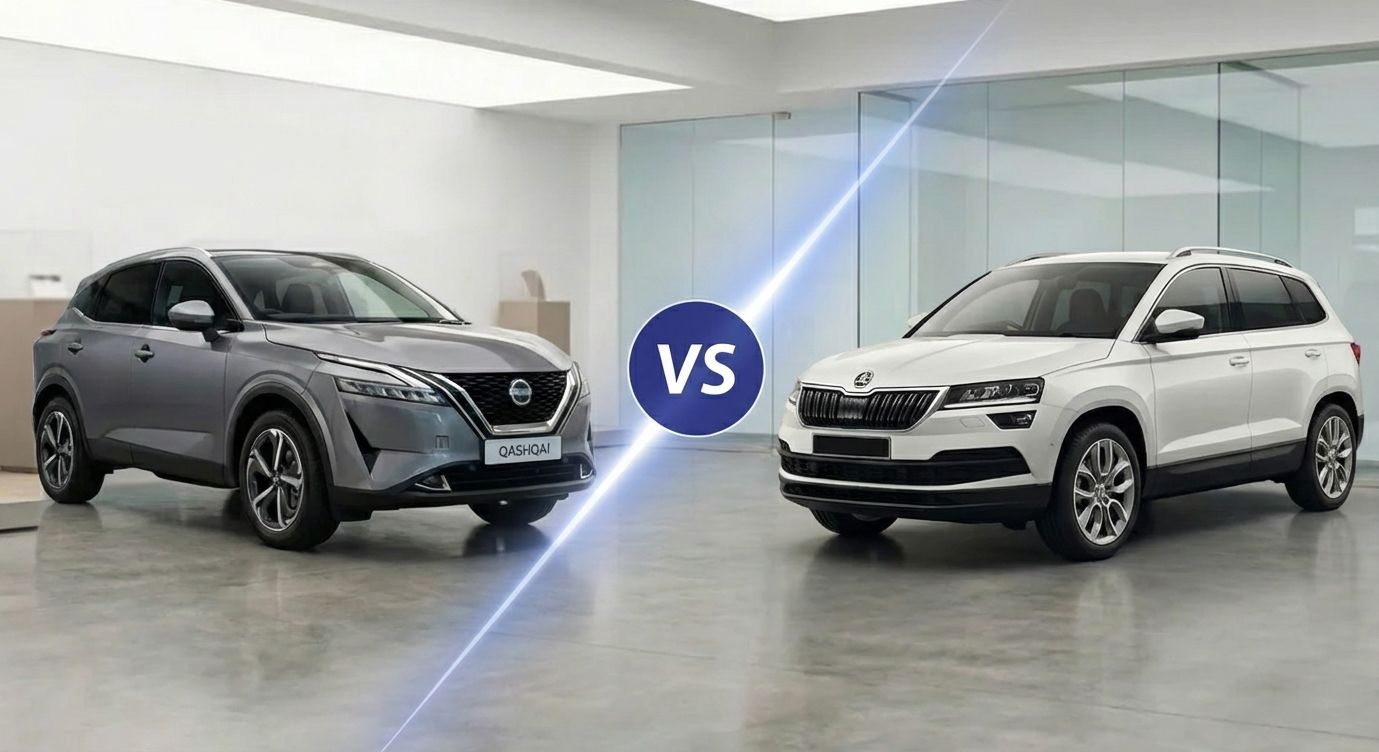
Detailed comparison of Nissan Qashqai vs. Škoda Karoq. Find out everything about reliability, equipment, and driving characteristics. Which used SUV is the better choice?
Apr 14, 2026
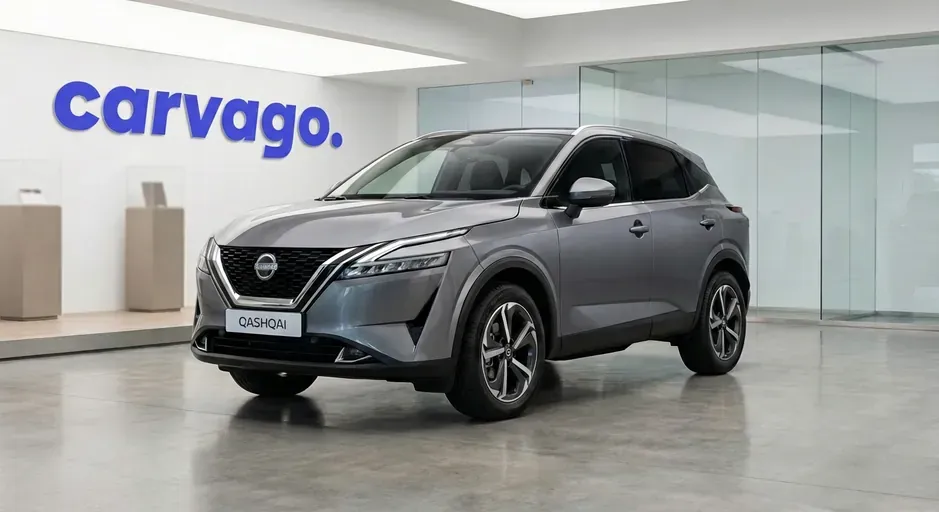
Nissan Qashqai review: real owner experiences, common faults, e-POWER picks, running costs and used prices — all you need before you buy.
Oct 18, 2026