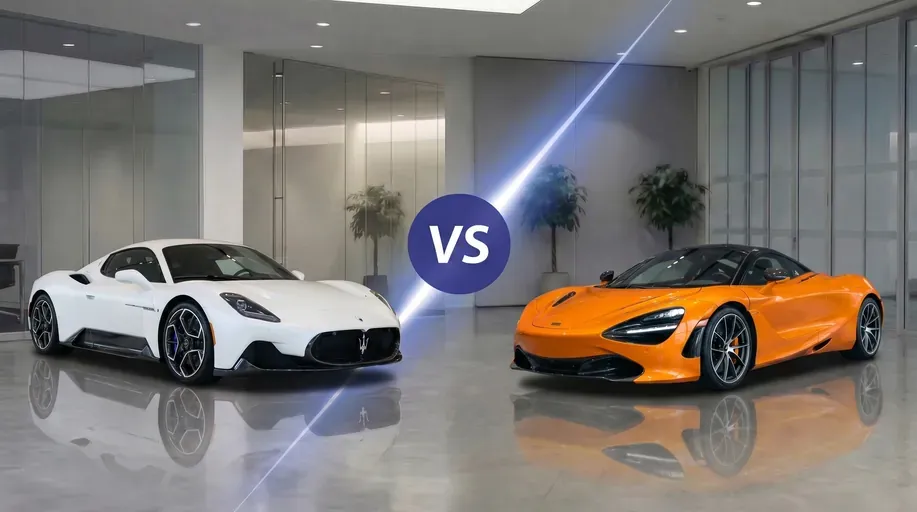
Car battle
Maserati MC20 vs. McLaren 720S: Complete comparison 2026
Detailed comparison of the Maserati MC20 vs McLaren 720S supercars. Discover the differences in performance, equipment, and real-world driving. Read our verdict!
May 4, 2026
Porsche 718 Boxster review: real owner experiences, running costs, key engine picks and used prices — everything you need before buying.
October 25, 2026
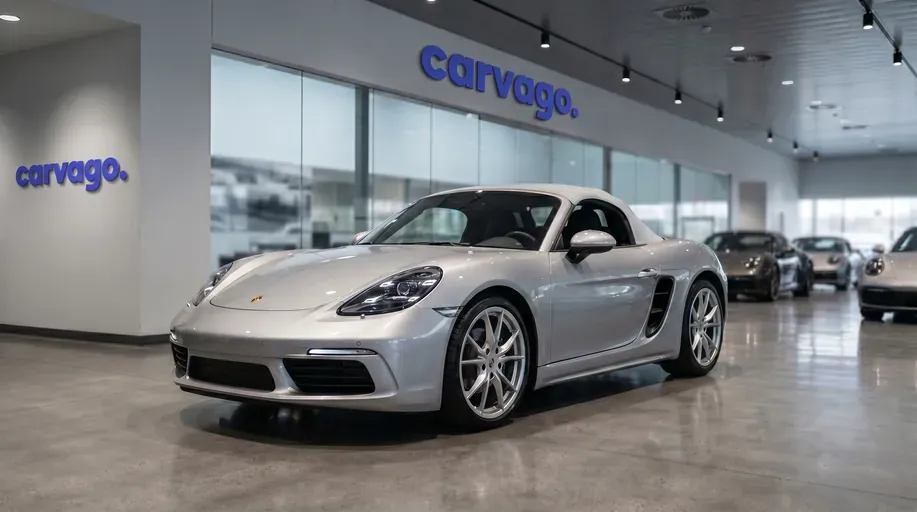
The Porsche 718 Boxster represents the Type 982 generation of the brand’s mid-engine two-seater lineage. European order intake opened on 27 January 2016, with first customer deliveries commencing on 30 April 2016. Standard European factory orders ended on 25 March 2024 ahead of regional vehicle cybersecurity regulations that took effect on 1 July 2024, after which only niche variants under small-series type approval remained available.
Occupying the dedicated open-top sports car segment, the Porsche 718 Boxster convertible was produced strictly as a two-seat roadster featuring an electrically folding fabric roof and a mid-engine layout. Instead of a traditional cosmetic sheet-metal facelift, Porsche updated the generation incrementally through powertrain additions: the four-cylinder GTS arrived in October 2017, the touring-focused Boxster T in December 2018, the naturally aspirated six-cylinder GTS 4.0 in January 2020, an equipment-focused edition in November 2022, and the track-oriented 718 Spyder RS in May 2023.
The model appeals primarily to driving purists and sports car enthusiasts who seek open-air motoring combined with mid-engined chassis balance and everyday usability, serving both as an engaging weekend roadster and a capable cross-country tourer.
Owners of the fourth-generation convertible Porsche 718 Boxster generally report a robust ownership experience. Long-term mechanical durability is solid, but owners and specialist technicians document a handful of recurring component faults alongside several factory safety recalls that prospective buyers must account for.
Tests and specialist workshop analyses describe repeated failures of the Porsche Active Drivetrain Mounts on cars fitted with dynamic chassis packages. An amber warning illuminates on the instrument cluster, disabling the vehicle's adaptive chassis modes. Although the physical fluid mount typically remains structurally sound, in some cases the internal micro-sensor circuit delaminates under heat and vibration cycling, cutting signal communication. While manufacturer workshops routinely replace the complete mount assembly, independent specialists have developed dedicated sensor replacement solutions.
Interior wear reveals another common complaint. Tests and owner reports describe upper interior door card delamination on cars with standard synthetic interior trim. Prolonged sun exposure can break down the factory adhesive backing, causing the top trim line along the side window glass to bow upward. If left unaddressed, the warped edge can drag against the descending side window or hinder the door lock mechanism. Specialists resolve this by stripping the degraded adhesive and bonding the trim with heat-resistant polyurethane adhesive.
In the engine bay, tests and owners describe intermittent cooling warnings on turbocharged four-cylinder models caused by vacuum leakage in pneumatic changeover valves that regulate coolant circulation. In higher-mileage cars, mechanical water pump shaft seals are known to weep, leaving dried coolant deposits around the pulley before developing bearing play.
Several official safety campaigns have been registered across European and global databases for the Type 982 generation. Always verify whether a prospective petrol Porsche 718 Boxster has had these rectifications completed by an authorised dealer using its vehicle identification number (VIN).
Before purchasing any Porsche 718 Boxster, buyers can have the vehicle's structural integrity, recorded campaign history, and mechanical running gear evaluated professionally through CarAudit.
The petrol Porsche 718 Boxster line-up brought a significant technical departure for the model line, introducing turbocharged four-cylinder engines before reintroducing naturally aspirated six-cylinder power units later in its lifecycle. Every variant sends drive exclusively to the rear wheels through either a six-speed manual gearbox or a seven-speed dual-clutch automatic transmission.
| Engine | Fuel | Power | Gearbox | Model years |
|---|---|---|---|---|
| 718 Boxster (2.0) | Petrol | 220 kW (300 hp) | 6-speed manual, 7-speed automatic | 2016–2024 |
| 718 Boxster T (2.0) | Petrol | 220 kW (300 hp) | 6-speed manual, 7-speed automatic | 2019–2023 |
| 718 Boxster S (2.5) | Petrol | 257 kW (350 hp) | 6-speed manual, 7-speed automatic | 2016–2024 |
| 718 Boxster GTS (2.5) | Petrol | 269 kW (365 hp) | 6-speed manual, 7-speed automatic | 2017–2020 |
| 718 Boxster GTS 4.0 | Petrol | 294 kW (400 hp) | 6-speed manual, 7-speed automatic | 2020–2024 |
| 718 Spyder (4.0) | Petrol | 309 kW (420 hp) | 6-speed manual, 7-speed automatic | 2019–2023 |
| 718 Spyder RS (4.0) | Petrol | 368 kW (500 hp) | 7-speed automatic | 2023–2026 |
City use and short commutes: The base turbocharged four-cylinder found in the standard Boxster and the Boxster T provides ample low-end torque from early in the engine speed range, making it responsive in daily traffic. For frequent urban use, an automatic Porsche 718 Boxster equipped with the dual-clutch gearbox eliminates the heavy clutch pedal action of the manual in stop-and-go driving.
Mixed use and winding back roads: The Boxster S incorporates a variable-geometry turbocharger that broadens the mid-range punch, making it a fast and flexible choice on varied rural routes. Enthusiasts prioritising linear throttle response and a high-revving vocal range will prefer the naturally aspirated six-cylinder Boxster GTS 4.0 or the Spyder. Although a manual Porsche 718 Boxster offers purist mechanical engagement, its tall transmission gearing means the dual-clutch automatic allows drivers to access the engine's upper performance band far more readily on public roads. At the extreme end, the Spyder RS caters strictly to track-focused buyers.
Motorway touring: On long high-speed trips, the seven-speed automatic keeps cruising engine speeds moderate, allowing the Boxster S or the GTS 4.0 to cover extended motorway distances with composure.
Towing: The Porsche 718 Boxster has no factory towing approval and cannot be equipped for trailer use.
| Parameter | Dimension / Capacity |
|---|---|
| Length (mm) | 4,379 |
| Width without mirrors (mm) | 1,801 |
| Height (mm) | 1,262–1,281 |
| Wheelbase (mm) | 2,475 |
| Boot volume (front / rear, l) | 150 / 125 |
Note: Dimensions apply to standard body configurations; revised aerodynamic bumpers and lowered chassis setups alter exterior length and ride height on higher-output six-cylinder and specialized lightweight derivatives.
As a dedicated mid-engine roadster, the convertible Porsche 718 Boxster is strictly a two-seater with a fixed structural bulkhead positioned directly behind the cabin, leaving no provision for rear seats or a through-loading ski hatch. Everyday touring capability relies entirely on a dual-compartment luggage layout, which divides cargo between a deep front luggage compartment and a wide rear boot situated behind the mid-mounted engine. Crucially, the folding multi-layer fabric roof stows into an independent storage compartment above the engine, which prevents the open top from compromising luggage capacity. Within the passenger cell, space is engineered around two low-slung bucket positions that deliver ample legroom and head clearance even for taller adults, although oddment storage is notably limited to narrow door pockets, a shallow central cubby, and deployable dashboard cup holders.
Professional tests praise the Porsche 718 Boxster for its mid-engine balance and steering precision. With adaptive dampers fitted, the chassis maintains disciplined body control over undulating roads while absorbing sharp expansion joints and broken tarmac for daily use. Cars on the standard passive suspension display slightly looser vertical control over crests. The steering rack delivers immediate, neutral turn-in and clear road feedback without kickback, while pedal placement facilitates manual heel-and-toe downshifts.
Acoustic refinement draws mixed judgements. The multi-layer fabric roof insulates effectively against high-speed wind buffeting, and body rigidity prevents scuttle shake over rough surfaces. However, tyre roar penetrates the cabin noticeably on coarse asphalt. The four-cylinder turbocharged engines faced widespread criticism for a coarse, utilitarian drone under cruising loads. The later introduction of the naturally aspirated six-cylinder addressed this criticism directly, restoring the mechanical soundtrack testers felt was missing from earlier cars.
The cabin provides a low, supportive seating position and durable materials. The centre console relies on physical switches, which remain intuitive to navigate while driving, even if basic specifications feature visible blank buttons. The infotainment interface and dashboard architecture feel aged compared to modern digital layouts. Testers broadly agree on the dynamic balance of the convertible Porsche 718 Boxster, though opinions diverge on the standard seats, which some drivers noted feel slightly high-set compared to the optional deep bucket seats.
All charts in this section are drawn from Carvago listings of the whole Porsche Boxster model family, including other generations represented in the data, rather than the reviewed generation alone. Because listings are grouped solely by build year, this overview does not establish a separate price level for the reviewed generation. On the current market, the median asking price stands at €60,000 for 2018 cars, €74,900 for 2020 models, and €96,200 for 2025 registrations. Higher asking figures among newer model years reflect the market presence of higher-output powertrains and option-heavy specifications.
Active listings for the Porsche 718 Boxster fell from 824 advertised cars in April 2026 to 623 in September 2026 across the tracked six-month window. The monthly figures below show how the volume of available listings developed over this period.
Active listings over time
| Month | Porsche 718 Boxster |
|---|---|
| 2026-04 | 824 |
| 2026-05 | 807 |
| 2026-06 | 759 |
| 2026-07 | 699 |
| 2026-08 | 612 |
| 2026-09 | 623 |
Source Carvago
Buyers still have a substantial selection of more than 600 cars to choose from, even though available stock declined through August before edging up slightly from 612 to 623 vehicles in September.
For used Porsche 718 Boxster listings advertised today, the median asking price is €60,000 for cars built in 2018 and reaches €96,200 for those built in 2025.
Median advertised price by year of manufacture
| Model year | Porsche 718 Boxster |
|---|---|
| 2018 | 60 000 |
| 2019 | 64 800 |
| 2020 | 74 900 |
| 2021 | 89 000 |
| 2022 | 88 900 |
| 2023 | 91 500 |
| 2024 | 89 100 |
| 2025 | 96 200 |
Source Carvago
Buyers considering 2018 through 2020 models see median asking prices from €60,000 to €74,900. Across the 2021 to 2025 model years, medians sit higher between €88,900 and €96,200, though the pattern is not strictly continuous, with 2022 cars at €88,900 and 2024 cars at €89,100 listed slightly lower than the model years immediately preceding them.
This depreciation curve tracks how the Porsche 718 Boxster loses value over time, shedding roughly 40% of its initial residual value by age three. The sharpest single-year drop occurs between age one and age two, leading directly into the trend illustrated below.
Residual value by vehicle age
| Vehicle age | Porsche 718 Boxster |
|---|---|
| New | 167 800 |
| 1 yr | 147 200 |
| 2 yrs | 117 100 |
| 3 yrs | 101 500 |
| 4 yrs | 97 000 |
| 5 yrs | 93 600 |
| 6 yrs | 88 800 |
| 7 yrs | 77 000 |
Source Carvago
Over the full seven-year span, the model sheds around 54% of its initial residual value. The steepest decline is concentrated in the first three years, after which annual losses flatten noticeably between ages three and five to under 5% annually before picking up again in year seven.
Active listings for the Porsche 718 Boxster are overwhelmingly petrol-powered, moving from 823 petrol cars advertised in April 2026 to 623 in September 2026. The chart below illustrates the monthly volume of advertised cars categorized by fuel type.
Supply composition by fuel type
Petrol
Diesel
| Month | Petrol | Diesel |
|---|---|---|
| 2026-04 | 823 | 1 |
| 2026-05 | 806 | 1 |
| 2026-06 | 758 | 1 |
| 2026-07 | 698 | 1 |
| 2026-08 | 612 | 0 |
| 2026-09 | 623 | 0 |
Source Carvago
In September 2026, petrol accounted for all 623 active listings, with zero listings recorded for any other fuel type. Anyone browsing the used market will find that realistic options are entirely confined to petrol engines.
Between April 2026 and September 2026, the average asking price for the Porsche 718 Boxster began at €72,700 before shifting over the following months.
Average price development over time
| Month | Porsche 718 Boxster |
|---|---|
| 2026-04 | 72 700 |
| 2026-05 | 72 400 |
| 2026-06 | 71 100 |
| 2026-07 | 71 500 |
| 2026-08 | 70 300 |
| 2026-09 | 70 000 |
Source Carvago
Across the period, the average moved from €72,700 to €70,000, a net decrease of under 4% with a brief rebound to €71,500 in July.
Disciplined mid-engine balance and precise steering with clear road feedback
Dual luggage compartments provide practical storage unaffected by the folding roof
Robust mechanical durability across both four-cylinder and six-cylinder powertrains
Four-cylinder engines produce a coarse drone under load alongside noticeable tyre roar
Active drivetrain mount sensor failures and interior door panel delamination
Dated infotainment architecture and minimal oddment storage inside the cabin
Overall mechanical durability is solid across both four-cylinder and six-cylinder powertrains. However, buyers should verify via VIN that all manufacturer safety campaigns have been formally completed.
The base turbocharged four-cylinder in the Porsche 718 Boxster is best suited to daily commuting thanks to low-end torque, especially when paired with the dual-clutch automatic. Enthusiasts prioritising an evocative soundtrack should choose the naturally aspirated six-cylinder, though its tall manual gearing makes the automatic more versatile on public roads.
It can manage daily duties for two occupants thanks to dual luggage compartments that remain unaffected when the roof is lowered. However, cabin oddment storage is minimal and the model has no factory approval for towing.
Have a dealer run a VIN check to confirm that all manufacturer safety recalls have been formally documented. During physical inspection, verify that dynamic chassis modes engage without dashboard warnings and ensure front radiators are free of trapped road debris.
Sources: newsroom.porsche.com, adac.de, autocar.co.uk, autoexpress.co.uk, autobild.de
This article was prepared using artificial intelligence tools. The section guarantor is Petr Dušek.
Detailed comparison of the Maserati MC20 vs McLaren 720S supercars. Discover the differences in performance, equipment, and real-world driving. Read our verdict!
May 4, 2026
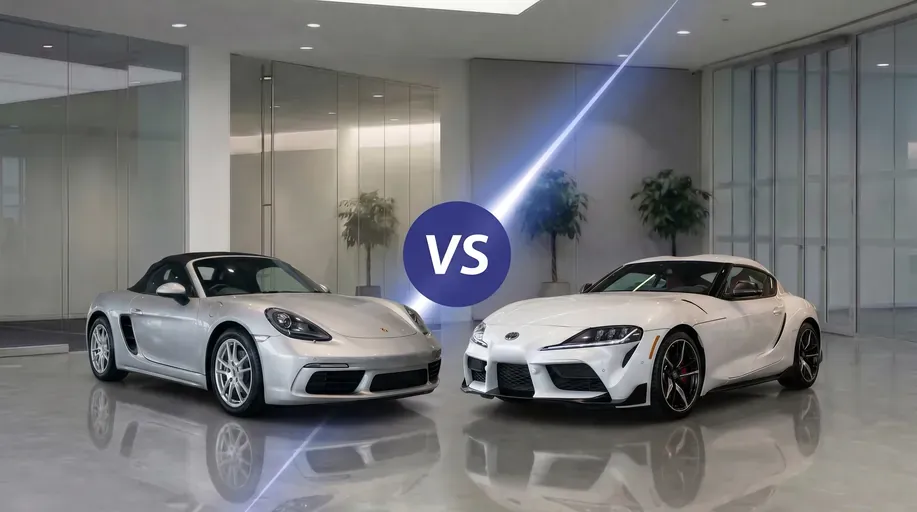
Complete comparison of the Porsche 718 Boxster vs. Toyota GR Supra. Discover the real differences in performance and handling, and read our final verdict!
Oct 16, 2026
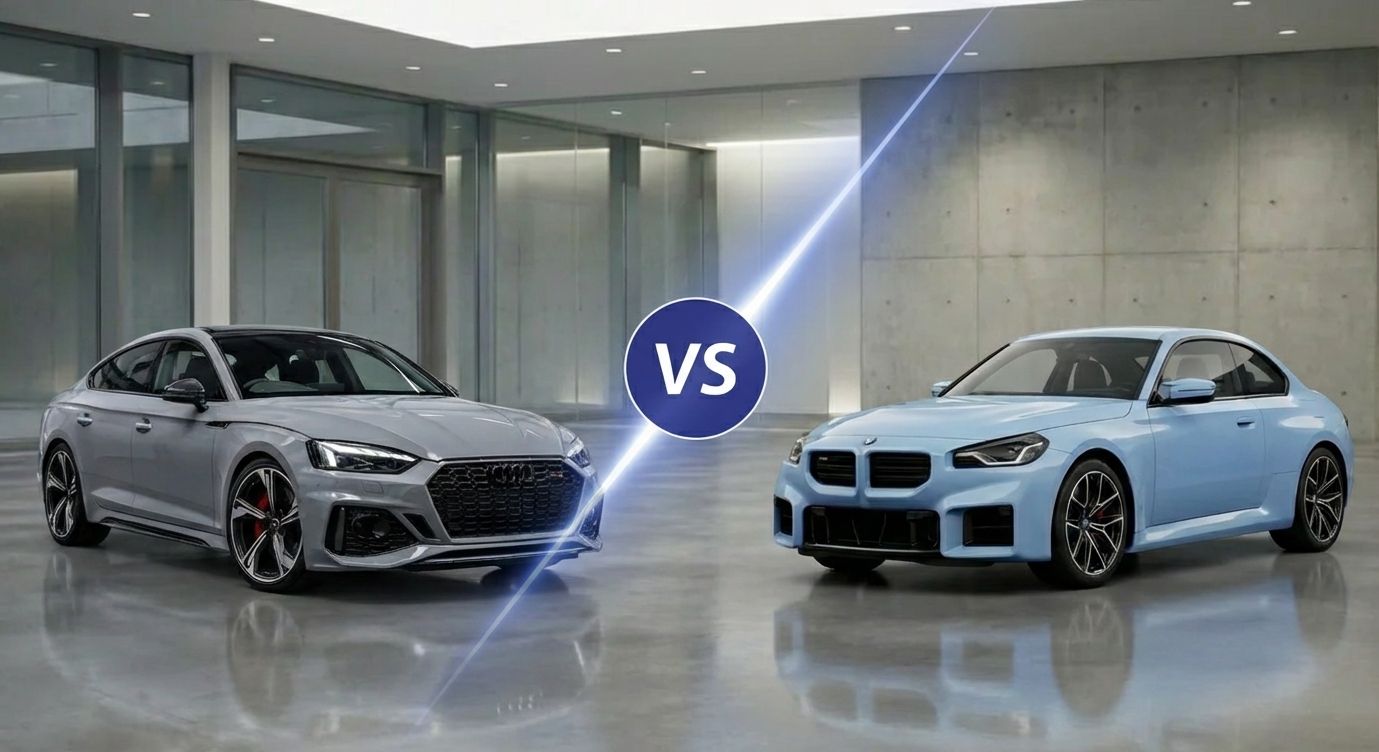
Audi RS 5 vs. BMW M2. A detailed comparison of performance, driving dynamics, and practicality. Find out which sports coupe is the right choice for you.
Apr 14, 2026