Porsche 718 Boxster vs. Toyota Supra: Complete comparison 2026

Complete comparison of the Porsche 718 Boxster vs. Toyota GR Supra. Discover the real differences in performance and handling, and read our final verdict!

October 16, 2026

VS
Porsche 718 Boxster

Porsche 718 Boxster

Toyota Supra

Toyota Supra

Introduction

The Porsche 718 Boxster, also internally known as the 982 generation, is a precision mid-engine sports roadster that, in its modern incarnation, combines powerful turbocharged four-cylinder or naturally aspirated six-cylinder engines with perfect chassis balance. Standing against it is the fifth generation of the Toyota GR Supra (often referred to by fans as the A90 or J29), an iconic sports coupe revived in collaboration with BMW, which relies on a traditional front-engine, rear-wheel-drive layout. The following comparison will show you how these two different, yet equally exciting approaches to sports driving fare in a direct head-to-head on the market for nearly-new used cars.

Comparison of External Dimensions

Although both models represent the compact rear-wheel-drive sports car segment, their exterior dimensions and proportions reveal a different technical approach. In terms of overall length, there is an unexpected consensus between the models from the generations current for the four-year-old used car market (Porsche 982 and Toyota A90). The base versions of both cars measure exactly 4379 mm to the millimeter. However, differences can be found in their width and road stance, which is due to the different body concepts. While the Boxster is a classic low-slung mid-engine roadster, the Supra bets on a traditional coupe silhouette with a long hood hiding a longitudinally mounted six-cylinder (or four-cylinder) engine.

The most striking difference is felt when looking from the front and during parking itself, as the Toyota Supra is significantly wider. With a value of 1854 mm, it surpasses its German rival (1801 mm) by a noticeable 53 mm. This gives it a more muscular and planted look, but it can mean slightly less confidence in cramped underground garages or narrow city streets. The Porsche 718 Boxster, on the other hand, maintains slimmer lines, complemented by a slightly lower build – depending on the chosen version (such as the lowered GTS 4.0 model), the Boxster can be as low as 1262 mm, which enhances its center of gravity being pressed as close to the road as possible.

The wheelbase of both cars is surprisingly very similar. Porsche offers a wheelbase of 2475 mm, which is only 5 mm longer than Toyota's (2470 mm). In terms of the overall footprint, both cars take up a similar area in a parking space; however, the Boxster's more compact width makes it a slightly more user-friendly car for everyday city maneuvering. The Supra, on the other hand, gives the impression of a more aggressive "gran turismo" with its dimensions, putting its musculature more on display.

ParameterPorsche 718 Boxster CabrioletToyota Supra Coupé
Width (mm)18011854
Length (mm)4379 - 43914379
Height (mm)1262 - 12811292
Wheelbase (mm)24752470

Trunk Volume

When choosing a purebred sports car, trunk capacity is usually not the most important argument for purchase, but for daily usability or planning weekend trips for two, it plays an absolutely crucial role. Porsche 718 Boxster and Toyota Supra approach storage space differently depending on their design, which has a direct impact on how many personal belongings you can pack for your travels.

The current A90 generation Toyota Supra (produced since 2019), which is designed as a classic front-engine coupe, offers a very solid trunk capacity of 290 liters. This value remains the same across engine options (2.0 and 3.0). On the other hand, there is the Porsche 718 Boxster (982 generation, available since 2016). This agile mid-engine roadster with a retractable roof shows a basic capacity of 122 liters in its technical specifications, and this value remains identical even for the more powerful S, T, or GTS versions. Since both are strictly two-seater cars, a maximum volume value after folding the rear seats logically does not exist for these models.

This difference in capacity brings clear practical consequences. The Toyota's coupe body provides a sufficiently sized and easily accessible space under the rear window, which is fully adequate for weekend shopping or a longer vacation – you can easily fit several extra bags or two medium-sized carry-on suitcases here. In contrast, the stated 122 liters for the Porsche requires significantly more efficient packing. The interior space serves more for a few smaller soft bags, which makes the car more suitable for slightly shorter trips. If the ability to comfortably carry luggage for two people on a longer road trip is important to you when choosing a used sports car, the Toyota Supra offers a significantly more relaxed and practical approach.

Trunk Capacity Comparison

ParameterPorsche 718 Boxster CabrioletToyota Supra Coupé
Basic capacity (liters)122290
Maximum capacity with seats folded (liters)N/AN/A

Practicality for traveling in pairs 🧳

While the Porsche 718 Boxster with its 122 liters will suit weekend minimalists, the Toyota Supra, thanks to its 290-liter capacity, can easily handle luggage for a full week's vacation.

Trailer Weights

When focusing on trailer weight, for purebred sports cars such as the Porsche 718 Boxster (982 generation from 2016–2024) and the Toyota GR Supra (A90 generation from 2019–2025), we find ourselves in a rather specific situation. For buyers of such cars, towing capacity usually doesn't play a major role; however, from the perspective of the car's overall usability, it is important to know its limits. If you were looking for towing practicality in these roughly four-year-old used cars, you would find that the exact figures for both standard and maximum trailer weight for both vehicles are exactly 0 kg. Neither Porsche nor Toyota provides the option for a homologated tow bar for these current sports generations.

This complete absence of towing capacity applies across the board to all offered trims and engines. We find no exceptions or hybrid variants with reduced or different capacity; all available versions – from the basic two-liter four-cylinders to the full-blooded top-tier six-cylinders – must do without a trailer entirely. From a practical standpoint, this very clearly defines the boundaries of these vehicles' use. While in a regular passenger car, even a basic tow bar would provide ideal space for a few extra suitcases (for example, using an additional box) and offer a solution sufficient for weekend shopping or a longer holiday for two, owners of the Boxster and Supra are reliant exclusively on the built-in, and it must be noted, rather compact, onboard luggage compartments.

Although some distant historical generations of the Toyota Supra (for example, the A70 from the late 1980s) offered the ability to tow up to 1700 kg, modern representatives of both automakers have radically sacrificed this utility on the altar of aerodynamics, body rigidity, and an undisturbed driving experience. In conclusion, it can be stated with certainty that in the discipline of trailer towing, you simply cannot pick a winner between these two rivals. Both cars are uncompromisingly built from the ground up for speed and emotion, so for someone who might even occasionally need to hitch a trailer, they will not be the right choice.

Given the fact that neither of the compared models for the mentioned modern generations has any factory-approved data on permitted trailer load, the table below reflects this and is left empty.

Model and engineBraked trailer (kg)Unbraked trailer (kg)

Overview of Most Common Motorizations

Powertrains and Dynamics

The basic philosophy of the powertrains in these two sports cars differs significantly, which has a fundamental impact on their driving character and overall focus. The Porsche 718 Boxster utilizes a mid-engine architecture (behind the seats), which ensures perfect weight distribution, and relies on traditional horizontally opposed engines (boxer). In contrast, the Toyota GR Supra bets on a classic GT concept with a front-mounted engine and rear-wheel drive, largely benefiting from a partnership with BMW and deploying their renowned straight-six engines.

While both models offer very capable turbocharged two-liter four-cylinder engines as the base choice, each brand chooses a different strategy at the top of the range. For purists, the Boxster revived the naturally aspirated 4.0-liter six-cylinder with linear power delivery to high revs, while the Supra relies on the massive pull of a three-liter turbocharged straight-six that pulls strongly from the very bottom of the tachometer. Ultimately, the choice depends primarily on the buyer's preferences – whether they are looking for the sharp response of a naturally aspirated unit for weekend drives or the raw power of a turbocharger for daily use and fast highway cruising.

Porsche 718 Boxster (982 generation)

The selection in the used car segment around four years old for the 718 Boxster primarily includes powerful turbocharged four-cylinder engines with a displacement of 2.0 liters (Base and purist T versions) and 2.5 liters for the more powerful S variant. The transition to turbochargers in the 982 generation brought a massive increase in torque, which dramatically accelerated the car's everyday dynamics. However, the most desirable model for traditional Porsche fans is the GTS 4.0, which permanently replaced the original turbocharged 2.5-liter four-cylinder GTS during 2020. With this move, the automaker listened to enthusiasts and returned the phenomenal naturally aspirated six-cylinder, shared with the GT4 and Spyder models, under the hood.

All engine options are available with either an exceptionally precise six-speed manual transmission or a seven-speed PDK dual-clutch automatic transmission, which often offers slightly higher torque (up to 430 Nm on top versions) due to different software tuning. In both cases, only the rear wheels are driven.

Note on engine availability: The original four-cylinder GTS model with the 2.5 Turbo engine ceased production in early 2020. Today, it hardly appears in the selection of younger used cars (around 4 years old) because it was completely displaced by the naturally aspirated GTS 4.0 model. When buying, we recommend focusing your attention on the newer six-cylinder model.

Engine TypeFuel TypePower (kW)Torque (Nm)Transmission
2.0 Turbo (Base / T)Petrol2203806MT / 7PDK
2.5 Turbo (S)Petrol2574206MT / 7PDK
2.5 Turbo (GTS)*Petrol269420 - 4306MT / 7PDK
4.0 NA (GTS 4.0)Petrol294420 - 4306MT / 7PDK

Toyota GR Supra (A90 generation)

The engine range for the Toyota GR Supra is noticeably simpler and structurally built entirely on the foundations of engines from BMW. Since spring 2020, the base of the Japanese coupe has been a turbocharged two-liter four-cylinder (code B48) with an output of 190 kW (258 hp). Although such a portion might seem insufficient for the iconic "Supra" name, the absence of two cylinders makes the front axle a full 100 kilograms lighter. This shifts the overall weight distribution to an exact 50:50 ratio and fundamentally benefits the car in terms of agility on winding roads. This choice is ideal for drivers focused on surgical precision of control rather than raw straight-line speed.

Most purists, however, unwaveringly choose the more powerful turbocharged 3.0-liter straight-six (code B58). In European specifications, it sends 250 kW (340 hp) to the rear wheels and offers a mammoth torque of 500 Nm from as low as 1600 rpm. While until 2022 the Supra was exclusively paired with a brilliantly tuned eight-speed ZF automatic transmission, newer units offered the option to pay extra for a purist six-speed manual for the six-cylinder version at the request of customers.

Engine TypeFuel TypePower (kW)Torque (Nm)Transmission
2.0 TurboPetrol1904008AT
3.0 TurboPetrol2505008AT / 6MT

Reason or Emotion? 🏁

While the Toyota GR Supra excels with the crushing pull of its turbocharged straight-six engines and great user-friendliness, the Porsche 718 Boxster prioritizes the surgical precision of its mid-engine layout and the option of an iconic naturally aspirated six-cylinder for maximum driving goosebumps.

Choosing the right engine is absolutely critical for long-term satisfaction, which is why our recommendations are based on real-world experience, mechanical reliability, actual fuel consumption, and owner feedback. Both models represent completely different approaches to sports car propulsion. While the Porsche 718 Boxster (982 generation) relies on a mid-engine layout for perfect weight distribution, the Toyota Supra (A90) sticks to the classic GT recipe with a front engine and rear-wheel drive. An interesting paradox from the history of these models is their initial reception by the community – Porsche initially faced sharp criticism for the 718's transition from naturally aspirated six-cylinders to turbocharged four-cylinders, before eventually returning a six-cylinder modification to purists in the later GTS 4.0 versions. Conversely, the Toyota Supra bet straight away on the legendary BMW turbocharged inline-six, for which it earned praise due to its immense tuning potential and durability.

ModelRecommended enginePowerAvailability history (generation)
Porsche 718 Boxster2.0 turbocharged four-cylinder (Boxer)220 kW / 300 hp2016 – 2024 (continuously on sale)
Toyota Supra3.0 turbocharged inline-six250 kW / 340 hp2019 – present (still available)

As can be seen from the table above and the data on engine availability years for used vehicles, when looking for an approximately four-year-old used car, it is necessary to keep in mind the discontinued production of certain specifications. For example, the Porsche 718 Boxster S and GTS models with the 2.5 engine stopped being sold in Europe around 2020, when they were replaced as the superior engine option exclusively by the naturally aspirated GTS 4.0 model. Similarly, Toyota's limited editions like the A90 Edition or Fuji Speedway had only one-year life cycles. Our recommendations are thus based on variants with the best balance of price, durability, and good availability on the used car market.

For the Porsche 718 Boxster, we recommend: 2.0 turbocharged boxer (220 kW / 300 hp)

The base two-liter four-cylinder is, from the perspective of purchasing a four-year-old used car, the most sensible and best-available choice in the entire portfolio. Technically, this unit scores primarily with its fantastic torque curve (380 Nm is available from very low RPM), which gives the small roadster flexibility and strong pull in the city and on backroads that the previous naturally aspirated base models lacked. In terms of efficiency, it is an incredibly economical engine – in real-world driving and highway cruising, it can achieve an excellent 8 liters per 100 km. Regarding mechanical reliability, the unit is very solid and does not suffer from fatal bearing failures or connecting rod destruction (which was a recall issue for a small series of the larger 4.0L six-cylinders from 2021).

The main weak point of the two-liter in the Boxster tends to be premature wear of the water pump bearings and degradation of its plastic blades. This fault leads to coolant leaks or direct cooling failure. When inspecting a used car, therefore, carefully check the coolant level, ask about the water pump replacement history, and look for traces of dried pink coolant in the engine bay. During the test drive, monitor the temperature gauge closely. If the previous owner occasionally took the car to track days, the air-oil separator (AOS) may fail. If a cloud of white-blue smoke puffs out of the exhaust during hard acceleration or a cold start, it is a warning sign of a damaged AOS, which is letting oil into the intake. We recommend this engine primarily to drivers who want a nimble and agile car for reliable daily driving and weekend trips with the top down without the risk of astronomical service costs.

For the Toyota Supra, we recommend: 3.0 turbocharged inline-six (250 kW / 340 hp)

If you are choosing an approximately four-year-old Supra, we unequivocally recommend opting for the iconic three-liter turbocharged six-cylinder (engine code B58). It is a technical gem that breathes exactly that raw, thoroughbred sports character into the car that you expect from the legendary Supra name. The engine dominates with a beautifully linear power delivery and a massive amount of torque (500 Nm), thanks to which the car picks up without noticeable turbo lag. Compared to the cheaper two-liter, it also offers a much more authentic soundscape. Its other strength is a well-dimensioned cooling system and durable internals, so it handles dynamic loads with ease. Even on longer journeys, it can please with real-world consumption falling below 9 liters per 100 km.

While the B58 engine is among the most reliable modern units, it has its specifics that require attention. Owners of models from the 2020 and 2021 model years, in particular, often report increased oil consumption, which the car often begins to warn about halfway through the prescribed service interval. Driving with a low oil level in such a high-performance turbo is a path to rapid destruction. We recommend physically and more frequently monitoring the oil level and ideally shortening the long factory oil change interval to a maximum of 10,000 km or one year. Another potential trap for cars with slightly higher mileage is a brittle valve cover gasket, which causes oil leaks. When inspecting a used Supra, always focus on the typical smell of burning oil coming from the engine bay and look for dark, greasy patches on the aluminum block and exhaust manifolds. This top-tier engine is perfect for dynamically oriented drivers, highway long-distance cruisers, and enthusiasts of occasional amateur track days who want to feel a mammoth reserve of power at every corner exit.
Real Fuel Consumption

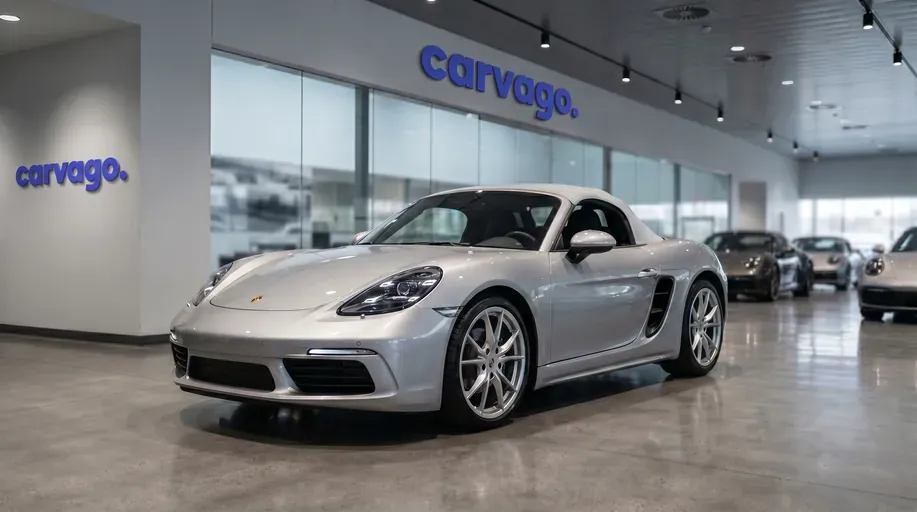
Official fuel consumption figures for sports cars often differ significantly from reality, especially if drivers occasionally make full use of the potential hidden under the hood. To get a more accurate picture of approximately four-year-old used cars – specifically the 982 generation for Porsche and the A90 for Toyota, which currently dominate this segment of the used car market – it is best to look at real-world data directly from owners. The popular community portal Spritmonitor.de serves as an ideal source of long-term and objective statistics.

Model and EngineAverage Consumption (l/100 km)Source
Toyota GR Supra 2.0 (190 kW)8.2Spritmonitor.de
Porsche 718 Boxster 2.0 (220 kW)8.8Spritmonitor.de
Toyota GR Supra 3.0 (250 kW)9.5Spritmonitor.de
Porsche 718 Boxster GTS 4.0 (294 kW)11.5Spritmonitor.de

Looking at the real-world data, it is clear that while the use of smaller turbocharged engines does bring some fuel savings, the differences are not nearly as vast as paper specifications might suggest.

  • Two-liter four-cylinder engines: With a real-world average of 8.2 l/100 km, the Toyota GR Supra 2.0 is the most fuel-efficient variant among the compared cars. The turbocharged two-liter boxer in the Porsche 718 Boxster, on the other hand, requires a bit more; in practice, its consumption commonly reaches the 8.8 l/100 km mark.
  • Large-displacement six-cylinder engines: The biggest surprise comes from the Munich-sourced three-liter six-cylinder under the Supra's hood. Its average consumption of 9.5 l/100 km means it requires only about 1.3 liters more than the significantly less powerful two-liter. However, if you opt for the top-of-the-line naturally aspirated GTS 4.0 version of the Boxster, you must expect an average steadily approaching 11.5 l/100 km, with these figures logically soaring during more spirited weekend drives.

For everyday users, the base two-liter engines represent a very solid compromise with reasonable running costs. They are thus an ideal choice for those who plan to use the car for daily commuting or more frequent highway trips. Especially in the case of the Toyota Supra, it is clear that the premium for the legendary 3.0 six-cylinder is not devastating in terms of fuel bills. For those focused on maximum driving experience and character, the more powerful variant makes a lot of sense. Porsche, on the other hand, generates significantly higher fuel costs with its larger six-cylinder, which it easily justifies with the completely unique character of the naturally aspirated engine and its unrivaled throttle response.

Ultimately, fuel consumption itself is unlikely to be the main deciding factor that tips the scales when choosing between these two attractive sports cars. However, it is extremely useful to know that while the Toyota Supra can be a surprisingly fuel-efficient sports "GT" with its more powerful six-cylinder, the Porsche with its large-displacement four-liter will require much more frequent stops at gas stations when driven at a brisker pace.

Current offers Toyota Supra

View full offer

Price Range and Used Car Offerings

Used Car Prices and Residual Value

When looking at the market for nearly-new used cars around four years old (focusing on models with production dates in 2021 and 2022), we encounter two completely different price worlds. While the Toyota Supra represents a relatively affordable entry ticket into the world of genuine sports cars, the Porsche 718 Boxster maintains a high premium price tag even as a used car, and for some engine variants, it functions almost as an investment tool.

Porsche 718 Boxster (2021–2022)

The base 718 Boxster (internally generation 982) holds its value very well thanks to the immense prestige of the Stuttgart brand. However, the true holy grail on the used market is the GTS 4.0 version, powered by a 4.0-liter naturally aspirated flat-six engine. For these, the depreciation has almost stopped as they age, as demand for pure driver-focused naturally aspirated engines significantly exceeds supply.

  • Base models (2.0 and S): Prices for well-maintained four-year-old models currently most often range between €62,000 and €74,000.
  • GTS 4.0 models and limited editions: Here, prospective buyers on the used market must prepare at least €90,000 to €103,000. In the case of purist and extremely limited versions like the Spyder or Spyder RS, purchase prices commonly reach the €120,000 to €160,000 mark.

Toyota Supra (2021–2022)

The Toyota GR Supra (generation A90/J29) attracts buyers in used car dealerships with a significantly more friendly purchase price. Buying on the secondary market makes great sense, especially for drivers who want to get the maximum price-to-performance ratio. Depreciation in the first three years was noticeably steeper for the Supra than for the Porsche, which now benefits buyers of four-year-old used cars.

  • 2.0 engine version: The most affordable path to the iconic Supra is represented by models with the two-liter four-cylinder from BMW, which can now be found for a very tempting €39,000 to €47,000.
  • 3.0 engine version: The much more desirable straight-six engines start at approximately €49,000, and for cars in top condition with a perfect history, customers pay an average of €59,000.

Overview of Approximate Used Car Prices (2021–2022 models)

Model and EngineApproximate Market Price (€)Estimated Depreciation
Toyota Supra 2.0 (190 kW)€39,000 – €47,000Medium
Toyota Supra 3.0 (250 kW)€49,000 – €59,000Lower (price is stabilizing)
Porsche 718 Boxster 2.0 (220 kW)€62,000 – €74,000Low
Porsche 718 Boxster GTS 4.0 (294 kW)€90,000 – €103,000Very low (high growth potential)

Service and Operating Costs

The difference in the purchase price of a used car seamlessly transitions into different operating costs. For the Toyota Supra, the unexpected availability of original spare parts is a plus (largely due to the widely used shared technology with the BMW brand, such as the legendary B58 engine) along with relatively bearable hourly rates at authorized service centers of the Japanese brand.

Caring for a Porsche 718 Boxster is, logically, significantly more demanding financially. The exceptional and more complex mid-engine configuration makes any mechanical work more expensive. Furthermore, despite the fact that Porsche sports cars are renowned for excellent reliability and build quality, any routine service inspection, renewal of the "Porsche Approved" extended warranty, or simple replacement of wear-and-tear parts (e.g., robust steel or optional carbon-ceramic brakes) will put a significantly greater strain on your budget.

Final Verdict on Used Cars 💰

If your main priority is uncompromising value for money and more accessible servicing, the six-cylinder Toyota Supra 3.0 is a brilliant choice on the four-year-old used market, while the Porsche 718 Boxster attracts with premium prestige and minimal future depreciation, for which, however, you must pay a very hefty premium upfront.

Safety and Euro NCAP Rating

Although five-star Euro NCAP standards are often mentioned in the context of shared platforms and related models for both cars, it is crucial to emphasize the context and the year of testing for these specific sports cars. Independent testing protocols are constantly evolving and becoming increasingly stringent, meaning that percentage scores from earlier years cannot be directly compared with today's. Older tests simply do not correspond to the latest methodologies, which today standardly include, for example, complex frontal offset crash simulations, advanced cyclist detection, or emergency scenarios at obscured intersections.

Porsche 718 Boxster

The Porsche 718 Boxster is among the purebred sports cars produced in smaller series, and therefore it has never been directly crash-tested by the independent Euro NCAP organization. For this reason, there are no official percentage data for this model, and the table below intentionally remains empty for this car. Passive safety here, however, relies on an exceptionally rigid body, integrated roll bars behind the headrests, six airbags, and top-tier stability control tuning. Given that the car's basic architecture dates back to 2016, the Boxster cannot offer the most modern active assistants common in newer models as standard, and advanced active safety is limited mainly to optional features such as blind-spot monitoring or adaptive cruise control.

Toyota Supra

The current generation Toyota Supra was also not independently tested by Euro NCAP due to its specific focus and lower sales volumes. However, the Supra shares its entire technical architecture and safety systems with the BMW Z4, which successfully passed tests in 2019, earning the maximum five stars. For this reason, the data in the table reflect this sister model. The 2019 test demonstrated a very high level of safety, particularly with an excellent 97% rating in adult protection and a 91% score for vulnerable road users. These results confirm the robustness of the platform and the presence of advanced technologies – the Supra comes standard with lane-keeping assist, autonomous emergency braking with pedestrian and cyclist detection, and rear cross-traffic alert.

Safety Summary

In an overall comparison, the Toyota Supra demonstrably offers a more modern and comprehensive safety package. While the Porsche 718 Boxster represents a driver-focused purist roadster on a solid but older platform, the Supra benefits significantly from a newer architecture developed in cooperation with BMW. Thanks to this, it features a wide range of advanced assistance systems even in the base trim, which much better corresponds to today's stricter safety standards for the used car market.

ParameterPorsche 718 BoxsterToyota Supra
Year of testing-2019
Adult occupant protection-97 %
Child occupant protection-87 %
Vulnerable road users protection-91 %
Safety assist systems-76 %

More modern safety in the Toyota 🛡️

Although neither model has its own direct crash test, the Toyota Supra, thanks to its newer platform and robust data from its sister BMW, offers a clearly richer and more modern set of active safety features, making it a safer choice for everyday driving.

Comparison of Interesting Equipment Features

In addition to standard equipment, each of these models offers something extra and brings a completely different approach to enriching the driving experience and daily life with the car.

Porsche 718 Boxster: Mid-engine layout and purist technology

This German roadster benefits from its specific architecture and the brand's long-term evolutionary development. The most interesting equipment and technological specifics include:

  • Mid-engine concept (Chassis and layout): The engine located just behind the seats provides the car with perfect weight distribution and a very low center of gravity. This guarantees unrivaled agility and predictability in corners, which is the main asset of this model.
  • Two luggage compartments (Everyday practicality): Thanks to the absence of an engine in the front, the Boxster offers a practical front trunk (the so-called frunk) with a deep floor, in addition to a standard rear trunk. The total volume is surprisingly sufficient even for longer weekend trips for two.
  • Six-cylinder and four-cylinder hearts (Engines): While the base and S versions rely on modern turbocharged flat-fours (boxers) with strong mid-range pull, the top-tier GTS 4.0 version (available in the current generation) hides a naturally aspirated flat-six, which is a sought-after collector's item on the used car market today.
  • Transmissions for enthusiasts and perfectionists (Transmissions): Customers can choose between a perfectly precise six-speed manual that draws you into the action, or the lightning-fast seven-speed dual-clutch PDK transmission, which is at the absolute technological forefront and shifts without interrupting power delivery.
  • Advanced chassis electronics (Driving assistants): The Boxster excels with optional systems such as PASM (Porsche Active Suspension Management) for adaptive adjustment of damper stiffness and lowering the ride height, or PTV (Porsche Torque Vectoring) working in conjunction with a mechanical limited-slip differential for maximum traction when exiting corners.
  • Retractable roof on demand (Comfort): The fully automatic fabric roof is a masterpiece of simplicity and speed. It can be opened or closed in just 9 seconds at speeds up to 50 km/h, which greatly facilitates handling during sudden weather changes.

Toyota GR Supra: The Golden Ratio and a legacy of racing legends

The new Supra was created under the Gazoo Racing (GR) division with a clear focus on the maximum driving experience of a traditional classic coupe concept. It brings these key elements:

  • "Golden ratio" of dimensions (Chassis and body): During the design phase, engineers focused on the so-called golden ratio, the ideal ratio between a short wheelbase and a wide track (a ratio of 1.55). Combined with a low center of gravity, this gives the car phenomenal stability and agility at the limit.
  • Distinctive aerodynamic design (Smart solutions): The iconic "double-bubble" roof is not just a design reference to the legendary 2000GT model. It helps reduce aerodynamic drag while providing the driver and passenger with plenty of headroom – even when wearing a racing helmet during track days.
  • Iconic inline-six (Engines): The cornerstone of the Supra is (alongside the lighter and rev-happy turbocharged two-liter) a fantastic inline three-liter six-cylinder. It is characterized by instant throttle response, massive torque, and a characteristic deep sound.
  • Active rear differential and AVS (Electronics): Most three-liter versions are equipped as standard with an active rear differential that can continuously adjust locking from 0 to 100% in milliseconds. Along with AVS adaptive suspension, the car offers an unexpectedly good compromise between track stiffness and comfort for long-distance travel.
  • Return of the intelligent manual (Sports version): Although the Supra (A90 generation) began its journey exclusively with a brilliantly tuned eight-speed automatic, Toyota listened to the fans' calls. Later models also offered a six-speed intelligent manual transmission (iMT) developed specifically for this car, which features an automatic rev-matching function.
  • Top-tier infotainment with German roots (Connectivity): The onboard system, control logic, and telematics benefit from platform sharing with BMW vehicles. The result is a very fast and extremely intuitive system with a precise rotary controller on the center console, excellent voice control, and seamless wireless Apple CarPlay support.

Key Advantages and Disadvantages

Porsche 718 Boxster

Pros

Perfect balance and excellent driving characteristics thanks to the mid-engine layout

High-quality interior craftsmanship with an emphasis on premium materials

Lightning-fast and reliable PDK dual-clutch automatic transmission (or an excellent manual)

Authentic driving experience with a retractable soft top

Surprising everyday practicality thanks to two luggage compartments (front and rear)

Surgically precise and communicative steering

Cons

Four-cylinder engines in base versions have a less attractive sound profile compared to their predecessors

Significantly higher costs for regular service, maintenance, and genuine spare parts

Older multimedia system architecture that lags behind modern standards

A long list of very expensive optional equipment, which significantly increases the price of used cars

The Porsche 718 Boxster is the ideal choice for drivers seeking an absolute purist driving experience with the wind in their hair, who appreciate the surgically precise steering provided by the mid-engine layout. Despite higher service costs and the more compromised sound of the four-cylinder engines, this roadster offers unsurpassed driving dynamics and a premium feel in every detail.

Toyota Supra

Pros

Extremely powerful and characterful inline-six engine (sourced from BMW) with huge potential

Very attractive ratio of purchase price to real-world dynamics on the used car market

Rigid body and excellent vehicle stability even at very high speeds

Distinctive, aggressive, and completely unmistakable exterior design on the road

Reliable and intuitive iDrive infotainment with fast response

Cons

Very poor visibility from the car and an overall more cramped feel in the cabin with more difficult entry

Significant aerodynamic noise (buffeting) in the cabin when driving with the windows down

Older model years lack Android Auto support (the system primarily supported only Apple CarPlay)

Fewer storage spaces in the interior and an impractically shaped trunk access

The Toyota Supra targets fans of classic rear-wheel-drive sports coupes who want maximum performance and reliable technology for more reasonable money. Its aggressive looks and powerful six-cylinder engine make it a great car for backroads and occasional track visits, although one must account for the slightly cramped interior and poorer visibility.

Common Problems and Owner Complaints

Based on long-term user experience, service reports, recalls, and findings from our own inspections, which include a comprehensive car audit, we have compiled an overview of the most common problems that buyers of both these used sports cars should watch out for.

Porsche 718 Boxster (982 generation)

The Porsche 718 Boxster is considered a mechanically durable and superbly built sports car, yet specific faults can appear depending on the engine and age.

  • Engine and cooling system: In four-cylinder engines (2.0 and 2.5 liters) from the early years of production, premature water pump failures and minor coolant leaks occur slightly more frequently. Check for any traces of leaks on the bottom of the engine.
  • Dynamic engine mounts (PADM): In cars equipped with optional active mounts (Porsche Active Drivetrain Mounts), failures due to material fatigue occur quite often. The fault usually manifests as an error message on the dashboard and requires expensive replacement of original parts.
  • Turbocharger: Especially in four-cylinder units, owners sometimes report rattling or sticking of the wastegate actuator rod.
  • Chassis and brakes: Brake squeal at low speeds is a common occurrence for Porsche and usually does not represent a defect, but rather a characteristic of high-performance brake compounds. However, it is important to monitor uneven rear tire wear, which usually indicates misaligned rear axle geometry or worn control arms.
  • Electronics and infotainment: The PCM (Porsche Communication Management) multimedia system occasionally suffers from screen freezing or problems maintaining a stable Bluetooth connection with mobile phones. A software update usually helps.

Porsche 718 Boxster: More expensive but predictable service

Overall, it is a very reliable car with solid mechanics, but it requires precise and uncompromising maintenance. Potential repairs of specific equipment features, such as active mounts, can become significantly more expensive due to the price of original parts.

Toyota Supra (J29 generation)

The Toyota Supra, which shares its chassis platform and powertrain with the BMW Z4, is a robust car, but it does not hide the typical specifics of BMW technology and minor teething troubles from the start of production.

  • Engine and oil consumption: Early model years equipped with the popular three-liter six-cylinder (B58) had a tendency for higher oil consumption in some units, especially during sporty use. Regular level checks are therefore a necessity. Minor oil seepage around the valve cover also occurs.
  • Aerodynamic noise (Wind buffeting): An extremely well-known Supra problem is strong aerodynamic buffeting and vibrations inside the cabin when driving with the windows down, even at speeds around 80 km/h. Most owners solve this by installing aftermarket deflectors on the exterior side mirrors.
  • Steering and chassis: When driving over bumps or turning at low speeds, knocking is sometimes heard from the front axle. It is often caused by minor play in the tie rods or noisier upper strut mounts.
  • Electronics: The entertainment system, which is a rebranded BMW iDrive interface, struggles with occasional wireless Apple CarPlay connection drops. A typical ailment of the supplied electronics is also a higher load and battery self-discharge during longer vehicle standstills.
  • Recalls: Used cars from the first years of production should have several important service campaigns completed. These included software updates for engine management, repair of defective seat belt anchors, and random checks of the electronic brake booster. This is why a thorough physical inspection of a used car is crucial before purchase.

Toyota Supra: Reliability with a touch of Bavarian specifics

The fifth-generation Supra is an excellent driver's car and a mechanically durable machine, whose most common problems concern cabin aerodynamics and minor electronic quirks. The key to reliability for a used unit is a clear service history and verification that the car has undergone all necessary recalls.

Tips for Buying a Used Car

When buying a used sports car, a thorough inspection is key. Although both of these cars offer fantastic driving experiences, they have their own mechanical and electronic specifics that are worth paying attention to before signing the contract. For this reason, an independent technical inspection of the car is always an ideal step, as it reveals even hidden problems.

When choosing a Porsche 718 Boxster:

  • Engine control unit readout (DME report): For manual transmissions, it is absolutely crucial to check the history of so-called "over-revs". Higher stages (ranges 4 to 6) mean that the driver downshifted incorrectly in the past and the engine went deep past the limiter. This can mean engine damage and makes it impossible to obtain a Porsche Approved factory warranty.
  • Cooling and water pump: In four-cylinder engines (2.0 and 2.5 liters), leaks and premature water pump failure occur quite frequently. Watch the temperature closely during the test drive. After stopping and warming up the engine, check if there is a sweet smell of coolant around the car. A detailed physical inspection of the used car on a lift is essential in this regard.
  • PDK automatic transmission behavior: The PDK dual-clutch transmission should shift smoothly and without delay in normal mode. Focus on slow crawling in traffic or smooth starts from a standstill. Any noticeable jerking, clunking, or hesitation of the system may signal neglected service (the oil has strict replacement intervals) or excessively worn clutches.
  • Condition of the convertible top and drainage channels: Check the carpets directly behind the seats and in the luggage compartment for moisture. The roof's drainage channels can become clogged with dirt or leaves over time. If this happens, water will start to flow directly into the cabin, where there is a risk of irreversible damage to the expensive control units located under the seats.
  • Signs of track use: The Boxster is a frequent visitor to racing tracks. Look for excessively worn tire sidewalls, heat cracks on the brake discs, or blue discoloration of the brake calipers due to extreme temperatures.

When choosing a Toyota Supra:

  • Increased oil consumption (B58 engine): Some early models with the three-liter six-cylinder from 2020 and 2021 may suffer from higher engine oil consumption. Ask the owner about the frequency of topping up and check the electronic oil level dipstick and service records in the onboard infotainment.
  • Vulnerable front radiators: The Supra has a very aggressive front bumper design with large and relatively exposed intake vents. During a comprehensive car inspection, have the radiators behind the front grille thoroughly illuminated with a flashlight. They are often deformed or even punctured by flying stones, leading to coolant leaks.
  • Eight-speed ZF automatic test: Although this transmission is considered extremely reliable and durable on the market, it is necessary to check the transitions between Normal and Sport modes during a test drive. Shifting at full throttle must be sharp, but not metallically jarring. If it jerks when downshifting, it often indicates sync wear or the need for a transmission software update.
  • Aerodynamic noise and interior condition: During the test drive, roll down the windows at a speed of about 80-100 km/h. The Supra suffers from strong aerodynamic pulses in the cabin (so-called wind buffeting) from the factory. Most knowledgeable owners have already solved this by installing small aftermarket deflectors near the side mirrors – check if the car already has them. Also listen for any creaking of harder plastics on the center tunnel.
  • Infotainment and assistant diagnostics: Since the Supra uses a complete electronic architecture from BMW, carefully go through the iDrive system. Check for spontaneous restarts of the central display or Bluetooth connectivity drops. Go through the onboard menu (Check Control) and make sure the electronics do not report an error for any of the many safety sensors.

FAQ: Most Frequently Asked Questions

In a straight line, the Toyota Supra with its three-liter six-cylinder engine performs better, accelerating from 0 to 100 km/h in approximately 4.3 seconds. The base Porsche 718 Boxster with a two-liter four-cylinder engine needs around 4.9 seconds, but higher versions like the Boxster S or GTS easily match or surpass the Supra. It therefore depends primarily on which specific engine version you are comparing on the used car market.

The Porsche 718 Boxster surprisingly offers very good usability thanks to its mid-engine layout, as it features both a front and rear trunk with a total volume of roughly 275 liters. While the Toyota Supra has one large rear trunk with a volume of 290 liters, access to it and getting into the lower cabin itself is a bit more cramped. Furthermore, as a convertible, the Porsche adds the option of open-top driving, while the Supra is a classic and uncompromising coupe.

The Porsche 718 Boxster excels in corners thanks to its perfect weight distribution, ensured by the mid-mounted engine located right behind the seats. Conversely, the Toyota Supra, with its front-engine and rear-wheel-drive layout, offers a more classic, playful character typical of grand tourer category cars. In terms of absolute steering precision and neutral handling on back roads, the Porsche representative usually wins.

The Toyota Supra shares most of its technology with the BMW Z4, which means premium but still relatively affordable and predictable maintenance costs. While the Porsche 718 Boxster has long been among the most reliable sports cars on the market, the prices for regular service inspections and genuine spare parts are significantly higher. For long-term ownership with a stricter eye on the budget, Toyota is the more rational choice.

Yes, fans of traditional driving and three pedals will find what they're looking for in both compared models. The Porsche 718 Boxster has offered an excellent manual transmission across most of its trims and engines since the very beginning of production. The Toyota Supra initially only offered an automatic, but in newer used cars from 2023 and later, you can also find sought-after versions with a six-speed manual for the three-liter engine.

Conclusion: Which Model to Choose?

Sources: ADAC, forbes.cz, lidovky.cz, autoservis.cz, autozive.cz, cistadoprava.cz

This article was prepared using artificial intelligence tools. The section guarantor is Petr Dušek.

Related articles

Car battle

Audi R8 vs. Lamborghini Huracán: Complete comparison 2026

Detailed comparison of Audi R8 vs Lamborghini Huracán. We reveal the real differences, performance, and driving characteristics of these V10 supercars. Which one to choose?

Apr 14, 2026

Car battle

Mercedes-AMG C 63 Coupé vs. Porsche 718 Cayman: Complete comparison 2026

A major comparison of the Mercedes-AMG C 63 Coupé and the Porsche 718 Cayman. We reveal the differences in performance, driving characteristics, and equipment. Which sports coupé to choose?

Oct 16, 2026

Car battle

Renault Mégane vs. Toyota Corolla: Complete comparison 2026

Detailed comparison: Renault Mégane vs Toyota Corolla. Discover the differences in engines, equipment, and reliability, and find out which used car is the best for you.

Oct 16, 2026

We accept online card payments as well as wire transfers.

visa payment provider logovisa-electron payment provider logomastercard payment provider logomaestro payment provider logodiners-club payment provider logodiscover payment provider logo