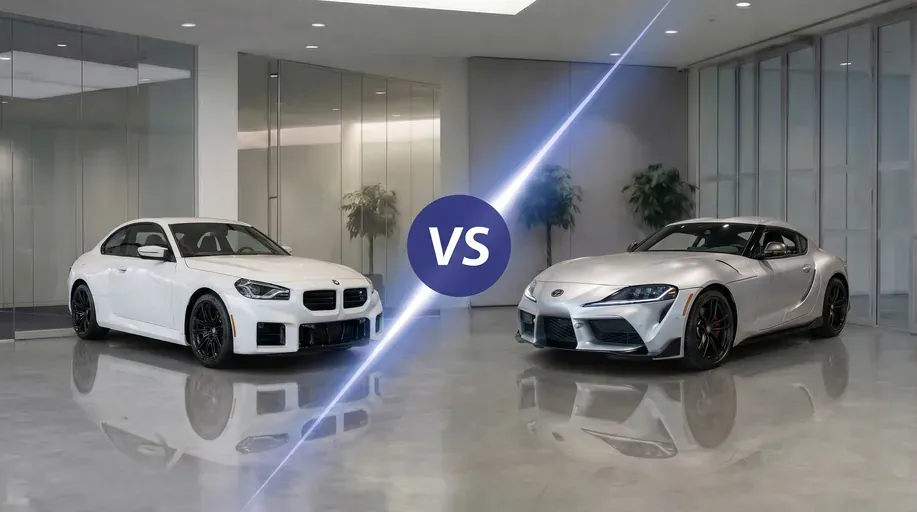
Car battle
BMW M2 vs. Toyota Supra: Complete comparison 2026
Detailed comparison of the BMW M2 vs Toyota GR Supra. Discover the real differences in driving characteristics and performance, and read our final verdict before you buy.
May 15, 2026
Articles
Review
Porsche 911 (992) review: real owner experience, 992.1 vs 992.2 changes, running costs, reliability and prices — everything before you buy.
October 25, 2026
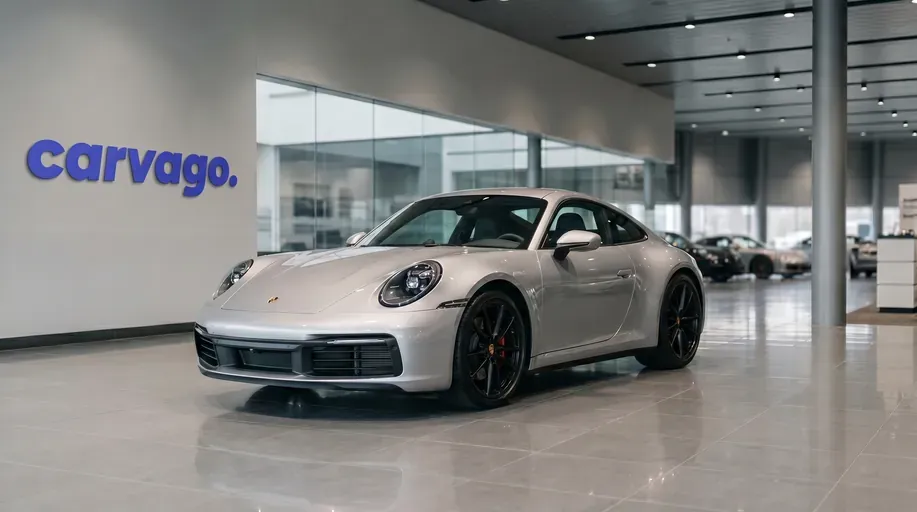
The Porsche 911 occupies a distinct position in the sports car segment, combining high-performance engineering with everyday usability. This review covers the eighth-generation 911, designated internally as the 992. Series production commenced in late 2018, with European customer deliveries beginning in March 2019 for the Carrera S and Carrera 4S models, followed by the standard Carrera in July 2019. The model line remains in series production through 2026.
Available in three primary body styles—the Porsche 911 Coupé, the open-top Porsche 911 Cabriolet, and the Targa—the generation received an extensive mid-cycle revision designated the 992.2. Premiered on 28 May 2024, with first European customer deliveries following in August 2024, the update introduced subtle aerodynamic revisions, an all-digital driver display, and the model's first production petrol-electric performance hybrid on GTS variants.
The 992 appeals primarily to buyers seeking genuine sports car dynamics without sacrificing the ergonomics, all-weather stability, and long-distance comfort required of a daily driver.
The eighth-generation Porsche 911 maintains a solid mechanical reputation among modern sports cars, yet real-world ownership highlights a clear split between traditional hardware durability and complex modern auxiliaries. While the core flat-six powertrains and gearboxes exhibit few systemic mechanical flaws across European fleets, electrical and ancillary systems require careful scrutiny on pre-owned examples. For the facelifted variant, which arrived on European roads in August 2024, long-term reliability of the new high-voltage hybrid architecture is not yet established.
On pre-facelift models equipped with lightweight lithium-iron-phosphate (LiFePO4) starter batteries—primarily cars fitted with optional rear-axle steering, as well as high-performance variants—tests describe severe battery management system lockouts. When parked without a dedicated lithium maintainer for three to six weeks, parasitic drain causes the internal battery management system to trigger undervoltage protection, disconnecting the 12V circuit entirely. Because the front luggage compartment latch is fully electronic, restoring power requires manual physical entry into the cabin and bridging the emergency fuse-box terminal to open the lid. If the unit remains depleted below its critical threshold, the lockout becomes permanent and requires complete battery replacement.
Exterior hardware and cabin electronics on early production cars also generate repeated grievances. Owners report that the electrically deployable flush door handles frequently stick in the extended position or fail to pop out during unlocking, a problem made worse by road grime and freezing winter temperatures. Cleaning offers temporary relief, but resolving the issue permanently requires installing a revised drive unit. Inside, tests describe central touchscreen crashes, spontaneous reboots, and sudden loss of the reversing camera on cars built between 2019 and 2022. Porsche addressed these software instability issues primarily with the rollout of the updated interface from model year 2022 onwards.
Official safety registers across Europe and Germany record several safety campaigns affecting the 992 generation:
The eighth-generation Porsche 911 offers a broad powertrain line-up spanning twin-turbocharged flat-six engines, high-revving naturally aspirated motorsport units, and performance hybrid technology introduced with the mid-cycle update. Motive force is directed to either the rear wheels or all four wheels via dual-clutch automatic or manual gearboxes.
| Engine | Fuel | Power | Drivetrain | Gearbox | Model years |
|---|---|---|---|---|---|
| Carrera / Carrera 4 (992.1) | Petrol | 283 kW (385 hp) | Rear-wheel drive / All-wheel drive | 8-speed automatic | 2019–2024 |
| Carrera T (992.1) | Petrol | 283 kW (385 hp) | Rear-wheel drive | 7-speed manual / 8-speed automatic | 2022–2024 |
| Carrera S / Carrera 4S (992.1) | Petrol | 331 kW (450 hp) | Rear-wheel drive / All-wheel drive | 7-speed manual / 8-speed automatic | 2019–2024 |
| Carrera GTS / Carrera 4 GTS (992.1) | Petrol | 353 kW (480 hp) | Rear-wheel drive / All-wheel drive | 7-speed manual / 8-speed automatic | 2021–2024 |
| Turbo (992.1) | Petrol | 427 kW (580 hp) | All-wheel drive | 8-speed automatic | 2020–2024 |
| Turbo S (992.1) | Petrol | 478 kW (650 hp) | All-wheel drive | 8-speed automatic | 2020–2025 |
| GT3 / GT3 Touring (992.1) | Petrol | 375 kW (510 hp) | Rear-wheel drive | 6-speed manual / 7-speed automatic | 2021–2024 |
| GT3 RS (992.1) | Petrol | 386 kW (525 hp) | Rear-wheel drive | 7-speed automatic | 2022–2024 |
| Carrera (992.2) | Petrol | 290 kW (394 hp) | Rear-wheel drive | 8-speed automatic | 2024–present |
| Carrera T (992.2) | Petrol | 290 kW (394 hp) | Rear-wheel drive | 6-speed manual | 2024–present |
| Carrera S (992.2) | Petrol | 353 kW (480 hp) | Rear-wheel drive | 8-speed automatic | 2025–present |
| Carrera GTS / Carrera 4 GTS (992.2 T-Hybrid) | Petrol / Electric | 398 kW (541 hp) | Rear-wheel drive / All-wheel drive | 8-speed automatic | 2024–present |
| Turbo S (992.2 T-Hybrid) | Petrol / Electric | 523 kW (711 hp) | All-wheel drive | 8-speed automatic | 2025–present |
| GT3 / GT3 Touring (992.2) | Petrol | 375 kW (510 hp) | Rear-wheel drive | 6-speed manual / 7-speed automatic | 2024–present |
For daily driving and routine commuting, the entry-level petrol Porsche 911 Carrera provides flexible low-rpm pull and smooth integration with the dual-clutch automatic transmission. Buyers seeking extra reserve punch for mixed driving scenarios will find the Carrera S an adaptable midpoint, either as a used car from earlier production runs or in its revised post-update configuration.
For frequent long-distance motorway travel and all-weather usability, an all-wheel-drive Porsche 911 such as the Carrera 4S or the range-topping Turbo delivers dependable traction in poor conditions and unstrained high-speed cruising stability. Note that towing is not permitted on any version of the model line.
Drivers who prioritize mechanical involvement on secondary roads should seek a manual Porsche 911. The purist Carrera T pairs a manual gearbox with a lighter specification, while the motorsport-derived GT3 delivers instant throttle modulation and a high rev ceiling.
For maximum responsiveness across varying driving situations, the facelifted hybrid Porsche 911 Carrera GTS integrates an electric turbocharger and a transmission-mounted electric motor, virtually eliminating boost lag and providing instant transient thrust.
For detailed recurring fault patterns, maintenance requirements, and workshop advice regarding these powertrains, refer to the dedicated owner experiences section.
| Variant / Model Year | Length (mm) | Width excl. / incl. mirrors (mm) | Height (mm) | Wheelbase (mm) | Luggage Compartment Front / Rear (l) |
|---|---|---|---|---|---|
| 992.1 Carrera Coupé (2019–2024) | 4,519 | 1,852 / 2,024 | 1,298 | 2,450 | 132 / 264 |
| 992.1 Carrera Cabriolet (2019–2024) | 4,519 | 1,852 / 2,024 | 1,299 | 2,450 | 132 / 163 |
| 992.2 Carrera Coupé (2024–present) | 4,542 | 1,852 / 2,033 | 1,302 | 2,450 | 135 / 373 |
| 992.2 Carrera Cabriolet (2024–present) | 4,542 | 1,852 / 2,033 | 1,301 | 2,450 | 135 / 163 |
| 992.2 Carrera GTS Coupé (2024–present) | 4,553 | 1,852 / 2,033 | 1,296 | 2,450 | 135 / 373 |
Dimensions do not apply to variants fitted with optional sport suspension or special track editions.
Everyday practicality in the 992 generation revolves around clever use of split spaces rather than a single large boot. Up front, the deep luggage compartment easily swallows carry-on trolley cases and soft bags. In the back, real-world utility depends heavily on generation and specification. Pre-facelift versions of the Porsche 911 Coupé feature folding rear seats that create a flat auxiliary luggage shelf, whereas the facelifted coupé arrives as a strict two-seater unless the zero-cost rear seating option was chosen when ordered new. Across both versions, expert tests note that the rear seats offer strictly limited legroom and headroom, making them suitable only for small children on shorter journeys or as secondary luggage space for weekend getaways. The Porsche 911 Cabriolet retains fixed rear seating alongside its folding roof mechanism, resulting in a more restricted cargo area behind the front row.
Across professional evaluations, the Porsche 911 demonstrates composure over challenging surfaces. Its adaptive damping delivers adequate compliance for daily driving while keeping vertical body motions tightly disciplined over crests and broken asphalt. The electromechanical steering rack provides crisp off-centre response and natural weighting, although testers note that front-axle grip limits in wet conditions are communicated less transparently than in track-focused derivatives. On versions equipped with active roll stabilisation and rear-axle steering, the chassis disguises its mass effectively through fast direction changes.
Cabin refinement draws mixed reviews. While wind rush and mechanical vibrations remain well suppressed, coarse tarmac generates persistent road roar from the wide rear tyres, which intrudes noticeably at sustained motorway speeds.
Build quality inside the cabin is solid, but ergonomic compromises draw criticism. The steering wheel rim partially obscures the outermost digital instrument displays from normal seating positions, and the gloss-black centre console trim is prone to surface scratching. Testers also lament the shift toward touchscreen interfaces at the expense of tactile secondary switches.
The mid-cycle revision replaced the traditional analogue central rev counter with a fully digital instrument display, dividing opinion among traditionalists. On hybrid-assisted variants, electric forced induction eliminates off-idle turbo lag, though the combustion engine note sounds gruffer under load.
All charts in this section are drawn from Carvago's listings of the whole Porsche 911 model family, including other generations represented in the data, not only the reviewed generation, so they do not establish a separate price level for the newest cars. Across recent build years, the median asking price stands at €149,600 for 2022 models and €159,400 for 2024 listings, with 2025 examples at €158,200. Asking prices in this segment depend heavily on individual optional specifications and equipment choices.
Active Porsche 911 listings increased from 37 vehicles in April 2026 to a peak of 51 in August 2026, before ending at 47 in September 2026. The chart below tracks this monthly count over the six-month period.
Active listings over time
| Month | Porsche 911 |
|---|---|
| 2026-04 | 37 |
| 2026-05 | 38 |
| 2026-06 | 43 |
| 2026-07 | 46 |
| 2026-08 | 51 |
| 2026-09 | 47 |
Source Carvago
Buyers typically had between 37 and 51 cars to choose from at any given point, showing a modest rise in overall availability through the summer before a slight dip in the final month.
For cars advertised today, the median asking price of models built in 2022 is €149,600, while the median asking price of those built in 2024 is €159,400. The chart below outlines these figures across the represented model years.
Median advertised price by year of manufacture
| Model year | Porsche 911 |
|---|---|
| 2022 | 149 600 |
| 2023 | 155 400 |
| 2024 | 159 400 |
| 2025 | 158 200 |
Source Carvago
A buyer considering a 2022 model faces a median asking price of €149,600, while listings for 2023 models stand at €155,400. Median asking prices across the newest years do not climb uniformly, with 2024 models at €159,400 and 2025 models slightly lower at €158,200.
This depreciation curve traces how the model loses value over time, shedding 9% of its residual value in the first year and 19% by age three. The chart below illustrates how this decline develops over seven years of vehicle age.
Residual value by vehicle age
| Vehicle age | Porsche 911 |
|---|---|
| New | 182 000 |
| 1 yr | 165 100 |
| 2 yrs | 153 800 |
| 3 yrs | 147 400 |
| 4 yrs | 146 700 |
| 5 yrs | 135 800 |
| 6 yrs | 127 000 |
| 7 yrs | 118 300 |
Source Carvago
Across the seven years shown, the model sheds 35% of its initial residual value, retaining 65% of it by age seven. The steepest annual decline occurs in the first year, after which depreciation slows considerably, flattening to a drop of under 1% between age three and age four.
Between April and September 2026, petrol models dominated listings, starting at 37 cars in April 2026 and closing at 44 in September 2026. The chart below tracks how advertised vehicles were split across fuel types over these months.
Supply composition by fuel type
Petrol
Hybrid
| Month | Petrol | Hybrid |
|---|---|---|
| 2026-04 | 37 | 0 |
| 2026-05 | 38 | 0 |
| 2026-06 | 42 | 1 |
| 2026-07 | 44 | 2 |
| 2026-08 | 48 | 3 |
| 2026-09 | 44 | 3 |
Source Carvago
In September 2026, the available selection recorded 44 petrol listings alongside 3 hybrid listings, with zero listings for diesel or electric powertrains. For prospective buyers, realistic choice is concentrated almost entirely in petrol-powered cars.
This chart shows the monthly average asking price for the Porsche 911 between April 2026 and September 2026, beginning at €140,400.
Average price development over time
| Month | Porsche 911 |
|---|---|
| 2026-04 | 140 400 |
| 2026-05 | 157 000 |
| 2026-06 | 157 000 |
| 2026-07 | 158 900 |
| 2026-08 | 159 600 |
| 2026-09 | 159 300 |
Source Carvago
Over the six months shown, the average asking price rose by about 13% from €140,400 to €159,300. Most of that change occurred with the rise to €157,000 in May 2026, after which monthly averages remained within a narrow band between €157,000 and €159,600.
Disciplined chassis balance and steering precision suited to daily driving
Broad powertrain range offering manual, dual-clutch, and hybrid configurations
Strong value retention after an initial moderate first-year drop
Persistent tyre roar from wide rear rubber on coarse motorway tarmac
Fragile lithium starter battery prone to shutdown during extended storage
Tightly restricted rear-seat passenger room in all versions
The core flat-six powertrains and gearboxes are mechanically robust for daily use. However, electrical systems on pre-facelift models require care, particularly vulnerable lithium starter batteries and sticking flush door handles.
Models produced from 2022 onwards are preferable because an updated infotainment interface resolved the recurring touchscreen crashes and camera dropouts seen on earlier builds. On older cars, verify documented completion of all software updates and factory safety recalls before purchasing.
The entry-level Porsche 911 Carrera offers flexible low-rpm pull and smooth automatic gear changes suited to everyday traffic, with all-wheel-drive versions adding extra reassurance in poor weather.
Confirm that all factory safety recalls have been completed by VIN, and arrange an independent inspection to check 12V starter battery health and ensure the front radiator intakes are free of road debris.
Sources: newsroom.porsche.com, ec.europa.eu, adac.de, autocar.co.uk, autoexpress.co.uk
This article was prepared using artificial intelligence tools. The section guarantor is Petr Dušek.
Detailed comparison of the BMW M2 vs Toyota GR Supra. Discover the real differences in driving characteristics and performance, and read our final verdict before you buy.
May 15, 2026
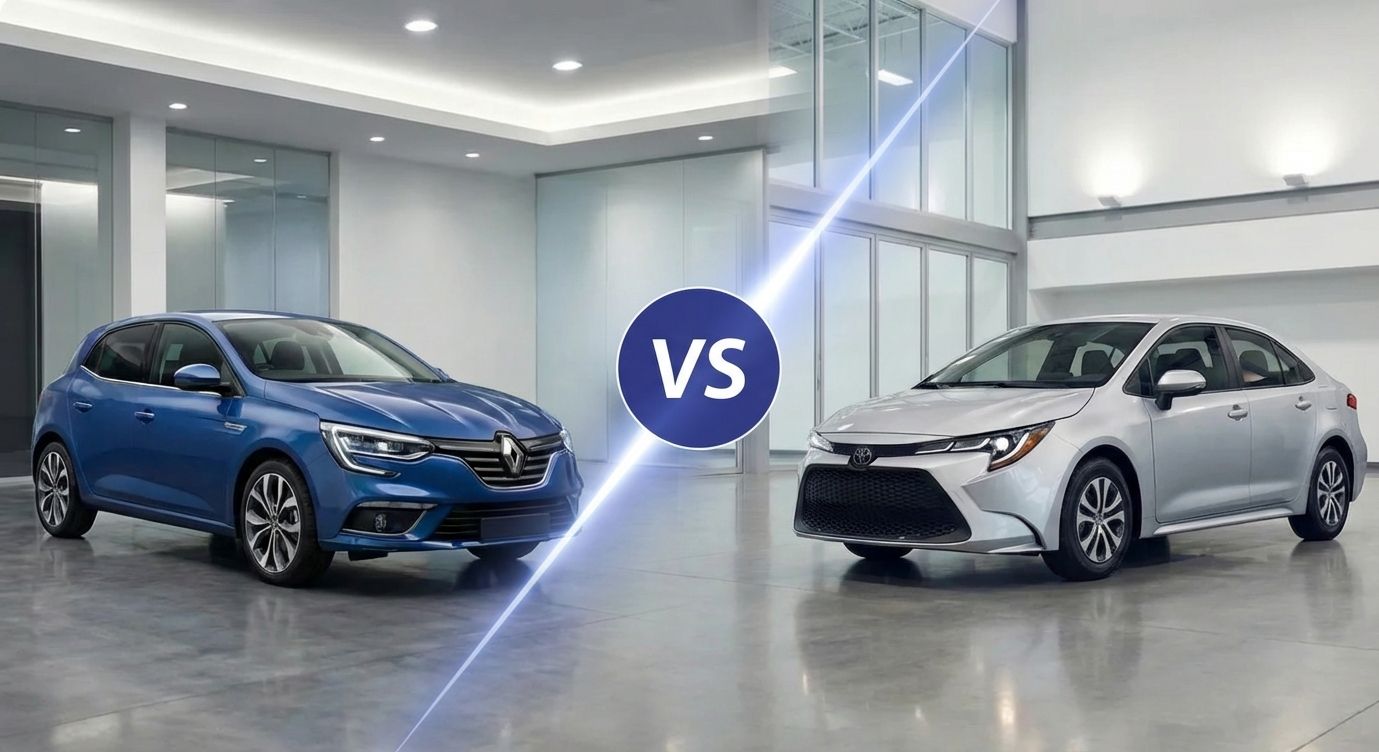
Detailed comparison: Renault Mégane vs Toyota Corolla. Discover the differences in engines, equipment, and reliability, and find out which used car is the best for you.
Oct 16, 2026
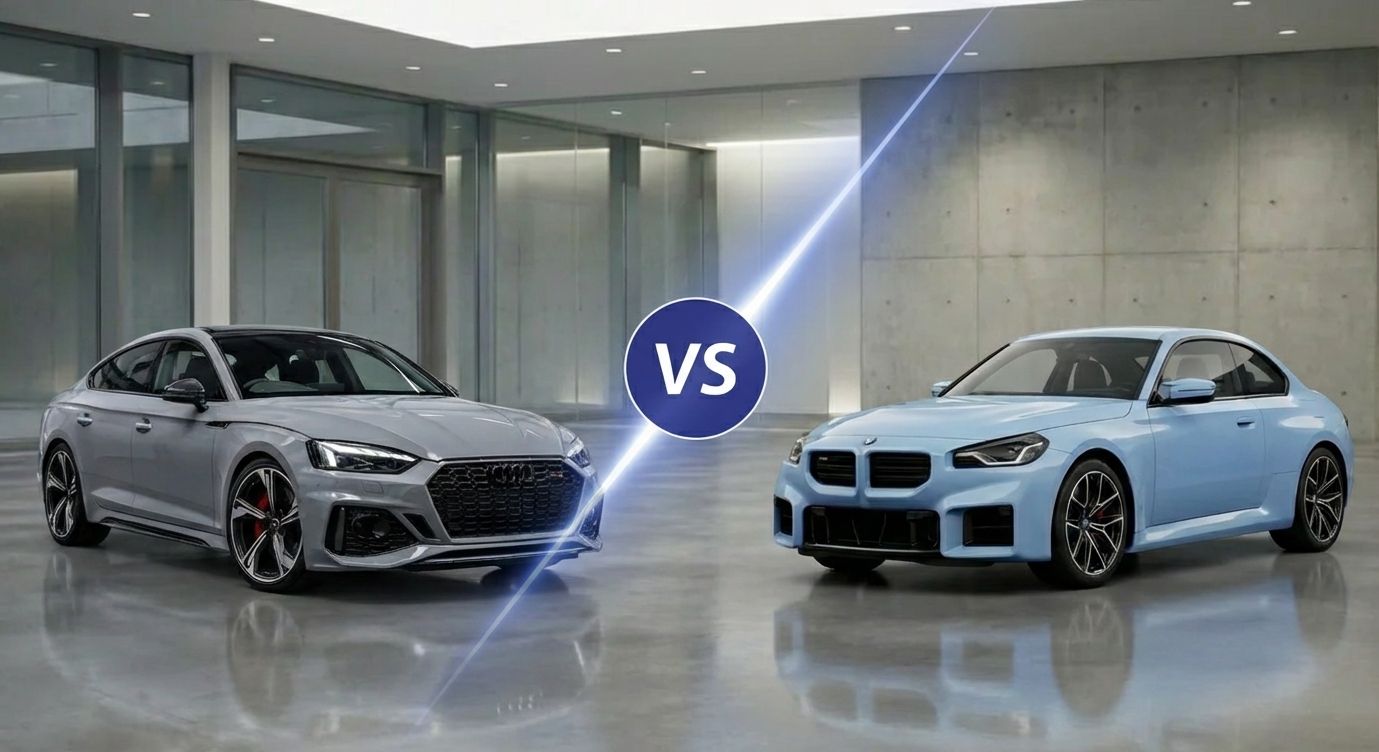
Audi RS 5 vs. BMW M2. A detailed comparison of performance, driving dynamics, and practicality. Find out which sports coupe is the right choice for you.
Apr 14, 2026