Lexus IS vs. Volvo V60: Complete comparison 2026
Detailed comparison of Lexus IS vs Volvo V60. Discover the differences in driving characteristics, equipment, and reliability of used cars. Read our clear verdict before buying.
Oct 16, 2026
Peugeot 508 (2018–2024) review: real owner experience, common faults, engine picks and used prices — everything you need before buying.
October 18, 2026

When the second-generation Peugeot 508 arrived, it repositioned the French brand’s mid-size family car into a lower, coupé-profile contender in the European D-segment. This review covers the second generation produced at the Mulhouse plant from October 2018 until European production ceased in December 2024. Initial customer deliveries commenced in October 2018, followed by main series deliveries in late 2018 and early 2019.
Available throughout Europe as a five-door Peugeot 508 Fastback and an extended Peugeot 508 SW estate, the model targeted private long-distance drivers and company fleets seeking a visually distinctive alternative to conventional saloons and high-riding crossover SUVs. A mid-cycle facelift unveiled on 24 February 2023 introduced revised front styling, updated lighting signatures, and the brand's contemporary crest, with customer deliveries of the revised range starting in September 2023.
The second-generation Peugeot 508 has established a generally solid reputation for mechanical resilience, though several specific vulnerabilities have emerged across its production cycle. The most significant mechanical concern centres on the 1.5 BlueHDi diesel engine fitted to vehicles manufactured up to January 2023. In these units, the internal 7 mm chain linking the two overhead camshafts is prone to premature wear and elongation under contact stress and oil carbonisation. If left unchecked, the chain can snap, resulting in severe valvetrain damage. Following a worldwide safety recall announced in July 2025 for models built between 11 January 2018 and 31 January 2023, authorized workshops conduct an acoustic diagnosis of the cylinder head. Engines exhibiting valvetrain rattle receive a reinforced 8 mm chain alongside a modified housing, while units within acoustic tolerance receive an engine control software update to adjust oil degradation tracking.
For any diesel Peugeot 508, independent endurance tests and fleet reports describe recurrent complications with the Selective Catalytic Reduction (SCR) exhaust aftertreatment. Urea fluid crystallisation and breather faults can trigger warnings indicating that engine restarting will be prevented within a declining distance limit. Because the urea injection pump, heating element, and level sensors are sealed directly into the plastic AdBlue tank assembly, a stalled or burned-out pump cannot be replaced independently, necessitating the replacement of the complete reservoir unit.
On the hybrid Peugeot 508, professional tests and owners report occasional traction system alerts that temporarily disable pure-electric operation. These faults typically trace back to malfunctions within the on-board charger module or voltage drop in the secondary 12V auxiliary battery located in the boot, which prevents the hybrid control unit from completing initial safety checks. Across both saloon and Peugeot 508 estate variants, owners also report winter issues with the frameless door glass. Pulling the door handle activates a micro-drop mechanism to clear the upper weatherstripping; in sub-zero weather, moisture freezing along the lower waist seals can prevent the glass from dropping, creating a risk of torn rubber seals or broken regulator clips if doors are pulled open with force.
The model has also been subject to several manufacturer recall campaigns. In May 2023, a worldwide recall covering plug-in hybrids built between 2019 and 2023 was launched to remedy water ingress that could cause corrosion perforation of the traction battery reinforcement, requiring technicians to add designated drain points and apply protective anti-corrosion wax. High-voltage battery safety alerts in September 2022, September 2025 (affecting vehicles built between 10 July 2019 and 19 April 2022), and February 2026 addressed cell voltage mismatches or overheating risks across Europe via diagnostics, battery management software updates, or complete pack replacements. Software recalls have also addressed engine control units to correct emissions monitoring, as well as an October 2025 campaign for facelift models built from 15 November 2023 to 30 September 2024 to rectify coding errors that rendered the engine start-stop system inoperative. Independent pre-purchase inspection services such as CarAudit can help buyers verify maintenance records and confirm whether all open campaigns have been carried out.
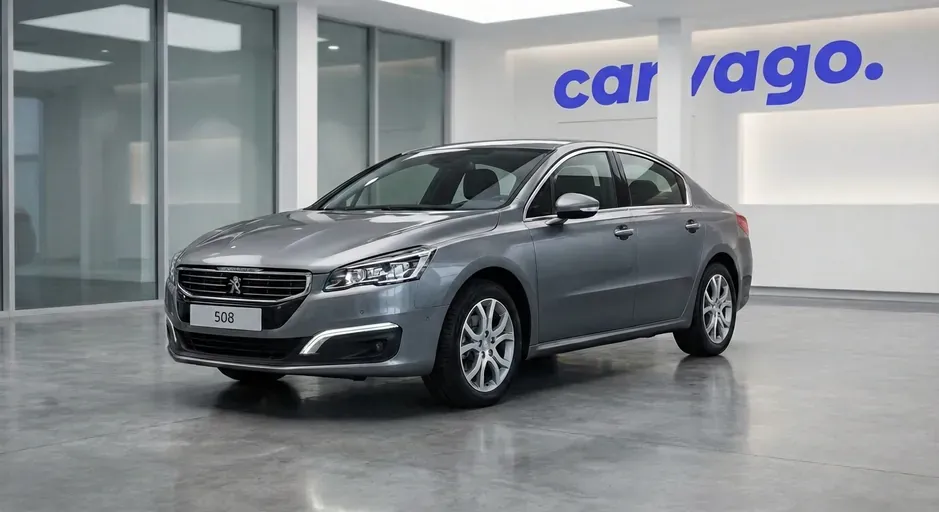
Across its European production run, the second-generation Peugeot 508 was sold with turbocharged petrol, diesel, and plug-in hybrid options paired almost exclusively with automatic gearboxes. Stellantis streamlined the portfolio over time, discontinuing manual transmissions and larger diesels before vehicle production ended in December 2024.
| Engine | Fuel | Power | Drivetrain | Gearbox | Model years |
|---|---|---|---|---|---|
| 1.2 PureTech 130 | Petrol | 96 kW (130 hp) | Front-wheel drive | 8-speed automatic | 2020–2024 |
| 1.6 PureTech 180 | Petrol | 133 kW (180 hp) | Front-wheel drive | 8-speed automatic | 2018–2021 |
| 1.6 PureTech 225 | Petrol | 165 kW (225 hp) | Front-wheel drive | 8-speed automatic | 2018–2021 |
| 1.5 BlueHDi 130 | Diesel | 96 kW (130 hp) | Front-wheel drive | 6-speed manual | 2018–2020 |
| 1.5 BlueHDi 130 | Diesel | 96 kW (130 hp) | Front-wheel drive | 8-speed automatic | 2018–2024 |
| 2.0 BlueHDi 160 | Diesel | 120 kW (160 hp) | Front-wheel drive | 8-speed automatic | 2018–2020 |
| 2.0 BlueHDi 180 | Diesel | 130 kW (180 hp) | Front-wheel drive | 8-speed automatic | 2018–2020 |
| Plug-in Hybrid 180 | Petrol plug-in hybrid | 132 kW (180 hp) | Front-wheel drive | 8-speed automatic | 2023–2024 |
| Plug-in Hybrid 225 | Petrol plug-in hybrid | 165 kW (225 hp) | Front-wheel drive | 8-speed automatic | 2019–2024 |
| PSE Hybrid4 360 | Petrol plug-in hybrid | 265 kW (360 hp) | All-wheel drive | 8-speed automatic | 2021–2024 |
For urban driving and short daily commutes, a hybrid Peugeot 508 makes practical sense if you have access to regular charging, allowing purely electric driving without cold-start wear. Among non-electrified options, the three-cylinder 1.2 PureTech in a petrol Peugeot 508 suits town driving best due to its lighter front axle and the absence of complex diesel exhaust aftertreatment components.
For mixed everyday driving, the four-cylinder 1.6 PureTech petrol engines—available on used models built up to 2021—offer refined road manners without carrying the weight penalty of a traction battery. The lower-powered 1.6 PureTech provides ample everyday performance, while the stronger petrol delivers sharper mid-range responsiveness. On newer models where purely petrol options were restricted, the entry plug-in hybrid and the more powerful hybrid variant become the standard choices for combined driving.
For high-mileage motorway driving, a diesel Peugeot 508 remains the most effective option. As a used buy, the 2.0 BlueHDi diesels offered until late 2020 provide relaxed high-speed cruising and strong low-end pulling power. On newer model years, the smaller 1.5 BlueHDi provides low long-distance fuel consumption, though overtaking on open roads requires more forward planning.
For towing, the 2.0 BlueHDi and 1.5 BlueHDi diesel models provide the most practical pulling capability, as plug-in hybrid variants are subject to lower homologated trailer limits. Buyers seeking maximum traction in slippery conditions can opt for the flagship all-wheel-drive hybrid Peugeot 508 PSE Hybrid4 360, which adds an electrically powered rear axle.
For an overview of mechanical durability, valvetrain updates, and high-voltage battery recall actions across these powertrains, refer to the owner experiences section.
| Dimension / Capacity | Fastback | SW Estate |
|---|---|---|
| Length (mm) | 4,750 | 4,778 |
| Width excluding mirrors (mm) | 1,859 | 1,859 |
| Height (mm) | 1,403 | 1,420 |
| Wheelbase (mm) | 2,793 | 2,793 |
| Boot volume, upright / folded (l) | 487 / 1,537 | 530 / 1,780 |
Exterior height figures do not apply to high-performance PSE versions, which feature a lowered chassis.
The low, sweeping silhouette prioritises exterior styling over cabin accommodation, which noticeably compromises rear passenger space. In the Peugeot 508 Fastback, taller adults will encounter restricted headroom alongside narrow door apertures that complicate entry and exit. The low-mounted rear bench also offers minimal under-thigh support, and foot space under the front seats is tight. The Peugeot 508 SW estate fares somewhat better for passenger comfort, using its extended roofline to provide more rear head clearance. For cargo carrying, the fastback's wide liftback tailgate simplifies loading bulky items compared to a traditional saloon boot lid, though the estate provides superior everyday utility. The estate adds a lower loading sill, an integrated ski hatch within the folding rear armrest on higher trims, and boot-mounted release levers fitted standard that drop the split rear backrests flat. Because the hybrid traction battery is packaged beneath the rear seats, electrified models preserve their full luggage capacity without sacrificing cargo room to conventional petrol or diesel versions.
On the road, the Peugeot 508 balances high-speed stability with eager initial turn-in, assisted by a compact steering wheel and quick rack. However, testers find the steering devoid of road texture around the centre, occasionally prompting mid-corner corrections. Ride comfort depends on suspension specification: standard passive dampers—fitted to smaller engines and lower trims—struggle to cushion sharp transverse ridges, whereas electronically controlled adaptive dampers (standard on higher trims and plug-in hybrids, and optional on two-litre diesels) round off blemishes far more smoothly. Wind insulation is effective despite the frameless door glass, though tyre roar on coarse surfaces and strained combustion notes under heavy throttle intrude into the cabin. Hybrid variants draw criticism for an inconsistent, non-linear brake pedal feel as regenerative braking blends with friction pads.
Inside, the architecture looks distinctive, highlighted by tactile toggle switches and solid upper materials, though hard plastics linger on lower cabin panels. The seating position proves polarising: multiple road tests report that the steering wheel rim obscures the digital instrument display unless lowered into the driver's lap, while touchscreen-dependent climate controls add driving distraction. Testers agree on the car's directional stability across both body shapes, including the Peugeot 508 estate, but diverge on compliance, with some finding the chassis overly firm over routine surface imperfections. The mid-cycle facelift refined styling and interface details, but left these core ergonomic traits unchanged.
All market charts in this section are drawn from Carvago listings of the whole Peugeot 508 model family, including other generations represented in the data, rather than exclusively the reviewed second generation. Consequently, this dataset does not establish a separate price level for the reviewed generation alone. Across the available model years, the median asking price for the Peugeot 508 starts at €15,800 for 2018 vehicles and reaches €35,900 for 2025 models. Intermediate points include a median asking price of €20,900 for 2021 cars and €29,300 for 2023 examples.
Active Peugeot 508 advertisements decreased each month across this six-month window, declining from 2,372 listings in April 2026 to 1,793 in September 2026. The monthly figures below illustrate how the available inventory contracted over that period.
Active listings over time
| Month | Peugeot 508 |
|---|---|
| 2026-04 | 2 372 |
| 2026-05 | 2 371 |
| 2026-06 | 2 269 |
| 2026-07 | 2 144 |
| 2026-08 | 1 817 |
| 2026-09 | 1 793 |
Source Carvago
While choice on the market narrowed toward the end of the span, buyers still had 1,793 active listings to browse by September 2026.
Among used listings advertised today, the median asking price stands at €15,800 for cars built in 2018 and reaches €35,900 for 2025 models. The progression across build years is not entirely uniform, as seen in the comparison below.
Median advertised price by year of manufacture
| Model year | Peugeot 508 |
|---|---|
| 2018 | 15 800 |
| 2019 | 18 900 |
| 2020 | 18 700 |
| 2021 | 20 900 |
| 2022 | 22 900 |
| 2023 | 29 300 |
| 2024 | 26 800 |
| 2025 | 35 900 |
Source Carvago
Buyers comparing model years will find the median asking price at €18,900 for 2019 cars and €18,700 for 2020 cars, while 2023 models post a median of €29,300 compared to €26,800 for 2024 models.
Diesel represents the largest share of advertised Peugeot 508 listings, recording 1440 cars in April 2026 compared to 572 hybrids. The chart below illustrates how active listings for each fuel type developed between April and September 2026.
Supply composition by fuel type
Petrol
Diesel
Hybrid
| Month | Petrol | Diesel | Hybrid |
|---|---|---|---|
| 2026-04 | 357 | 1 440 | 572 |
| 2026-05 | 329 | 1 518 | 521 |
| 2026-06 | 313 | 1 465 | 489 |
| 2026-07 | 305 | 1 378 | 459 |
| 2026-08 | 286 | 1 105 | 425 |
| 2026-09 | 288 | 1 076 | 427 |
Source Carvago
In September 2026, diesel continued to lead the selection with 1076 listings, followed by 427 hybrids and 288 petrol models. Buyers will have the easiest time finding a diesel, whereas petrol and hybrid options provide a noticeably narrower choice.
Between April 2026 and September 2026, the average asking price for the Peugeot 508 began at €20,900 and closed at €20,200. The chart below tracks how monthly averages developed across this span.
Average price development over time
| Month | Peugeot 508 |
|---|---|
| 2026-04 | 20 900 |
| 2026-05 | 20 300 |
| 2026-06 | 20 100 |
| 2026-07 | 19 800 |
| 2026-08 | 20 100 |
| 2026-09 | 20 200 |
Source Carvago
Across the six months, the average asking price dipped to €19,800 in July before rising back to €20,200 in September. Overall movement was relatively small, shifting by around three percent between the first and final month.
Stable high-speed cruising paired with responsive steering turn-in
Full luggage capacity preserved on plug-in hybrid variants
Distinctive cabin layout featuring tactile toggle switches and solid materials
Restricted rear passenger headroom and tight foot space in the fastback
Polarising driving position where the steering wheel rim can block the instruments
Camshaft chain wear on older diesels and recurring AdBlue tank faults
The Peugeot 508 offers solid mechanical durability overall, provided all factory recall campaigns have been completed. Earlier 1.5 BlueHDi diesels are the main concern due to camshaft drive chain wear.
The earlier 2.0 BlueHDi diesel provides the most relaxed high-speed cruising, while the smaller 1.5 BlueHDi offers lower fuel consumption on long runs. Commuters covering mostly urban routes should avoid a diesel Peugeot 508 to prevent exhaust aftertreatment complications.
Have an authorised dealer check the VIN to confirm all valvetrain, software, and traction battery recalls have been completed. During a test drive, listen for camshaft chain rattle on 1.5 BlueHDi diesels built up to January 2023 and ensure the frameless door windows drop cleanly.
The fastback provides straightforward boot loading through its wide liftback tailgate, but its descending roofline noticeably restricts rear passenger headroom. Families needing greater cabin clearance and easier daily loading will be better served by the Peugeot 508 estate.
Sources: media.stellantis.com, peugeot.co.uk, adac.de, kba.de, autocar.co.uk
This article was prepared using artificial intelligence tools. The section guarantor is Petr Dušek.

Detailed comparison of Lexus IS vs Volvo V60. Discover the differences in driving characteristics, equipment, and reliability of used cars. Read our clear verdict before buying.
Oct 16, 2026

Detailed comparison of Renault Talisman vs. Toyota Camry. Discover the real differences in reliability, equipment, and fuel consumption. Find out which car to choose based on our verdict.
Oct 16, 2026

Detailed comparison of Opel Insignia vs. Volkswagen Passat. Discover the differences in fuel consumption, equipment, and reliability of used cars. Our verdict will help you choose the right car.
May 10, 2026