Review
Review Seat Leon: What do owners and experts really say?
SEAT Leon Mk4 review: real owner experience, common faults, engine picks, and running costs. Read our expert verdict before you buy.
Oct 24, 2026
Peugeot 308 review: real owner experience, common faults, hybrid and EV running costs, and used prices — everything you need before you buy.
October 26, 2026
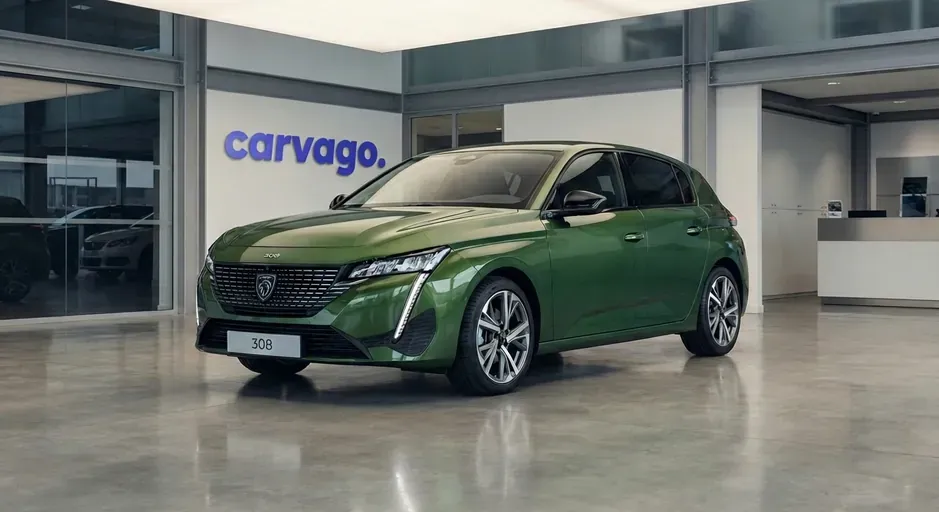
The third-generation Peugeot 308 represents the French brand's contender in the European compact family car class. Built on the Stellantis EMP2 V3 platform, series production began at the Mulhouse plant in France on 29 September 2021. European customer deliveries started in late 2021 for the Peugeot 308 hatchback, followed by the longer Peugeot 308 SW estate in March 2022. Both body styles remain in active European production.
The third generation was engineered around a multi-energy approach from launch. Stellantis expanded the lineup over time, delivering the all-electric E-308 to European customers from July 2023, introducing a 48V mild hybrid in February 2024, and opening orders for an updated plug-in hybrid variant on 26 February 2025. A mid-cycle facelift premiered on 26 August 2025, bringing an illuminated front emblem, revised three-claw exterior lighting, and an upgraded high-voltage battery for the electric model.
Positioned to appeal to commuters, fleet operators, and private buyers seeking expressive design alongside a tech-focused cabin architecture, this review examines the third-generation 308 across both its pre-facelift and updated iterations.
Early build years of the third-generation Peugeot 308 frequently draw criticism from owners regarding electronic stability. In some cases, owners report that the central touchscreen and digital toggle shortcuts can freeze, show a blank screen on start-up, or reboot while driving. Intermittent connection dropouts and audio lag with wireless smartphone integration were also widely noted on cars built in 2021 and 2022. Dealership-installed software updates and over-the-air firmware patches have resolved the majority of reboot loops, though early production cars require verification that current software is installed.
On mechanical components, the most critical issue concerns the early diesel Peugeot 308 equipped with the 1.5 BlueHDi engine manufactured from launch in September 2021 up to February 2023. Official service bulletins describe premature stretching and wear of the factory 7 mm camshaft interconnecting chain. Symptoms typically emerge as a metallic ticking or rattling noise from the top of the cylinder head during a cold idle. Left unaddressed, chain elongation can cause timing slippage or chain failure, leading to severe internal engine damage. Factory production was upgraded in early 2023 with a reinforced 8 mm chain arrangement, and affected earlier engines require retrofitting with the revised camshaft housing, tensioner, and chain kit along with updated oil specification.
For newer electrified models, owners report low-speed driveline hesitation on the hybrid Peugeot 308 with the 48V powertrain introduced in early 2024. During city driving, the handover between regenerative electric deceleration and mechanical friction clutching can cause noticeable shudder or clunking when coming to a halt or restarting in slow traffic. Transmission software calibration updates have reduced shift harshness, but slight low-speed hesitation remains an inherent characteristic of this dual-clutch transmission design.
Several verified European safety recalls affect this generation across its production run:
The third-generation Peugeot 308 offers one of the most varied powertrain line-ups in the compact segment, spanning conventional combustion units, 48V mild hybrids, plug-in hybrids, and a fully electric version. All variants send power exclusively to the front wheels.
| Engine | Fuel | Power | Gearbox | Model years |
|---|---|---|---|---|
| 1.2 PureTech 110 | Petrol | 81 kW (110 hp) | 6-speed manual | 2021–2023 |
| 1.2 PureTech 130 | Petrol | 96 kW (130 hp) | 6-speed manual | 2021–2024 |
| 1.2 PureTech 130 | Petrol | 96 kW (130 hp) | 8-speed automatic | 2021–2024 |
| 1.2 Hybrid 136 | Mild hybrid petrol | 100 kW (136 hp) | 6-speed dual-clutch automatic | 2024–2025 |
| 1.2 Hybrid 145 | Mild hybrid petrol | 107 kW (145 hp) | 6-speed dual-clutch automatic | 2025–present |
| 1.5 BlueHDi 130 | Diesel | 96 kW (130 hp) | 6-speed manual | 2021–2022 |
| 1.5 BlueHDi / Diesel 130 | Diesel | 96 kW (130 hp) | 8-speed automatic | 2021–present |
| Plug-in Hybrid 180 | Plug-in hybrid petrol | 133 kW (180 hp) | 8-speed automatic | 2021–2025 |
| Plug-in Hybrid 225 | Plug-in hybrid petrol | 165 kW (225 hp) | 8-speed automatic | 2021–2025 |
| Plug-in Hybrid 195 | Plug-in hybrid petrol | 143 kW (195 hp) | 7-speed dual-clutch automatic | 2025–present |
| E-308 156 (54 kWh) | Electric | 115 kW (156 hp) | Single-speed automatic | 2023–2025 |
| E-308 156 (58.4 kWh) | Electric | 115 kW (156 hp) | Single-speed automatic | 2025–present |
For regular urban driving and short suburban commutes, the electrified petrol powertrains or the electric Peugeot 308 are the most suitable choices. The 48V mild hybrid models operate on electric power for substantial portions of stop-and-start traffic, avoiding the soot accumulation and warm-up issues that afflict diesels in the city. Early non-hybrid petrol Peugeot 308 variants are available as used cars, but buyers should ensure verified maintenance history.
For mixed everyday driving combining urban routes with weekend highway trips, the hybrid Peugeot 308 strikes a practical balance. If you have home or workplace charging access, the plug-in hybrid options cover typical daily commutes entirely on electricity while retaining petrol capability for unconstrained weekend travel. Real-world testing reveals negligible performance difference between the earlier plug-in hybrid versions, making the lower-output variant the sensible used buy.
For high-mileage drivers spending most of their time on the motorway, the diesel Peugeot 308 paired with the eight-speed automatic remains the most capable option. It settles into a quiet cruise and delivers long-distance fuel economy that neither petrol nor depleted plug-in hybrids can match at sustained highway speeds.
For towing, the diesel and plug-in hybrid models provide the necessary pulling ability and the highest rated trailer capacities in the range. The all-electric version is not homologated for trailer towing and is restricted to carrier-mounted accessories.
For detailed ownership findings, known mechanical vulnerabilities, and safety recalls across these powertrains, refer to the owner experiences section.
| Body Style & Powertrain | Length (mm) | Width (mm) | Height (mm) | Wheelbase (mm) | Boot Capacity (Seats Up / Folded, l) |
|---|---|---|---|---|---|
| Hatchback (Petrol / Diesel / Hybrid) | 4,367 | 1,852 | 1,441 | 2,675 | 412 / 1,323 |
| Hatchback (Plug-in Hybrid / Electric) | 4,367 | 1,852 | 1,441 | 2,675 | 361 / 1,271 |
| SW Estate (Petrol / Diesel / Hybrid) | 4,636 | 1,852 | 1,442 | 2,732 | 608 / 1,634 |
| SW Estate (Plug-in Hybrid) | 4,636 | 1,852 | 1,442 | 2,732 | 548 / 1,574 |
Underfloor traction battery hardware accounts for the reduced luggage volume in plug-in hybrid and electric versions.
Rear passenger accommodation is the primary spatial compromise of the third-generation Peugeot 308 hatchback. Rear knee room and foot space are noticeably restricted for adults seated behind a taller driver, while sweeping roof pillars limit the outward view. The stretched wheelbase of the Peugeot 308 estate improves rear legroom slightly, though passenger space remains tighter than in boxier segment alternatives. Everyday cargo loading favours the estate, which incorporates remote release levers inside the luggage bay for a three-way folding rear bench, producing an uninterrupted load floor. The hatchback relies on a simpler two-piece split-folding arrangement with an optional central through-loading hatch, and neither body style offers sliding rear seat adjustment.
On open roads, the Peugeot 308 proves a stable cruiser, isolating wind and road noise effectively. Low-speed compliance is less settled: over broken city asphalt, the ride can feel busy, particularly on examples fitted with larger optional wheels where sharp ridges transmit noticeable impacts through the rear torsion beam. The heavier electric Peugeot 308 and plug-in hybrid variants maintain disciplined body control through corners. Testers divide over handling involvement. While the small steering wheel creates an immediate sense of agility on turn-in, multiple reviews find the weighting artificial off-centre and lacking natural feedback.
Inside, tactile finishes and assembly standards earn praise across tests, as do the supportive front seats. Ergonomics, by contrast, draw frequent criticism. The high-mounted instrument display remains partially obscured by the steering-wheel rim for drivers outside average height bands, which is compounded on longer trips by an offset pedal layout. The infotainment interface also tests patience with sluggish menu responses and touchscreen-integrated climate controls that require diverted attention on the move.
Professional verdicts converge on the car's high perceived interior quality and relaxed cruising manners, whether in hatchback form or as the Peugeot 308 SW estate. They split sharply on driver engagement and the everyday usability of the dashboard architecture, characteristics that the mid-cycle refresh left fundamentally unchanged.
All market charts in this section reflect listings of the entire Peugeot 308 model family on Carvago, including earlier generations in the dataset, rather than isolating the reviewed generation alone. Consequently, this overview does not establish a separate price level specifically for the third generation. Across the advertised model years, the median asking price spans from €12,900 for 2019 vehicles to €31,000 for 2026 models, with 2022 examples recording a median asking price of €21,000. These figures reflect the varying mix of powertrains, body styles, and specifications available across the wider model range.
The number of advertised Peugeot 308s ranged from 9,552 in August 2026 to a peak of 10,154 in July 2026, as shown in the monthly counts below.
Active listings over time
| Month | Peugeot 308 |
|---|---|
| 2026-04 | 9 786 |
| 2026-05 | 9 900 |
| 2026-06 | 10 094 |
| 2026-07 | 10 154 |
| 2026-08 | 9 552 |
| 2026-09 | 9 836 |
Source Carvago
With active listings staying between 9,552 and 10,154 cars through September 2026, buyers can expect broad choice and relatively stable overall availability from month to month.
The median asking price of cars advertised today, built in 2019, is €12,900, while the median asking price of cars advertised today, built in 2026, is €31,000. The chart below shows how these median asking prices compare across build years.
Median advertised price by year of manufacture
| Model year | Peugeot 308 |
|---|---|
| 2019 | 12 900 |
| 2020 | 13 000 |
| 2021 | 14 700 |
| 2022 | 21 000 |
| 2023 | 24 900 |
| 2024 | 23 900 |
| 2025 | 28 400 |
| 2026 | 31 000 |
Source Carvago
Buyers considering earlier model years find median asking prices from €12,900 for 2019 to €14,700 for 2021, compared with €21,000 for 2022 models. The figures do not increase monotonically across build years, as 2024 models show a lower median asking price at €23,900 than 2023 models at €24,900, before reaching €31,000 for 2026 models.
This depreciation curve illustrates how the Peugeot 308 loses residual value as it ages, shedding 21% in its first year and 40% by age three. The data below tracks this progression across seven years of vehicle age.
Residual value by vehicle age
| Vehicle age | Peugeot 308 |
|---|---|
| New | 31 700 |
| 1 yr | 24 900 |
| 2 yrs | 21 600 |
| 3 yrs | 19 000 |
| 4 yrs | 18 100 |
| 5 yrs | 13 200 |
| 6 yrs | 11 600 |
| 7 yrs | 10 100 |
Source Carvago
Across the seven-year span shown, the model sheds 68% of its initial residual value. The initial steep drop slows markedly between age three and age four, before another sharp decline occurs at age five.
In September 2026, petrol led the advertised Peugeot 308 selection with 5,004 listings, alongside 3,751 diesel listings. The chart below tracks how active listings across each powertrain developed between April and September 2026.
Supply composition by fuel type
Petrol
Diesel
Hybrid
Electric
LPG
| Month | Petrol | Diesel | Hybrid | Electric | LPG |
|---|---|---|---|---|---|
| 2026-04 | 5 032 | 3 719 | 764 | 243 | 5 |
| 2026-05 | 5 046 | 3 860 | 724 | 235 | 4 |
| 2026-06 | 5 090 | 3 984 | 733 | 252 | 4 |
| 2026-07 | 5 197 | 3 920 | 734 | 266 | 5 |
| 2026-08 | 4 910 | 3 620 | 743 | 238 | 3 |
| 2026-09 | 5 004 | 3 751 | 802 | 234 | 2 |
Source Carvago
Petrol and diesel models form the vast majority of the available supply, giving used buyers by far the widest variety of vehicles to choose from. By comparison, electrified options remain much more limited, with September 2026 recording 802 hybrid and 234 electric listings.
The chart tracks the average asking price for the Peugeot 308 between April 2026 and September 2026, beginning the period at €20,400.
Average price development over time
| Month | Peugeot 308 |
|---|---|
| 2026-04 | 20 400 |
| 2026-05 | 20 500 |
| 2026-06 | 20 500 |
| 2026-07 | 20 600 |
| 2026-08 | 20 800 |
| 2026-09 | 20 700 |
Source Carvago
Prices stayed within a narrow band across the six months, peaking at €20,800 in August before closing at €20,700 in September. The net movement from €20,400 represents a shift of less than two percent, reflecting minor month-to-month variation rather than a sustained price trend.
Broad powertrain line-up spanning petrol, diesel, hybrids, and a fully electric model
Quiet and composed high-speed cruising with disciplined body control
High-quality cabin finishes with tactile materials and supportive front seats
Restricted rear knee and foot space for adults, particularly in the hatchback
Ergonomic compromises, including touchscreen-integrated climate controls and an obscured instrument cluster
Low-speed driveline hesitation in city traffic and software instability on early build years
Early models are generally usable once software updates are applied, but the diesel Peugeot 308 built before February 2023 carries risk unless retrofitted with the upgraded 8 mm camshaft chain.
For mixed everyday driving, the hybrid Peugeot 308 strikes the most practical balance with electric operation in slow traffic. Motorway drivers should opt for the diesel automatic, provided long journeys justify it.
The hatchback has limited rear passenger room, making the longer Peugeot 308 estate the better family choice for its larger luggage compartment and easier cargo loading.
Verify the service history by VIN to confirm all recalls are completed, and test the infotainment and cold-start engine sound on early diesels before buying.
Sources: media.stellantis.com, peugeot.co.uk, adac.de, autocar.co.uk, autoexpress.co.uk
This article was prepared using artificial intelligence tools. The section guarantor is Petr Dušek.
SEAT Leon Mk4 review: real owner experience, common faults, engine picks, and running costs. Read our expert verdict before you buy.
Oct 24, 2026
Toyota Corolla review: real owner experience, hybrid reliability, common faults, running costs and used prices. Read our full verdict.
Oct 19, 2026
Detailed comparison of the Citroën C4 vs Škoda Octavia. We compare the driving characteristics, space, and equipment of these used cars. Find out from our verdict which car to choose.
Apr 18, 2026