Car battle
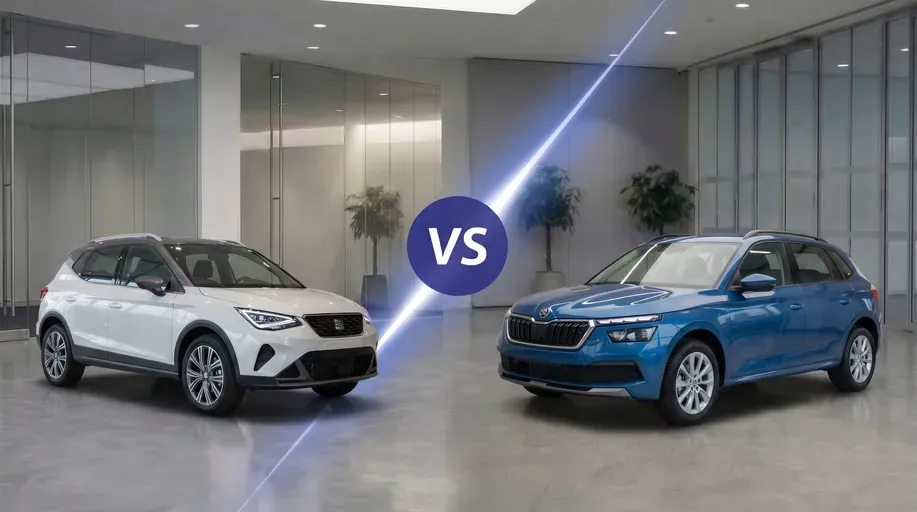
Seat Arona vs. Škoda Kamiq: Complete comparison 2026
Detailed comparison: Seat Arona vs. Škoda Kamiq. Which used city SUV is better? Discover the differences in space, features, and reliability in our review.
Oct 16, 2026
Articles
Review
Opel Mokka review: real owner insights, petrol and EV running costs, common faults, and used prices — everything you need before you buy.
November 1, 2026
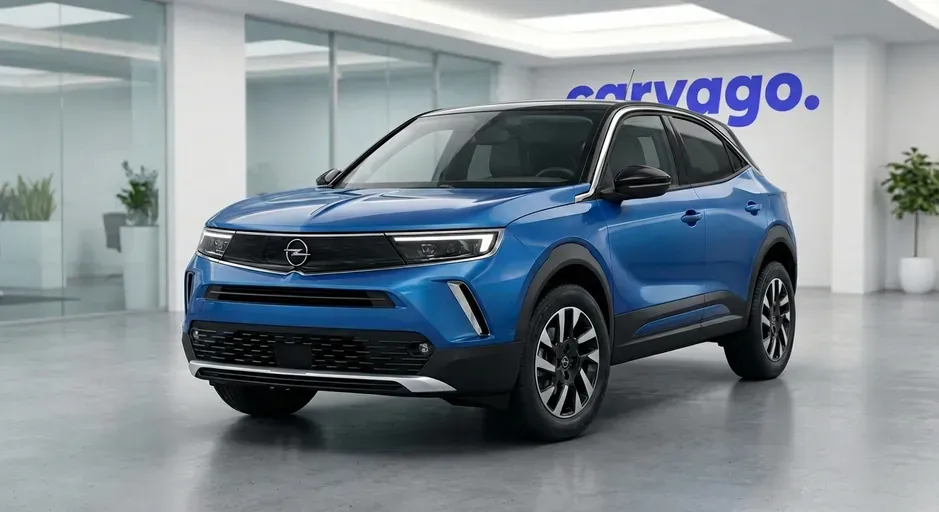
The second-generation Opel Mokka represents a sharp departure in the subcompact crossover segment. Built on the Stellantis CMP platform, it is sold exclusively as a five-door Opel Mokka SUV, targeting drivers who seek distinctive urban styling and compact exterior dimensions for daily commuting.
This review focuses strictly on the second generation (Mokka B), covering vehicles delivered from early 2021 through 2026. Order books originally opened on 22 September 2020, with first customer deliveries reaching European dealer networks on 02 March 2021 across petrol, diesel, and all-electric variants. A 48-volt hybrid joined the order books on 13 June 2024.
A mid-cycle facelift opened for orders on 23 October 2024, introducing restyled front and rear bumpers, the updated brand emblem, and a revised steering wheel alongside an upgraded infotainment system. The line-up expanded further when the high-performance all-electric GSE variant became orderable on 25 November 2025.
Owner experiences with the second-generation Opel Mokka center primarily around mechanical upkeep on combustion models, electronic glitches in the cabin, and several safety recall actions initiated across Europe. Because early examples entered service in 2021, long-term durability data beyond five years remains limited, but clear patterns have emerged from workshop reports, technical inspections, and endurance testing.
The most critical mechanical vulnerability involves early versions of the petrol Opel Mokka built from 2020 through late 2023. Tests describe accelerated degradation of the engine's oil-submerged timing belt caused by chemical reactions with fuel-diluted oil. As the rubber breaks down, shed particles accumulate in the oil sump, eventually clogging the oil pump strainer and the brake vacuum pump. In some cases, this condition causes oil starvation warnings, rough running, and diminished braking assistance. Revised belt materials and strict annual oil servicing mitigate the issue, while the hybrid Opel Mokka introduced a timing chain that eliminates this failure mode entirely.
Electronic dependability presents another recurring complaint. Owners report and professional endurance tests describe intermittent freezing of the central infotainment screen, sudden disconnections during smartphone mirroring, and the digital instrument cluster unexpectedly resetting to default settings after restarting. In most cases, having an authorized workshop flash the latest control module software resolves these digital stability issues without requiring replacement hardware.
Chassis evaluations during mandatory vehicle inspections and long-term teardowns show that the front lower control arm wishbone bushings develop noticeable play earlier than anticipated, requiring replacement. Inspectors also document premature superficial corrosion forming along the welded seams of the front axle subframe on vehicles approaching 100,000 km, which warrants preventive underbody protective coating.
Several official safety campaigns have been published for this generation. Buyers should verify via dealer service history or an independent inspection service such as CarAudit whether the required remedial work has been documented on a prospective purchase.
| Defect & Stated Risk | Affected Powertrain | Build Window | Reach | Workshop Remedy |
|---|---|---|---|---|
| Belt-starter generator clearance (fire risk): Insufficient clearance between the particulate filter pipe and generator cap risks water ingress, short circuits, and thermal events. | 1.2 Turbo 48V Hybrid | February 2024 – January 2026 | Worldwide | Install redesigned insulation cap; check pipe clearance, reposition if under 10 mm, or replace damaged pipes. |
| Fuel rail hose connection (fire risk): Loose union nuts between the high-pressure pump and fuel rail may result in fuel leaks. | 1.2 Turbo petrol / 1.5 Diesel | November 2022 – April 2025 (diesel until 2023) | Worldwide | Inspect and retorque union nuts; replace damaged or chafed fuel line assemblies. |
| Battery management calibration (propulsion loss): Software error causing starting difficulties and sudden loss of drive while operating the electric Opel Mokka. | Electric | May 2022 – March 2023 | Worldwide | Reprogram the battery management unit with updated calibration software. |
| Steering rack pinion failure: Steering gear failing specifications, creating a risk of internal cracking that causes stiff steering or steering lock. | All powertrains | April 2024 – May 2024 | Worldwide | Replace the complete steering gear assembly free of charge. |
| Wiper failure in sub-zero temperatures: Windscreen wipers fail to activate in ambient temperatures below 0°C, reducing driver visibility. | All powertrains | February 2021 – September 2021 | Europe-wide | Reprogram the body control module software. |
The second-generation Opel Mokka launched with a focused mix of turbocharged three-cylinder petrol units, a four-cylinder diesel, and a pure-electric powertrain, later updated with mild-hybrid technology and a dedicated performance electric flagship. All versions route drive exclusively through the front wheels.
| Engine | Fuel | Power | Gearbox | Model years |
|---|---|---|---|---|
| 1.2 Turbo | Petrol | 74 kW (100 hp) | 6-speed manual | 2021–2024 |
| 1.2 Turbo | Petrol | 96 kW (130 hp) | 6-speed manual | 2021–2023 |
| 1.2 Turbo | Petrol | 96 kW (130 hp) | 8-speed automatic | 2021–2024 |
| 1.2 Turbo | Petrol | 100 kW (136 hp) | 6-speed manual | 2023–present |
| 1.2 Hybrid 48V | Petrol Mild-Hybrid | 100 kW (136 hp) | 6-speed dual-clutch automatic | 2024–present |
| 1.5 Diesel | Diesel | 81 kW (110 hp) | 6-speed manual | 2021–2023 |
| Mokka Electric | Electric | 100 kW (136 hp) | Automatic | 2021–2023 |
| Mokka Electric | Electric | 115 kW (156 hp) | Automatic | 2023–present |
| Mokka GSE | Electric | 207 kW (281 hp) | Automatic | 2025–present |
For urban commuting and stop-start city driving, the electric Opel Mokka and the newer 48-volt hybrid Opel Mokka are the most suitable configurations. The hybrid can manoeuvre at parking speeds and crawl through congestion purely on its integrated electric motor, which smooths out low-speed traffic and avoids clutch fatigue. The electric models provide immediate throttle pickup and quiet operation, provided you have regular access to home or destination charging.
For mixed suburban and regional use, the mid-range petrol Opel Mokka serves as a balanced all-rounder. Earlier versions with the torque-converter automatic transmission offer seamless gear shifts without dual-clutch hesitation, while the manual models remain capable for everyday commuting without the added complexity of high-voltage battery architecture.
For long-distance motorway driving, the diesel Opel Mokka remains a practical choice on the used market. Although withdrawn from production in 2023 and restricted to a manual gearbox, its high pulling power at low engine speeds ensures steady highway pacing and low operating costs over high annual mileage.
Drivers planning to pull a small trailer or fit a heavy carrier must choose a combustion or hybrid model, as electric variants are not rated for towing.
For known mechanical faults, maintenance requirements, and factory recall campaigns across these powertrains, refer to the owner experiences section.
| Dimension | Combustion & Hybrid | Electric |
|---|---|---|
| Length (mm) | 4,150 | 4,150–4,151 |
| Width excluding mirrors (mm) | 1,787 | 1,785–1,787 |
| Height (mm) | 1,531–1,535 | 1,531–1,534 |
| Wheelbase (mm) | 2,557 | 2,561 |
| Boot volume – seats upright (l) | 350 | 310 |
| Boot volume – seats folded (l) | 1,105 | 1,060 |
The second-generation Opel Mokka prioritises compact urban proportions over cabin room. In the second row, knee clearance and footwell space are tight for taller adults, particularly behind a tall driver. Narrow rear door openings combined with wide sills also complicate ingress and egress. The rear seat bench is fixed rather than sliding, though it folds in a standard 60/40 split configuration to expand carrying capacity.
Luggage practicality varies by powertrain: the electric Opel Mokka SUV loses underfloor volume to battery packaging, leaving the petrol, diesel, and hybrid variants with the deeper cargo compartment.
Professional tests describe the Opel Mokka as a firm-riding crossover. Around town, the suspension reacts abruptly to sharp ridges, potholes, and transverse joints, feeling fidgety on broken asphalt. It settles into a more composed rhythm on motorways, with the heavier, low-slung electric Opel Mokka exhibiting a calmer secondary ride over long road swells. Steering is light for parking, delivering safe and predictable cornering, though testers consistently point out an artificial weighting and a lack of road feedback around the centre. Cabin noise is subdued at urban speeds, but wind rush along the windscreen pillars and noticeable tyre roar penetrate the cabin on the motorway, accompanied by petrol engine vibration under heavy acceleration.
Testers praise the ergonomics of retaining physical switches and rotary dials for the climate controls beneath the digital instrument panel, avoiding touch-only frustrations. Front seating comfort and driving position are well regarded, though hard plastics on the transmission tunnel and lower door casings detract from overall cabin ambiance. Practical shortcomings noted in evaluations include missing rear roof grab handles and an input lag when pressing the engine start button.
Reviewers broadly agree on the stiff low-speed damping, yet they diverge on handling: while urban assessments commend its agile direction changes, open-road reviews judge the chassis as disconnected compared to key segment rivals. The facelift addressed initial cabin criticisms by introducing less scratch-sensitive console plastics, a revised steering wheel, and a rear interior reading light.
All charts in this section are drawn from Carvago’s listings of the whole model family, including other generations represented in the data, not only the reviewed generation. Consequently, this market data does not establish a separate price level for the reviewed generation. Across the wider Opel Mokka selection currently advertised, the median asking price stands at €14,300 for 2019 cars, sits at €18,400 for 2021 models, and reaches €24,000 for 2026 vehicles. These differences across model years reflect varying mileage, powertrains, and equipment levels across the diverse mix of vehicles currently available.
Active Opel Mokka listings ranged from 16,578 in April 2026 to a peak of 17,974 in July 2026. The monthly figures below show how advertised volumes developed across this six-month window.
Active listings over time
| Month | Opel Mokka |
|---|---|
| 2026-04 | 16 578 |
| 2026-05 | 16 724 |
| 2026-06 | 16 906 |
| 2026-07 | 17 974 |
| 2026-08 | 17 133 |
| 2026-09 | 17 106 |
Source Carvago
Buyers have an extensive selection to choose from, as available inventory remained comfortably above 17,000 vehicles through late summer and finished at 17,106 in September 2026.
The median asking price of used Opel Mokka listings advertised today stands at €14,300 for cars built in 2019 and reaches €24,000 for models built in 2026. The figures do not increase across every consecutive model year, as listings built in 2021 show a median asking price of €18,400 compared to €19,000 for those built in 2020.
Median advertised price by year of manufacture
| Model year | Opel Mokka |
|---|---|
| 2019 | 14 300 |
| 2020 | 19 000 |
| 2021 | 18 400 |
| 2022 | 18 900 |
| 2023 | 20 600 |
| 2024 | 21 700 |
| 2025 | 23 400 |
| 2026 | 24 000 |
Source Carvago
Buyers exploring models built between 2022 and 2024 encounter median asking prices from €18,900 to €21,700, while listings built in 2025 require a median asking price of €23,400.
This depreciation curve shows how the model's value declines as it ages, shedding approximately 13% of its residual value in the first year and 23% by age three. The chart below tracks this decline across seven years.
Residual value by vehicle age
| Vehicle age | Opel Mokka |
|---|---|
| New | 23 800 |
| 1 yr | 20 600 |
| 2 yrs | 19 300 |
| 3 yrs | 18 400 |
| 4 yrs | 17 300 |
| 5 yrs | 16 000 |
| 6 yrs | 13 700 |
| 7 yrs | 12 800 |
Source Carvago
Across the seven years shown, the model loses roughly 46% of its residual value, with the largest drop occurring in the first year before annual losses moderate. A second noticeable decline appears between ages five and six, after which depreciation tapers off toward age seven.
Between April and September 2026, advertised petrol models moved from 12,399 listings in the first month to 14,244 in the last. The chart below shows how active listings split across each fuel type over this six-month period.
Supply composition by fuel type
Petrol
Diesel
Hybrid
Electric
LPG
| Month | Petrol | Diesel | Hybrid | Electric | LPG |
|---|---|---|---|---|---|
| 2026-04 | 12 399 | 757 | 507 | 2 833 | 49 |
| 2026-05 | 13 288 | 809 | 492 | 2 059 | 45 |
| 2026-06 | 13 685 | 794 | 470 | 1 891 | 35 |
| 2026-07 | 14 672 | 785 | 499 | 1 963 | 32 |
| 2026-08 | 14 169 | 725 | 545 | 1 648 | 26 |
| 2026-09 | 14 244 | 748 | 565 | 1 498 | 29 |
Source Carvago
In September 2026, petrol cars represented the vast majority of the offer with 14,244 listings, followed by 1,498 electric and 748 diesel options. Buyers seeking alternatives will face far fewer choices on the market, with 565 hybrid and 29 LPG vehicles advertised that month.
The chart tracks the average asking price for the Opel Mokka from April 2026 to September 2026, opening at €19,300 before easing in early summer.
Average price development over time
| Month | Opel Mokka |
|---|---|
| 2026-04 | 19 300 |
| 2026-05 | 19 100 |
| 2026-06 | 18 800 |
| 2026-07 | 18 600 |
| 2026-08 | 18 600 |
| 2026-09 | 18 600 |
Source Carvago
Across the six-month period, the average asking price moved down from €19,300 to €18,600 before holding flat from July through September 2026, representing a modest overall shift of under 4%.
Physical dials and buttons for climate controls ensure straightforward ergonomics
Agile handling and light steering well suited for urban driving and parking
Broad powertrain choices spanning long-range diesel, smooth hybrid, and pure electric options
Vulnerable wet timing belt on early petrol engines requiring diligent maintenance
Cramped rear seating combined with narrow door apertures and wide sills
Firm low-speed ride over sharp bumps and noticeable tyre roar at motorway speeds
It is dependable if properly maintained, though non-hybrid petrol models built before 2024 suffer from timing belt degradation in engine oil that can clog the oil strainer. The hybrid Opel Mokka resolve this with a timing chain.
The hybrid Opel Mokka and electric Opel Mokka suit city driving best thanks to smooth low-speed electric operation, while the diesel is preferable for regular motorway journeys. Buyers who need to tow trailers must choose a combustion or hybrid model, as electric versions are not rated for towing.
Verify by VIN with an authorized dealer that all official safety recall actions have been completed. For non-hybrid petrol models built before 2024, inspect the timing belt through the oil filler cap for signs of degradation.
It works poorly as a primary family vehicle because compact exterior dimensions leave tight rear legroom and narrow door openings for rear passengers. Luggage capacity is also modest, with electric versions losing underfloor cargo space to battery packaging.
Sources: media.stellantis.com, adac.de, ec.europa.eu, autobild.de, autocar.co.uk
This article was prepared using artificial intelligence tools. The section guarantor is Petr Dušek.
Detailed comparison: Seat Arona vs. Škoda Kamiq. Which used city SUV is better? Discover the differences in space, features, and reliability in our review.
Oct 16, 2026
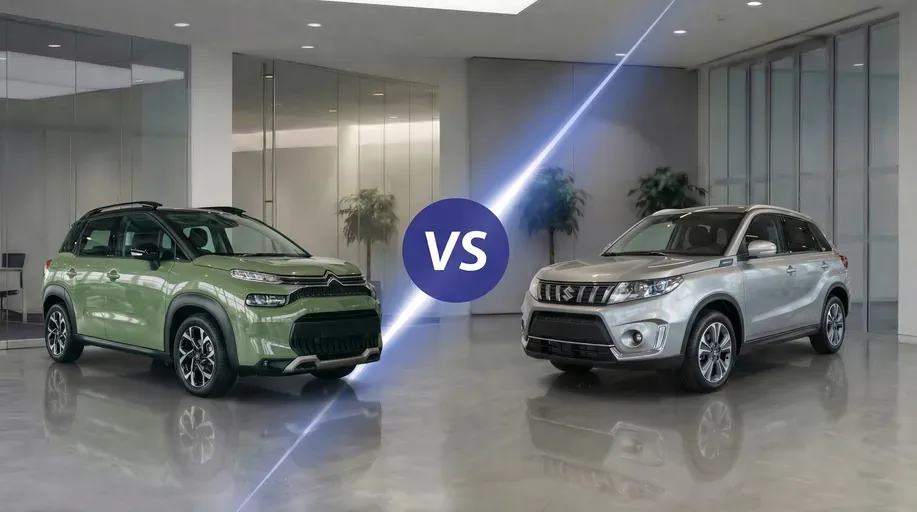
Detailed comparison of used SUVs Citroën C3 Aircross and Suzuki Vitara. Find out the differences in engines, equipment, or reliability and read our final verdict.
Apr 13, 2026
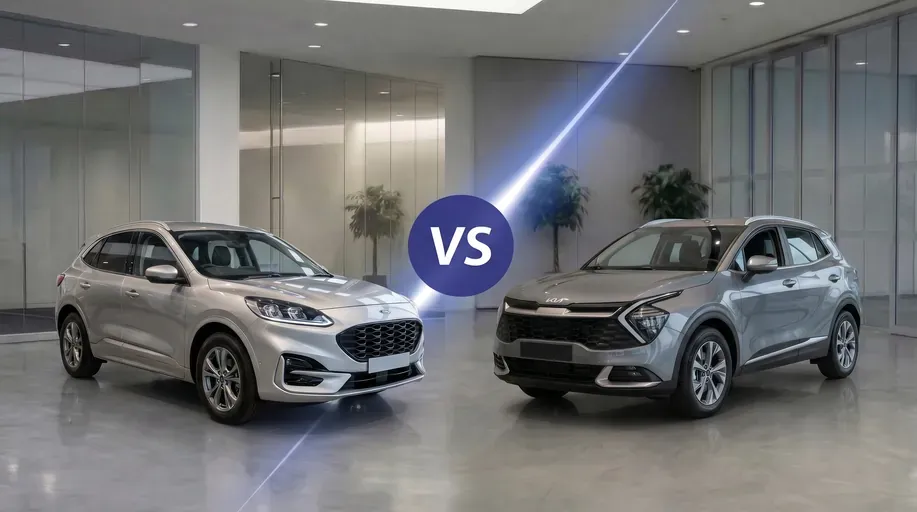
Detailed comparison: Ford Kuga vs. Kia Sportage. Discover the differences in engines, equipment, and reliability, and find out which used SUV is the best choice for you.
Apr 22, 2026