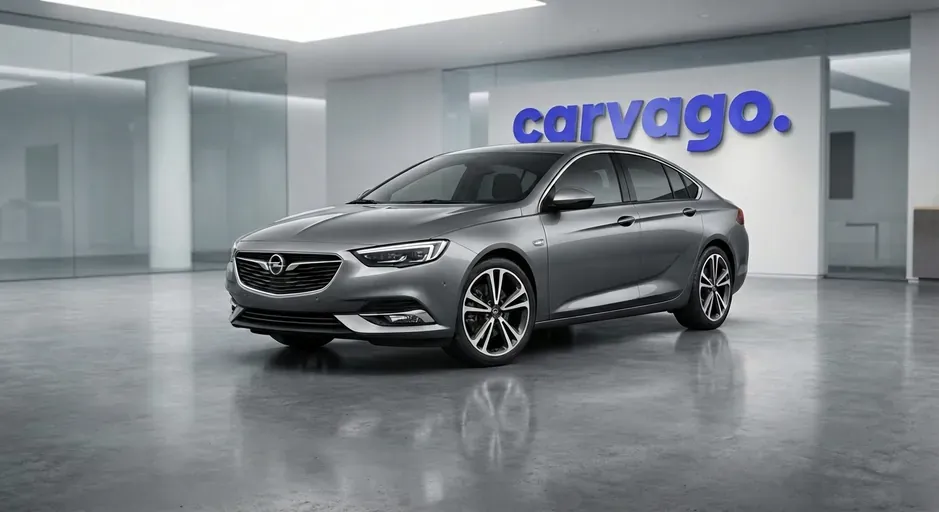
Long-term reliability data and workshop records for the second-generation Opel Insignia present a clear pattern: mechanically sound fundamentals offset by persistent fluid weeping, emission sensor sensitivities on diesels, and electrical gremlins tied to battery voltage.
Repeated Faults from Tests and Owner Reports
Mandatory roadworthiness inspection data shows that fluid leaks around the powertrain represent the most frequent mechanical issue on this generation. Even at early periodic inspections, oil seepage from the engine and transmission occurs at rates substantially higher than the segment average. Technicians trace these fluid losses primarily to crankshaft radial oil seals, oil sump mating surfaces, and turbocharger oil feed and return fittings. While re-sealing cures immediate seepage, higher-mileage cars often re-develop minor oil misting along lower casing joints.
Diesel powertrains carry specific mechanical watchpoints. On the 1.6-litre diesel, tests and specialist workshops describe timing chain rattle during cold starts, caused by hydraulic tensioners that allow engine oil to drain back when parked. If unaddressed, chain flapping against plastic guides can lead to premature wear or guide breakage over time. On earlier versions of the 2.0-litre diesel, the secondary camshaft-to-camshaft synchronizing chain can develop slack past higher mileages, producing a distinct metallic rattle at idle.
On diesel Opel Insignia variants conforming to recent Euro 6 standards, selective catalytic reduction components frequently trigger warning messages. Common culprits include urea crystallization around the injector tip, failing heating elements inside the urea tank, and electronic drift in upstream or downstream nitrogen oxide sensors. These malfunctions typically trigger an emissions warning along with an engine restart countdown.
Roadside breakdown statistics highlight the 12-volt starter battery as the single most frequent failure point across all model years. The car’s complex network of active safety modules, keyless entry, and infotainment draws considerable quiescent current. A drop in battery voltage frequently generates phantom dashboard warnings—such as false parking brake errors or radar sensor alerts—long before the starter motor struggles to turn over. On Opel Insignia 4x4 variants, owners also report that neglecting differential and clutch fluid maintenance can lead to binding thuds or shutter during tight, low-speed turning maneuvers.
Verified Safety Recalls
Official European safety registers record several manufacturer recall actions across the generation’s production life:
- Hydraulic Brake Pressure Regulator (March 2023): Affecting 194,032 vehicles worldwide built between 13 December 2016 and 5 October 2020. The official notice stated that "due to a vacuum loss in the hydraulic brake pressure regulator, the automatic emergency brake may not activate, increasing the risk of an accident." The remedy requires an authorized workshop to update the software in the electronic brake control module.
- Engine Tailpipe Emissions (August 2023): Affecting 25,639 vehicles worldwide across shared model ranges built from 2017 to 2019. The notice cited an "increased lambda value" departing from regulatory emission standards, rectified via an engine control unit software calibration.
- Wheel Fastener Torque Deviation (February 2021): Covering 3,561 vehicles worldwide built between 23 June 2019 and 10 July 2020. Official notices warned that "the wheel screws are not tightened with the required torque. This could lead to a wheel being lost during driving, increasing the risk of an accident." Workshops inspect and retorque all wheel fasteners.
- Fuel Feed Hose Abrasion (January 2020): Covering vehicles built from July 2016 to November 2018 (primarily 2.0-litre diesels). The defect notice stated that "the fuel hose may be damaged by contact with a support bracket. As a result, fuel may leak, increasing the risk of fire." Dealerships inspect the hose, replace it if abraded, and install protective sleeving with adjusted clearance.
- Turbocharger Oil Return Pipe (January 2020): Affecting vehicles built between 2 May 2017 and 21 February 2019. The safety alert noted that "the turbo charger oil return pipe may get damaged by cracks which may lead to oil leaks," presenting a fire risk. Workshops fit a revised return pipe.
- Brake Master Cylinder Sealing (June 2019): Restricted to 1.6-litre diesel models with manual transmissions built between 3 January 2017 and 29 June 2017. The notice cautioned that "defective sealing may cause an internal leakage on the brake master cylinder," which could lengthen braking distances. Authorized workshops replace the master cylinder and clutch slave cylinder assembly.