Review
Review Citroën C4: What do owners and experts really say?
Citroën C4 review: real owner insights, electric ë-C4 range, common faults, running costs, and used prices — everything you need before buying.
Oct 19, 2026
Opel Astra L review: real owner experience, reliability, running costs, engine picks and used prices — everything you need before you buy.
October 21, 2026
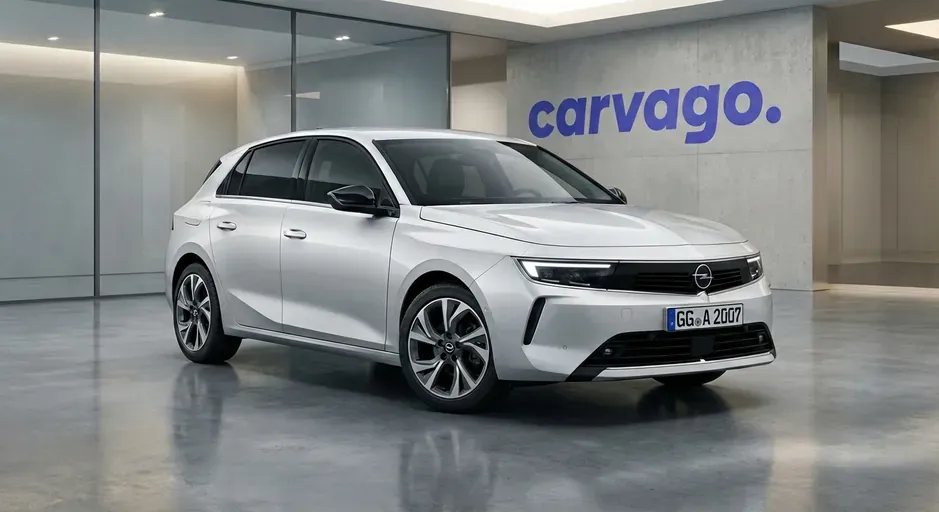
The Opel Astra represents the brand’s established contender in the competitive European compact class. This review focuses on the sixth-generation model, designated Astra L, engineered on the Stellantis EMP2 V3 platform. Following its world premiere in September 2021, European customer deliveries of the Opel Astra hatchback began in spring 2022, with the Opel Astra Sports Tourer estate arriving with customers in autumn 2022.
The model range expanded over time, adding a fully electric variant that reached European buyers in autumn 2023, followed by a 48V mild hybrid in March 2024. A mid-cycle facelift celebrated its world premiere in January 2026, with European order books opening in March 2026 and customer deliveries commenced in July 2026.
Sold as a five-door hatchback and a traditional estate, the Astra L is aimed primarily at daily commuters, company fleet drivers, and families looking for conventional compact proportions and estate utility rather than a taller crossover footprint.
Early production of the sixth-generation Opel Astra began arriving with European customers in spring 2022, while the mid-cycle facelift was delivered starting in July 2026. Because the facelifted models have only recently entered service, long-term durability data for their updated powertrains and battery packs is not yet established. For earlier production years, owners report a mix of initial assembly imperfections and electronic teething troubles alongside mechanical areas that require strict maintenance diligence.
On early cars built between 2022 and mid-2023, tests describe inconsistent exterior panel gaps, particularly around the bonnet and composite tailgate, as well as loose rubber door weatherstripping. Condensation droplets forming inside the rear LED light clusters have also been documented by multiple owners, requiring light cluster replacement under warranty. Inside the cabin, tests and owner reports frequently highlight software instability with the dual-screen infotainment system on models produced from 2022 to 2025. Symptoms include temporary black screens while driving, sluggish engagement of the reversing camera, and sporadic disconnections during wireless smartphone projection, though subsequent workshop software updates have resolved the most severe crashes.
Mechanically, the non-hybrid 1.2-litre petrol variants built through mid-2023 use a timing belt operating in an engine oil bath. If these vehicles endure frequent short journeys or are serviced with unapproved engine oil, the belt material can degrade and peel. Flaking debris drops into the oil sump, where it can clog the oil strainer mesh and the vacuum pump, eventually triggering low oil pressure alerts or reducing brake servo assistance. Checking the service history and belt condition through a physical inspection like CarAudit is essential. Hybrid variants introduced in early 2024 replaced this setup with an internal timing chain, eliminating the wet-belt wear concern. On diesel models built before May 2023, tests note that the internal camshaft drive chain can stretch prematurely, producing a metallic ticking or rattling sound during a cold start.
Several official safety campaigns have been coordinated across European markets for this generation:
| Announcement | Affected Models | Reason for Recall | Workshop Remedy |
|---|---|---|---|
| January 2025 | 48V hybrid and plug-in hybrid (built 2024) | Weakness in the quick-coupling connector at the high-pressure fuel pump may cause a fuel leak in the engine bay and create a fire risk. | Replacement of the high-pressure fuel pipe assembly with an optimized connector. |
| July 2025 | 1.2-litre petrol (2023–2025 production) | Inadequately torqued union nuts between the high-pressure fuel line and engine fuel rail could loosen and cause fuel leakage. | Retightening fuel rail connections to updated factory torque specifications or replacing lines if damaged. |
| February 2026 | 1.5-litre diesel (built July–October 2025) | Inaccurate seating of the cone on the common-rail high-pressure distribution tube may loosen the retaining nut, risking fuel leakage and fire. | Inspection of the distribution rail and replacement of high-pressure injection pipes where necessary. |
| April 2026 | 1.5-litre diesel (built October 2025–February 2026) | Slippage of the coolant water pump pulley can cause timing belt misalignment and engine failure, or detach the pulley into traffic. | Full replacement of the coolant water pump and inspection of the drive assembly. |
| June 2026 | All powertrains (built July 2023–July 2024) | An electronic module glitch can randomly deactivate interior door handles, preventing occupants from opening doors from inside in an emergency. | Recalibration and software update of the supervision module. |
| June 2026 | 1.2-litre petrol and hybrid (built late 2025–early 2026) | Incorrectly routed fuel line can chafe against the engine pulley, leading to fuel leakage and fire risk. | Inspection, repositioning, and securing of the fuel pipe, replacing chafed components. |
| September 2026 | All powertrains (built September–December 2025) | A Vehicle Supervision Module software fault can display incorrect speed-limit assistance indications. | Over-the-air or workshop VSM/infotainment software update. |
The sixth-generation Opel Astra offers an unusually diverse selection of front-wheel-drive powertrains, ranging from conventional turbocharged petrol and diesel units to 48V mild hybrids, plug-in hybrids, and a battery-electric version. Across its production run, transmission choices include six-speed manuals, conventional torque-converter automatics, and newer electrified dual-clutch units.
| Engine | Fuel | Power | Gearbox | Model years |
|---|---|---|---|---|
| 1.2 Turbo | Petrol | 81 kW (110 hp) | 6-speed manual | 2022 – 2024 |
| 1.2 Turbo | Petrol | 96 kW (130 hp) | 6-speed manual | 2022 – 2026 |
| 1.2 Turbo | Petrol | 96 kW (130 hp) | 8-speed automatic | 2022 – 2026 |
| 1.2 Turbo Hybrid 136 | Petrol mild hybrid | 100 kW (136 hp) | 6-speed dual-clutch automatic | 2024 – 2026 |
| 1.2 DI Turbo Hybrid 145 | Petrol mild hybrid | 107 kW (145 hp) | 6-speed dual-clutch automatic | 2026 – present |
| 1.5 Diesel | Diesel | 96 kW (130 hp) | 6-speed manual | 2022 – 2022 |
| 1.5 Diesel | Diesel | 96 kW (130 hp) | 8-speed automatic | 2022 – present |
| 1.6 Turbo Plug-in Hybrid | Petrol plug-in hybrid | 133 kW (180 hp) | 8-speed automatic | 2022 – 2025 |
| Astra GSe 1.6 Turbo Plug-in Hybrid | Petrol plug-in hybrid | 165 kW (225 hp) | 8-speed automatic | 2023 – 2025 |
| 1.6 Turbo Plug-in Hybrid | Petrol plug-in hybrid | 144 kW (196 hp) | 7-speed dual-clutch automatic | 2025 – present |
| Astra Electric (54 kWh) | Electric | 115 kW (156 hp) | 1-speed automatic | 2023 – 2026 |
| Astra Electric (58 kWh) | Electric | 115 kW (156 hp) | 1-speed automatic | 2026 – present |
For short journeys and urban driving, the electric Opel Astra is the smoothest option, eliminating cold-engine wear and providing silent, direct power delivery. If home charging is not an option, the mild-hybrid petrol with its electrified dual-clutch gearbox serves city drivers well by allowing low-speed electric gliding during stop-and-go traffic.
For mixed everyday driving, the conventional petrol Opel Astra powered by the stronger 1.2 Turbo provides adequate flexibility, though as a used car the eight-speed automatic is notably easier to live with than the manual. Drivers with regular charging access who split their time between city commuting and weekend road trips will find the standard hybrid Opel Astra plug-in variant well matched to their routine, whereas the stiffer Astra GSe offers negligible real-world straight-line performance gains over the standard plug-in version.
For high-mileage motorway cruising, the diesel Opel Astra paired with the eight-speed automatic remains the top choice, delivering strong low-rpm pulling power and maximum long-distance cruising range between refuelling stops.
If towing a trailer is a regular requirement, buyers should choose the 1.5 Diesel or the higher-output petrol and plug-in hybrid models for their certified towing limits, keeping in mind that the Astra Electric is unsuited for this purpose because it is not homologated for trailer operation.
For detailed information on known mechanical issues, timing components, and factory service campaigns across these powertrains, refer to the owner experiences section.
| Body Style & Powertrain | Dimensions L × W × Height (mm) | Wheelbase (mm) | Boot Capacity (seats up / folded, l) |
|---|---|---|---|
| Hatchback (Petrol, Diesel & Mild Hybrid) | 4,374 × 1,860 × 1,441–1,470 | 2,675 | 422 / 1,339 |
| Hatchback (Plug-in Hybrid & Electric) | 4,374 × 1,860 × 1,442–1,488 | 2,675 | 352 / 1,268 |
| Sports Tourer (Petrol, Diesel & Mild Hybrid) | 4,642 × 1,860 × 1,443–1,480 | 2,732 | 597 / 1,634 |
| Sports Tourer (Plug-in Hybrid & Electric) | 4,642 × 1,860 × 1,443–1,481 | 2,732 | 516 / 1,553 |
The optional premium audio subwoofer reduces underfloor luggage capacity across all models.
Inside the Opel Astra, front occupants have good headroom and supportive seating posture, but rear legroom remains strictly average for the compact segment. Taller passengers travelling behind tall front occupants will find kneeroom limited, and the rear bench is fixed without any sliding adjustment to rebalance passenger space against cargo volume. The Opel Astra hatchback uses a two-way split-folding rear backrest that drops to accommodate bulkier items. For demanding everyday hauling, the estate body of the Opel Astra Sports Tourer offers noticeably greater utility: its extended wheelbase eases entry into the second row, while a three-way split rear seat with remote release levers in the luggage bay creates a flat load floor without needing to adjust the seat base.
Professional road tests describe the Opel Astra as a firmly sprung compact that prioritises motorway composure over low-speed absorption. The chassis keeps body movements tightly checked on smooth roads, but the torsion-beam rear axle feels fidgety across sharp urban ridges and broken tarmac. Steering is direct and predictable, though testers note artificial weighting and limited road feedback. While wind noise is well suppressed, coarse surfaces generate noticeable tyre rumble. The petrol engine thrums audibly when pushed, whereas the electric Opel Astra glides silently and the hybrid alternates power sources smoothly.
Inside, testers unanimously praise the certified ergonomic front seats, available standard on higher trims or optional on entry models, for their posture support during long-distance driving. Dashboard usability is another highlighted asset: retaining physical buttons for climate settings and key menus prevents driver distraction. However, interior quality is split. Upper dash materials are solid, but lower door plastics feel basic, and extensive gloss black trim on the centre console rapidly accumulates dust and fine scratches.
Reviewers agree on the value of tactile switchgear and supportive seating, but diverge on suspension comfort: some accept the firm damping for highway stability, while others find it unyielding in town. The facelift brought smoother hybrid transitions and refined assistance calibration, leaving the taut ride and cabin space unchanged.
All market charts in this section are drawn from Carvago listings covering the entire Opel Astra model family, including earlier generations present in the data rather than the reviewed generation alone. Because the supplied data groups listings strictly by year of manufacture without isolating individual vehicle generations, this dataset does not establish a separate price level for the newest iteration. Across the advertised offer, the median asking price ranges from €12,500 for model year 2019 up to €29,000 for model year 2026, with model year 2022 listings recording a median asking price of €18,400.
Active Opel Astra listings moved from 18,138 in April 2026 to a high of 18,917 in May before decreasing over the following months, as tracked in the chart below.
Active listings over time
| Month | Opel Astra |
|---|---|
| 2026-04 | 18 138 |
| 2026-05 | 18 917 |
| 2026-06 | 18 288 |
| 2026-07 | 18 091 |
| 2026-08 | 16 285 |
| 2026-09 | 16 070 |
Source Carvago
Buyers can expect a wide selection on the market, with 16,070 vehicles advertised in September 2026, though the total number of available listings has contracted since the May peak.
Among Opel Astra listings advertised today, the median asking price is €12,500 for cars built in 2019 and €29,000 for those built in 2026. The chart below illustrates how these median figures compare across model years.
Median advertised price by year of manufacture
| Model year | Opel Astra |
|---|---|
| 2019 | 12 500 |
| 2020 | 13 900 |
| 2021 | 14 600 |
| 2022 | 18 400 |
| 2023 | 23 000 |
| 2024 | 24 300 |
| 2025 | 25 000 |
| 2026 | 29 000 |
Source Carvago
Buyers looking at 2020 and 2021 models encounter median asking prices of €13,900 and €14,600. For more recent build years, the median asking price reaches €23,000 for 2023 models and €25,000 for 2025 models.
This depreciation curve tracks how the Opel Astra loses value over time, shedding 17% of its initial residual value in the first year and 33% by age three. The chart below illustrates how that decline develops from one year to the next.
Residual value by vehicle age
| Vehicle age | Opel Astra |
|---|---|
| New | 28 700 |
| 1 yr | 23 800 |
| 2 yrs | 21 500 |
| 3 yrs | 19 100 |
| 4 yrs | 16 200 |
| 5 yrs | 12 700 |
| 6 yrs | 11 300 |
| 7 yrs | 11 000 |
Source Carvago
Across the seven-year span shown, the model loses 62% of its baseline residual value. The pace of depreciation eases considerably toward the older end of the curve, where the drop slows to under 3% between age six and age seven.
Across the recorded months, petrol and diesel engines made up the bulk of advertised cars, with petrol listings opening at 13,126 in April 2026 alongside 3,285 diesels. The chart below tracks how the volume of advertised vehicles splits across each fuel type over time.
Supply composition by fuel type
Petrol
Diesel
Hybrid
Electric
CNG
LPG
| Month | Petrol | Diesel | Hybrid | Electric | CNG | LPG |
|---|---|---|---|---|---|---|
| 2026-04 | 13 126 | 3 285 | 1 124 | 559 | 20 | 16 |
| 2026-05 | 13 601 | 3 665 | 1 103 | 498 | 23 | 14 |
| 2026-06 | 12 957 | 3 667 | 1 154 | 468 | 11 | 16 |
| 2026-07 | 12 939 | 3 538 | 1 121 | 456 | 10 | 11 |
| 2026-08 | 11 432 | 3 350 | 1 056 | 414 | 9 | 9 |
| 2026-09 | 11 195 | 3 408 | 1 067 | 371 | 8 | 6 |
Source Carvago
In September 2026, petrol options led the market with 11,195 listings, followed by 3,408 diesels, giving buyers the deepest selection among traditional powertrains. Alternative choices remain considerably narrower, with hybrid listings at 1,067 and electric models at 371 in the same month.
From April 2026 to September 2026, the average asking price for the Opel Astra opened at €20,000 before edging down to €19,800 in May, as illustrated in the chart below.
Average price development over time
| Month | Opel Astra |
|---|---|
| 2026-04 | 20 000 |
| 2026-05 | 19 800 |
| 2026-06 | 19 600 |
| 2026-07 | 19 700 |
| 2026-08 | 19 500 |
| 2026-09 | 19 400 |
Source Carvago
Across the period, the average moved from €20,000 to €19,400, a modest total decrease of 3%. The downward path was not entirely continuous, marked by a brief rebound to €19,700 in July.
Broad powertrain choice spanning petrol, diesel, hybrid, and fully electric variants
Certified ergonomic front seats, standard on higher trims or optional, and physical climate controls ensure intuitive daily comfort
Practical estate variant featuring a flat cargo floor and remote seatback releases
Firm suspension feels fidgety across sharp urban ridges and broken tarmac
Restricted rear kneeroom for passengers seated behind tall front occupants
Early model years suffered from infotainment software crashes and reversing camera lag
Overall mechanical dependability of the Opel Astra is solid with strict maintenance, though early models produced between 2022 and 2025 frequently suffer from glitchy dashboard displays. The critical item to verify is the wet timing belt on pre-2024 non-hybrid petrol versions, which can degrade if serviced with incorrect oil.
For versatile everyday driving, the higher-output petrol engine paired with the eight-speed automatic delivers the easiest balance of drivability and comfort. Motorway commuters should choose the long-legged diesel, while the electric version suits urban driving but cannot tow a trailer.
On pre-2024 non-hybrid petrol models, inspect the timing belt through the oil filler neck for surface swelling or cracking. In addition, have an authorized dealer verify by VIN that all official safety recalls have been completed.
While front occupants enjoy supportive seating, the hatchback has tight rear kneeroom that restricts comfort on long trips with taller passengers. Growing families should look for the Opel Astra Sports Tourer, which features an extended wheelbase for easier rear access and a substantially larger, flat load area.
Sources: stellantis.com, opel.de, adac.de, autobild.de, autocar.co.uk
This article was prepared using artificial intelligence tools. The section guarantor is Petr Dušek.
Citroën C4 review: real owner insights, electric ë-C4 range, common faults, running costs, and used prices — everything you need before buying.
Oct 19, 2026
Detailed comparison of Škoda Octavia vs. VW Golf (Volkswagen Golf). Discover real-world experiences, differences in space, and our verdict on which car is more worth it.
Apr 15, 2026
Detailed comparison of Kia Ceed vs VW Golf (Volkswagen). Which used hatchback offers better engines, equipment, and reliability? Read our final verdict.
May 18, 2026