Review Citroën C4: What do owners and experts really say?
Citroën C4 review: real owner insights, electric ë-C4 range, common faults, running costs, and used prices — everything you need before buying.
October 19, 2026
Verdict at a Glance
Who it suits: Pragmatic buyers seeking family hatchback usability and an elevated driving position with an emphasis on ride comfort.
Recommended engine: The automatic PureTech 130 for balanced everyday driving, or the Hybrid 136 for newer model years.
What to avoid: 2020–2024 petrol models without verified timing belt condition, and any vehicle without documented recall repairs checked by VIN.
Introduction
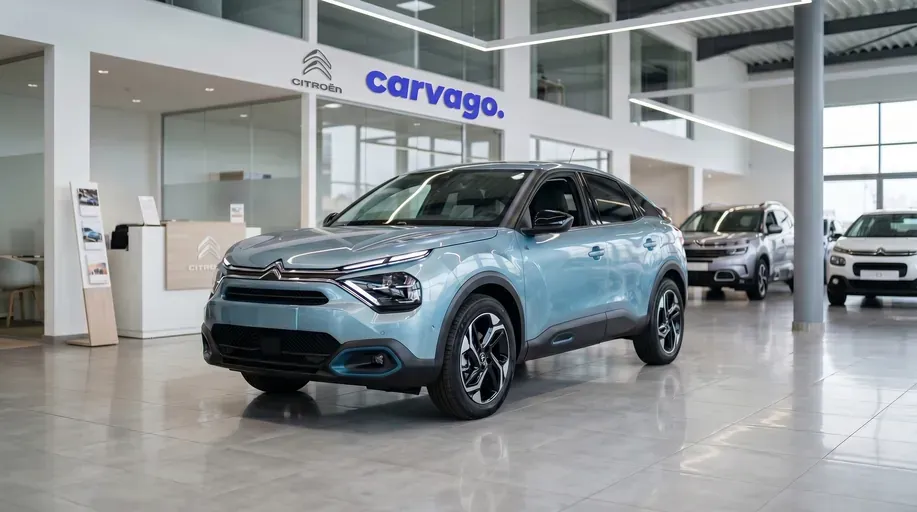
The third-generation Citroën C4 entered the European market with first customer deliveries commencing in December 2020 and January 2021. Citroën positioned the model as an unconventional bridge between a traditional compact five-door hatchback and a crossover, blending an elevated ride height and protective lower body cladding with an aerodynamic, coupe-like roofline. Alongside conventional petrol and diesel powertrains, the line-up debuted simultaneously with the all-electric Citroën ë-C4.
Following the start of production in late 2023, the line-up expanded in March 2024 with a 48V mild hybrid variant, joining the updated electric drivetrain introduced in 2023. A thorough facelift followed in October 2024 at the Paris Motor Show, with customer deliveries starting in January 2025. The update introduced sharper front-end styling aligning with Citroën's updated design identity, revised lighting signatures, and subtle cabin tech updates.
The third-generation Citroën C4 appeals primarily to pragmatic private and company-car buyers looking for the dimensions and daily usability of a family hatchback alongside the easier ingress and higher driving position of an SUV. It remains in active European production and delivery, offering a comfort-oriented alternative in the competitive compact segment.
Owner Experiences: Common Faults and Recalls
The third-generation Citroën C4 arrived in European showrooms in late 2020, offering petrol, diesel, and all-electric options. Across European owner forums and specialist reports, long-term reliability heavily depends on which powertrain sits under the bonnet, with pre-facelift petrol models and early electric versions requiring the most vigilance.
On pre-facelift petrol variants produced between 2020 and 2024, the 1.2 PureTech engine uses an oil-immersed timing belt. Unburnt fuel dilution during short journeys accelerates the breakdown of the rubber compound. As the belt delaminates, shed rubber particulates collect in the oil sump, clogging the oil pump pickup strainer and the brake vacuum pump filter. In some cases, this causes low oil pressure alerts and can lead to a sudden reduction in braking assistance. Later 48V hybrid variants introduced in 2024 revised this design by adopting a conventional timing chain. On the all-electric Citroën ë-C4, owners report recurring failures of the optional 11 kW tri-phase on-board AC charger on cars built between 2020 and 2023. When the unit fails, the vehicle refuses to charge from home wallboxes or AC public posts, even though DC rapid charging remains fully operational.
Owners and testers report that the central touchscreen fitted to 2020 to 2024 pre-facelift models can be sluggish, noting slow start-up sequences, menu lag, and occasional smartphone disconnection. These response issues were largely addressed by the revised hardware and software introduced alongside the late 2024 update. Furthermore, owners note that the driver information display on electric models can overestimate motorway driving range, particularly during colder winter conditions.
Verified Safety Recalls
Several official safety recall campaigns have been registered across European safety databases for this generation:
48V Starter-Alternator Fire Risk (Announced 27 March 2026): Affecting hybrid Citroën C4 models manufactured between 4 October 2023 and 12 January 2026. The official notice states that clearance between the petrol particulate filter tube and the starter-alternator terminal cap is under 10 mm. In wet conditions, contact can cause water ingress and an electric arc, triggering a fire risk. Dealerships inspect the gap, adjust the wiring harness bracket, and install an updated thermal and moisture shield.
High-Pressure Fuel Rail Leak (Announced 23 August 2025): Covering petrol Citroën C4 variants built between 4 October 2023 and 23 April 2025. Loose union nuts on the high-pressure fuel hose between the fuel pump and rail can lead to fuel leakage and fire. Workshops re-torque the unions or replace damaged high-pressure fuel lines.
Camshaft Drive Chain Rupture (Announced 25 July 2025): Targeting diesel Citroën C4 models built between 26 May 2020 and 31 January 2023. Due to oil carbonisation and high contact pressure, the 7 mm camshaft drive chain can fatigue and break, causing engine failure and potential loss of vehicle control. Workshops check for valvetrain rattle and chain elongation, updating engine control software and retrofitting a reinforced 8 mm chain and camshaft assembly if wear is found.
Traction Battery Shutdown (Announced April 2025): Covering electric models built from 3 May 2022 to 3 April 2023. Software managing the battery unit can prevent the drive system from entering ready mode or cause the motor to cut out while driving. Dealers apply a recalibration software update to the battery management unit.
Braking and Chassis Campaigns: A worldwide recall in June 2025 addressed an internal brake fluid leak inside the electronic braking system valve block on a batch built between 29 May and 5 June 2024. Earlier recalls covered rear suspension lower spring cups on vehicles built between 26 May 2020 and 20 August 2021, and emergency e-Call microphone modules on 2021 to 2023 cars. Additionally, a December 2024 campaign addressed simultaneous deactivation of Emergency Brake Assist and Lane Keeping Assist on 2024 models via a telematics software update.
🔍 What to check before buying
On 2020–2024 petrol models, arrange a physical inspection such as a CarAudit to check the service history and belt condition through the oil filler cap using a gauge tool for any swelling, cracking, or edge fraying, and insist on proof of timely oil changes matching manufacturer specifications.
Test AC charging on used electric models using a standard wallbox or AC destination charger to ensure the on-board charger takes current without error.
Check the vehicle identification number (VIN) with an authorised dealer to verify that all safety recalls—specifically the starter-alternator shield, high-pressure fuel rail unions, and diesel camshaft chain check—were fully executed.
Test the central touchscreen through multiple cycles during a test drive, checking responsiveness when switching between climate controls, reverse camera views, and phone projection.
Engines: Which One to Choose
The third-generation Citroën C4 arrived with an broad spectrum of powertrains, spanning traditional petrol and diesel units, 48-volt mild hybrids, and fully electric configurations. Every variant directs drive exclusively to the front wheels.
Engine
Fuel
Power
Gearbox
Model Years
PureTech 100
Petrol
74 kW (100 hp)
6-speed manual
2021–2024
PureTech 130
Petrol
96 kW (130 hp)
6-speed manual
2020–2023
PureTech 130
Petrol
96 kW (130 hp)
8-speed automatic
2020–present
PureTech 155
Petrol
114 kW (155 hp)
8-speed automatic
2020–2022
Hybrid 100
Petrol Mild Hybrid
74 kW (100 hp)
6-speed dual-clutch automatic
2025–present
Hybrid 136
Petrol Mild Hybrid
100 kW (136 hp)
6-speed dual-clutch automatic
2024–present
BlueHDi 110
Diesel
81 kW (110 hp)
6-speed manual
2021–2023
BlueHDi 130
Diesel
96 kW (130 hp)
8-speed automatic
2020–2024
ë-C4 136
Electric
100 kW (136 hp)
Single-speed automatic
2020–present
ë-C4 156
Electric
115 kW (156 hp)
Single-speed automatic
2023–present
For city driving and short commutes, the electrified variants make the most sense. The electric Citroën C4, badged as the ë-C4, delivers quiet running and seamless progress in urban congestion, with the extended-range version adding extra flexibility for highway trips. If home charging is not an option, the hybrid Citroën C4 in either Hybrid 100 or Hybrid 136 specification handles stop-and-go traffic smoothly using its dual-clutch transmission and integrated electric motor.
For mixed everyday driving, the PureTech 130 paired with the eight-speed automatic provides the most balanced option among earlier combustion models. In contrast, the manual gearbox is hindered by vague shift precision, while the earlier PureTech 155 offered more top-end performance than the relaxed chassis could put to good use before its early retirement. For buyers shopping newer model years, the Hybrid 136 serves as the natural successor for mixed commuting.
Long-distance drivers should look to the secondary market for a diesel Citroën C4. As a used car, the BlueHDi 130 automatic proves well-suited to sustained motorway cruising due to its strong low-end torque, though cold-start clatter makes it less appealing for short urban hops.
For towing, the BlueHDi 130 and PureTech 130 offer the highest trailer ratings, whereas the base petrol Citroën C4 is restricted to lighter loads. Anyone intending to pull a trailer must avoid the electric ë-C4 entirely, as it lacks type approval for towing.
For detailed component reliability, maintenance considerations, and verified recall campaigns across these engines, consult the owner experiences section.
Space & Practicality
Parameter
Citroën C4
Length
4,350–4,360 mm
Width (excluding mirrors)
1,800 mm
Height
1,520–1,525 mm
Wheelbase
2,670 mm
Boot capacity (standard / seats folded)
380 / 1,250 l
The Citroën C4 blends compact hatchback proportions with an elevated ground clearance. In the back, knee clearance accommodates average-sized passengers comfortably, though the tapering roofline tightens headroom for taller adults. The rear seating uses a fixed bench with a split-folding backrest rather than a sliding arrangement, while on higher trims, a central armrest ski hatch is included for carrying longer cargo.
Luggage practicality is supported by a flat-sided cargo area and a two-tier adjustable boot floor, which eliminates the step to create an unbroken loading surface when the rear backrests fold down. Because the drive battery sits under the floor and chassis structure rather than intruding into the cargo compartment, boot space remains identical whether choosing petrol, mild-hybrid, or all-electric power.
What the Tests Say
Professional road tests consistently note that the Citroën C4 prioritises ride comfort over agility. Its softly sprung suspension absorbs road swells and country undulations effectively, although sharp urban potholes and ridges can send sudden thuds into the cabin. In corners, body lean is pronounced and the steering remains light and detached from the road surface. Cabin refinement is strongest in the electric Citroën C4, which travels quietly, whereas petrol variants emit an audible three-cylinder growl under heavy acceleration before settling at a steady cruise.
Inside, testers praise the retention of physical rotary climate dials below the central touchscreen, which makes adjustments straightforward on the move. The front seats provide soft cushioning for long highway stretches, though they offer limited lateral support in bends. Cabin materials are noticeably split: soft surfaces coat the upper dashboard, but hard, scratch-prone plastics line the lower sections and rear door cards.
Professional verdicts agree on the car’s relaxed, unhurried character, but diverge on secondary ride control; some testers appreciate the soft absorption, while others criticize body float over deep dips. The facelift brought updated mild-hybrid powertrains and revised infotainment graphics, but the soft damping, noticeable roll, and light steering remain fundamentally unchanged.
Prices and Market Offer
All charts in this section are drawn from Carvago listings across the entire Citroën C4 model family, including previous generations, so they do not establish a separate price level for the reviewed generation alone. Across current listings, the median asking price stands at €13,200 for 2019 model years and €17,000 for 2021 cars. For 2026 examples, the median asking price is €24,300, reflecting stronger buyer interest in newer hybrid powertrains over earlier petrol stock.
Between April and September 2026, the volume of advertised Citroën C4 models fell from 7,525 to 6,011 listings. The chart below illustrates how active inventory moved across these six months.
Citroën C4 - availability over time
Active listings over time
Month
Citroën C4
2026-04
7 525
2026-05
7 250
2026-06
6 871
2026-07
6 654
2026-08
6 180
2026-09
6 011
Source Carvago
Although available listings decreased every month across this period, a total of 6,011 cars on offer in September 2026 still represents an extensive selection for prospective buyers.
The median asking price of cars advertised today, built in 2019, is €13,200, compared to a median asking price of €24,300 for those built in 2026. The chart below outlines how median asking prices compare across build years.
Citroën C4 - median price by model year
Median advertised price by year of manufacture
Model year
Citroën C4
2019
13 200
2020
15 900
2021
17 000
2022
18 000
2023
19 700
2024
19 700
2025
23 000
2026
24 300
Source Carvago
Buyers looking at 2021 and 2022 models encounter median asking prices of €17,000 and €18,000, respectively, while listings from 2023 and 2024 share an identical median asking price of €19,700. For 2025 and 2026 model years, the median asking price stands at €23,000 and €24,300.
This depreciation curve illustrates how the Citroën C4 loses residual value as it ages, shedding 19% of its initial figure in the first year alone and 32% by age three. The chart below traces this progression across seven years of vehicle age.
Citroën C4 - value loss by age
Residual value by vehicle age
Vehicle age
Citroën C4
New
24 900
1 yr
20 100
2 yrs
18 200
3 yrs
17 000
4 yrs
16 400
5 yrs
15 200
6 yrs
13 700
7 yrs
11 700
Source Carvago
Across the seven-year span, the model loses 53% of its initial residual value. The steepest annual decline happens between year zero and year one, while the rate of value loss flattens to its gentlest pace between ages three and four.
Across the six months from April to September 2026, petrol models formed the largest share of Citroën C4 listings, beginning at 5,503 advertised cars in April 2026 alongside 1,150 electric options.
Citroën C4 - supply by fuel over time
Supply composition by fuel type
Petrol
Diesel
Hybrid
Electric
LPG
Month
Petrol
Diesel
Hybrid
Electric
LPG
2026-04
5 503
827
39
1 150
2
2026-05
5 327
937
49
930
2
2026-06
4 969
944
62
887
3
2026-07
4 804
836
84
919
3
2026-08
4 488
756
106
821
1
2026-09
4 392
751
97
758
2
Source Carvago
By September 2026, petrol continued to lead the available stock with 4,392 listings, while electric vehicles and diesels offered comparable secondary alternatives at 758 and 751 listings respectively. Anyone searching the market will find petrol cars by far the easiest to source, whereas hybrids at 97 listings and LPG models at 2 provide very limited selection.
The chart tracks the average asking price for Citroën C4 listings from April 2026, when it was €18,700, through September 2026.
Citroën C4 - price trend over time
Average price development over time
Month
Citroën C4
2026-04
18 700
2026-05
18 600
2026-06
18 600
2026-07
18 600
2026-08
19 000
2026-09
18 800
Source Carvago
Across the six months, the average held at €18,600 from May to July 2026, rose to €19,000 in August, and closed at €18,800 in September. These month-to-month changes were very slight relative to the overall price level, reflecting minor variations rather than any pronounced shift.
Forgiving suspension and cushioned front seats provide relaxed cruising comfort
Physical climate dials ensure straightforward adjustments while driving
Identical luggage capacity across petrol, hybrid, and all-electric variants
Cons
Noticeable body lean in corners combined with detached steering feel
Timing belt degradation risks on pre-facelift petrol engines
Sloping roofline tightens headroom for taller passengers in the rear
Frequently asked questions
Which engine is best for everyday driving?
For mixed everyday driving, the automatic PureTech 130 is the most balanced choice among earlier models, while newer buyers should look to the Hybrid 136. Motorway drivers covering high annual mileage are best served by the BlueHDi 130 diesel.
What are the main reliability issues to look out for?
The primary concern is timing belt degradation on 2020–2024 petrol models, where rubber debris can cause oil starvation and reduced braking assistance. Early electric models built between 2020 and 2023 can also experience AC on-board charger failures.
Can the electric version tow a trailer?
No, the electric Citroën ë-C4 lacks type approval for towing. Buyers intending to pull a trailer must choose one of the combustion variants instead, such as the PureTech 130 or BlueHDi 130.
What should be checked before buying a used model?
On petrol models, check the timing belt condition and complete oil-change documentation to avoid oil starvation risks. For all models, verify through an authorised dealer that all manufacturer safety recalls have been completed by VIN.