
Car battle
Ford Edge vs. Škoda Kodiaq: Complete comparison 2026
Ford Edge vs. Škoda Kodiaq comparison. A detailed look at the equipment, space, and driving characteristics of used SUVs. Read our verdict and choose the right one.
Oct 16, 2026
Articles
Review
Nissan X-Trail (T33) review: real owner experience, e-POWER efficiency, boot capacity, running costs, and our expert buying verdict.
October 31, 2026
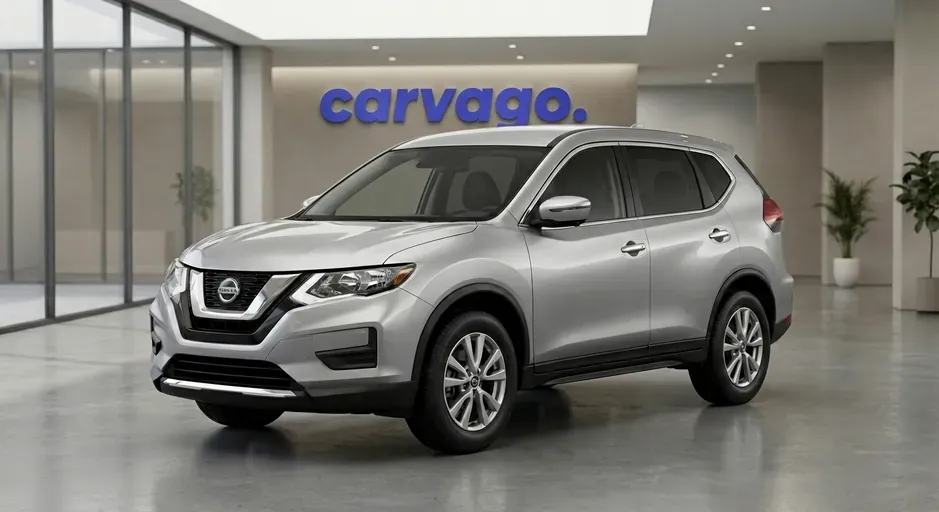
The fourth-generation Nissan X-Trail sits in the mid-size crossover segment as the brand's flagship family vehicle in Europe. Following its European premiere on 6 September 2022, first customer deliveries began in October 2022. Built as a five-door Nissan X-Trail SUV, the model provides European buyers with a choice between standard five-seat and optional seven-seat cabin configurations.
Nissan revised the range with a facelift announced on 11 March 2026, with European deliveries beginning in July 2026. Alongside exterior styling tweaks and updated infotainment connectivity, the revision transitioned the European catalogue to an all-hybrid line-up by dropping the previous mild-hybrid variant.
The vehicle targets family buyers and long-distance drivers seeking flexible seating arrangements, everyday cargo utility, and all-weather capability through an electrified all-wheel-drive system without the need for plug-in charging.
Because customer deliveries of the fourth-generation Nissan X-Trail began in autumn 2022, long-term reliability across high mileages is not yet fully established. However, the model’s electrified drivetrains, sophisticated driver aids, and variable-compression petrol technology have already generated several official safety campaigns and recurring workshop findings across European markets.
Three verified safety recalls require attention when evaluating a used example. The most critical for the hybrid Nissan X-Trail involves the high-voltage battery controller software, announced in July and August 2026 for vehicles manufactured globally between 1 December 2021 and 21 April 2026. Affecting 102,494 vehicles worldwide—including 12,723 in Germany—across front-wheel-drive and all-wheel-drive hybrid models, the notice states that the controller may fail to maintain diagnostic stability due to circuit resistance fluctuations or parasitic effects. As a result, the car can enter a fail-safe mode where motive power is reduced or propulsion is lost entirely. Authorised workshops resolve this with a software reprogram of the controller.
A separate lighting campaign announced in February and July 2025 covers 10,117 vehicles globally (including 972 in Germany and 120 in the Netherlands) produced between 15 January 2024 and 1 October 2024 equipped with adaptive headlights on higher trims. The notice highlights that a software malfunction can cause headlights to toggle erratically between main and dipped beams in the presence of oncoming traffic, presenting a glare hazard. The fix requires recalibrating the headlight control module.
For the mild-hybrid VC-Turbo petrol variant, a major manufacturer safety campaign was launched in February 2026 covering 2023 to 2026 model years, encompassing over 320,000 vehicles worldwide. Operating conditions can cause an increase in engine oil temperature that degrades lubrication, risking engine damage or failure. The campaign excludes hybrid models. Dealerships update the engine control module software to safeguard lubrication and inspect bottom-end bearings for wear, replacing the engine assembly if physical scoring is detected. Drivers should stop immediately if an oil warning light illuminates or mechanical knocking occurs.
Beyond official campaigns, owners report recurring acoustic and electrical quirks. On hybrid models built between 2022 and 2025, tests describe a high-pitched squealing or clicking from the front wheels during gentle deceleration or the transition from regenerative braking to friction braking. Factory anti-rattle shims can distort from thermal cycling, allowing excessive pad play; installing redesigned, strengthened shims and lubricating the caliper slides typically resolves the noise. Multiple owners also report that cars left parked for one to two weeks can suffer auxiliary 12V battery depletion. Because the auxiliary battery relies entirely on the high-voltage system rather than an alternator, telematics background draw can trigger spurious sensor warnings or prevent the vehicle from starting. Finally, an official manufacturer bulletin identifies that on 2021 to 2023 global build years, the cabin climate blower fan may fail to activate on a cold start until manually switched off and back on, an issue typically resolved by updating or replacing the climate control amplifier.
Having the car’s background and service records independently reviewed by CarAudit provides assurance that pending software campaigns have been applied.
The fourth-generation Nissan X-Trail departed completely from the diesel options of its predecessors, relying exclusively on electrified three-cylinder petrol powertrains across European markets. The lineup divides into a conventional mild hybrid and Nissan's series-hybrid e-POWER system, with all variants equipped with an automatic transmission.
| Engine | Fuel | Power | Drivetrain | Gearbox | Model Years |
|---|---|---|---|---|---|
| 1.5 VC-T Mild-Hybrid | Petrol (Mild Hybrid) | 120 kW (163 hp) | FWD | Automatic | 2022–2026 |
| 1.5 VC-T e-POWER | Full Hybrid | 150 kW (204 hp) | FWD | Automatic | 2022–present |
| 1.5 VC-T e-POWER e-4ORCE | Full Hybrid | 157 kW (213 hp) | AWD | Automatic | 2022–present |
For urban commuting and mixed everyday driving, the front-wheel-drive hybrid Nissan X-Trail e-POWER is the most suitable option. Because the petrol engine acts strictly as an onboard generator to feed the electric traction motor, propulsion is smooth and responsive in stop-and-go traffic without any stepped gear shifting.
Buyers intending to tow trailers or drive regularly in winter conditions should bypass front-wheel-drive models and select the all-wheel-drive hybrid Nissan X-Trail e-4ORCE. The front-wheel-drive e-POWER has a severely restricted towing rating that precludes hauling anything beyond a small unbraked utility trailer, whereas the twin-motor all-wheel-drive model provides the towing capability needed for caravans and horseboxes alongside surefooted traction on loose surfaces.
Frequent long-distance motorway drivers face a notable compromise with the e-POWER architecture. At sustained high cruising speeds, where opportunities for kinetic energy recuperation are scarce and double energy conversion works against the system, fuel consumption rises markedly and the combustion generator revs noticeably under load to keep pace with electrical demand.
As a used car, the discontinued front-wheel-drive petrol Nissan X-Trail 1.5 VC-T mild hybrid offers a mechanically simpler alternative with a traditional transmission, though its stepped continuously variable gearbox feels less immediate when accelerating from a standstill.
For detailed reports on long-term mechanical durability, auxiliary battery quirks, and official manufacturer service campaigns, refer to the owner experiences section.
| Dimension / Capacity | Value |
|---|---|
| Length | 4,680 mm (pre-facelift) / 4,690 mm (facelift) |
| Width (excluding mirrors) | 1,840 mm |
| Height | 1,720–1,725 mm |
| Wheelbase | 2,705 mm |
| Boot volume (e-POWER 5-seater, seats up / folded) | 575 / 1,396 l |
| Boot volume (e-POWER 7-seater, 7 / 5 / 2 seats upright) | 177 / 485 / 1,298 l |
The listed boot capacities do not apply to the discontinued mild-hybrid petrol variant, which provided a slightly larger luggage bay due to the absence of the traction battery.
Everyday practicality in the Nissan X-Trail relies heavily on seating modularity. The second row slides on rails and features a three-way split-folding backrest with a centre load-through hatch, enabling drivers to balance rear legroom against cargo space. Due to the placement of the hybrid battery beneath the floor, second-row occupants sit with slightly raised knees, although overall head and leg room remains sufficient for adults. When equipped with the optional third row, the Nissan X-Trail SUV provides occasional seven-seat capability, though these folding rearmost seats are cramped and strictly suited to children; deploying them also restricts the remaining luggage hold to space suitable only for soft bags. The five-seat configuration provides a flat loading surface with the seats folded down, accommodating bulky cargo without intrusive wheel-arch mouldings.
Professional road tests paint the fourth-generation Nissan X-Trail as a relaxed motorway cruiser with a split personality at lower speeds. On smooth open roads, the suspension settles into a pliant, well-controlled ride that isolates large undulations effectively. However, testers consistently highlight an underlying firmness around town, where sharp tarmac joints and potholes cause restless secondary vibrations—an issue amplified significantly when fitted with optional 20-inch wheels. In corners, body control remains secure and predictable, but early-limit understeer and noticeable lean on undulating backroads remind drivers of its substantial mass. Dual-motor all-wheel-drive variants earn credit for balanced traction under throttle, though steering feel is universally described as muted and detached despite its natural weighting.
Cabin refinement is among the car’s strongest attributes when driven gently. The electric drive delivers seamless, step-free acceleration and near-silent operation in urban traffic. Testers note, however, that under sustained full throttle or steep inclines, the petrol generator revs high and its three-cylinder drone penetrates the passenger compartment until cruising speed returns.
Inside, the cabin receives solid marks for build integrity and user-friendly ergonomics. Testers widely appreciate the retention of physical dials and buttons for climate control rather than relegating them to digital sub-menus. Front seating comfort on higher trims is rated highly for long journeys.
While reviewers agree on the car's highway composure, opinions diverge on steering behaviour and handling composure. One German assessment criticised an abrupt, coarsely regulating stability control system during sudden evasive manoeuvres, whereas subsequent UK evaluations found the electronic interventions unobtrusive. Testers are also divided on the revised Google-based infotainment system introduced with the 2026 facelift: some praised its updated connected functionality, while others noted occasional software hesitation.
All charts in this section are drawn from Carvago listings of the whole Nissan X-Trail model family, including earlier generations represented in the data rather than only the reviewed generation. Because the dataset spans multiple generations without distinguishing between them by year alone, it does not establish a separate price level strictly for the newest iteration. Across the broader model range, the median asking price begins at €20,000 for 2019 cars, steps up to €34,900 for 2022 models, and reaches €38,900 for 2025 examples, before dipping to €37,000 for 2026 models.
Between April 2026 and September 2026, the number of advertised Nissan X-Trail vehicles ranged between a peak of 4,385 listings and a low of 4,064 listings. The monthly figures below show how overall inventory shifted across this six-month period.
Active listings over time
| Month | Nissan X-Trail |
|---|---|
| 2026-04 | 4 266 |
| 2026-05 | 4 385 |
| 2026-06 | 4 267 |
| 2026-07 | 4 314 |
| 2026-08 | 4 084 |
| 2026-09 | 4 064 |
Source Carvago
Buyers can expect a broad selection of vehicles on the market, though overall choice contracted somewhat toward the end of the period, moving from 4,314 listings in July to 4,064 by September 2026.
Among used listings of this model advertised today, the median asking price of cars built in 2019 is €20,000, while cars built in 2025 have a median asking price of €38,900. The chart below illustrates how these median asking prices compare across build years.
Median advertised price by year of manufacture
| Model year | Nissan X-Trail |
|---|---|
| 2019 | 20 000 |
| 2020 | 21 000 |
| 2021 | 22 500 |
| 2022 | 34 900 |
| 2023 | 35 000 |
| 2024 | 38 000 |
| 2025 | 38 900 |
| 2026 | 37 000 |
Source Carvago
Buyers targeting earlier build years encounter a median asking price of €20,000 for 2019 models and €22,500 for 2021 models, stepping up to €34,900 for 2022 models. The values do not increase across every year, as listings for 2026 cars show a median asking price of €37,000 compared to €38,900 for 2025 cars.
This depreciation curve shows how the Nissan X-Trail's residual value falls with vehicle age, shedding roughly 24% of its initial value by three years of age. The chart below traces this progression across seven years.
Residual value by vehicle age
| Vehicle age | Nissan X-Trail |
|---|---|
| New | 36 500 |
| 1 yr | 33 600 |
| 2 yrs | 30 400 |
| 3 yrs | 27 800 |
| 4 yrs | 26 000 |
| 5 yrs | 20 700 |
| 6 yrs | 18 700 |
| 7 yrs | 17 800 |
Source Carvago
Across the full seven-year span shown, the model sheds roughly 51% of its residual value. The steepest annual decline occurs between the fourth and fifth years, after which the rate of depreciation noticeably flattens.
Across the six months from April to September 2026, the advertised Nissan X-Trail inventory was led by hybrid and petrol options, recording 2,103 hybrid and 1,640 petrol listings in April 2026. The monthly breakdown across all tracked fuel types is shown below.
Supply composition by fuel type
Petrol
Diesel
Hybrid
Electric
| Month | Petrol | Diesel | Hybrid | Electric |
|---|---|---|---|---|
| 2026-04 | 1 640 | 520 | 2 103 | 0 |
| 2026-05 | 1 771 | 557 | 2 054 | 1 |
| 2026-06 | 1 724 | 544 | 1 997 | 1 |
| 2026-07 | 1 747 | 562 | 2 002 | 2 |
| 2026-08 | 1 650 | 516 | 1 913 | 3 |
| 2026-09 | 1 540 | 548 | 1 969 | 1 |
Source Carvago
In September 2026, hybrids accounted for 1,969 listings and petrol models for 1,540, alongside 548 diesel listings and 1 electric vehicle. Buyers will find the vast majority of available choices concentrated in hybrid and petrol powertrains, whereas diesel options are far less common.
The chart tracks the average asking price for the Nissan X-Trail from April 2026 to September 2026, opening at €31,700.
Average price development over time
| Month | Nissan X-Trail |
|---|---|
| 2026-04 | 31 700 |
| 2026-05 | 31 200 |
| 2026-06 | 30 900 |
| 2026-07 | 30 800 |
| 2026-08 | 30 900 |
| 2026-09 | 30 400 |
Source Carvago
Across the period, the average asking price moved down from €31,700 to €30,400—a modest overall decline of about 4%—with a minor rebound to €30,900 in August 2026.
Smooth and responsive electric propulsion in urban driving
Practical cabin modularity with sliding second-row seating
Straightforward dashboard ergonomics with physical climate controls
Engine drone and higher fuel consumption at sustained motorway speeds
Restless low-speed ride over sharp road imperfections on larger wheels
Severely cramped optional third row strictly suited to children
Long-term reliability across high mileages is not yet established because customer deliveries only began in late 2022. While major mechanical failures are rare, multiple software recalls affect early cars—most crucially involving the high-voltage battery controller on the hybrid Nissan X-Trail and engine oil temperature management on mild-hybrid petrols—making documented recall completion essential.
The all-wheel-drive hybrid Nissan X-Trail e-4ORCE is the necessary choice. Its dual electric motors deliver secure all-weather traction and proper towing capacity, whereas front-wheel-drive hybrid variants have a severely restricted towing rating limited to light utility trailers.
Have an authorised dealer verify the vehicle’s VIN to confirm that all manufacturer software updates and safety campaigns have been completed. On a test drive, listen for squealing from the front brakes during gentle deceleration.
No, the third-row seats in the Nissan X-Trail are cramped and strictly sized for children. Raising the rearmost seats also heavily compromises cargo space, leaving room only for soft travel bags.
Sources: europe.nissannews.com, adac.de, autocar.co.uk, autoexpress.co.uk, whatcar.com
This article was prepared using artificial intelligence tools. The section guarantor is Petr Dušek.
Ford Edge vs. Škoda Kodiaq comparison. A detailed look at the equipment, space, and driving characteristics of used SUVs. Read our verdict and choose the right one.
Oct 16, 2026

Audi Q5 vs Volvo XC60: Which luxury used SUV should you choose? Read our detailed comparison of equipment, driving dynamics and practicality, complete with our final verdict.
May 4, 2026

Detailed comparison of Hyundai Santa Fe vs. Seat Tarraco. Real-world experience, evaluation of spaciousness and driving characteristics. Find out which family SUV is better!
Oct 16, 2026