Car battle
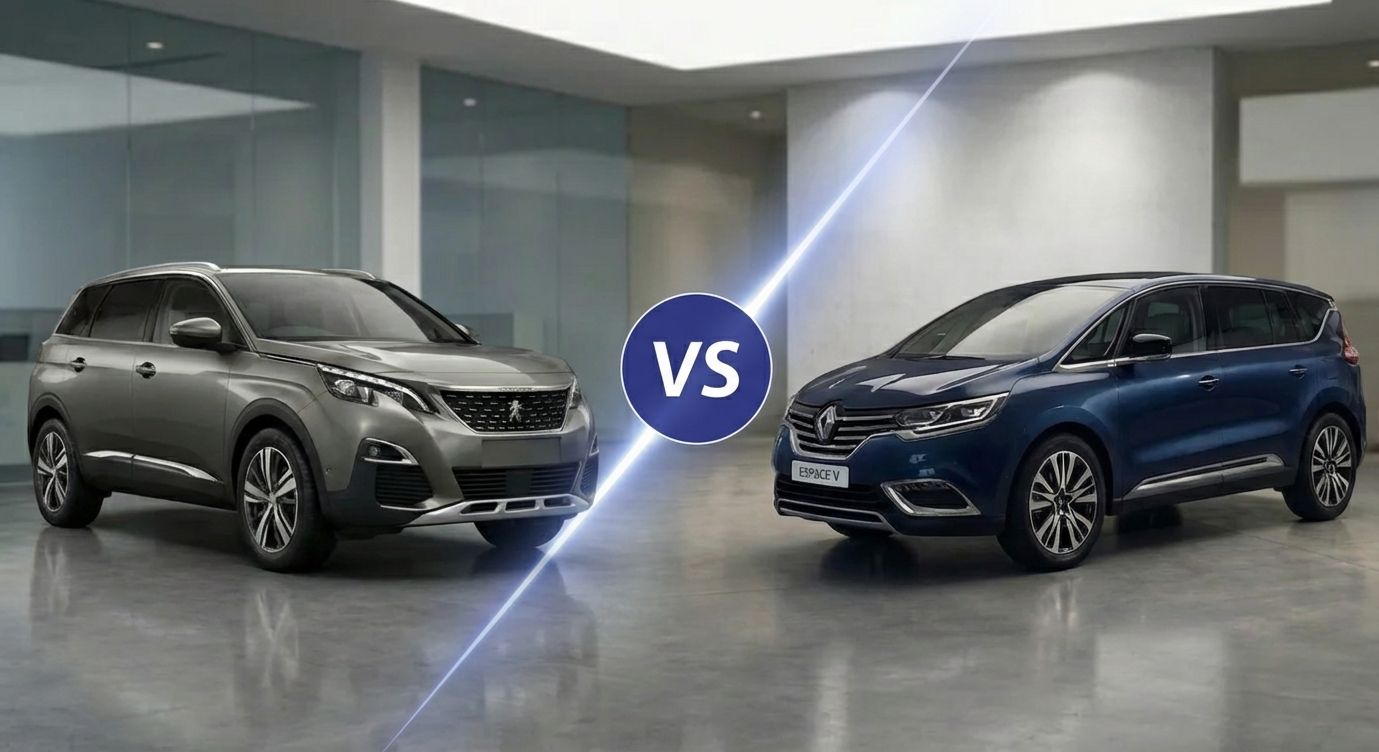
Peugeot 5008 vs. Renault Espace: Complete comparison 2026
Detailed comparison of Peugeot 5008 vs Renault Espace. We reveal real-world experiences, equipment details, and a clear verdict. Find out which 7-seater car to choose.
Oct 16, 2026
Articles
Car battle
Ford Edge vs. Škoda Kodiaq comparison. A detailed look at the equipment, space, and driving characteristics of used SUVs. Read our verdict and choose the right one.
October 16, 2026

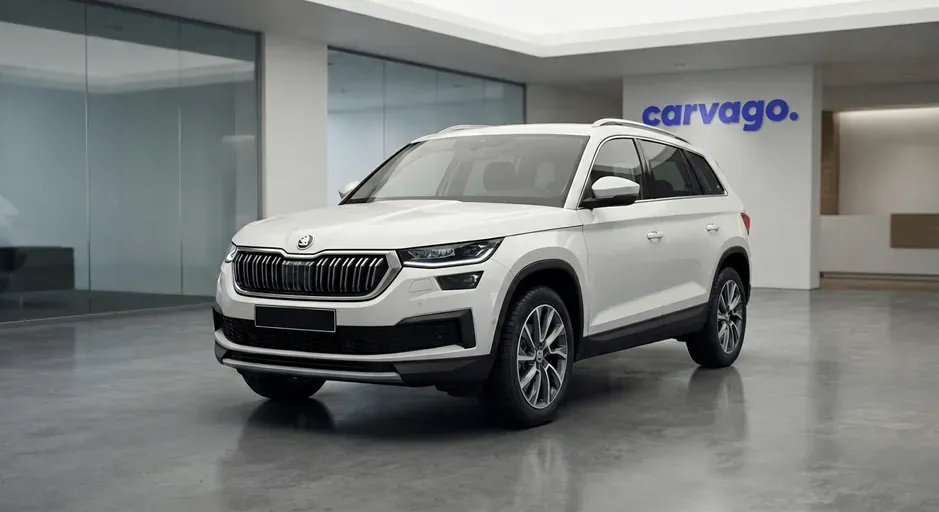
Ford Edge, also known as the Ford Endura in the Australian and New Zealand markets, is a robust American SUV that focuses primarily on generous interior space and maximum driving comfort. Standing against it is the popular Czech representative, the Škoda Kodiaq, which scores globally with its extraordinary family practicality, the option of a seven-seat layout, and its famous smart solutions. In the following comparison, we will focus in detail on the key differences between these two vehicles to help you decide which one better suits your daily needs.
At first glance, it is clear that the Ford Edge brings typically American proportions to the European market, while the Škoda Kodiaq honors traditional European efficiency. In a direct comparison of the first generations of both models, which represent the most relevant choice on the current market for approximately four-year-old used cars, the Ford Edge is roughly 111 to 122 mm longer and a significant 46 mm wider (1928 mm compared to 1882 mm for the Kodiaq). This significant increase in external dimensions means that the American representative makes a much more massive impression on the road and guarantees generous interior space in the transverse direction. However, the greater width and length represent a clear disadvantage when maneuvering in narrow city streets or parking in typical underground garages, where the Kodiaq clearly benefits from its more compact build. For drivers moving primarily in heavy city traffic, the Czech model will thus be a significantly more user-friendly choice.
The Ford Edge boasts a wheelbase of 2848 to 2850 mm, which is roughly 60 mm more than what the Škoda Kodiaq offers (2788 to 2791 mm). This seemingly subtle difference translates directly into regal legroom for passengers in the second row. The Edge is also taller (reaching a height of up to 1751 mm compared to a maximum of 1688 mm for the Kodiaq), which ensures a higher driving position and a better overview of what is happening in front of the vehicle. However, despite its smaller footprint and shorter wheelbase, the Škoda Kodiaq maintains incredibly efficient interior packaging. Thanks to this, unlike the purely five-seater Ford, it can also offer a practical third row of seats. While the longer wheelbase of the Ford maximizes travel comfort, the Kodiaq easily wins in terms of overall interior layout variability.
In the overall assessment of external proportions, the different philosophies of the two automakers are clearly evident. The Ford Edge is designed as a massive, maximally spacious, and comfortable SUV that excels on long highway journeys, where its wider and longer build contributes to excellent directional stability. The Škoda Kodiaq, on the other hand, profiles itself as the perfect family all-rounder. On the outside, the model is modest enough not to unnecessarily complicate daily life in tight spaces, yet inside it hides maximum usable space thanks to masterful engineering. The final choice therefore depends primarily on whether you prefer the uncompromising comfort of a robust cruiser or rather everyday practicality and agility.
| Parameter | Ford Edge SUV | Škoda Kodiaq SUV |
|---|---|---|
| Width (mm) | 1928 | 1882 |
| Length (mm) | 4808 - 4827 | 4697 - 4705 |
| Height (mm) | 1686 - 1751 | 1660 - 1688 |
| Wheelbase (mm) | 2848 - 2850 | 2788 - 2791 |
Luggage capacity is often a decisive factor when choosing a family car. Both the Ford Edge and the Škoda Kodiaq belong to the large SUV category, where they are expected to handle family holidays, transport sports equipment, or bulky shopping trips without a hitch. While the Ford's American design emphasizes interior width and passenger comfort, the Czech representative traditionally focuses on maximum practicality, making it one of the leaders in its class.
Looking at the specific figures for roughly four-year-old used cars (the first generation of both models), the Ford Edge offers a solid 602 litres in its standard five-seat configuration. Folding down the second row of seats provides an almost flat loading surface and a total usable space of 1847 litres. The Ford's boot stands out with its very regular shape without major intrusive elements, which you will appreciate when loading larger items. While the numbers lag behind its rival from Mladá Boleslav in a direct comparison, the volume is still fully sufficient for weekend shopping and longer holidays.
In contrast, the first-generation Škoda Kodiaq is a true master of moving. The standard version holds a generous 650 litres at its base. Thanks to the sliding rear bench and updates from later production years, this basic volume can climb to an impressive 835 litres. With the seats fully folded, the storage space expands to a gigantic 2065 litres. It is worth noting that for the sportier Kodiaq RS version, which requires slight structural compromises due to its specific drivetrain and exhaust system, the maximum capacity drops to a still generous 1960 litres. In practice, this difference in favour of the Škoda represents space for several extra suitcases, or the ability to load an unfolded pram without any compromises or the need to play "Tetris" with the gear.
In terms of total boot capacity and clever storage solutions, the Kodiaq gives used family car buyers a much freer hand. While the Ford Edge doesn't offer such breathtaking figures, its volume will be perfectly adequate for the vast majority of families.
| Parameter | Ford Edge SUV | Škoda Kodiaq SUV |
|---|---|---|
| Basic volume (litres) | 602 | 650 - 835 |
| Maximum volume with seats folded (litres) | 1847 | 1960 - 2065 |
If raw boot volume and variability are your absolute priorities, the first-generation Škoda Kodiaq is the unbeatable winner, although even the more stylish Ford Edge certainly won't let you down on a typical family holiday.
Towing capacity and maximum trailer weight are key parameters for drivers who spend their leisure time actively or need high utility value for regular towing of heavy loads. When choosing a roughly four-year-old used car, both popular SUVs offer solid performance, however, their approach differs significantly. The first-generation Ford Edge is the embodiment of simplification – regardless of whether a weaker or stronger two-litre diesel (TDCi or the newer EcoBlue) works under the hood, the car offers a uniform standard and maximum braked trailer weight of exactly 2,000 kg across the range.
Conversely, the first-generation Škoda Kodiaq, which dominates the used SUV market, shows a wide range of towing power depending on the specific engine and drivetrain. Standard petrol versions such as the 1.4 TSI or 1.5 TSI can handle trailers weighing from 1,600 to 2,000 kg. However, if you choose the more powerful 2.0 TDI diesel variants (especially with 4x4 drive) or the top-of-the-line Kodiaq RS, the maximum braked weight climbs to an impressive 2,300 kg. Also worth mentioning are the generationally younger variants equipped with plug-in hybrid or mild-hybrid powertrains (iV PHEV and mHEV), where the towing capacity is reduced across the board and limited to 1,800 kg due to the additional weight of the battery installation.
In practice, these paper deviations play a crucial role. The difference of up to 300 kg in favour of the powerful diesel Kodiaqs expands practical usability – it gives you the freedom to safely and legally hitch a heavy twin-axle family caravan fully equipped for a long summer holiday or a massive two-horse trailer. While the Ford Edge, with its stable two tonnes, reliably stands its ground when transporting common boats and single-axle caravans, it leaves no room for weight reserves with the heaviest loads.
In conclusion, if maximizing towing capacity is your absolute priority, a better-equipped Škoda Kodiaq with a powerful two-litre engine will clearly serve you better and offers wider working potential. The Ford Edge, on the other hand, represents a worry-free choice for users with standard requirements, saving them the need to study the technical specifications of individual used cars in detail.
| Model and engine | Braked trailer weight (kg) | Unbraked trailer weight (kg) |
|---|---|---|
| Ford Edge 2.0 TDCi / EcoBlue (110–175 kW) | 2000 | 750 |
| Škoda Kodiaq 1.4 / 1.5 TSI (92–110 kW) | 1600 - 2000 | 750 |
| Škoda Kodiaq 1.5 TSI iV / mHEV (110 kW) | 1800 | 750 |
| Škoda Kodiaq 2.0 TSI (132–140 kW) | 2000 - 2200 | 750 |
| Škoda Kodiaq 2.0 TDI (110–147 kW) | 1950 - 2300 | 750 |
| Škoda Kodiaq RS TDI / TSI (176–180 kW) | 2300 | 750 |
When comparing the engine options of the Ford Edge and Škoda Kodiaq, we encounter completely different approaches from the two manufacturers, which is of fundamental importance for buyers of roughly four-year-old used cars in terms of fuel consumption, performance, and running costs. While the Ford Edge relied exclusively on robust diesel units designed for confident pulling power and highway cruising on the European market (primarily the updated 2.0 EcoBlue range), the Škoda Kodiaq offers a significantly more diverse palette. With the Kodiaq, you can choose between efficient petrol engines, reliable 2.0 TDI diesels, and even sport-tuned RS versions. The base engine for the Kodiaq is the 1.5 TSI petrol four-cylinder (110 kW), while the much heavier Edge starts with the more powerful 2.0 EcoBlue diesel with the same output (110 kW). For demanding drivers, Ford offers the twin-turbocharged 2.0 EcoBlue Bi-Turbo (175 kW), which was previously rivalled on the Škoda side by the 2.0 BiTDI diesel (176 kW), subsequently replaced by the 2.0 TSI petrol engine (180 kW). In both cases, we find intelligent all-wheel drive, but when buying a used car, it's important to remember that the Ford Edge has already ended its life cycle in Europe.
The Ford Edge engine range is straightforward and focused purely on diesel, which will be fully appreciated by drivers with high annual mileage and a need to tow heavy trailers. For cars manufactured after 2018, the 2.0 EcoBlue diesel engines form the core. These replaced the older 2.0 TDCi generation, which was offered until 2018 with outputs of 132 kW and 154 kW (Bi-Turbo). Today, the most interesting option on the four-year-old used car market is the more modern 2.0 EcoBlue in 110 kW and 140 kW variants. The absolute top of the range is the exceptionally powerful 2.0 EcoBlue Bi-Turbo, providing 175 kW and a massive 500 Nm of torque, which is standardly paired with a smooth eight-speed automatic transmission. Since sales of the Edge model in Europe ended in late 2020, you must take note that you won't find any newer hybrid technologies or pure petrol engines in its range.
| Engine type | Fuel | Power (kW) | Torque (Nm) | Transmission |
|---|---|---|---|---|
| 2.0 EcoBlue | Diesel | 110 / 140 | 370 / 400 | 6MT / 8AT |
| 2.0 EcoBlue Bi-Turbo | Diesel | 175 | 500 | 8AT |
| 2.0 TDCi (until 2018) | Diesel | 132 | 400 | 6MT / 6AT |
| 2.0 TDCi Bi-Turbo (until 2018) | Diesel | 154 | 450 | 6AT |
The Škoda Kodiaq counters with immense variability of power units for diverse customer profiles. The four-year-old used car market (1st generation, especially cars after the 2021 facelift) is built on the 1.5 TSI ACT (110 kW) petrol base. This engine features clever technology that deactivates two cylinders under low load to reduce consumption and represents a great choice for relaxed drivers and city traffic. More demanding users preferring petrol opt for the more dynamic 2.0 TSI (140 kW). However, the core of the range for long distances are the economical 2.0 TDI EVO diesel units (110 kW and 147 kW) featuring innovative "twin dosing" technology (double AdBlue injection), which radically reduces nitrogen oxide emissions. A major shift occurred in the top RS versions – the original 2.0 BiTDI (176 kW) engine, popular among drivers, was discontinued in 2020 due to tightening emission standards. It was replaced by a lighter and even more powerful 2.0 TSI petrol (180 kW). Except for the base 1.5-litre, the vast majority of used Kodiaq cars on the market appear in combination with a fast seven-speed dual-clutch DSG transmission and all-wheel drive.
| Engine type | Fuel | Power (kW) | Torque (Nm) | Transmission |
|---|---|---|---|---|
| 1.5 TSI ACT | Petrol | 110 | 250 | 6MT / 7DSG |
| 2.0 TSI | Petrol | 140 | 320 | 7DSG |
| 2.0 TSI (RS, from 2021) | Petrol | 180 | 370 | 7DSG |
| 2.0 TDI SCR | Diesel | 110 / 147 | 340 / 400 | 6MT / 7DSG |
| 2.0 BiTDI (RS, until 2020) | Diesel | 176 | 500 | 7DSG |
When looking for the ideal used car, a simple rule applies: For budget-conscious families mostly commuting on shorter routes, the Kodiaq 1.5 TSI is the most rational choice. If you spend hours on the highway, you will appreciate both diesel units, with the Kodiaq 2.0 TDI (110 kW) rewarding you with slightly more economical operation and an excellent price/performance ratio. However, if you often tow a trailer and want an American sense of heft, the powerful Edge 2.0 EcoBlue Bi-Turbo will quickly win you over. Conversely, for those seeking sporty dynamics, the Kodiaq RS clearly leads with its punchy 2.0-litre petrol engine.
While the Ford Edge relies exclusively on the massive torque of its diesel engines, the Škoda Kodiaq counters with flexibility, offering efficient petrol options and the RS version. For most drivers and typical family travel, the Kodiaq 2.0 TDI offers a more well-rounded overall compromise in terms of efficiency and running costs.
Choosing the right engine is crucial for long-term satisfaction with a car. Our recommendations are based on real-world experience, balanced performance, actual fuel consumption, and mechanical reliability observed in roughly four- to six-year-old used cars on our market. While the American-style Ford Edge requires a powerful two-liter diesel to effortlessly compensate for its high weight exceeding two tons, for the lighter and more aerodynamic Škoda Kodiaq, the proven Group diesel makes the most sense, with an emphasis on maximum efficiency and low operating costs.
This top-of-the-line four-cylinder diesel, which replaced the older and more problematic TDCi engines under the hood of the Edge in 2018, is absolutely the best choice for this massive SUV. Note: Official sales of the Ford Edge in Europe ended in 2020, so you will be looking for these engines in cars five to six years old.
Although a more powerful diesel variant (147 kW / 200 hp) or powerful petrol units are also available for the 2021–2023 Kodiaq, experience with used cars clearly shows that the lower-output version of the 2.0 TDI is the most rational and long-term reliable choice for this SUV.
Official fuel consumption figures provided by manufacturers often look very tempting, but in practice, large family SUVs often reveal a significantly harsher reality. The difference between laboratory measurements and actual road use can be several liters for such massive vehicles. To get an accurate and objective picture of how much these cars actually consume, we analyzed records from the independent community portal Spritmonitor.de, where thousands of real drivers meticulously record every refueling. We specifically targeted engine versions typical for roughly four-year-old used cars – for the Ford Edge, this means the end of European production with EcoBlue engines (2019–2020), while for the Škoda Kodiaq, we focused on the facelifted first-generation models.
| Model and engine | Average consumption (l/100 km) |
|---|---|
| Škoda Kodiaq 1.5 TSI ACT 110 kW (petrol) | 7.6 |
| Škoda Kodiaq 2.0 TSI 140 kW (petrol) | 8.6 |
| Škoda Kodiaq 2.0 TDI SCR 110 kW (diesel) | 6.6 |
| Škoda Kodiaq 2.0 TDI SCR 147 kW (diesel) | 7.3 |
| Ford Edge 2.0 EcoBlue 140 kW (diesel) | 8.1 |
| Ford Edge 2.0 EcoBlue Bi-Turbo 175 kW (diesel) | 8.5 |
Looking at the real user data, several key findings emerge:
For the average motorist, a clear recommendation emerges from this data. If you are a highway mile-muncher or regularly travel long distances with a full trunk, the more economical Škoda Kodiaq 2.0 TDI will be a noticeable relief for your budget. For families moving primarily around town and the immediate vicinity, the petrol Kodiaq 1.5 TSI is a better option, eliminating concerns about clogged particulate filters on short trips. However, if you decide on the Ford Edge, you must accept that American comfort and huge interior space simply come at a price. If its design and safety appeal to you, it makes sense to go straight for the top-of-the-line 2.0 EcoBlue Bi-Turbo engine. While it averages 8.5 liters of diesel, it represents the only truly adequate dynamic choice for a two-ton colossus without the consumption differing drastically from the weaker variant.
In conclusion, fuel-related operating costs will play a very significant, if not decisive, role when choosing between these vehicles. The Kodiaq scores with excellent efficiency and a wide range of engines for every use, while the Edge will primarily appeal to drivers willing to tolerate higher fuel bills in exchange for superior robustness and a prestigious character.
When looking for a used family SUV around 4 years old (2020 to 2022 models), you will encounter two quite different price and market stories. While the Škoda Kodiaq is a mass-market staple with a huge selection across all specifications, the Ford Edge represents a more exclusive and rarer alternative following its withdrawal from the European market.
This market situation fundamentally shapes their value depreciation – and this is precisely where, from a price-to-premium-equipment ratio perspective, one of them might surprisingly make more sense.
As a domestic bestseller, the Škoda Kodiaq holds its value exceptionally well. Four-year-old models (from both before and just after the facelift) can be found in a wide price range, which depends heavily on the chosen engine, trim level, and mileage.
Imports of the Ford Edge to Europe ended around the turn of 2020 and 2021, so in this age category on the used market, you will exclusively find models from the very end of its production cycle. This is the second generation after the facelift. The supply of used units is many times smaller, but thanks to a steeper depreciation curve, it offers more attractive price tags from a buyer's perspective.
| Criterion | Škoda Kodiaq (2020–2022) | Ford Edge (2019–2021) |
|---|---|---|
| Starting price (higher mileage) | from €20,000 | from €18,000 |
| Average price (good condition/trim) | €25,000 – €31,000 | €23,000 – €29,000 |
| Top versions (RS / Vignale) | €31,000 – €37,000+ | €27,000 – €31,000 |
| Value loss | Very low | Higher |
| Market availability | Huge selection | Very limited |
While the Škoda Kodiaq is a safe bet with a huge selection and exceptionally stable residual value, the Ford Edge acts as a "secret tip" on the secondary market – it provides massive American space and premium equipment for the price of an averagely equipped used Škoda.
Both the Ford Edge and the Škoda Kodiaq earned the maximum five-star rating in independent Euro NCAP crash tests at the time. When choosing a used car, however, it is necessary to view these results in a broader context and take into account the specific year the tests took place. The methodology and testing protocols of the Euro NCAP organization are constantly evolving and becoming more stringent over time. Percentage gains from different years cannot be directly compared, as a rating that was sufficient for a full star count a few years ago would not reach the top mark today due to the absence of the latest assistance systems and stricter scenarios (such as collisions at intersections).
The Ford Edge underwent its tests in 2016, while the first generation of the Škoda Kodiaq, which forms the core of the used car market offering in the category of roughly four-year-old vehicles, passed through the testing facility a year later, in 2017. Naturally, neither of these tests reflects the most modern testing standards, and the Euro NCAP certifications for these specific model years have formally expired due to age. Even so, the percentage results clearly show the strengths and weaknesses of both cars: the Kodiaq offered slightly better structural body protection, while the Ford Edge excelled in the area of active safety.
| Parameter | Ford Edge | Škoda Kodiaq |
|---|---|---|
| Year of testing | 2016 | 2017 |
| Adult occupant protection | 85 % | 92 % |
| Child occupant protection | 76 % | 77 % |
| Vulnerable road users protection | 67 % | 71 % |
| Safety assist systems | 89 % | 54 % |
Looking closer at this data, it is clear that the Škoda Kodiaq dominated in purely passive safety. A respectable score of 92% for adult occupant protection suggests an exemplarily designed and highly rigid body. The Kodiaq also performed slightly better in protecting child passengers and vulnerable road users (pedestrians). On the other hand, the 54% rating for the Czech SUV's assistance systems shows that at the time of testing, the range of standard active features across all trim levels was not as extensive. The Ford Edge absolutely excels here with a result of 89%, confirming the American automaker's efforts at the time to deliver its premium European SUV with exceptionally rich standard safety equipment, including advanced autonomous emergency braking.
In conclusion, both models represent a very safe choice for family travel, even though they would not meet today's strictest standards without additional modifications. If your priority is maximum cabin durability and excellent protection during the impact itself, the Škoda Kodiaq is a slightly more secure option thanks to its above-average rigid structure. However, if you prefer accident prevention and appreciate a more generous dose of standard electronic assistants, the Ford Edge offers a significantly more comprehensive and modern prevention system from the perspective of its time.
While the Škoda Kodiaq dominates in excellent structural resilience and occupant protection during an actual impact, the Ford Edge on the used car market boasts significantly better standard equipment in terms of assistants that actively prevent accidents.
Both vehicles offer much more than just basic equipment, with each having its own distinctive approach to added value. In addition to standard equipment, each model offers several unique features that can be decisive for the customer during the final selection.
Above-standard interior cabin width, very comfortable for three adult passengers in the rear seats
Excellent interior soundproofing (often with the Active Noise Control system) and a comfortable chassis for long journeys
Rich standard equipment and more premium materials in higher trim levels, such as Vignale
Standard all-wheel drive (AWD) and reliable two-liter EcoBlue diesel engines with high torque
Impressive appearance and a sense of absolute safety thanks to the overall massive construction
Complete absence of a seven-seater variant; it is only available as a five-seater SUV
Higher curb weight noticeably limits agility in corners and increases average fuel consumption
Older SYNC 3 multimedia system, which lags behind more modern European competitors in terms of graphics and speed
The end of official sales of the model in Europe may affect the residual value in the long term
The Ford Edge is an excellent choice for drivers looking for maximum travel comfort, cabin quietness, and American-style generous interior space. It serves best as a tireless and comfortable highway cruiser, provided you can do without a third row of seats and accept slightly higher diesel consumption.
Giant luggage compartment with a capacity of up to 835 liters in the basic five-seat configuration
Option of a seven-seat configuration, making the car an ideal choice for larger families
Wide range of powertrains, including more economical TSI gasoline engines
More modern and snappier infotainment with excellent control ergonomics
A significant number of practical "Simply Clever" solutions that genuinely make daily use easier
The narrower interior does not provide as much comfort in the rear seats for three adults sitting side-by-side as the Ford
Poorer standard equipment on the used car market; many assistance and comfort features required an extra charge from the first owner
Stiffer suspension tuning on bumps if the car is not equipped with the optional DCC adaptive dampers
Due to its huge popularity, it is a very commonplace car without a hint of exclusivity
The Škoda Kodiaq represents a rational and highly versatile family SUV that crushes the competition on the market with its immense practicality and service availability. It is an ideal car for those who primarily need to move a large volume of things or a larger family, although it does not offer as premium a driving feel and overall soundproofing as the massive Edge.
Based on long-term user feedback, service reports, recall campaigns, and data from our thorough physical used car inspection, we have compiled a detailed overview of the most common issues you should watch out for with both models.
The second-generation Ford Edge after the facelift (approx. 2019–2021) is a robust vehicle generally considered very reliable. However, its technology and high curb weight can manifest in several areas.
The Ford Edge is a mechanically very durable car that primarily requires strict adherence to AWD transfer case oil changes and expects a shorter lifespan for brake components due to its immense weight.
The Škoda Kodiaq benefits from shared Volkswagen Group technology, which ensures easy service availability. However, in used cars around four years old, some typical ailments of modern electronics and drivetrain wear are appearing.
The reliability of the Kodiaq in newer model years can be marred by glitchy MIB3 infotainment electronics; for high-mileage units, timely DSG transmission service and water pump checks play a major role.
When buying a used car, a thorough inspection is key, and both models have their specifics to watch out for. Before you sign the purchase agreement, an independent technical inspection of the car is always useful to help uncover hidden or imminent defects.
Unlike the Ford Edge, the Škoda Kodiaq is available with an optional third row of seats, so it can carry up to seven passengers. The Edge, on the other hand, exists exclusively in a five-seat version but offers excellent comfort and generous width for all passengers. For larger families, the Czech representative is overall more flexible and the clear choice.
The Škoda Kodiaq is a leader in its class and, in a five-seat configuration, offers a huge basic trunk volume of up to 835 liters. The Ford Edge has a luggage compartment with a volume of about 602 liters, which is still sufficient for family needs, but it is not enough to match its Czech competitor. In addition, the Kodiaq has a more practical square-shaped trunk and many cleverly designed storage spaces.
The Ford Edge excels on highways, where it benefits from its robust design, exceptionally soft suspension, and top-notch active cabin noise cancellation. The Škoda Kodiaq with DCC adaptive suspension is, on the other hand, slightly stiffer, but thanks to that, much more agile and confident on winding country roads. Both SUVs, however, represent a great choice for comfortably and safely covering hundreds of kilometers.
The Škoda Kodiaq benefits from an overall lower curb weight, so its 2.0 TDI diesel engines can run in real traffic with consumption around 6 to 6.5 liters per 100 km. The significantly heavier and more massive Ford Edge usually consumes a liter to a liter and a half more diesel from the same amount of fuel. If you are looking for the lowest possible fuel operating costs, the Kodiaq is clearly more economical.
Service and maintenance play strongly in favor of the Kodiaq model thanks to the wide availability of affordable spare parts and a huge network of specialized service centers. The Ford Edge can be more expensive to maintain as a used car because it does not share as many components with other cars in Europe and some specific parts are harder to find. For both cars, however, pay close attention to the condition of the automatic transmissions and a verifiable oil change history before buying.
Sources: ADAC, novinky.cz, denik.cz, automix.cz, chytreauto.cz, rallylife.cz
This article was prepared using artificial intelligence tools. The section guarantor is Petr Dušek.
Detailed comparison of Peugeot 5008 vs Renault Espace. We reveal real-world experiences, equipment details, and a clear verdict. Find out which 7-seater car to choose.
Oct 16, 2026
Detailed comparison: Kia Sorento vs. Seat Tarraco. Discover the differences in driving characteristics, space, and reliability. Which used family SUV is the better choice?
Oct 16, 2026
Detailed comparison of Hyundai Santa Fe vs. Seat Tarraco. Real-world experience, evaluation of spaciousness and driving characteristics. Find out which family SUV is better!
Oct 16, 2026