Peugeot 5008 vs. Toyota Highlander: Complete comparison 2026
Detailed comparison: Peugeot 5008 vs. Toyota Highlander. Discover the differences in space, engines, and equipment of these used cars. Read our verdict before you buy!
Oct 16, 2026
Articles
Car battle
Audi Q5 vs Volvo XC60: Which luxury used SUV should you choose? Read our detailed comparison of equipment, driving dynamics and practicality, complete with our final verdict.
May 4, 2026


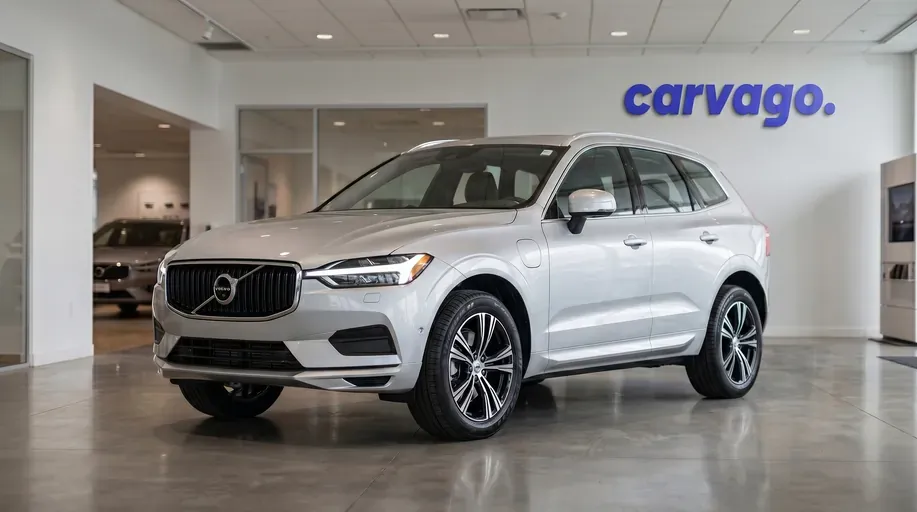
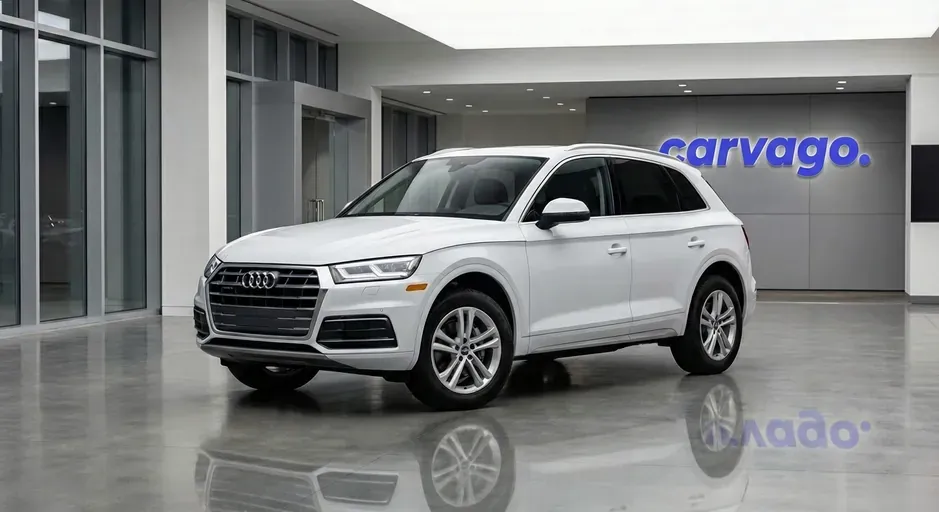
Audi Q5 is a benchmark of precise German engineering, which stands out in its class with a balanced combination of sporty dynamics, advanced technologies, and top-tier craftsmanship. In contrast, the popular Swedish Volvo XC60 has long been winning the hearts of drivers thanks to its unmistakable minimalist Scandinavian design, unrivaled emphasis on active and passive safety, and extraordinary travel comfort. In the following detailed comparison, we will look under the surface of both these sought-after premium SUVs to help you discover which one will better suit your lifestyle and daily driving needs.
When you place the Audi Q5 and Volvo XC60 side by side, you will immediately find that they are direct competitors in the premium mid-size SUV segment. In terms of their overall footprint on the road and in parking spaces, both cars are evenly matched. If you are looking for a used car around four years old (generations sold around 2022), you will find that engineers at both carmakers aimed for almost identical exterior dimensions. The vehicles thus offer a very similar compromise between a majestic appearance, interior space, and everyday usability in the city.
A detailed comparison of the numbers shows that the differences in length, width, and height are rather cosmetic. The length of both cars is just under the 4.7-meter mark – the standard Audi Q5 measures 4682 mm (the more lifestyle-oriented Sportback version is slightly longer at 4689 mm), while the Volvo XC60 has a length of 4688 mm. A similar situation exists for width, where the Volvo, at 1902 mm, beats the Audi (1893 mm) by just 9 millimetres. When parking in narrow underground garages or maneuvering in a cramped residential area, both models behave very similarly and require the same amount of caution from the driver.
However, the most significant and important difference for the occupants can be found in the wheelbase. The Swedish Volvo XC60 boasts a wheelbase of 2865 mm, which is a full 46 mm more than the German Audi Q5 (2819 mm). In practice, this significant lead results in slightly more generous legroom for rear-seat passengers. Furthermore, the Volvo's longer wheelbase contributes to a smoother and more stable ride on long motorway journeys. On the other hand, the slightly shorter distance between the axles of the Audi Q5 allows for a touch better agility in tight corners, which perfectly matches its somewhat sportier character.
| Parameter | Audi Q5 SUV | Volvo XC60 SUV |
|---|---|---|
| Length (mm) | 4682 - 4689 | 4688 |
| Width (mm) | 1893 | 1902 |
| Height (mm) | 1660 - 1662 | 1658 |
| Wheelbase (mm) | 2819 | 2865 |
Choosing a premium mid-size SUV often means looking for a compromise between a representative appearance and family practicality. Trunk capacity is a key factor for buyers planning weekend trips, transporting sports equipment, or family vacations. Both the Audi Q5 (FY generation, available as a roughly four-year-old used car) and the Volvo XC60 (2nd generation) offer a very solid foundation for these purposes and are among the leaders in their class, although a detailed comparison reveals noticeable differences.
In terms of pure numbers for the standard versions, the German representative has the upper hand. Standard internal combustion and mild-hybrid variants of the Audi Q5 offer a base trunk capacity of 520 liters, which is 37 liters more than the Volvo XC60 with its 483 liters. In practice, this difference means space for one extra carry-on bag or slightly easier loading of a bulky stroller. When the rear seats are folded down, the gap widens even further – the Audi provides a maximum space of 1520 liters, while the Volvo offers 1410 liters. We must also mention the more stylish Audi Q5 Sportback body variant with its sloping roof, which, despite its sportier silhouette, offers a very respectable 510 liters.
A crucial variable for both models is the choice of powertrain, specifically the increasingly popular plug-in hybrid (PHEV) versions, which lose some of their practicality due to the placement of the traction battery. In the Audi Q5 (e.g., the 50 TFSI e version), the trunk shrinks to 465 liters, which is a significant reduction. The Volvo XC60 in T6 and T8 Recharge versions sees a slightly milder drop to 468 liters. In the plug-in hybrid version, the strengths of both competitors are remarkably balanced, and their trunks are fully sufficient for everyday shopping as well as longer vacations, although they require a bit more care when packing compared to the standard versions.
| Parameter | Audi Q5 SUV | Volvo XC60 SUV | Audi Q5 Sportback | Audi Q5 SUV (PHEV) | Volvo XC60 SUV (PHEV) |
|---|---|---|---|---|---|
| Base capacity (liters) | 520 | 483 | 510 | 465 | 468 |
| Maximum capacity with seats folded (liters) | 1520 | 1410 | 1480 | 1405 | 1395 |
In standard internal combustion versions, the Audi Q5 offers significantly more luggage space and slightly better versatility than the Volvo XC60, but when choosing a plug-in hybrid powertrain, the usable capacities of both premium SUVs are practically equal.
The ability to tow heavy loads is a key parameter for many buyers of premium mid-size SUVs, whether it's transporting a boat, a horse trailer, or a large family caravan. Looking at models roughly four years old (the FY generation for Audi and the 2nd generation for Volvo), we find that both automakers take this discipline very seriously and offer above-standard capabilities, albeit with minor differences in electrified powertrains.
In its standard diesel and petrol versions, such as the highly sought-after 40 TDI or 45 TFSI engines, the Audi Q5 offers an excellent maximum braked trailer weight of exactly 2,400 kg. Entry-level versions like the 35 TDI can typically handle 2,000 kg. A more significant reduction comes with the plug-in hybrid models (50 TFSI e and 55 TFSI e). Due to the additional weight of the traction batteries, the towing capacity of these more eco-friendly variants drops to between 1,750 and 2,000 kg.
The second-generation Volvo XC60 is no slouch in this regard with its Swedish approach. Its conventional and mild-hybrid powertrains (labeled B4, B5, D4, or B6) can tow 2,300 to 2,400 kg as standard. Similar to its competitor from Ingolstadt, Volvo's plug-in hybrid versions (Recharge T6 and T8) show a slight decrease to values between 2,100 and 2,250 kg. However, these figures are among the absolute best for plug-in hybrid SUVs on the market.
In practice, these numbers mean that the standard internal combustion engines of both cars will literally toy with anything you hitch behind them. A value of 2,400 kg is perfectly sufficient for towing heavy twin-axle caravans. The reduced capacity of the hybrid models—around 2,000 kg for the Audi or 2,200 kg for the Volvo—still provides generous room for a few extra suitcases in the form of a utility trailer and is fully sufficient for a weekend haul of bulky building materials or a long summer holiday.
Both SUVs boast the status of excellent workhorses. The Audi Q5 clearly excels with a maximum towing capacity of 2,400 kg for standard four-cylinder engines. However, if you are considering a plug-in hybrid and know you will be using a trailer more frequently, the Volvo XC60 offers a slightly better compromise here thanks to higher towing limits in its electrified specifications.
| Model and engine | Braked trailer weight (kg) | Unbraked trailer weight (kg) |
|---|---|---|
| Audi Q5 40 TDI (140 - 150 kW) | 2400 | 750 |
| Audi Q5 50 TFSI e (195 kW) | 2000 | 750 |
| Volvo XC60 B5 (184 kW) | 2300 - 2400 | 750 |
| Volvo XC60 T8 (228 kW) | 2100 - 2250 | 750 |
When choosing an engine between the Audi Q5 and Volvo XC60, you will encounter two fundamentally different engineering approaches that significantly impact your operating costs and overall driving experience. While the Audi Q5 sticks to a classic structure with a wide range of proven diesel (TDI) and petrol (TFSI) engines, complemented by the sophisticated quattro all-wheel-drive system and lightning-fast S tronic dual-clutch transmissions, Volvo has completely transitioned to a unified architecture of 2.0-litre four-cylinder engines for the XC60 (in its second generation). For nearly new used cars around four years old, every Volvo utilizes a classic 8-speed Geartronic torque-converter automatic and is electrified without exception – whether through advanced mild-hybrid technology (B models) or extremely powerful plug-in hybrid powertrains (Recharge). Audi scores points for variety for highway cruisers – it is one of the few SUVs in this class still offering a proper diesel V6 (50 TDI). Volvo, on the other hand, dominates the plug-in hybrid field; the top-tier T8 Recharge version produces a staggering 335 kW, comfortably outperforming Audi's competing plug-in (55 TFSI e). While the classic 40 TDI from Audi will always be the optimal middle ground for drivers with high annual highway mileage, the Volvo T6 or T8 Recharge makes immense sense for tech enthusiasts who charge frequently and seek sports car dynamics.
The engine lineup for the Audi Q5 (for used FY generation models after the 2021 to 2024 facelift) is built on traditional turbocharged units. The entry point into the Q5 world is the economical 35 TDI diesel variant with 120 kW, which is one of the few to rely heavily on front-wheel drive only. However, the absolute king of the used car market is the more powerful 40 TDI (150 kW) version, which comes standard with quattro all-wheel drive and offers an ideal mix of performance, towing power, and low fuel consumption. For proponents of refined petrol operation, Audi offers the flexible 40 TFSI and 45 TFSI units. A specialty for true connoisseurs with a large fuel budget is the 50 TDI engine, which is the only one to benefit from the power of a 3.0-litre V6 with a massive 600 Nm of torque, paired with a classic 8-speed Tiptronic. The range is successfully rounded off by petrol plug-in hybrids labeled 50 TFSI e and 55 TFSI e, which will please drivers looking for a compromise for trips to the city centre and the countryside.
| Engine | Fuel | Power (kW) | Torque (Nm) | Transmission |
|---|---|---|---|---|
| 35 TDI | Diesel | 120 | 370 | 7-speed S tronic |
| 40 TDI | Diesel | 150 | 400 | 7-speed S tronic |
| 50 TDI | Diesel | 210 | 600 | 8-speed Tiptronic |
| 40 TFSI | Petrol | 150 | 320 | 7-speed S tronic |
| 45 TFSI | Petrol | 195 | 370 | 7-speed S tronic |
| 50 TFSI e | Plug-in Hybrid | 220 | 450 | 7-speed S tronic |
| 55 TFSI e | Plug-in Hybrid | 270 | 500 | 7-speed S tronic |
The second generation of the Volvo XC60, especially models on the four-year-old used car market, bet on an absolute transition to mild-hybrids and plug-in hybrids, which fully replaced the previously available internal combustion engines. If you come across D3, D4, D5 (pure diesels) or T4 and T5 (pure petrols) badges, these are cars manufactured up to 2020. Newer models start with B4 and B5 engines (in both petrol and diesel variants), where the letter "B" indicates the use of an efficient mild-hybrid system that eases the start-stop mode and improves throttle response at intersections. All engines are unified four-cylinders paired exclusively with a smooth-shifting 8-speed torque-converter automatic. If your goal is absolute dynamics and performance, the top-tier Recharge plug-in hybrid models make no compromises. Even the T6 Recharge variant boasts a system output of 257 kW, while the flagship T8 Recharge breaks limits with a dazzling 335 kW and 709 Nm of torque, safely maintaining dynamic dominance compared to Audi's hybrids.
| Engine | Fuel | Power (kW) | Torque (Nm) | Transmission |
|---|---|---|---|---|
| B4 | Mild-Hybrid Petrol | 145 | 300 | 8-speed Geartronic |
| B4 Diesel | Mild-Hybrid Diesel | 145 | 400 | 8-speed Geartronic |
| B5 | Mild-Hybrid Petrol | 184 | 350 | 8-speed Geartronic |
| B5 Diesel | Mild-Hybrid Diesel | 173 | 480 | 8-speed Geartronic |
| B6 | Mild-Hybrid Petrol | 220 | 420 | 8-speed Geartronic |
| T6 Recharge | Plug-in Hybrid | 257 | 659 | 8-speed Geartronic |
| T8 Recharge | Plug-in Hybrid | 335 | 709 | 8-speed Geartronic |
While the Audi Q5 will delight traditional highway drivers with its wide range of economical and powerful TDI engines, including six cylinders, the Volvo XC60 makes the most sense as a technologically advanced mild-hybrid or an extremely powerful plug-in hybrid for those who want to combine performance with emission-free city commutes.
When choosing a roughly four-year-old premium SUV, selecting the right engine is key to long-term satisfaction, reliability, and keeping operating costs in check. Interestingly, while the Audi Q5 relies on a classic longitudinal engine layout that favors a sportier character and a constant sense of power reserve, the second-generation Volvo XC60 bets exclusively on transversely mounted two-liter four-cylinder engines. Furthermore, Volvo has decided to completely phase out diesel engines from the global market, making used diesel examples of this brand highly sought-after. Although both manufacturers offered very potent gasoline and more complex plug-in hybrid versions during those years (around 2021), from the perspective of residual value, real-world fuel consumption on long trips, and proven mechanical durability, an advanced diesel still makes the most sense for these roughly two-ton vehicles.
The four-cylinder diesel engine labeled 40 TDI (from the FY generation, widely available on the used market from 2020–2023) represents the best choice for the Q5 in terms of balanced dynamics, practicality, and operating costs. The unit from the EA288 evo generation is excellently soundproofed, and in real-world driving, even with a heavy all-wheel-drive SUV, consumption can be kept below 7 liters per 100 km.
While the second generation of the Volvo XC60 permanently buried the legendary "indestructible" five-cylinder engines, its mild-hybrid B4 Diesel version (mostly offered from 2020–2023) is currently the most sensible family engine for daily life from a used car perspective.
Official fuel consumption figures provided by manufacturers often differ significantly from everyday reality in practice. Especially with heavy premium SUVs like the Audi Q5 and Volvo XC60, aerodynamics and real vehicle weight can play a crucial role. Laboratory tests simply cannot always accurately simulate dynamics on real roads and highways.
To get an objective picture of how much these cars actually consume, we analyzed data from the independent community portal Spritmonitor.de. It collects real refueling statistics from thousands of regular users. In our comparison, we focused on the most popular engines of the generations that currently form the core of the market for roughly four-year-old used cars (for the Audi Q5, this is the facelifted FY generation from 2020–2023; for the Volvo XC60, the second generation with mild-hybrid "B" engine designations).
| Model and engine | Average consumption (l/100 km) |
|---|---|
| Volvo XC60 B4 Diesel (145 kW) | 6.8 |
| Audi Q5 40 TDI (150 kW) | 7.1 |
| Audi Q5 50 TDI (210 kW) | 8.2 |
| Volvo XC60 B4 (petrol, 145 kW) | 8.8 |
| Audi Q5 45 TFSI (195 kW) | 8.9 |
| Volvo XC60 T6 Recharge (PHEV) | 4.2 |
| Audi Q5 50 TFSI e (PHEV) | 4.5 |
Looking at the table, it is clear that diesel engines still hold an unshakeable position in large SUVs:
The resulting values thus form fairly clear boundaries for selection. If you are a highway mile-eater or drive tens of thousands of kilometers a year, the diesel variants Q5 40 TDI and XC60 B4 Diesel should be your clear choice.
Conversely, a petrol engine will be appreciated mainly by people with lower annual mileage (up to 15,000 km) who seek the most peaceful and refined engine performance. In this scenario, the increased consumption will not be reflected so significantly in the cost of ownership.
Plug-in hybrid engines should then be chosen exclusively by those drivers whose daily routine corresponds to roughly 40 kilometers (typically commuting to the office and back) and who have the certainty of reliable charging at home or at work.
Overall, fuel consumption is likely not going to be the key deciding factor between these two rivals. If you compare comparable engines, the operating costs of both SUVs differ only by tenths of a liter and will rather depend on the weight of your foot on the pedal. The decision should therefore primarily be based on personal preference for design, interior ergonomics, and specific driving characteristics – any financial concerns regarding refueling can be set aside without regret in a direct battle between Audi and Volvo.
The market for used premium mid-size SUVs is very dynamic, and both models play an important role. If we focus on cars approximately four years old (production years roughly 2021–2022), we are currently looking at facelifted Audi Q5 models (FY generation) and second-generation Volvo XC60s (SPA platform).
| Model (approx. 4 years old) | Starting price (mileage over 100,000 km) | Price for a well-maintained model (mileage up to 50,000 km) | Estimated value drop |
|---|---|---|---|
| Audi Q5 (2021-2022) | from €27,000 | €39,000 - €49,000 | approx. 40 - 45% |
| Volvo XC60 (2021-2022) | from €29,000 | €41,000 - €53,000 | approx. 35 - 40% |
While the used Audi Q5 benefits from a huge fleet supply and offers a slightly more friendly entry price for diesel models with higher mileage, the Volvo XC60 protects its value excellently in the long term thanks to its undiminished popularity with families and a strong supply of desirable plug-in hybrids.
Both evaluated models, the Audi Q5 and Volvo XC60, earned the maximum five-star rating from independent Euro NCAP crash tests, confirming their excellent overall safety levels. However, when analyzing these results, it is absolutely crucial to know the context and the year the vehicles underwent specific crash tests. Euro NCAP's methodology and testing protocols are constantly becoming stricter and evolving – while a robust body shell was enough in the past, modern tests place huge emphasis on advanced cyclist detection, intersection crisis scenario simulations, and sophisticated active collision avoidance systems. For this reason, percentage scores from different years cannot be directly compared. However, for these two specific models, if we focus on cars approximately four years old available on the used market today, we have a rare opportunity for a direct comparison. Both generations relevant for this age were tested in the same year and according to the same methodology.
If you are considering buying a used Audi Q5 (second generation after the facelift, usually from around 2022), you must follow the Euro NCAP results from the original testing of this platform in 2017. Although the organization tested the brand-new third generation in the spring of 2025 according to its most current and strictest protocols (which include, for example, a new moving barrier for frontal impact or strict pedestrian detection), these latest results do not apply to the used cars currently available on the market. In the relevant 2017 test, the older Audi Q5 earned a very solid 93% for adult protection and 86% for child protection. However, where the car significantly lost valuable points back then was in safety assistance systems, with a result of only 58%. This striking drop was caused by the brand's sales policy at the time, where advanced features like the lane-keeping system were only optional equipment, and the organization therefore did not include them in the overall rating of the base model. Protection of vulnerable road users was rated at 73% at the time. It is also important to realize that certification from this year is considered formally expired by today's standards.
The current second-generation Volvo XC60, which represents the most frequent and direct competition for the Q5 on the used market, was also tested in the same year (2017). The results of this test still command extraordinary respect today and prove why the Swedish automaker is considered the absolute leader in active and passive safety innovations. Volvo received a nearly perfect 98% for adult occupant protection and 87% for child protection. However, what catapulted the Volvo in this generation high above the competition was the safety assistance systems category, with a staggering 95% score. Technologies like City Safety with advanced autonomous emergency braking and sophisticated recognition of pedestrians, cyclists, or even large animals were standard equipment on every unit. This created a massive performance gap in the rating compared to the Audi. Protection of vulnerable road users reached 76%. Although the methodology has changed significantly and become stricter since then, Volvo's technological lead in active safety for its time is simply undeniable.
The final safety comparison of both premium SUVs speaks surprisingly clearly in favor of the Nordic representative. Although both cars offer top-tier passive protection for the crew during an actual impact and their construction's sturdiness is undoubtedly premium, the Volvo XC60 offers a much more modern and comprehensive package of active assistance features thanks to its excellent standard equipment. The dramatic difference in the safety assist rating in this direct head-to-head generation battle proves that in terms of accident prevention, Volvo was more forward-thinking and represents a more robust choice for today's family purposes.
| Parameter | Audi Q5 | Volvo XC60 |
|---|---|---|
| Year of testing | 2017 | 2017 |
| Adult occupant protection | 93 % | 98 % |
| Child occupant protection | 86 % | 87 % |
| Vulnerable road user protection | 73 % | 76 % |
| Safety assist systems | 58 % | 95 % |
Although both cars guarantee five-star occupant protection in an impact, the Volvo XC60 making up today's used market clearly beats the Audi Q5 thanks to its incomparably richer standard equipment of active assistance systems, which ensures much more reliable accident prevention.
In addition to standard equipment, each model offers several unique features that can be decisive for the customer and clearly demonstrate the different approach of both brands to added value.
The German SUV relies on top-tier technology, sophisticated mechanics, and extensive individualization options, which will be especially appreciated by drivers focused on technology and dynamics.
The Swedish representative, on the other hand, bets on calm, minimalist luxury, top-quality materials, and an innovative approach to software equipment that caters to modern digital life.
Excellent build quality and premium interior materials
Great compromise between comfortable suspension and confident driving characteristics
Highly efficient quattro all-wheel drive and economical, dynamic TDI engines
Fast and reliable MMI multimedia system with a logical interface
Excellent aerodynamic cabin insulation even at higher highway speeds
Very conservative design, which may seem too understated after years
Stiffer chassis tuning on base models without optional adaptive dampers
Significantly limited luggage space in plug-in hybrid versions (TFSI e)
The Audi Q5 is a perfect choice for drivers looking for uncompromising build quality, refined performance, and precise driving characteristics for long journeys. It will primarily appeal to more conservatively minded buyers who appreciate reliable all-wheel drive and intuitive controls without ergonomic missteps.
First-class level of active and passive safety and assistance systems
Top-tier travel comfort thanks to ergonomically excellent seats
Elegant and calming Scandinavian exterior and interior design
Infotainment system with integrated Google Automotive services (including great maps)
Very powerful and efficient Recharge plug-in hybrid powertrains with realistic range
Integration of climate control exclusively into the touchscreen is distracting
Less precise steering and a more detached driving feel compared to German competitors
Shallower and smaller luggage space in Recharge variants due to battery placement
Potentially higher costs for genuine spare parts and authorized service
The Volvo XC60 is primarily aimed at families and drivers for whom safety, comfort, and a relaxed atmosphere on board are absolute priorities. It is an ideal used car for those who prefer a smooth ride in a beautiful and minimalist environment rather than sporty ambitions in the corners.
Based on our own CarAudit inspections, breakdown statistics, service reports, and long-term user experiences, we have compiled an overview of the most common problems that potential buyers of these approximately four-year-old used cars should watch out for.
The second-generation Audi Q5 (including facelifted versions) is generally considered a reliable premium SUV; however, as mileage and age increase, specific faults can occur.
The Audi Q5 offers solid mechanics and premium craftsmanship, but it insists on strict adherence to service intervals, especially regarding the S tronic dual-clutch transmission and air suspension checks.
The second-generation Volvo XC60 scores points for high safety and elegant Nordic design, but it is occasionally troubled by "teething problems" in the areas of software and more complex powertrains.
The Volvo XC60 is a very comfortable and robust SUV, but for used units, it is necessary to carefully check the condition of the brake linings, the stability of the infotainment, and ensure that water is not leaking into the vehicle through the panoramic roof.
When buying a used car, a thorough inspection is key. Both premium SUVs are considered generally reliable and very popular, but given their technological complexity, they have specific areas that need close attention. That's why, when buying on the used car market, a detailed physical car inspection by a professional mechanic is always worth it to reveal any hidden defects under the surface.
Audi Q5 provides a base trunk capacity of 520 liters, which can be increased to 550 liters in versions with sliding rear seats. Volvo XC60 offers a slightly smaller luggage compartment of 483 liters, which is further reduced in plug-in hybrid versions. For families requiring maximum transport capacity, the German representative is therefore the better choice.
The Swedish model is renowned for its exceptionally comfortable ergonomic seats and softer suspension tuning, making it an ideal highway cruiser. Audi, on the other hand, offers slightly stiffer and more composed driving dynamics that better mask the car's higher weight in corners. For maximum travel comfort, Volvo has the upper hand, while more dynamically oriented drivers will likely prefer the Q5.
Volvo's plug-in hybrid models labeled Recharge generally offer higher system power and, thanks to higher-capacity batteries in newer model years, achieve a real-world range of over 60 kilometers. Competing TFSI e models of roughly the same generation lag behind with a real-world electric range that is typically around 40 to 50 kilometers. If you plan on frequent city commuting exclusively on electricity, the Swedish alternative is the more efficient choice.
Both premium SUVs received a full five-star rating in independent Euro NCAP tests and are among the absolute best in their class. However, Volvo has historically placed the highest possible emphasis on occupant protection and offers a wider range of advanced driver assistance systems for collision avoidance even in the base trim. In terms of comprehensive standard safety equipment and road protection, the XC60 thus has a slight edge.
Both vehicles belong to the luxury segment, which logically entails overall higher prices for spare parts and hourly rates at authorized service centers. For Audi Q5 models four years and older, a slight advantage may be the wider availability of cheaper aftermarket parts and a denser network of independent mechanics specializing in the VW Group. Differences in regular fuel costs are otherwise comparable and depend primarily on whether you choose diesel, gasoline, or hybrid power.
Sources: ADAC, novinky.cz, forbes.cz, emobility.cz, automix.cz, youngtimer.cz
This article was prepared using artificial intelligence tools. The section guarantor is Petr Dušek.

Detailed comparison: Peugeot 5008 vs. Toyota Highlander. Discover the differences in space, engines, and equipment of these used cars. Read our verdict before you buy!
Oct 16, 2026

Detailed comparison of Seat Tarraco vs Toyota Highlander. Find out which 7-seater SUV offers better space, equipment, and driving characteristics. Make the right choice!
Oct 16, 2026

Detailed comparison of Nissan X-Trail vs Škoda Kodiaq. Discover real-world experiences, differences in equipment, and the final verdict that will help you choose the best SUV.
Oct 16, 2026