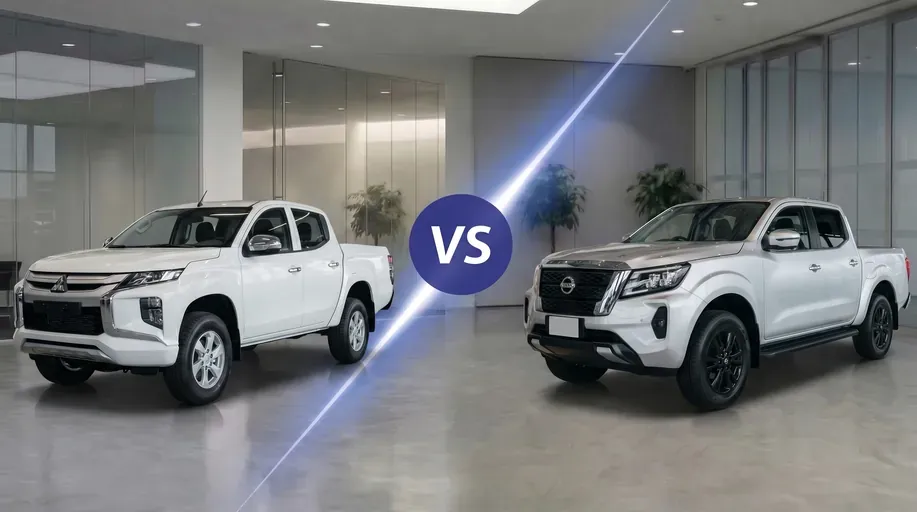
Car battle
Mitsubishi L200 vs. Nissan Navara: Complete comparison 2026
Comparison of the Mitsubishi L200 (Triton) and Nissan Navara (NP300). Find out which pickup has better driving characteristics and equipment. Read our final verdict!
Apr 20, 2026
Mitsubishi L200 review: real owner experiences, towing and payload specs, running costs, prices, and our definitive expert verdict.
October 20, 2026
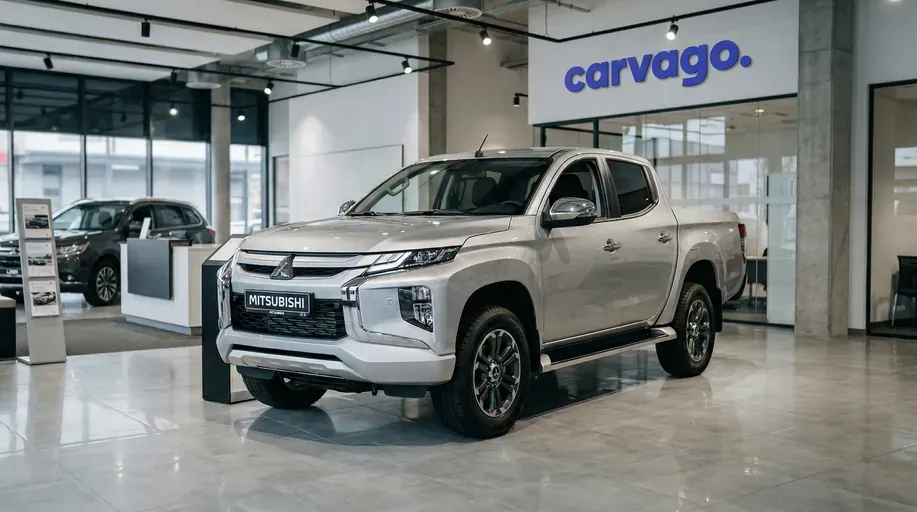
The Mitsubishi L200 represents a traditional ladder-frame mid-size pickup truck competing in Europe's commercial and utility sector. This review focuses exclusively on the sixth-generation model, which had its world premiere on 26 July 2023. European order books opened on 26 February 2026 following an initial reintroduction announcement in January 2026, with the first European customer deliveries commencing in May 2026. Continental European specifications were announced on 21 September 2026 ahead of scheduled dealer arrivals in November 2026. As a recent arrival in European showrooms, this generation has received no mid-cycle facelift.
Offered as a four-door Double Cab, the Mitsubishi L200 pickup is available in both a standard five-seat passenger layout and an optional two-seat commercial configuration that replaces the rear bench with a bulkhead and internal cargo deck. It caters primarily to agricultural businesses, tradespeople, commercial fleets, and private owners who require four-wheel-drive capability and heavy towing capacity over rough terrain rather than road-biased crossover alternatives.
With European customer handovers commencing in May 2026 and mainland European dealer deliveries scheduled for November 2026, the sixth-generation Mitsubishi L200 has a very short operational history in Europe. As of October 2026, zero safety recalls have been published across European safety registers, including the European Commission Safety Gate, the German Federal Motor Transport Authority, and the UK Driver and Vehicle Standards Agency. Because the European fleet has accumulated minimal road mileage, long-term durability for its mechanical components and the exhaust aftertreatment system on the bi-turbo diesel engine is not yet established.
The primary model-specific fault identified during the global rollout involves the driver assistance electronics. Professional tests and manufacturer technical campaigns highlight an overly sensitive driver monitoring system. The steering column camera frequently misinterprets natural head movements—such as glancing at the wing mirrors, checking the centre display, or adjusting instrument cluster menus—as driver distraction or drowsiness. This triggers repeated audible chimes and visual warnings on the dashboard, and attempting to navigate cluster menus to silence the alert can prompt additional distraction warnings. The manufacturer addressed this by issuing a factory dealer service campaign with revised software that increases tolerance thresholds for normal head movements. Vehicles produced prior to the introduction of this calibration require a dealer software reflash to suppress nuisance alerts.
In early evaluations of the bi-turbo diesel Mitsubishi L200 4x4, road tests observed that the automatic transmission calibration tends to hold lower gears at typical urban speeds before executing an upshift, which keeps engine speeds elevated in city traffic. While this programming provides prompt throttle response and aids engine braking when carrying cargo or towing, it increases engine noise in the cabin at low speeds. Testers have not reported mechanical transmission defects, though evaluating gear selection during town driving remains an important check. When assessing an early production example, having its electronic update status and chassis condition independently confirmed through CarAudit provides added reassurance before completing a purchase.
For its European return, the latest-generation Mitsubishi L200 streamlines its mechanical offering around a single four-cylinder diesel engine. The twin-turbocharged unit is paired with either a six-speed manual or a six-speed torque-converter automatic, depending on the equipment grade and market.
| Engine | Fuel | Power | Gearbox | Model years |
|---|---|---|---|---|
| 2.4 Bi-Turbo Diesel | Diesel | 150 kW (204 hp) | 6-speed manual, 6-speed automatic | 2026–present |
Town driving and short commutes:
Like any modern utility vehicle fitted with selective catalytic reduction and a diesel particulate filter, the diesel Mitsubishi L200 is ill-suited to repeated short urban trips. Frequent low-temperature running hampers exhaust aftertreatment regeneration cycles and increases the risk of filter clogging. Buyers whose daily routines consist mostly of stop-start city errands should reconsider a diesel workhorse, as this powertrain requires regular open-road running to operate without exhaust maintenance complications.
Mixed daily use:
For everyday driving across mixed routes, the six-speed automatic paired with permanent four-wheel drive—available on higher trims—is the most practical configuration. Unlike traditional part-time four-wheel-drive setups that must remain in rear-wheel drive on dry or wet asphalt to prevent driveline binding, the permanent system allows continuous all-wheel traction across changing tarmac surfaces without driver intervention.
Motorway driving:
On extended highway trips, the sequential twin-turbo configuration uses a smaller primary turbine off idle before transitioning smoothly to a larger secondary turbine. This staging provides steady pulling power at motorway speeds while keeping engine vibration well isolated in the cabin. The six-speed automatic maintains composed cruising manners, though its wide gear spacing means it downshifts more frequently on steeper gradients than rivals with eight or ten gears.
Towing and heavy hauling:
For hauling cargo or towing heavy trailers, this powertrain proves capable. Strong pulling power is delivered low in the rev range, enabling a laden Mitsubishi L200 4x4 to get moving smoothly under load. Drivers regularly towing on unpaved ground or muddy tracks will benefit most from versions equipped with low-range reduction and a mechanical rear differential lock.
| Dimension | Double Cab |
|---|---|
| Length | 5,320 mm |
| Width | 1,865 mm |
| Height | 1,795–1,815 mm |
| Wheelbase | 3,130 mm |
| Cargo bed (length × width × depth) | 1,555 × 1,545 × 526 mm |
| Boot volume (seats up / folded) | Not applicable* |
*As an open-bed utility vehicle, official enclosed VDA luggage capacity in litres is not published. Height varies by wheel size and exterior roof profile.
In the passenger Double Cab configuration, the Mitsubishi L200 pickup provides sufficient legroom and headroom for adult passengers across the rear bench, while the broader cabin width eases three-abreast seating. The rear backrest remains noticeably upright, however, and the bench cannot slide fore or aft, though the split backrest folds down to carry tools or sensitive equipment out of the weather. An optional two-seat commercial configuration replaces the entire rear bench with a flat load deck and a full bulkhead behind the front seats. Out back, the open load bed of the Mitsubishi L200 accommodates a standard Euro pallet between the inner wheel housings. For daily practicality, loading requires extra care because the tailgate lacks a descent damper to slow its drop, and locking it demands a separate physical key blade because the latch is excluded from the central locking system.
On tarmac, the diesel Mitsubishi L200 pickup 4x4 behaves like a traditional body-on-frame workhorse. Road tests report an unsettled, jittery ride over uneven surfaces when unladen, with noticeable vibration from the rear leaf springs. Carrying weight in the bed or reaching cruising speeds smooths out the suspension. Handling is safe and predictable rather than agile, with slow, insulated steering. The diesel engine delivers strong low-end pulling power and settles quietly at steady cruising speeds, yet it sounds vocal inside under brisk acceleration, joined by wind rustle around the large side mirrors.
The cabin prioritises utility over plush finishes, relying heavily on hard-wearing plastics. Testers praise the straightforward layout, particularly the physical analogue dials and buttons for the ventilation and audio controls. The upright driving position affords clear forward visibility and supportive front cushions.
Professional verdicts align on the Mitsubishi L200 being a rugged, capable hauler with secure all-wheel-drive grip and dependable off-road composure. Opinions diverge on day-to-day civility: some reviewers find the high-speed refinement adequate for a utility vehicle, while others consider the unladen low-speed bouncing and engine intrusion too intrusive for relaxed suburban commuting.
All charts in this section are drawn from Carvago listings of the entire Mitsubishi L200 model family, including other generations represented in the data, rather than solely the newest generation. Because European customer deliveries for the newest model began in 2026, this dataset does not establish a separate price level for the reviewed generation. Across the recorded model years, the median asking price starts at €21,000 for 2016 examples, reaches €29,500 for 2021 vehicles, and stands at €45,700 for 2023 models.
Across the six months from April to September 2026, advertised Mitsubishi L200 listings fluctuated within a moderate range, opening at 253 vehicles and peaking at 282 in June. The monthly totals illustrate how supply on the market developed over this period.
Active listings over time
| Month | Mitsubishi L200 |
|---|---|
| 2026-04 | 253 |
| 2026-05 | 277 |
| 2026-06 | 282 |
| 2026-07 | 275 |
| 2026-08 | 244 |
| 2026-09 | 269 |
Source Carvago
Overall choice remained fairly consistent, dipping to a low of 244 listings in August before rebounding to 269 in September. Prospective buyers can generally count on around 250 to 280 vehicles available at any given time.
For cars advertised today, the median asking price is €21,000 for models built in 2016 and €45,700 for those built in 2023, illustrating how asking levels vary across build years in the chart below.
Median advertised price by year of manufacture
| Model year | Mitsubishi L200 |
|---|---|
| 2016 | 21 000 |
| 2017 | 22 600 |
| 2018 | 23 900 |
| 2019 | 26 100 |
| 2020 | 28 000 |
| 2021 | 29 500 |
| 2022 | 32 900 |
| 2023 | 45 700 |
Source Carvago
Buyers focusing on earlier model years face a median asking price of €21,000 for a 2016 build or €23,900 for a 2018 build, whereas stepping up to a 2023 model corresponds to a median asking price of €45,700.
The breakdown below shows the number of advertised cars by fuel type from April to September 2026, starting with 249 diesel and 4 petrol listings in April 2026.
Supply composition by fuel type
Petrol
Diesel
| Month | Petrol | Diesel |
|---|---|---|
| 2026-04 | 4 | 249 |
| 2026-05 | 1 | 276 |
| 2026-06 | 0 | 282 |
| 2026-07 | 0 | 275 |
| 2026-08 | 0 | 244 |
| 2026-09 | 0 | 269 |
Source Carvago
Diesel completely dominates the available inventory, representing all 269 advertised vehicles in September 2026, which means buyers will realistically be choosing almost exclusively from diesel options.
Between April 2026 and September 2026, the average asking price for the Mitsubishi L200 began at €26,200, as shown in the monthly figures below.
Average price development over time
| Month | Mitsubishi L200 |
|---|---|
| 2026-04 | 26 200 |
| 2026-05 | 25 800 |
| 2026-06 | 25 700 |
| 2026-07 | 25 900 |
| 2026-08 | 25 900 |
| 2026-09 | 25 500 |
Source Carvago
Across the period, the average asking price experienced minor fluctuations before closing at €25,500 in September 2026. The net change from the initial €26,200 is less than three percent, representing very little movement relative to the vehicle values.
Permanent four-wheel-drive system on higher trims usable on paved roads without driveline binding
Cargo bed accommodates a standard Euro pallet between the wheel arches
Straightforward cabin controls with physical dials and buttons
Unsettled and bouncy ride over uneven surfaces when unladen
Overly sensitive driver monitoring camera triggers frequent nuisance warnings
Tailgate lacks a descent damper and requires a separate physical key to lock
Because European customer deliveries of this Mitsubishi L200 only commenced in May 2026, long-term durability is not yet established. Zero safety recalls have been issued, and early driver monitoring alert issues are resolved via a dealer software update.
The twin-turbo diesel paired with the six-speed automatic and permanent four-wheel drive—available on higher trims—is the most practical choice. Unlike part-time systems, it can run continuously in all-wheel drive across wet or dry asphalt without driveline binding.
Ask a dealer to verify by the vehicle's VIN that the driver monitoring software recalibration has been performed. You should also ensure the four-wheel-drive modes engage promptly and inspect the ladder frame for protective wax condition or towing stress.
Not for short stop-start errands, as the bi-turbo diesel Mitsubishi L200 4x4 requires regular open-road trips to complete exhaust filter regeneration cycles. An unladen Mitsubishi L200 pickup also delivers a jittery ride over uneven town streets.
Sources: mitsubishi-motors.de, mitsubishi-motors.co.uk, ec.europa.eu, autocar.co.uk, autoexpress.co.uk
This article was prepared using artificial intelligence tools. The section guarantor is Petr Dušek.
Comparison of the Mitsubishi L200 (Triton) and Nissan Navara (NP300). Find out which pickup has better driving characteristics and equipment. Read our final verdict!
Apr 20, 2026
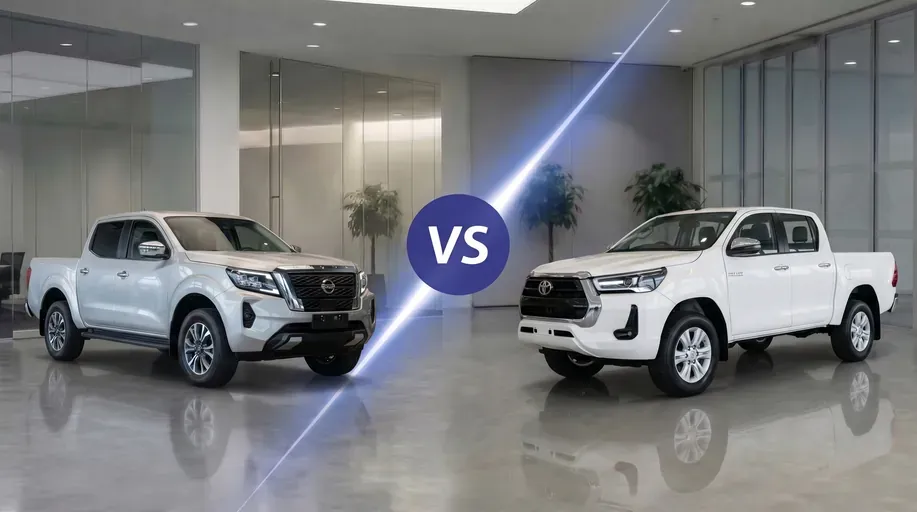
Detailed comparison of Nissan Navara (NP300) vs Toyota Hilux. Discover the key differences in performance, towing capacity, and reliability. Read the verdict before you buy!
May 16, 2026
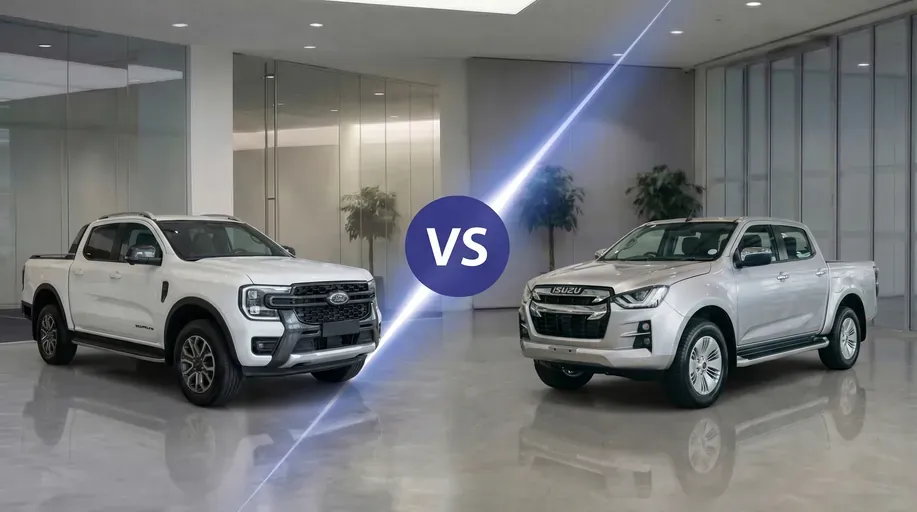
Looking for the perfect pickup truck? A detailed comparison of the Ford Ranger vs. Isuzu D-Max. We reveal the differences in off-road performance, reliability, and equipment to help you choose the best one.
Oct 16, 2026