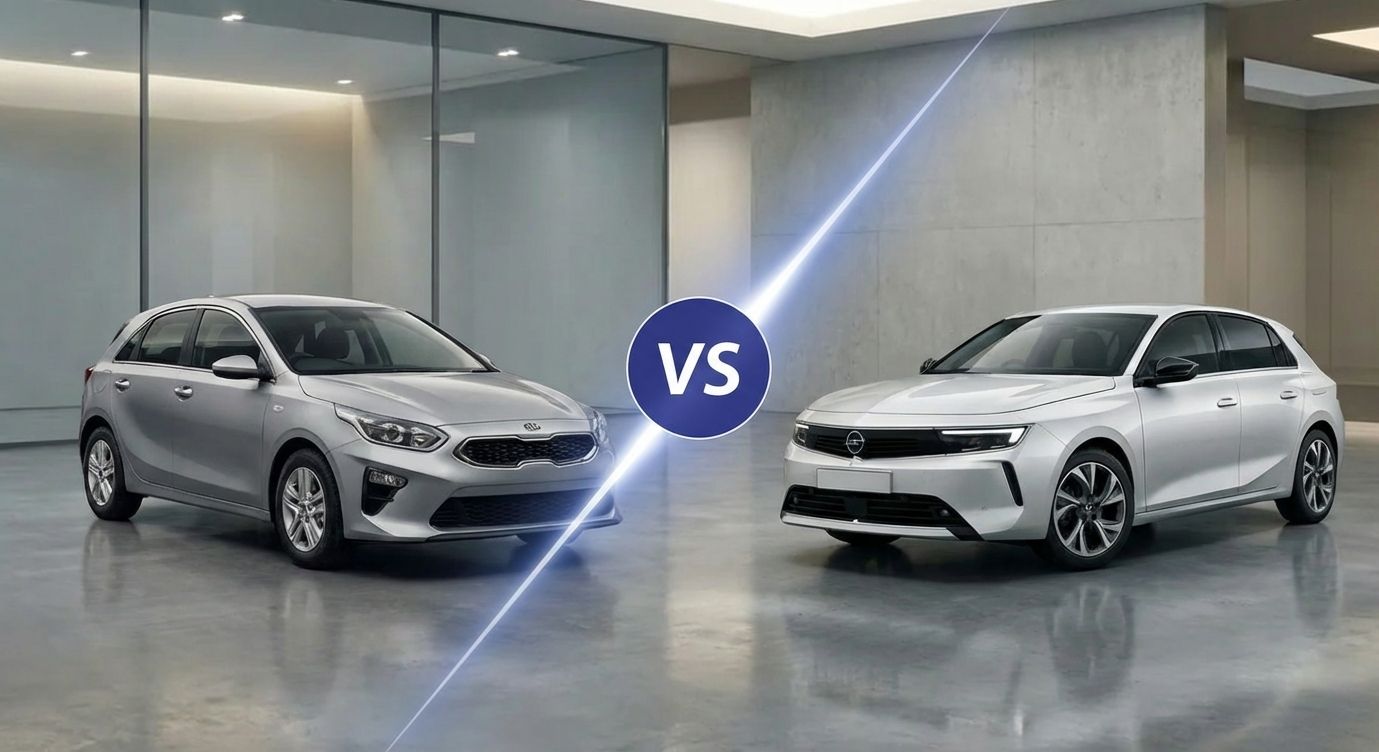
Car battle
Kia Ceed vs. Opel Astra: Complete comparison 2026
Detailed comparison of the Kia Ceed and Opel Astra. We compared real-world fuel consumption, reliability, and equipment. Find out which popular hatchback is worth buying.
Oct 16, 2026
Articles
Review
Mazda 3 review: real owner experience, engine picks, common faults, practicality and running costs — everything you need before you buy.
November 1, 2026
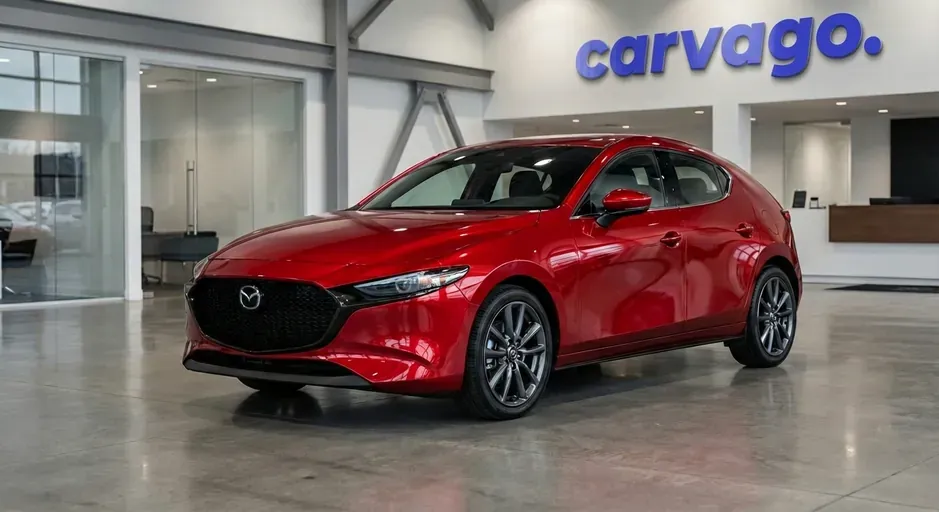
The fourth-generation Mazda 3 occupies a distinctive position in the European compact class, prioritising sleek exterior proportions and driver engagement over boxy utility. Following its global premiere in late 2018, European customer deliveries commenced in May 2019 for the Mazda 3 Hatchback and June 2019 for the four-door Mazda 3 Saloon. This review covers this fourth generation, which remains in active production and on sale across European markets.
Rather than receiving a dramatic visual overhaul, the car has evolved through targeted technology and mechanical revisions. A subsequent revision arrived in August 2024, when ordering opened for a larger-capacity e-Skyactiv G mild-hybrid petrol engine to replace the earlier entry petrol variants, alongside integrated voice assistance.
Sold in two distinct body configurations—a five-door hatchback and a traditional four-door saloon—the Mazda 3 caters primarily to private buyers looking for a driver-focused cockpit, mechanical simplicity, and distinctive road presence rather than outright cargo capacity.
The fourth-generation Mazda 3 has established an overall dependable mechanical reputation across European markets, avoiding fundamental mechanical flaws. However, vehicles produced during the first production years (late 2018 to 2021) experienced software glitches, electrical battery drain, and minor assembly revisions that required official workshop interventions. Cars produced after the updates are substantially more settled.
The most widely documented running issue centres on the 12V auxiliary starter battery on mild-hybrid petrol models built between 2019 and 2021. Due to parasitic draw from the body control module after the vehicle is locked, the battery could deplete after three to seven days of inactivity, triggering instrument cluster warnings, disabling the stop-start function, or preventing the engine from starting. A manufacturer service campaign updated the body control module software to eliminate key-off parasitic draw, though batteries weakened by repeated deep discharges require replacement. In addition, tests describe premature rear brake disc corrosion and sticking caliper sliders, particularly on vehicles driven primarily on low-speed urban journeys where mild-hybrid energy recuperation under-exercises the friction brakes.
Exterior fit and finish show a few specific vulnerabilities on earlier builds. On both the Mazda 3 Hatchback and the Mazda 3 Saloon assembled between November 2018 and mid-2020, outer rubber weatherstripping along the B-pillar can swell and rub against the door frames. This causes front doors to stick when opening and generates wind noise at motorway speeds; fitting revised weatherstripping and modified rear-door B-pillar clips cures the issue. Owners report that exterior power-folding door mirrors on 2019 to 2022 models can judder, stick, or fail to fold fully due to internal gear wear and moisture ingress. Tests also describe the factory multi-stage metallic paint finishes as fragile and vulnerable to stone chipping on high-mileage highway vehicles.
Several official European safety recalls have addressed software and assembly defects on the model:
The fourth-generation Mazda 3 eschews downsized turbo engines in favour of naturally aspirated petrol units and its proprietary Spark Plug Controlled Compression Ignition (SPCCI) technology, complemented briefly by a compact turbodiesel.
| Engine | Fuel | Power | Gearbox | Drivetrain | Model years |
|---|---|---|---|---|---|
| 1.8 Skyactiv-D | Diesel | 85 kW (116 hp) | 6-speed manual / 6-speed automatic | FWD | 2019–2021 |
| 2.0 Skyactiv-G | Petrol Mild Hybrid | 90 kW (122 hp) | 6-speed manual / 6-speed automatic | FWD | 2019–2024 |
| 2.0 e-Skyactiv G | Petrol Mild Hybrid | 110 kW (150 hp) | 6-speed manual / 6-speed automatic | FWD | 2020–2024 |
| 2.5 e-Skyactiv G | Petrol Mild Hybrid | 103 kW (140 hp) | 6-speed manual / 6-speed automatic | FWD | 2024–present |
| 2.0 Skyactiv-X | Petrol Mild Hybrid | 132 kW (180 hp) | 6-speed manual / 6-speed automatic | FWD / AWD | 2019–2021 |
| 2.0 e-Skyactiv X | Petrol Mild Hybrid | 137 kW (186 hp) | 6-speed manual / 6-speed automatic | FWD / AWD | 2021–present |
For short urban trips and daily commuting, the naturally aspirated petrol Mazda 3 variants are the most suitable choice. The earlier 2.0 Skyactiv-G delivers smooth throttle response from idle, while the later 2.5 e-Skyactiv G provides more accessible low-end pulling power in traffic without needing frequent downshifts. The 1.8 Skyactiv-D diesel should be avoided for predominantly city use, as frequent short journeys prevent exhaust filter regeneration and cause fuel dilution in the engine oil.
For mixed everyday driving, the 2.5 e-Skyactiv G or the stronger 2.0 e-Skyactiv G strike a dependable balance between refinement and flexibility. Buyers looking for an engaging drive will appreciate the manual Mazda 3, which features a tactile, short-throw shift action reminiscent of a sports car. For congested commutes, the automatic Mazda 3 uses a traditional torque converter that ensures smooth low-speed crawling and parking manoeuvres.
For frequent motorway travel, the 2.0 e-Skyactiv X is the most capable petrol option, achieving diesel-like efficiency at sustained cruising speeds while maintaining quiet high-speed cruising manners. The earlier 1.8 Skyactiv-D diesel is available only as a used car buy; it delivers frugal long-distance economy, though its outright overtaking pace is modest.
For towing duties, the 2.5 e-Skyactiv G and the 2.0 e-Skyactiv X offer the strongest low- and mid-range muscle to handle heavier trailers comfortably. Drivers who encounter winter conditions or need extra traction when towing will also benefit from the all-wheel-drive Mazda 3 version of the e-Skyactiv X.
| Parameter | Hatchback | Saloon |
|---|---|---|
| Length (mm) | 4,460 | 4,660 |
| Width (mm) | 1,795 | 1,795 |
| Height (mm) | 1,435 | 1,440 |
| Wheelbase (mm) | 2,725 | 2,725 |
| Boot capacity (seats up / folded, l) | 334 / 1,026 | 450 / 1,138 |
Hatchback boot capacity is slightly reduced on cars fitted with the optional premium sound system due to the underfloor woofer housing.
In the cabin, front occupants enjoy supportive seating and straightforward adjustments, but the rear quarters demand compromises. Taller passengers face restricted knee clearance behind high-set front seats, while the rising shoulder line and thick rear roof pillars limit incoming light, creating an enclosed atmosphere in the back. Everyday loading into the Mazda 3 Hatchback requires lifting items over a pronounced sill into a cargo bay that trails compact-class averages, whereas the Mazda 3 Saloon trades vertical clearance for a noticeably deeper boot floor. Practical flexibility across the Mazda 3 relies entirely on standard 60:40 split-folding rear seatbacks, as the cabin lacks fore-and-aft sliding rear seats or a separate through-load ski hatch.
Professional road tests consistently characterise the Mazda 3 as a driver-focused compact with a noticeably firm ride. Its chassis remains composed and resists excessive body roll during abrupt lane changes, providing predictable front-axle grip. However, the taut damping struggles to filter sharp urban ridges, cobbles, and sunken drains, where models on larger wheels transmit abrupt impacts into the cabin. While high-speed motorway cruising suppresses wind noise effectively, tyre roar over coarse surfaces remains prominent. Depending on the engine, testers also note faint vibrations during cylinder deactivation or combustion clatter under light acceleration.
Cabin execution earns widespread praise among testers. Soft-touch materials, padded surfaces, and damped switchgear frequently draw comparisons to premium-brand rivals. Ergonomics are a particular highlight: the physical rotary controller and dedicated heating controls prove far less distracting on the move than all-touchscreen layouts found in competitors. Front seats provide supportive lateral bolsters and a well-aligned driving position, though thick rear roof pillars significantly impede over-the-shoulder visibility.
Testers broadly agree that the model prioritises cabin craftsmanship and intuitive controls over rear-seat utility and low-speed suspension compliance. Opinions diverge primarily around the steering: while several reviews commend its natural weighting and linear response, others find the ratio somewhat slow on turn-in, with limited communication from the front tyres. Recent model updates integrated upgraded infotainment displays and connectivity while retaining the car's distinctive mechanical switchgear and firm suspension characteristics.
All charts in this section are drawn from Carvago listings covering the broader Mazda 3 model family, including other generations represented in the data, rather than exclusively the reviewed generation. Because listings are grouped only by year of manufacture, these figures do not establish a separate price level for the reviewed generation alone. In the current market offer, the median asking price is €18,300 for 2019 vehicles, €25,400 for 2023 cars, and €27,500 for the 2024 model year, while 2025 and 2026 listings both record a median asking price of €27,000.
Active Mazda 3 listings on the market fell from 4,202 in April 2026 to 3,743 in September 2026, as illustrated in the breakdown below.
Active listings over time
| Month | Mazda 3 |
|---|---|
| 2026-04 | 4 202 |
| 2026-05 | 4 070 |
| 2026-06 | 3 956 |
| 2026-07 | 3 872 |
| 2026-08 | 3 644 |
| 2026-09 | 3 743 |
Source Carvago
Buyers still have broad choice across the market, with several thousand advertised cars available each month despite supply softening through August to 3,644 before a small uptick at the end of the period.
Among listings advertised today, the median asking price for cars built in 2019 is €18,300, compared to €27,500 for those built in 2024. The difference between build years is not entirely continuous, as the median asking price of cars advertised today built in 2025 and 2026 is €27,000.
Median advertised price by year of manufacture
| Model year | Mazda 3 |
|---|---|
| 2019 | 18 300 |
| 2020 | 19 500 |
| 2021 | 20 300 |
| 2022 | 21 800 |
| 2023 | 25 400 |
| 2024 | 27 500 |
| 2025 | 27 000 |
| 2026 | 27 000 |
Source Carvago
A buyer targeting earlier production will see a median asking price of €18,300 for cars advertised today built in 2019, or €21,800 for those built in 2022. For newer options advertised today, the median asking price stands at €25,400 for 2023 models and €27,500 for 2024 models.
This depreciation curve illustrates how the Mazda 3 loses residual value over time, shedding roughly 10% in its first year and 22% by age three. The chart below outlines this progression across the model's first seven years.
Residual value by vehicle age
| Vehicle age | Mazda 3 |
|---|---|
| New | 27 200 |
| 1 yr | 24 500 |
| 2 yrs | 23 200 |
| 3 yrs | 21 300 |
| 4 yrs | 19 600 |
| 5 yrs | 19 000 |
| 6 yrs | 17 500 |
| 7 yrs | 17 400 |
Source Carvago
In total, the model sheds approximately 36% of its initial residual value across the seven-year span shown. The steepest single drop occurs in the first year, after which annual losses moderate and almost completely level off between age six and seven.
Between April and September 2026, petrol variants represented the vast majority of advertised Mazda 3 listings, shifting from 4108 cars in April 2026 to 3655 in September 2026. The chart below details the monthly breakdown of active listings by fuel type.
Supply composition by fuel type
Petrol
Diesel
Hybrid
| Month | Petrol | Diesel | Hybrid |
|---|---|---|---|
| 2026-04 | 4 108 | 11 | 81 |
| 2026-05 | 3 936 | 15 | 117 |
| 2026-06 | 3 842 | 19 | 93 |
| 2026-07 | 3 760 | 17 | 92 |
| 2026-08 | 3 554 | 16 | 72 |
| 2026-09 | 3 655 | 18 | 67 |
Source Carvago
In September 2026, petrol models dominated the active count with 3655 listings, compared to 67 hybrids and 18 diesels. Buyers will find that the available selection is concentrated almost entirely in petrol power, with hybrid and diesel choices remaining scarce.
Between April 2026 and September 2026, the average asking price for the Mazda 3 started at €24,100 and concluded at €24,300. The chart below tracks how advertised prices moved across these six months.
Average price development over time
| Month | Mazda 3 |
|---|---|
| 2026-04 | 24 100 |
| 2026-05 | 24 100 |
| 2026-06 | 24 000 |
| 2026-07 | 24 100 |
| 2026-08 | 24 300 |
| 2026-09 | 24 300 |
Source Carvago
Across the entire period, the average moved by less than one percent, staying within a narrow band between €24,000 and €24,300. Such slight month-to-month variation represents little overall movement relative to the vehicle's advertised price level.
High-grade interior materials with intuitive physical switchgear and rotary controls
Composed chassis balance with minimal body roll and a precise manual shift action
Smooth and dependable petrol powertrains well suited to mixed everyday driving
Restricted rear knee room and compromised over-the-shoulder visibility from thick pillars
Firm low-speed ride over sharp urban bumps and tyre roar on coarse surfaces
Early production years subject to auxiliary battery drain and multiple software recalls
The Mazda 3 has established a dependable mechanical record without major hardware failures, though cars from the first production years experienced software glitches and battery drain issues. Ensure that the 12V auxiliary starter battery holds an adequate charge and that all manufacturer software campaigns have been applied.
For daily commuting and city driving, the naturally aspirated petrol Mazda 3 variants offer the smoothest delivery and trouble-free operation. Motorway commuters will get the best balance of performance and cruising efficiency from the e-Skyactiv X, while the short-lived diesel should be avoided for urban use due to filter regeneration concerns.
Verify the car's VIN with an authorised dealer to confirm that all official safety recalls were completed. In addition, arrange a pre-purchase CarAudit inspection to verify the health of the auxiliary battery and inspect the door seals and brakes before purchase.
It prioritises driver engagement and interior design over cabin space, making it better suited to couples or commuters than growing families. Front occupants have plenty of space, but restricted rear knee clearance, thick roof pillars that limit natural light, and a modest boot require compromises on practicality.
Sources: mazda-press.com, adac.de, europa.eu, autocar.co.uk, whatcar.com
This article was prepared using artificial intelligence tools. The section guarantor is Petr Dušek.
Detailed comparison of the Kia Ceed and Opel Astra. We compared real-world fuel consumption, reliability, and equipment. Find out which popular hatchback is worth buying.
Oct 16, 2026
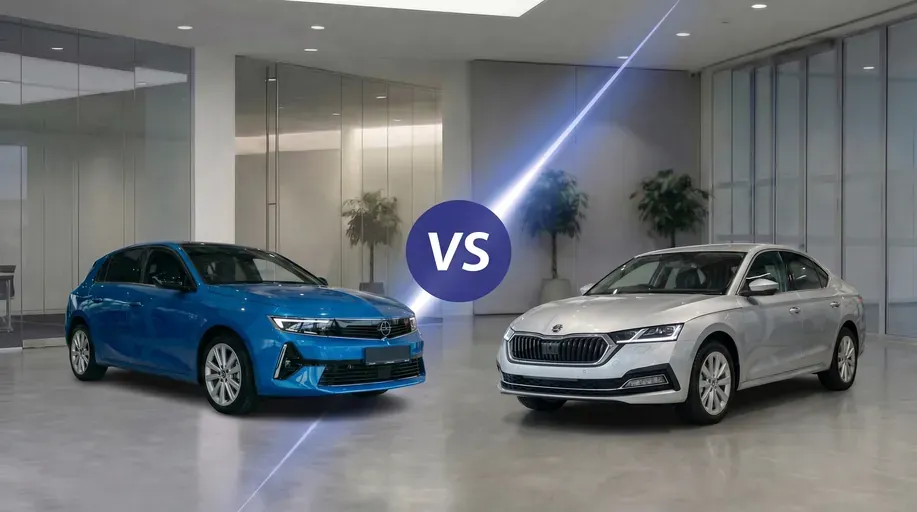
Detailed comparison of Opel Astra vs. Škoda Octavia. We evaluated real-world driving characteristics, equipment, and space. Read our verdict and make the right choice!
Apr 25, 2026
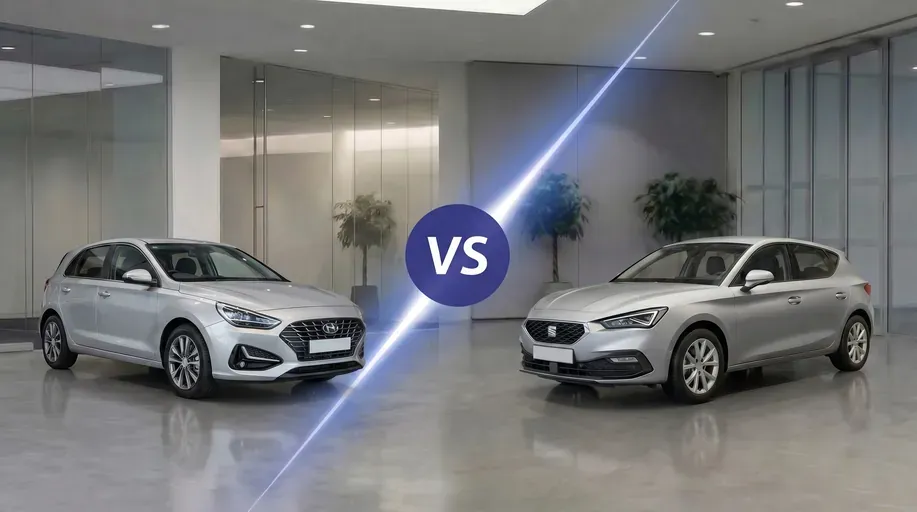
Detailed comparison of used Hyundai i30 vs Seat Leon. Find out which hatchback offers better driving characteristics, fuel consumption, and reliability. Read our verdict!
Oct 16, 2026