Car battle
Citroën C4 vs. Hyundai i30: Complete comparison 2026
Detailed comparison of Citroën C4 vs. Hyundai i30. Find out which car offers better real-world fuel consumption, equipment, and value for money. Read our final verdict!
Oct 16, 2026
Articles
Car battle
Detailed comparison of used Hyundai i30 vs Seat Leon. Find out which hatchback offers better driving characteristics, fuel consumption, and reliability. Read our verdict!
October 16, 2026
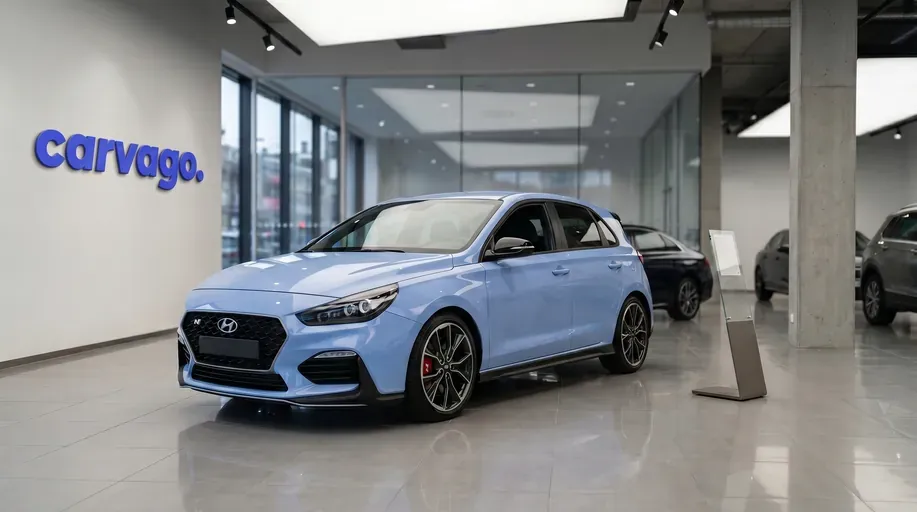
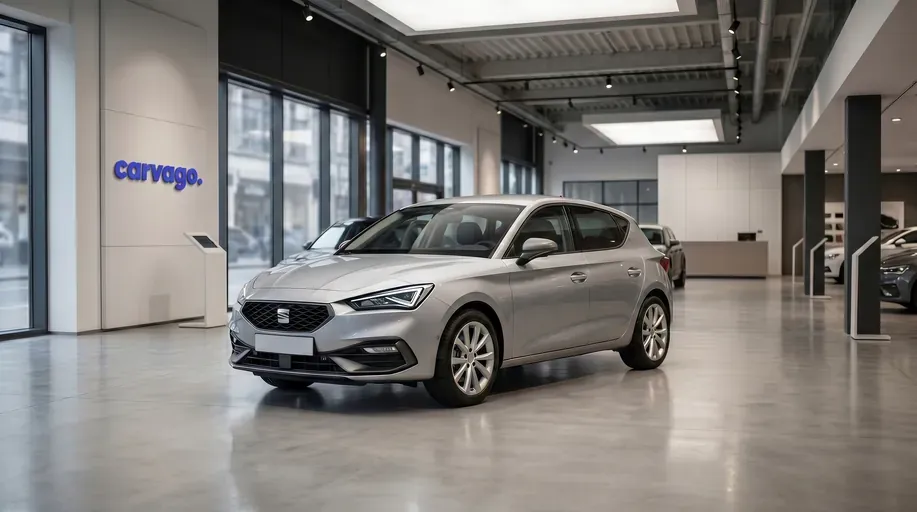
The South Korean Hyundai i30, previously also sold under the Elantra GT name in some overseas markets, has established a strong position in the European market as a reliable, practical, and exceptionally well-equipped car with an excellent price-to-value ratio. Standing against it is the spirited Spanish SEAT Leon, a stylishly designed representative with proven Volkswagen Group technology, whose top performance versions now appear on the market under the independent Cupra Leon brand. Let's take a detailed look at which of these two popular five-door hatchbacks offers a better driving experience, a more thoughtful interior, and an overall more sensible choice when selecting from the four-year-old used car market.
When we place the third-generation Hyundai i30 and the fourth-generation Seat Leon (designated KL) from around 2022 side by side, their clear belonging to the traditional compact class is immediately apparent. However, if we look more closely at the physical dimensions of these approximately four-year-old used cars, we find that the Spanish representative, thanks to its generational update in 2020, has grown in overall volume and has a slight edge in external proportions. The Seat's larger footprint will immediately appeal to drivers who expect a C-segment car to maximize offered space, while the Hyundai will please with its balanced and slightly more compact silhouette.
The fundamental difference lies in the overall length of the cars and the closely related wheelbase. While the Hyundai i30 hatchback measures 4340 mm in length with a wheelbase of 2650 mm, the Seat Leon is 28 mm longer (4368 mm) and its wheelbase is 2682 to 2686 mm. This numerical difference, representing over 30 mm in favor of the Spanish car, brings a slightly more stable driving experience in practice and also more airy knee room for rear-seat passengers. A similar situation exists for the popular estate body styles – the Seat Leon Sportstourer is, at 4642 mm, a significant 57 mm longer than the Hyundai i30 Kombi with its 4585 mm. The greater length and longer wheelbase clearly predetermine the Seat Leon for the role of a more spacious and comfortable highway cruiser, whereas the slightly shorter build of the Hyundai i30 offers the driver somewhat easier maneuverability and estimation when parking in crowded city streets.
In terms of the width of both competitors, we measure a negligible difference of only 4 mm (1795 mm for the i30 versus 1799 mm for the Leon), so the ability to park in narrow underground garages and the feeling of airiness at shoulder level are practically identical. More noticeable differences can be found in height, where the Hyundai i30 Kombi model (up to 1475 mm) is slightly taller than the low-slung Leon Sportstourer (up to 1456 mm). This slight increase in height for the Korean model can make installing a roof box or bike racks easier and also brings a few millimeters of easier entry. Furthermore, Hyundai counters with the presence of a stylish and more sportily cut Fastback variant with a sloping roof and a height of only 1417–1425 mm. In the final decision, from the perspective of external proportions, your lifestyle plays the main role – for a more crouched sporty stance and more generous longitudinal space, you'll likely reach for the Leon, while the Hyundai i30, with its slightly taller build of classic variants, guarantees easier access to the cabin and also offers an interesting body alternative in the form of the aforementioned liftback.
| Parameter | Hyundai i30 Hatchback | Seat Leon Hatchback | Hyundai i30 Fastback | Hyundai i30 Kombi | Seat Leon Sportstourer |
|---|---|---|---|---|---|
| Width (mm) | 1795 | 1799 | 1795 | 1795 | 1799 |
| Length (mm) | 4340 | 4368 | 4455 | 4585 | 4642 |
| Height (mm) | 1444 - 1455 | 1442 - 1460 | 1417 - 1425 | 1465 - 1475 | 1437 - 1456 |
| Wheelbase (mm) | 2650 | 2682 - 2686 | 2650 | 2650 | 2682 - 2686 |
When choosing a family or everyday practical car, the size of the luggage compartment often plays a key role. Whether you need to transport bulky groceries, sports equipment, or are packing for a two-week family holiday, extra liters always come in handy. Both the Hyundai i30 and the Seat Leon, as very popular representatives of the compact class, offer excellent utility value on the market for roughly four-year-old used cars. However, the approach of both carmakers to spatial layout differs slightly, especially when electrified powertrains come into play.
In the case of the base five-door hatchbacks, the South Korean representative offers slightly more everyday practicality. The third-generation Hyundai i30 has a base volume of 395 liters, which is a value perfectly sufficient for a regular weekend grocery run or a folded smaller stroller. The Seat Leon (KL generation) in the hatchback version lags slightly behind with its 380 liters. However, a truly massive difference occurs if you are considering the plug-in hybrid version (e-HYBRID) of the Seat Leon. Due to the placement of bulky batteries under the floor, the capacity here drops to a below-average 270 liters, which significantly limits the space for a few extra suitcases. In contrast, the Hyundai i30 relies only on mild-hybrid technology (48V), which does not affect the trunk size in any way. After folding the rear seats, however, the capacities of both standard hatchbacks level out at an identical 1301 liters. Also worth mentioning is the elegant Hyundai i30 Fastback, which combines dynamic design with a very solid base trunk volume of 450 liters.
But the real battle for family buyers takes place in the category of spacious estates. Here, the Seat Leon Sportstourer shows its greatest weapon and, with a base volume of 620 liters, surpasses the rival Hyundai i30 Estate (602 liters). This generous capacity in both models easily accommodates luggage for a longer holiday or bulkier children's equipment. However, the situation surprisingly reverses when you need to transport long items and fold the rear seats completely – the Hyundai offers an impressive 1650 liters, while the Seat offers a slightly smaller 1600 liters. Even with practical estates, it is necessary to choose the engine carefully; the Seat Leon Sportstourer e-HYBRID reduces its family luggage compartment to 470 liters and the compressed natural gas (TGI) version to 480 liters.
| Parameter | Hyundai i30 Hatchback | Seat Leon Hatchback | Hyundai i30 Estate | Seat Leon Sportstourer |
|---|---|---|---|---|
| Base volume (liters) | 395 | 380 | 602 | 620 |
| Max. volume with seats folded (liters) | 1301 | 1301 | 1650 | 1600 |
While the Hyundai i30 scores with a stable trunk size regardless of the mild-hybrid powertrain used and provides more space in the hatchback version, the Seat Leon attracts with a slightly more voluminous family estate, where you must, however, be very careful about the noticeable loss of space in the plug-in hybrid and gas variants.
Towing capacity often determines how versatile your car can be. Whether it's hitching up a family caravan, transporting building materials, or just installing a heavier e-bike rack, trailer weight is a key parameter for many buyers. Looking at roughly four-year-old used cars on the market, we find that the Hyundai i30 (3rd generation) and Seat Leon (KL generation) approach this discipline differently and offer values that can fundamentally influence your decision.
The standard braked trailer weight for the base one-liter Hyundai i30 (1.0 T-GDI) engines most often ranges between 1,000 and 1,200 kg. In contrast, the current KL generation Seat Leon with the base 1.0 TSI engine shows slightly better predispositions for towing heavier loads, offering a standard of 1,100 to 1,300 kg. However, more significant differences appear with more powerful versions. The maximum braked trailer weight for the i30 with the economical 1.6 CRDi diesel engine reaches 1,500 kg (and 1,600 kg for the top-of-the-line N sports version). The Seat Leon with the 2.0 TDI engine can handle 1,500 to 1,600 kg as standard, but in the exceptionally practical Leon Sportstourer 2.0 TDI version, it can tow as much as 1,600 to 2,000 kg. This is an exceptional value within the compact class.
Special attention should be paid to electrified versions, where technical compromises often occur. If you opt for certain model years of the Hyundai i30 in the 1.0 T-GDI version with 48V mild-hybrid technology, the maximum braked trailer capacity can drop to as little as 700 kg. In contrast, the Seat Leon with its advanced 1.4 e-HYBRID plug-in hybrid easily maintains a towing capacity of 1,500 kg.
In practice, these differences mean that while the base or mild-hybrid Hyundai i30 provides space for a few extra suitcases in a light utility trailer, the more powerful variants of the Seat Leon can safely tow even a caravan without hesitation. The Leon's robust capacity is thus more than sufficient for weekend shopping as well as longer holidays with a fully loaded caravan.
Overall, if regular towing of heavier loads is a priority for you, the Seat Leon represents the more robust choice in this duel without the need for major compromises in eco-friendly variants. The Hyundai i30, on the other hand, targets more recreational users. As for unbraked trailers, the database does not specify exact values for both vehicles; however, in practice, this car class always involves standard legal limits from 600 to 750 kg depending on the weight of the specific car specification.
| Model and engine | Braked trailer weight (kg) | Unbraked trailer weight (kg) |
|---|---|---|
| Hyundai i30 1.0 T-GDI (3rd generation) | 1000 - 1200 | Not specified |
| Hyundai i30 1.0 T-GDI 48V-Mildhybrid (3rd generation) | 700 - 1200 | Not specified |
| Hyundai i30 1.5 T-GDI 48V-Mildhybrid (3rd generation) | 1210 - 1420 | Not specified |
| Hyundai i30 1.6 CRDi (3rd generation) | 1500 | Not specified |
| Seat Leon 1.0 TSI / eTSI (KL Generation) | 1100 - 1300 | Not specified |
| Seat Leon 1.4 e-HYBRID (KL Generation) | 1500 | Not specified |
| Seat Leon 1.5 TSI / eTSI (KL Generation) | 1300 - 1500 | Not specified |
| Seat Leon 2.0 TDI (KL Generation) | 1500 - 1600 | Not specified |
| Seat Leon Sportstourer 2.0 TDI (KL Generation) | 1500 - 2000 | Not specified |
When comparing the engine lineups of the Hyundai i30 and Seat Leon, the different engineering approaches of the two manufacturers are immediately apparent. While Hyundai, with its third generation, relies to some extent on more traditional and mechanically simpler solutions, the Seat Leon KL generation (launched in 2020) utilizes a wide range of electrified powertrains and sophisticated Volkswagen Group technology. For buyers in the market for nearly new used cars around four years old, this practically means choosing between Hyundai's renowned robustness and Seat's advanced efficiency. The entry-level option for Hyundai is the very popular 1.5 DPI naturally aspirated four-cylinder petrol engine; in contrast, Seat always starts with the 1.0 TSI turbocharged three-cylinder. For performance enthusiasts, Hyundai offers the top-tier, aggressive two-liter in the legendary i30 N version (up to 206 kW), which the Leon counters with a more refined 2.0 TSI petrol engine (140 kW) and an economical yet dynamic plug-in hybrid with 150 kW. Both brands offer precise manual transmissions and fast dual-clutch automatics (DCT/DSG), but the Leon gains a significant advantage for mountain drivers thanks to the availability of all-wheel drive (4Drive) on selected larger engines in the estate body style.
The engine range for the third-generation Hyundai i30 was carefully designed with both durability and strict emission limits in mind. The absolute entry-level and one of the most sought-after engines on today's used car market is the 1.5 DPI naturally aspirated four-cylinder with 81 kW and a manual transmission. Thanks to indirect fuel injection, this engine resists carbon buildup and is ideal for short city trips or conservative drivers. However, customers should note that this exceptionally reliable unit ceased production during 2022 due to emissions regulations. For the same reason, you will no longer find the economical 1.6 CRDi diesel engines in the latest model years, as their sale in Europe also ended in 2022. Modern turbocharged petrol variants are currently represented by the 1.0 T-GDI three-cylinder (88 kW) and the more powerful 1.5 T-GDI four-cylinder (118 kW). These frequently appear with 48V mild-hybrid technology, complemented by the intelligent manual transmission (iMT) or a seven-speed dual-clutch automatic (DCT). A standout in the hot-hatch territory is the sporty i30 N model, which churns out 206 kW in its most powerful versions.
| Engine Type | Fuel Type | Power (kW) | Torque (Nm) | Transmission |
|---|---|---|---|---|
| 1.5 DPI | Petrol | 81 | 144 | 6MT |
| 1.0 T-GDI | Petrol | 88 | 172 | 6MT / 7DCT |
| 1.0 T-GDI 48V | Petrol (Mild-hybrid) | 88 | 172 | 6iMT / 7DCT |
| 1.5 T-GDI 48V | Petrol (Mild-hybrid) | 118 | 253 | 6iMT / 7DCT |
| 1.6 CRDi | Diesel | 85 | 280 / 300 | 6MT / 7DCT |
| 1.6 CRDi 48V | Diesel (Mild-hybrid) | 100 | 280 / 320 | 6iMT / 7DCT |
| 2.0 T-GDI (i30 N) | Petrol | 206 | 392 | 6MT / 8DCT |
The fourth-generation Seat Leon (KL) benefits down to the last bolt from advanced Volkswagen Group architecture and boasts an incredibly rich palette of powertrains on the four-year-old used car market. The petrol entry point is the agile 1.0 TSI three-cylinder (66 or 81 kW). Except for purely manual versions, the DSG automatics are equipped with sophisticated mild-hybrid assistance labeled eTSI. An excellent compromise for the vast majority of customers is the 1.5 TSI four-cylinder, sold with outputs of 96 kW and 110 kW (also with eTSI technology when choosing DSG). A real ace up the sleeve for those regularly driving long distances is the mature 2.0 TDI diesel (85 and 110 kW), where the Sportstourer estate body could be configured with 4Drive all-wheel drive. Furthermore, a used Leon can offer specialties whose production ended during 2023 and can now only be purchased on the used market: the more eco-friendly 1.5 TGI variant running on compressed natural gas (CNG) and the flagship, non-electrified 2.0 TSI petrol engine producing a generous 140 kW. One cannot overlook the technologically advanced 1.4 e-HYBRID plug-in hybrid, which, thanks to a 13 kWh battery, ensures dozens of kilometers of completely emission-free operation.
| Engine Type | Fuel Type | Power (kW) | Torque (Nm) | Transmission |
|---|---|---|---|---|
| 1.0 TSI | Petrol | 66 / 81 | 175 / 200 | 6MT |
| 1.0 eTSI | Petrol (Mild-hybrid) | 81 | 200 | 7DSG |
| 1.5 TSI | Petrol | 96 / 110 | 200 / 250 | 6MT |
| 1.5 eTSI | Petrol (Mild-hybrid) | 110 | 250 | 7DSG |
| 2.0 TSI | Petrol | 140 | 320 | 7DSG |
| 1.4 e-HYBRID | Plug-in hybrid | 150 | 350 | 6DSG |
| 1.5 TGI | CNG | 96 | 200 | 6MT / 7DSG |
| 2.0 TDI | Diesel | 85 / 110 | 300 / 360 | 6MT / 7DSG |
Which engine range makes more sense?
Both vehicles offer clearly defined advantages to their prospective buyers. The Hyundai i30 is the perfect choice for budget-conscious customers who find the indestructible 1.5 DPI naturally aspirated engine ideal for city commuting without the risks associated with expensive turbo servicing. However, the Hyundai's weak point is the premature removal of highway-friendly diesels from the European lineup and the total absence of all-wheel drive. In contrast, the Seat Leon KL is the clear champion for individuals requiring confident two-liter diesel highway cruisers, the perfectly tuned interplay of mild-hybrids with the DSG automatic transmission, or the option to charge the car overnight from a socket and drive around town exclusively on electricity.
While a used Hyundai i30 with a naturally aspirated engine attracts with low service costs, the Seat Leon will dazzle fans of modern turbocharged units, mild-hybrids, and those who swallow long highway miles with the popular 2.0 TDI engine.
Choosing the right engine is an absolutely crucial step for your long-term satisfaction with the car, and our recommendations are based on a balance of performance, real-world fuel consumption, owner feedback, and proven mechanical reliability. When looking for an ideal roughly four-year-old used car, you will encounter quite different technical approaches from both brands. Interestingly, while Seat fully switched to sophisticated turbo engines with cylinder deactivation technology and mild-hybrids (eTSI) for the fourth generation of the Leon, Hyundai opted for a combination of turbocharging with a robust 48V electrified system for the facelifted third generation of the i30, and was one of the few to offer a simple naturally aspirated engine on the market for a long time. As available production data clearly shows, older and very popular units such as the 1.4 T-GDI from Hyundai or the 1.4 TSI from Seat definitively ended production around 2020. Therefore, you will naturally no longer find them in the range of four-year-old cars from 2021 and 2022, which is why our tips primarily focus on their more modern and significantly more efficient successors.
This four-cylinder turbocharged unit represents the best you can choose in the i30 model on the modern used car market. It offers an excellent compromise between above-average dynamics and everyday practicality. Its main technical strength is the 48V mild-hybrid system. Using a starter-generator, it effectively compensates for the turbocharger's weaker pull at the lowest revs, perfectly smooths out the start-stop system's interventions, and realistically helps push combined fuel consumption down to a pleasant level of around 6 litres per 100 km.
As with many modern direct-injection engines, there is a long-term risk of carbon deposits on the intake valves, especially if you plan to tackle exclusively short city trips with a cold engine. However, this ailment can be very successfully prevented: simply shorten the oil change interval to 10,000 to 15,000 kilometres, use high-quality fuel with additives, and regularly "stretch" the engine with a smooth highway drive, which safely burns off the deposits. During the test drive before purchase, focus carefully on the smoothness of pulling away – the so-called intelligent Manual Transmission (iMT) with an electronically controlled clutch has no fixed mechanical link to the pedal, and its modulation may take some getting used to at first.
This engine is an ideal choice for drivers who insist on a decent power reserve for quick and safe overtaking, enjoy occasional more dynamic driving, and divide their weekly schedule between city traffic and longer weekend highway or country road trips.
In the fourth generation of the Seat Leon, the 150 hp 1.5 TSI petrol four-cylinder makes the most sense in terms of reliability and overall operating costs. It is a very well-tuned unit that excels in everyday use with top-tier thermal efficiency and a surprisingly strong torque curve from the mid-range. The ultimate weapon of this engine is the clever ACT (Active Cylinder Technology) system. Under partial load, it can completely and imperceptibly deactivate the two middle cylinders, which, during defensive driving or at a constant highway speed, brings real consumption down well below 5.5 litres per 100 km.
From a technical and service perspective, it is a safe choice, but it has its minor specifics that you, as a used car buyer, must focus on. Especially in cars from the very beginning of production, slight jerking of a completely cold engine (known as "kangarooing") appeared in the colder months. In four-year-old cars on the market, this phenomenon should have already been completely eliminated by a new software update for the control unit. Nevertheless, always insist to the dealer that you start the test drive with a 100% cold engine. Your second visual check should lead under the hood to the coolant expansion tank. TSI engines occasionally suffer from minor coolant micro-leaks around the water pump seal; if the pink liquid level is at the minimum mark or dangerously below it, it could mean an additional expense for replacing the entire pump in the near future.
The 1.5 TSI engine is perfect for family use, highway commuting, and drivers with a completely varied route profile. It combines excellent agility with driving comfort and does not require tolerating the higher service and emission risks that used diesels of the same power often bring.
Official fuel consumption figures provided by car manufacturers in catalogs often differ significantly from real-world driving. Laboratory tests simply cannot always faithfully simulate daily driving in traffic jams, highway climbs, or the influence of weather. To get the most accurate picture, we looked at real user data from the independent community platform Spritmonitor.de, where hundreds of thousands of drivers regularly record their actual refueling. We focused on the engine versions and generations of both models that are most relevant on the market for roughly four-year-old used cars today – specifically the modern third-generation Hyundai i30 and the fourth-generation Seat Leon (designated as KL).
news_site: Spritmonitor.de
| Model and engine | Average consumption (l/100 km) |
|---|---|
| Hyundai i30 1.0 T-GDI 88 kW | 6.0 |
| Seat Leon 1.0 eTSI 81 kW | 5.8 |
| Hyundai i30 1.5 T-GDI 118 kW | 6.3 |
| Seat Leon 1.5 eTSI 110 kW | 6.1 |
| Hyundai i30 1.6 CRDi 100 kW | 5.3 |
| Seat Leon 2.0 TDI 110 kW | 5.2 |
Looking closely at the real data, several interesting trends emerge. Traditional diesel engines for long distances do not disappoint – both the proven two-liter TDI under the hood of the Seat and the 1.6 CRDi unit in the Hyundai can easily manage an average just above the five-liter per hundred kilometers mark in the real world. However, the situation with petrol engines is much more interesting. A surprising finding is that the small-displacement three-cylinder 1.0 T-GDI in the Hyundai i30 does not bring as much operational savings as it might seem. With an average of 6.0 l/100 km, it only slightly undercuts the much more refined and powerful four-cylinder 1.5 eTSI in the Seat Leon (6.1 l/100 km). Smaller engines have to work harder at highway speeds or under heavier loads, completely losing their paper advantage from the laboratory in the real world.
For the average driver, there is a clear recommendation: choose the engine according to your most frequent driving environment. If you commute dozens of kilometers on the highway daily, the diesel variants of both models will guarantee you unbeatable operating costs. Conversely, for the typical suburban driver or a family with a diverse mix of trips, modern petrol units are an absolutely ideal choice. The 1.5-liter petrol engines represent the best compromise between consumption, reliability, and driving dynamics for both cars. In this displacement, the Leon benefits slightly from the group's cylinder deactivation system and mild-hybrid assistance (eTSI), while the Hyundai successfully keeps pace with its own 48V mild-hybrid system.
Overall, it can be said that fuel consumption should not be the main and only deciding factor in this particular duel. Both manufacturers offer highly competitive and efficient powerplants in their four-year-old representatives of the compact class. The differences between equivalent engines are in the range of negligible tenths of a liter. In the final selection of your used car, personal preferences regarding design, interior ergonomics, chassis tuning, and purchase price will likely carry much more weight.
When looking for a roughly four-year-old car, you will encounter quite significant differences in acquisition costs. The Hyundai i30 from the PD generation (post-facelift) represents one of the most affordable options in its class, while the fourth-generation SEAT Leon (KL) benefits from Volkswagen Group technology and targets slightly wealthier buyers on the used car market.
The South Korean model is traditionally an exceptionally strong player in terms of price-to-value ratio. It enjoys great popularity on the used car market, and its huge advantage is the fact that cars around four years old can still fall under the factory five-year warranty with no mileage limit.
The SEAT Leon shares the technologically advanced MQB Evo platform with cars like the VW Golf or Škoda Octavia. Compared to the Hyundai, however, it maintains a significantly higher price level as a used car, and the depreciation in the first few years is somewhat more gradual.
| Model | Starting price (from) | Average price (mid-range) | Typical price ceiling |
|---|---|---|---|
| Hyundai i30 | €12,000 | €14,000 | €16,000 |
| SEAT Leon | €16,000 | €18,000 | €21,000 |
Market value summary:
While the Hyundai i30 represents a highly rational and economical choice with an attractive entry price and peace of mind in the form of the remaining warranty, the SEAT Leon requires a significantly higher initial investment. However, this is compensated for by more modern shared Group technology and a slower decline in residual value during potential resale.
The Hyundai i30 is guaranteed to appeal to buyers looking for maximum utility at an unbeatable price, while the SEAT Leon attracts with a more premium foundation, for which you will, however, pay significantly more on the used car market.
Both compared cars – the Hyundai i30 and the SEAT Leon – boast a maximum five-star rating in independent crash tests by Euro NCAP. When buying a used car, however, it is crucial to view this result in a broader context and take into account the year the testing took place. Safety methodology and requirements are constantly evolving and becoming stricter over time. For this reason, percentage ratings from different years cannot be directly compared – what was enough for an excellent rating a few years ago would likely not be enough to achieve full points by today's standards.
The Hyundai i30 underwent safety tests in 2017. Although the car received a five-star rating, the tests were conducted according to the significantly milder protocols of the time. While it already featured basic autonomous emergency braking (AEB) and lane departure warning systems, they lacked today's complexity. It is also important to mention that Euro NCAP certification typically expires after six to seven years. From the strict perspective of current standards, the i30's 2017 rating is no longer formally valid, although it remains a very safe and robust family car on the four-year-old used car market.
The SEAT Leon, on the other hand, underwent crash tests three years later, in 2020. It thus had to deal with a much more demanding and stricter methodology. New protocols from that year brought fundamental changes, such as a frontal impact simulation with a moving barrier (replacing the older static obstacle) or a completely new assessment of protection during an impact from the opposite side of the vehicle (so-called far-side impact). The Leon scored significantly in this discipline, partly thanks to the implementation of an innovative center airbag, which prevents dangerous collisions between the heads of the driver and the front passenger. In terms of assistance systems, the Leon also successfully handled advanced cyclist detection and emergency scenarios when turning at intersections.
A closer look at the results of both cars makes it clear that while both protect their occupants excellently, the SEAT Leon offers an overall more modern safety package. Adult and child protection are at a very good level in both cars, but differences appear in the evaluation of electronic assistants. The Leon achieved an excellent 80% in this category despite the more demanding methodology, while the i30 received 68% under the simpler conditions of 2017. For those interested in a used car, this means that the Spanish car better meets current requirements for both active and passive safety.
| Parameter | Hyundai i30 | SEAT Leon |
|---|---|---|
| Year of testing | 2017 | 2020 |
| Adult occupant protection | 88 % | 92 % |
| Child occupant protection | 84 % | 88 % |
| Vulnerable road users protection | 64 % | 71 % |
| Safety assist systems | 68 % | 80 % |
Although both cars are very safe for the occupants, the SEAT Leon offers more modern assistance systems and more advanced protection in complex accidents thanks to its newer design and 2020 tests.
In addition to standard equipment, each of these models offers more than just the basics, bringing its own specific approach to added value that can be key for daily life.
Great dashboard ergonomics with physical buttons for air conditioning and basic functions
High reliability and often still valid five-year factory warranty with unlimited mileage
Excellent price-to-value ratio on the used car market
Very comfortable chassis tuning that absorbs road bumps excellently
Intuitive, fast, and easy-to-use multimedia system
More conservative and older design (the third generation's base dates back to 2017)
Average luggage capacity for the hatchback version (395 liters)
Less legroom for rear-seat passengers compared to the Leon
Higher fuel consumption in some older petrol engines
Hyundai i30 is a perfect choice for pragmatic drivers who appreciate excellent ergonomics, user-friendliness, and a comfortable chassis. On the used car market, it scores mainly with its unbeatable price-to-performance ratio and the peace of mind provided by the long factory warranty.
Attractive, emotional design with a distinct sporty touch
Excellent driving characteristics, stable chassis, and precise steering
Generous interior space, especially in terms of legroom for rear passengers
Wide range of modern and very efficient engines, including mild-hybrids (eTSI)
Advanced digital technologies and excellent Full LED headlights
Absence of physical buttons and more complicated touch controls for infotainment and air conditioning
More frequent software bugs and slower system responses in cars from the first years of the fourth generation's production
Firmer chassis tuning, which can feel less comfortable on broken roads
Higher purchase price on the used car market compared to its Korean competitor
The fourth-generation Seat Leon will primarily appeal to drivers looking for attractive design and engaging driving characteristics with a touch of sportiness. It offers the latest Group technologies and a more airy interior, though at the cost of a longer learning curve for the fully touch-based controls of onboard functions.
Based on our own CarAudit inspections, reliability statistics, expert articles, and long-term user experience, we have compiled an overview of the most common problems that buyers of roughly four-year-old used cars of both brands should watch out for.
The South Korean hatchback is generally considered an above-average reliable car; however, if you have a detailed used car inspection carried out before purchase, inspectors will specifically focus on several known weak points associated with the modernized technology.
The Hyundai i30 is a mechanically very durable car that requires increased attention primarily regarding the dual-clutch transmissions and the more sensitive mild-hybrid technology. With documented regular servicing, however, it is a safe bet.
The fourth generation of the Spanish compact relies on radical digitalization, which, however, became by far the biggest stumbling block for cars from the first years of production (2020 and 2021), and during a physical inspection of the car, it is absolutely crucial to verify the flawless functioning of the onboard network.
The biggest enemy of the fourth-generation Leon is its own onboard systems and touch controls. However, if the chosen unit has had its software teething troubles safely resolved, it will reward you with top-tier driving characteristics and excellent fuel efficiency.
When buying a used car, a thorough inspection is key. Both of these vehicles have their own specifics and weak points that are worth paying attention to during a test drive. To ensure a good purchase, an independent technical inspection of the car's condition is always worthwhile.
The standard hatchbacks are very similar, with the Hyundai offering 395 litres compared to 380 litres for the Seat. In the more practical estate versions, the Seat Leon Sportstourer has a slight edge with a volume of 620 litres, while the i30 estate provides 602 litres. Both cars can thus easily handle common family and travel needs.
The Hyundai i30 retains a traditional layout with a large number of physical buttons for the air conditioning and radio functions, which significantly facilitates operation while driving. The Seat Leon relies on a more modern but more demanding minimalist interior with touchscreens and sliders. If you prefer quick and ergonomically seamless operation, the Korean car will be the safer choice for you.
The Seat Leon utilizes the advanced MQB Evo group platform, thanks to which it offers more agile cornering, precise steering, and an overall sportier feel. The Hyundai i30, on the other hand, is tuned primarily for comfort and a calmer ride with very good damping of common road imperfections. For enthusiastic drivers looking for fun behind the wheel, the Spanish representative is the better candidate.
The Seat Leon scores with a wide range of powertrains, including TSI petrol engines, economical TDI diesels, and advanced plug-in hybrid versions with the possibility of driving purely on electricity. The Hyundai i30 offers reliable petrol engines with mild-hybrid technology, but those interested in a plug-in hybrid powertrain will not find it in this model. In terms of reliability, roughly four-year-old used cars of both brands are above average and do not suffer from major systemic defects.
Both cars received the maximum five-star rating in strict Euro NCAP safety tests and provide the occupants with high-standard protection. Thanks to its newer architecture, the Seat Leon has slightly more advanced and smoother assistance systems, such as predictive cruise control. However, the Hyundai i30 does not lag behind its competitor and, even in more affordable trim levels, offers very well-tuned emergency braking and active lane-keeping assist.
Sources: ADAC, aktualne.cz, garaz.cz, motorvize.cz, automagazin.cz, ceskyautoblog.cz
This article was prepared using artificial intelligence tools. The section guarantor is Petr Dušek.
Detailed comparison of Citroën C4 vs. Hyundai i30. Find out which car offers better real-world fuel consumption, equipment, and value for money. Read our final verdict!
Oct 16, 2026
Detailed comparison of the Kia Ceed and Opel Astra. We compared real-world fuel consumption, reliability, and equipment. Find out which popular hatchback is worth buying.
Oct 16, 2026
Detailed comparison: Peugeot 308 vs Volkswagen Golf (VW Golf). Read real-world experiences, engine comparisons, and a clear verdict on which hatchback to choose.
Apr 16, 2026