Articles

Car battle

Citroën C4 vs. Hyundai i30: Complete comparison 2026

Detailed comparison of Citroën C4 vs. Hyundai i30. Find out which car offers better real-world fuel consumption, equipment, and value for money. Read our final verdict!

October 16, 2026

VS
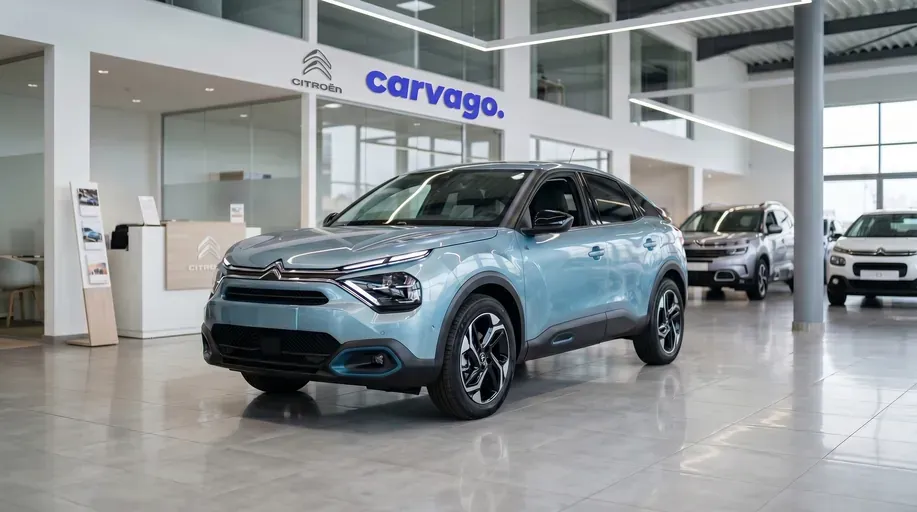
Citroën C4

Citroën C4

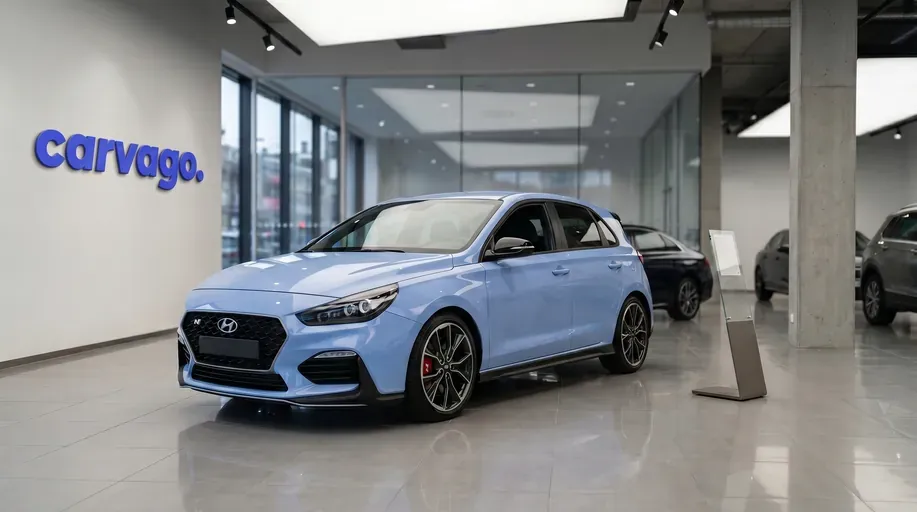
Hyundai i30

Hyundai i30

Introduction

Citroën C4, sold in a purely electric version as the ë-C4 (and historically known in foreign markets as the C-Quatre or C-Triomphe), is a boldly designed car that combines the features of a hatchback and a crossover with a maximum emphasis on exceptional driving comfort. Its rival is the popular South Korean model Hyundai i30, previously offered on the North American market as the Hyundai Elantra GT, which has built an exceptionally strong position thanks to its proven reliability, great ergonomics, and versatile family practicality. The following comparison will tell you in detail whether, when choosing the ideal used car, it is worth giving preference to French extravagance or rather betting on the more conservative certainty in the form of the Korean bestseller.

Comparison of External Dimensions

When looking at the exterior dimensions of roughly four-year-old used cars, the Citroën C4 and Hyundai i30 (both in their third generations) clearly profile themselves into different roles. While the Hyundai i30 sticks to the traditional proportions of the compact class and offers a choice between a classic five-door hatchback, a stylish fastback (technically a liftback), and a practical estate, the Citroën C4 has opted for a single format. Its body has transformed into a popular, slightly elevated style on the borderline between a hatchback and a crossover. The base Hyundai i30 hatchback measures 4340 mm in length, while the French representative is a negligible 15 mm longer at 4350–4355 mm. In terms of overall width, both models are almost identical – the Citroën C4 offers exactly 1800 mm and the Hyundai i30 just 5 mm less (1795 mm). In practice, this means very similar and trouble-free maneuverability when parking in narrow city streets or shopping centers.

However, a fundamental difference lies in the height and wheelbase, which directly affects the overall silhouette, driving position, and the feeling of interior space. The elevated build of the Citroën C4 reaches a height of up to 1525 mm (or 1520 mm for the electric ë-C4 version), which makes getting in significantly easier for families and older drivers and provides a slightly better view of the road. In contrast, the Hyundai i30 hatchback is a noticeable 70 mm lower (1455 mm), and for the sportier Fastback model, the roofline drops even further to values between 1417–1425 mm. This gives the Asian car a lower center of gravity and noticeably more confident, agile handling on winding country roads. The wheelbase is also a very important parameter. The Citroën C4 has an above-standard 2670 mm, surpassing all body versions of the Hyundai i30 (2650 mm) by 20 mm. This paper advantage translates favorably into slightly more generous longitudinal knee room for rear-seat passengers in the French model.

If maximum cargo capacity is your priority and overall exterior dimensions are not a limiting factor, the Hyundai i30 scores with its Estate version (often also referred to as Kombi or cw). With a total length of 4585 mm, it exceeds the base hatchback by a significant 245 mm, primarily benefiting families who need to carry strollers or bulky luggage. In its third generation, Citroën does not offer a classic estate or liftback. The choice between these two cars in terms of exterior dimensions thus depends primarily on your preferences: are you more attracted to the higher seating position, body protection, and original silhouette of the French car, or do you appreciate the wide variability of traditional body styles in its Korean competitor?

Exterior Dimensions Table (3rd generation, cars around 4 years old)
ParameterCitroën C4 SUV/CrossoverHyundai i30 HatchbackHyundai i30 Fastback (Liftback)Hyundai i30 Estate
Width (mm)1800179517951795
Length (mm)4350 – 43554335 – 434044554585
Height (mm)1520 – 15251439 – 14551417 – 14251465 – 1475
Wheelbase (mm)2670265026502650

Trunk Volume

When choosing a used car around four years old, trunk capacity often plays a key role, especially if you are looking for a practical family car. The approach of both manufacturers differs fundamentally in this regard. While the Citroën C4 in its third generation (produced since 2020) has bet on a single body style that sits on the border between a hatchback and a crossover, the competing Hyundai i30 (third generation) offers customers a wide range of classic body styles. This variability makes the Korean car a more flexible choice for different types of drivers.

In its basic configuration, the Citroën C4 offers a trunk capacity of 380 liters. This is a fully sufficient value for a regular weekend shopping trip or storing a baby stroller. The base Hyundai i30 Hatchback fares slightly better with 395 liters, which in practice means space for an extra small backpack or sports bag. However, if your priority is maximum practicality and space for a longer family vacation, the absolute winner of the comparison is the Hyundai i30 Estate. It swallows an impressive 602 liters of cargo. An attractive compromise between design and practicality is the dynamically styled Hyundai i30 Fastback, which hides an excellent 450 liters thanks to its longer and sloping rear.

Significant differences also exist in the maximum volume obtained after folding down the rear seats. The Citroën C4 can increase its cargo space to 1,250 liters, facilitating the transport of bulkier boxes or a small piece of furniture. The competing Hyundai i30 Hatchback provides 1,301 liters, but the Estate version fully demonstrates its family and moving capabilities with a total capacity of 1,650 liters. Great news for those interested in alternative powertrains is that the fully electric ë-C4 and the modern mild-hybrid variants of the Hyundai i30 maintain the same trunk volume as the purely internal combustion versions. Minor spatial compromises occur only in the purely sporty Hyundai i30 N models – their volume drops slightly (for example, from 395 to 381 liters in the hatchback) due to a massive rear strut bar, which serves to increase the torsional rigidity of the body in these "hot hatches."

Trunk Capacity Comparison

ParameterCitroën C4 CrossoverHyundai i30 HatchbackHyundai i30 FastbackHyundai i30 Estate
Basic volume (liters)380395450602
Maximum volume with seats folded (liters)1250130113511650

The Family Ideal from Korea 🏕️

While the Citroën C4 represents a stylish choice with a perfectly adequate trunk for everyday use, for more space-demanding buyers and families with children, the Hyundai i30 will be the more practical path, especially in the unbeatable Estate version.

Trailer Weights

A car's ability to tow a trailer is often a deciding factor for families, cottage owners, and active individuals. The possibility of attaching a trailer or a carrier means more than just space for a few extra suitcases – it turns the car into a practical all-rounder whose utility capacity is sufficient for weekend shopping as well as a longer holiday with a caravan. If we focus on cars approximately four years old (i.e., the relevant third generation of both models), we encounter quite significant differences that favor the Korean representative.

Common petrol engines of the Hyundai i30 model (such as the 1.4 and 1.5 T-GDI) can easily handle a braked trailer weighing 1210 to 1420 kg. Diesel variants 1.6 CRDi can standardly handle 1500 kg, and in the case of the sporty Hyundai i30 N derivative, one can count on a very generous maximum of up to 1600 kg. In contrast, the third-generation Citroën C4 functions primarily as a lifestyle family crossover, and its towing capabilities are significantly more modest. Standard PureTech petrol versions and BlueHDi diesel engines allow for towing a braked trailer with a maximum weight of only 1000 to 1200 kg.

An interesting and very important situation for the customer arises with electrified versions, where the maximum towing capacity decreases compared to their internal combustion siblings. For example, in some equipment levels of the mild-hybrid Hyundai i30 variants (1.0 T-GDI 48V), the weight of a braked trailer can drop to as little as 700 kg. The most fundamental limitation awaits those interested in the fully electric Citroën ë-C4. According to technical specifications, there are no factory data on the permitted load, and legally the car is not homologated for towing conventional trailers at all (weight 0 kg). Any installed tow bar on this version may serve exclusively as a mounting point for a bicycle carrier.

Final Summary: In terms of towing loads, the Hyundai i30 represents a noticeably better and more reliable choice. While both cars will serve you excellently for the occasional transport of a small unbraked trailer with leaves to the recycling center, if your plans include a summer trip with a larger caravan, the higher weight limits of the Hyundai i30 will provide the necessary performance and legal margin.

Model and engineBraked trailer (kg)Unbraked trailer (kg)
Citroën C4 1.2 PureTech (3rd gen)1000 - 1200640 - 670
Citroën C4 1.5 BlueHDi (3rd gen)1200680 - 690
Hyundai i30 1.0 T-GDI (3rd gen)1000 - 1200600
Hyundai i30 1.0 T-GDI 48V (3rd gen)700 - 1200600
Hyundai i30 1.4 / 1.5 T-GDI (3rd gen)1210 - 1420600 - 610
Hyundai i30 1.6 CRDi (3rd gen)1500650 - 750
Hyundai i30 N / N Performance (3rd gen)1600700 - 750

Overview of Most Common Motorizations

The range of powertrains is a decisive factor for many used car buyers, as it directly affects fuel consumption, reliability, and future maintenance costs. Looking at cars approximately four years old (i.e., models from 2021 to 2022), we find that the Citroën C4 and Hyundai i30 choose completely different strategies within their 3rd generations. Citroën has bet on light and efficient three-cylinder petrol engines, very economical diesels, and was one of the few in its class to offer a fully electric version from the start. The Hyundai i30, on the other hand, follows a more traditional yet technically sophisticated path. It impresses with a rare and reliable naturally aspirated four-cylinder engine and a wide range of modern mild-hybrid (48V) engines that deliver excellent flexibility. While Citroën will please fans of classic torque converter automatics, Hyundai attracts buyers with dual-clutch transmissions and a special intelligent manual.

Engines under the hood of the Citroën C4 (3rd generation)

The engine range for the third-generation Citroën C4 is straightforward and covers the needs of the vast majority of drivers. The petrol base consists of agile turbocharged 1.2 PureTech three-cylinders with 74 kW (100 hp) and a more powerful version with 96 kW (130 hp). The most powerful PureTech 155 (114 kW) version was only available for a relatively short time, and you will rarely come across this car on the used market. Those who spend a lot of time on the road will appreciate the exceptionally efficient 1.5 BlueHDi diesel four-cylinders, available with a manual transmission (81 kW) or a smooth-shifting eight-speed EAT8 automatic (96 kW). For fans of emission-free driving, the fully electric e-C4 (100 kW) variant is a huge draw, ideal for smooth and quiet commuting in and around the city.

Engine typeFuelPower (kW)Torque (Nm)Transmission
1.2 PureTech 100Petrol742056MT
1.2 PureTech 130Petrol962306MT / 8EAT
1.2 PureTech 155*Petrol1142408EAT
1.5 BlueHDi 110Diesel812506MT
1.5 BlueHDi 130Diesel963008EAT
e-C4 136Electricity1002601AT

*The 1.2 PureTech 155 engine was only offered between February 2021 and April 2022.

Engines under the hood of the Hyundai i30 (3rd generation, facelift)

For the Hyundai i30, especially its facelifted version available since 2020, the variety of engines is surprisingly diverse. A completely unique phenomenon on the used market is the naturally aspirated 1.5 DPi (81 kW) four-cylinder with port injection, which excels in mechanical durability and handles demanding city stop-and-go traffic without any problems (it was discontinued in May 2022). Fans of turbos and lower consumption can choose from the 1.0 T-GDI petrol three-cylinder or the dynamic 1.5 T-GDI four-cylinder, both of which Hyundai equipped with a 48V mild-hybrid system. The diesel section was represented by the durable and efficient 1.6 CRDi unit, with the more powerful version also supported by mild-hybrid technology. A bonus of the i30 model is the option of a seven-speed dual-clutch automatic (7DCT) or an intelligent manual transmission (iMT), which can automatically disengage the clutch on mild-hybrid engines and effectively "coast" for even lower consumption.

Engine typeFuelPower (kW)Torque (Nm)Transmission
1.5 DPi*Petrol811446MT
1.0 T-GDIPetrol881726MT / 7DCT
1.0 T-GDI 48VPetrol (MHEV)881726iMT / 7DCT
1.5 T-GDI 48VPetrol (MHEV)1182536iMT / 7DCT
1.6 CRDi 115*Diesel852806MT
1.6 CRDi 136 48V*Diesel (MHEV)100280 / 3206iMT / 7DCT

*The naturally aspirated 1.5 DPi engine and 1.6 CRDi diesel engines were offered in the first half of the facelift's life cycle and permanently disappeared from the European range during 2022.

Proven classics versus quiet efficiency ⚡

While the Hyundai i30 is an ace up its sleeve among 4-year-old used cars thanks to its unbeatable naturally aspirated 1.5 DPi engine and lively 1.5 T-GDI four-cylinder, the Citroën C4 attracts customers with its unrivalled efficient BlueHDi diesel engines and very comfortable fully electric variant.

Choosing the right engine is key to long-term satisfaction. The following recommendations are based on performance, real-world fuel consumption, user experience, and proven mechanical reliability observed in service practice. Looking at cars roughly four years old, one can notice a significantly different approach from both manufacturers. While the third generation of the Citroën C4 relies exclusively on efficient turbocharged three-cylinder engines in the petrol range, the Hyundai i30, following its extensive facelift in 2020, came out with very refined four-cylinder engines featuring advanced 48V mild-hybrid technology. An interesting fact from the availability database is that the older and widely used 1.4 T-GDI engine in the Hyundai i30 completely ceased production in the spring of 2020 and has already been fully replaced in the younger used car market by its more modern and larger successor, the 1.5 T-GDI.

For the Citroën C4, we recommend: 1.2 PureTech 130 (96 kW)

This turbocharged three-cylinder represents the most sensible compromise between dynamics and daily operating costs within the third generation. It has a torque of 230 Nm, which gives the compact car with its slightly raised chassis very decent flexibility even on the highway. In terms of user comfort, it makes the most sense when paired with the smooth-shifting EAT8 eight-speed automatic transmission. Real-world fuel consumption under normal use ranges between 6 and 6.5 liters of petrol per 100 kilometers, making the car a very economical companion.

  • What to watch out for: The engine uses a specific timing belt system immersed in oil (wet belt). For long-term reliability, it is absolutely critical to shorten the oil change interval to 10,000 to 15,000 km (or a maximum of one year) and to use only the oil exactly specified by the manufacturer. When choosing a used car, always visually check the condition of the belt through the oil filler neck – if the material is degraded, crumbling, or cracks appear, there is a risk of clogging the oil pump intake strainer, which could lead to damage to the engine itself.
  • Who it is ideal for: This power unit will be especially appreciated by customers who have a calmer driving style, prefer the soft comfort typical of the Citroën brand, and are looking for linear pull from low revs for smooth sailing through city and suburban traffic.

For the Hyundai i30, we recommend: 1.5 T-GDI 48V-Mildhybrid (118 kW)

The four-cylinder 1.5 T-GDI engine, which fully replaced the aforementioned 1.4 in the price list, is considered one of the most reliable and overall pleasant units in its class on the used car market. With 160 hp, it offers the car excellent dynamics and exemplary mechanical refinement. The integrated 48V mild-hybrid system smooths out all throttle responses, helps the car with pull-offs, and allows for economical "coasting" with the internal combustion engine switched off. Owners often praise the real-world fuel consumption, which, thanks to this assistance, drops even below 6 liters, which is a fantastic result for a powerful petrol four-cylinder.

  • What to watch out for: Since this is a direct-injection power unit, it does not benefit from long-term operation exclusively on short city trips, which could lead to carbon buildup on the intake valves or unburnt fuel entering the oil. Great prevention is to regularly warm up the engine with a brisker drive on a longer route and occasionally refuel with premium fuel enriched with cleaning additives. In the case of the version with the seven-speed dual-clutch DCT automatic, expect that crawling in congested traffic jams may eventually result in clutch wear; therefore, it is better not to tempt the car into excessive "creeping" using only the brake pedal.
  • Who it is ideal for: A perfect choice for more demanding drivers who travel longer distances, require a safe power reserve for quick overtaking, and want a robust car that, with proper servicing, will maintain its functionality and value for many years.

Real Fuel Consumption

While the official fuel consumption figures provided by manufacturers according to the WLTP standard are significantly more accurate than in the past, real-world driving conditions often still differ slightly. If you are considering buying a roughly four-year-old used car, the best guide is to look at actual data from drivers themselves. To compare the current generations of the Citroën C4 (3rd generation, available since 2020) and the Hyundai i30 (3rd generation facelift, typically from 2020–2022), we used user data from the popular independent portal Spritmonitor.de. From these, one can accurately see how much fuel these cars require in long-term daily operation.

Model and engineAverage consumption (l/100 km)
Citroën C4 1.2 PureTech 100 (74 kW)5.8
Citroën C4 1.2 PureTech 130 (96 kW)6.2
Hyundai i30 1.0 T-GDI (88 kW)6.1
Hyundai i30 1.5 T-GDI MHEV (118 kW)6.3
Hyundai i30 1.5 DPi (81 kW)6.5
Citroën C4 1.5 BlueHDi 130 (96 kW)5.0
Hyundai i30 1.6 CRDi MHEV (100 kW)5.2

Looking at the real-world figures, interesting operational trends are clearly visible. Diesel engines remain the absolute kings of efficiency even in this modern era – the four-cylinder 1.5 BlueHDi from Citroën and the 1.6 CRDi from Hyundai, enhanced with mild-hybrid technology, can achieve consumption figures close to the five-liter mark. In contrast, there are slightly larger differences among petrol engines. While three-cylinder turbo engines (1.2 PureTech and 1.0 T-GDI) promise extremely low consumption on paper, in the real world – especially under heavier loads or on the highway – they cannot always fully live up to their theoretical promises and commonly require six liters of fuel. An expected finding is the consumption of the naturally aspirated four-cylinder 1.5 DPi from Hyundai, which shows the highest appetite in the selection but more than compensates for this minor disadvantage with its absolute mechanical simplicity and durability. On the other hand, the powerful 1.5 T-GDI four-cylinder from Hyundai works very effectively, where the 48V mild-hybrid assistance manages to keep consumption very low despite its above-average output of 118 kW.

What does this mean for the average user in practice? If you are a driver who spends a lot of time on long highway commutes and covers well over 20,000 kilometers a year, it still makes huge economic sense to opt for a diesel Citroën C4 BlueHDi or Hyundai i30 CRDi. For daily suburban commuting and navigating city traffic, budget-conscious buyers will find the base petrol engines ideal, as they won't have to deal with the complex emission systems of diesel engines. A specific and very smart choice for calmer drivers is the naturally aspirated 1.5 DPi engine in the Hyundai, which may slightly increase the monthly fuel bill but will save on maintenance worries regarding the turbo or injection system in the long run. The "golden middle way," combining unexpectedly decent dynamics and acceptable consumption, is represented by the brisk Hyundai i30 1.5 T-GDI.

Overall, it can be said that fuel consumption will likely not be the main and definitive argument that decides your personal battle between these two models. Both the Citroën C4 and the Hyundai i30 offer a very well-thought-out range of efficient powertrains that achieve excellent and almost comparable values in their categories. Your final choice should therefore depend primarily on personal preferences regarding the overall tuning of the car – Citroën clearly scores with maximum, quiet, and supple suspension comfort, while Hyundai traditionally pleases drivers looking for slightly more precise and confident feedback from the steering and chassis.

Current offers Hyundai i30

View full offer

Price Range and Used Car Offerings

When looking for an approximately four-year-old car (2021–2022 models), we find that both the Citroën C4 (third generation) and the Hyundai i30 (third generation after facelift) represent affordable and rational used car options. However, both cars have slightly different price developments and completely different availability on the secondary market.

Hyundai i30 (3rd generation, from 2020 after facelift)

The Hyundai i30 has long been one of the best-selling cars on the Czech market, which is reflected in the huge supply of used cars – often coming from corporate fleets, operational leases, and private owners.

  • Affordable base: More modestly equipped versions and fleet units, often with the basic naturally aspirated 1.5 DPi engine or the three-cylinder 1.0 T-GDI, start in the range of €10,000 to €11,000.
  • Richer equipment and popular estate: Cars from private owners with the sought-after 1.5 T-GDI engine (often with MHEV mild-hybrid technology) and in the practical estate body style usually sell for €12,000 to €18,000, depending on mileage and trim level (e.g., the sporty N Line trim).
  • Sporty extreme: A separate chapter is the full-fledged hot hatch and fastback i30 N Performance. This represents a completely different market, and prices for well-maintained units from 2021–2022 commonly range above €25,000, exceptionally reaching up to €31,000.

Citroën C4 (3rd generation, from 2020)

The Citroën C4 is less represented on the used car market than its Korean rival, which limits the variety of choice but also helps keep prices at a stable level without extreme price drops.

  • Base engines: Prices for decent petrol versions with the 1.2 PureTech or economical 1.5 BlueHDi diesel start at roughly €10,000 to €11,000 for cars with higher mileage.
  • The golden mean: Most well-preserved cars with reasonable mileage and solid equipment (Feel Pack or Shine trims) can be found in a relatively narrow price range of €13,000 to €17,000.
  • Electric alternative: At the top of the Citroën range, we don't find sporty models, but the fully electric ë-C4 variant. As an approximately four-year-old used car, it sells for prices ranging from €18,000 to €23,000, which, given the original purchase prices, is a very interesting drop for those interested in an affordable electric car.

Quick comparison of average prices on the used car market

Feature / ModelHyundai i30 (2021–2022)Citroën C4 (2021–2022)
Starting price for a nice unit~ €10,000~ €10,000
Average price of an equipped car€14,000€14,000
Most expensive used variantsSporty models (i30 N)Electric models (ë-C4)
Market availabilityHuge (hundreds of units)Average (dozens of units)

From a used car buyer's perspective, the Hyundai i30 is a safe bet with an almost inexhaustible selection of specifications and colors. The Citroën C4 will appeal more to drivers who choose with their eyes, require above-standard comfort, and don't mind waiting a while for the right used unit to appear in the listings.

Supply and top versions decide 💰

While the price midpoints of both cars rarely meet, the Hyundai i30 attracts with a huge selection of body styles on the market, while the price ceiling of the Citroën C4 is formed more by modern electric versions instead of raw sporty power.

Safety and Euro NCAP Rating

When comparing safety and the results of independent Euro NCAP crash tests, it is absolutely crucial to take into account the context and the year of testing. The methodology and requirements of the tests become significantly stricter over time. For this reason, percentage scores or star ratings from different years cannot be directly compared – what was enough for a full star rating in the past represents a completely different standard today. Active safety and assistance systems, in particular, are undergoing extremely rapid development.

Citroën C4: Stricter rules and four stars

The Citroën C4 underwent testing in 2021, a time of significantly stricter rules that placed high demands on advanced detection of vulnerable road users and handling complex intersection scenarios.

  • Occupant protection: The car received an overall rating of four stars. The structural integrity of the vehicle and the protection of adults (80%) and children (83%) are at a very high level and fully comply with modern standards.
  • Why it lost points: The lower rating was primarily due to the protection of vulnerable road users and assistance systems. The standard autonomous emergency braking (AEB) system responded more weakly in some pedestrian test scenarios, and advanced cyclist detection was completely missing from the base equipment of the tested vehicle.

Hyundai i30: A five-star classic from a more lenient era

The Hyundai i30 underwent crash tests in 2017 and earned a full five-star rating at the time.

  • Occupant protection: In its time, the car was among the absolute top performers. The adult occupant protection rating reached an excellent 88%, and child protection reached 84%.
  • Rating context: It is necessary to take into account that the criteria at the time were much more lenient towards electronic assistants, and the crash tests themselves were conducted according to an older methodology. Under current strict Euro NCAP rules (where, additionally, the certification of older cars expires after a few years), its original rating would no longer be formally valid. For those interested in a roughly four-year-old used car, however, this does not change the fact that it is a very robust and safe vehicle that was premium-equipped for its era.

Final safety summary

In terms of the used car market, both cars provide a great level of protection for everyday family travel. The Hyundai i30 benefits from excellent original results and, for its time, generous safety equipment. The Citroën C4, on the other hand, brings a newer safety architecture designed to withstand substantially more modern and specific types of impacts. The percentage of points the French representative lost on assistance systems reflects the extreme strictness of recent tests rather than an objective lack of protection in real-world traffic.

ParameterCitroën C4Hyundai i30
Year of testing20212017
Adult protection80 %88 %
Child protection83 %84 %
Vulnerable road user protection57 %64 %
Safety assistance systems63 %68 %

Modern standards vs. proven classics 🛡️

Although the Hyundai i30 has a full five stars on paper, the Citroën C4 passed much stricter tests from 2021, making it a structurally more advanced choice for a used car buyer, albeit a slightly more compromised one in the area of basic assistants.

Comparison of Interesting Equipment Features

In addition to standard equipment, each model offers several unique features and innovations, through which they aim to differentiate themselves from the competition and provide specific added value for everyday use.

Citroën C4: Emphasis on absolute comfort and unmistakable style

  • Chassis and damping: In this generation, the Citroën C4 utilizes its unique shock absorbers with Progressive Hydraulic Cushions. The system effectively filters out bumps with a "flying carpet" effect, which significantly increases driving comfort, especially on broken city and country roads.
  • Interior comfort: The cabin features standout Advanced Comfort seats. They use special high-density foam that prevents sagging and ensures above-average body support even during long highway journeys.
  • Smart solutions (Smart design): A very original and practical detail is the Smart Pad Support system. It is a robust retractable tablet holder integrated into the dashboard directly in front of the passenger. This allows the passenger to safely watch movies without the device interfering with airbag deployment. There is also an integrated retractable drawer for documents or small electronics.
  • Engines and drivetrains: Within the compact car class, the range of choice stands out. In addition to classic petrol (PureTech) and diesel (BlueHDi) units, a fully electric variant, the ë-C4, is available. For those interested in a 4-year-old used car, this means an opportunity to enter the world of electromobility with a stylish crossover.
  • Electronics and assistance systems: The user experience is enhanced by a retractable color Head-up display and the Highway Driver Assist system, which combines adaptive cruise control with active lane centering, enabling semi-autonomous driving on the highway.

Hyundai i30: Advanced connectivity and a sporting spirit

  • Sporty variants and chassis: With the Hyundai i30, Hyundai is very successful with the N Line trim level. This brings not only a more attractive, aggressive body design and sports seats inspired by the purebred N models, but also a specifically and more stiffly tuned chassis for sharper handling in the more powerful engine versions.
  • Infotainment and telematics: In post-facelift models, the 10.25-inch responsive touchscreen takes center stage, complemented by Bluelink services. This system ensures advanced connectivity, including remote access to the vehicle via a smartphone app (locking/unlocking, vehicle status check, or sending navigation destinations from the comfort of home).
  • Engines and innovative transmission: The range of power units includes 48V mild-hybrid technology. However, the most interesting feature is the possibility of pairing it with an intelligent Manual Transmission (iMT). This features an electronically controlled clutch and allows the car to "coast" with the engine off even while a gear is engaged, which realistically reduces fuel consumption.
  • Body styles: While the Citroën C4 bets on a cross between a hatchback and an SUV, the Hyundai i30 offers a classic selection. Alongside the traditional five-door hatchback, those looking for a family car can choose a spacious estate, or opt for the elegantly designed and slightly sporty fastback with its smoothly sloping rear.
  • Safety electronics: The Hyundai SmartSense suite of assistance systems is among the best-tuned on the market. It offers, for example, excellent Lane Following Assist (LFA) and improved autonomous emergency braking with precise detection of pedestrians and cyclists.

Key Advantages and Disadvantages

Citroën C4

Pros

Above-standard ride comfort thanks to shock absorbers with progressive hydraulic cushions

Distinctive and attractive design on the border between a hatchback and a crossover

Comfortable Advanced Comfort seats ideal for longer journeys

Option of a purely electric version (ë-C4) on the used car market

Higher ground clearance facilitating entry and movement around town

Cons

Slower and less intuitive multimedia system

Unengaging and detached driving performance during more dynamic cornering

Sloping roofline limits headroom for rear-seat passengers

Higher proportion of hard plastics in the interior

The Citroën C4 is a perfect choice for drivers who prioritize maximum comfort, original style, and a relaxed drive. Thanks to its crossover concept and exceptionally soft chassis, it will appeal to those looking for a quiet mile-muncher who don't mind less emphasis on sporty driving characteristics.

Hyundai i30

Pros

Excellent value for money on the used car market

Great interior ergonomics with the retention of logical physical buttons

Confident and very balanced driving characteristics

Choice of multiple body styles (hatchback, fastback, estate)

Wide range of proven and reliable engines

Cons

Stiffer chassis tuning, which does not filter out bumps as smoothly on broken roads

Significantly more conservative exterior design compared to French competitors

Slightly higher noise from the chassis and wheels at highway speeds

Simpler materials and more outdated instrument cluster graphics in lower trim levels

The Hyundai i30 represents a safe bet for rational buyers who require practicality, clear ergonomics, and versatility. This more traditionally styled model will primarily appeal to families and drivers looking for a universal car with predictable and confident road behavior, regardless of the chosen body style.

Common Problems and Owner Complaints

Based on our own data from comprehensive vehicle inspections using the CarAudit service, breakdown statistics, service reports, and long-term owner experiences, we have compiled an overview of the most common problems that buyers of roughly four-year-old used cars should watch out for.

The third generation of the Citroën C4 brings bold design and high comfort to the used car market, but it still has several typical weaknesses that may manifest during use.

  • Engines (1.2 PureTech): Although the three-cylinder petrol engines were modified in many respects in the newer generation (from 2020), there is still an increased risk of timing belt degradation, as it is immersed in an oil bath. Peeling material particles can gradually clog the oil pickup screen, leading to fatal lubrication failure. Furthermore, the engine suffers from increased carbon deposit formation during frequent city driving.
  • Electronics and infotainment: A common ailment from user reviews is the touchscreen freezing, slower system response, or occasional image dropouts from the rear parking camera. Service centers also frequently deal with excessive battery drain caused by the vehicle's control units not correctly entering sleep mode after locking.
  • Transmissions: With the optional eight-speed automatic transmissions (EAT8), some owners complain of occasional jerky shifting, slipping, or hesitation when pulling away. Fortunately, in most cases, this is not a mechanical fault but an anomaly that can be resolved by a software update.
  • Chassis: Specific shock absorbers with progressive hydraulic cushions offer a smooth ride, but on sharper bumps, they can sometimes emit squeaking or knocking sounds. This is usually a result of premature wear of the shock absorber mounts or axle bushings.

Citroën C4: Comfortable, but with risks for petrol engines

The third generation of the Citroën C4 scores with extraordinary driving comfort, but requires absolutely consistent care for the 1.2 PureTech engine and occasional tolerance for minor software ailments of the onboard electronics.

The Korean hatchback Hyundai i30 after its 2020 facelift is considered a highly reliable choice on the market; however, even it has specific issues, the occurrence of which depends heavily on the chosen engine and driving style.

  • Engines: In the base 1.0 T-GDI three-cylinder (including the mild-hybrid version), more noticeable vibrations occasionally occur during cold starts, and the engine is very sensitive to oil quality. For the economical 1.6 CRDi diesel units, if used primarily for short city trips, there is a risk of relatively early EGR valve clogging and problems with diesel particulate filter (DPF) regeneration.
  • Transmission (7DCT): The seven-speed dual-clutch transmission can exhibit premature wear of the dry clutches during frequent stop-and-go traffic and city driving. A typical symptom is a noticeable jerk when pulling away slowly or a delayed response after sharp acceleration.
  • Assistance systems: User reports occasionally mention unnecessarily anxious and falsely reacting assistance systems. This mainly concerns the Autonomous Emergency Braking (AEB) or blind-spot monitoring, which can activate spontaneously. The remedy is usually sensor calibration or a software reflash.
  • Body and interior: Compared to the benchmarks of its class, the harder plastics in the interior are more prone to minor scuffs and scratches. On some units, condensation also appears inside the front LED headlights, caused by a faulty ventilation membrane inside the light module.

Hyundai i30: A reliable workhorse with a delicate automatic

The Hyundai i30 is a solidly built car where, in the case of a used vehicle, the greatest risk is wear of the DCT dual-clutch transmission due to city traffic and the clogging of modern engines on short trips.

Tips for Buying a Used Car

When buying a used car, a thorough inspection is key, and for both models, there are specific areas you should focus on in detail during a test drive or visual inspection. To avoid expensive surprises in the future, an independent technical inspection of the car is always worthwhile, as it helps uncover potential hidden defects before you sign the purchase agreement.

When choosing a Citroën C4:

  • Timing belt condition on the 1.2 PureTech: This petrol engine uses a timing belt that runs in an oil bath (a "wet belt"). If the owner neglected oil changes or drove exclusively short distances, the belt can begin to crumble and clog the oil pump pickup screen. Always check the service history carefully and use a flashlight to look through the oil filler neck at the condition of the belt itself.
  • Shock absorbers with hydraulic stops: The Citroën C4 uses a special Advanced Comfort suspension, which should filter out bumps perfectly and quietly. Take the car on a rough road or over speed bumps – if you hear dull metallic thuds or significant squeaking from the chassis, it indicates fluid leakage from the shocks or excessive wear, which is more expensive to repair than a conventional suspension.
  • AdBlue system functionality (1.5 BlueHDi): For diesel versions, pay close attention to error messages on the instrument cluster. Pump failures or deformation of the AdBlue tank itself are known issues with Stellantis Group vehicles, and their replacement can significantly increase running costs.
  • Infotainment stability and speed: Models from the first years of production (2020 and 2021) in particular had occasional software issues. During the drive, check if the multimedia system freezes, test the loading speed of the rear parking camera, and the smoothness of pairing with your phone.
  • Battery health on the e-C4 version: If you are buying a purely electric version of a used "C4," always request a diagnostic report of the traction battery's condition (SOH – State of Health). Furthermore, don't forget to physically test whether the car communicates and initiates the charging process without issues from both a DC fast-charging station and a slow AC charging post.

When choosing a Hyundai i30:

  • 7DCT automatic transmission behavior: The dual-clutch transmission in Hyundai vehicles requires a careful check. During the test drive, try repeated smooth starts and slow crawling in traffic. Jerking, significant hesitation, or vibrations when shifting from first to second gear very often mean worn dry clutches, which foreshadows an expensive repair.
  • Noises from the steering column: In vehicles from this family (across the entire generation and after the facelift), wear of the flexible coupling in the power steering electric motor can occur. Start the car while stationary and move the steering wheel quickly but with a small angle from side to side. If you hear distinct clicking or knocking from the steering wheel, you know what the problem is.
  • Clutch and iMT transmission function: On manual versions, monitor the travel of the clutch pedal. If the clutch engages too high, or slips during sharp acceleration on the highway, it will soon need replacement. Pay close attention to mild-hybrid versions (1.5 T-GDi) with the so-called intelligent manual transmission (iMT) with an electronically controlled clutch – the system must transition smoothly from coasting mode and the pedal must not lose backpressure.
  • 1.0 T-GDi engine cold start performance: The small turbocharged three-cylinder engine can be more prone to carbon deposit buildup, especially if the previous owner drove exclusively in the city. Insist on a completely cold start – if the engine's RPM fluctuates significantly or it shakes strongly immediately after starting, it may indicate the need for decarbonization of the intake valves.
  • Multi-link rear axle noise: More powerful engine variants of the Hyundai i30 feature a more advanced multi-link rear suspension. Although this makes the car handle better in corners, this solution is more sensitive to the condition of the bushings and stabilizers. Any squeaking or thumping from the rear axle when driving over potholes means a necessary investment in chassis parts and subsequent wheel alignment.

FAQ: Most Frequently Asked Questions

The Hyundai i30 hatchback offers a slightly larger boot with a capacity of 395 litres compared to 380 litres for the Citroën C4. If you need to carry more items, the Hyundai i30 is also produced as a spacious estate with a capacity of 602 litres, which the C4 does not have in its range.

The Citroën C4 excels in extraordinary comfort thanks to unique shock absorbers with progressive hydraulic cushions, which filter out potholes and bumps excellently. The Hyundai i30, on the other hand, has a stiffer and more traditionally tuned chassis, which in turn provides more confident and precise handling in corners.

The Hyundai i30 is among the very reliable cars with robust technology and benefits on the used car market from the remaining five-year factory warranty with unlimited mileage. The Citroën C4 is also solidly built, but for petrol versions with the 1.2 PureTech engine, it is recommended to carefully monitor oil change intervals and the condition of the timing belt.

A major advantage of the Citroën C4 is the availability of the fully electric ë-C4 version for those interested in locally emission-free operation. The Hyundai i30, on the other hand, appeals to traditional drivers with the offer of a more powerful 1.5 T-GDi petrol four-cylinder and the option to choose the sportier N Line trim.

For families with children, the Hyundai i30 is a more practical choice, especially in the estate (Wagon) variant, which easily accommodates a pram and holiday luggage. However, the Citroën C4 scores with its body featuring crossover elements, which ensures a higher seating position, easier installation of child car seats, and a better view from the car.

Conclusion: Which Model to Choose?

Sources: ADAC, forbes.cz, novinky.cz, autoweb.cz, autozive.cz, autosystem.cz

This article was prepared using artificial intelligence tools. The section guarantor is Petr Dušek.

Related articles

Car battle

Citroën C4 vs. Škoda Octavia: Complete comparison 2026

Detailed comparison of the Citroën C4 vs Škoda Octavia. We compare the driving characteristics, space, and equipment of these used cars. Find out from our verdict which car to choose.

Apr 18, 2026

Car battle

Kia Ceed vs. Opel Astra: Complete comparison 2026

Detailed comparison of the Kia Ceed and Opel Astra. We compared real-world fuel consumption, reliability, and equipment. Find out which popular hatchback is worth buying.

Oct 16, 2026

Car battle

Kia Ceed vs. Renault Mégane: Complete comparison 2026

Used car comparison: Kia Ceed vs Renault Mégane. Which hatchback or estate to choose? We compared engines, equipment, and reliability. Read our verdict!

Oct 16, 2026

We accept online card payments as well as wire transfers.

visa payment provider logovisa-electron payment provider logomastercard payment provider logomaestro payment provider logodiners-club payment provider logodiscover payment provider logo