Review Lexus LS: What do owners and experts really say?

Lexus LS (2018–2025) review: real owner experiences, hybrid reliability, running costs and used prices — everything you need before you buy.

October 24, 2026

Lexus LS

Verdict at a Glance

  • Who it suits: Executive drivers and chauffeurs prioritising passenger comfort and Japanese craftsmanship over sporty dynamics.
  • Recommended engine: The 3.5 V6 hybrid, preferably from 2021 onwards for smoother power delivery in daily driving.
  • What to avoid: Cars without documented recall repairs verified by VIN, and early models if sensitive to ride harshness.

Introduction

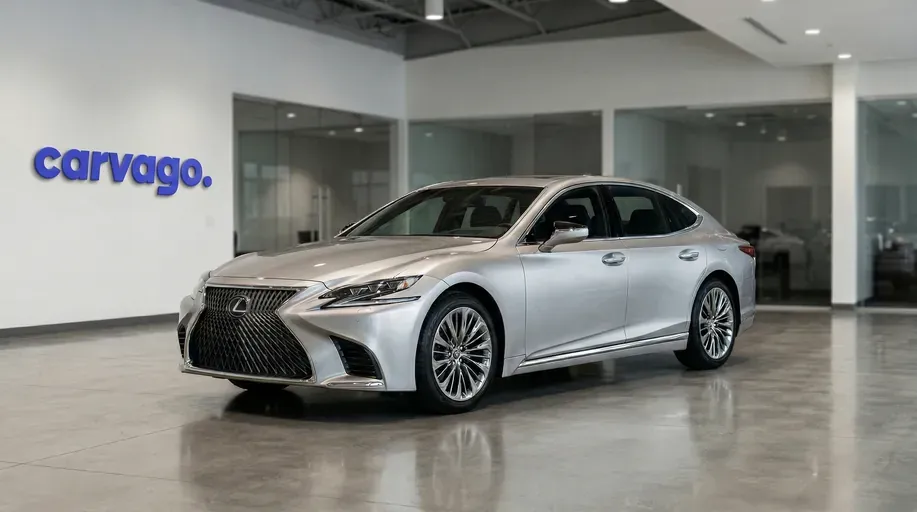
The Lexus LS serves as the Japanese manufacturer's flagship in the full-size luxury segment, positioned against established European executive flagships. This review covers the fifth-generation model, which reached European showrooms with customer deliveries beginning in January 2018. It remained on sale until continental deliveries concluded with the 2024–2025 model runs.

Sold exclusively as a four-door Lexus LS saloon, the car received a mid-cycle facelift with customer deliveries starting in January 2021, followed by an interior update delivered from December 2022.

The fifth-generation LS appeals primarily to executive owner-drivers and professional chauffeur services looking for an individual alternative to conventional executive saloons, prioritising self-charging hybrid propulsion, calm road manners, and Japanese interior craftsmanship over overt sporting pretensions.

Owner Experiences: Common Faults and Recalls

The fifth-generation Lexus LS maintains a strong record for mechanical durability, though real-world ownership highlights specific electronic quirks and chassis traits. The most frequent complaint among owners concerns the 12-volt auxiliary battery located in the luggage compartment. Owners report that when a hybrid Lexus LS remains stationary for ten to fourteen days, parasitic current draw from the telematics module and proximity key sensors can deeply deplete the battery. Even though the high-voltage traction battery remains charged, a discharged auxiliary battery prevents the hybrid management system from powering up into its active operational state. Resolving this typically requires keeping the battery charged during extended storage, fitting a replacement with greater reserve capacity, or updating the telematics software.

Chassis wear on early production models built between 2018 and 2020 also features in owner reports. Factory-fitted run-flat tyres tend to wear heavily on their inner shoulders, exacerbated by the car's weight and factory alignment angles. Many owners addressed uneven tyre wear by switching to conventional touring tyres paired with a tyre repair kit. In the cabin, pre-facelift infotainment software can suffer from interface lag or momentary freezes.

Several safety recalls have been registered across European markets for this generation. In November 2025, two separate campaigns were announced: one addressed 2021–2025 models where a software timing error between the parking assist module and panoramic monitor could cause the rearview camera image to freeze or fail to display when reversing, while another rectified programming in 2023–2025 models where memory overflow could leave the instrument cluster entirely blank. In July 2024, a recall was issued for 2022–2023 models whose camera cases could separate under stress due to improper welding, allowing moisture ingress and causing the camera feed to fail.

Earlier mechanical campaigns include a March 2020 recall for a low-pressure fuel pump impeller that could develop surface cracks, deform, and cause the engine to stall on cars built up to May 2019. In August 2019, vehicles produced between April and June 2019 were recalled because a defective plastic brush holder in the brake booster pump motor could stop functioning, leading to a loss of power-braking assistance after repeated pedal applications and extending stopping distances. Additionally, a March 2019 recall addressed 2017–2018 production models where run-flat tyres sustained sidewall reinforcement damage during factory wheel mounting, presenting a risk of tread detachment.
🔍 What to check before buying

  • Check the car's VIN and update history with an official dealer or arrange a CarAudit to verify that all safety recalls—particularly the fuel pump replacement and the digital display and camera software updates—have been completed.
  • Test the condition of the 12-volt auxiliary battery to confirm the hybrid system powers up smoothly into its ready state without low-voltage warnings after sitting parked.
  • Inspect the front tyres for rapid inner-shoulder wear, particularly on early models equipped with run-flat tyres.
  • On models produced before late 2022, navigate through navigation and settings menus to confirm the trackpad controller responds without interface lag or system freezes.
  • On vehicles fitted with the optional relaxation package, test every rear seat motor, ottoman leg rest extension, and massage bladder via the rear armrest display.

Engines: Which One to Choose

European buyers of the fifth-generation Lexus LS will find a streamlined powertrain catalogue dominated almost entirely by a full hybrid setup. A non-hybrid twin-turbo petrol option was restricted to select Eastern European markets, leaving the hybrid as the standard specification across European markets.

EngineFuelPowerGearboxDrivetrainModel years
3.5 V6 Hybrid (LS 500h)Full Hybrid264 kW (359 hp)10-speed automaticRear-wheel drive2018–2022
3.5 V6 Hybrid (LS 500h)Full Hybrid264 kW (359 hp)10-speed automaticAll-wheel drive2018–2025
3.5 V6 Twin-Turbo (LS 500)Petrol307 kW (417 hp)10-speed automaticAll-wheel drive2018–2020

Which engine to choose as a used buy

For urban driving and daily commuting, the hybrid Lexus LS is the suitable option. At low speeds, the powertrain relies heavily on electric propulsion, keeping progress quiet and smooth in stop-and-go traffic.

For mixed everyday driving, the hybrid remains the primary choice. Used buyers should prioritise models delivered from January 2021 onwards, where updated battery mapping provides stronger low-speed electric assistance and reduces engine flare during moderate acceleration compared to early production cars. Rear-wheel drive was discontinued during 2022, so later examples feature all-wheel drive as standard.

For frequent long motorway journeys, the powertrain choice depends on cruising habits and regional availability. The all-wheel-drive hybrid Lexus LS remains quiet at steady cruising speeds, but the naturally aspirated petrol engine must work harder under brisk acceleration or steep inclines, diminishing the hybrid system's efficiency. Where found on the secondary market, the petrol Lexus LS twin-turbo V6 delivers substantially stronger mid-range pulling power and sustained high-speed composure through its conventional torque-converter automatic, making it better suited to high-speed travel.

For towing, the fifth-generation LS cannot be considered under any circumstances, as the platform was not homologated for towing across all configurations.

Both the hybrid and petrol powertrains have proven mechanically durable, with issues largely confined to auxiliary components and software updates.

Space & Practicality

The Lexus LS saloon prioritises passenger relaxation over cargo flexibility. Rear occupants have substantial legroom, and higher trims feature electrically reclining outer seats with massage functions and an extending footrest on the passenger side. However, the sweeping roof profile reduces rear headroom, meaning taller adults may find the headlining close. Luggage versatility is compromised by design: the rear seatbacks are completely fixed due to structural body bracing and the hybrid battery installation directly behind the bulkhead. As a result, folding the seats to extend the load area is not possible, precluding the transport of longer items.

ParameterSedan / Saloon
Length5,235 mm
Width (excluding mirrors)1,900 mm
Height1,450–1,470 mm
Wheelbase3,125 mm
Boot capacity (upright / folded)430 l / Non-folding

Height varies according to the fitted suspension system and drive configuration. Boot capacity reflects the standard European hybrid model; the non-hybrid petrol version offered in select eastern markets provides a larger luggage compartment.

What the Tests Say

Professional road tests describe the hybrid Lexus LS as a calm cruiser that effectively isolates passengers from tyre noise on smooth asphalt. Steering is accurate and weighted consistently, but testers agree the chassis prioritises relaxed travelling over agility; pressing through tighter bends triggers noticeable body roll and front-end push. While the saloon runs silently at urban speeds in electric mode, low-speed ride compliance divided opinion. Reviewers repeatedly noted that larger wheels transmit sudden patter and vertical fidgeting over broken road surfaces. Swift overtakes also disturb cabin tranquility, provoking vocal engine strain as the complex transmission hesitates under sudden kickdown demands.

Inside, cabin assembly and tailored materials receive consistently positive reviews, highlighted by distinctive door trim ornamentation and multi-adjustable seating. Ergonomic evaluations were nonetheless dominated by frustration with the central touchpad controller fitted to earlier production years, which testers found awkward and distracting to operate while driving. Model updates systematically tackled these issues: chassis revisions introduced for deliveries starting in January 2021 helped calm low-speed suspension fidgeting, while the update arriving in December 2022 replaced the maligned touchpad with a responsive touchscreen multimedia system.

Prices and Market Offer

All the charts in this section are drawn from Carvago listings representing the whole Lexus LS model family across generations, rather than being filtered exclusively to the reviewed generation. Because the dataset encompasses the broader model line, it does not establish a separate price level solely for the fifth generation. Across currently advertised vehicles, the median asking price sits at €50000 for 2018 examples, while 2021 models record a median asking price of €68600. Later manufacturing years reflect higher secondary-market figures, with 2024 models reaching a median asking price of €119900.

The count of active Lexus LS listings ranged between 24 and 29 over the six months shown, beginning at 28 in April 2026 and concluding at 24 in September 2026. The chart tracks how advertised volume shifted month by month across that period.

Lexus LS - availability over time

Active listings over time

MonthLexus LS
2026-0428
2026-0529
2026-0624
2026-0724
2026-0827
2026-0924

Source Carvago

Prospective buyers can expect a modest selection of between 24 and 29 vehicles on offer at any given time. Inventory has fluctuated within this narrow range rather than following a single upward or downward trajectory.

The median asking price of cars advertised today built in 2018 is €50,000, while the median asking price of cars advertised today built in 2024 reaches €119,900. The breakdown across the recorded model years is displayed below.

Lexus LS - median price by model year

Median advertised price by year of manufacture

Model yearLexus LS
201850 000
201954 500
202168 600
202278 200
202393 400
2024119 900

Source Carvago

Buyers considering 2018 and 2019 models see median asking prices of €50,000 and €54,500, whereas newer 2023 and 2024 examples reflect median asking prices of €93,400 and €119,900.

Between April and September 2026, hybrid variants made up most of the advertised cars, starting at 26 listings in April alongside 2 petrol models. The breakdown of active listings by fuel type over this period is tracked below.

Lexus LS - supply by fuel over time

Supply composition by fuel type

  • Petrol

  • Hybrid

MonthPetrolHybrid
2026-04226
2026-05326
2026-06321
2026-07024
2026-08324
2026-09321

Source Carvago

In September 2026, listings included 21 hybrids and 3 petrol cars, with 0 recorded for diesel or electric power. Buyers searching the active market will realistically be choosing almost exclusively from hybrid vehicles.

The chart traces the average asking price for the Lexus LS from April 2026 to September 2026, opening at €78,500 before reaching a peak of €82,100 in June 2026.

Lexus LS - price trend over time

Average price development over time

MonthLexus LS
2026-0478 500
2026-0575 700
2026-0682 100
2026-0781 100
2026-0871 700
2026-0966 300

Source Carvago

Across the six months, the average fluctuated rather than following a single trajectory, ultimately dropping to €66,300 in September 2026, a decline of roughly 16% from where it began in April.

Pros & Cons

Lexus LS

Pros

Calm, refined cruising manners with silent electric running in urban traffic

High-grade cabin craftsmanship with distinctive ornamentation and comfortable seating

Dependable mechanical durability from the self-charging hybrid powertrain

Cons

Fixed rear seatbacks prevent expanding luggage capacity for longer items

Awkward and distracting console trackpad interface on earlier models

Platform is not homologated for towing on any configuration

Frequently asked questions

Mechanical components of the Lexus LS demonstrate strong long-term durability, though the auxiliary battery can discharge if the car sits stationary for extended periods. When buying used, check the vehicle's VIN with an official dealer to confirm that all safety recalls have been completed.

Models delivered from January 2021 onward are preferable for their improved ride comfort and smoother hybrid throttle response. If a modern touchscreen interface is essential, prioritize examples delivered from December 2022.

No. The platform was neither engineered nor homologated for towing, meaning towing is entirely prohibited across all drivetrains and configurations.

While the boot handles everyday luggage comfortably, carrying versatility is compromised. The rear seatbacks are permanently fixed in place due to structural chassis bracing and the hybrid battery bulkhead, precluding the transport of longer or bulky items.

Sources: newsroom.lexus.eu, media.lexus.co.uk, adac.de, ec.europa.eu, autocar.co.uk

This article was prepared using artificial intelligence tools. The section guarantor is Petr Dušek.

Related articles

Car battle

Bentley Continental GT vs. Rolls-Royce Ghost: Complete comparison 2026

Bentley Continental GT vs Rolls-Royce Ghost. A detailed comparison of British luxury. Discover the differences in comfort, equipment, driving characteristics, and our verdict.

Oct 16, 2026

Review

Review Volvo S90: What do owners and experts really say?

Volvo S90 review: real owner experience, reliability, engine picks and used prices. Discover running costs and faults before you buy.

Oct 20, 2026

Car battle

Volvo S90 vs. Volvo V90: Complete comparison 2026

Detailed comparison of Volvo S90 vs Volvo V90. Discover the differences in practicality, equipment, and driving characteristics. Read the detailed verdict before you buy!

May 7, 2026

We accept online card payments as well as wire transfers.

visa payment provider logovisa-electron payment provider logomastercard payment provider logomaestro payment provider logodiners-club payment provider logodiscover payment provider logo