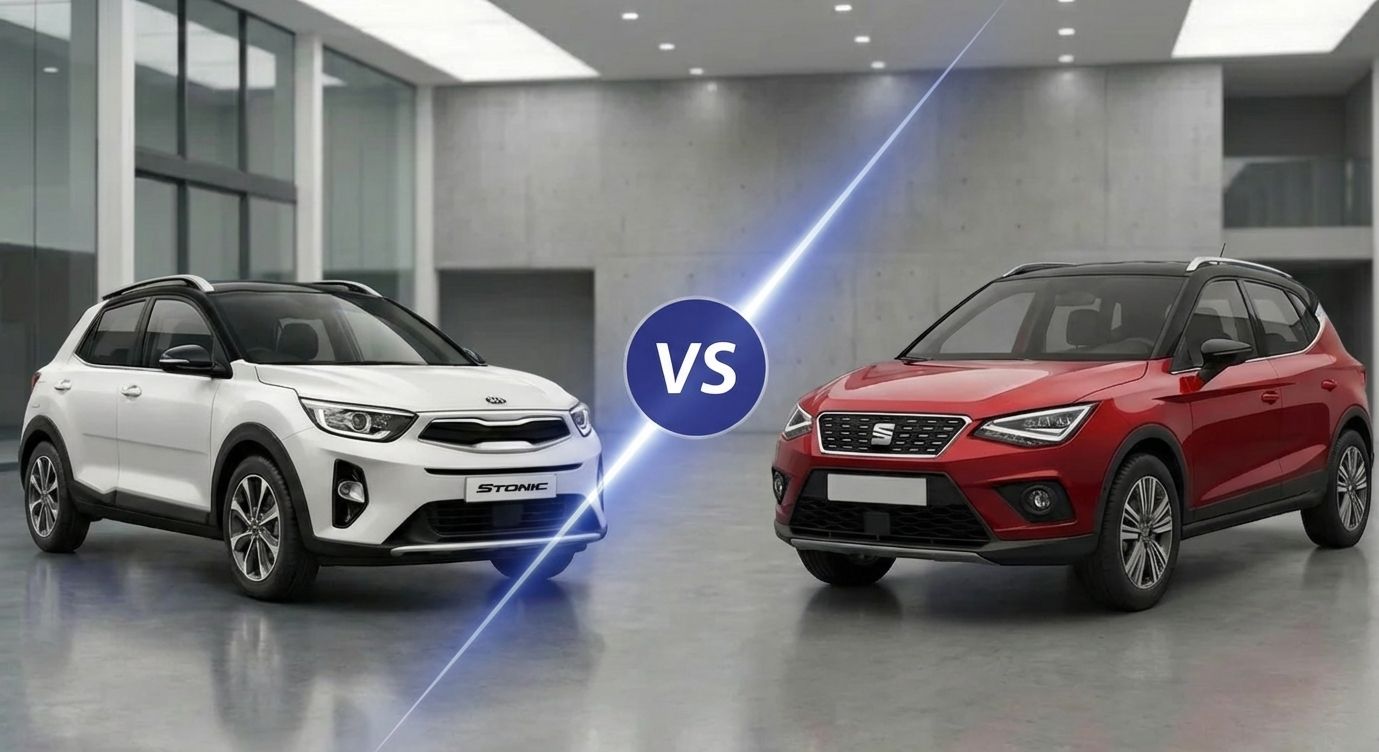
Car battle
Kia Stonic vs. Seat Arona: Complete comparison 2026
Kia Stonic or Seat Arona? We compare their engines, reliability, and practicality. Find out which used SUV is a better fit for you.
Oct 16, 2026
Kia Sportage (NQ5) review: real owner experience, hybrid engine picks, boot space, common faults and our verdict on the European SUV.
October 28, 2026
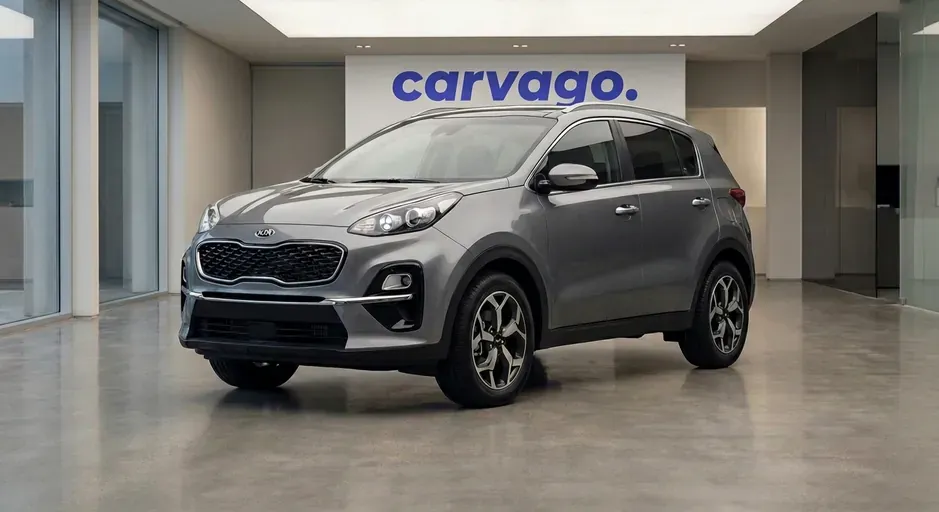
The fifth-generation Kia Sportage competes in the compact crossover class, serving primarily families and business drivers seeking practical daily transport. Developed with a dedicated European short-wheelbase architecture, it is sold exclusively as a five-door Kia Sportage SUV.
Following its European reveal in September 2021, series assembly began in late 2021, with initial European customer handovers taking place in January 2022 for petrol, diesel, and full-hybrid models. The plug-in hybrid derivative followed with European market deliveries commencing in April 2022. European production and sales remain ongoing as of October 2026.
A mid-cycle visual and technical refresh arrived when the updated European Kia Sportage was presented in June 2025. Customer deliveries of the updated combustion and hybrid derivatives commenced in September 2025, followed by the updated plug-in hybrid powertrain in December 2025. This review examines how this generation performs across its European production run.
Real-world feedback on the fifth-generation Kia Sportage paints a picture of modern mechanical dependability offset by initial software and emissions calibration quirks. Because European deliveries commenced in early 2022, long-term multi-year durability is still becoming established, yet clear patterns have already emerged from early production batches. Prospective used buyers who verify service records and arrange an independent inspection through CarAudit can easily confirm whether the necessary updates have been completed.
Official safety recall notices across Europe have addressed several specific hardware and software defects. In April 2026, an official recall was published for vehicles built between 24 June 2025 and 18 December 2025 due to an instrument cluster display delay while driving, rectified by a workshop software update. In December 2025, a recall was issued for vehicles produced between 12 May 2025 and 27 May 2025 because the internal thread diameter of the steering tie rod could be too large; over time, this can reduce fastening force and lead to a loss of steering control, requiring workshops to inspect and replace defective tie rods. Earlier in 2025, a recall was launched for the 1.6 T-GDi 48V mild-hybrid petrol built between 8 September 2022 and 14 June 2023: high starter-generator torque during engine startup could damage the camshaft drive gear for the brake vacuum pump, which increases the required pedal force and braking distance. Dealers update the engine control software and replace any damaged mechanical components. Additionally, an action launched in mid-2023 addressed vehicles built between 10 August 2022 and 27 March 2023 whose digital instrument cluster could fail to illuminate at startup due to electrical voltage instability, resolved via software recalibration or instrument unit replacement.
| Build Window | Affected Powertrain / Component | Defect Description | Remedial Action |
|---|---|---|---|
| 08/2022 – 03/2023 | Digital instrument cluster | Voltage instability causing cluster display failure to illuminate at startup | Software recalibration or cluster unit replacement |
| 09/2022 – 06/2023 | 1.6 T-GDi 48V mild-hybrid petrol | Starting torque damaging vacuum pump camshaft drive, requiring higher brake pedal force | Engine software update and mechanical inspection/replacement |
| 05/2025 – 05/2025 | Steering tie rods | Incorrect internal thread diameter risking reduced fastening force and loss of steering control | Dealer inspection and replacement of tie rod assemblies |
| 06/2025 – 12/2025 | Digital instrument cluster | Software timing issue causing instrument display lag while driving | Instrument cluster software update |
Beyond official recalls, owners report frequent petrol particulate filter warnings on petrol variants, including the non-hybrid, mild-hybrid, and hybrid models. In vehicles subjected to repeated short urban trips, the exhaust fails to reach sufficient operating temperature to clear soot passively. Drivers are prompted by an alert to keep driving to regenerate the filter. Clearing the prompt typically requires sustained driving at higher engine revs with off-throttle coasting phases, while stubborn cases require a dealer-forced electronic regeneration or software update.
On the hybrid Kia Sportage and plug-in hybrid models, owners describe occasional parasitic drain of the 12V auxiliary circuit. Because these electrified variants integrate the 12V supply within the high-voltage battery casing rather than using a conventional starter battery, software sleep-logic glitches can drain the circuit if the car sits parked for one to two weeks. While a dashboard reset switch temporarily reconnects power to start the system, permanent resolution requires workshop software updates. Furthermore, owners report occasional software freezing or rebooting of the curved central infotainment touchscreen, which is primarily addressed through dealer software updates.
Under the bonnet of the fifth-generation Kia Sportage, buyers encounter a versatile four-cylinder engine line-up spanning turbocharged petrol, mild-hybrid diesel, full hybrid, and plug-in hybrid options paired with front-wheel or all-wheel drive.
| Engine | Fuel | Power | Gearbox | Drivetrain | Model years |
|---|---|---|---|---|---|
| 1.6 T-GDi | Petrol | 110 kW (150 hp) | Manual, 6-speed / Automatic, 7-speed | Front-wheel drive | 2022–2024 |
| 1.6 T-GDi | Petrol | 118 kW (160 hp) | Manual, 6-speed / Automatic, 7-speed | Front-wheel drive / All-wheel drive | 2024–2025 |
| 1.6 T-GDi | Petrol | 110 kW (150 hp) | Manual, 6-speed / Automatic, 7-speed | Front-wheel drive | 2025–present |
| 1.6 T-GDi | Petrol | 132 kW (180 hp) | Automatic, 7-speed | Front-wheel drive / All-wheel drive | 2022–2024 |
| 1.6 T-GDi | Petrol | 132 kW (180 hp) | Automatic, 7-speed | All-wheel drive | 2025–present |
| 1.6 CRDi | Diesel | 100 kW (136 hp) | Manual, 6-speed / Automatic, 7-speed | Front-wheel drive / All-wheel drive | 2022–2025 |
| 1.6 CRDi | Diesel | 100 kW (136 hp) | Manual, 6-speed / Automatic, 7-speed | Front-wheel drive | 2025–present |
| 1.6 T-GDi HEV | Hybrid | 169 kW (230 hp) | Automatic, 6-speed | Front-wheel drive / All-wheel drive | 2022–2024 |
| 1.6 T-GDi HEV | Hybrid | 158 kW (215 hp) | Automatic, 6-speed | Front-wheel drive / All-wheel drive | 2024–2025 |
| 1.6 T-GDi HEV | Hybrid | 176 kW (239 hp) | Automatic, 6-speed | Front-wheel drive / All-wheel drive | 2025–present |
| 1.6 T-GDi PHEV | Plug-in hybrid | 195 kW (265 hp) | Automatic, 6-speed | All-wheel drive | 2022–2024 |
| 1.6 T-GDi PHEV | Plug-in hybrid | 185 kW (252 hp) | Automatic, 6-speed | All-wheel drive | 2024–2025 |
| 1.6 T-GDi PHEV | Plug-in hybrid | 212 kW (288 hp) | Automatic, 6-speed | Front-wheel drive / All-wheel drive | 2026–present |
For predominantly urban driving and stop-and-go commuting, the hybrid Kia Sportage is the most balanced option. Its torque-converter automatic operates smoothly in low-speed traffic, and the electric motor shoulders frequent stops and starts without needing a charging socket. Drivers who can plug in regularly at home will benefit from the plug-in hybrid, which handles daily local commutes purely on electric power, though its extra weight makes it less agile on rougher road surfaces.
Buyers needing an uncomplicated family runabout on a tighter budget can look at the entry-level petrol Kia Sportage. While the manual gearbox offers an easy shift action, the clutch pedal bite point requires acclimatisation in slow-moving traffic. The mild-hybrid petrol with the dual-clutch transmission suits mixed suburban and rural use, although frequent crawl speeds can reveal occasional hesitation compared to the hybrid's torque converter.
For frequent long-distance travel and regular motorway commuting, the diesel Kia Sportage remains the sensible pick. The 1.6 CRDi delivers sustained pulling power at cruising speeds, though engine clatter becomes noticeable inside the cabin under heavy throttle.
Drivers planning to pull trailers or horseboxes should prioritise the manual diesel, which offers the highest braked towing rating in the line-up.
For detailed findings on long-term mechanical reliability, filter regeneration behaviour, and software updates across these powertrains, refer to the owner experiences section.
| Dimension / Parameter | Pre-facelift (2021–2025) | Facelift (2025–present) |
|---|---|---|
| Length | 4,515 mm | 4,540 mm |
| Width | 1,865 mm | 1,865 mm |
| Height | 1,645–1,650 mm | 1,645–1,650 mm |
| Wheelbase | 2,680 mm | 2,680 mm |
| Standard petrol boot capacity (seats up / folded) | 591 / 1,780 l | 591 / 1,780 l |
| Plug-in hybrid boot capacity (seats up / folded) | 540 / 1,715 l | 540 / 1,715 l |
Note: Stated boot capacities do not apply to mild-hybrid petrol, full hybrid, or diesel variants, which have different luggage volumes due to underfloor battery and emissions hardware.
The fifth-generation Kia Sportage SUV accommodates five passengers with adequate knee clearance and shoulder space for adults across the rear bench. While the second row is fixed and lacks fore-and-aft sliding adjustment, the backrests feature a practical 40:20:40 split, allowing long objects to fit through the centre without disturbing outer seating. Rear headroom is sufficient in standard builds, though models fitted with the optional panoramic glass sunroof restrict vertical clearance for taller occupants in the rear. In daily use, cargo loading is straightforward thanks to remote quick-release levers mounted inside the luggage compartment walls that drop the backrests flat. Overall load capacity remains accommodating across the broader Kia Sportage line-up, although mild-hybrid, full hybrid, and plug-in hybrid derivatives forfeit useful underfloor storage space to house their auxiliary electrical hardware.
In professional road tests, the Kia Sportage earns credit for its stable, relaxed cruising manners. The suspension absorbs undulations well at speed and maintains secure body control through bends. Low-speed compliance divides opinion: versions on smaller wheels cushion broken tarmac effectively, whereas larger wheels produce a fidgety edge over urban potholes and ridges. Steering is light and reassuring in sudden manoeuvres, yet it offers minimal road feel. Cabin noise remains subdued when cruising, although the petrol engine drones under hard throttle, and wider tyres generate tyre roar on coarse surfaces.
Inside, assembly is solid with soft upper surfaces, though scratch-prone plastics line the lower cabin. The curved panoramic display responds promptly, yet testers consistently criticise the switchable touch bar beneath it: toggling between climate and media controls proves distracting on the move. Rearward visibility is compromised by thick rear roof pillars.
Reviewers agree that the chassis prioritises secure stability over agility, and that the dual-mode touch strip frustrates daily use. The mid-cycle facelift brought revised styling and updated cabin software, but the driving dynamics retain their familiar touring-oriented character.
All the charts in this section are drawn from Carvago listings of the whole Kia Sportage model family, including other generations represented in the data, not only the reviewed generation. Because vehicles are categorized strictly by build year, this data does not establish a separate price level for the reviewed generation alone. Across current platform offerings, the median asking price stands at €17,900 for 2019 models, €24,800 for 2022 models, and €35,400 for 2026 examples.
Between April 2026 and September 2026, the number of advertised Kia Sportage listings moved from 20,785 down to 18,675. The chart below shows the count of active monthly listings recorded across this six-month span.
Active listings over time
| Month | Kia Sportage |
|---|---|
| 2026-04 | 20 785 |
| 2026-05 | 20 531 |
| 2026-06 | 20 404 |
| 2026-07 | 20 464 |
| 2026-08 | 19 141 |
| 2026-09 | 18 675 |
Source Carvago
Buyers have an extensive selection of vehicles to choose from, though the total number of cars on offer declined in the later months rather than holding steady.
Among used listings advertised today, the median asking price of cars built in 2019 is €17,900, compared to €35,400 for those built in 2026. The breakdown across individual build years illustrates how asking prices compare across the model family.
Median advertised price by year of manufacture
| Model year | Kia Sportage |
|---|---|
| 2019 | 17 900 |
| 2020 | 18 900 |
| 2021 | 19 000 |
| 2022 | 24 800 |
| 2023 | 29 300 |
| 2024 | 32 800 |
| 2025 | 34 300 |
| 2026 | 35 400 |
Source Carvago
Buyers considering 2019 to 2021 models see median asking prices from €17,900 to €19,000, while 2022 models stand at €24,800. For 2024 to 2026 models, listings show median asking prices from €32,800 to €35,400.
This depreciation curve illustrates how the Kia Sportage's residual value declines across vehicle age. The model loses approximately 11% of its value by age one, with cumulative losses reaching 26% by age three.
Residual value by vehicle age
| Vehicle age | Kia Sportage |
|---|---|
| New | 34 900 |
| 1 yr | 31 000 |
| 2 yrs | 28 800 |
| 3 yrs | 26 000 |
| 4 yrs | 24 200 |
| 5 yrs | 19 400 |
| 6 yrs | 18 000 |
| 7 yrs | 17 200 |
Source Carvago
Over seven years, the model sheds roughly 51% of its initial residual value, retaining just under half. The sharpest annual drop occurs between four and five years of age, after which annual losses taper off to their lowest rate.
Active listings for the Kia Sportage show petrol models leading the selection, starting at 10,115 advertised cars in April 2026 alongside 5,279 diesel vehicles. The chart below tracks how advertised volumes developed across each fuel type through September 2026.
Supply composition by fuel type
Petrol
Diesel
Hybrid
Electric
LPG
| Month | Petrol | Diesel | Hybrid | Electric | LPG |
|---|---|---|---|---|---|
| 2026-04 | 10 115 | 5 279 | 4 960 | 0 | 392 |
| 2026-05 | 10 046 | 5 203 | 4 883 | 0 | 358 |
| 2026-06 | 9 952 | 5 227 | 4 826 | 1 | 353 |
| 2026-07 | 9 864 | 5 186 | 4 905 | 2 | 468 |
| 2026-08 | 8 947 | 4 885 | 4 796 | 1 | 482 |
| 2026-09 | 8 582 | 4 600 | 4 970 | 3 | 481 |
Source Carvago
By September 2026, petrol remained the most advertised option with 8,582 listings, followed by hybrid at 4,970 cars and diesel at 4,600. Buyers will find ample inventory across petrol, hybrid, and diesel variants, whereas alternatives such as LPG with 481 listings and electric with 3 cars represent a very small slice of available stock.
The chart below tracks the average asking price for the Kia Sportage from April 2026 to September 2026, starting at €23,600.
Average price development over time
| Month | Kia Sportage |
|---|---|
| 2026-04 | 23 600 |
| 2026-05 | 23 300 |
| 2026-06 | 23 200 |
| 2026-07 | 23 200 |
| 2026-08 | 23 300 |
| 2026-09 | 23 400 |
Source Carvago
After dipping to €23,200 in June and July, the average closed at €23,400 in September 2026, representing a shift of less than two percent over the entire six-month span.
Secure body control and relaxed cruising comfort on open roads
Accommodating passenger cabin with convenient remote rear seat releases
Diverse powertrain line-up spanning petrol, diesel, and hybrid options
Distracting dual-purpose touch bar toggles between climate and media controls
Frequent particulate filter warnings on petrol models driven on repeated short trips
Fidgety low-speed ride on larger wheels and compromised rearward visibility
Mechanically it is dependable, though long-term durability is still becoming established for this generation. Short urban trips can prompt particulate filter warnings on petrol models, while software updates have addressed early electronic glitches.
The hybrid Kia Sportage is the most balanced pick for daily commuting thanks to its smooth torque-converter automatic in stop-and-go traffic. For regular long-distance motorway driving, the diesel Kia Sportage provides stronger cruising pull.
Confirm via VIN that all safety recall campaigns have been completed by an authorised dealer. On petrol models used primarily in town, verify that no particulate filter regeneration warnings are active on the dashboard.
Median asking prices start at €24,800 for 2022 models, while late-production examples reach €35,400. Typical depreciation across the broader model family runs at roughly 11% after the first year.
Sources: kia.com, adac.de, europa.eu, autocar.co.uk, autoexpress.co.uk
This article was prepared using artificial intelligence tools. The section guarantor is Petr Dušek.
Kia Stonic or Seat Arona? We compare their engines, reliability, and practicality. Find out which used SUV is a better fit for you.
Oct 16, 2026
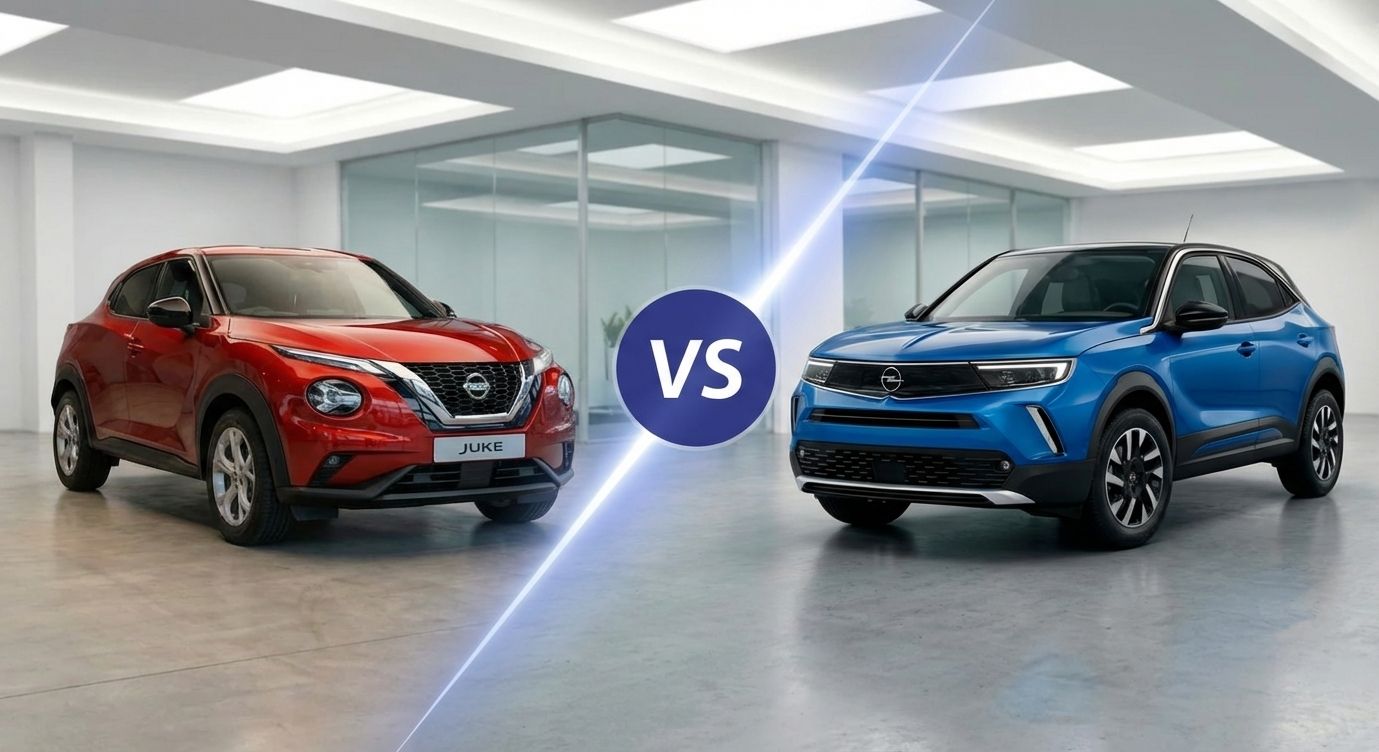
Nissan Juke vs Opel Mokka: A detailed comparison of design, ride, and features. Our verdict will help you choose the right compact crossover.
Oct 22, 2026
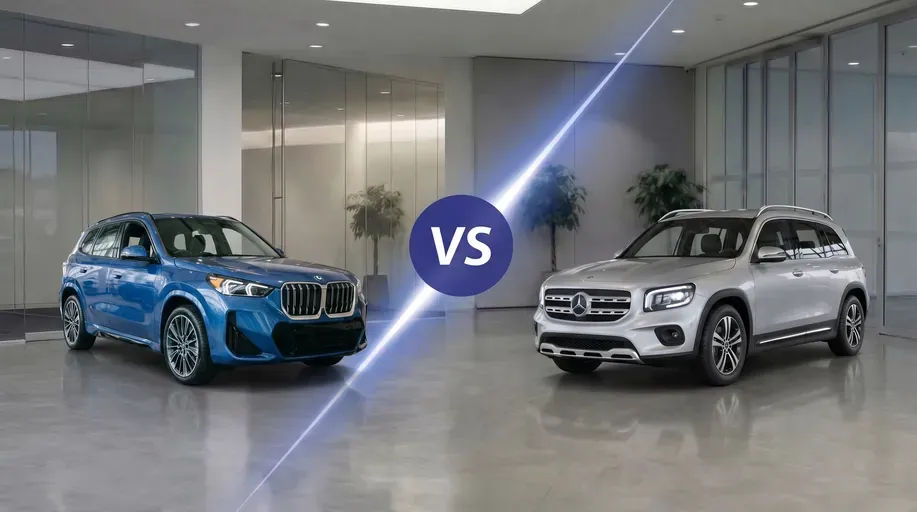
Detailed comparison of the BMW X1 and Mercedes-Benz GLB. Real-world experience, specifications, equipment comparison, and a clear verdict to help you choose your SUV.
Oct 16, 2026