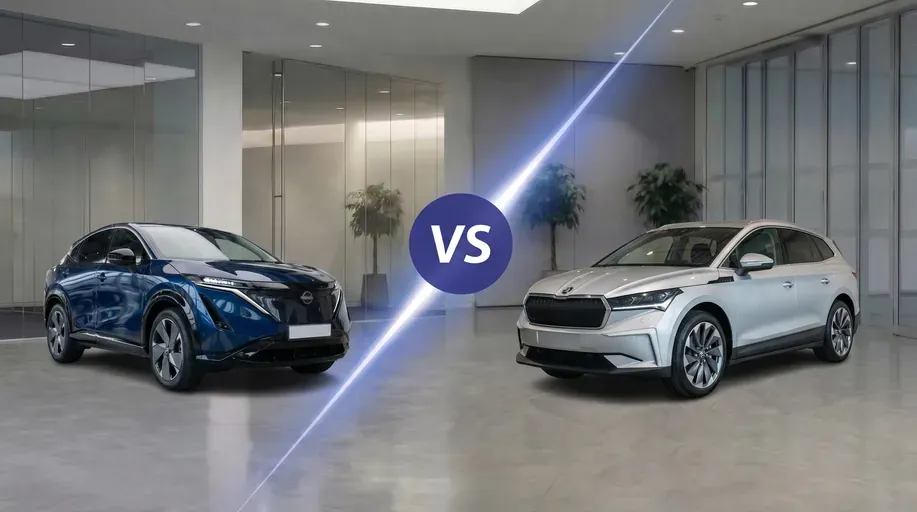
Car battle
Nissan Ariya vs. Škoda Enyaq iV: Complete comparison 2026
Nissan Ariya vs. Škoda Enyaq iV Comparison: Which electric SUV is better? We reveal real-world range, spaciousness, and equipment. Read our final verdict!
Apr 14, 2026
Jaguar I-Pace review: real owner experience, common faults, real-world range, used prices and our verdict — everything before you buy.
November 2, 2026
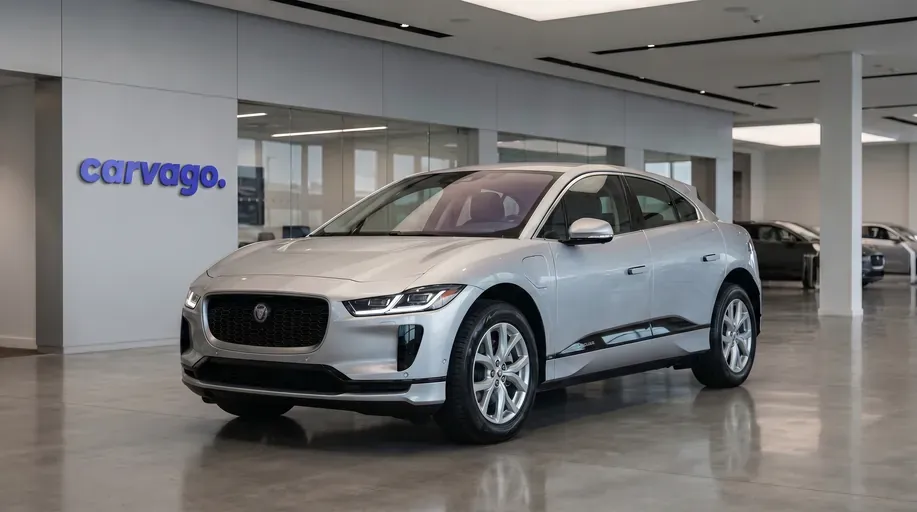
The Jaguar I-Pace arrived on European roads as the brand’s first series-production battery-electric vehicle, positioned in the premium mid-size crossover class. This review covers its first generation, for which order books opened on 1 March 2018, initial European deliveries commenced in June 2018, and global series assembly ended in December 2024. Offered exclusively in a single five-door crossover body style with all-wheel drive, it was aimed at private and corporate buyers seeking an alternative to conventional combustion-engined executive models.
Two notable updates marked the car's production run. An update announced on 23 June 2020 introduced faster three-phase alternating-current charging alongside updated infotainment hardware, with a lower-output derivative joining order books in select continental European markets in August 2020. A visual facelift followed on 11 January 2023, replacing the traditional front mesh with a smooth shield grille and revising exterior accents before production concluded.
On the European used market, the electric Jaguar I-Pace appeals primarily to drivers seeking an all-wheel-drive crossover with a low roofline and distinctive cab-forward proportions, rather than a conventional upright family SUV.
The ownership history of the electric Jaguar I-Pace is dominated by several high-voltage traction battery safety campaigns. In June 2023, a worldwide recall covering 62,921 vehicles built between 23 August 2017 and 05 June 2023 was launched due to a risk of high-voltage battery pack thermal overload leading to fire or smoke; retailers installed diagnostic software that monitors cell deviations and caps charging to 75% if anomalies occur. Between October 2023 and February 2024, a follow-up recall covered 3,676 vehicles worldwide to re-flash vehicles where the initial diagnostic update had been incorrectly completed. In April 2024, a targeted safety recall affecting 264 vehicles built between 16 February 2018 and 26 September 2019 addressed battery packs containing cells produced on or before 31 May 2018, requiring pack replacement or vehicle re-acquisition due to elevated thermal overload risk. In March and May 2026, an interim recall across Europe and worldwide covering 29,007 vehicles built between 23 June 2017 and 18 August 2020 (with records extending to 10 June 2021) identified that a risk of thermal overload remains. As an interim remedy while a permanent solution is developed, software restricts the maximum state of charge to 90%, and owners were instructed to park and charge away from structures.
Other safety recalls addressed heating, structure, and early braking control. Between October 2023 and August 2024, a Europe-wide recall covering 3,735 vehicles worldwide built from 03 June 2020 to 12 January 2022 resolved an issue where high-voltage coolant heater failures left vehicles without windscreen defrosting capability, requiring workshop replacement of the heater assembly. In February 2024, a campaign covering 70 vehicles built between 19 September 2023 and 20 October 2023 rectified floor tunnel strengthening panels that could crack and compromise seat anchorage rigidity, with technicians drilling crack relief holes and fitting reinforcing plates. Earlier, in May 2019, a recall covering 3,099 vehicles built between 23 August 2017 and 11 April 2019 deployed a software update to eliminate a momentary delay when transitioning from regenerative deceleration to the mechanical foundation brakes.
Beyond official safety campaigns, recurring electrical faults center on heating components and the low-voltage network. Internal failure of the high-voltage coolant heater is a frequent issue, particularly on 2020 to 2022 models, where delamination and cracking of the ceramic heating element can disable both windscreen defrosting and cabin warmth. Independent tests also highlight frequent 12-volt battery discharge on early Jaguar I-Pace models built from 2018 to 2020; control modules fail to enter sleep mode, triggering parasitic drain on the dual auxiliary batteries and in some cases causing system lockouts that leave the vehicle unable to engage drive. Early dual-screen infotainment systems from the 2018 to 2020 model years also suffer from noticeable processor lag, display blackouts, and frozen camera feeds, which software updates only partly resolved prior to the hardware revision introduced for the 2021 model year.
Mechanical wear reflects the substantial weight of the chassis and the operational characteristics of electric driving. Because regenerative braking handles most everyday deceleration, mechanical friction brakes are frequently underutilised; inspection reports regularly find severe corrosion, deep surface pitting, and sticking calliper pins on all four brake discs. The front suspension also works hard, with tests noting accelerated wear on lower wishbone bushings and steering ball joints, evident as clunking over uneven surfaces. Additionally, owners of early production models occasionally report damp front footwells caused by displaced air conditioning drain tubes or compromised bulkhead seals, making an independent pre-purchase inspection like CarAudit especially prudent.
The first-generation electric Jaguar I-Pace features a dual-motor powertrain across its entire production run, pairing an electric motor on each axle with a single-speed automatic transmission. Buyers choosing a used model encounter two output configurations: the standard EV400 and the short-lived EV320.
| Engine | Fuel | Power | Gearbox | Model years |
|---|---|---|---|---|
| EV400 | Electric | 294 kW (400 hp) | Automatic | 2018–2024 |
| EV320 | Electric | 236 kW (320 hp) | Automatic | 2020–2021 |
As a used car, the Jaguar I-Pace EV400 represents the vast majority of the European market offer. Its twin motors deliver immediate throttle response without hesitation, making it well suited to mixed commuting, motorway overtaking, and light towing duties where all-wheel traction provides stable progress. The software-derated EV320 was offered only in select continental European countries for the 2021 model year; while it trails the EV400 in high-speed acceleration, it provides identical urban manners and sufficient pace for everyday suburban driving. For urban trips, both variants operate smoothly in high-regeneration mode, allowing one-pedal driving once the driver adapts to the deceleration rate. For towing light trailers, the EV400 provides secure traction, though pulling extra mass noticeably quickens battery depletion.
Real-world range in the electric Jaguar I-Pace varies substantially with ambient temperatures and road speeds. Sustained motorway cruising increases electrical consumption compared to town driving, noticeably compressing travel radius between charging stops. In winter conditions, cabin heating demands and colder cell chemistry further reduce usable driving distance.
Charging practicality depends significantly on the vehicle's build date. Early production cars utilise single-phase alternating current charging, whereas models built from the June 2020 update onward incorporate three-phase alternating current charging, halving home and destination charging times on compatible European infrastructure. On direct current fast chargers, both variants accept high input rates initially, though charging speed gradually tapers as the battery fills.
| Dimension / Capacity | Measurement |
|---|---|
| Length | 4,682 mm |
| Width (mirrors folded) | 2,011 mm |
| Height | 1,566 mm |
| Wheelbase | 2,990 mm |
| Boot capacity (seats up / folded) | 505 / 1,163 l |
| Front luggage compartment | 27 l |
Specifications apply across standard production variants. Selecting an optional spare wheel raises the luggage floor and reduces underfloor storage.
A dedicated electric platform and cab-forward proportions allow the electric Jaguar I-Pace to provide adult passengers with knee clearance comparable to larger saloons, aided by a flat cabin floor free of a central tunnel. Headroom in the second row accommodates tall occupants, though the tapering roofline and thick rear pillars narrow outward visibility. The rear bench is fixed without fore-and-aft sliding, but the folding backrests drop flat to extend the cargo area for bulkier loads. In everyday use, the shallow recess beneath the boot deck offers minimal utility, so charging cables frequently occupy the primary luggage area unless coiled into the compact compartment beneath the bonnet.
Road tests consistently highlight the all-wheel-drive electric Jaguar I-Pace for its chassis composure. Air suspension, fitted standard on higher trims and optional on entry models, keeps body roll minimal through quick direction changes while delivering a compliant ride on moderate wheel sizes. Selecting the largest wheel options compromises secondary bump absorption over sharp expansion joints. Steering feels direct with reassuring on-centre stability, though testers note that the wide turning circle complicates tight city parking. Cabin refinement ranks among the model's strengths, keeping both electric motor whine and wind turbulence muted at highway speeds.
The driving position combines low-slung sportiness with clear forward sightlines, supported by deeply contoured front seats. Material quality divides opinion: while cabin touchpoints and leather upholstery feel upscale on higher trims, lower trims carry plainer dashboard plastics.
While reviewers praise the hushed cruising manners of the Jaguar I-Pace, opinions diverge over steering feedback, which some testers consider aloof during spirited cornering.
All charts in this section are drawn from Carvago's listings of the whole Jaguar I-Pace model family, including other generations represented in the data, not only the reviewed generation. Because no separate generation-specific dataset is supplied, these figures do not establish an isolated price level for the reviewed generation alone. The advertised median asking price stands at €28,000 for 2018 models, €38,900 for 2022 examples, and €68,700 for 2025 builds. Buyers on the used market favour newer production runs that introduced upgraded infotainment systems and three-phase AC charging.
Active Jaguar I-Pace listings stood at 191 in May 2026 before finishing at 148 in October 2026. The chart below tracks how the number of advertised vehicles developed across these six months.
Active listings over time
| Month | Jaguar I-Pace |
|---|---|
| 2026-05 | 191 |
| 2026-06 | 181 |
| 2026-07 | 174 |
| 2026-08 | 175 |
| 2026-09 | 180 |
| 2026-10 | 148 |
Source Carvago
Buyers had a pool of around 170 to 190 vehicles through most of the period, though choice narrowed in October when listings fell to 148.
Among used listings advertised today, the median asking price for a Jaguar I-Pace built in 2018 is €28,000, compared to €68,700 for cars built in 2025. Median asking prices are generally higher for newer model years, with the exception of 2024 models, which sit slightly below 2023.
Median advertised price by year of manufacture
| Model year | Jaguar I-Pace |
|---|---|
| 2018 | 28 000 |
| 2019 | 32 400 |
| 2020 | 33 100 |
| 2021 | 33 700 |
| 2022 | 38 900 |
| 2023 | 59 400 |
| 2024 | 59 200 |
| 2025 | 68 700 |
Source Carvago
Buyers looking at 2019 to 2021 model years encounter median asking prices between €32,400 and €33,700. For newer options, median asking prices step up from €38,900 for 2022 models to €59,400 for 2023 models.
Between May and October 2026, advertised listings for the model consisted entirely of electric vehicles, beginning at 191 listings in May 2026 and standing at 148 listings in October 2026. The monthly counts illustrate the volume on offer across powertrain types.
Supply composition by fuel type
| Month | Electric |
|---|---|
| 2026-05 | 191 |
| 2026-06 | 181 |
| 2026-07 | 174 |
| 2026-08 | 175 |
| 2026-09 | 180 |
| 2026-10 | 148 |
Source Carvago
With zero listings recorded for petrol, diesel, or hybrid variants throughout the six months, pure electric models make up the entirety of the advertised selection, meaning buyers will find no alternative fuel choices on the market.
Between May 2026 and October 2026, the average asking price for the Jaguar I-Pace started at €37,200 and peaked at €37,700 in July 2026.
Average price development over time
| Month | Jaguar I-Pace |
|---|---|
| 2026-05 | 37 200 |
| 2026-06 | 37 500 |
| 2026-07 | 37 700 |
| 2026-08 | 37 400 |
| 2026-09 | 36 900 |
| 2026-10 | 36 400 |
Source Carvago
Following that peak, the average decreased over three consecutive months to €36,400 in October 2026, with overall movement across the six months remaining under three percent.
Composed chassis delivering minimal body roll and secure all-wheel-drive traction
Roomy rear seating with adult knee clearance and a flat floor
Quiet cabin with well-muted wind and electric motor noise
Multiple traction battery safety recalls requiring VIN verification for active charging limits
Sluggish early infotainment alongside frequent auxiliary battery and cabin heater faults
Compromised rearward visibility and a wide turning circle in tight spaces
Long-term reliability of the electric Jaguar I-Pace is largely overshadowed by recurring high-voltage battery safety campaigns that can trigger active charging limits. While the underlying dual-motor powertrain is mechanically durable, verifying documented recall completions by VIN is essential before purchasing.
Vehicles built from the June 2020 update onward are the most sensible choice because they incorporate faster three-phase alternating-current charging alongside updated, responsive infotainment hardware. They command higher asking prices than earlier cars, but they eliminate the sluggish multimedia interface and slower home charging of earlier examples.
The EV400 is the practical option because it makes up almost the entire European used market supply and offers stronger high-speed acceleration. The continental EV320 provides identical everyday urban manners, but its short one-year production run makes it exceedingly rare to find.
Verify via official dealer records and the VIN that all traction battery safety recalls have been carried out and whether an active charging restriction remains in place. Additionally, confirm that the heating system produces hot air promptly from a cold start.
Sources: media.jlr.com, jaguar.com, adac.de, autocar.co.uk, autoexpress.co.uk
This article was prepared using artificial intelligence tools. The section guarantor is Petr Dušek.
Nissan Ariya vs. Škoda Enyaq iV Comparison: Which electric SUV is better? We reveal real-world range, spaciousness, and equipment. Read our final verdict!
Apr 14, 2026
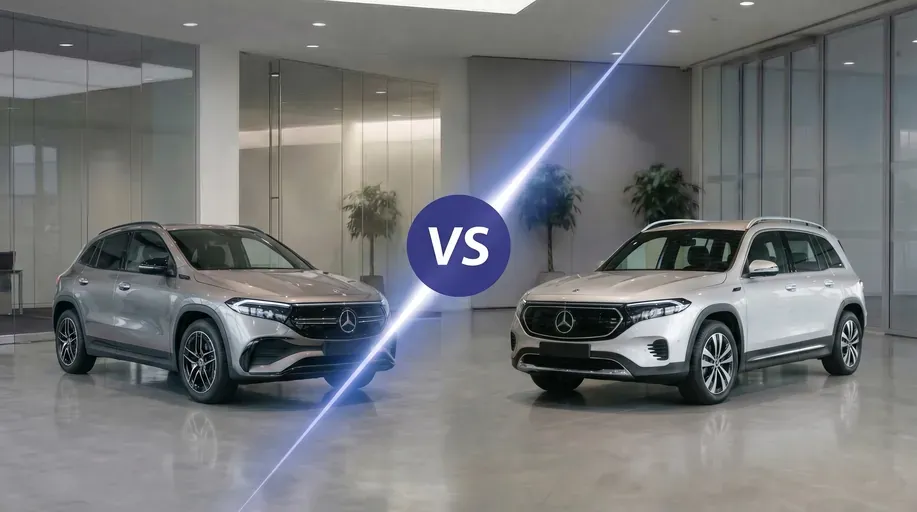
Detailed comparison of the Mercedes-Benz EQA and Mercedes-Benz EQB. Find out which electric SUV offers better range, space, and equipment. Read our verdict!
May 21, 2026
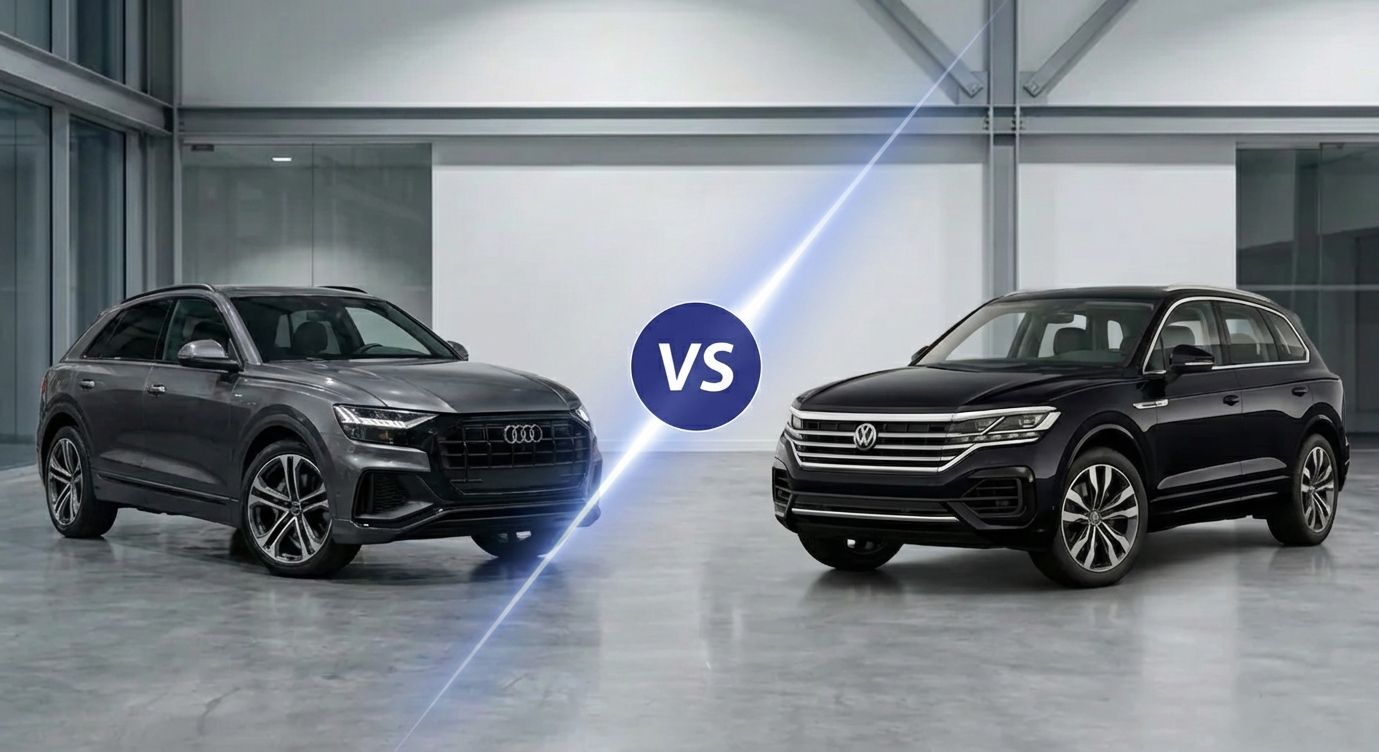
They share the same platform, but which one is better? A detailed comparison of the Audi Q8 and Volkswagen Touareg. We have evaluated the features and prices, and we provide a clear final verdict.
Oct 16, 2026