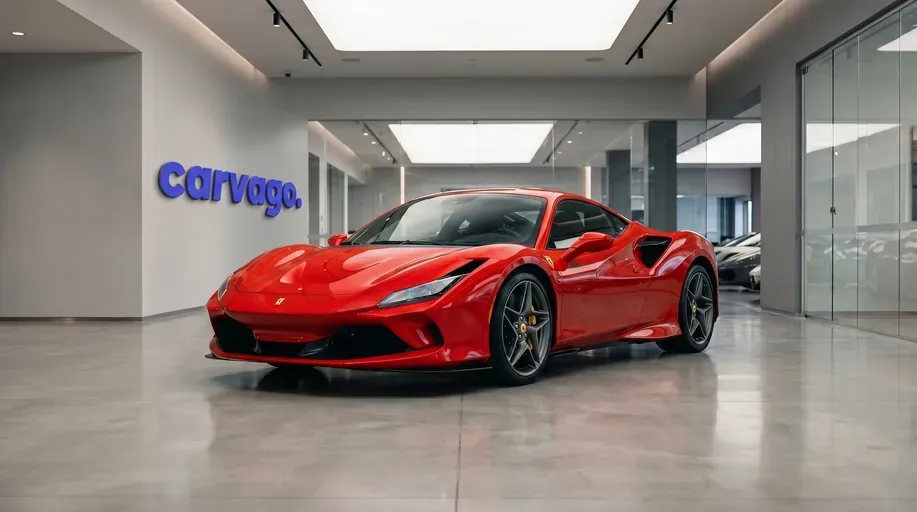
Review
Review Ferrari F8 Tributo: What do owners and experts really say?
Ferrari F8 Tributo review: real owner insights, running costs, used prices, and reliability — our definitive verdict on the V8 supercar.
Nov 6, 2026
Jaguar F-Type (2013–2024) review: real owner experience, common faults, running costs and used prices — everything to know before you buy.
November 7, 2026
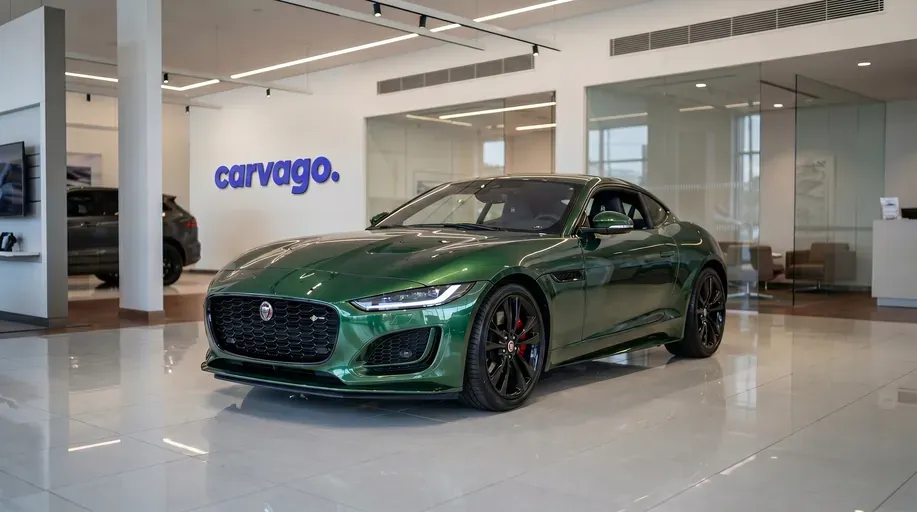
The Jaguar F-Type (internal code X152) represents the brand's dedicated entry in the two-seat sports car segment, positioned against established European rivals. Production commenced in December 2012, with the first customer deliveries of the Jaguar F-Type Convertible arriving in Europe in May 2013. The fixed-roof Jaguar F-Type Coupé followed shortly after, reaching European customers in spring 2014. Series production officially concluded on 13 June 2024, marking this single generation as the manufacturer's final combustion-powered sports car.
A major facelift premiered on 2 December 2019, with updated models arriving in European showrooms in March 2020. The redesign replaced the original vertical headlamps with slimmer horizontal LED units, reshaped the front bumper and rear fascia, and introduced a fully digital instrument cluster to update cabin technology.
On the used market, the F-Type primarily attracts buyers seeking traditional front-engine sports car proportions and distinctive styling.
Throughout its production run from 2012 to 2024, the Jaguar F-Type has proven mechanically durable when maintained rigorously, though specific thermal and driveline components require careful monitoring. Both the Jaguar F-Type Coupé and Jaguar F-Type Convertible rely on extensive vehicle electronics that are sensitive to 12-volt battery health. Tests describe how depleted battery voltage frequently triggers false warning messages on the instrument panel or causes the motorized centre air vents to stick, rather than indicating genuine hardware failure.
On supercharged V6 and V8 petrol Jaguar F-Type models—most notably on vehicles produced between 2013 and 2018—owners report repeated failures of the plastic coolant crossover pipes located in the engine vee beneath the supercharger. The factory-fitted pipes were manufactured by joining two moulded halves with a longitudinal sonic weld. Over time, engine heat cycles cause the plastic to embrittle and crack along the seam or shear at the block connections, resulting in rapid coolant loss and a serious risk of engine overheating. Rectifying the issue requires removing the supercharger assembly to fit revised seamless pipework, while some owners choose aftermarket aluminium pipes to prevent future fractures. Tests also describe occasional water pump shaft seal weeping on pre-facelift supercharged engines, evidenced by dried coolant residue around the pump pulley.
In the driveline, tests and specialist workshop records note premature hardening and leaking of the rear differential pinion oil seal across rear-wheel-drive and all-wheel-drive Jaguar F-Type variants, including cars with active electronic differentials. Because underbody covers mask minor seepage, gradual fluid loss can go unnoticed until depleted lubrication causes bearing wear, manifesting as a high-frequency whine on trailing throttle. Furthermore, on cars fitted with the switchable active exhaust system—which was standard on higher trims and optional on entry models—owners report that road grime, salt, and carbon deposits cause the internal butterfly valves within the rear silencer to seize, leaving the exhaust permanently locked in one sound setting. Before purchasing a used example, arranging an independent inspection via CarAudit provides certainty about differential seal condition and undeclared fluid leaks.
The model has also been involved in several official European safety recalls. In June 2015, a recall was registered for vehicles built between September 2014 and January 2015 because the rear anti-roll bar was assembled incorrectly onto certain vehicles, which could lead to vehicle loss of control; authorized dealers replaced the anti-roll bar and adjusted the rear axle alignment. In January 2019, an alert was issued across Europe covering vehicles built between 12 October 2018 and 11 December 2018 because the crankshaft pulley retaining bolt could fracture due to a production specification error, potentially causing the crankshaft nose to break, resulting in engine power loss and loose pulley damage; retailers replaced the centre retaining bolt. In March 2019, an emissions campaign for four-cylinder petrol models built from 09 November 2016 to 05 July 2018 addressed vehicles that failed to routinely achieve the required levels of CO2 emissions, resolved by updating engine control software. In August and September 2022, an alert covering cars built between 17 January 2022 and 15 March 2022 addressed front seat belt pretensioner tubes that might have been damaged during assembly, which could lead to reduced or complete loss of pre-tensioning in an impact; dealers inspect the pretensioner tubes and replace affected retractor assemblies. In December 2025, an official advisory and guidance letter was issued for vehicles built from 31 August 2012 to 13 May 2024 regarding vehicle security and theft prevention (no mechanical workshop action required).
Across its production run, the petrol Jaguar F-Type relied entirely on forced-induction petrol powertrains, combining supercharged six- and eight-cylinder engines alongside an entry-level turbocharged four-cylinder. The engine ladder was simplified during the December 2019 facelift, when the manual gearbox and all six-cylinder units were discontinued for European buyers in favour of a revised lineup. A limited-edition 3.0 V6 400 SPORT producing 294 kW (400 hp) was also offered in RWD and AWD for the 2018 model year.
| Engine | Fuel | Power | Gearbox | Drivetrain | Model years |
|---|---|---|---|---|---|
| 2.0 i4 Turbo (P300) | Petrol | 221 kW (300 hp) | 8-speed automatic | RWD | 2017–2024 |
| 3.0 V6 Supercharged | Petrol | 250 kW (340 hp) | 8-speed automatic (6-speed manual from 2015) | RWD | 2013–2019 |
| 3.0 V6 S Supercharged | Petrol | 280 kW (380 hp) | 8-speed automatic (6-speed manual RWD from 2015) | RWD / AWD (from 2015) | 2013–2019 |
| 5.0 V8 S Supercharged | Petrol | 364 kW (495 hp) | 8-speed automatic | RWD | 2013–2015 |
| 5.0 V8 R Supercharged | Petrol | 405 kW (550 hp) | 8-speed automatic | RWD / AWD | 2014–2020 |
| 5.0 V8 SVR Supercharged | Petrol | 423 kW (575 hp) | 8-speed automatic | AWD | 2016–2020 |
| 5.0 V8 P450 Supercharged | Petrol | 331 kW (450 hp) | 8-speed automatic | RWD / AWD | 2020–2024 |
| 5.0 V8 R Supercharged | Petrol | 423 kW (575 hp) | 8-speed automatic | AWD | 2020–2024 |
For urban driving and frequent short trips, the turbocharged four-cylinder Jaguar F-Type is the most sensible option. It reaches operating temperature more quickly than the multi-cylinder alternatives and carries less weight over the front axle, which improves directional agility in dense traffic.
For mixed everyday driving and winding roads, the supercharged V6 represents the sweet spot of the range. The mechanical supercharger provides immediate throttle response without turbocharger lag. While the rare manual Jaguar F-Type appeals to traditional driving enthusiasts, the automatic Jaguar F-Type delivers smoother shifts in daily congestion. Drivers needing dependable traction across wet and cold European seasons are best served by the higher-output V6 S equipped with all-wheel drive.
For long-distance motorway travel, the supercharged V8 transforms the car into a capable grand tourer. The milder V8 introduced with the facelift offers abundant low-end torque for overtakes while maintaining high-speed composure. For earlier pre-facelift eight-cylinder models, opting for an all-wheel-drive Jaguar F-Type is advisable, as the early rear-wheel-drive versions easily overwhelm available rear tyre grip in slippery conditions.
Towing is not an option with any variant, as the model was never homologated for trailer operation.
For detailed insights into mechanical durability and component longevity across these powertrains, refer to the owner experiences section.
| Parameter | Coupé | Convertible |
|---|---|---|
| Length (mm) | 4 470–4 482 | 4 470–4 482 |
| Width without mirrors (mm) | 1 923 | 1 923 |
| Height (mm) | 1 311 | 1 307–1 308 |
| Wheelbase (mm) | 2 622 | 2 622 |
| Boot volume – normal (l) | 336 | 132 |
| Boot volume – seats folded (l) | — | — |
Note: Stated boot capacities reflect standard VDA measurements without a spare wheel. Neither variant offers rear seats or folding backrests.
The Jaguar F-Type is strictly a two-seater with a fixed structural bulkhead behind the cabin, precluding any rear seating, folding backrests, or load-through facility. Everyday practicality requires compromise: the low seating position and broad sills make entering and exiting the vehicle demanding in narrow parking spots, while in-cabin stowage is limited to slim door pockets, a shallow centre console, and minimal room for oddments behind the seats.
Cargo usability varies significantly between the two body styles. The Jaguar F-Type Coupé features a wide, shallow load bay beneath its lifting tailgate that easily accommodates weekend luggage or soft travel bags, provided items are not excessively tall. In contrast, the Jaguar F-Type Convertible offers a much tighter, irregularly shaped boot constrained by the folding soft-top stowage compartment, restricting luggage space to compact bags.
On the road, the Jaguar F-Type behaves more like a muscular grand tourer than a razor-sharp track car. Professional tests note that versions on standard steel springs deliver a firm ride that transmits sharp ruts and urban potholes into the cabin. In contrast, models with adaptive dampers—which were standard on higher trims and optional on entry models—absorb imperfections far more smoothly in comfort settings. The steering is direct and stable at highway speeds, with four-cylinder variants displaying crisper turn-in agility due to less weight over the front axle. However, testers agree that the chassis lacks the granular steering feedback of dedicated sports cars. Acoustic refinement varies: while supercharged engines provide theatrical character under load, extended cruising in early versions can become fatiguing.
Inside, the Jaguar F-Type Coupé features a low, driver-focused cockpit with supportive seats and quality materials. Testers consistently criticise everyday usability, noting restricted rear visibility. The December 2019 facelift modernised the cabin with a digital instrument display, yet the central touchscreen still suffers from input latency and rigid menus. While testers differ on whether the chassis feels too stiff on broken pavement, they broadly agree that the facelift improved long-distance compliance and tamed low-speed exhaust noise, solidifying its role as a fast cruiser.
All market charts in this section are drawn from Carvago listings of the whole Jaguar F-Type model family, including other generations represented in the data, not only the reviewed generation, meaning this chart does not establish a separate price level for the reviewed generation. Across current listings, the median asking price stands at €40,500 for 2018 models, €51,000 for 2020 cars, and €110,500 for 2025 registrations. Differences between model years primarily reflect powertrain mixes, with later offerings more heavily represented by supercharged V8 and all-wheel-drive configurations.
Between May 2026 and October 2026, active Jaguar F-Type listings on the platform moved from a high of 473 down to 416 cars, as shown in the monthly breakdown below.
Active listings over time
| Month | Jaguar F-Type |
|---|---|
| 2026-05 | 473 |
| 2026-06 | 454 |
| 2026-07 | 440 |
| 2026-08 | 426 |
| 2026-09 | 440 |
| 2026-10 | 416 |
Source Carvago
Throughout this six-month period, buyers had a solid selection of more than 400 vehicles to choose from, with overall inventory gradually tapering despite a brief uptick to 440 listings in September 2026.
Among used cars advertised today, the median asking price of vehicles built in 2018 is €40,500, compared to a median asking price of €110,500 for 2025 registrations.
Median advertised price by year of manufacture
| Model year | Jaguar F-Type |
|---|---|
| 2018 | 40 500 |
| 2019 | 44 900 |
| 2020 | 51 000 |
| 2021 | 52 000 |
| 2022 | 59 300 |
| 2023 | 81 400 |
| 2024 | 80 000 |
| 2025 | 110 500 |
Source Carvago
Buyers targeting earlier production years see median asking prices of cars advertised today between €40,500 for 2018 and €59,300 for 2022. The distribution is not strictly ascending across newer years, with the median asking price of cars advertised today standing at €80,000 for 2024 compared to €81,400 for 2023, before reaching €110,500 for 2025 registrations.
Advertised listings for the model family consist entirely of petrol models across the observed six-month period, shifting from 473 cars in May 2026 to 416 in October 2026.
Supply composition by fuel type
| Month | Petrol |
|---|---|
| 2026-05 | 473 |
| 2026-06 | 454 |
| 2026-07 | 440 |
| 2026-08 | 426 |
| 2026-09 | 440 |
| 2026-10 | 416 |
Source Carvago
With all 416 active listings in October 2026 powered by petrol and zero recorded for any other fuel type, used buyers will exclusively encounter petrol options on the market.
From May 2026 to October 2026, the average asking price began at €57,400, following the monthly trajectory shown in the chart below.
Average price development over time
| Month | Jaguar F-Type |
|---|---|
| 2026-05 | 57 400 |
| 2026-06 | 56 400 |
| 2026-07 | 55 800 |
| 2026-08 | 55 500 |
| 2026-09 | 56 600 |
| 2026-10 | 55 700 |
Source Carvago
Across the six months, the average fluctuated within a narrow range between €55,500 and €57,400, finishing at €55,700 in October 2026 with an overall change of approximately 3 percent.
Characterful supercharged petrol engines with immediate throttle response
Composed long-distance cruising on facelift models with adaptive dampers
Coupé tailgate provides practical luggage capacity for weekend trips
Vulnerable plastic coolant crossover pipes beneath the supercharger on older models
Everyday cabin access compromised by wide door sills and scarce oddment storage
Central touchscreen suffers from noticeable input latency and rigid menus
The supercharged V6 represents the sweet spot in the Jaguar F-Type lineup, delivering immediate throttle response and balanced cruising manners, particularly when paired with all-wheel drive for wet-weather traction.
Only if you are willing to accept significant compromises. Low ground clearance, broad door sills, and limited rear visibility make tight parking manoeuvres and routine errands demanding.
Inspect the engine vee beneath the supercharger for coolant leaks or residue from the plastic crossover pipes on older cars, and check the rear differential pinion seal for oil weeping.
The Jaguar F-Type Coupé is vastly superior for travel, offering a shallow load bay beneath its rear tailgate that accommodates weekend luggage. The convertible features a significantly tighter boot constrained by the folding soft-top stowage area.
Sources: media.jlr.com, jaguar.com, adac.de, ec.europa.eu, autocar.co.uk
This article was prepared using artificial intelligence tools. The section guarantor is Petr Dušek.
Ferrari F8 Tributo review: real owner insights, running costs, used prices, and reliability — our definitive verdict on the V8 supercar.
Nov 6, 2026
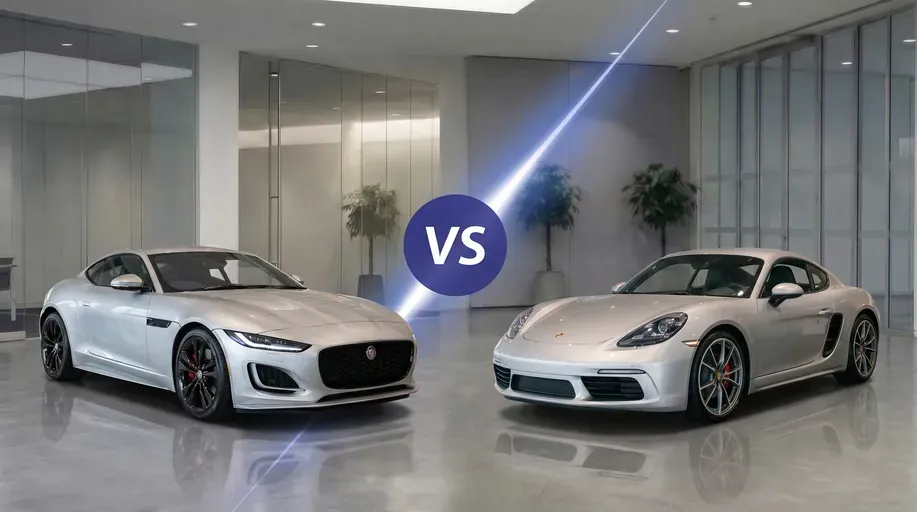
Detailed comparison of Jaguar F-Type vs Porsche 718 Cayman. We compared the performance, driving characteristics, and equipment of used cars. Find out which sports coupe is better.
May 2, 2026
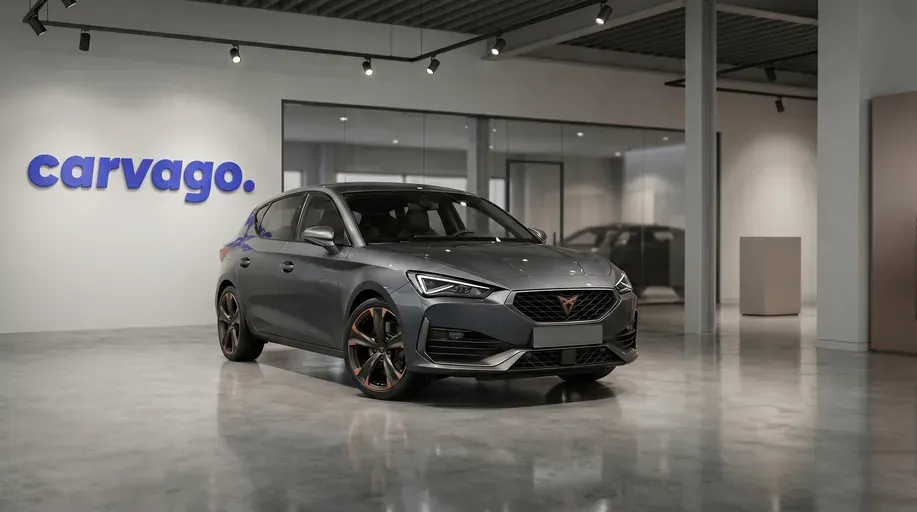
CUPRA Leon review: real owner experiences, common issues, hybrid running costs and our verdict — everything you need before you buy.
Oct 28, 2026