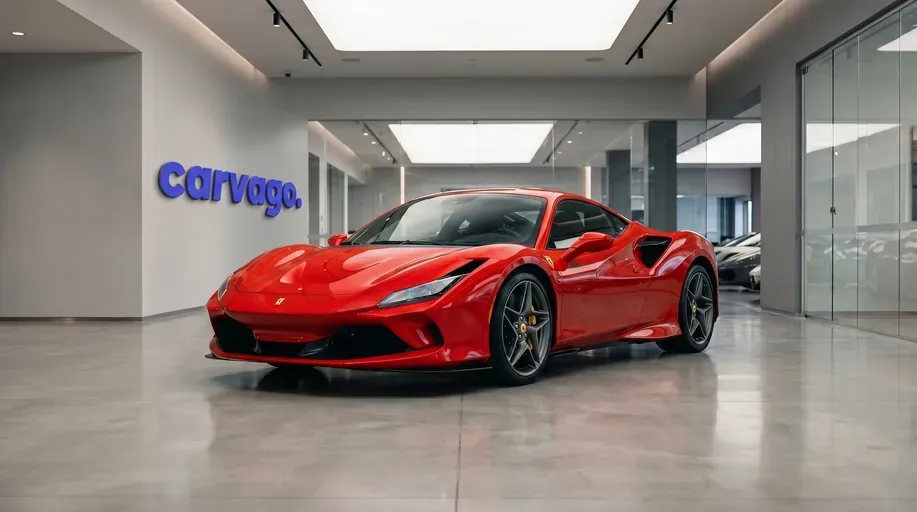
Review Ferrari F8 Tributo: What do owners and experts really say?
Ferrari F8 Tributo review: real owner insights, running costs, used prices, and reliability — our definitive verdict on the V8 supercar.
November 6, 2026
Verdict at a Glance
Who it suits: Driving enthusiasts and collectors seeking a pure, non-hybrid mid-engine supercar for road tours and track use.
Recommended engine: The twin-turbo V8 petrol, which delivers progressive torque on secondary roads and composed high-speed cruising.
What to avoid: Cars without a documented brake fluid reservoir cap recall repair — check by VIN.
Introduction
The Ferrari F8 Tributo represents the final iteration of Maranello’s non-hybrid mid-rear-engine V8 lineage, serving as the direct successor to the 488 GTB. Internally designated Type F142MFL, the model sits in the core two-seater supercar segment, designed to balance aerodynamic efficiency with everyday usability.
Following its public premiere at the Geneva International Motor Show in March 2019, first European customer deliveries began in October 2019. Ferrari offered the model in two distinct body styles: the standard fixed-roof Ferrari F8 coupé and the open-top Ferrari F8 convertible Spider, which debuted in September 2019. Throughout its run, the model received no mid-cycle facelifts. Factory order books closed in March 2022, and production as well as final deliveries concluded in April 2023.
On the pre-owned market, the Ferrari F8 appeals primarily to driving enthusiasts and collectors seeking the brand's classic mid-engine configuration without the added complexity of hybrid assistance, serving equally well on road tours and closed circuits.
Owner Experiences: Common Faults and Recalls
Owner experiences with the Ferrari F8 Tributo indicate that its twin-turbocharged V8 engine and seven-speed dual-clutch transmission are mechanically durable when maintained according to official schedules. Major powertrain failures are rare across European markets. Instead, reported issues centre primarily on quiescent electrical drain and an official braking system recall.
Verified Safety Recall
European regulatory authorities registered one significant safety recall affecting the F8 Tributo. The broader campaign encompassed vehicles manufactured from February 2005 through July 2022 across multiple model lines, with the F8 Tributo build window covering cars produced between August 2019 and July 2022.
The defect notice states that the brake fluid reservoir cap may fail to vent properly, preventing proper atmospheric pressure equalisation inside the reservoir. This condition can create an internal vacuum that induces fluid leakage, leading to a partial or total loss of braking ability. Authorised workshops resolve the issue by replacing the reservoir cap with a modified, ventilated component and installing updated software to display a low-fluid warning message accompanied by an acoustic chime. The official manufacturer guidance directs drivers who see a low-brake-fluid warning to pull over safely, stop driving immediately, and arrange vehicle recovery.
Recall Subject
Affected Production Window
Reach
Remedy
Brake fluid reservoir cap venting and warning software
August 2019 – July 2022 (F8 Tributo)
Worldwide (incl. EU and UK)
Replacement with ventilated cap and instrument software update
Electrical Drain and Visibility Quirks
The most frequent complaint among owners concerns the 12-volt electrical system. Because the onboard control modules draw current while stationary, cars left parked without an active charger for one to two weeks experience a significant voltage drop. On startup, this low resting voltage causes communication timing glitches across the electronic network. Owners report that this triggers false dashboard alerts, such as engine control system warnings, stability control faults, or disabled driving modes, even though mechanical components remain in working order. Connecting the car to the factory magnetic trickle charger whenever parked helps prevent these voltage dips, and owners note that replacing an ageing battery typically resolves recurring phantom warning codes.
Visibility is another characteristic noted by owners and professional tests. On the Ferrari F8 Tributo Coupé, the louvered polycarbonate rear engine cover causes noticeable optical refraction and split reflections in the interior rear-view mirror. Tests describe this as an inherent trait of the slotted lightweight panel rather than an assembly defect, leaving drivers dependent on the exterior mirrors and the reversing camera when manoeuvring.
🔍 What to check before buying
Check the car's VIN through an authorised dealer to confirm the brake fluid reservoir cap replacement and instrument software update recall was completed.
Connect a diagnostic tool to read the calculated carbon-ceramic brake disc wear percentage, and inspect all four rotor edges physically for chipping or surface delamination.
Confirm the factory magnetic battery tender is present, operational, and that the car starts cleanly without low-voltage error cascades on the instrument display.
Inspect the low-hanging front splitter, aerodynamic intake ducting, and composite underfloor trays on a workshop lift for ground-scrape damage or cracks.
Verify the service history through CarAudit and confirm that every scheduled annual service has been logged in the manufacturer's central digital database.
Engines: Which One to Choose
Ferrari delivered the Ferrari F8 Tributo throughout its single-generation lifecycle with a single powertrain configuration. The mid-rear mounted twin-turbocharged V8 drives the rear wheels exclusively through a seven-speed dual-clutch automatic transmission.
Engine
Fuel
Power
Gearbox
Model years
3.9 Twin-Turbo V8
Petrol
530 kW (720 hp)
7-speed automatic
2019–2023
Which engine to choose as a used buy
Because Ferrari offered only one drivetrain across the production run, buyers evaluating a used petrol Ferrari F8 do not have to weigh engine sizes or transmission types. Buying advice therefore centres on matching the single powertrain setup to your driving profile.
City driving and short trips: In automatic mode, the seven-speed dual-clutch transmission shifts smoothly at low road speeds, making urban navigation straightforward. However, frequent short journeys prevent the powertrain from reaching optimal operating temperatures.
Mixed driving and dynamic roads: This is the primary operational sweet spot. Electronic torque management limits peak pulling power in lower gears and builds progressively toward the upper rev range, providing immediate throttle control on twisting secondary roads without sudden spikes in wheelspin.
Long motorway journeys: The transmission's tall top gear keeps engine revs low at cruising speeds, allowing the coupé to cover long distances with low cabin vibration and minimal mechanical strain.
Towing: The car is not homologated for trailer use or roof loads, meaning towing is prohibited.
For a detailed evaluation of powertrain durability, service considerations, and electrical system behaviour, refer to the owner experiences section.
Space & Practicality
Dimension / Capacity
Ferrari F8 Tributo (Coupé)
Ferrari F8 Spider (Convertible)
Length (mm)
4,611
4,611
Width without mirrors (mm)
1,979
1,979
Height (mm)
1,206
1,206
Wheelbase (mm)
2,650
2,650
Luggage compartment (l)
200
200
Cargo capacity with seats folded
Not applicable
Not applicable
Width excludes exterior rear-view mirrors. Cargo expansion is not possible due to the fixed rear bulkhead.
As a dedicated two-seater mid-engine sports car, the Ferrari F8 Tributo has no rear seats. The passenger cell terminates directly behind the two bucket seats, where a fixed structural firewall separates the cabin from the engine compartment. This architecture leaves only a slim rear parcel shelf suitable for soft coats or small bags, eliminating any possibility of expanding cargo space into the rear. Practical luggage carrying relies entirely on the front luggage compartment under the bonnet, which accommodates a pair of soft weekend bags or a compact flight-standard carry-on, though road tests emphasize that rigid or oddly shaped suitcases will not fit. Daily cabin stowage across both the coupé Ferrari F8 Tributo and the open-top convertible Ferrari F8 is limited to shallow door bins, a small glovebox, and a narrow under-bridge console shelf where modern smartphones can become awkward to retrieve.
What the Tests Say
On varied asphalt, professional road tests describe the Ferrari F8 Tributo as compliant, absorbing surface imperfections cleanly through its rough-road damper decoupling mode without inducing body float. Steering response is instant, with the front axle resisting corner-entry push and delivering balanced mechanical grip. On-board stability software blends braking and slip angles progressively, enabling manageable slides without abrupt torque cuts. The engine settles smoothly into urban traffic, though particulate filters in the exhaust line soften the acoustic volume.
The cockpit provides a low driving position with rigid lateral seat support, yet daily ergonomics invite consistent criticism. The pedal box is narrow enough to crowd drivers with larger shoes, and placing indicators, wipers, and start functions directly on the steering wheel complicates basic driving tasks. Furthermore, the compact digital displays on either side of the rev counter present small menu layouts that require distracting adjustments through dashboard rotary pods.
Professional reviews reach a clear consensus regarding the chassis balance, commending the accessible dynamic limits provided by the electronic differential and stability software. Tester opinions diverge on steering feel, with some noting that the rapid rack isolates the driver from textured road feedback. Because the model completed a single production lifecycle without a mid-career facelift, these driving characteristics and interior controls remained uniform throughout its build run.
Prices and Market Offer
The market charts in this section are drawn from Carvago's listings of the whole model family, including other generations represented in the data, not only the reviewed generation, so they do not establish a separate price level for the reviewed generation alone. Across current offers for the Ferrari F8, the median asking price stands at €299,900 for 2020 models and reaches €370,000 for 2024 vehicles, with 2022 examples recording €347,500. Differences between individual vehicles reflect optional equipment such as the front suspension lifter or carbon-fibre packages, alongside verified dealer servicing.
Advertised listings for the model shifted across the six months from May 2026 to October 2026, starting at 226 cars before dipping to 198 in June. The monthly counts below show how availability moved over this period.
Ferrari F8 Tributo - availability over time
Active listings over time
Month
Ferrari F8 Tributo
2026-05
226
2026-06
198
2026-07
195
2026-08
183
2026-09
204
2026-10
185
Source Carvago
Buyers can expect a selection of between 183 and 226 cars on the market in any given month, with overall choice fluctuating rather than following a continuous upward or downward trend.
Across used listings advertised today, the median asking price is €299,900 for models built in 2020, compared with €370,000 for those built in 2024.
Ferrari F8 Tributo - median price by model year
Median advertised price by year of manufacture
Model year
Ferrari F8 Tributo
2020
299 900
2021
320 000
2022
347 500
2023
362 900
2024
370 000
Source Carvago
Buyers considering a 2020 model face a median asking price of €299,900, while newer 2022 and 2024 examples reflect median asking prices of €347,500 and €370,000.
Across the six months from May to October 2026, advertised listings consisted entirely of petrol cars, moving from 226 listings in May to 185 in October 2026. The chart below shows the monthly count of vehicles on offer broken down by fuel type.
Ferrari F8 Tributo - supply by fuel over time
Supply composition by fuel type
Month
Petrol
2026-05
226
2026-06
198
2026-07
195
2026-08
183
2026-09
204
2026-10
185
Source Carvago
In October 2026, all 185 active listings were petrol, with 0 recorded for diesel, hybrid, or electric powertrains. For buyers, the secondary market offer consists exclusively of petrol cars.
The chart tracks the average asking price between May 2026 and October 2026, beginning at €338,400.
Ferrari F8 Tributo - price trend over time
Average price development over time
Month
Ferrari F8 Tributo
2026-05
338 400
2026-06
334 500
2026-07
338 400
2026-08
338 000
2026-09
332 900
2026-10
333 200
Source Carvago
Monthly averages fluctuated within a narrow band over the period, reaching a low of €332,900 in September before finishing at €333,200 in October, representing an overall change of less than two percent.
Compliant suspension on uneven roads paired with progressive chassis stability control
Mechanically durable twin-turbocharged powertrain with smooth low-speed gear shifts
Progressive torque delivery and composed refinement on long-distance motorway driving
Cons
Steering-wheel-mounted auxiliary controls, small instrument displays, and a narrow pedal box
Louvered polycarbonate rear cover on the coupé distorts interior rear-view mirror visibility
Rapid parasitic battery drain triggers false electronic warning messages when parked off the tender
Frequently asked questions
Is the F8 Tributo reliable as a used buy?
Mechanically, the powertrain is durable when maintained on schedule, with major engine or gearbox failures proving rare. However, stationary electrical drain frequently triggers false electronic dashboard alerts if the Ferrari F8 is not kept connected to a battery maintainer.
What should be checked before buying?
Verify by VIN that the brake fluid reservoir cap recall was completed, and inspect the carbon-ceramic brakes and underfloor trays for physical damage. Documented main-dealer service history is essential.
Which engine is best on the used market?
Buyers have only one powertrain option, as the Ferrari F8 Tributo was produced exclusively with a twin-turbocharged V8 and seven-speed dual-clutch automatic transmission. The practical decision centres on choosing between the fixed-roof Ferrari F8 coupé and the open-top Spider.
Does the model year matter?
Technical specifications remained identical throughout production because the car received no mid-cycle facelifts. Selection should focus on verified maintenance records and desirable options like the front suspension lifter rather than the build year.