Review Cupra Leon: What do owners and experts really say?
CUPRA Leon review: real owner experiences, common issues, hybrid running costs and our verdict — everything you need before you buy.
October 28, 2026
Verdict at a Glance
Who it suits: Drivers seeking sharper compact styling or estate versatility without stepping up into an SUV footprint.
Recommended engine: The 2.0 TDI for long-distance motorway cruising, or plug-in hybrids for commuters with regular charging access.
What to avoid: Cars without documented recall repairs verified by VIN, and early production years with unresolved infotainment glitches.
Introduction
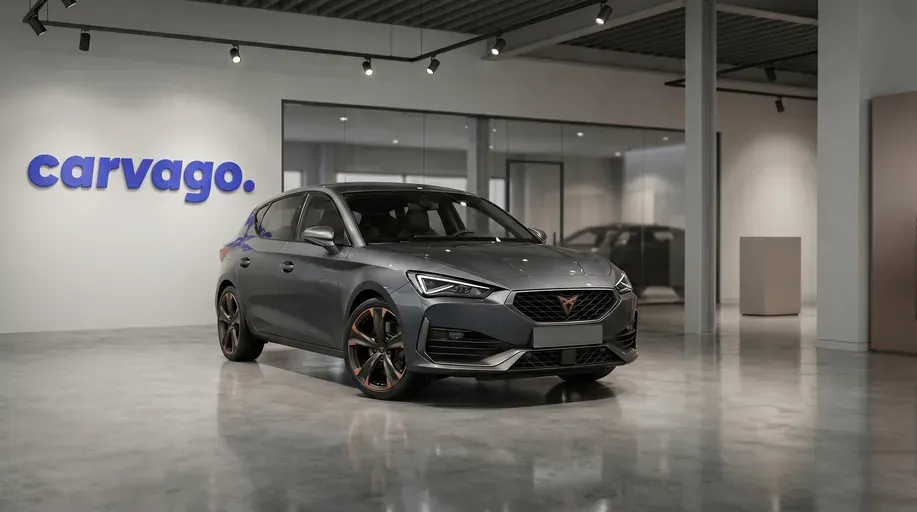
The CUPRA Leon represents the brand’s dedicated entry in the European compact class. Built on the MQB Evo platform, this first generation under the standalone CUPRA badge held its world premiere in February 2020. Initial European customer deliveries began in December 2020 with plug-in hybrid options, followed by pure petrol variants in April 2021 and an expanded engine roster in November 2022.
Offered as a five-door CUPRA Leon hatchback and a CUPRA Leon Sportstourer estate, the line-up received a comprehensive mid-cycle refresh unveiled on 29 April 2024. Facelift series production commenced at the Martorell facility in July 2024, with dealership deliveries arriving in the third quarter of 2024. The revision introduced reshaped exterior styling, upgraded on-board infotainment hardware, and revised powertrain options.
The CUPRA Leon targets buyers looking for a sharper design focus than standard compact hatchbacks offer, as well as drivers needing the cargo utility of an estate without moving into an SUV footprint. This review examines this single generation across both pre-facelift and facelift versions from the early-2020 production launch through 2026.
Owner Experiences: Common Faults and Recalls
Owner reports and workshop logs for the standalone CUPRA Leon show that the majority of early ownership headaches stemmed from vehicle electronics rather than core mechanical failures. On pre-facelift cars built between 2020 and 2023, owners and tests report the central infotainment system freezing on start-up, displaying black screens, and triggering reboot cycles that temporarily lock the driver out of digital climate adjustments and the reversing camera. In addition, some owners report repeated false alert chimes from the roof-mounted emergency call system. Most of these digital stability issues have been addressed through official software updates, with full hardware replacements only needed in isolated instances.
Mechanically, the platform is generally robust, but two recurring issues stand out in owner communities. On models fitted with optional or standard Dynamic Chassis Control adaptive dampers, owners report a metallic clunking sound over urban speed bumps and uneven tarmac in Comfort mode. The noise is caused by the electromechanical fluid solenoid valve rather than worn suspension bushings, and fitting revised factory replacement dampers has resolved the noise in several documented cases. On the 2.0-litre petrol engines, owners report gradual coolant loss caused by hairline leaks around the thermostat and water pump housing due to thermal stress on the plastic module. Replacing the complete housing assembly with the updated factory part has resolved the seepage in documented cases.
European regulatory registries document several safety recalls for this generation:
Brake fluid reservoir heat damage (announced January–April 2024): Affecting vehicles built between March 2020 and April 2022 equipped with an electromechanical brake servo and dual-clutch transmission across Europe and worldwide. The official notice states that due to incorrect assembly of the heat shield, the brake fluid reservoir nozzle can melt from exhaust system heat, which can result in brake fluid leakage and create a fire risk. Authorised workshops inspect the heat protection mat, ensure correct shield orientation, and fit a supplementary heat shield.
Plug-in hybrid high-voltage fuse (announced May 2022): Applicable worldwide to 1.4-litre plug-in hybrid CUPRA Leon variants manufactured between September 2020 and February 2022. The notice notes that a fuse produced with insufficient extinguishing sand could cause an arc flash during a short circuit, creating a fire risk. Dealerships remedy this by fitting an insulating mat over the high-voltage battery switch box.
Engine design cover detachment (announced March–April 2022): Covering 2.0-litre petrol models built between October 2020 and February 2022 worldwide. The notice warns that the engine cover could loosen under spirited driving or rough road surfaces and contact hot turbocharger components, presenting a fire risk. Workshops initially removed the cover and later fitted a revised design with improved fastenings.
Engine support mount fracture (announced November 2023): Covering a worldwide batch of 258 vehicles built between 26 July 2023 and 7 August 2023. Improper heat treatment applied to the engine mounts could cause them to break, compromising vehicle stability. Dealerships replace the affected mount assembly.
Luggage partition brackets on CUPRA Leon Sportstourer estate models (announced September–October 2022): Affecting estate variants built between July 2020 and June 2022 fitted with the luggage net partition. A poorly riveted mounting bracket could detach during an accident, creating an injury risk. Authorised workshops inspect and re-rivet the chassis brackets.
Front seat belt anchorage points (announced September–October 2021): Covering vehicles built between 18 September 2020 and 23 August 2021 worldwide, where inadequate anchorage points could reduce restraint performance during an impact. Technicians inspect and re-torque the mountings to specification.
For the facelifted version delivered from the third quarter of 2024 onwards, long-term durability data remains limited. Early reports indicate improved infotainment stability, though long-term field data for the revised plug-in hybrid battery and updated drivetrains is not yet established. To ensure all relevant campaigns and technical updates have been fully executed on a specific used vehicle, buyers can arrange a pre-purchase verification through CarAudit.
🔍 What to check before buying
Confirm that the vehicle identification number (VIN) is clear of outstanding factory recalls with an authorised dealer, specifically regarding the brake servo heat shield and high-voltage fuse insulation.
Operate the central touchscreen during a cold start to ensure navigation, reversing camera, and climate adjustments load immediately without lagging or rebooting.
On 2.0-litre petrol models, inspect the lower engine compartment for traces of dried white coolant residue around the thermostat housing.
Test the dual-clutch transmission at slow parking speeds, confirming smooth engagement between first, reverse, and second gear without jerky clutch uptake.
On plug-in hybrid models, verify that the charging port latch locks and releases smoothly, and observe that the transition from electric drive to combustion power occurs without shuddering.
Engines: Which One to Choose
The first standalone generation of the Cupra Leon encompasses a diverse powertrain lineup, ranging from accessible mild hybrids and long-distance diesels to high-output turbocharged petrol units and plug-in hybrids. The range was refined during the mid-cycle refresh, which streamlined the intermediate petrol offerings and introduced upgraded plug-in hybrid systems alongside a more potent all-wheel-drive estate.
Engine
Fuel
Power
Gearbox
Drivetrain
Model years
1.5 TSI
Petrol
110 kW (150 hp)
6-speed manual
FWD
2022–present
1.5 eTSI
Mild hybrid petrol
110 kW (150 hp)
7-speed automatic
FWD
2022–present
2.0 TSI
Petrol
140 kW (190 hp)
7-speed automatic
FWD
2022–2023
2.0 TSI
Petrol
180 kW (245 hp)
7-speed automatic
FWD
2021–2023
2.0 TSI
Petrol
221 kW (300 hp)
7-speed automatic
FWD
2021–present
2.0 TSI 4Drive
Petrol
228 kW (310 hp)
7-speed automatic
AWD
2021–2024
2.0 TSI 4Drive
Petrol
245 kW (333 hp)
7-speed automatic
AWD
2024–present
2.0 TDI
Diesel
110 kW (150 hp)
6-speed manual
FWD
2023–2023
2.0 TDI
Diesel
110 kW (150 hp)
7-speed automatic
FWD
2023–present
1.4 e-HYBRID
Plug-in hybrid
150 kW (204 hp)
6-speed automatic
FWD
2021–2024
1.4 e-HYBRID
Plug-in hybrid
180 kW (245 hp)
6-speed automatic
FWD
2021–2024
1.5 e-HYBRID
Plug-in hybrid
150 kW (204 hp)
6-speed automatic
FWD
2024–present
1.5 e-HYBRID
Plug-in hybrid
200 kW (272 hp)
6-speed automatic
FWD
2024–present
For urban driving and short commutes, the plug-in hybrid options are well suited if you have access to regular charging. The revised 1.5 e-HYBRID introduced with the facelift offers significantly greater electric-only driving range and direct-current fast charging compared to the earlier 1.4 e-HYBRID, keeping daily trips purely electric without burning fuel. If charging is inconvenient, the mild-hybrid 1.5 eTSI automatic or the manual Cupra Leon with the 1.5 TSI petrol serve as sensible options for mixed everyday driving. Those browsing the pre-owned market can also look at the discontinued intermediate 2.0 TSI versions, which provide a noticeable performance increase as a used car without the higher running costs of the flagship petrol models.
Drivers who routinely cover long motorway journeys should consider the 2.0 TDI in the diesel Cupra Leon. The diesel remains the standout option for sustained motorway fuel economy and dependable pulling power. Enthusiasts seeking pure performance will prefer the high-output front-wheel-drive 2.0 TSI in the Cupra Leon hatchback, which benefits from a standard electro-hydraulic front limited-slip differential for sharp cornering. For all-weather capability, towing duty, or rear axle torque splitting on facelift models, the all-wheel-drive Cupra Leon estate with the 2.0 TSI 4Drive is the definitive pick; note that hatchback plug-in hybrids are not homologated for pulling trailers, making the estate mandatory if you require towing capacity on a hybrid Cupra Leon.
For recurring mechanical faults, cooling system issues, and manufacturer recall campaigns across these engines, refer to the owner experiences section.
Space & Practicality
Body Style & Powertrain
Dimensions (L × W × H, mm)
Wheelbase (mm)
Boot Volume (Seats Up / Folded, l)
Hatchback (Combustion & Mild-Hybrid)
4,398 × 1,799 × 1,444
2,686
380 / 1,301
Hatchback (Plug-in Hybrid)
4,398–4,399 × 1,799 × 1,467
2,681–2,686
270 / 1,191
Sportstourer (Combustion & Mild-Hybrid)
4,656–4,657 × 1,799 × 1,438–1,444
2,686–2,689
620 / 1,600
Sportstourer (Plug-in Hybrid)
4,657 × 1,799 × 1,463
2,681–2,689
470 / 1,450
Note: Stated exterior dimensions exclude door mirrors and do not apply to facelift performance all-wheel-drive estate variants.
In the CUPRA Leon hatchback, passenger space provides adequate legroom and headroom for two adults in the outer rear seats, though tall occupants may find the flat bench contours offer modest under-thigh support on longer journeys. The middle seating position remains compromised by a pronounced central tunnel. Everyday versatility is aided by a split-folding rear bench featuring a practical load-through hatch integrated into the folding centre armrest. The cargo compartment offers a wide aperture, though plug-in hybrid variants sacrifice underfloor storage depth to accommodate the high-voltage traction battery. Buyers requiring substantial family carrying capacity will find the CUPRA Leon Sportstourer considerably more capable, offering an extended load bay, standard roof rails, and quick-release levers in the boot sidewalls to drop the rear backrests directly from the tailgate opening.
What the Tests Say
Road tests highlight that the CUPRA Leon balances daily compliance with disciplined body control, particularly when equipped with adaptive dampers. In softer settings, the chassis absorbs speed bumps and motorway dips smoothly, though large alloy wheels transmit noticeable jitter over cobblestones and sharp ruts. The steering proves direct and predictable, but testers note a lack of detailed road feel. High-powered front-wheel-drive models offer tidy cornering balance, whereas heavier plug-in hybrids respond with deliberate, steady understeer. Cabin refinement remains composed at cruising speeds, though the petrol engine sounds vocal under hard acceleration.
Inside, copper accents and padded upper surfaces elevate the ambience, though hard plastics lower down and unclad inner window frames reveal visible cost-cutting. Front sports seats provide sturdy lateral support, but their integrated headrests lack individual adjustment.
Facelift Changes and Tester Verdicts
Testers agree that the mid-cycle refresh rectifies the cabin's primary flaw: a revised infotainment screen with illuminated touch sliders and faster software simplifies climate adjustments. On the flagship all-wheel-drive CUPRA Leon estate, the torque-splitting rear differential introduced with the update resolves earlier criticisms of clinical, understeer-prone all-wheel-drive handling, adding welcome cornering agility. However, testers universally lament the absence of physical toggles for the stop-start system and the mandatory touchscreen sub-menus required to silence driver-assistance alerts on every journey.
Prices and Market Offer
All market figures and charts in this section draw from advertised listings across the wider CUPRA Leon model family, including other generations present in the data rather than strictly the reviewed generation alone. Because the underlying listings aggregate these broader offerings, this dataset does not establish a separate price level for the reviewed generation. Current listings show a median asking price starting at €24,000 for 2019 models and reaching €35,800 for 2026 examples, with 2021 builds recorded at a median asking price of €25,800 and 2024 cars at €31,500.
Between April 2026 and September 2026, active Cupra Leon advertisements started at 11,954 and ended at 12,958, with the monthly progression shown below.
Cupra Leon - availability over time
Active listings over time
Month
Cupra Leon
2026-04
11 954
2026-05
12 091
2026-06
12 443
2026-07
12 536
2026-08
12 370
2026-09
12 958
Source Carvago
Buyers can count on a large selection of vehicles, as the overall volume stayed between 11,954 and 12,958 listings despite small month-to-month movements.
The median asking price of Cupra Leon cars advertised today built in 2019 is €24,000, whereas the median asking price of cars advertised today built in 2026 reaches €35,800.
Cupra Leon - median price by model year
Median advertised price by year of manufacture
Model year
Cupra Leon
2019
24 000
2020
25 500
2021
25 800
2022
26 300
2023
28 900
2024
31 500
2025
35 000
2026
35 800
Source Carvago
Buyers focusing on earlier model years see a median asking price of €25,500 for 2020 cars advertised today, while securing a 2025 build reflects a median asking price of €35,000.
This curve illustrates how the Cupra Leon's residual value declines with age, showing that the model sheds 28% of its initial value over the first two years. The steepest decline occurs during this early period, as the following data details.
Cupra Leon - value loss by age
Residual value by vehicle age
Vehicle age
Cupra Leon
New
36 500
1 yr
31 500
2 yrs
26 300
3 yrs
24 900
4 yrs
21 800
5 yrs
21 400
6 yrs
20 000
7 yrs
16 900
Source Carvago
Across the full seven years recorded, the car loses 54% of its value, retaining 46% of its baseline residual value. The rate of loss moderates significantly past age two, with the smallest annual drop occurring between four and five years of age.
Between April and September 2026, petrol models formed the largest share of advertised Cupra Leon cars, moving from 7839 to 9036 listings. The chart below illustrates how active listings evolved across each fuel type over these six months.
Cupra Leon - supply by fuel over time
Supply composition by fuel type
Petrol
Diesel
Hybrid
Month
Petrol
Diesel
Hybrid
2026-04
7 839
1 182
2 933
2026-05
8 119
1 234
2 738
2026-06
8 448
1 209
2 786
2026-07
8 595
1 082
2 859
2026-08
8 559
1 151
2 659
2026-09
9 036
1 226
2 694
Source Carvago
In September 2026, petrol led the market with 9036 listings, followed by 2694 hybrid and 1226 diesel options. Buyers will find the greatest choice among petrol and hybrid powertrains, while diesel selections are comparatively limited.
Between April 2026 and September 2026, the average asking price for the Cupra Leon started at €32,100, as shown across the consecutive months below.
Cupra Leon - price trend over time
Average price development over time
Month
Cupra Leon
2026-04
32 100
2026-05
31 700
2026-06
31 400
2026-07
31 200
2026-08
31 100
2026-09
31 000
Source Carvago
Across the observed period, the average declined steadily each month to reach €31,000 in September 2026, representing a modest overall change of roughly 3% relative to the car's overall price level.
Pre-facelift versions prone to frozen screens and software stability glitches
Hatchback plug-in hybrids sacrifice underfloor boot space and cannot tow trailers
Fussy touchscreen sub-menus required for disabling driver assists and operating basic functions
Frequently asked questions
Is the CUPRA Leon a reliable used car?
Overall mechanical reliability is solid, though pre-facelift cars built between 2020 and 2023 were prone to central touchscreen software glitches. Prospective buyers should confirm software updates have been applied and verify outstanding recall work by VIN.
Which engine is the best choice for everyday driving?
The mild-hybrid 1.5 eTSI automatic is the most sensible choice for mixed commuting without home charging. Commuters with regular plug-in access will benefit most from the plug-in hybrid CUPRA Leon, while high-mileage drivers should choose the 2.0 TDI diesel.
Is the facelifted CUPRA Leon worth choosing over earlier model years?
Yes, as the mid-2024 update resolves the pre-facelift cabin's primary ergonomic flaws with an improved infotainment screen and illuminated touch controls. On all-wheel-drive versions of the CUPRA Leon Sportstourer, the facelift also brings a torque-splitting rear axle for sharper handling.
Can the CUPRA Leon tow a trailer?
It depends on the body style and powertrain. Standard petrol, diesel, and estate plug-in hybrid variants are rated for towing, but five-door hatchback plug-in CUPRA Leon models are not homologated to pull a trailer.