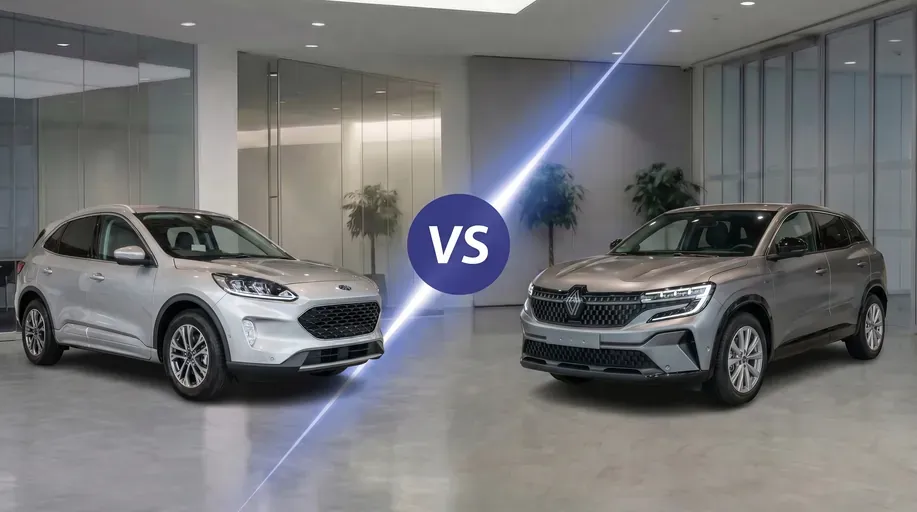
Car battle
Ford Kuga vs. Renault Austral: Complete comparison 2026
Used SUV comparison: Ford Kuga vs. Renault Austral. Find out which model offers better engines, equipment, and real value. Read our final verdict!
Oct 16, 2026
Hyundai Kona review: real owner insights, petrol, hybrid and EV efficiency, boot practicality, running costs, and our definitive verdict.
November 5, 2026
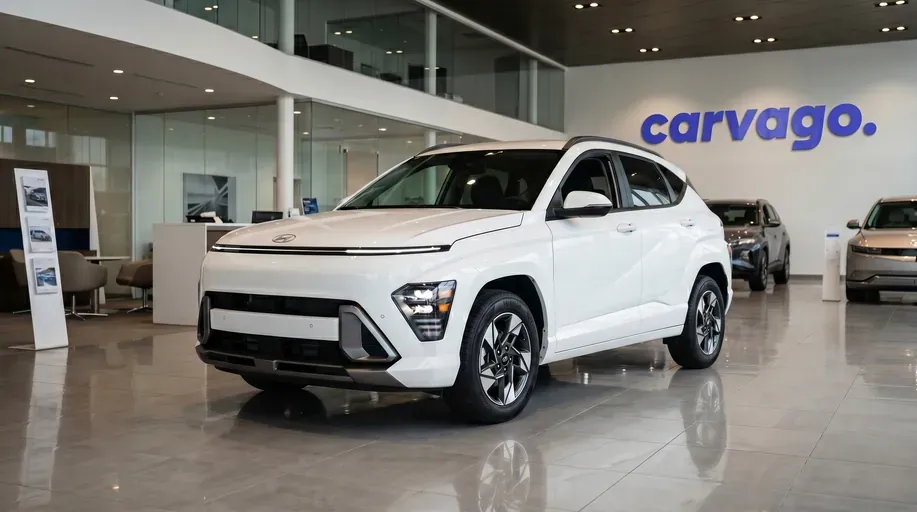
The Hyundai Kona occupies the compact crossover segment, bridging the gap between small urban hatchbacks and larger family sport utility vehicles. This review focuses on the second generation, which made its global design premiere in December 2022. First European customer deliveries of petrol and full hybrid variants began in May 2023, while the battery-electric version entered European series manufacturing in August 2023 before reaching customers in October 2023.
Offered exclusively as a five-door Hyundai Kona SUV, the lineup provides buyers with front-wheel-drive petrol, hybrid, and all-electric configurations, as well as selected all-wheel-drive petrol models. The manufacturer skipped a traditional mid-cycle visual facelift in favour of a compressed lifecycle, though petrol and hybrid powertrains received revised emissions calibrations in June 2024.
The model primarily targets urban commuters, suburban families, and corporate fleet users looking for elevated seating and hatchback-like ease of parking. Because the lineup spans traditional combustion engines alongside electrified options, used buyers face distinct choices between conventional running costs and electric efficiency.
Owners of the second-generation Hyundai Kona report that early ownership has been largely free of deep mechanical defects, though early production runs required several targeted software remedies. With European deliveries having started in May 2023 for combustion models and October 2023 for the electric variant, long-term, high-mileage fleet reliability beyond 150,000 km is not yet established. Most second-generation cars currently circulating in Europe remain within their initial factory coverage.
Official technical bulletins document an auxiliary 12-volt battery parasitic drain affecting petrol, hybrid, and electric models. Owners describe arriving to an unresponsive car after five to seven days of parking. Diagnostics indicated that sleep-mode inhibition in the body domain controller and lighting modules could keep onboard systems awake, while early control logic on the electric Hyundai Kona occasionally failed to trigger auxiliary top-up cycles from the high-voltage pack. Dealerships rectify this via control unit calibrations, though 12-volt batteries subjected to repeated deep discharge required physical replacement.
On combustion models equipped with automated dual-clutch transmissions, owners and testers describe low-speed shudder, hesitation, or jerky engagement during stop-and-go driving and low-speed parking manoeuvres. While revised transmission control logic softens clutch engagement, low-speed judder remains an inherent operational characteristic under thermal load in dense urban creeping. Inside the cabin, owners report intermittent freezing of the digital central display and Bluetooth pairing failures, which dealerships address through software updates.
European vehicle safety authorities have issued three safety recalls relevant to this generation:
| Defect Description | Affected Models & Production Window | European Reach & Action |
|---|---|---|
| Engine Bay Fire Risk: The engine control unit bracket can interfere with wiring in a collision, causing a short circuit. | 1.0 T-GDi (17.04.2023 – 30.12.2023) and 1.6 T-GDi (21.03.2023 – 05.01.2024) | Pan-European. Workshops install a protective casing over the wiring near the bracket. |
| TCU Software Defect: Transmission software does not engage emergency mode during a fault, causing unexpectedly severe deceleration. | Dual-clutch combustion models (19.04.2023 – 27.12.2023) | Pan-European. Dealerships reprogram the transmission control unit logic. |
| Instrument Cluster Blackout: Display panel may reboot during vehicle operation, resulting in a blank screen while driving. | Model Year 2025 production runs | Pan-European. Rectified via over-the-air update or workshop installation. |
The second-generation Hyundai Kona arrived with a diverse powertrain portfolio encompassing conventional turbocharged petrol engines, a self-charging hybrid, and two fully electric battery configurations. In June 2024, the internal combustion line-up received recalibrated power outputs to meet stricter Euro 6e emissions standards.
| Engine | Fuel | Power | Gearbox | Drivetrain | Model years |
|---|---|---|---|---|---|
| 1.0 T-GDi | Petrol | 88 kW (120 hp) | 6-speed manual / 7-speed automatic | FWD | 2023–2024 |
| 1.0 T-GDi | Petrol | 74 kW (100 hp) | 6-speed manual | FWD | 2024–present |
| 1.6 T-GDi | Petrol | 146 kW (198 hp) | 6-speed manual / 7-speed automatic | FWD | 2023–2024 |
| 1.6 T-GDi | Petrol | 146 kW (198 hp) | 7-speed automatic | AWD | 2023–2024 |
| 1.6 T-GDi | Petrol | 101 kW (138 hp) | 6-speed manual / 7-speed automatic | FWD | 2024–present |
| 1.6 GDi Hybrid | Full Hybrid (HEV) | 104 kW (141 hp) | 6-speed automatic | FWD | 2023–2024 |
| 1.6 GDi Hybrid | Full Hybrid (HEV) | 95 kW (129 hp) | 6-speed automatic | FWD | 2024–present |
| Electric Standard Range | Electric | 115 kW (156 hp) | Single-speed automatic | FWD | 2023–present |
| Electric Long Range | Electric | 160 kW (218 hp) | Single-speed automatic | FWD | 2023–present |
For predominantly urban driving and short daily commutes, the entry-level three-cylinder 1.0 T-GDi petrol offers an accessible entry point when paired with the manual gearbox. However, city drivers seeking greater refinement will find the hybrid Hyundai Kona or the standard-range electric Hyundai Kona significantly better suited, as electric pull-away eliminates clutch wear in crawling traffic.
For mixed everyday driving and balanced family use, the 1.6 GDi Hybrid stands out as the most cohesive option in the lineup. Its petrol unit and electric motor operate through a dual-clutch automatic that avoids high-rev droning, while its multi-link rear axle provides noticeably better ride composure on rougher pavement than torsion-beam petrol models.
Frequent motorway drivers and long-distance commuters should look towards the four-cylinder 1.6 T-GDi or the long-range electric variant. While the three-cylinder engine feels strained at sustained high speeds, the larger turbocharged petrol Hyundai Kona delivers confident overtaking reserves, particularly in the earlier higher-output specification as a used car. The long-range battery electric version also serves regular highway travel comfortably for those with home or workplace charging access.
If towing is a regular requirement, the 1.6 T-GDi petrol is the definitive pick across the range, providing the highest braked towing limits. Buyers in alpine regions or those requiring wet-weather traction from boat ramps should seek out the all-wheel-drive Hyundai Kona with the seven-speed automatic, whereas the hybrid and standard-range electric models carry strict towing limitations.
| Parameter | Petrol & Hybrid SUV | Electric SUV |
|---|---|---|
| Length (mm) | 4,350 | 4,355 |
| Width (mm) | 1,825 | 1,825 |
| Height (mm) | 1,585 | 1,575–1,580 |
| Wheelbase (mm) | 2,660 | 2,660 |
| Rear boot volume, seats up / folded (l) | 466 / 1,300 | 466 / 1,300 |
| Front boot volume (l) | — | 27 |
Exterior length figures do not apply to sport-styled versions fitted with extended bumpers, and optional boot-mounted audio equipment may reduce underfloor cargo space.
The Hyundai Kona provides adult-friendly space in the second row, offering sufficient knee clearance and headroom for tall passengers sitting behind tall front occupants. Practicality benefits from a standard three-way folding rear backrest split in a 40:20:40 arrangement, which allows long items to pass through the centre while retaining two full outboard seating positions. However, the rear bench is fixed in place and does not slide fore or aft, preventing owners from adjusting passenger legroom to expand luggage depth on demand. Loading remains straightforward due to a wide hatch aperture and a level load area when the rear backrests fold flat, and the luggage compartment retains identical space regardless of whether the car uses a combustion engine, hybrid hardware, or a battery-electric powertrain.
Professional road tests describe the Hyundai Kona as an easy-going, secure crossover biased toward everyday ease rather than agility. Its suspension absorbs sharp tarmac ruts with reasonable compliance, though brisk cornering brings pronounced body lean and light steering that offers limited road feedback. On larger optional wheels, urban speed humps cause noticeable thuds, while undulating motorway crests reveal a tendency for the body to float. Refinement on the open road is solid: the Hyundai Kona Electric remains quiet at speed, whereas the hybrid Hyundai Kona runs unobtrusively on battery power but becomes coarse and vocal under sudden throttle load.
Inside, testers praise the cockpit ergonomics. The dashboard retains physical buttons and rotary dials for climate and audio functions, avoiding the distraction of touchscreen sub-menus. However, cabin materials draw uniform criticism across professional evaluations: surfaces below eye level consist of hard, scratch-prone plastics, and unpadded door armrests feel budget-oriented. Testers also repeatedly complain about the intrusive driver-assistance warnings, which emit persistent audible chimes during ordinary driving.
Reviewers broadly agree on the car's predictable stability and straightforward controls. Opinions diverge primarily on suspension composure, where some testers note a fidgety low-speed ride over uneven urban streets while others highlight its bump compliance. Because this generation bypassed a mid-cycle facelift, these driving and cabin characteristics remain consistent across the entire production run.
All market charts in this section are drawn from Carvago’s advertised listings across the entire Hyundai Kona model family, encompassing earlier iterations alongside the latest version, meaning these figures do not establish an isolated pricing baseline for the current generation alone. Across the full range, asking prices start at a median of €15,800 for 2019 models and rise through €19,900 for 2022 models before stepping up to €26,800 for 2023 cars and reaching €32,800 for 2026 examples. This broad upward shift reflects the transition toward newer inventory, with buyers on the secondary market consistently placing higher value on modernised hybrid and long-range electric powertrains over base specifications.
Active listings for the Hyundai Kona stood at 13,247 in May 2026, peaked at 13,395 in July, and ended at 12,333 in October 2026. The chart below shows the number of advertised cars recorded each month over this period.
Active listings over time
| Month | Hyundai Kona |
|---|---|
| 2026-05 | 13 247 |
| 2026-06 | 13 388 |
| 2026-07 | 13 395 |
| 2026-08 | 12 825 |
| 2026-09 | 12 837 |
| 2026-10 | 12 333 |
Source Carvago
Buyers can expect a wide selection of vehicles in the market, with overall choice easing slightly after the summer but remaining at or above 12,333 listings through October 2026.
Among used listings advertised today, the median asking price of cars built in 2019 is €15,800, while the median asking price of cars built in 2026 is €32,800. The chart below shows how these median asking prices compare across build years.
Median advertised price by year of manufacture
| Model year | Hyundai Kona |
|---|---|
| 2019 | 15 800 |
| 2020 | 17 900 |
| 2021 | 18 900 |
| 2022 | 19 900 |
| 2023 | 26 800 |
| 2024 | 30 500 |
| 2025 | 30 400 |
| 2026 | 32 800 |
Source Carvago
Buyers considering 2020 to 2022 models encounter median asking prices between €17,900 and €19,900, while 2023 models reflect a higher median asking price of €26,800. The median asking price is slightly lower for 2025 models at €30,400 than for 2024 models at €30,500, before reaching €32,800 for 2026 models.
This depreciation curve illustrates how the Hyundai Kona loses residual value as it ages, shedding approximately 34% of its value by age three. The sharpest drop occurs between the second and third years, as outlined in the chart below.
Residual value by vehicle age
| Vehicle age | Hyundai Kona |
|---|---|
| New | 32 800 |
| 1 yr | 28 700 |
| 2 yrs | 25 700 |
| 3 yrs | 21 500 |
| 4 yrs | 20 100 |
| 5 yrs | 18 600 |
| 6 yrs | 16 500 |
| 7 yrs | 15 200 |
Source Carvago
The rate of depreciation moderates significantly after the third year as annual losses level out past the steepest portion of the curve. Across the entire seven-year span shown, the model sheds roughly 54% of its initial residual value.
Across the six months from May to October 2026, petrol models represented the highest volume of advertised cars, starting at 6,299 listings in May 2026 and reaching 6,406 in July 2026. The monthly breakdown across all powertrains shows how listings are distributed across the market.
Supply composition by fuel type
Petrol
Diesel
Hybrid
Electric
LPG
| Month | Petrol | Diesel | Hybrid | Electric | LPG |
|---|---|---|---|---|---|
| 2026-05 | 6 299 | 374 | 3 169 | 3 373 | 3 |
| 2026-06 | 6 358 | 385 | 3 117 | 3 498 | 2 |
| 2026-07 | 6 406 | 379 | 3 057 | 3 507 | 3 |
| 2026-08 | 6 133 | 332 | 2 925 | 3 388 | 1 |
| 2026-09 | 6 113 | 306 | 3 056 | 3 320 | 0 |
| 2026-10 | 5 956 | 304 | 2 977 | 3 050 | 1 |
Source Carvago
In October 2026, petrol led the available stock with 5,956 listings, while electric models with 3,050 listings and hybrids with 2,977 listings offered substantial secondary options. Buyers seeking a diesel will have significantly fewer choices to consider, with only 304 cars advertised that month.
The chart tracks the average asking price for the Hyundai Kona between May 2026 and October 2026, opening at €23,100.
Average price development over time
| Month | Hyundai Kona |
|---|---|
| 2026-05 | 23 100 |
| 2026-06 | 23 000 |
| 2026-07 | 23 000 |
| 2026-08 | 23 500 |
| 2026-09 | 23 800 |
| 2026-10 | 23 700 |
Source Carvago
Prices stayed within a narrow band over the six-month period, dipping to €23,000 in June and July before reaching €23,800 in September and concluding at €23,700, an overall change of less than 3 percent.
Adult-friendly rear passenger room and identical luggage space across petrol, hybrid, and electric variants
Intuitive dashboard ergonomics with physical buttons and rotary dials for climate and audio controls
Refined hybrid and electric powertrains that provide quiet pull-away in stop-and-go city traffic
Hard, scratch-prone plastics below eye level and unpadded door armrests
Intrusive and persistent audible warning chimes from driver-assistance systems
Low-speed dual-clutch transmission judder in heavy traffic and auxiliary battery drain issues
Mechanically, the Hyundai Kona has proven dependable in early ownership, though long-term durability beyond 150,000 km is not yet established. Most reported problems relate to auxiliary 12-volt battery parasitic drain and infotainment software glitches, which dealerships resolve through control unit calibrations.
The hybrid Hyundai Kona provides the most balanced option for mixed everyday use, offering smooth low-speed pull-away and composed multi-link rear suspension. Frequent motorway drivers and those needing to tow heavier trailers should opt for the larger 1.6-litre turbocharged petrol or the long-range electric Hyundai Kona.
Check the vehicle's history by VIN to ensure official safety recall updates have been completed. During the test drive, verify that the 12-volt battery holds charge and inspect automatic gearboxes for low-speed clutch shudder.
It comfortably accommodates adult passengers in both seating rows and includes a versatile three-way folding rear backrest across all powertrain configurations. The main practical compromise is a fixed rear bench, which cannot slide fore or aft to expand luggage room on demand.
Sources: hyundai.news, adac.de, ec.europa.eu, autocar.co.uk, autoexpress.co.uk
This article was prepared using artificial intelligence tools. The section guarantor is Petr Dušek.
Used SUV comparison: Ford Kuga vs. Renault Austral. Find out which model offers better engines, equipment, and real value. Read our final verdict!
Oct 16, 2026
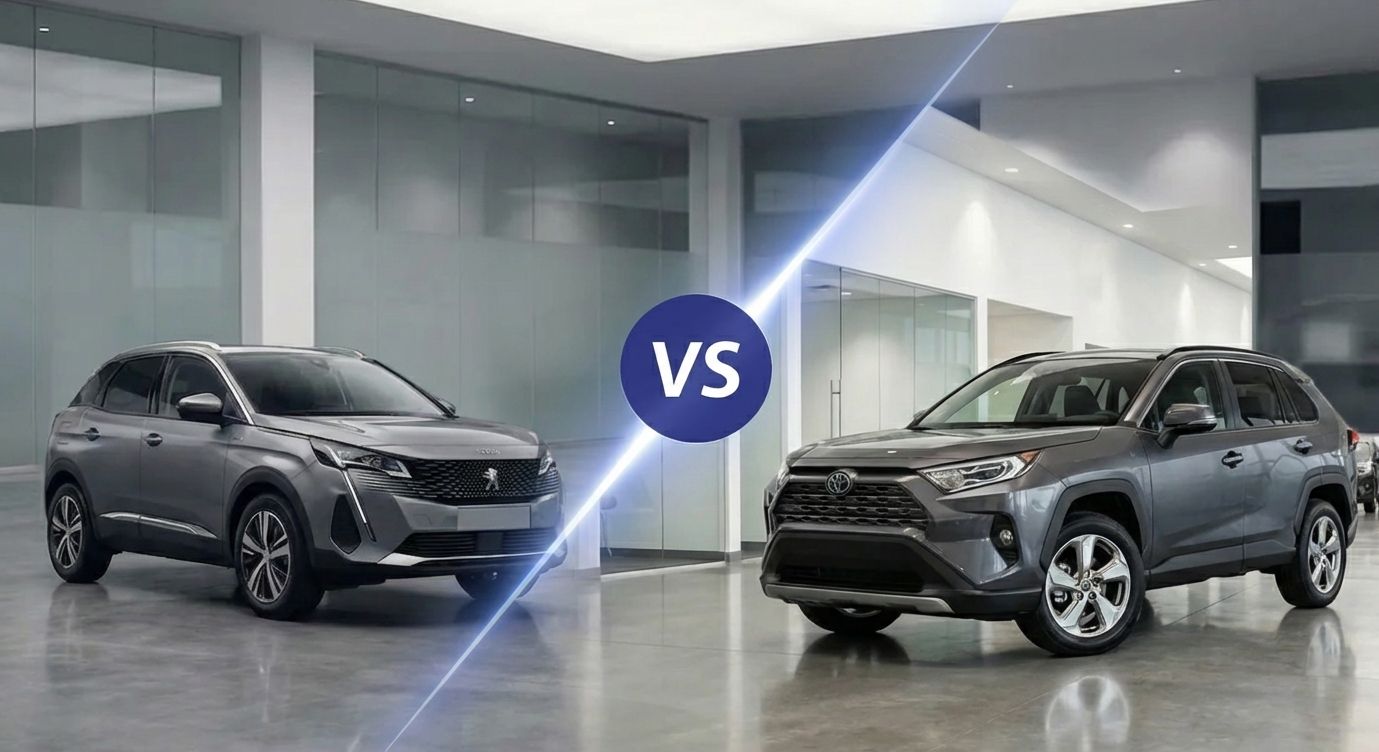
Detailed comparison of Peugeot 3008 vs Toyota RAV4. Discover real-world experiences with used cars, a comparison of fuel consumption, reliability, and a verdict that will make your choice easier.
Apr 2, 2026
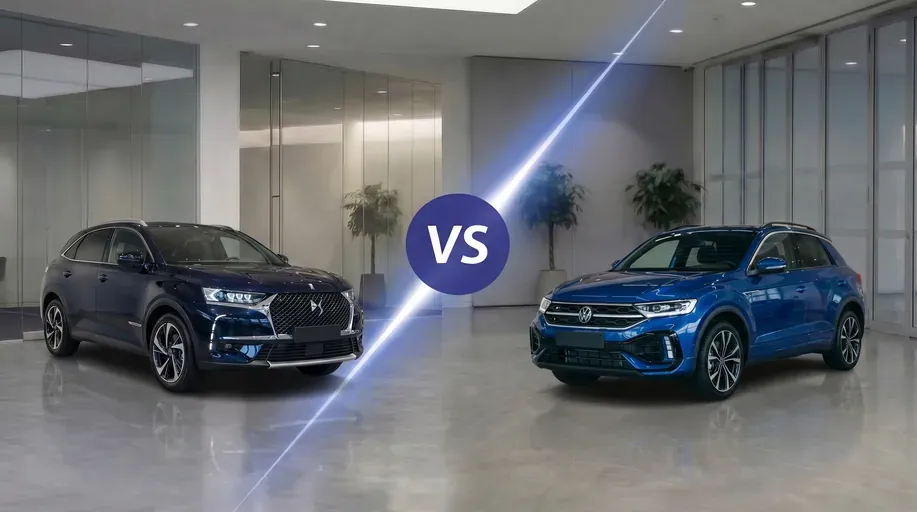
Detailed comparison of the DS 7 Crossback and Volkswagen T-Roc. Discover the differences in spaciousness, engines, and equipment. Read the verdict and choose the best used SUV.
Oct 16, 2026